Transfer Death Deed Beneficiary With Spouse
Description



Get your form ready online
Our built-in tools help you complete, sign, share, and store your documents in one place.
Make edits, fill in missing information, and update formatting in US Legal Forms—just like you would in MS Word.
Download a copy, print it, send it by email, or mail it via USPS—whatever works best for your next step.
Sign and collect signatures with our SignNow integration. Send to multiple recipients, set reminders, and more. Go Premium to unlock E-Sign.
If this form requires notarization, complete it online through a secure video call—no need to meet a notary in person or wait for an appointment.
We protect your documents and personal data by following strict security and privacy standards.

Make edits, fill in missing information, and update formatting in US Legal Forms—just like you would in MS Word.

Download a copy, print it, send it by email, or mail it via USPS—whatever works best for your next step.

Sign and collect signatures with our SignNow integration. Send to multiple recipients, set reminders, and more. Go Premium to unlock E-Sign.

If this form requires notarization, complete it online through a secure video call—no need to meet a notary in person or wait for an appointment.

We protect your documents and personal data by following strict security and privacy standards.
Looking for another form?









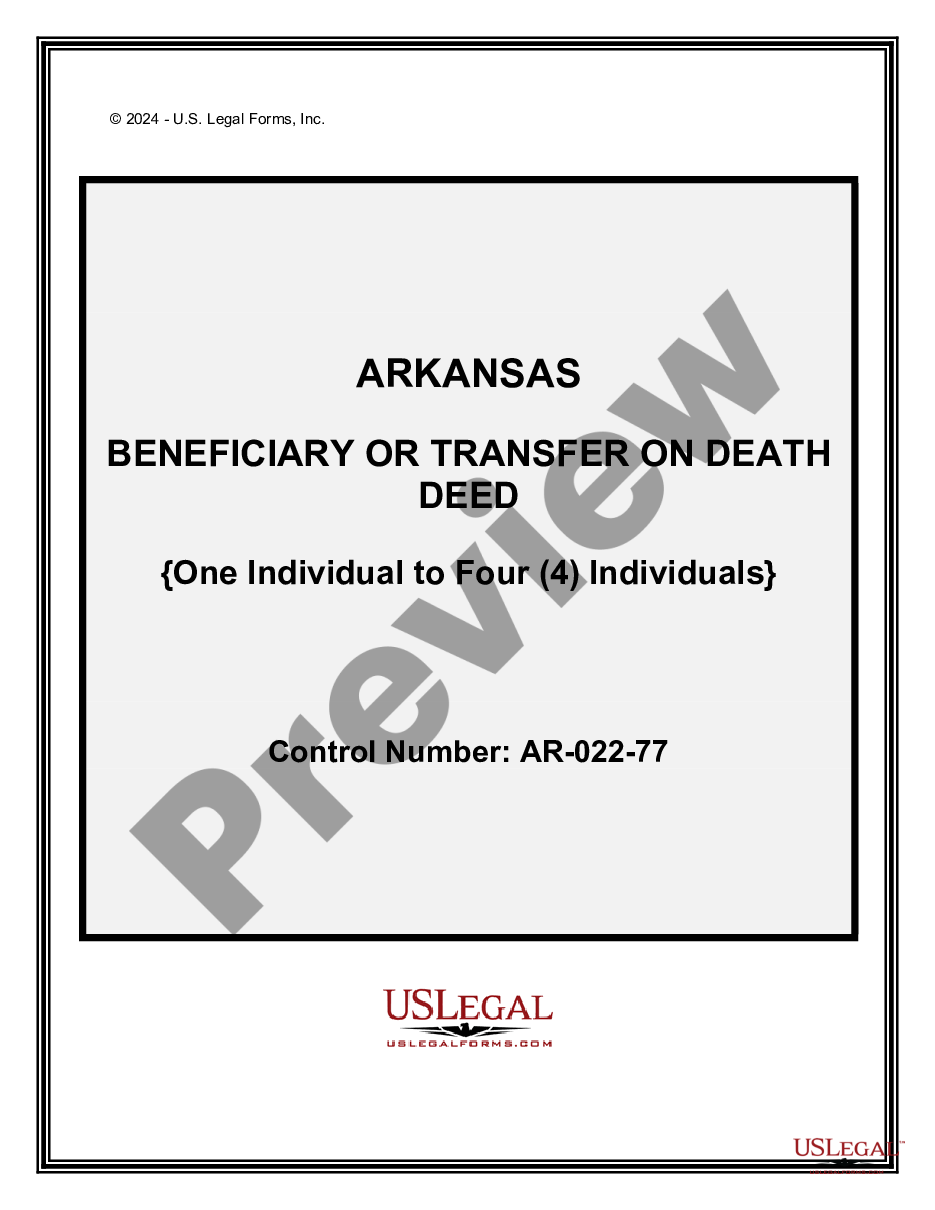
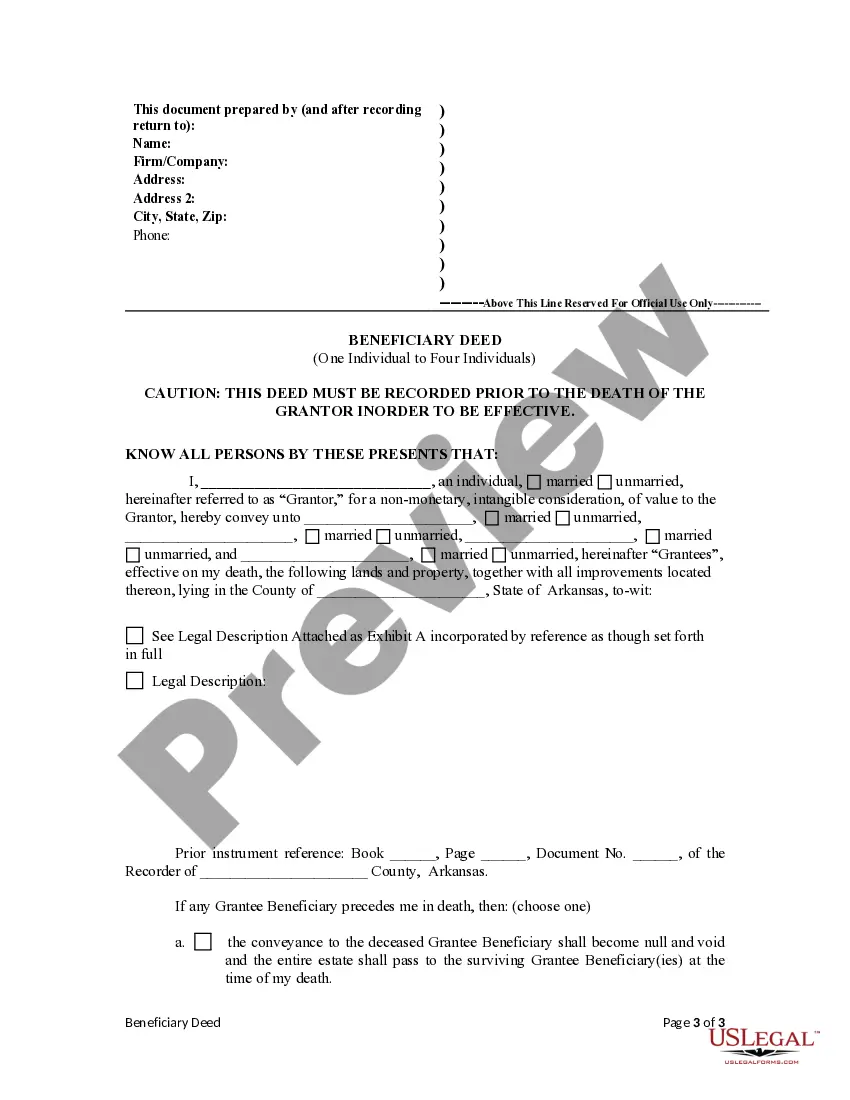
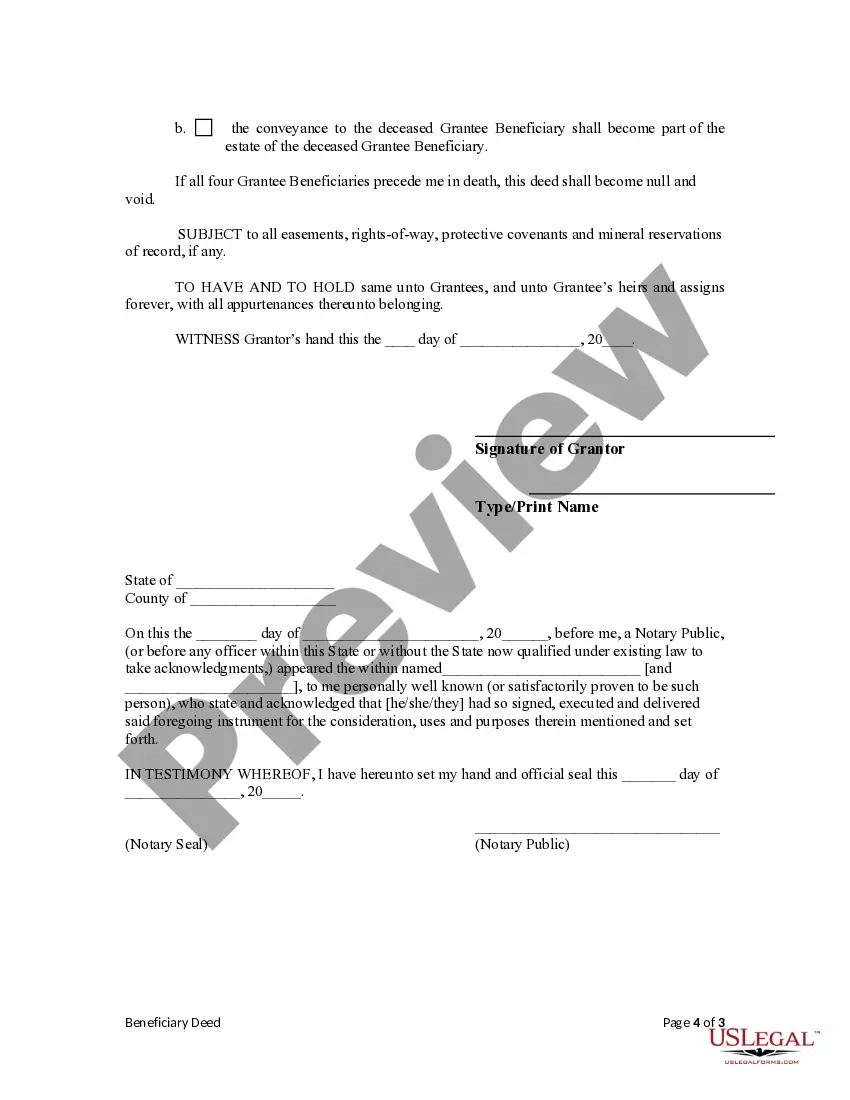
How to fill out Arkansas Transfer On Death Deed Or TOD - Beneficiary Deed For One Individual To Four Individuals?
- Log in to your US Legal Forms account if you're already a member, or create an account first if it's your first time.
- Search for the specific form template related to transferring a death deed beneficiary. Use the Preview mode to check if it meets your jurisdictional needs.
- If you don't find the right template, utilize the Search tab to locate a suitable one.
- Once you've identified the proper document, click the 'Buy Now' button to select your subscription plan.
- Complete your purchase by entering your payment information, whether it's through a credit card or PayPal.
- Download the form to your device and access it later from the 'My Forms' section of your account.
By following these steps, you ensure that your documentation process is both quick and efficient. US Legal Forms provides an extensive collection of over 85,000 editable forms, giving you the right resources for any legal need.
Take charge of your legal documentation today with US Legal Forms and secure your peace of mind. Start now!
Form popularity
FAQ
If your name is on the deed with your husband, you likely retain ownership of the property, bypassing probate. This arrangement simplifies the transition of the house to you directly. However, if any concerns arise, transferring the death deed beneficiary with spouse ensures clarity and peace of mind. Using resources like US Legal Forms can provide essential support throughout this process.
When a spouse's name is absent from the deed, ownership depends on local laws and the couple's marital property agreements. Many jurisdictions might treat property as part of the estate of the spouse on the deed. By transferring the death deed beneficiary with spouse, you can clarify ownership rights and reduce legal complications. Platforms like US Legal Forms can provide guidance and necessary documents for this process.
In situations where your spouse dies with only their name on the deed, the property usually becomes part of their estate. You may face challenges in gaining ownership and may have to go through probate. It is advisable to transfer the death deed beneficiary with spouse to simplify ownership rights. Using services like US Legal Forms can help streamline this transition legally.
If your spouse passes away without your name on the deed, the property typically goes to the estate of your spouse. This condition can lead to complications regarding ownership and inheritance. To ensure your rights, you may need to transfer the death deed beneficiary with spouse. Consider seeking legal assistance on platforms like US Legal Forms to navigate this process smoothly.
If your husband died and your name is not on the deed, the property may go through probate. This process can be lengthy and may require you to prove your right to inherit. Exploring a transfer death deed beneficiary with spouse could provide a more efficient way to manage ownership and bypass some probate issues.
While a transfer on death deed offers great benefits, there are also potential disadvantages. These can include limitations in terms of creditors' claims or the inability to make changes once executed. Understand the implications before proceeding with a transfer death deed beneficiary with spouse; seeking professional advice can help.
Typically, a home can remain in a deceased person’s name for a limited period, often until the estate is settled. However, delays in transferring the property can lead to additional costs or complications. To ensure a smooth transition, consider a timely transfer of the death deed beneficiary with spouse.
Choosing between a transfer on death deed (TOD) or a beneficiary designation after death depends on individual circumstances. A TOD can simplify the transfer process, while other beneficiary options may vary in complexity. Assess your needs carefully, and think about consulting uslegalforms for guidance on making the best decision for transferring property.
Generally, you have a limited timeframe to transfer a deed after death, often within a few months. If you delay excessively, you might face legal hurdles. It's wise to act quickly and ensure you fulfill local requirements when transferring a death deed beneficiary with spouse.
Currently, many states allow transfers on death deeds. These include states like California, Florida, and Texas, but the exact regulations can differ. If you're considering a transfer death deed beneficiary with spouse, it’s essential to check the specific laws in your state or consult with a local attorney.