Transfer Death Beneficiary Form With Estate
Description



Get your form ready online
Our built-in tools help you complete, sign, share, and store your documents in one place.
Make edits, fill in missing information, and update formatting in US Legal Forms—just like you would in MS Word.
Download a copy, print it, send it by email, or mail it via USPS—whatever works best for your next step.
Sign and collect signatures with our SignNow integration. Send to multiple recipients, set reminders, and more. Go Premium to unlock E-Sign.
If this form requires notarization, complete it online through a secure video call—no need to meet a notary in person or wait for an appointment.
We protect your documents and personal data by following strict security and privacy standards.

Make edits, fill in missing information, and update formatting in US Legal Forms—just like you would in MS Word.

Download a copy, print it, send it by email, or mail it via USPS—whatever works best for your next step.

Sign and collect signatures with our SignNow integration. Send to multiple recipients, set reminders, and more. Go Premium to unlock E-Sign.

If this form requires notarization, complete it online through a secure video call—no need to meet a notary in person or wait for an appointment.

We protect your documents and personal data by following strict security and privacy standards.
Looking for another form?


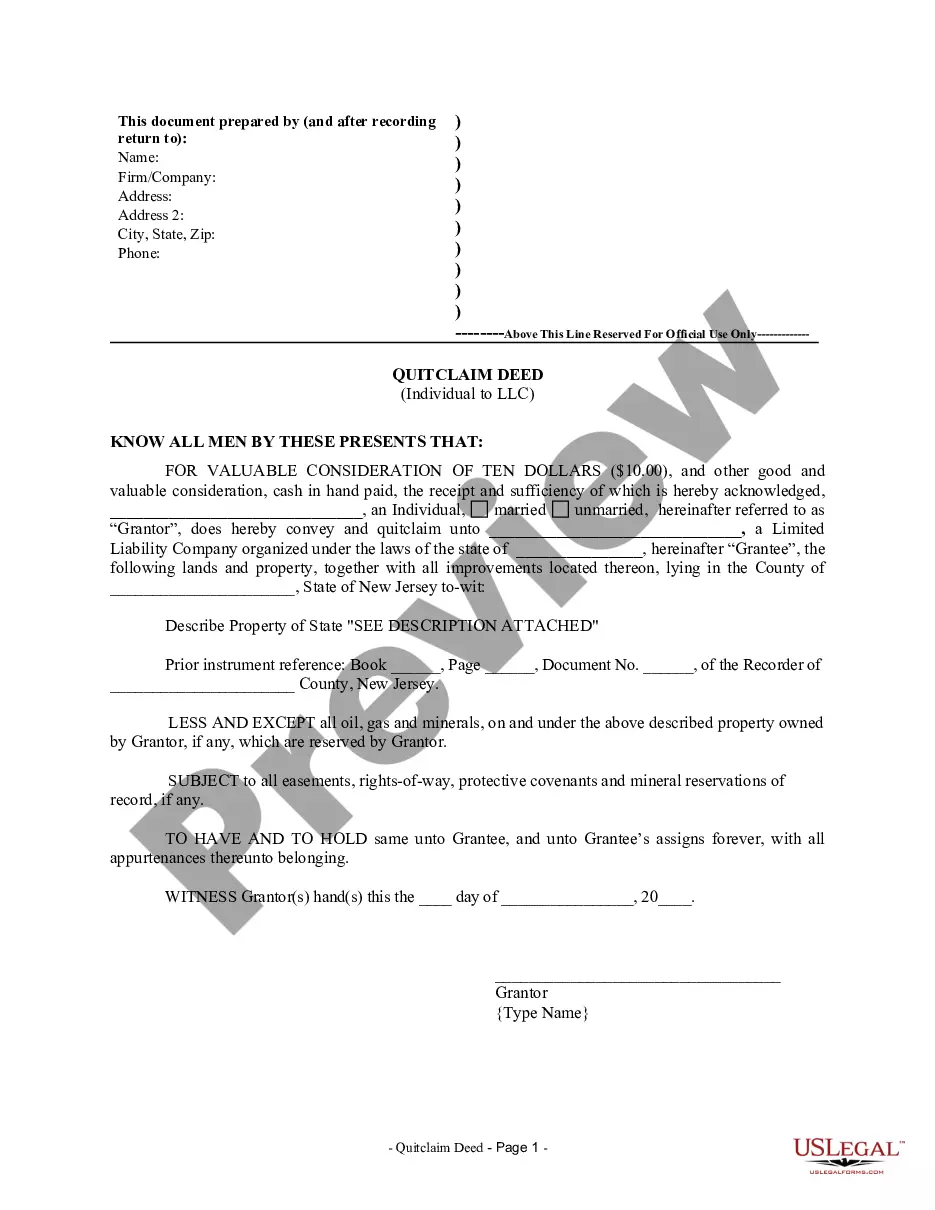


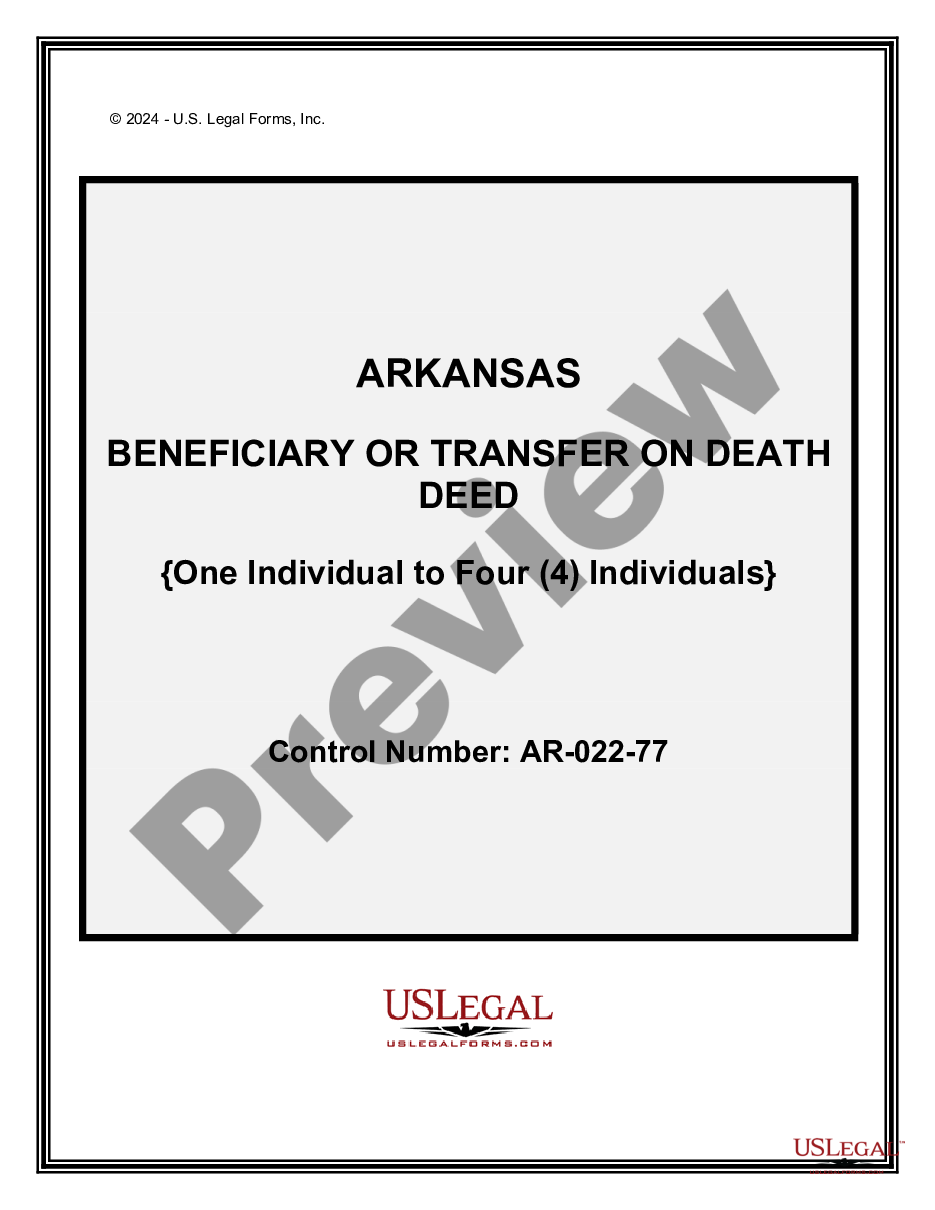
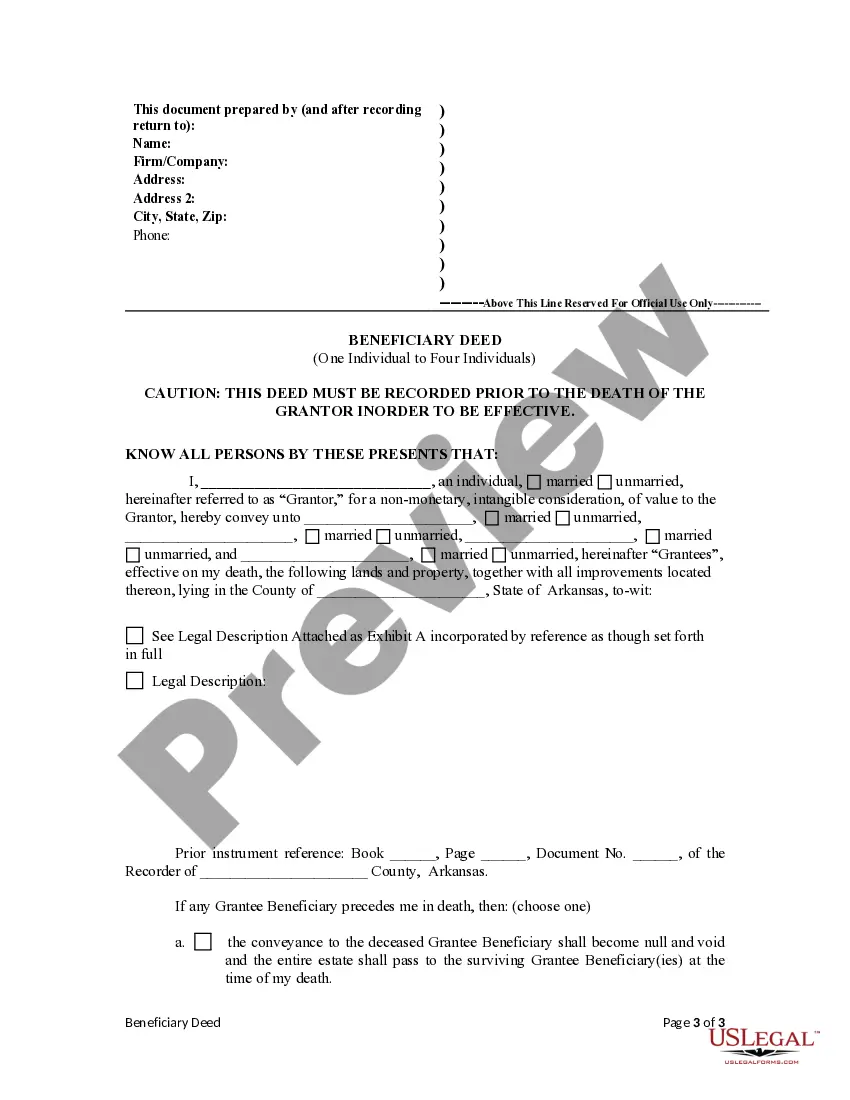
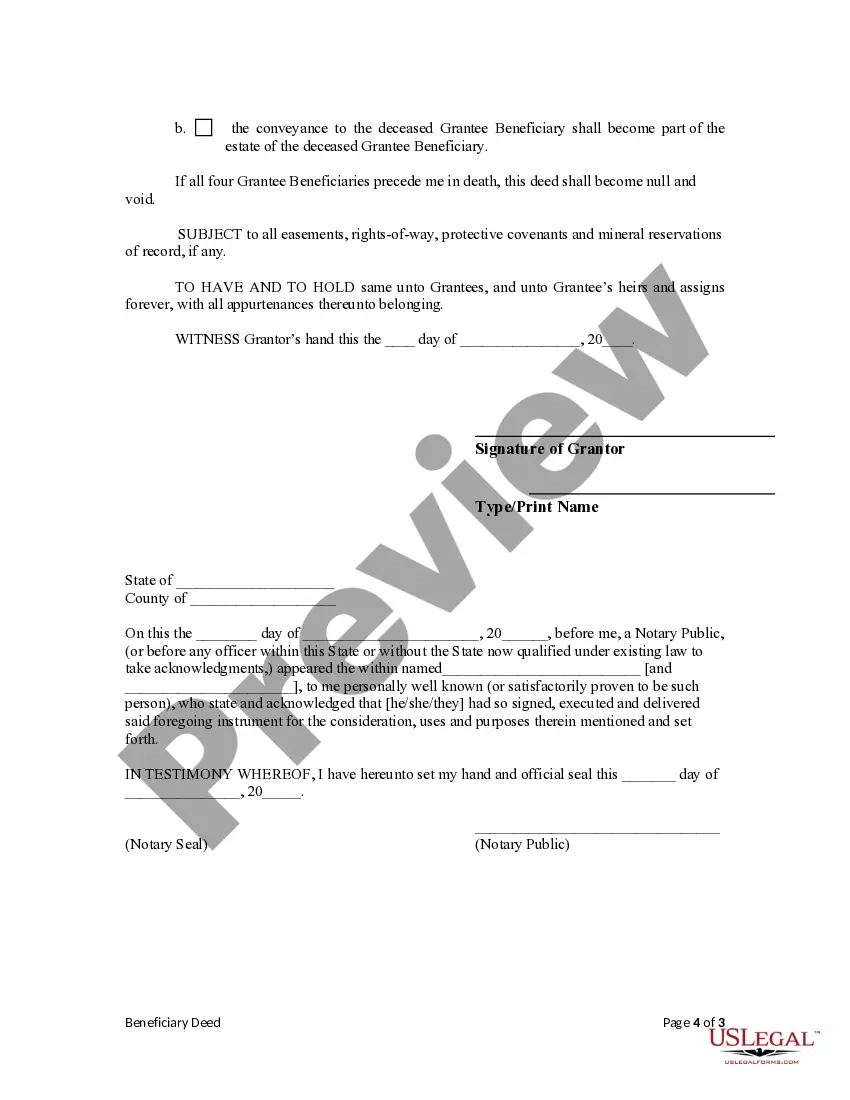
How to fill out Arkansas Transfer On Death Deed Or TOD - Beneficiary Deed For One Individual To Four Individuals?
- Start by logging into your account on the US Legal Forms website. Ensure your subscription is active.
- If you're new to the platform, search for the 'Transfer Death Beneficiary Form' in the library and review its description to confirm it aligns with your jurisdiction's requirements.
- If the form meets your criteria, proceed to purchase the document by clicking the 'Buy Now' button and selecting your preferred subscription plan.
- Enter your payment details, either through credit card or PayPal, to complete the purchase and gain access to your forms.
- After purchasing, download the form to your device for easy access and completion. You can also find it under 'My Forms' in your account anytime.
Completing the transfer death beneficiary form with estate ensures your intentions are legally documented. US Legal Forms not only makes this process efficient but also provides users access to a wealth of resources for any legal form need.
Ready to get started? Visit US Legal Forms today and simplify your legal documentation process!
Form popularity
FAQ
To transfer stock from the estate to a beneficiary, obtain a copy of the will and the death certificate. Complete the transfer death beneficiary form with the estate details and include the names of the beneficiaries. Submit this form to the broker or financial institution holding the stock, and ensure all required documentation is attached. This process helps ensure the stocks are transferred promptly and correctly.
Transferring shares from an estate involves several steps to ensure everything is done legally and correctly. First, gather necessary documents, including the death certificate and will. Next, fill out a transfer death beneficiary form with the estate details to facilitate the share transfer. Finally, submit this form to the relevant company or broker to complete the transfer.
To transfer stock from the estate to a beneficiary, you'll need to start by evaluating the estate's stock holdings. Complete a transfer death beneficiary form with estate information to initiate the transfer process. Then, submit this form to the stock issuer or broker to formally execute the transfer. Consulting a trust or estate attorney can help you navigate any complexities in this process.
An executor should first locate all stocks owned by the deceased and understand their value. Then, complete a transfer death beneficiary form with the estate information, which helps facilitate the stock transfer to the beneficiaries. Additionally, they should keep accurate records and provide information to the beneficiaries regarding their entitlements. This ensures a smooth asset distribution process.
To distribute stock to beneficiaries, you must first authenticate the will and determine the rightful heirs. Next, you will need to fill out a transfer death beneficiary form with the estate's details. This form allows the stock to be moved into the names of the beneficiaries. Remember to consult with a legal expert to ensure all procedures are correctly followed.
Tod accounts are designated to pass directly to the named beneficiary, thus they are not included in the estate. This method offers a straightforward way for beneficiaries to receive assets without the lengthy probate process. Making sure your transfer death beneficiary form with estate is regularly updated is crucial for ensuring accurate beneficiary designations. These steps can save time and reduce complications.
Transfer on death accounts are not part of an estate since they are set up to transfer directly to the named beneficiary outside of probate. This feature allows for quicker access to funds for your loved ones. It’s important to ensure your transfer death beneficiary form with estate is filled out correctly to facilitate this smooth transition. This can alleviate stress for your beneficiaries during a challenging time.
Items such as joint property, beneficiary-designated accounts, and certain trusts do not fall under the estate. For instance, assets transferred through a valid transfer death beneficiary form with estate avoid probate, making them distinct from the estate's other assets. Knowing what is excluded helps in planning and managing your estate efficiently. This knowledge allows you to streamline your estate process.
Payable on death (pod) accounts are designed to bypass probate, meaning they do not enter the estate when the account holder passes away. Instead, these accounts transfer directly to the designated beneficiary upon death. To ensure the correct beneficiary receives the funds, keep your transfer death beneficiary form with estate updated. This method simplifies the transfer process for your heirs.
When a beneficiary of an estate dies, the inheritance typically becomes part of that beneficiary's estate. This means their share may go to their heirs or be distributed according to their own estate plan. To manage this situation effectively, you may need to update your transfer death beneficiary form with estate to reflect these changes. Staying proactive can help prevent delays in the distribution of assets.