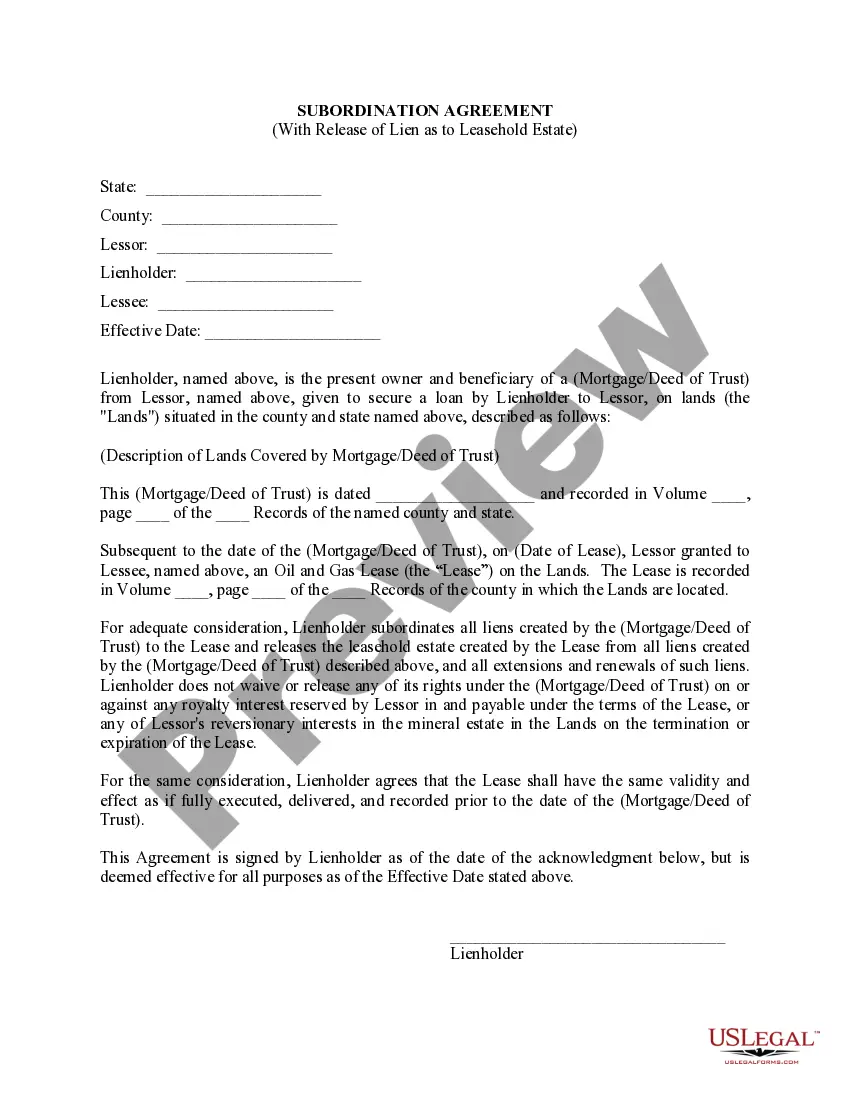
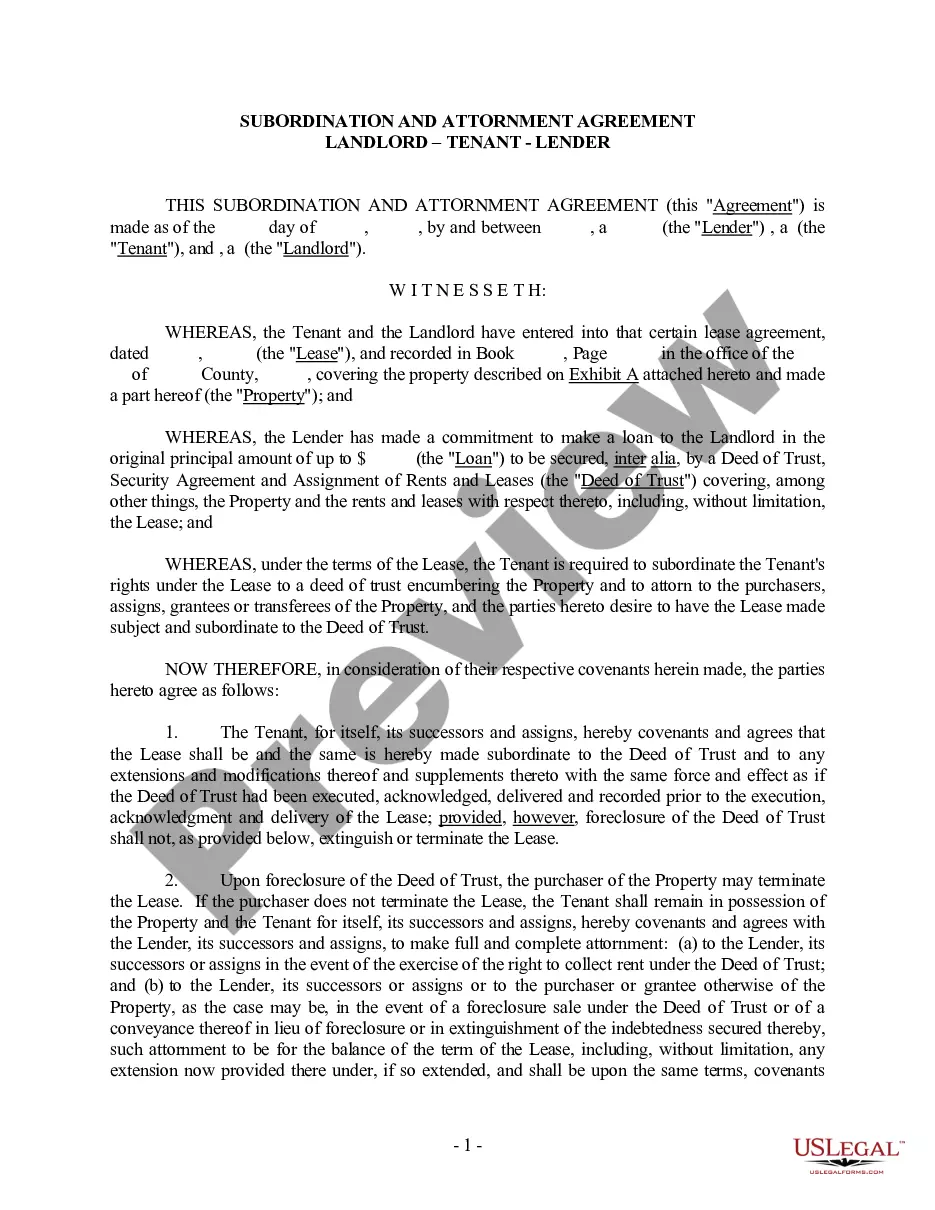
Subordination Agreement For Easement
Description
Get your form ready online
Our built-in tools help you complete, sign, share, and store your documents in one place.
Make edits, fill in missing information, and update formatting in US Legal Forms—just like you would in MS Word.
Download a copy, print it, send it by email, or mail it via USPS—whatever works best for your next step.
Sign and collect signatures with our SignNow integration. Send to multiple recipients, set reminders, and more. Go Premium to unlock E-Sign.
If this form requires notarization, complete it online through a secure video call—no need to meet a notary in person or wait for an appointment.
We protect your documents and personal data by following strict security and privacy standards.

Make edits, fill in missing information, and update formatting in US Legal Forms—just like you would in MS Word.

Download a copy, print it, send it by email, or mail it via USPS—whatever works best for your next step.

Sign and collect signatures with our SignNow integration. Send to multiple recipients, set reminders, and more. Go Premium to unlock E-Sign.

If this form requires notarization, complete it online through a secure video call—no need to meet a notary in person or wait for an appointment.

We protect your documents and personal data by following strict security and privacy standards.
Looking for another form?
How to fill out Alabama Lease Subordination Agreement?
Individuals typically connect legal documentation with something complex that only a professional can handle.
In a certain respect, this is accurate, as formulating a Subordination Agreement for Easement requires significant knowledge of subject matter, including state and municipal laws.
However, with US Legal Forms, the process has become simpler: pre-prepared legal templates for any personal and business circumstance relevant to state legislation are compiled in a single online directory and are now accessible to everyone.
All templates in our library are reusable: upon purchase, they are saved in your profile. You can access them at any time via the My documents tab. Explore all the advantages of using the US Legal Forms platform. Subscribe now!
- US Legal Forms offers over 85k current templates categorized by state and area of application, making it easy to find a Subordination Agreement for Easement or any specific form in just minutes.
- Previously registered users with an active subscription must Log In to their account and click Download to acquire the document.
- New users on the platform will need to create an account and subscribe before they can store any files.
- Here’s a straightforward guide on how to obtain the Subordination Agreement for Easement.
- Review the page content thoroughly to confirm it meets your requirements.
- Read the form description or view it through the Preview function.
- If the prior sample doesn’t suit your needs, find another template using the Search bar in the header.
- Once you locate the appropriate Subordination Agreement for Easement, click Buy Now.
- Select a subscription plan that fits your needs and financial situation.
- Create an account or Log In to proceed to the payment section.
- Process your subscription payment via PayPal or using your credit card.
- Choose the format for your document and click Download.
- Print your document or upload it to an online editor for quicker completion.
Form popularity
FAQ
A subordination agreement is a legal document that establishes one debt as ranking behind another in priority for collecting repayment from a debtor. The priority of debts can become extremely important when a debtor defaults on payments or declares bankruptcy.
A subordination agreement prioritizes collateralized debts, ranking one behind another for purposes of collecting repayment from a debtor in the event of foreclosure or bankruptcy. A second-in-line creditor collects only when and if the priority creditor has been fully paid.
When you take out a mortgage loan, the lender will likely include a subordination clause. Within this clause, the lender essentially states that their lien will take precedence over any other liens placed on the house. A subordination clause serves to protect the lender in case you default.
Often, all the information needed will be available from your mortgage lender and the title company. The process usually takes approximately 25 business days.
Subordination agreements are prepared by your lender. The process occurs internally if you only have one lender. When your mortgage and home equity line or loan have different lenders, both financial institutions work together to draft the necessary paperwork.