Florida Residential Rental Lease Application
What is this form?
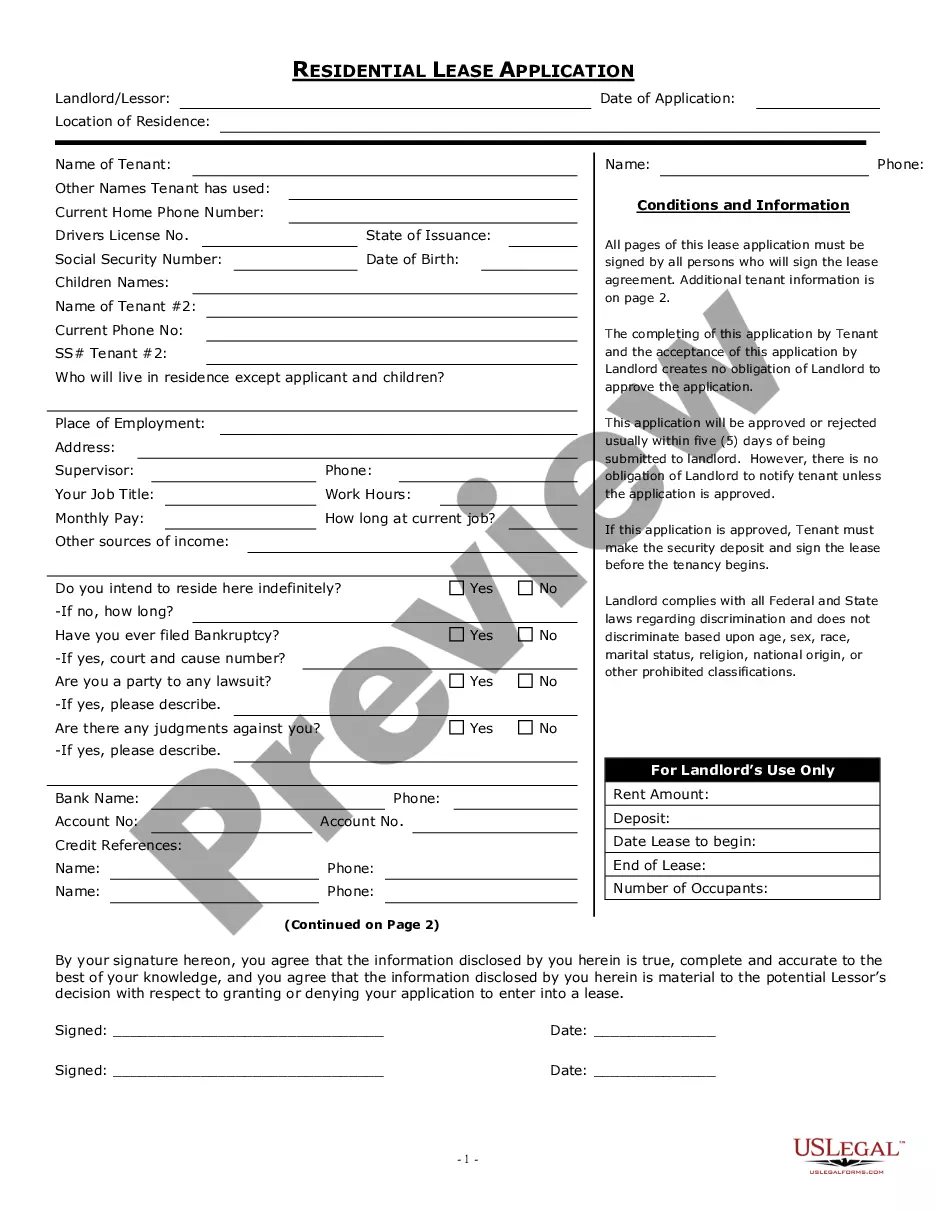
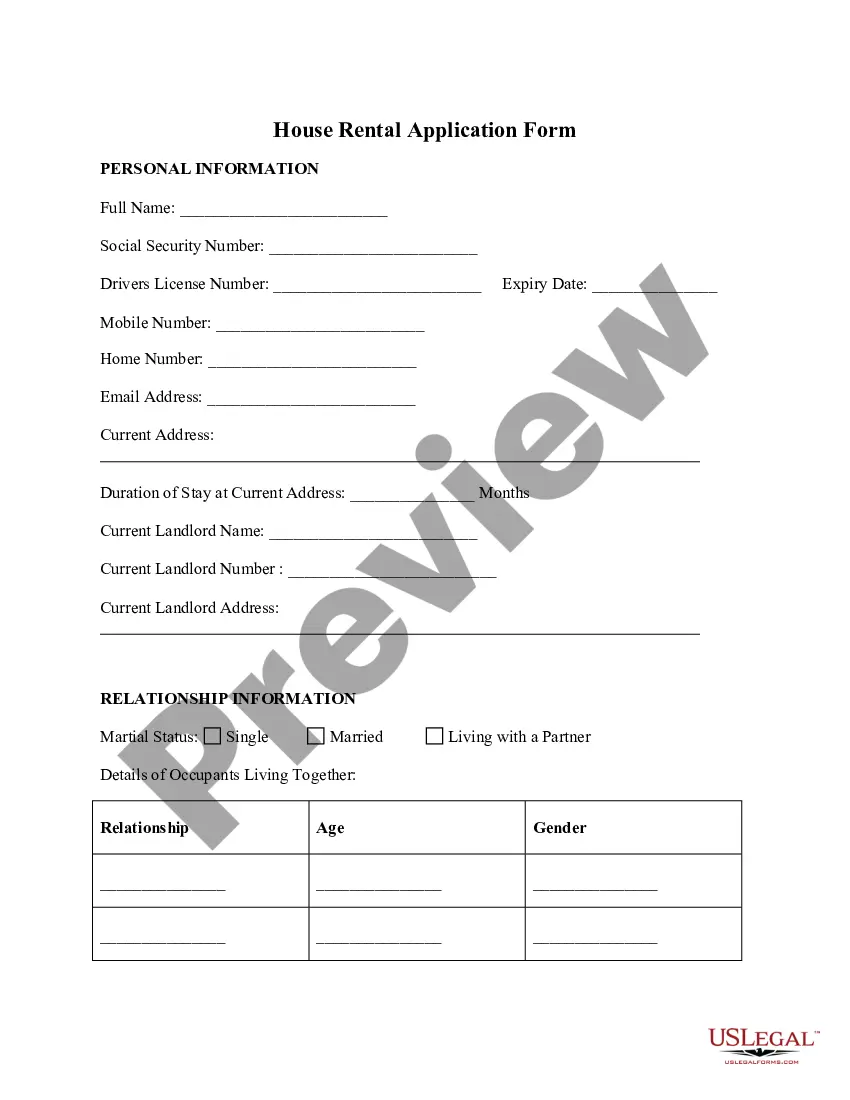
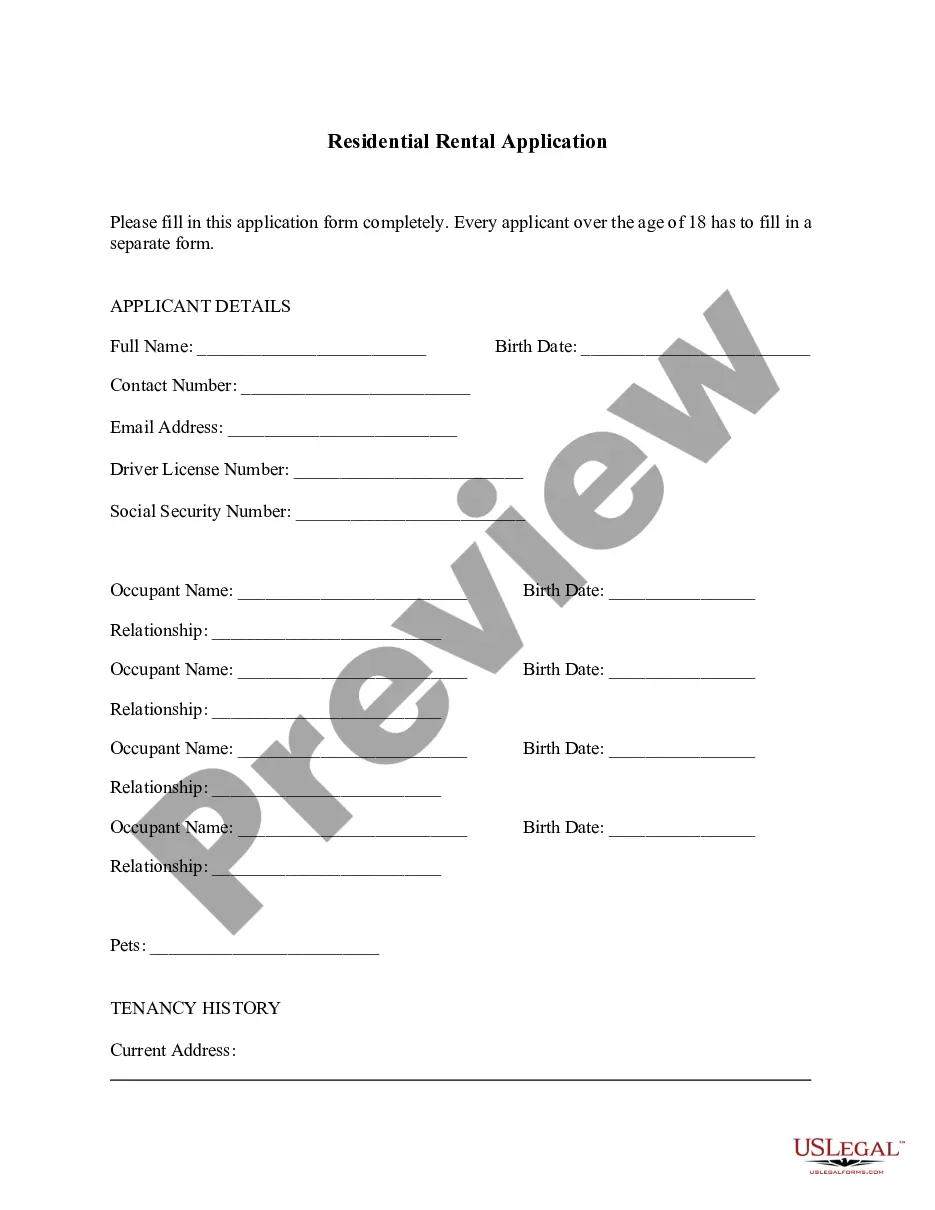
The residential rental lease application is a document that potential tenants complete to apply for a rental property. It serves to provide landlords with the necessary information to evaluate the applicant's suitability, including their background, credit history, and personal details. Unlike similar forms, this application specifically includes disclosures and authorizations for information release, ensuring compliance with legal standards and fair housing practices.
Form components explained
- Tenant's personal and contact information.
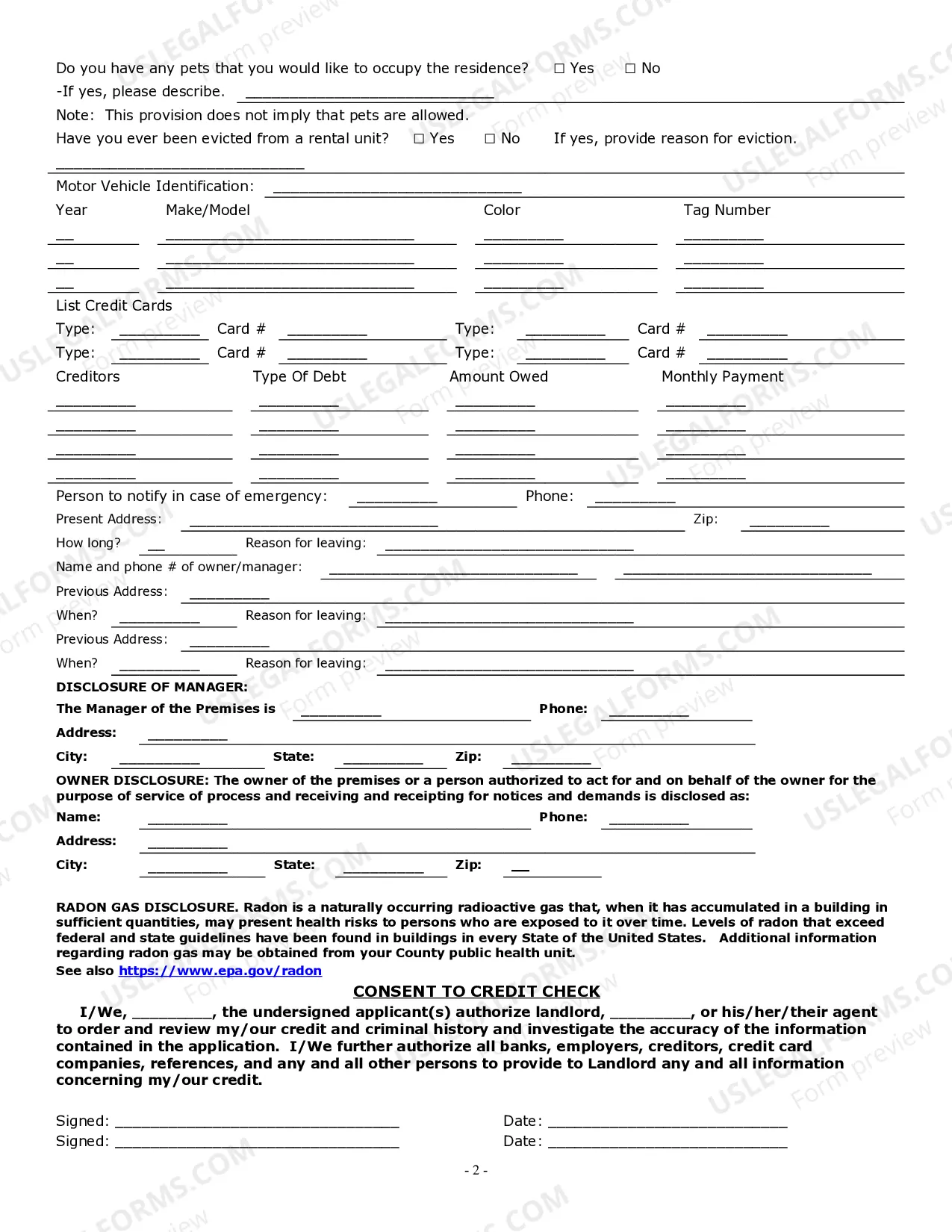
- Authorization for a credit and criminal background check.
- Disclosure of necessary information for the landlord's evaluation.
- Fields for landlord use, including space to note rent amounts and lease details.
- Tenant's signature confirming the accuracy of the information provided.

Common use cases
This form is needed when a tenant intends to rent a residential property and must formally apply to the landlord. It is typically used when a landlord requires prospective tenants to provide detailed background information to ensure they meet the rental criteria before signing a lease agreement.
Who can use this document
- Prospective tenants applying for residential leases.
- Landlords assessing applicants for rental properties.
- Property management companies conducting tenant screenings.
Steps to complete this form
- Identify the parties involved, including tenant's full name and contact information.
- Complete the section for the property you are applying to rent.
- Provide accurate financial and employment information as required.
- Sign the authorization for the landlord to perform a credit and criminal background check.
- Review all entered information for accuracy before submitting to the landlord.
Notarization guidance
Notarization is not commonly needed for this form. However, certain documents or local rules may make it necessary. Our notarization service, powered by Notarize, allows you to finalize it securely online anytime, day or night.
Get your form ready online
Our built-in tools help you complete, sign, share, and store your documents in one place.
Make edits, fill in missing information, and update formatting in US Legal Forms—just like you would in MS Word.
Download a copy, print it, send it by email, or mail it via USPS—whatever works best for your next step.
Sign and collect signatures with our SignNow integration. Send to multiple recipients, set reminders, and more. Go Premium to unlock E-Sign.
If this form requires notarization, complete it online through a secure video call—no need to meet a notary in person or wait for an appointment.
We protect your documents and personal data by following strict security and privacy standards.

Make edits, fill in missing information, and update formatting in US Legal Forms—just like you would in MS Word.

Download a copy, print it, send it by email, or mail it via USPS—whatever works best for your next step.

Sign and collect signatures with our SignNow integration. Send to multiple recipients, set reminders, and more. Go Premium to unlock E-Sign.

If this form requires notarization, complete it online through a secure video call—no need to meet a notary in person or wait for an appointment.

We protect your documents and personal data by following strict security and privacy standards.
Avoid these common issues
- Entering incomplete or inaccurate personal information.
- Not signing the authorization consent for credit checks.
- Failing to provide necessary documentation or references.
Benefits of completing this form online
- Convenience of downloading and completing the form from home.
- Editability allows for corrections and accurate information entry.
- Reliability in using attorney-drafted templates to ensure legal compliance.
Legal use & context
- The application serves as an initial step in the rental process and is not a guarantee of lease approval.
- Landlords must comply with fair housing laws when evaluating applications.
- Applicants should ensure the information provided is truthful, as it can impact their eligibility.
Main things to remember
- The residential rental lease application is essential for applicants seeking to rent a property.
- It includes critical components such as personal information, authorization for checks, and tenant disclosures.
- Ensure accurate and complete information to facilitate the application process successfully.
Looking for another form?


Form popularity
FAQ
The minimum credit score to rent in Florida generally ranges from 500 to 620, depending on the landlord's criteria. While some landlords might consider lower scores, they often require additional proof of income or references. As you prepare your Florida Residential Rental Lease Application, focusing on enhancing your financial profile can increase your rental options.
The application for a rental property in Florida typically includes personal information, rental history, and credit score verification. You will also need to provide identification and proof of income. To streamline this process, consider using platforms like uslegalforms, where you can access customizable templates for your Florida Residential Rental Lease Application. This can help simplify your application process.
In Florida, many landlords prefer tenants with a credit score of 620 or higher, although requirements may vary. Some landlords may accept lower scores if applicants provide a higher security deposit or a co-signer. When preparing your Florida Residential Rental Lease Application, be ready to present additional documentation that demonstrates your reliability, such as proof of income.
The new law for renting in Florida focuses on tenant protections and landlord responsibilities. One significant change includes regulations on tenant eviction processes and lease agreements. Understanding these changes can enhance your experience when filling out the Florida Residential Rental Lease Application. Always stay updated on local laws to ensure compliance during your rental journey.
Getting approved for an apartment with a 500 credit score can be challenging, but it's not impossible. Many landlords look for a credit score of at least 620; however, some may consider factors like rental history and income. It's important to be transparent during the Florida Residential Rental Lease Application process. Being honest about your situation may help you negotiate with potential landlords.
Filling out a residential agreement involves careful attention to detail, especially in a Florida Residential Rental Lease Application. First, read through the entire agreement to understand the terms clearly. Then, methodically enter your information, ensuring all sections are completed, including rental terms, security deposits, and maintenance responsibilities. Using tools offered by US Legal Forms can simplify this process by providing legal guidance and compliant forms.
To make your rental application for a Florida Residential Rental Lease Application stand out, showcase your reliability as a tenant. Provide complete and truthful information, and consider including a personal statement explaining why you would be a great fit for the property. Additionally, offering to provide references from previous landlords can help bolster your application and demonstrate your responsibility.
To fill out a Florida Residential Rental Lease Application, start by gathering all necessary information about yourself and the property. This includes details like your rental history, employment information, and references. Make sure to accurately input all details in the designated fields, and review everything before submitting the application. Utilizing a platform like US Legal Forms can streamline this process by providing templates and guidance.
To rent a house in Florida, you generally need to provide a completed Florida Residential Rental Lease Application, proof of income, and a reliable credit history. Landlords often seek applicants with stable employment and a good rental history. It's essential to understand any specific criteria set by the landlord to streamline the application process and enhance your chances of approval.
The new rental law in Florida introduces significant changes to the Florida Residential Rental Lease Application process. It aims to enhance transparency and protect both landlords and tenants. This law addresses issues such as security deposits, rental agreements, and eviction procedures. Understanding these changes can help you navigate the leasing landscape more effectively.