Florida Quitclaim Deed from Individual to Individual
What is this form?
The Quitclaim Deed from Individual to Individual is a legal document used when one individual (the Grantor) wants to transfer their interest in a property to another individual (the Grantee) without guaranteeing that they own any title. This form differs from other types of deeds, such as warranty deeds, as it does not provide any warranties or guarantees regarding the property title. It is an efficient way to clear up property ownership issues or transfer property between friends or family members when no money exchange occurs.
What’s included in this form
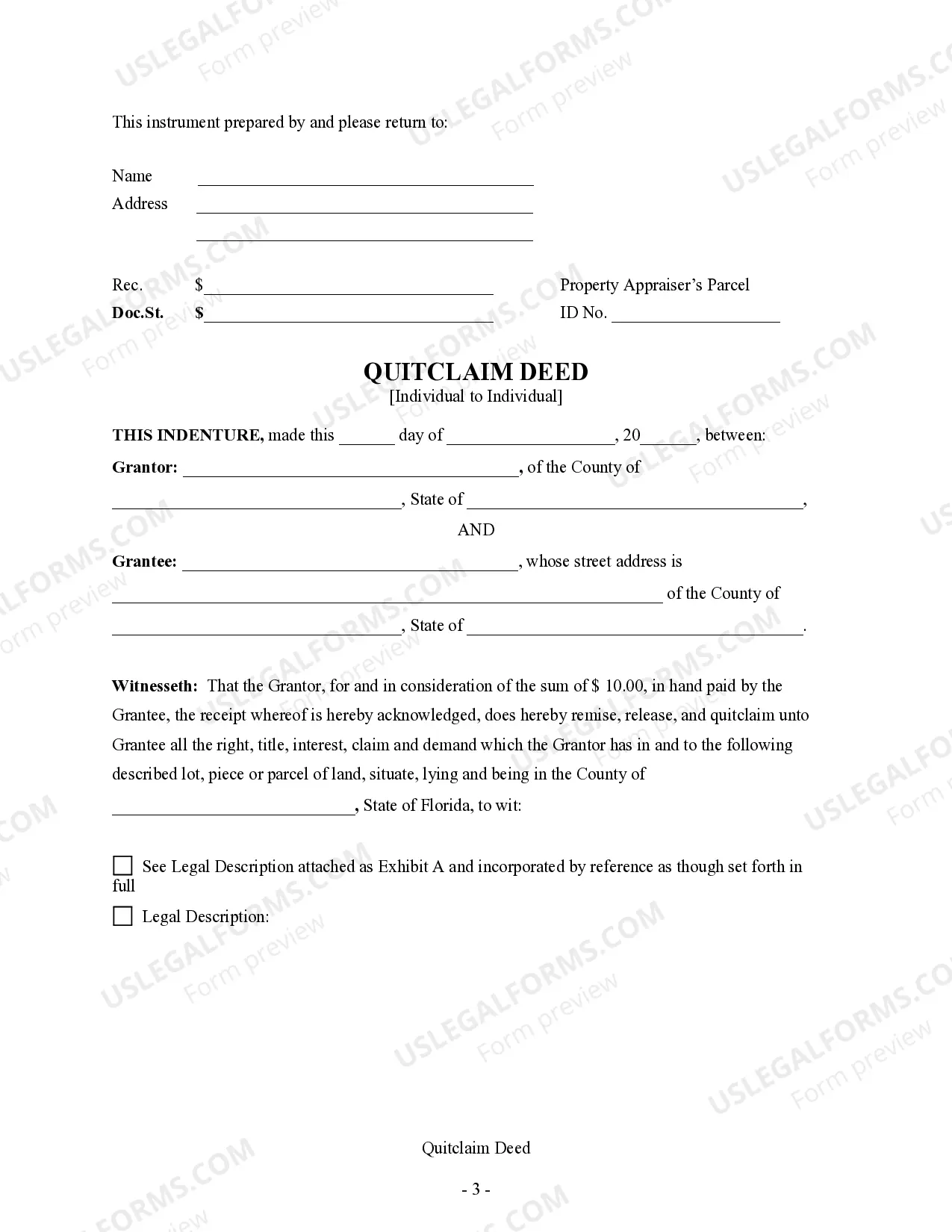
- Identifies the Grantor (current property owner) and Grantee (new property owner).
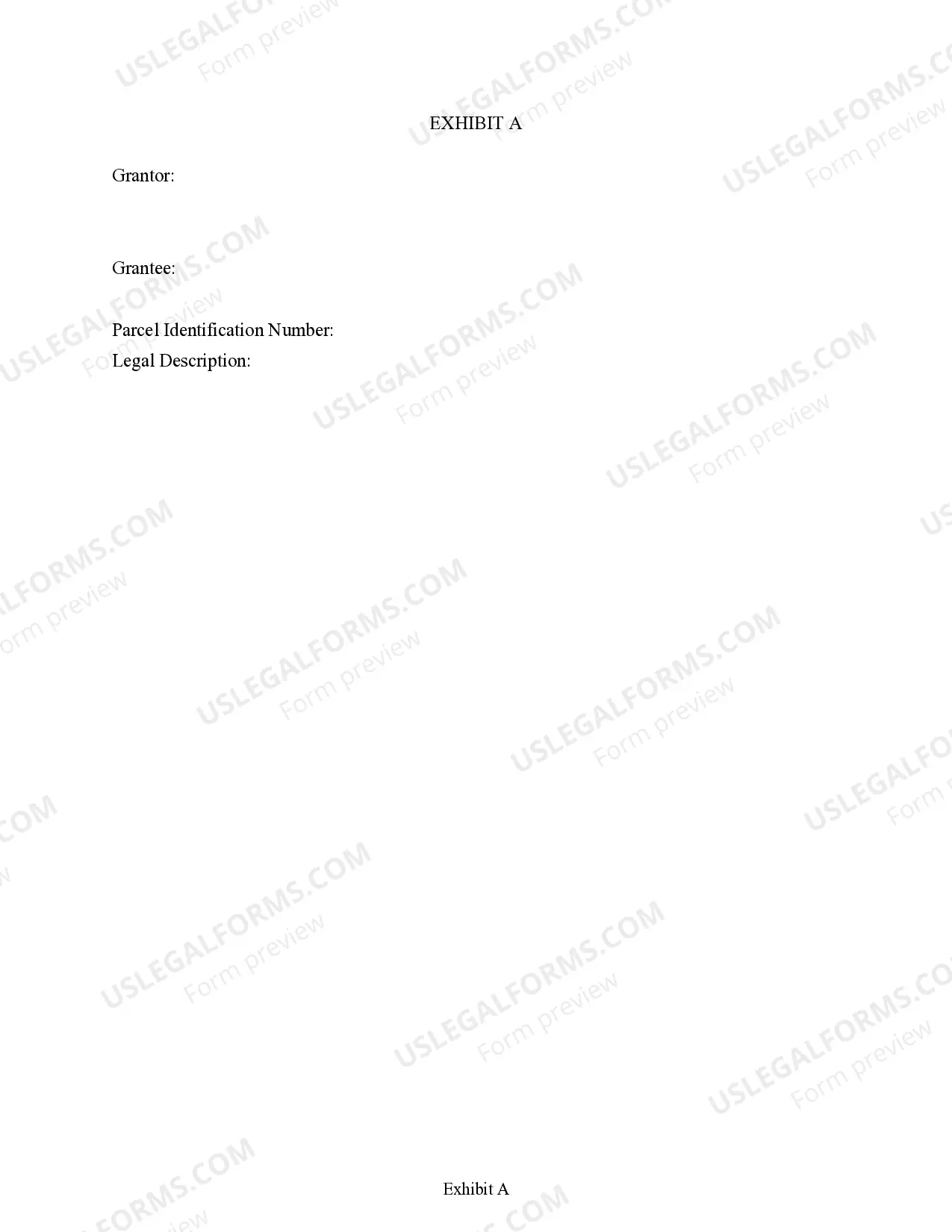
- Describes the property being transferred in detail.
- Includes a statement that specifies the Grantor is conveying their interest in the property.
- Reserves rights to any oil, gas, and minerals under the property, if applicable.
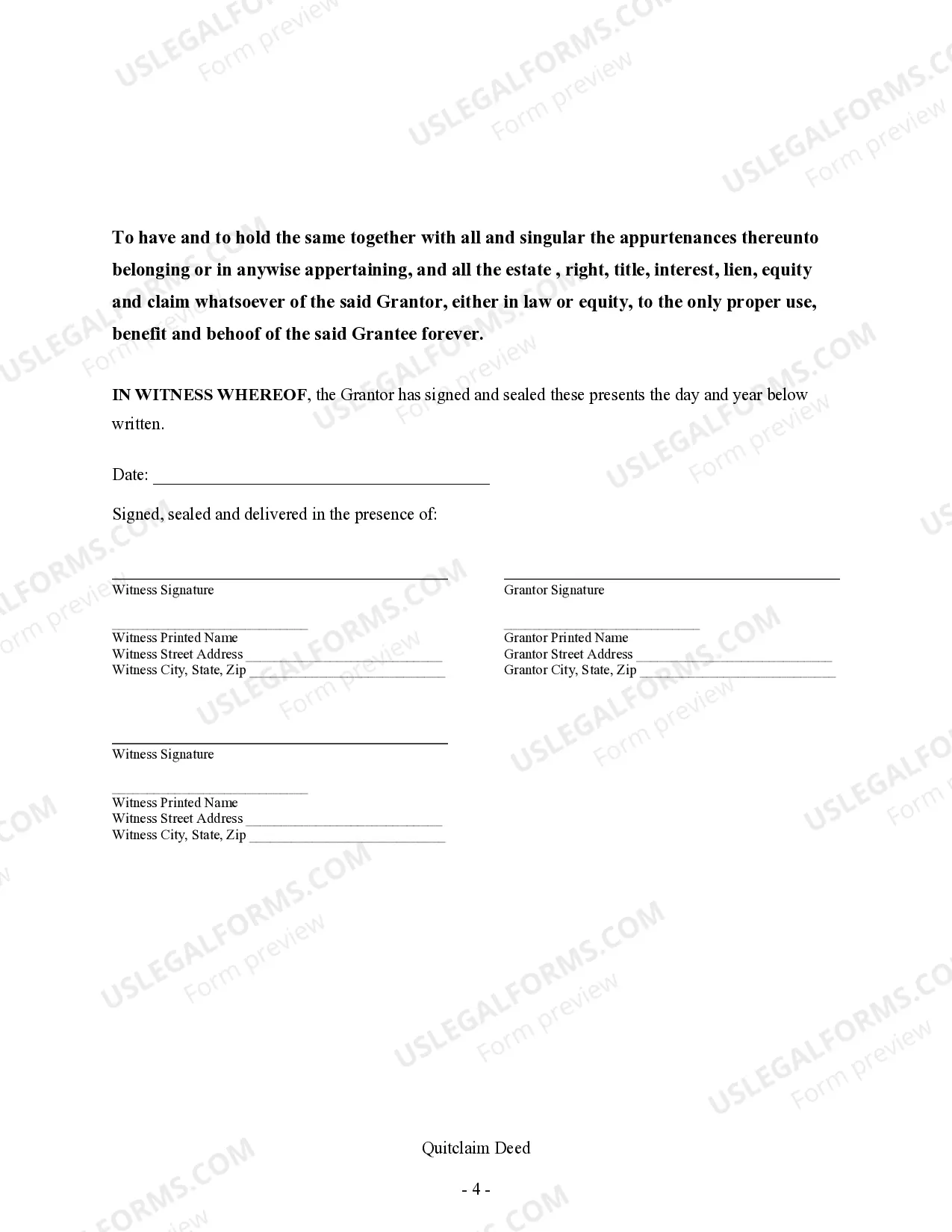
- Provides spaces for dates and signatures for effective documentation.





When to use this form
This Quitclaim Deed should be used when you need to transfer ownership of real estate from one individual to another without any guarantees about the title. Common scenarios include transferring property between family members, clearing up title issues, or when gifting property. It is important to note that this form is suitable for situations where the Grantor does not intend to make any warranties about the property condition or title.
Who needs this form
This form is intended for the following individuals:
- Property owners who wish to transfer their interest to another person.
- Individuals involved in informal property transactions where no money is exchanged.
- Family members wishing to gift property to each other.
- Anyone looking to clear up ownership issues on a property.
How to complete this form
- Identify the Grantor and Grantee by entering their full names and addresses.
- Specify the exact location and description of the property being transferred.
- Include the date of the transaction and provide a signature from the Grantor.
- Ensure that the Grantor reserves any rights to minerals beneath the property if applicable.
- Consult with a local attorney if you have questions about the process or legal implications.
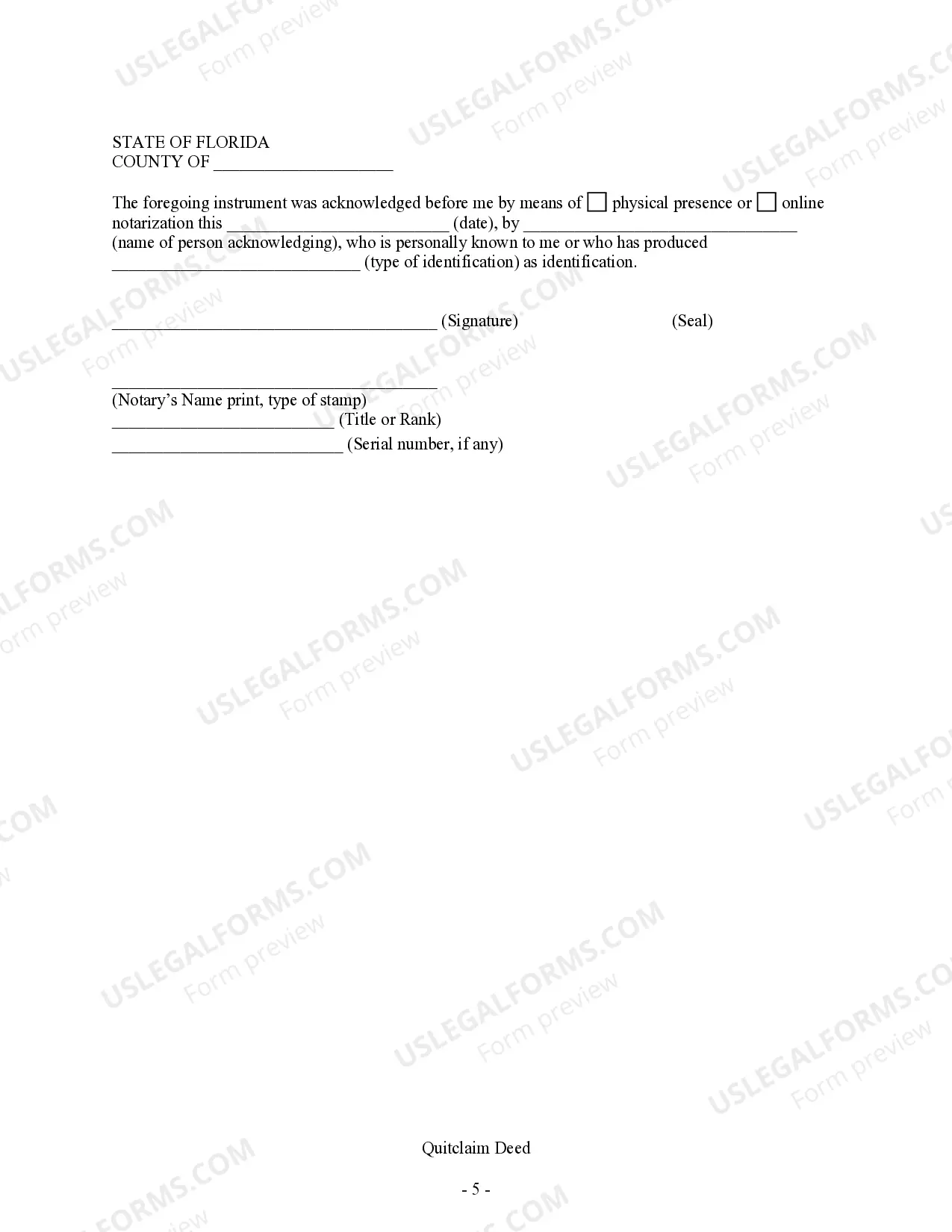
Notarization requirements for this form
This form may require notarization, depending on state-specific laws regarding property transfers. It is advisable to check local regulations to ensure compliance. U.S. Legal Forms offers integrated online notarization, providing 24/7 availability and a secure video call option to assist you easily.
Get your form ready online
Our built-in tools help you complete, sign, share, and store your documents in one place.
Make edits, fill in missing information, and update formatting in US Legal Forms—just like you would in MS Word.
Download a copy, print it, send it by email, or mail it via USPS—whatever works best for your next step.
Sign and collect signatures with our SignNow integration. Send to multiple recipients, set reminders, and more. Go Premium to unlock E-Sign.
If this form requires notarization, complete it online through a secure video call—no need to meet a notary in person or wait for an appointment.
We protect your documents and personal data by following strict security and privacy standards.

Make edits, fill in missing information, and update formatting in US Legal Forms—just like you would in MS Word.

Download a copy, print it, send it by email, or mail it via USPS—whatever works best for your next step.

Sign and collect signatures with our SignNow integration. Send to multiple recipients, set reminders, and more. Go Premium to unlock E-Sign.

If this form requires notarization, complete it online through a secure video call—no need to meet a notary in person or wait for an appointment.

We protect your documents and personal data by following strict security and privacy standards.
Avoid these common issues
- Failing to accurately describe the property can lead to disputes.
- Ignoring to provide the correct signatures or not having them notarized if required.
- Omitting granter rights to minerals when applicable.
- Using outdated forms or not checking for state-specific requirements.
Why complete this form online
- Easy access to a legally compliant form tailored for your needs.
- Ability to edit the document electronically before printing.
- Quick download saves time compared to traditional legal processes.
- Affordable alternative to hiring an attorney for simple property transfers.
Summary of main points
- The Quitclaim Deed is a simple means of transferring property ownership between individuals.
- It's crucial to include accurate information, particularly the legal description of the property and any reservations.
- This form is especially useful for quick and informal property transfers.
Looking for another form?



Form popularity
FAQ
Yes, you can create your own quitclaim deed in Florida, effectively completing a Florida Quitclaim Deed from Individual to Individual. You'll need to gather the necessary information and ensure that all required fields are filled out correctly. However, it is always a good idea to consider using resources like USLegalForms to guide you through the process and ensure compliance with legal standards.
To remove someone from a deed in Florida, you can use a Florida Quitclaim Deed from Individual to Individual. This process often involves the person being removed signing the deed, which confirms their voluntary relinquishment of ownership. After preparing and notarizing the deed, file it with the county clerk's office to make the changes official.
While it is not required to have a lawyer for a Florida Quitclaim Deed from Individual to Individual, having legal assistance may be beneficial. A lawyer can provide guidance on the process and help ensure that your rights are protected. If you are unsure about how to proceed or have concerns, consulting with an attorney is a wise option.
To transfer property in Florida, you will typically use a Florida Quitclaim Deed from Individual to Individual. First, you must complete the deed form accurately, including all necessary information about both parties and the property. After signing the deed in front of a notary, you should file the deed with the local county clerk's office to make the transfer official.
You do not need an attorney for a Florida Quitclaim Deed from Individual to Individual, but having one can simplify the process. An attorney can ensure all legal requirements are met and can help avoid potential mistakes. If you choose to proceed without legal help, be sure to follow state guidelines closely to ensure your deed is valid.
A Florida Quitclaim Deed from Individual to Individual grants the grantee ownership of the property immediately upon proper execution and recording. Once the deed is filed with the county, the transfer is official and recognized by law. However, actual ownership can be challenged if there are existing claims or disputes regarding the property's title. Therefore, it might be beneficial to conduct a title search and consultation before finalizing the transfer.
In Florida, a Quitclaim Deed must comply with specific legal requirements to be valid. The document must identify both the grantor and grantee, include a legal description of the property, and must be signed by the grantor in front of a notary public. It is also essential to record the quitclaim deed with the county clerk to ensure it is enforceable against third parties. Utilizing platforms like US Legal Forms can simplify this process by providing accurate templates and guidance.
While a Florida Quitclaim Deed from Individual to Individual is straightforward, it carries risks mainly due to the lack of warranties. If the title is flawed or there are existing liens, the grantee could face unforeseen complications. Unlike warranty deeds, quitclaim deeds do not provide protection against future claims, making it critical to perform thorough title research before proceeding. Therefore, understanding these potential drawbacks is key to making an informed decision.
A Florida Quitclaim Deed from Individual to Individual transfers property ownership without guaranteeing the title's quality. Essentially, the person transferring the property, known as the grantor, conveys whatever interest they may have in the property to the recipient, called the grantee. This deed is often used between family members or acquaintances when trust exists. However, it is essential to ensure the property has a clear title before making this transfer.
Removing one person from a deed in Florida typically requires executing a quitclaim deed from individual to individual. Both parties should agree on the transfer and complete the necessary documentation. After the new quitclaim deed is signed and notarized, file it with your county’s Clerk of Court to finalize the removal and ensure proper record-keeping.