Negociación y Redacción de Arrendamientos de Oficinas
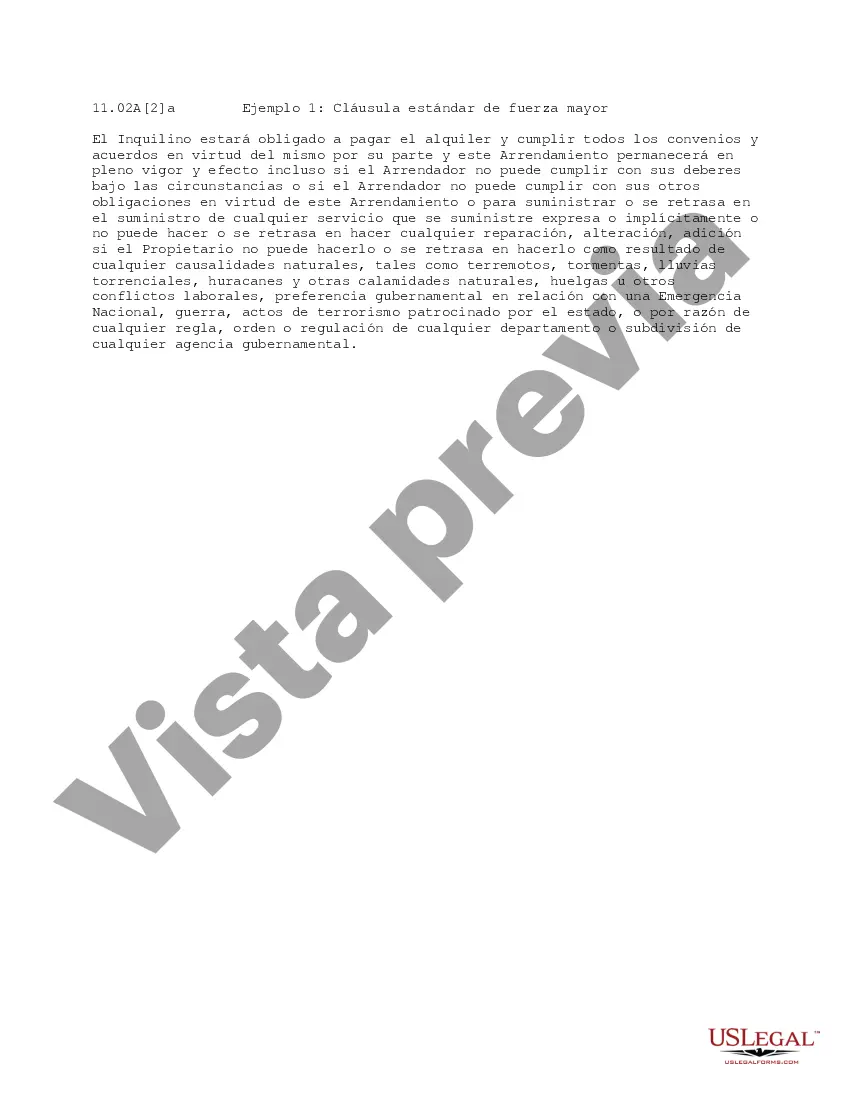
Para su conveniencia, debajo del texto en español le brindamos la versión completa de este formulario en inglés.
For your convenience, the complete English version of this form is attached below the Spanish version.
Many contracts will specify a timeframe to notify the other party; if that’s the case, be sure to stick to it. If not, it's wise to act as soon as possible to avoid complications.
It might, but not always! Most of the time, it just allows for a pause in obligations, but some contracts may allow for complete termination depending on the circumstances.
First off, check your contract to see how to properly notify the other party. It's usually a good idea to communicate quickly and clearly about the situation.
It really depends on what’s outlined in your contract. If the event fits the definition outlined in that clause and was truly beyond your control, then it likely qualifies.
While not mandatory, it's often a smart move to include it. It helps protect both parties by clearly stating what happens if the unexpected pops up.
Sure thing! Events like hurricanes, earthquakes, floods, or even things like war and strikes can trigger this clause, depending on what's written in the contract.
A force majeure clause is a part of a contract that excuses a party from fulfilling their obligations when extraordinary events happen that are beyond their control, like natural disasters or major disruptions.
Trusted and secure by over 3 million people of the world’s leading companies