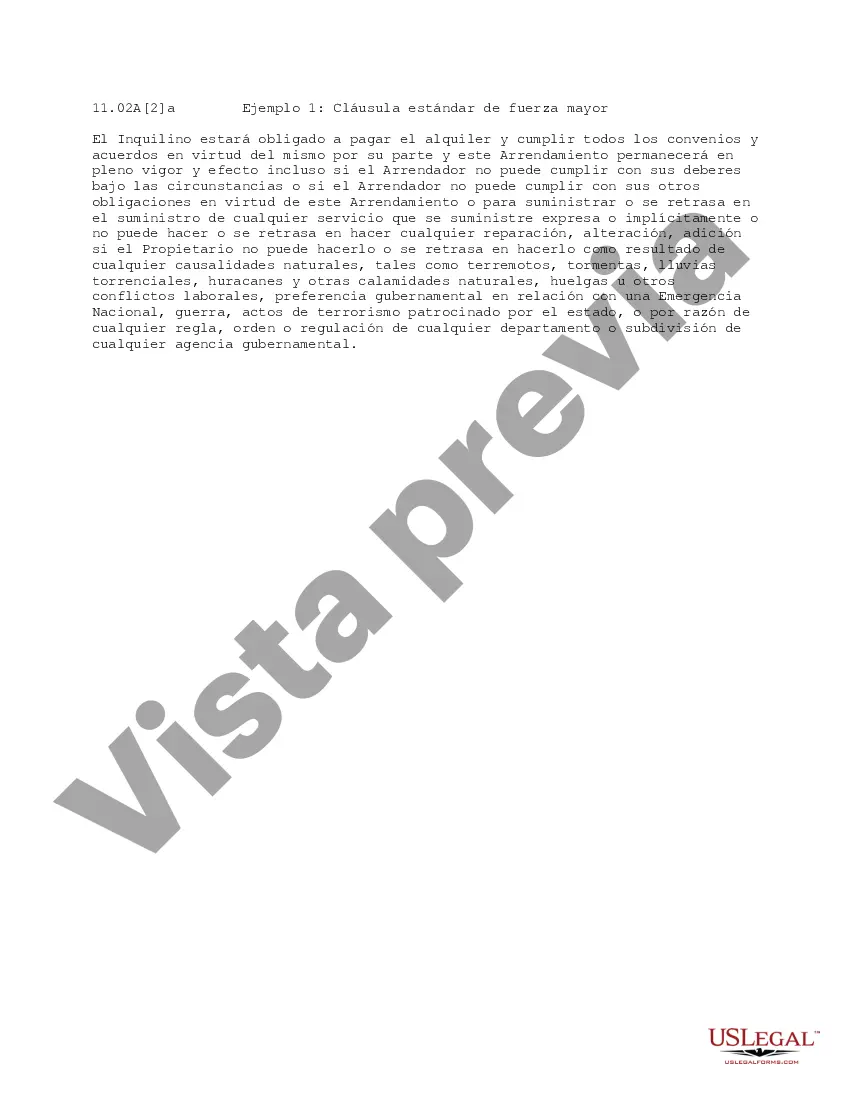
Negociación y Redacción de Arrendamientos de Oficinas
Para su conveniencia, debajo del texto en español le brindamos la versión completa de este formulario en inglés.
For your convenience, the complete English version of this form is attached below the Spanish version.
If it’s dragging on, it’s a good idea to have a chat with the other party to revisit the terms and see if adjustments are needed to get things back on track.
It’s smart to spell things out clearly in your clause—name specific events and outline how to handle them. This way, everyone knows what to expect when the unexpected hits.
Generally, no! If a valid force majeure event pops up, it keeps you off the hook for the hiccup, so long as you followed the contract guidelines.
When a force majeure event hits, the affected party notifies the other side, and they usually get some time to regroup without being penalized for not meeting contract terms.
Having a force majeure clause is like carrying an umbrella on a cloudy day; it’s better to be prepared just in case things go sideways.
We're talking about big stuff here, like natural disasters, wars, or pandemics—anything that’s beyond anyone’s control and makes it impossible to carry on as usual.
A force majeure clause is like a safety net in contracts. It helps to protect parties from unforeseen events that could stop them from fulfilling their obligations.
Trusted and secure by over 3 million people of the world’s leading companies