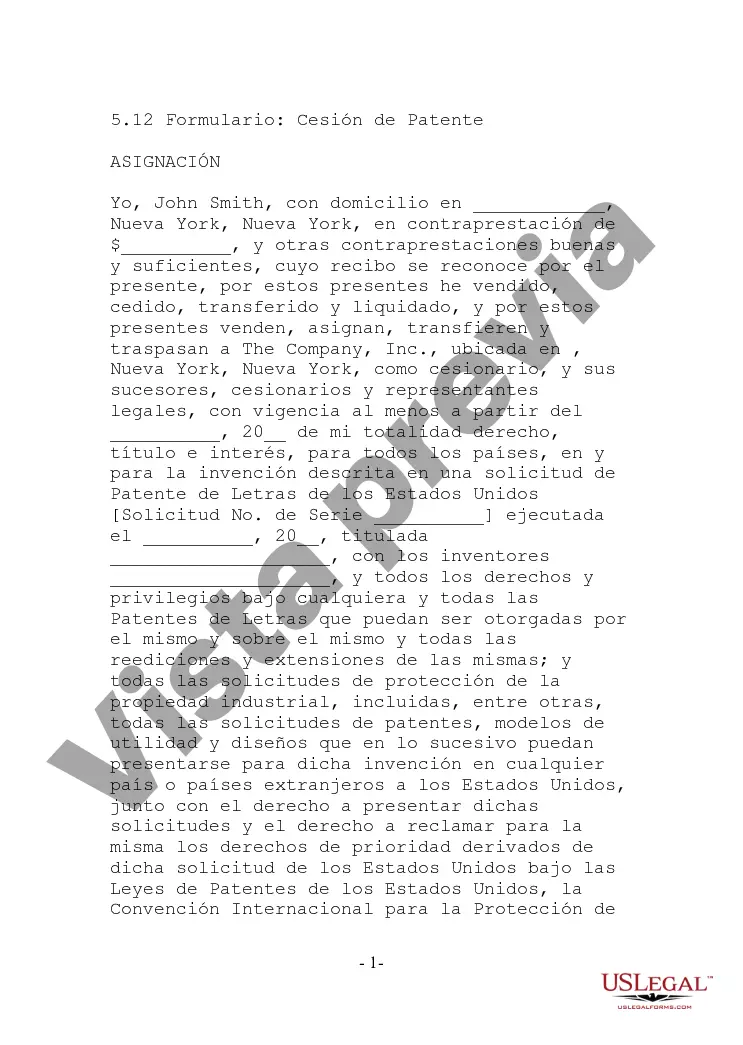
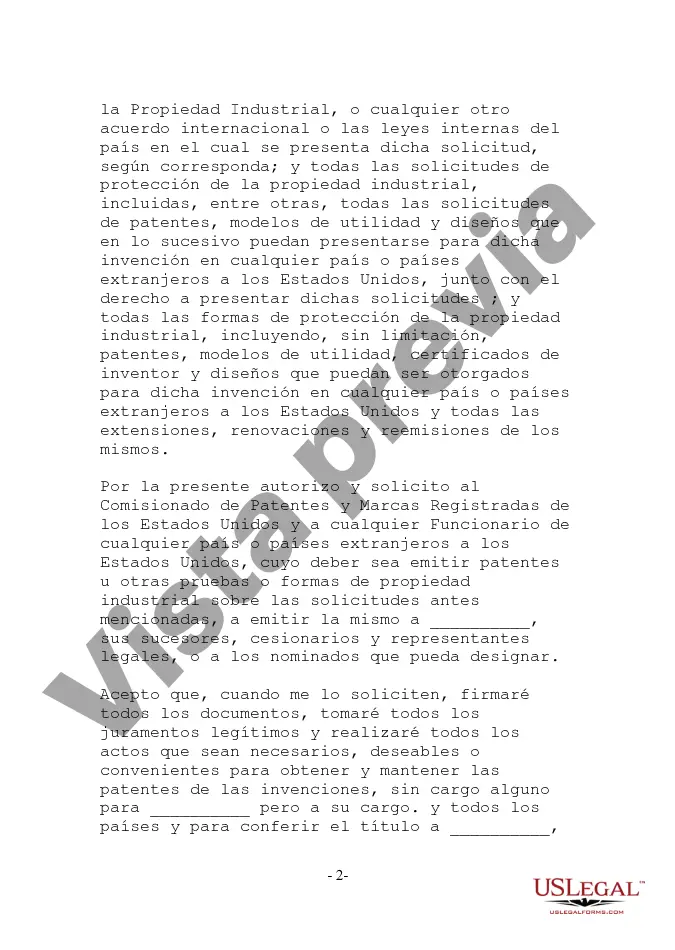
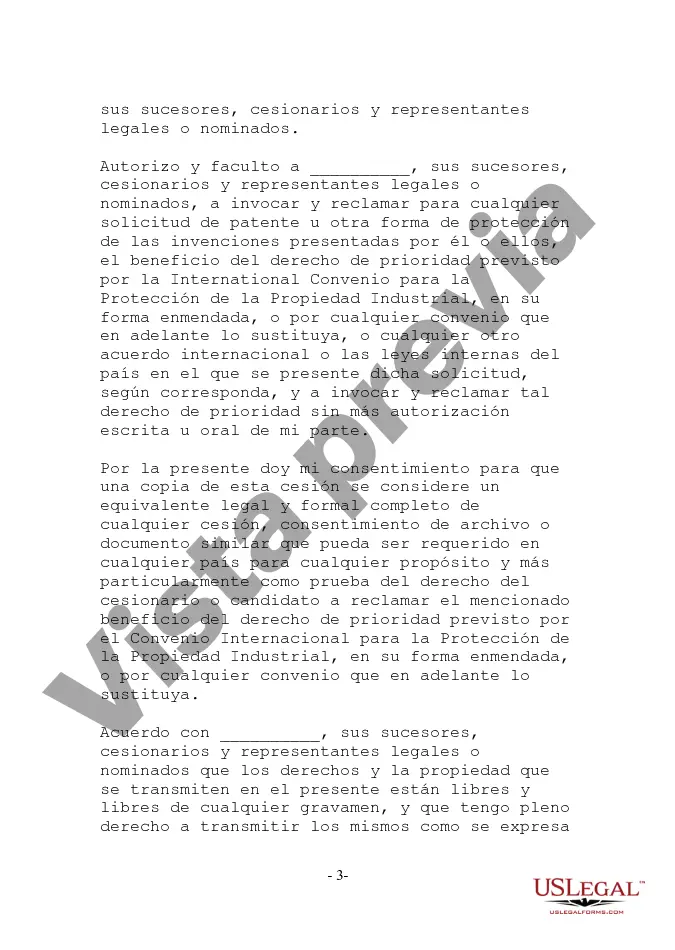
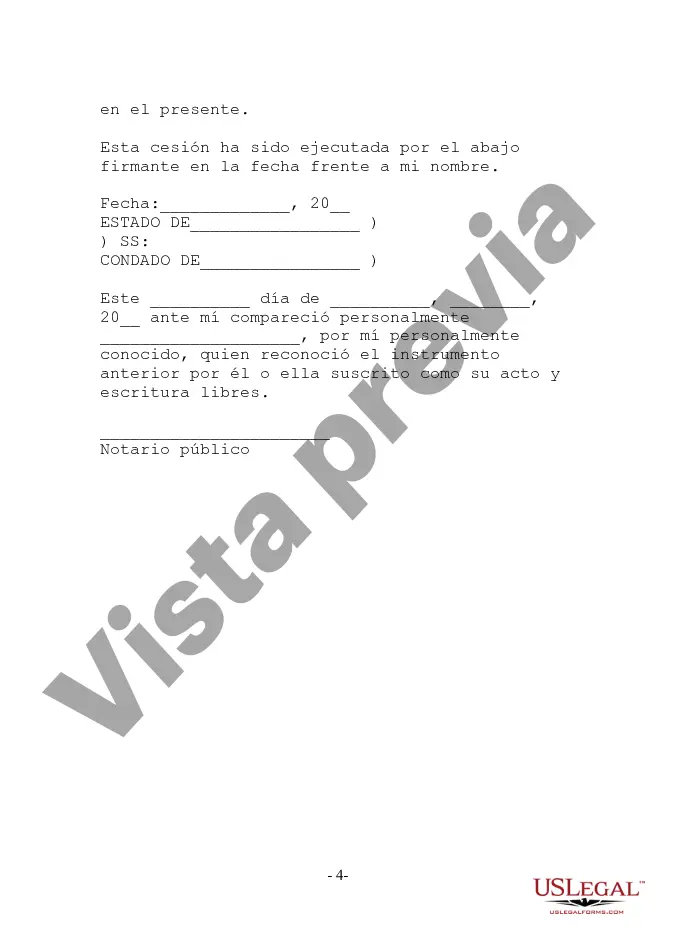
Formularios de acuerdo de licencia de Internet
Para su conveniencia, debajo del texto en español le brindamos la versión completa de este formulario en inglés.
For your convenience, the complete English version of this form is attached below the Spanish version.
Once you've assigned your patent, it's generally a done deal. Unless your agreement states otherwise, you can't just change your mind and reclaim ownership like trading back a gift.
Once the assignment is complete, the assignee gains all rights associated with that patent. They can make, use, sell, or license the invention as if they were the original inventor.
You can't assign a patent that hasn’t been granted yet. However, you can assign the rights to a pending patent application; it’s like saying you’re selling the rights to a future treasure.
To record a patent assignment, you need to file the assignment document with the United States Patent and Trademark Office (USPTO). This puts everyone on notice that the ownership has changed, kind of like updating a property deed.
Yes, it’s a good practice to have a written assignment agreement. While verbal agreements might work in other situations, when it comes to patents, it’s best to have everything in black and white.
Generally, the patent holder, known as the assignor, can transfer ownership. If you've come up with a great idea and have the patent, it's yours to assign when the time is right.
Patent assignment is the process of transferring ownership of a patent from one person or entity to another. Think of it like passing the baton in a race – you’re handing over the rights to that invention.
Trusted and secure by over 3 million people of the world’s leading companies