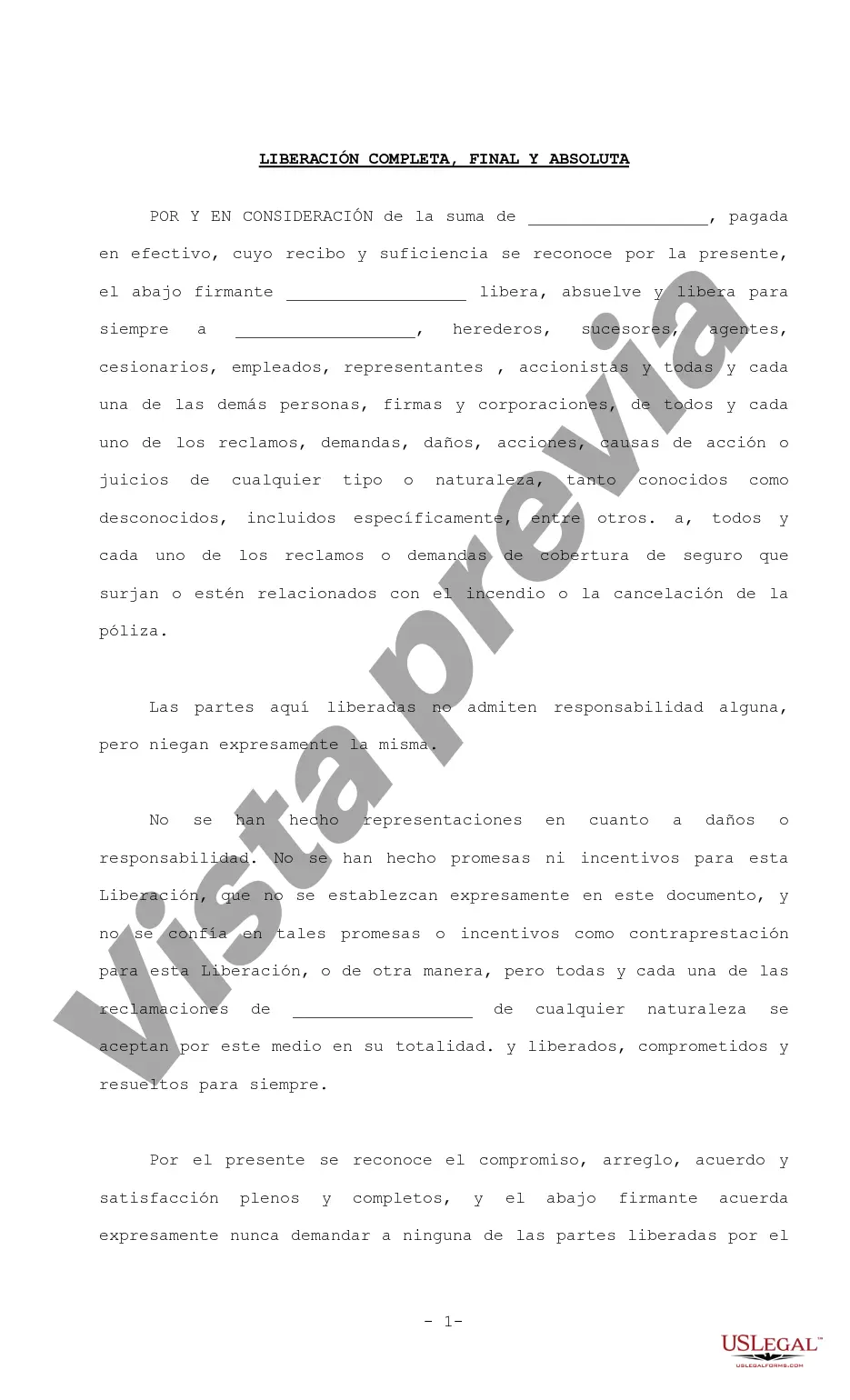
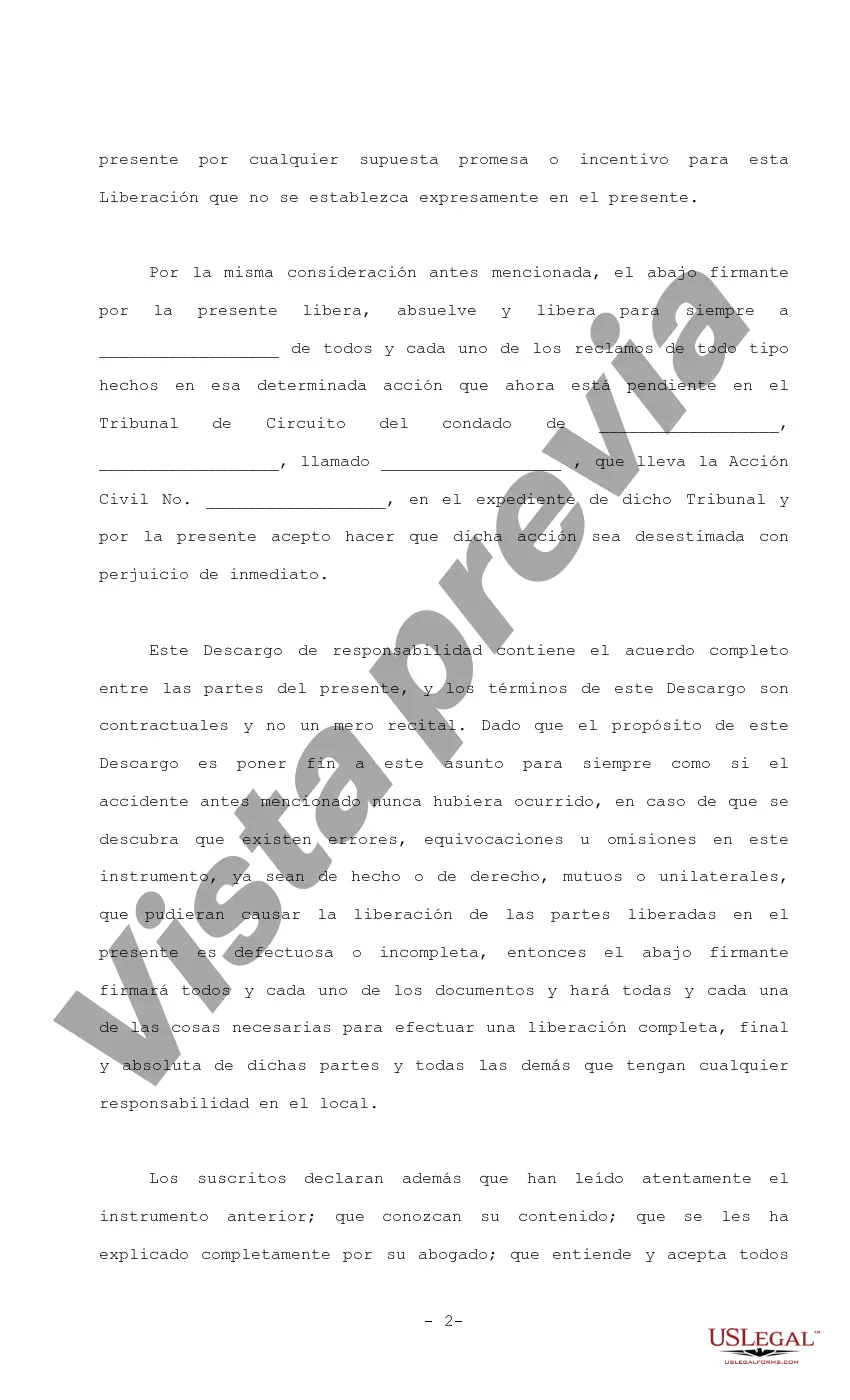
This form is a full, final and absolute release. The releasor acquits and discharges the releasee from any and all claims arising out of a fire and the cancellation of an insurance policy. The releasee does not admit any liability, but expressly denies the same. Also, no representations as to damages or liability have been made.
Para su conveniencia, debajo del texto en español le brindamos la versión completa de este formulario en inglés.
For your convenience, the complete English version of this form is attached below the Spanish version.
If you don’t sign, the other party may not finalize the agreement, leaving the door open for more claims. Sometimes it’s best to tie up loose ends and keep that door shut.
It’s not required, but having a lawyer can help ensure everything is clear, fair, and done correctly. It’s always handy to have a professional in your corner.
While they’re similar, a release specifically deals with final settlements, while a waiver might apply to giving up future rights. Think of it as two different tools in the same toolbox.
Nope, once you sign it, you’re generally locked in. It’s like making a deal with a handshake—once it’s done, it’s done.
It protects you by preventing the other party from coming back to haunt you with new claims. It's like wearing a raincoat to avoid getting soaked when it pours.
You’d typically use it when you’ve settled a legal matter, like a personal injury case. Think of it as putting a final period at the end of a sentence.
It's a legal document that essentially says you’ve settled everything and can’t come back for more claims. It's like closing the door behind you after you leave a room.
Trusted and secure by over 3 million people of the world’s leading companies
Minneapolis Minnesota Liberación completa, final y absoluta