Sample Letter conveying Crossclaim and Answer
Understanding this form
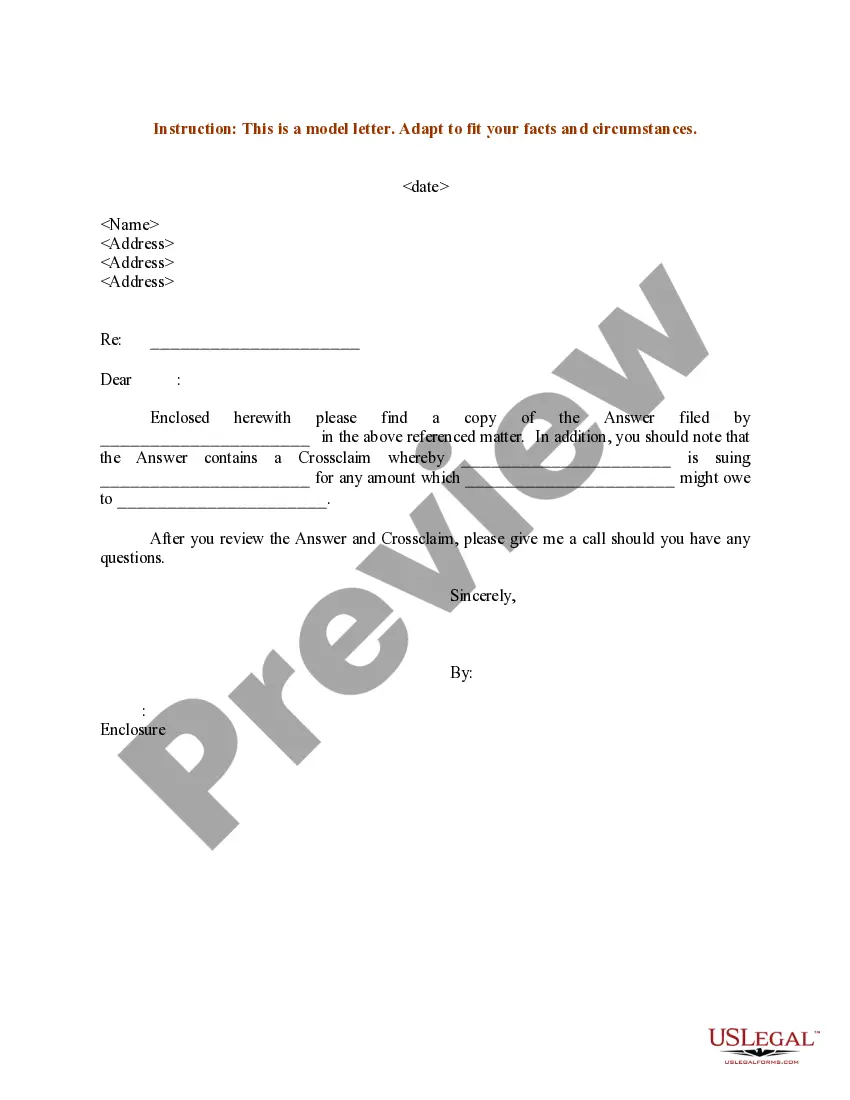
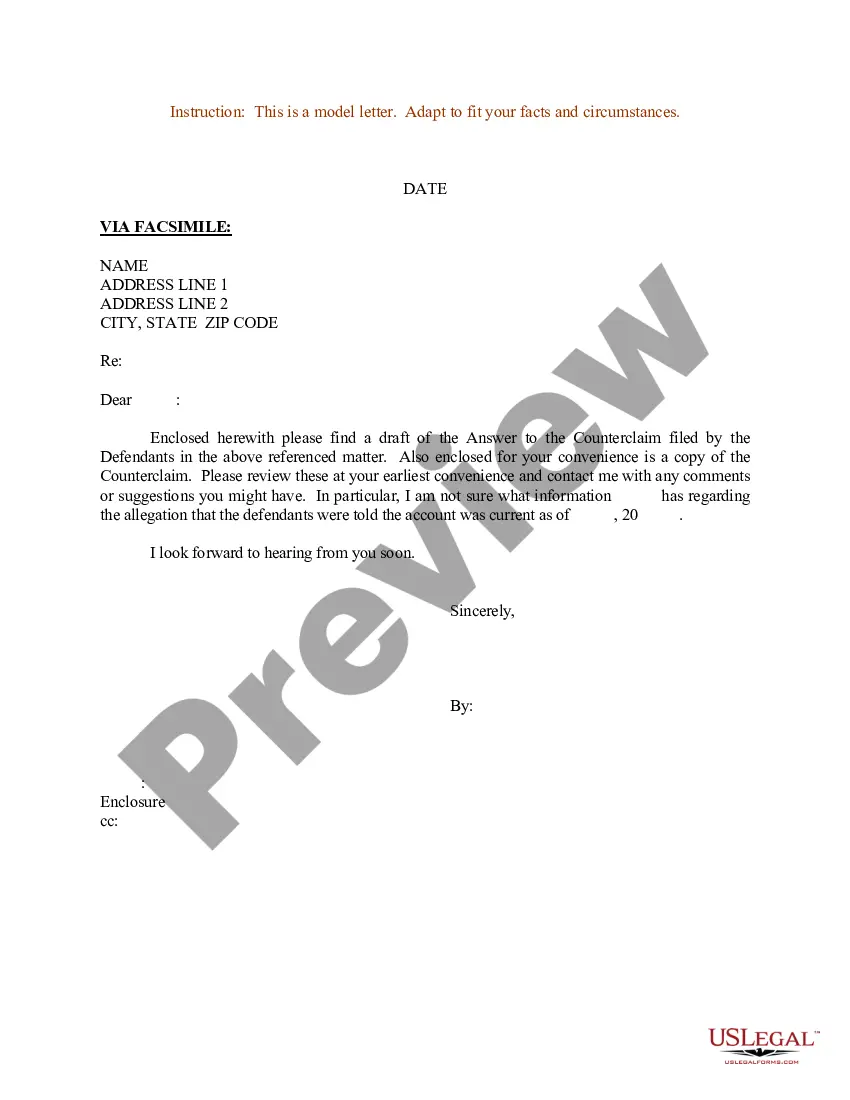
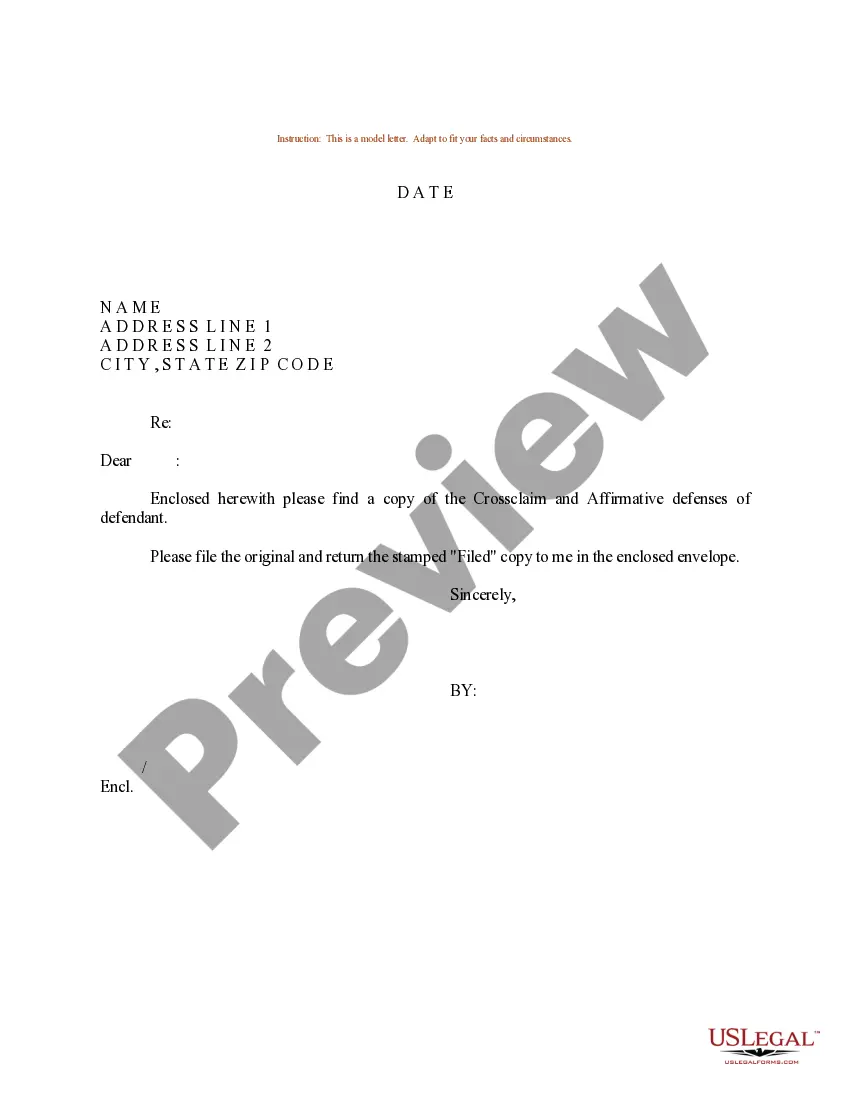
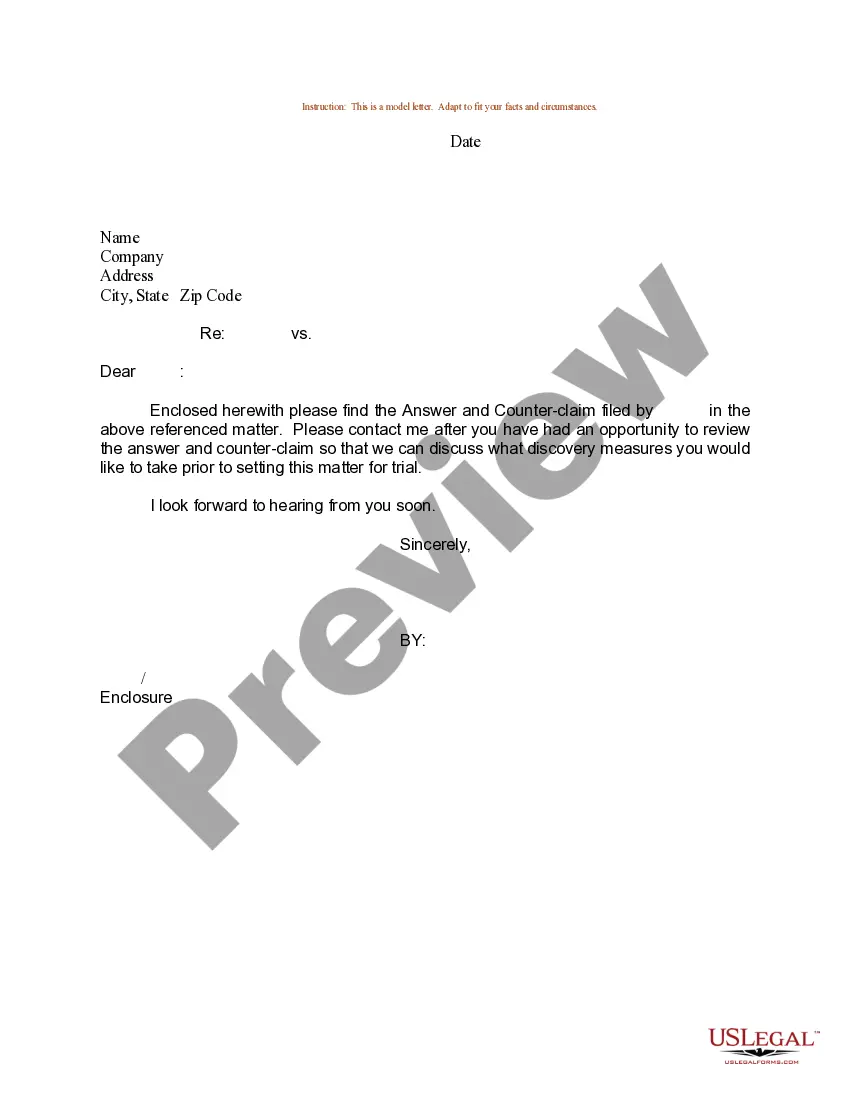
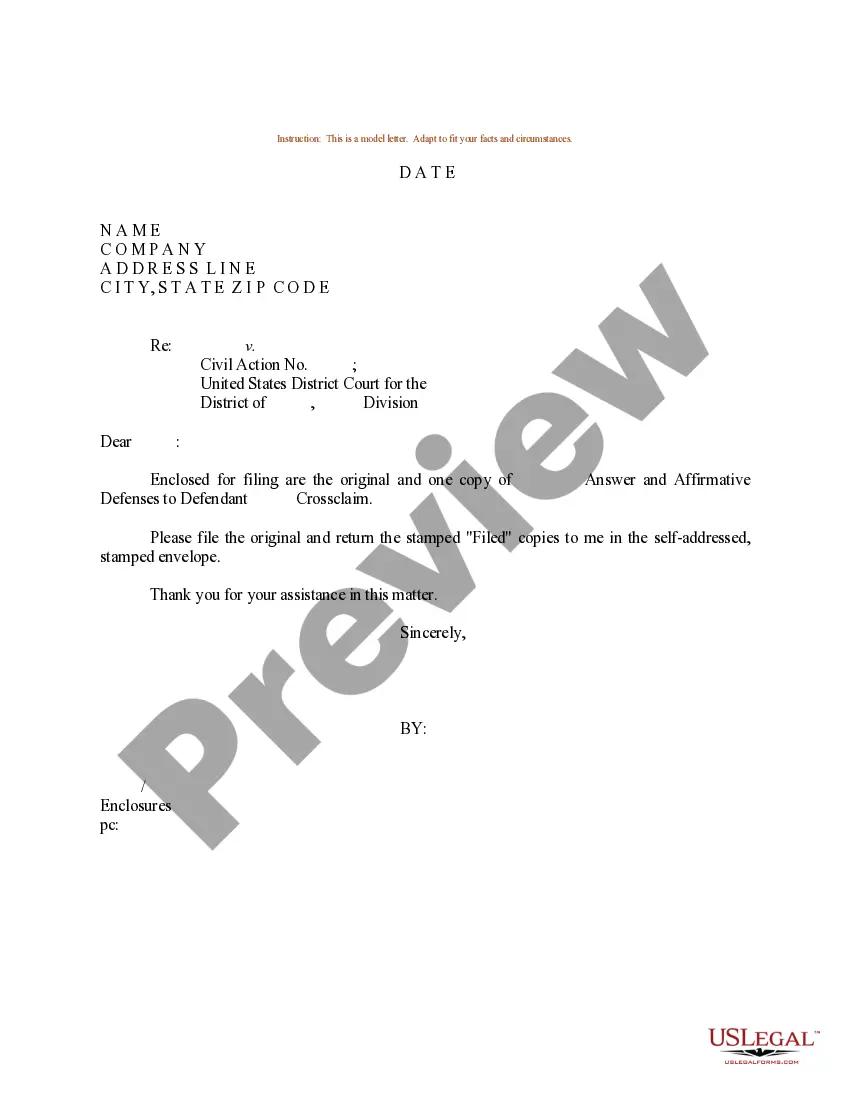
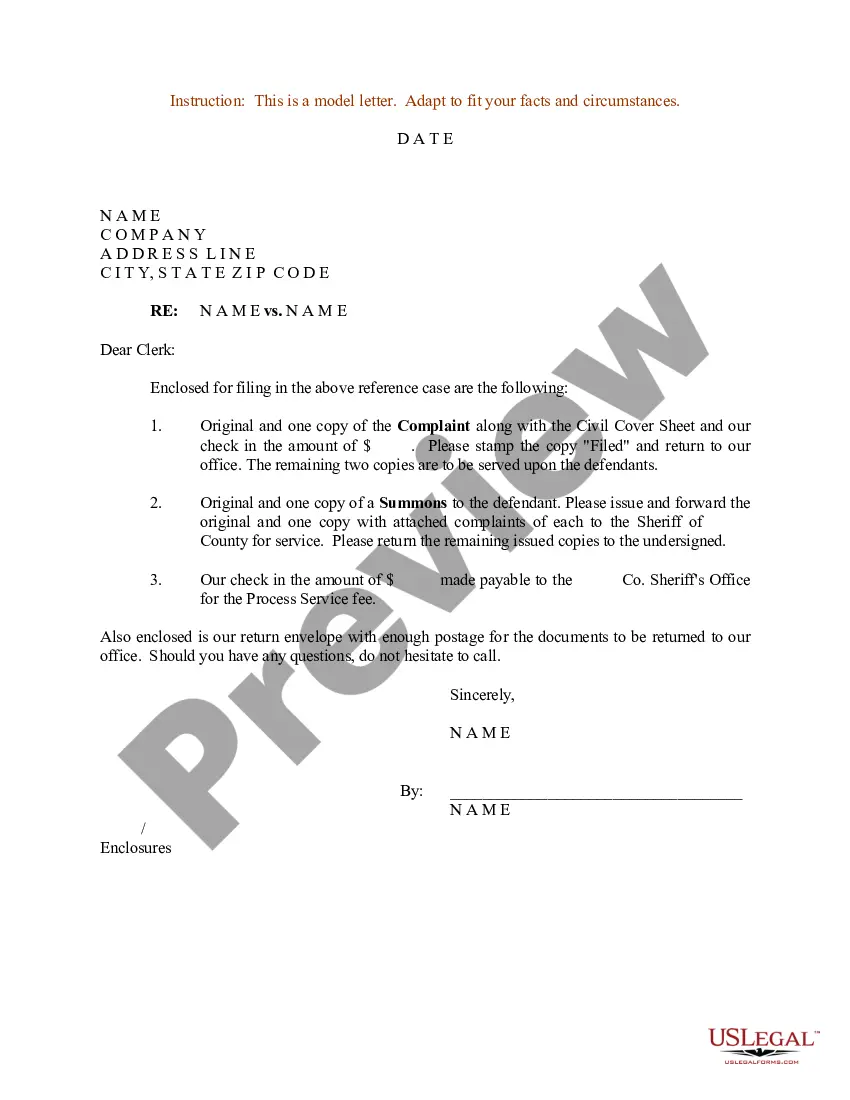
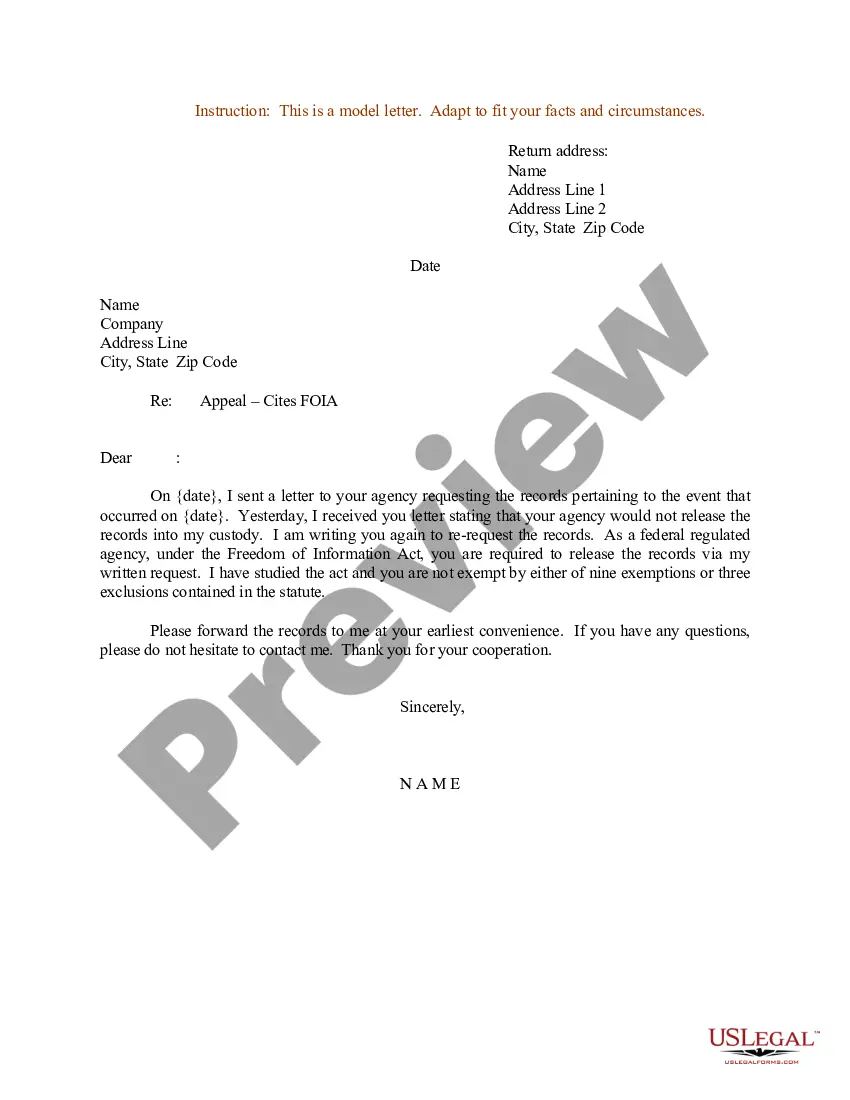
The Sample Letter conveying Crossclaim and Answer is a model letter designed to provide a framework for individuals to present a crossclaim and answer in legal proceedings. This letter differs from other legal forms by not only outlining the responses and claims being made within a lawsuit but also by serving as a communication tool to the other party and the court. It can help streamline the legal process and clarify the positions of the parties involved.
Key parts of this document
- Date: When the letter is created.
- Name: The name of the party sending the letter.
- Address fields: The complete address of the sender and recipient.
- Subject line: Indicates the purpose of the letter.
- Content: Details of the crossclaim and response to the original claim.
When to use this form
This form is ideal for situations where a defendant in a lawsuit wishes to assert a crossclaim against another party involved in the case. It can be used when responding to a complaint, allowing the defendant to not only address the original claim but also to bring up any related claims that may be relevant to the case.
Who this form is for
- Defendants in legal actions who want to file a crossclaim.
- Individuals or parties accused in a lawsuit looking to assert additional claims.
- Legal representatives drafting responses for clients.
How to complete this form
- Identify the parties involved in the legal matter and provide their names and addresses.
- Enter the date at the top of the letter to indicate when it was created.
- Provide a clear subject line that reflects the purpose of the letter.
- Detail your crossclaim and any responses to the original claim in the body of the letter.
- Review the letter for accuracy before sending it to the opposing party and the court.
Notarization guidance
This form does not typically require notarization unless specified by local law. However, it is always best to check local requirements to ensure compliance with jurisdictional regulations.
Get your form ready online
Our built-in tools help you complete, sign, share, and store your documents in one place.
Make edits, fill in missing information, and update formatting in US Legal Forms—just like you would in MS Word.
Download a copy, print it, send it by email, or mail it via USPS—whatever works best for your next step.
Sign and collect signatures with our SignNow integration. Send to multiple recipients, set reminders, and more. Go Premium to unlock E-Sign.
If this form requires notarization, complete it online through a secure video call—no need to meet a notary in person or wait for an appointment.
We protect your documents and personal data by following strict security and privacy standards.

Make edits, fill in missing information, and update formatting in US Legal Forms—just like you would in MS Word.

Download a copy, print it, send it by email, or mail it via USPS—whatever works best for your next step.

Sign and collect signatures with our SignNow integration. Send to multiple recipients, set reminders, and more. Go Premium to unlock E-Sign.

If this form requires notarization, complete it online through a secure video call—no need to meet a notary in person or wait for an appointment.

We protect your documents and personal data by following strict security and privacy standards.
Avoid these common issues
- Failing to include all parties' names and addresses accurately.
- Not adhering to the required legal format for the jurisdiction.
- Leaving out important details or arguments that support the crossclaim.
- Not signing or dating the letter before submission.
Benefits of completing this form online
- Convenience of downloading and editing the form at your own pace.
- Access to templates that are drafted by licensed attorneys, ensuring legal validity.
- Ability to customize the document to fit your specific situation and jurisdiction.
Legal use & context
- A crossclaim must be relevant to the original claim and within the same court proceedings.
- The letter serves as a formal communication and may face specific procedural requirements based on state laws.
- Ensure that all claims made in the letter comply with local rules for admissibility in court.
Looking for another form?
Form popularity
FAQ
Answer the person's inquiry as directly as you can. Address each question or concern from the person's original letter as completely as you can. Make sure you've hit every point so the person is satisfied with your response. State what the original letter inquired about, and then answer the question.
When writing the response, you can refer to the query date and then acknowledging your misconduct. Go straight to the point. Do not add unnecessary information to the query response and also assure whoever you are responding to that you will not repeat that conduct again.
Give precise details of the situation or circumstances. Describe the facts that resulted in the current situation. Be truthful so that you may not find yourself in a difficult position. Provide supporting documents if they are available. Describe what you will do to make the correction.
Be polite and formal in the tone of the letter. Mention the previous letter you received. Give a brief yet concise response to the claim letter sent to you. End on a positive and courteous tone.
Answer all points raised. Enumerate the pertinent allegations that you were accused of and rebut every single one. Explain it clearly. Recount what transpired. Include specifics like the date the NTE was issued and when the infraction was committed etc. A clear conscience alone will not suffice, werk it2026
You might start with Thank you for your patience and cooperation or Thank you for your consideration and then follow up with, If you have any questions or concerns, don't hesitate to let me know and I look forward to hearing from you.
Before you respond, compose yourself. A warming letter is just a sign that you need to correct some mistakes you are doing. Don't be defensive. Ms. Respond in writing. Keep it private and be respectful. Work on fixing your mistakes. Start looking for a new job.
Give precise details of the situation or circumstances. Describe the facts that resulted in the current situation. Be truthful so that you may not find yourself in a difficult position. Provide supporting documents if they are available. Describe what you will do to make the correction.