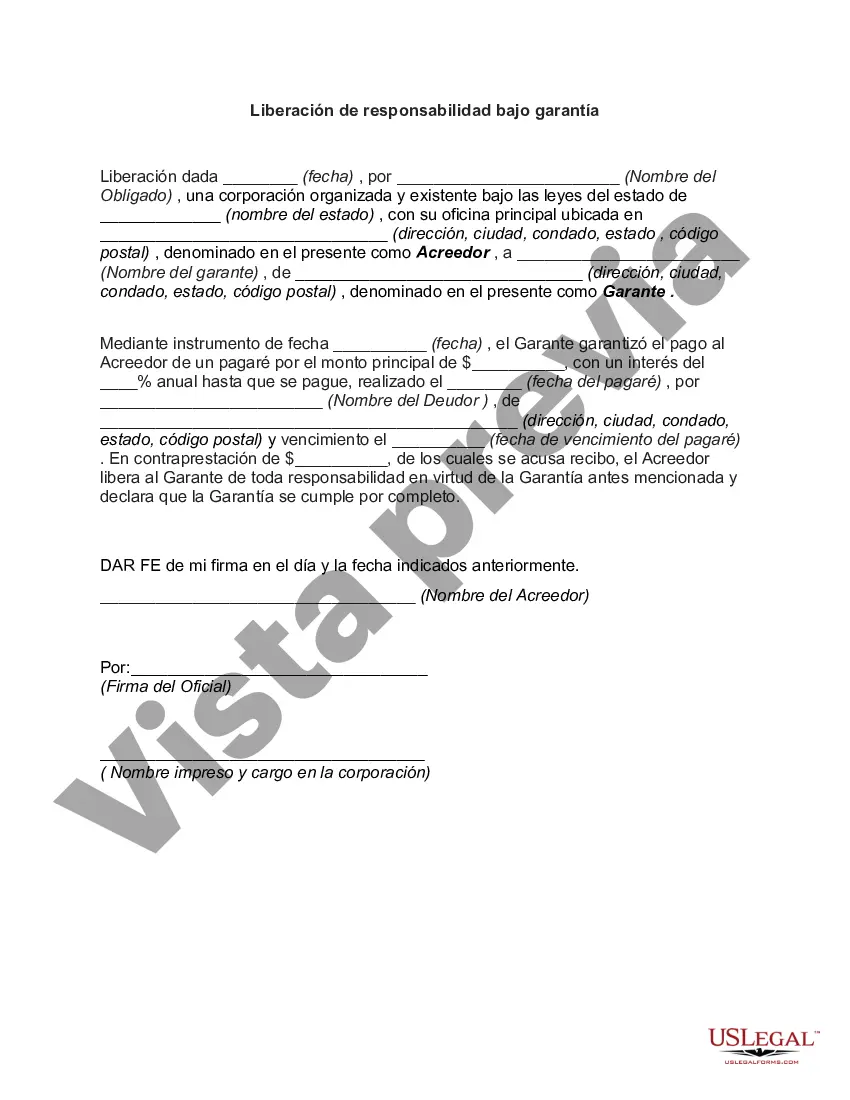
A guaranty is a contract under which one person agrees to pay a debt or perform a duty if the other person who is bound to pay the debt or perform the duty fails to do so. Usually, the party receiving the guaranty will first try to collect or obtain performance from the debtor before trying to collect from the one making the guaranty (guarantor).
Para su conveniencia, debajo del texto en español le brindamos la versión completa de este formulario en inglés.
For your convenience, the complete English version of this form is attached below the Spanish version.
Not exactly. While a waiver relinquishes certain rights or claims, a Release from Liability specifically deals with freeing someone from obligations tied to debts or guarantees.
Once it's signed, a Release is usually considered binding, but if there’s fraud or misrepresentation involved, it may be challenged in court.
If you don’t obtain this release, you could still be on the hook for the obligations you guaranteed, which could lead to unexpected financial headaches down the road.
While you can draft it yourself, it's often wise to consult a lawyer to make sure everything is on the up and up and that your interests are fully protected.
A Release from Liability under Guaranty is a legal document that frees someone from being held responsible for certain obligations or debts that they had guaranteed for another party.
Generally, once it's signed, it's a done deal. Revoking it can be tricky and may need special circumstances.
You might be leaving yourself open to potential claims, so it’s like walking a tightrope without a safety net.
Trusted and secure by over 3 million people of the world’s leading companies
Long Beach California Liberación de responsabilidad bajo garantía