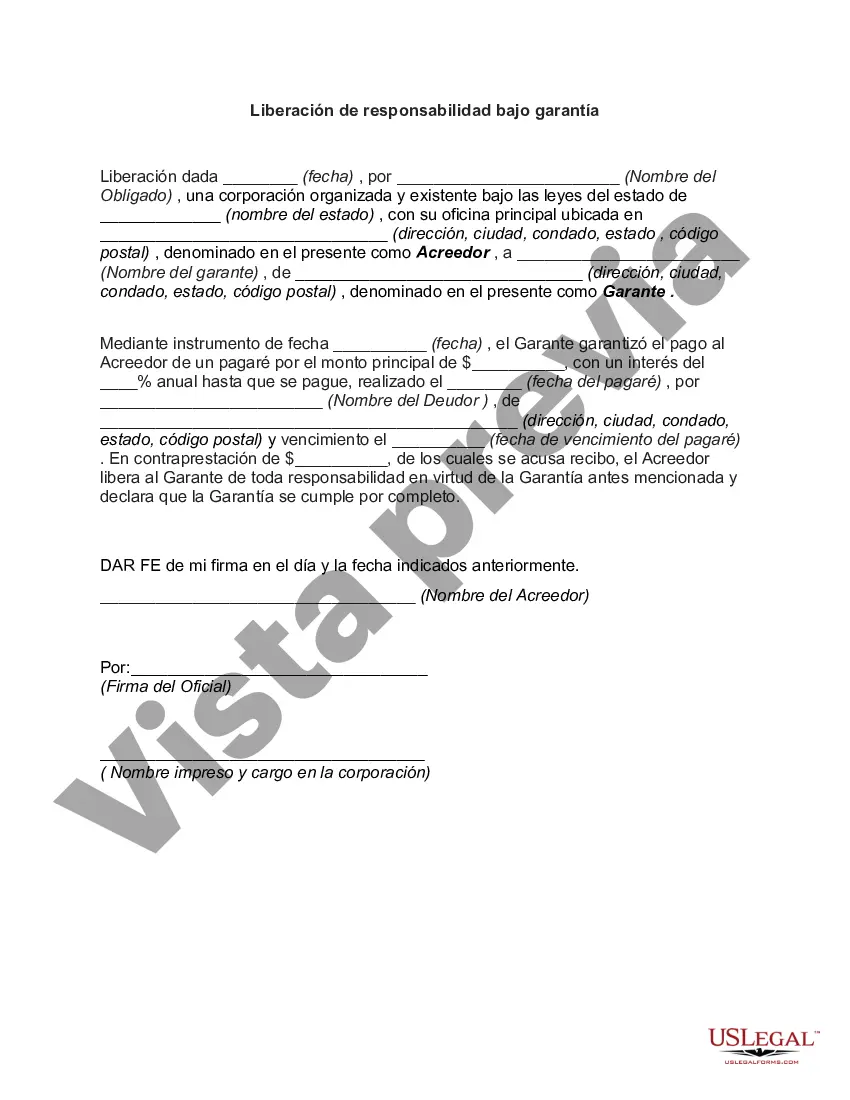
A guaranty is a contract under which one person agrees to pay a debt or perform a duty if the other person who is bound to pay the debt or perform the duty fails to do so. Usually, the party receiving the guaranty will first try to collect or obtain performance from the debtor before trying to collect from the one making the guaranty (guarantor).
Para su conveniencia, debajo del texto en español le brindamos la versión completa de este formulario en inglés.
For your convenience, the complete English version of this form is attached below the Spanish version.
Consulting with an attorney experienced in Albuquerque's legal landscape can clarify whether it's a must for your situation. They’ll help you sort through the legalese like a pro.
If you skip it, you could be on the hook for the obligations indefinitely. It's like leaving your door ajar—it could invite trouble later on.
Once it's signed, changes can be tricky. It's always best to have any changes freshly inked in a new document, like starting with a clean slate.
Absolutely! Once it’s signed and dated, it can hold water in a court of law, so make sure you’re serious about what you're agreeing to.
Typically, it’s signed by the guarantor, the party that’s responsible for the obligation. In simple terms, if you’re the one promising to cover someone else's debt, you might need to sign it.
You might need it if you're looking to limit your financial responsibility in a deal or if you want to protect yourself from future claims after the obligations are fulfilled.
Not exactly, but they both serve to protect you from certain legal claims; just tailor-made for different situations.
Trusted and secure by over 3 million people of the world’s leading companies
Albuquerque New Mexico Liberación de responsabilidad bajo garantía