MITIGATING FACTORS
Overview of this form
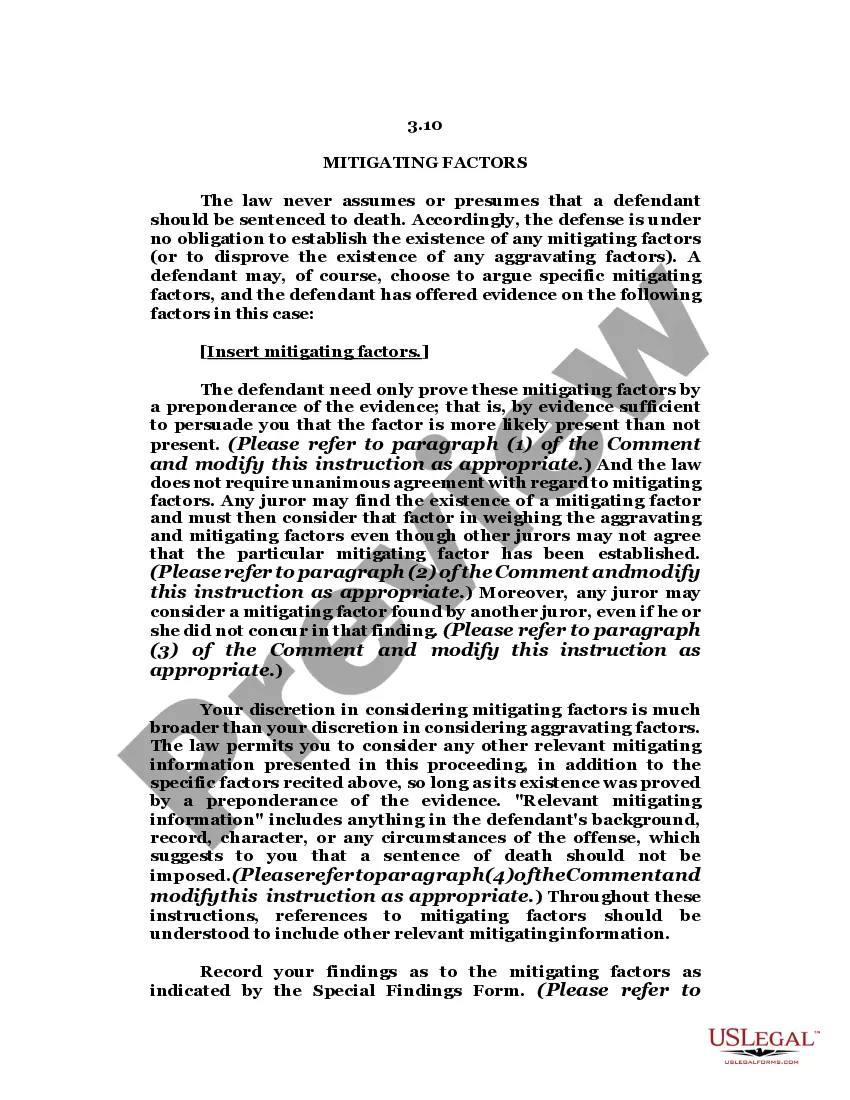
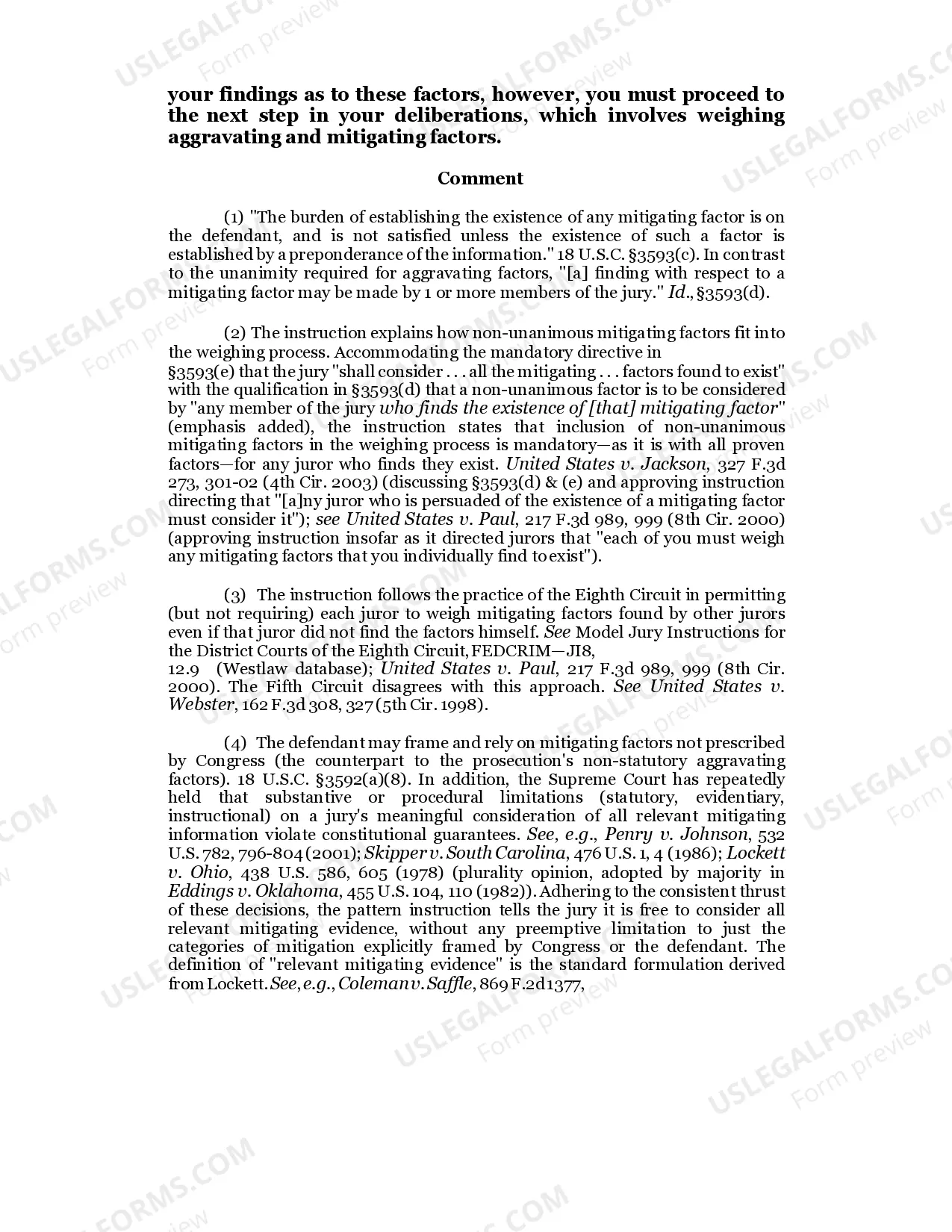
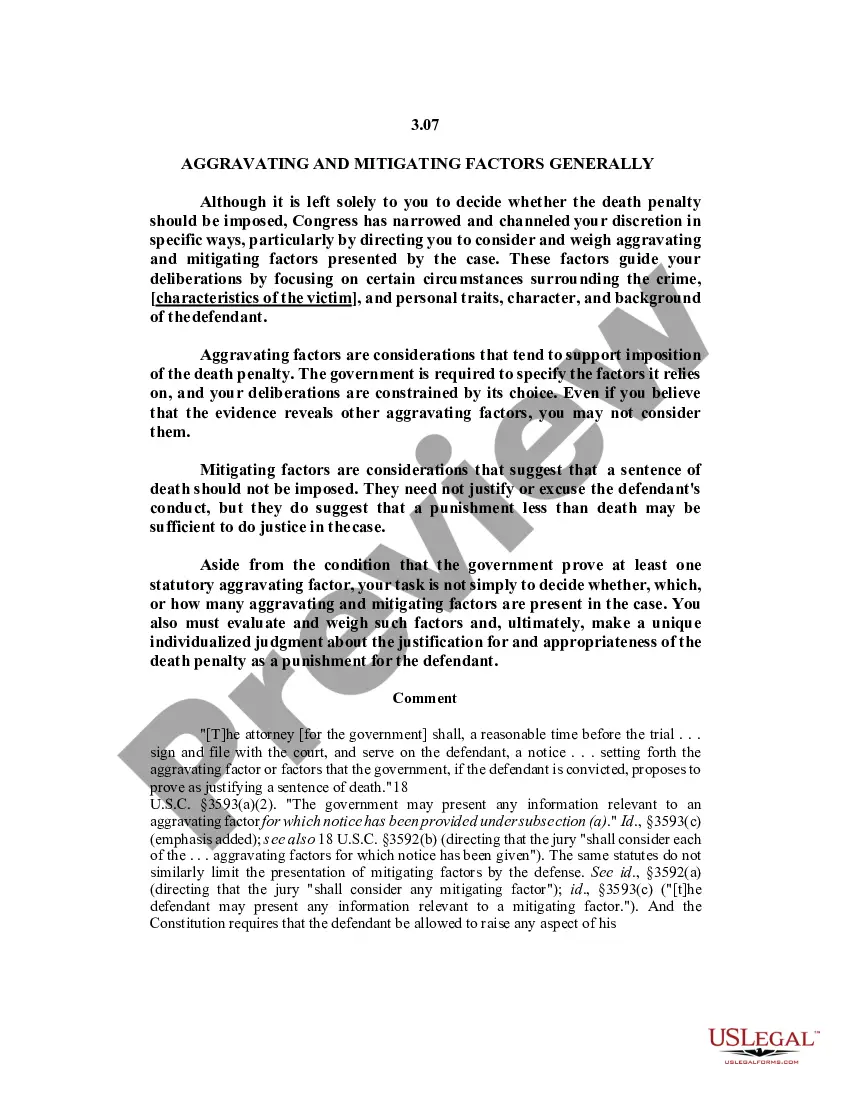
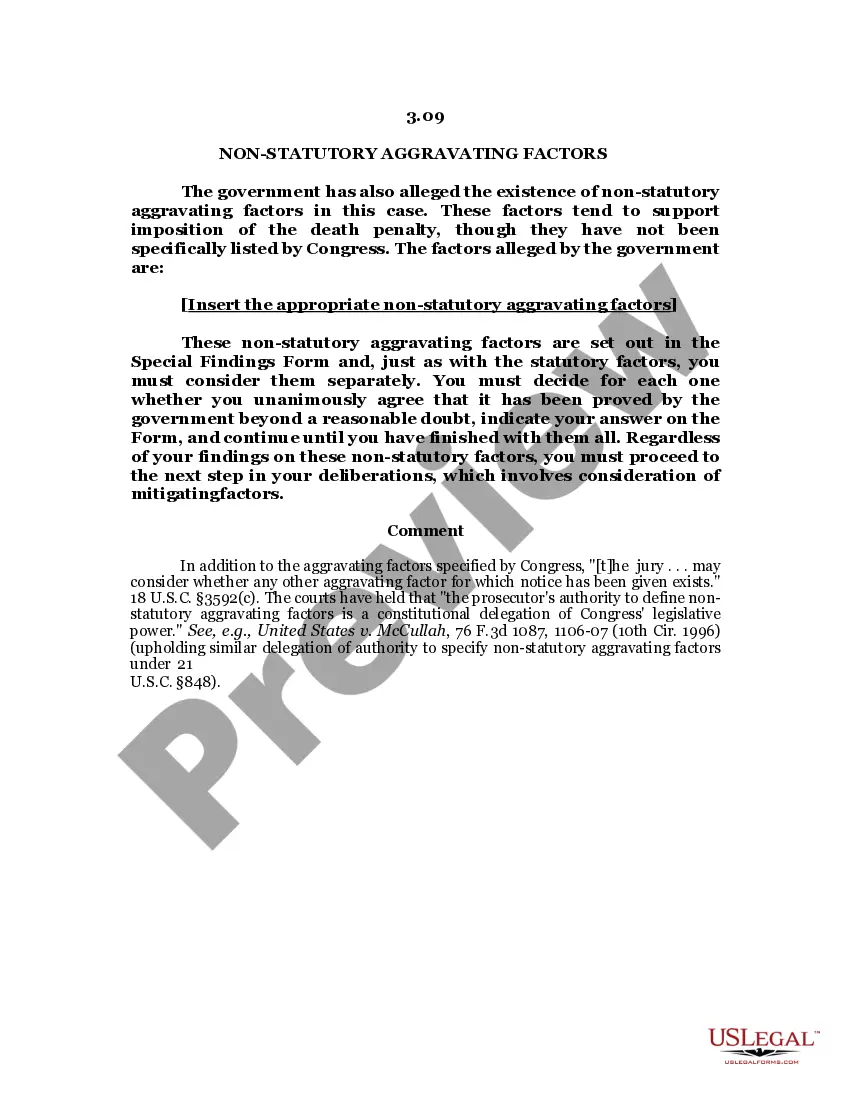
The mitigating factors form is a legal document that allows the defense in a capital case to present arguments for why a defendant should not receive the death penalty. Unlike other legal forms, it specifically addresses the concept of mitigating evidence, which can help lessen the severity of a sentence. This form assists jurors in understanding how to weigh these factors against aggravating circumstances when making their decisions regarding sentencing.
Form components explained
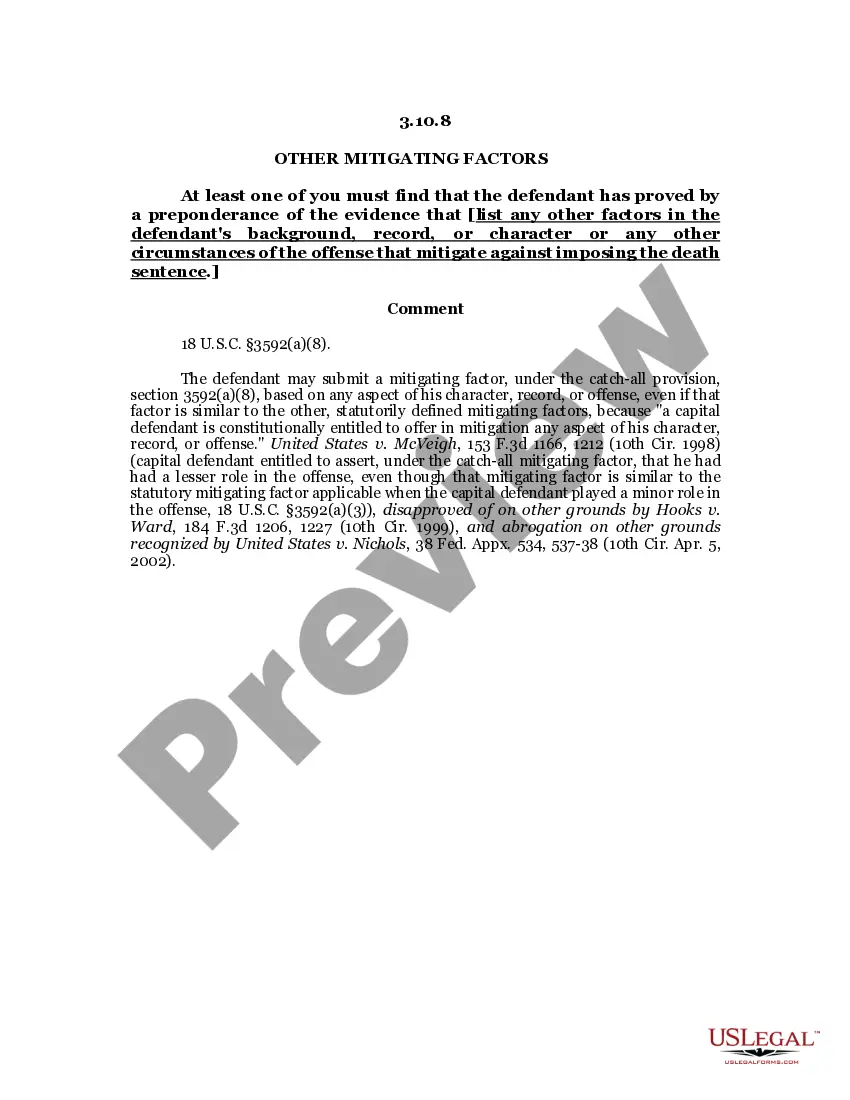
- Defendant's Burden of Proof: The defendant must demonstrate mitigating factors by a preponderance of the evidence.
- Non-unanimous Findings: Jurors can consider mitigating factors even if not all jurors agree on their existence.
- Broad Discretion: Jurors can consider any relevant mitigating information beyond specified factors.
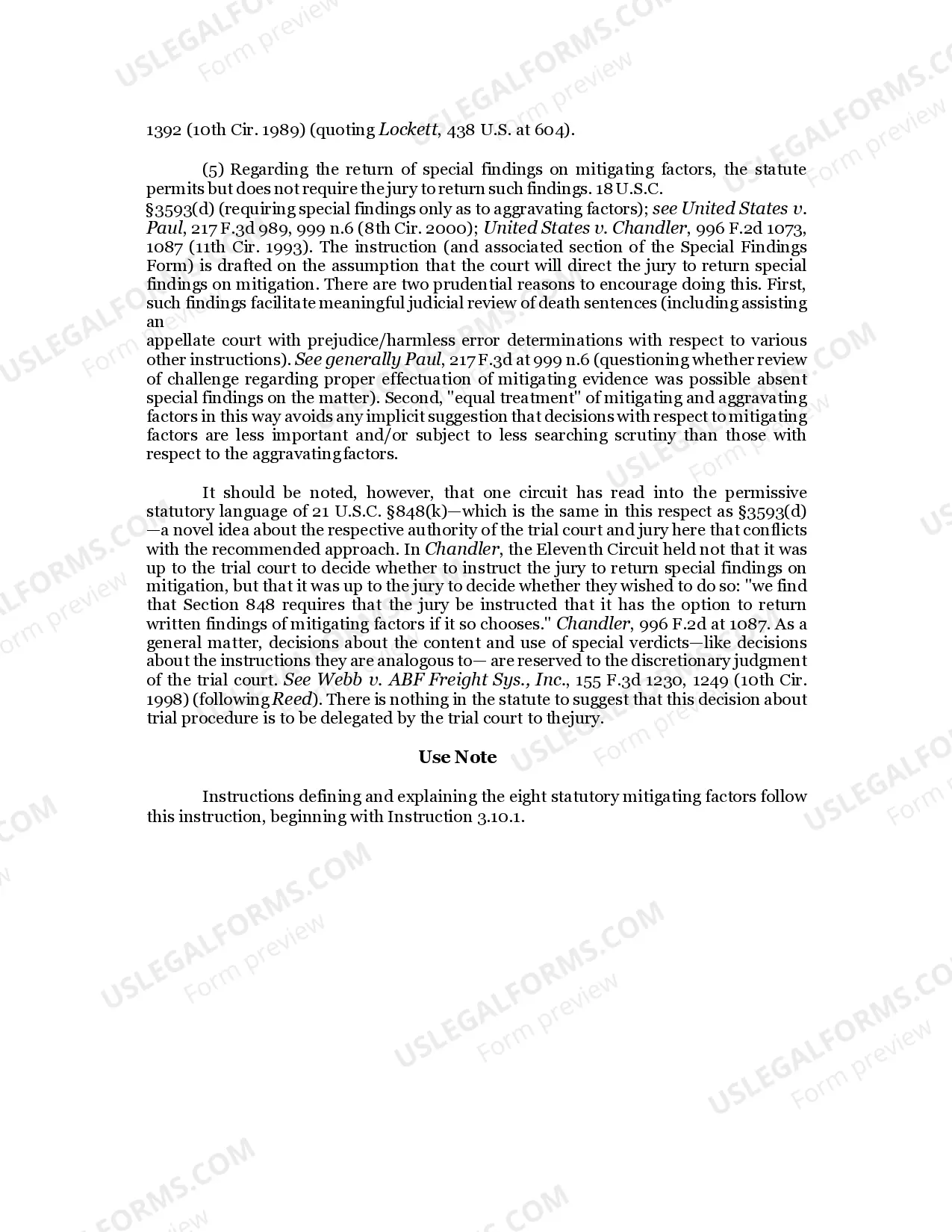
- Special Findings Form: Jurors record their findings regarding mitigating factors.
- Weighing Mitigating vs. Aggravating Factors: The form guides jurors on how to balance these factors during deliberation.


When to use this document
This form is used during capital trials when a defendant is facing the death penalty. It is essential for defense attorneys to present mitigating factors that may influence the jury's decision related to sentencing. It may be utilized when there are substantial arguments about the background, character, or circumstances surrounding the offense that could suggest that a death sentence is not appropriate.
Who should use this form
- Defense attorneys representing clients in death penalty cases.
- Jurors who are tasked with weighing aggravating and mitigating factors during deliberations.
- Legal experts involved in cases concerning capital punishment.
How to complete this form
- Identify the specific mitigating factors you wish to present.
- Gather evidence supporting these factors to prove their existence by a preponderance of the evidence.
- Fill out the Special Findings Form to record the identified mitigating factors.
- Present your arguments to the jury, emphasizing the relevance of the mitigating factors.
- Ensure that you modify any standard instructions to fit the specifics of the case as necessary.
Notarization guidance
This form does not typically require notarization to be legally valid. However, some jurisdictions or document types may still require it. US Legal Forms provides secure online notarization powered by Notarize, available 24/7 for added convenience.
Get your form ready online
Our built-in tools help you complete, sign, share, and store your documents in one place.
Make edits, fill in missing information, and update formatting in US Legal Forms—just like you would in MS Word.
Download a copy, print it, send it by email, or mail it via USPS—whatever works best for your next step.
Sign and collect signatures with our SignNow integration. Send to multiple recipients, set reminders, and more. Go Premium to unlock E-Sign.
If this form requires notarization, complete it online through a secure video call—no need to meet a notary in person or wait for an appointment.
We protect your documents and personal data by following strict security and privacy standards.

Make edits, fill in missing information, and update formatting in US Legal Forms—just like you would in MS Word.

Download a copy, print it, send it by email, or mail it via USPS—whatever works best for your next step.

Sign and collect signatures with our SignNow integration. Send to multiple recipients, set reminders, and more. Go Premium to unlock E-Sign.

If this form requires notarization, complete it online through a secure video call—no need to meet a notary in person or wait for an appointment.

We protect your documents and personal data by following strict security and privacy standards.
Common mistakes
- Failing to identify all relevant mitigating factors that could impact sentencing.
- Assuming that all jurors must agree on a mitigating factor before it can be considered.
- Neglecting to provide evidence that sufficiently proves a mitigating factor's existence.
Advantages of online completion
- Convenience of downloading forms at any time without needing to visit a law office.
- Immediate access to legal templates drafted by licensed attorneys, ensuring accuracy.
- Ability to edit and customize the form as needed for specific cases.
Looking for another form?

Form popularity
FAQ
Mitigating circumstances. n. in criminal law, conditions or happenings which do not excuse or justify criminal conduct, but are considered out of mercy or fairness in deciding the degree of the offense the prosecutor charges or influencing reduction of the penalty upon conviction.
Any fact or circumstance that lessens the severity or culpability of a criminal act. Mitigating factors include an ability for the criminal to reform, mental retardation, an addiction to illegal substances or alcohol that contributed to the criminal behavior, and past good deeds, among many others.
Typical examples of aggravating factors include recidivism, lack of remorse, amount of harm to the victim, or committing the crime in front of a child, and many others. See also: Mitigating Factor, Criminal Procedure, and the Death Penalty.
What are the 5 mitigating circumstances? Five mitigating circumstances include age, mental state, history of abuse, level of involvement in the crime and lack of criminal record of the defendant. Each of these categories of circumstances can contain many specific factors that result in different levels of mitigation.
Mitigating factors are extenuating circumstances that might lead to a reduced sentence. Aggravating factors are circumstances that increase the defendant's culpability and could lead to an enhanced or maximum sentence.
Mitigating factors include previous good character, remorse or good conduct following arrest, voluntary compensation of victims, a full admission of facts and guilt, duress, very young or old age or minor role in the offence.