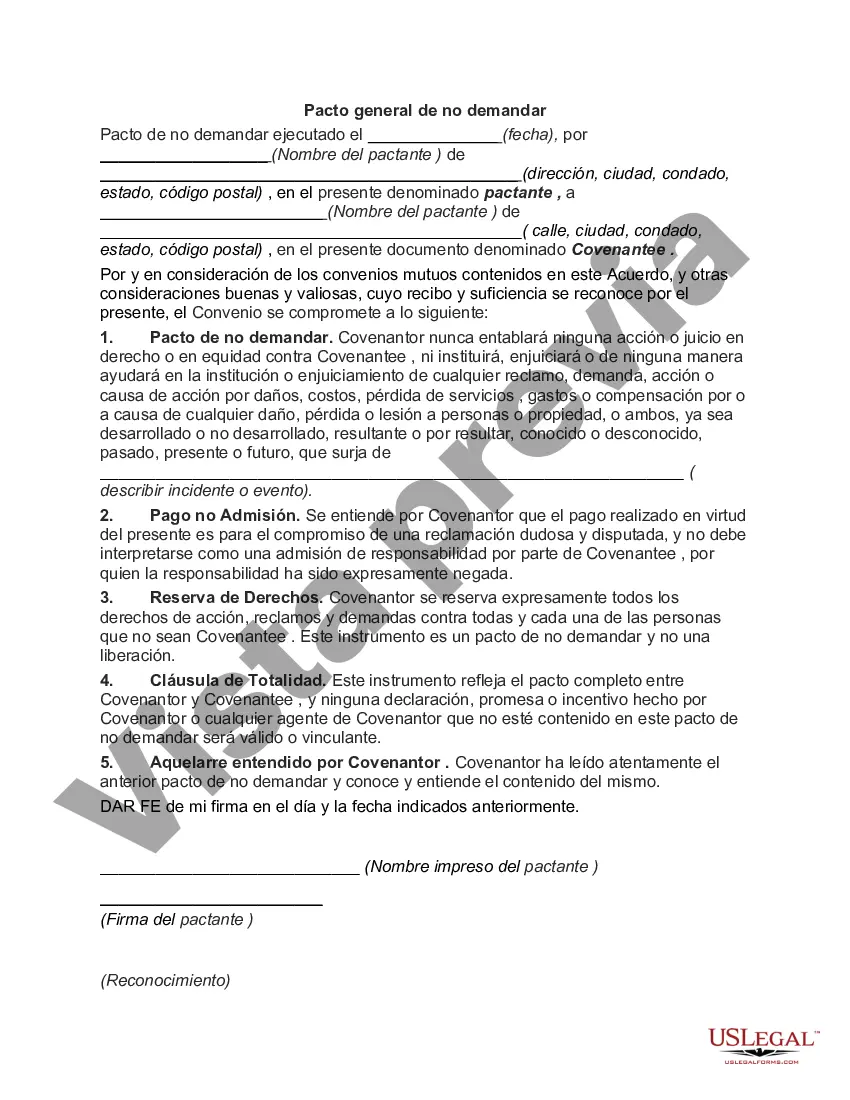
A covenant not to sue is an agreement entered into by a person who has a legal claim against another but agrees not to pursue the claim. Such a covenant does not extinguish a cause of action and does not release other joint tortfeasors even if it does not specifically reserve rights against them.
Para su conveniencia, debajo del texto en español le brindamos la versión completa de este formulario en inglés.
For your convenience, the complete English version of this form is attached below the Spanish version.
If one party goes against the covenant, the other party may have grounds to take legal action, depending on the situation and terms.
It's a good idea to consult with a legal professional who can explain the nitty-gritty and help you understand what you’re getting into.
Usually, once you sign, you're agreeing not to sue, so you may be out of luck if you decide to go back on that agreement.
This covenant often covers disputes related to property, personal injury, or any agreements where parties want to limit their legal options.
People usually sign this to have peace of mind and avoid future disputes, keeping things friendly and above board.
A waiver releases a person from liability while the Covenant Not to Sue is more about not suing in the first place—think of it like two sides of the same coin.
Once you sign it, it’s usually a done deal. It might not be easy to take it back unless everyone involved agrees to change things up.
Trusted and secure by over 3 million people of the world’s leading companies