Proxy voting refers to the procedure of delegating the right to vote by one person to another. In proxy voting in the absence of a person his/her vote will be secured by some other person. A person so designated to cast the vote of another is called a "proxy" and the person who delegates the power is called a principal. A voter must have a trust in the proxy. Any person including the official of the chosen party can be appointed as the proxy.
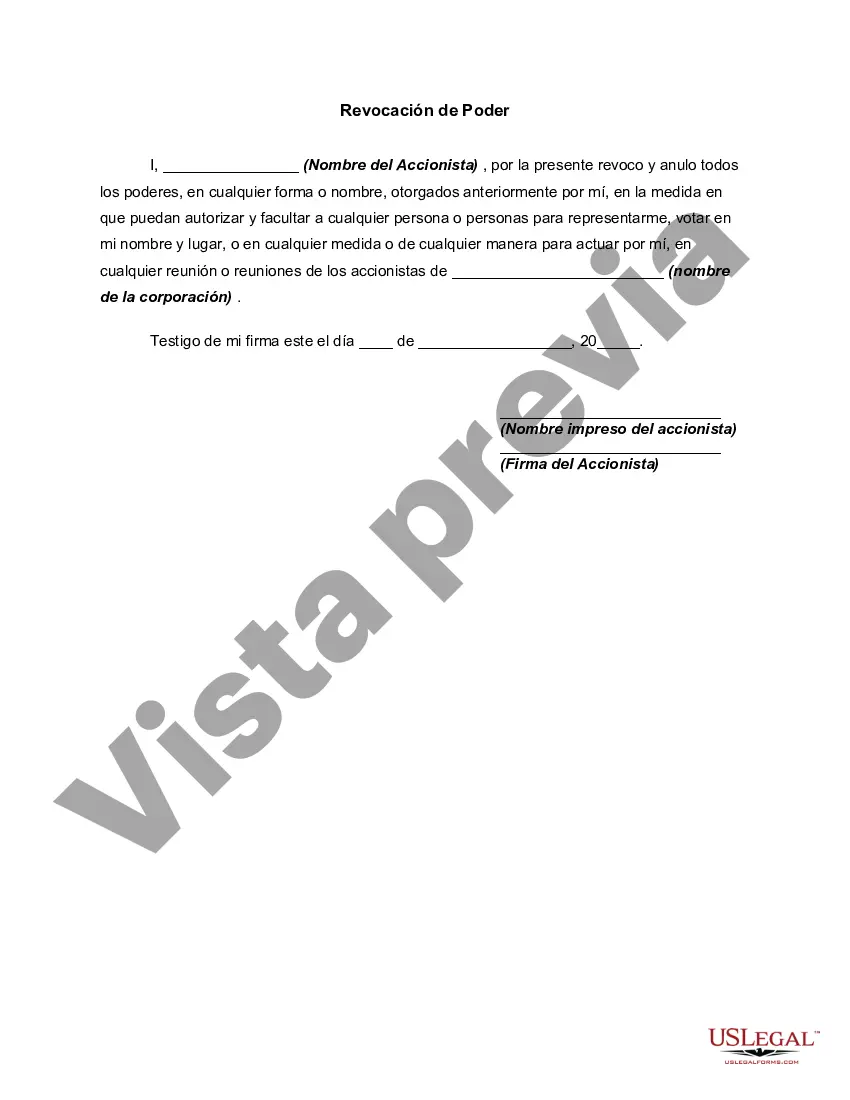
A proxy can also be revoked unless the terms of the proxy say otherwise.
Para su conveniencia, debajo del texto en español le brindamos la versión completa de este formulario en inglés.
For your convenience, the complete English version of this form is attached below the Spanish version.
You might not get a formal confirmation, but it’s smart to follow up with the person you revoked the proxy from to make sure they understand you’ve made a change.
There’s generally no deadline, but it’s a good idea to do it sooner rather than later if you want to avoid any mix-ups.
Once you revoke a proxy, the person you chose before can no longer act on your behalf. It's like shutting the door; they can't come in anymore.
Absolutely! You can change your mind whenever the fancy strikes you, as long as you're legally allowed to do so.
While there's no magic form needed, it's wise to put your revocation in writing. A simple letter can do the trick, ensuring everyone is on the same page.
To revoke a proxy, you need to write a clear statement saying that you are canceling the proxy. It's best to notify the person you gave the proxy to, just to keep things above board.
A revocation of proxy is a legal way to cancel someone else's authority to act on your behalf in matters like voting. It's like pulling the reins back on a horse; you're taking control again.
Trusted and secure by over 3 million people of the world’s leading companies