Proxy voting refers to the procedure of delegating the right to vote by one person to another. In proxy voting in the absence of a person his/her vote will be secured by some other person. A person so designated to cast the vote of another is called a "proxy" and the person who delegates the power is called a principal. A voter must have a trust in the proxy. Any person including the official of the chosen party can be appointed as the proxy.
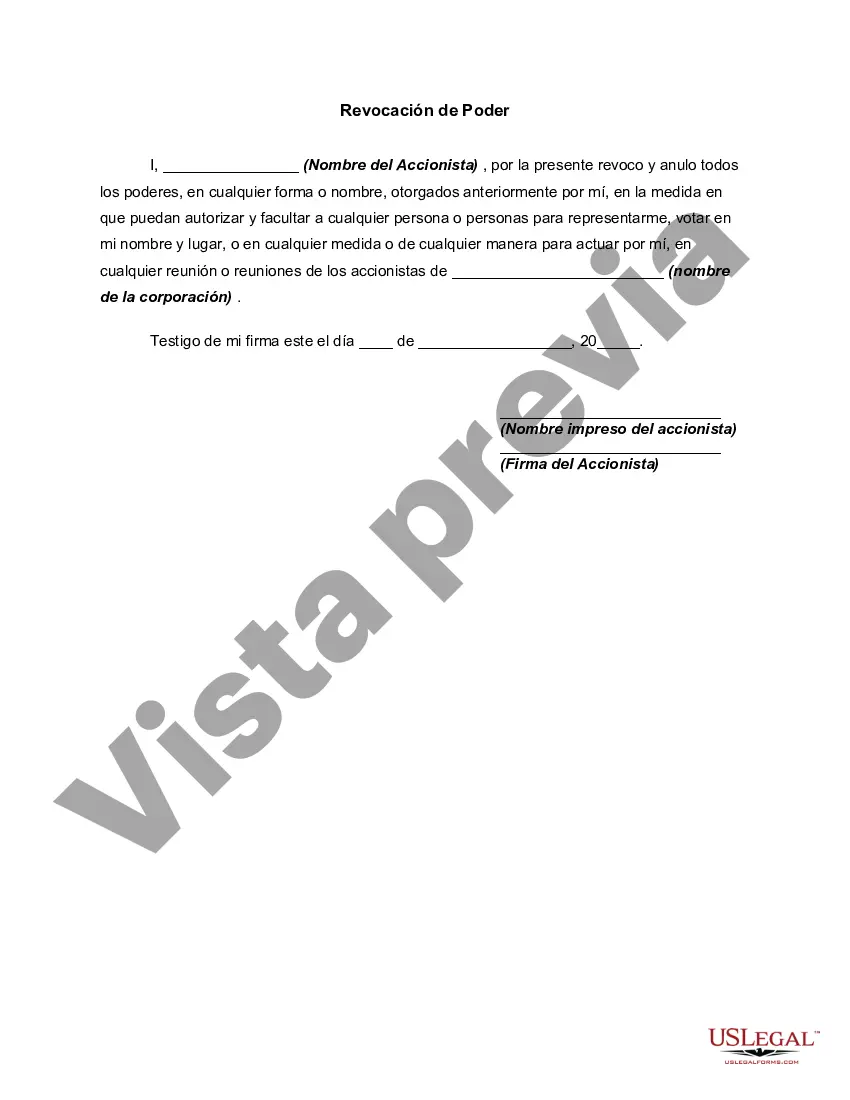
A proxy can also be revoked unless the terms of the proxy say otherwise.
Para su conveniencia, debajo del texto en español le brindamos la versión completa de este formulario en inglés.
For your convenience, the complete English version of this form is attached below the Spanish version.
If you forget, that proxy holder may still act on your behalf. It’s like handing over the keys to your car – always make sure you’ve got them back if you’re not ready for someone else to drive!
While verbal revocation might be okay in casual situations, it’s always safer to put it in writing. It creates a solid record and helps prevent any misunderstandings.
Nope! Revoking your proxy doesn’t change any past decisions. It only matters for future actions. Think of it like flipping a light switch off; it only affects what's to come.
Not necessarily. While some organizations might have a specific form for revocation, a simple written notice stating your intent can often do the trick. Just keep it clear and to the point!
You should revoke a proxy whenever you feel that the person you appointed isn’t representing your wishes anymore or if you decide to take matters into your own hands.
To revoke your proxy, you usually need to provide a written notice to the organization. Think of it as sending a postcard to say you've changed your mind.
Revoking a proxy means you’re taking back the permission you gave someone to vote or act on your behalf. It’s like saying, 'Thanks, but no thanks' to the person you appointed.
Trusted and secure by over 3 million people of the world’s leading companies