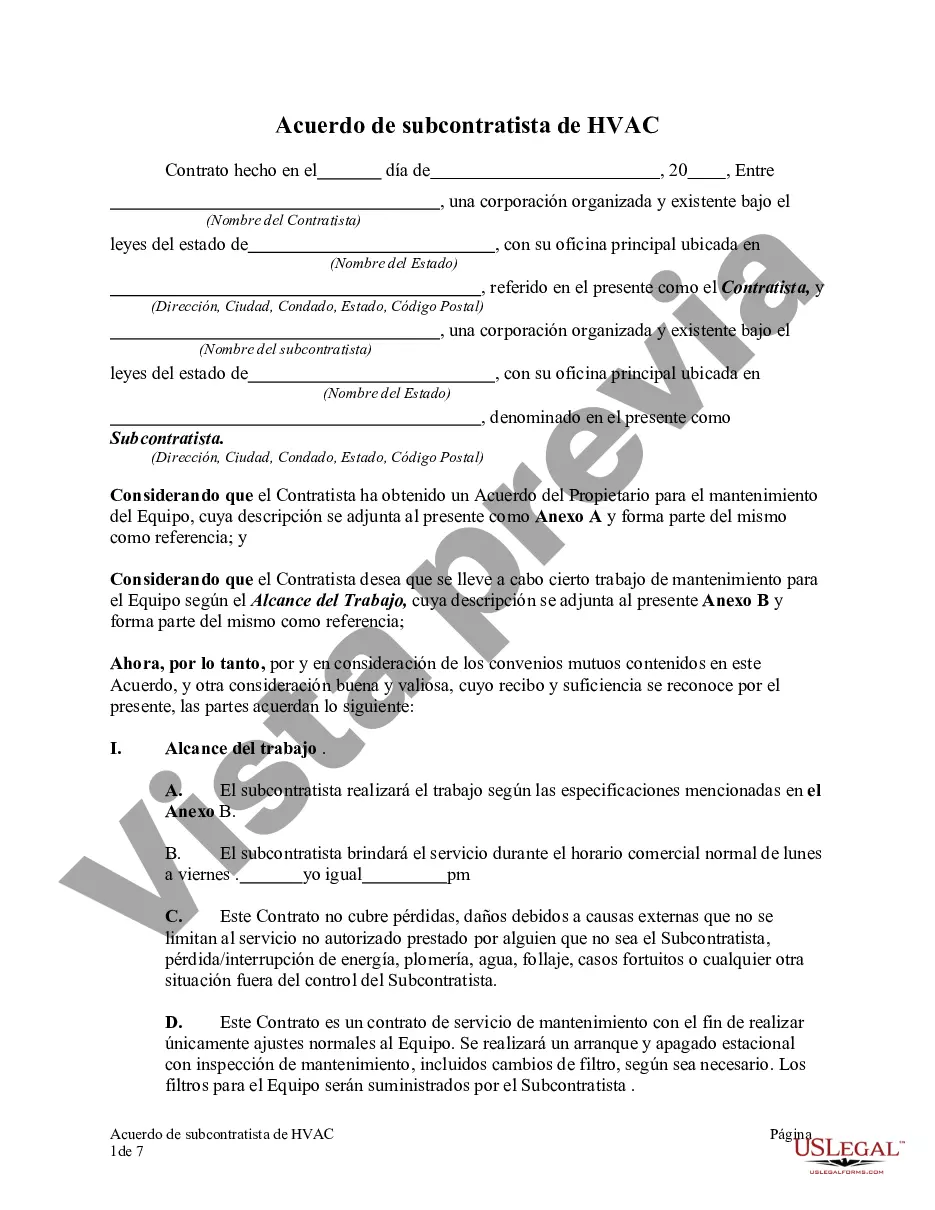
Aurora Colorado Acuerdo de subcontratista de HVAC - HVAC Subcontractor Agreement
State:
Multi-State
City:
Aurora
Control #:
US-0296BG
Format:
Word
Instant download
Description
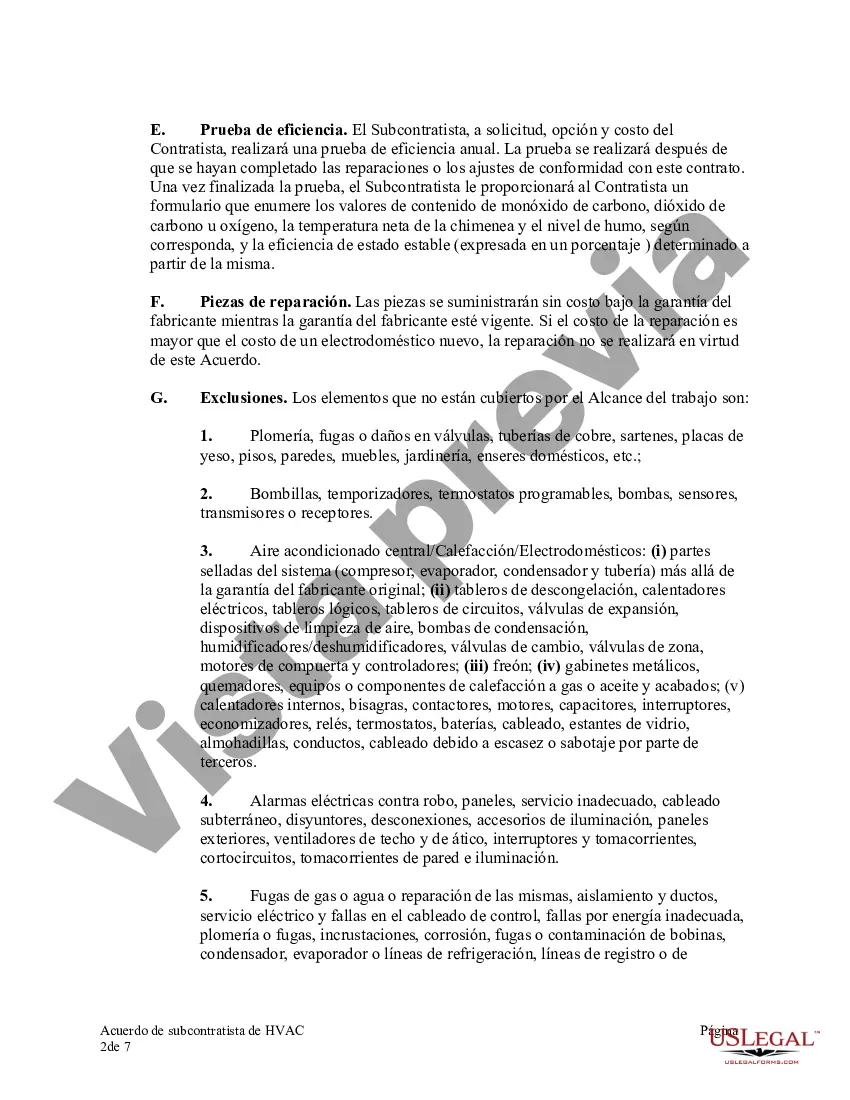
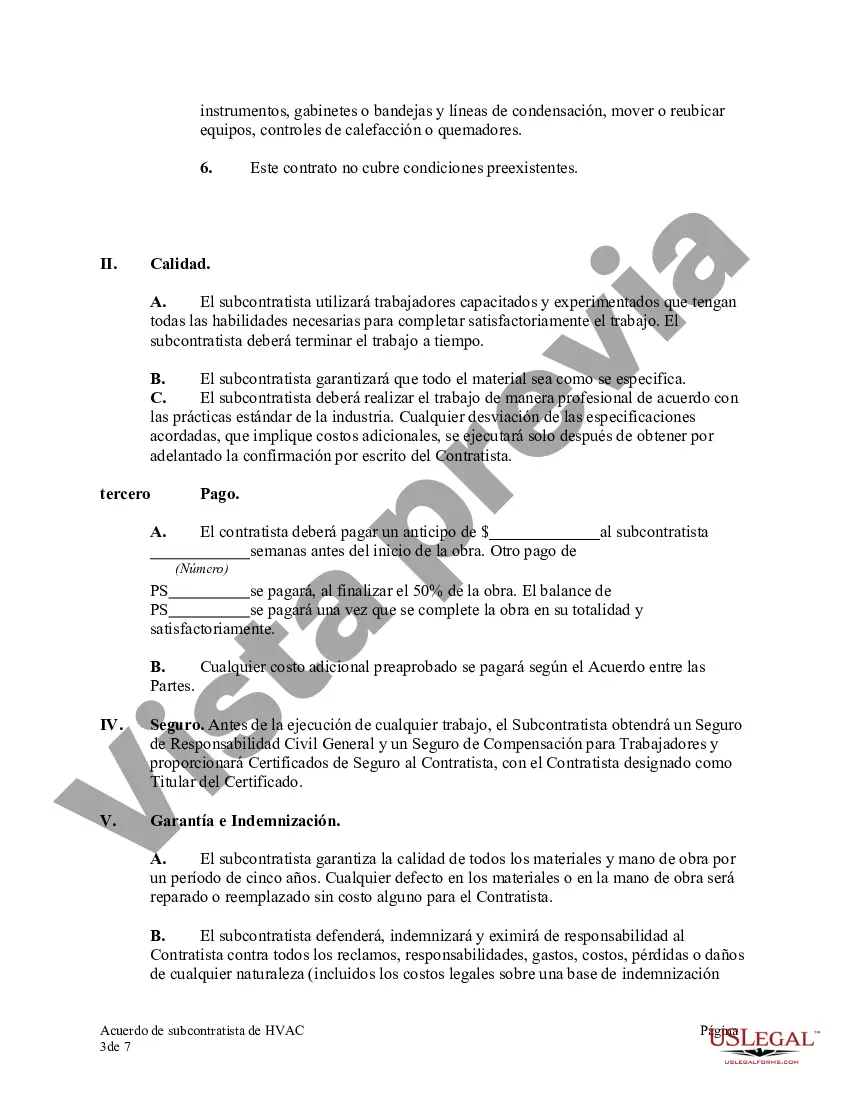
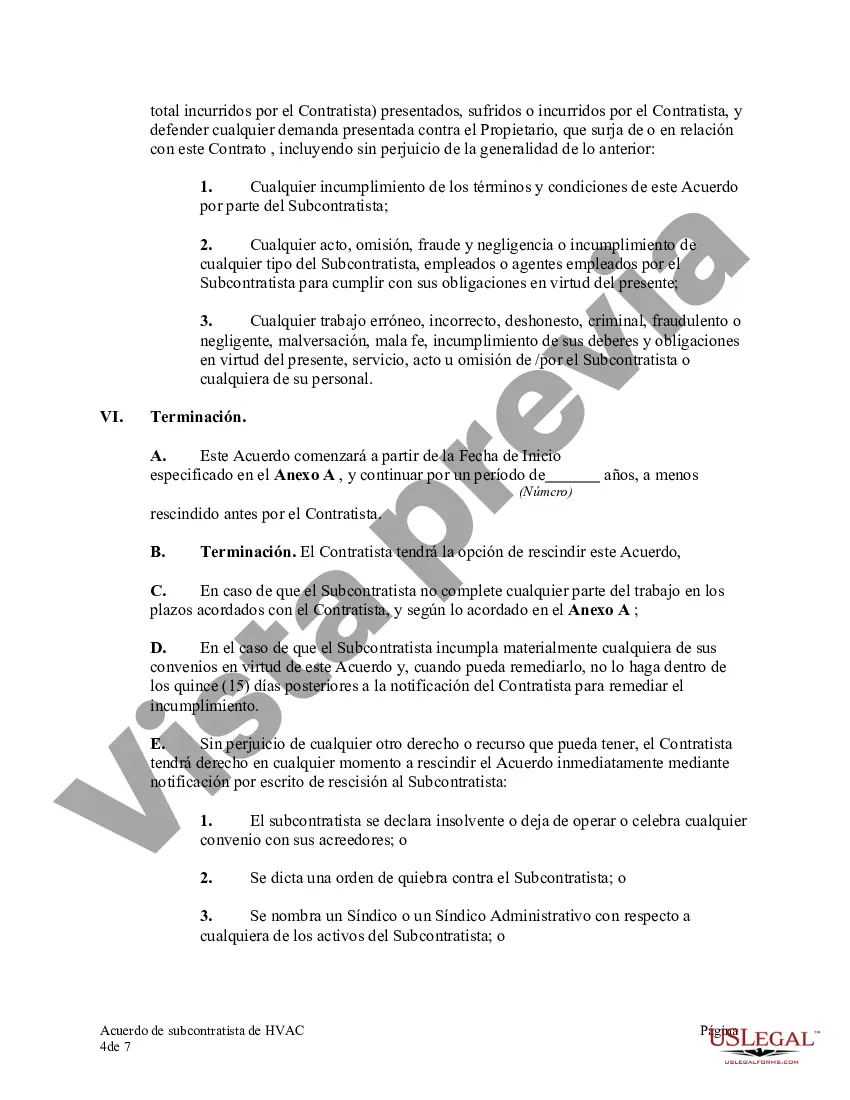
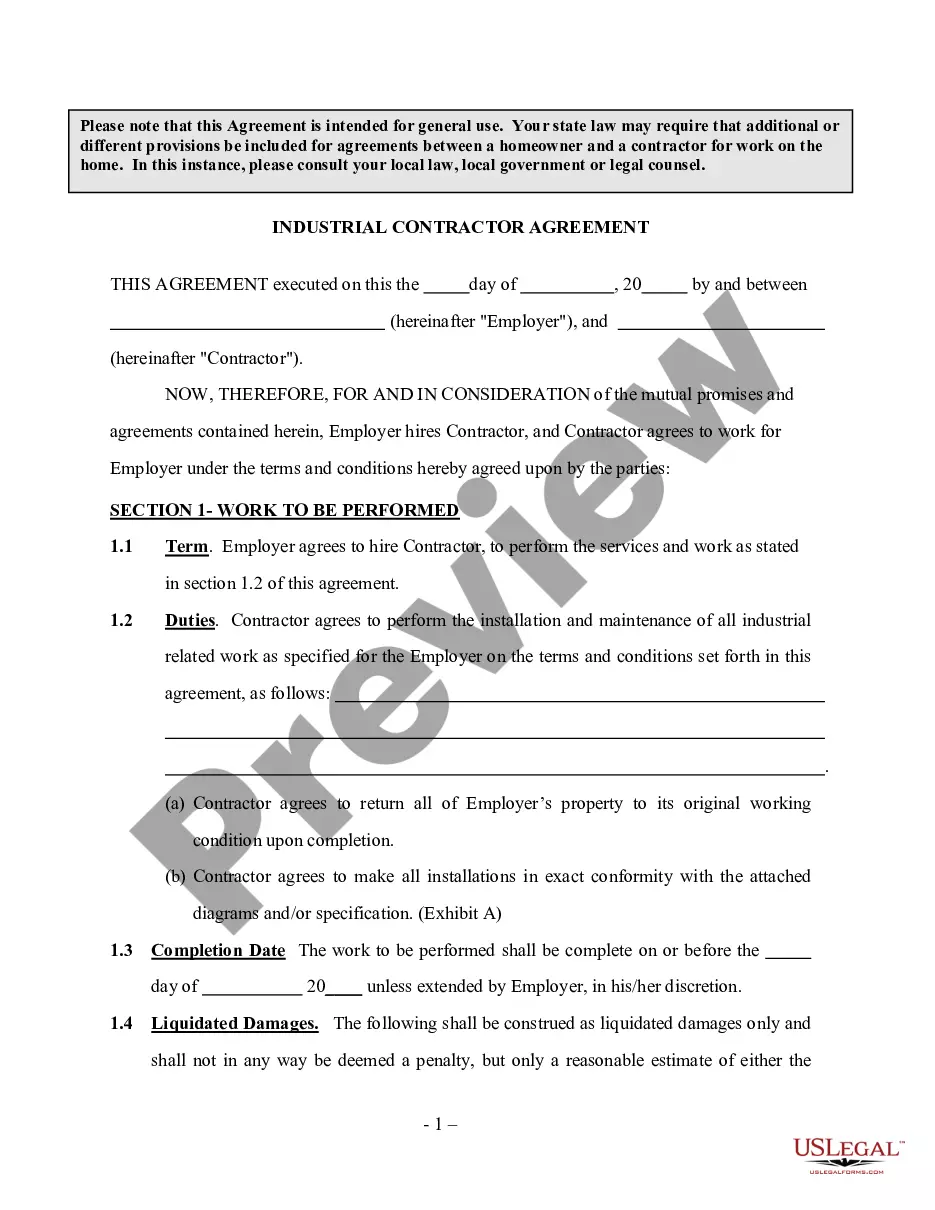
This HVAC Subcontractor Agreement is between a Contractor and a Subcontractor who is hired to perform heating, venting and air conditioning (HVAC) services. It is important that this agreement be set out in writing and clearly details the services the Subcontractor will perform (i.e., air conditioner or heating repairs or replacements). This agreement sets out the specific terms of the arrangement including the scope of Subcontractor's work, the hours when work can be performed and when the Subcontractor will be paid.
Para su conveniencia, debajo del texto en español le brindamos la versión completa de este formulario en inglés.
For your convenience, the complete English version of this form is attached below the Spanish version.
Free preview