Memphis Tennessee Poder revocable o irrevocable - Revocable or Irrevocable Proxy
State:
Multi-State
City:
Memphis
Control #:
US-01581
Format:
Word
Instant download
Description
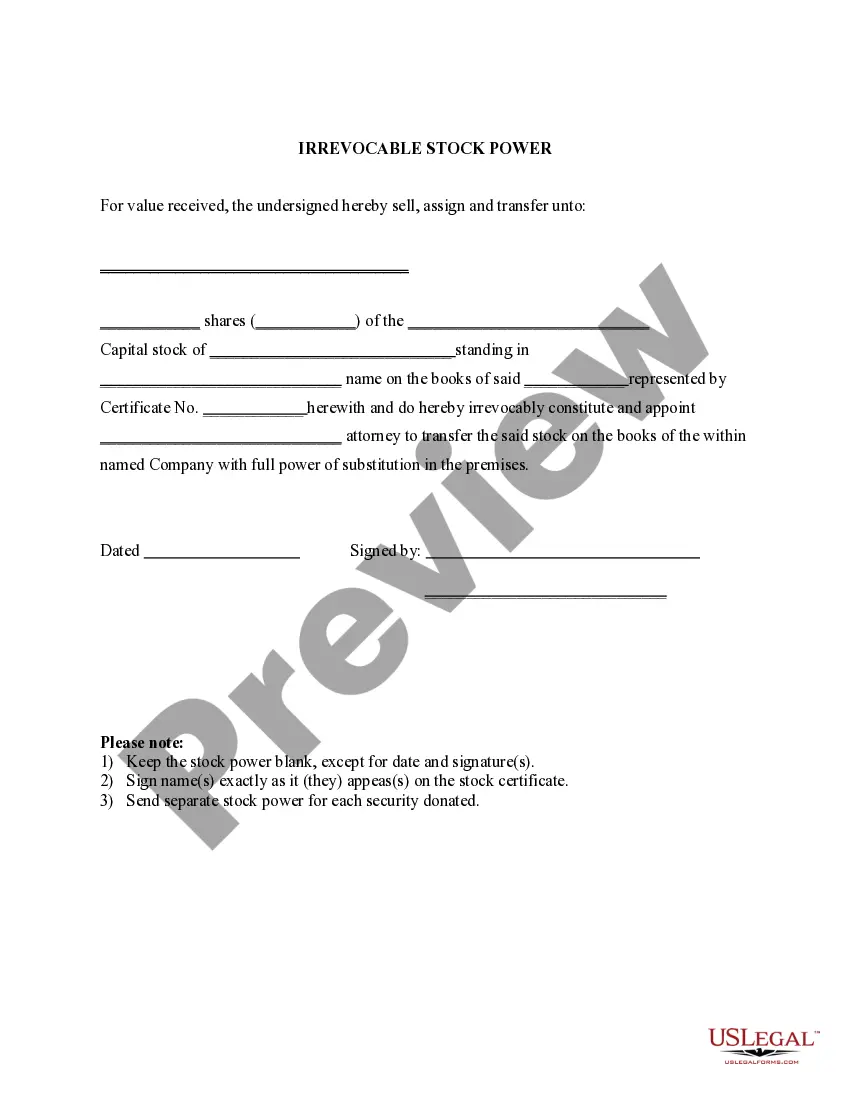
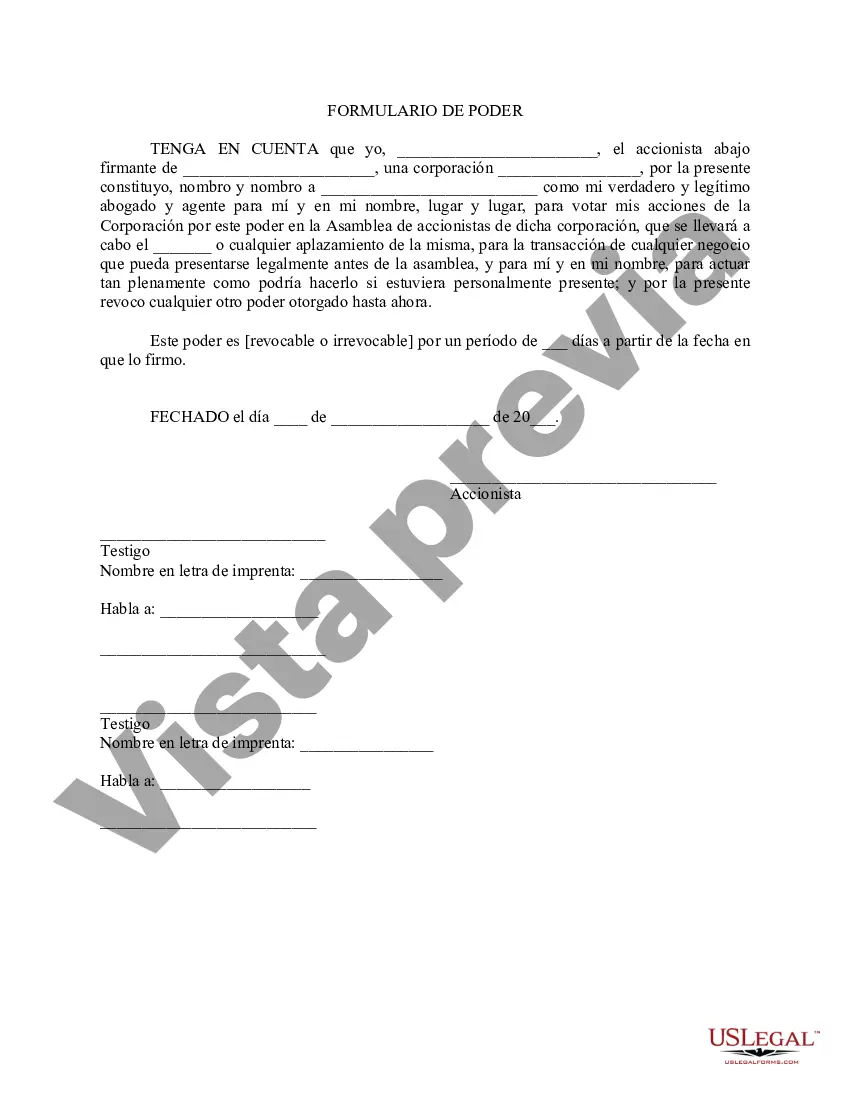
This is a proxy form, by which a shareholder grants their vote to a proxy who will cast the vote for them. Typically used in corporate shareholder meeting votes. Proxys solicit the votes before the meeting, and obtain the proxy forms.
Para su conveniencia, debajo del texto en español le brindamos la versión completa de este formulario en inglés.
For your convenience, the complete English version of this form is attached below the Spanish version.