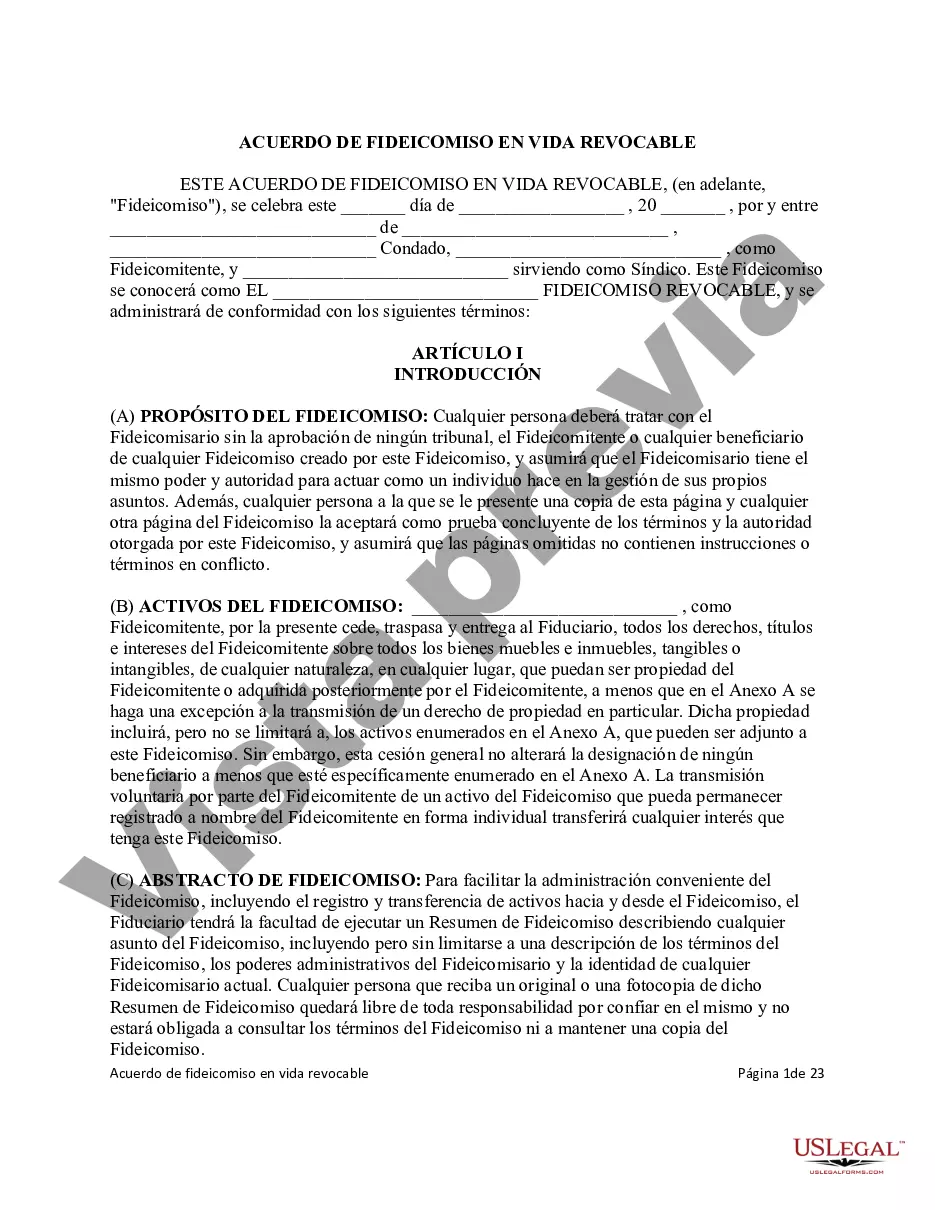
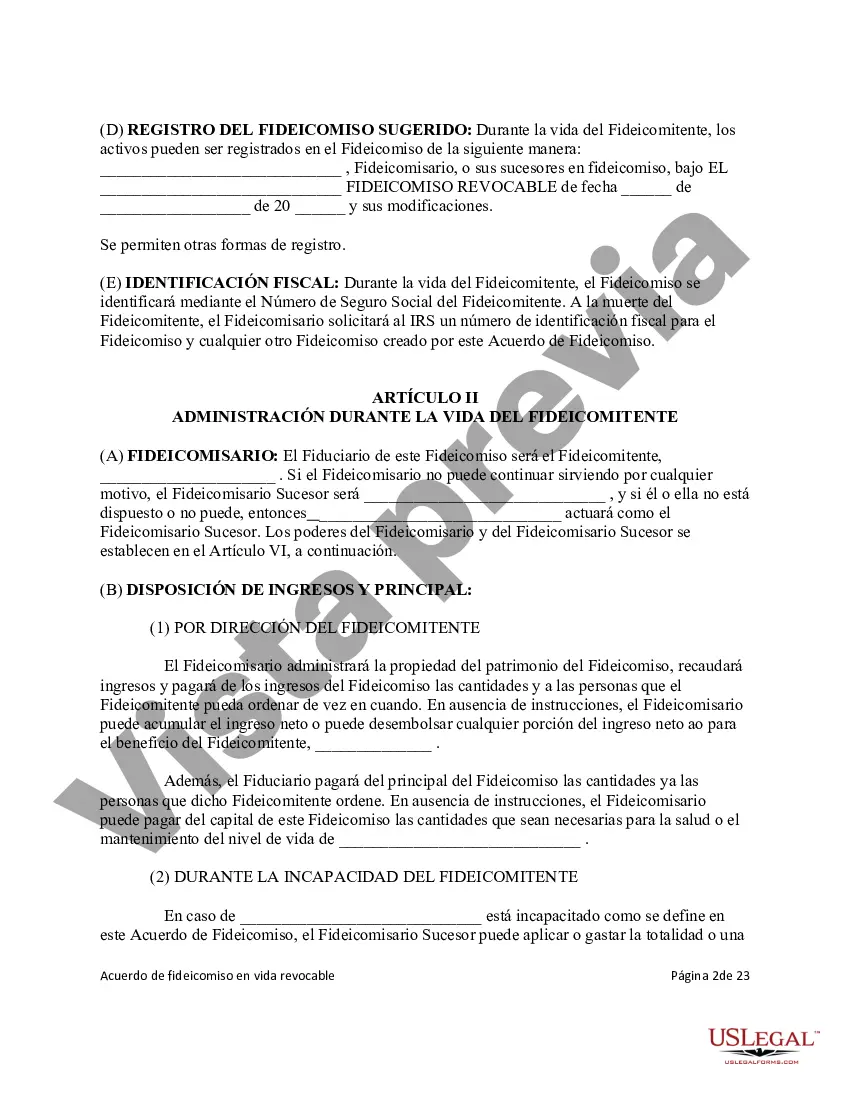
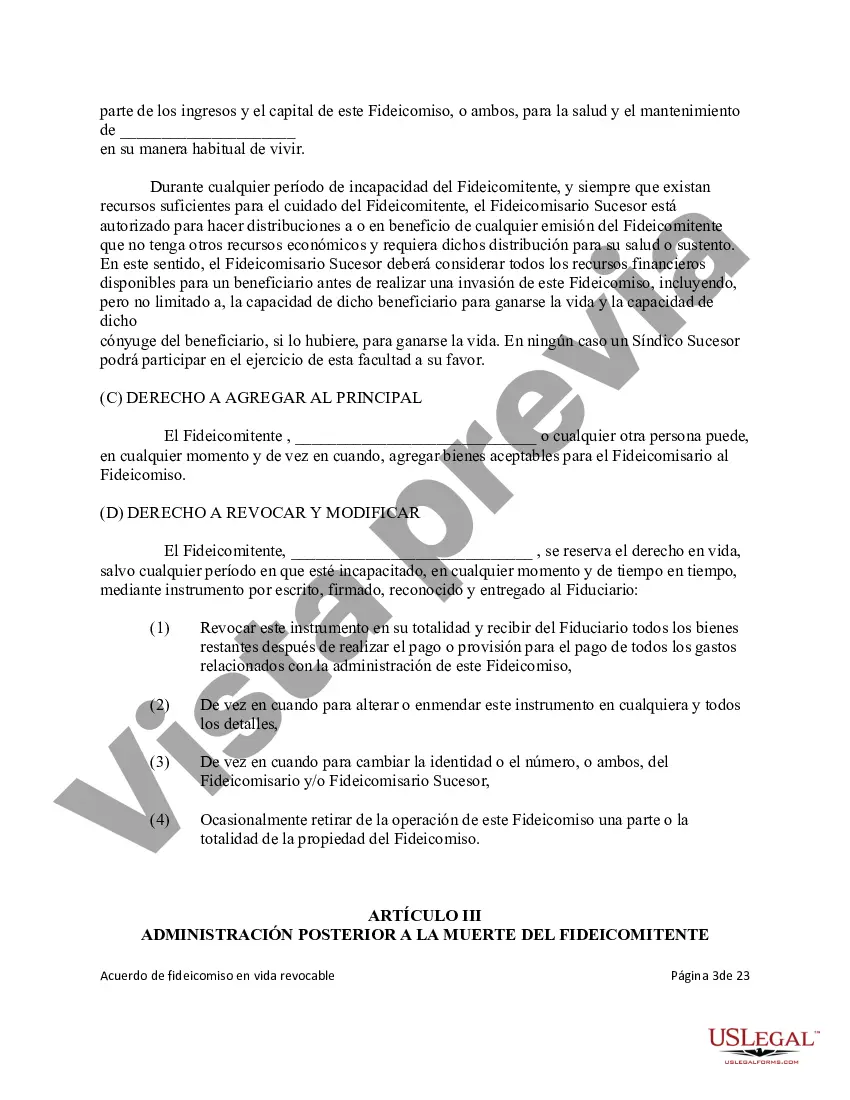
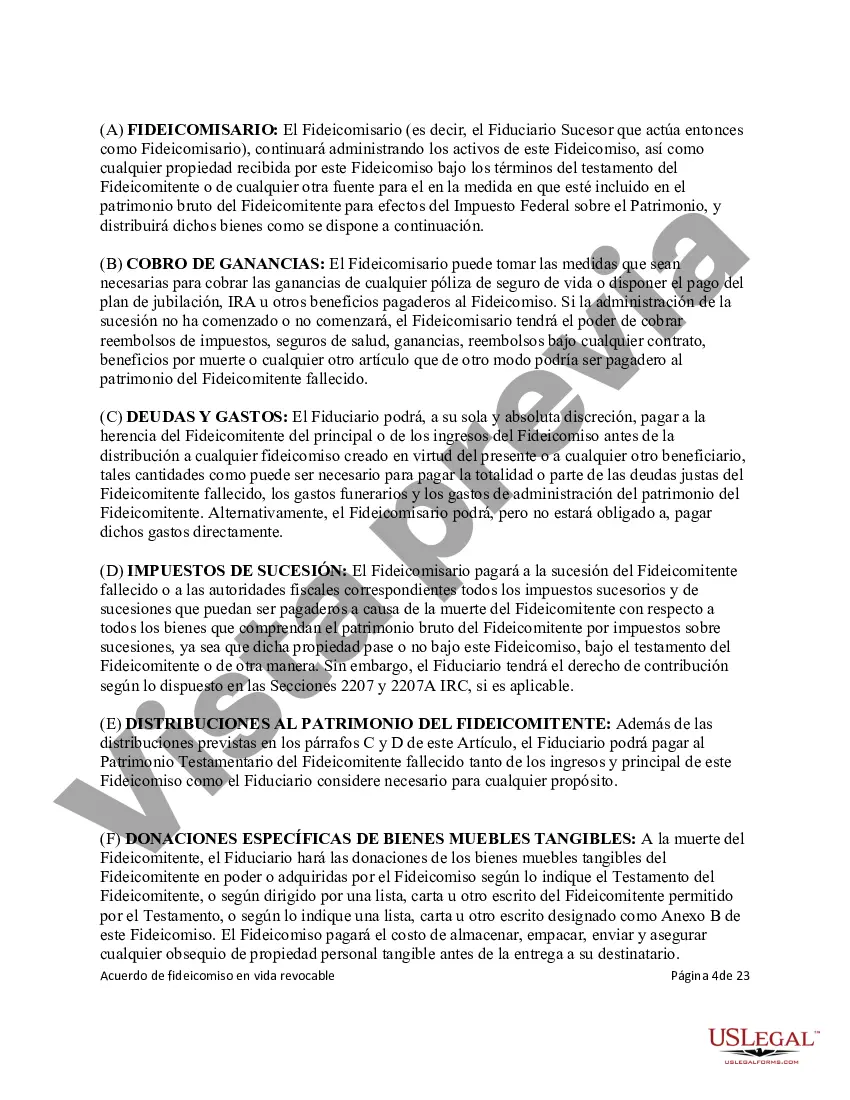
Fideicomiso en vida para personas que deseen disponer de activos sin sucesión. Revocable. 22 páginas. ¡MÁS POPULAR!
Para su conveniencia, debajo del texto en español le brindamos la versión completa de este formulario en inglés.
For your convenience, the complete English version of this form is attached below the Spanish version.
When you pass away, your living trust kicks into gear and distributes your assets according to your wishes—like following a treasure map. This usually happens without the hassle of probate, making it smoother for your loved ones.
Funding your living trust means transferring your property into it, kind of like putting your belongings into a moving truck before the big day. You'll need to retitle your assets—like your house and bank accounts—into the name of the trust.
Not really. A revocable living trust doesn’t provide protection from creditors while you're alive. It's like trying to hide your favorite cookie behind your back—creditors can still reach in if they need to.
You can be your own trustee while you’re alive, but it's wise to choose someone you trust to take over when you can’t. Think about family members, friends, or even a trusted professional who can handle the responsibility without a hitch.
Absolutely! That's the beauty of a revocable living trust; it's as flexible as a rubber band. You can modify, add, or take out assets and even change your beneficiaries whenever you want.
A revocable living trust can help you avoid probate, which is like a traffic jam for your assets. With a trust, your loved ones can access your property quicker, and everything stays private instead of becoming public record like a will.
A revocable living trust is a way to manage your assets while you’re alive and make it easier for your loved ones after you’re gone. Think of it as a safety deposit box that you can open whenever you want, but when you're not around, it ensures everything goes to the right people.
Trusted and secure by over 3 million people of the world’s leading companies