Wisconsin Complex Will with Credit Shelter Marital Trust for Large Estates
Understanding this form
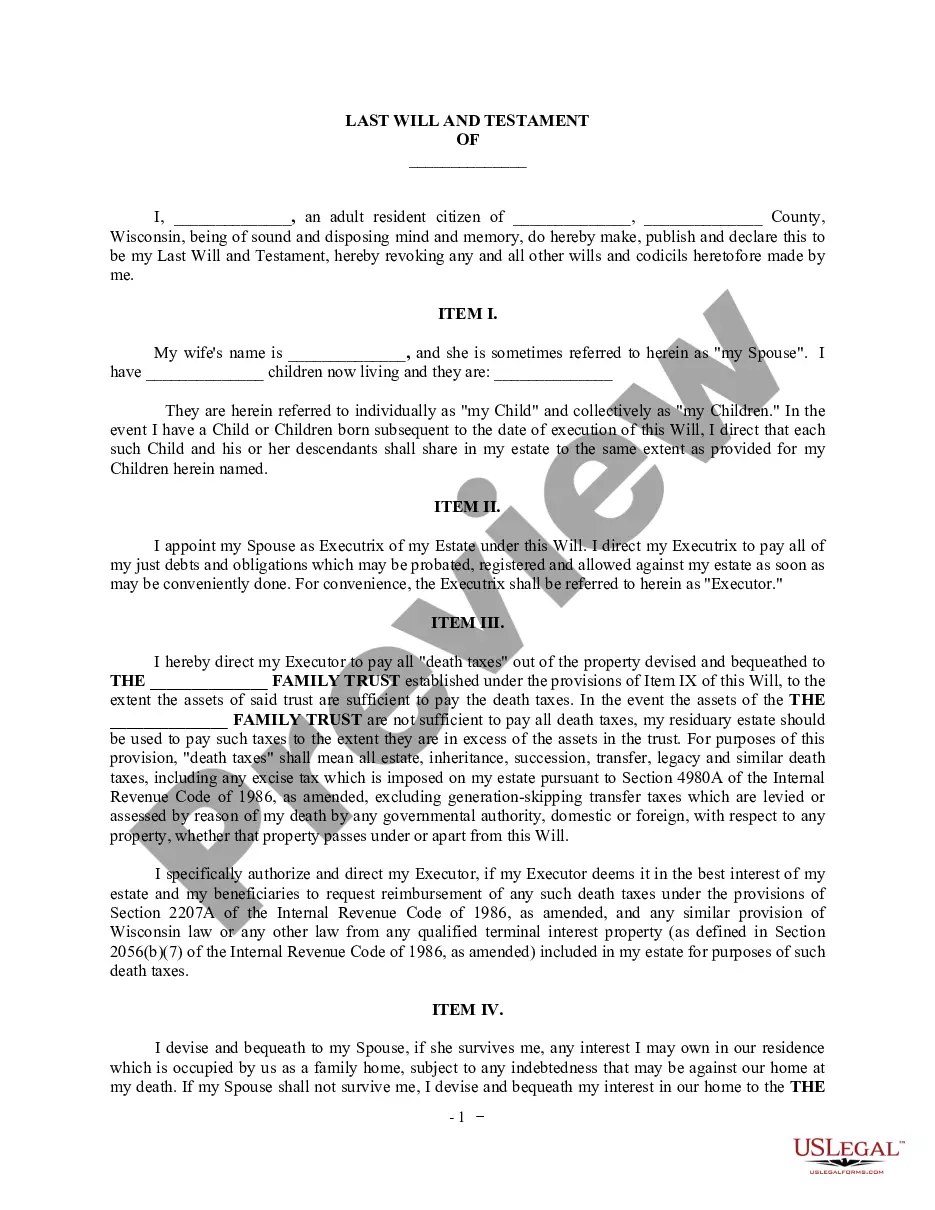
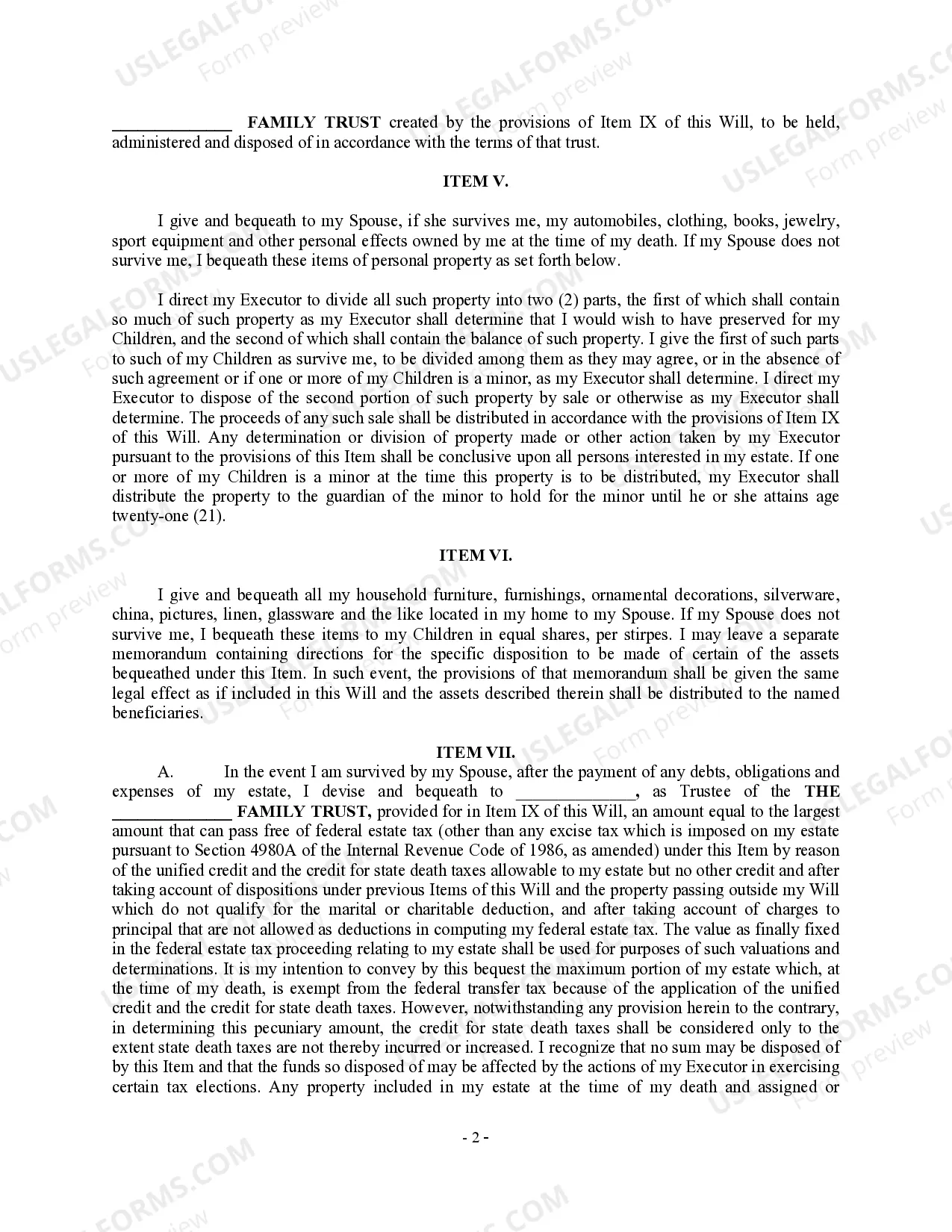
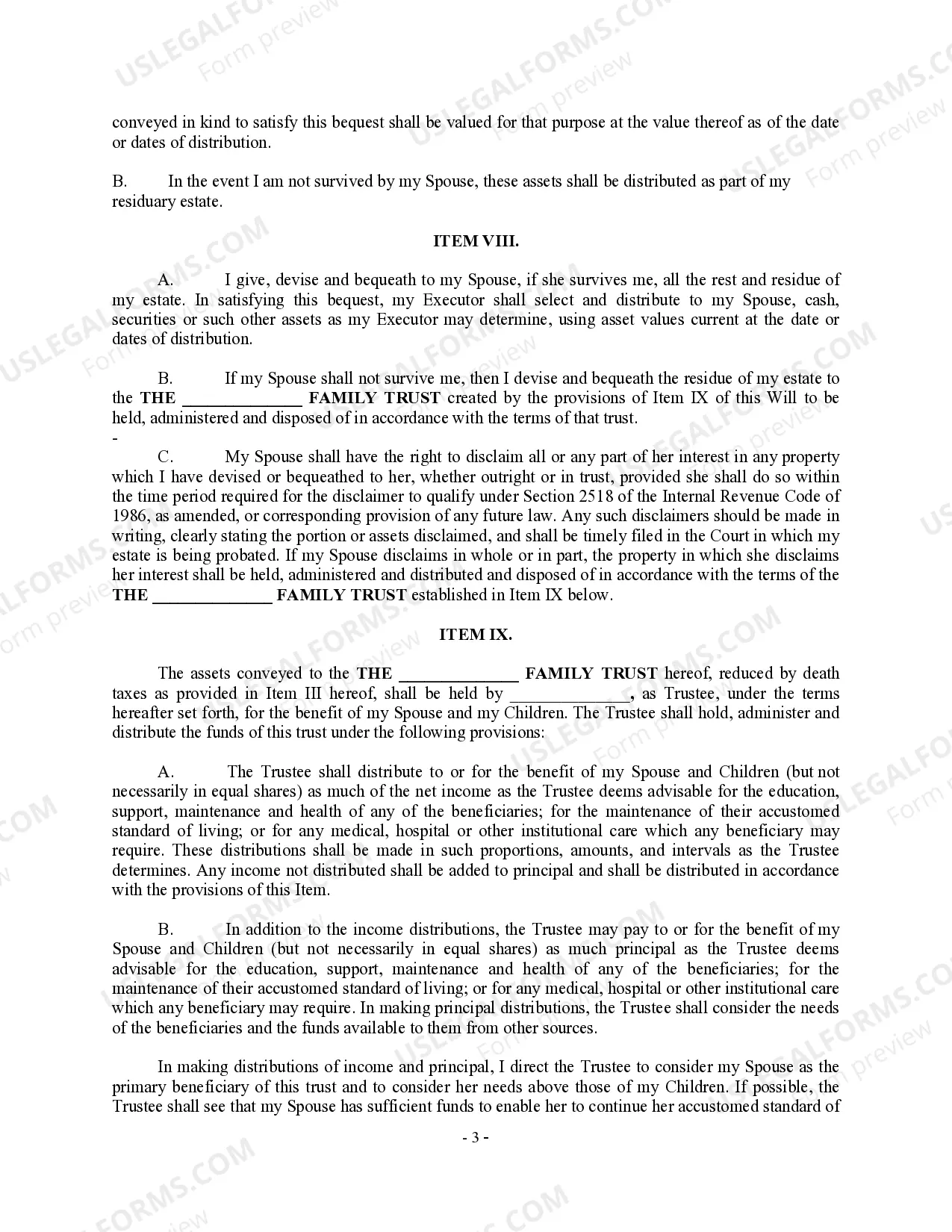
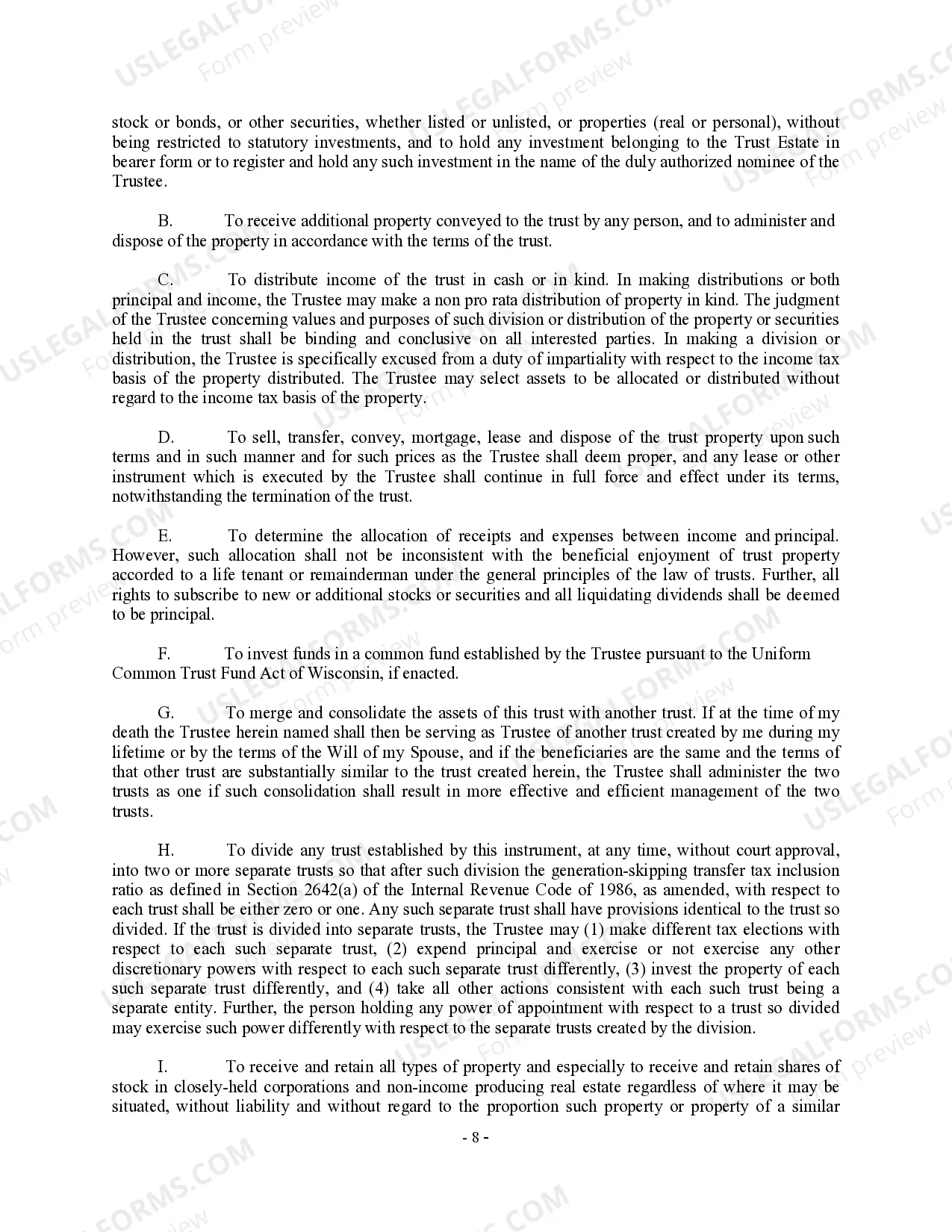
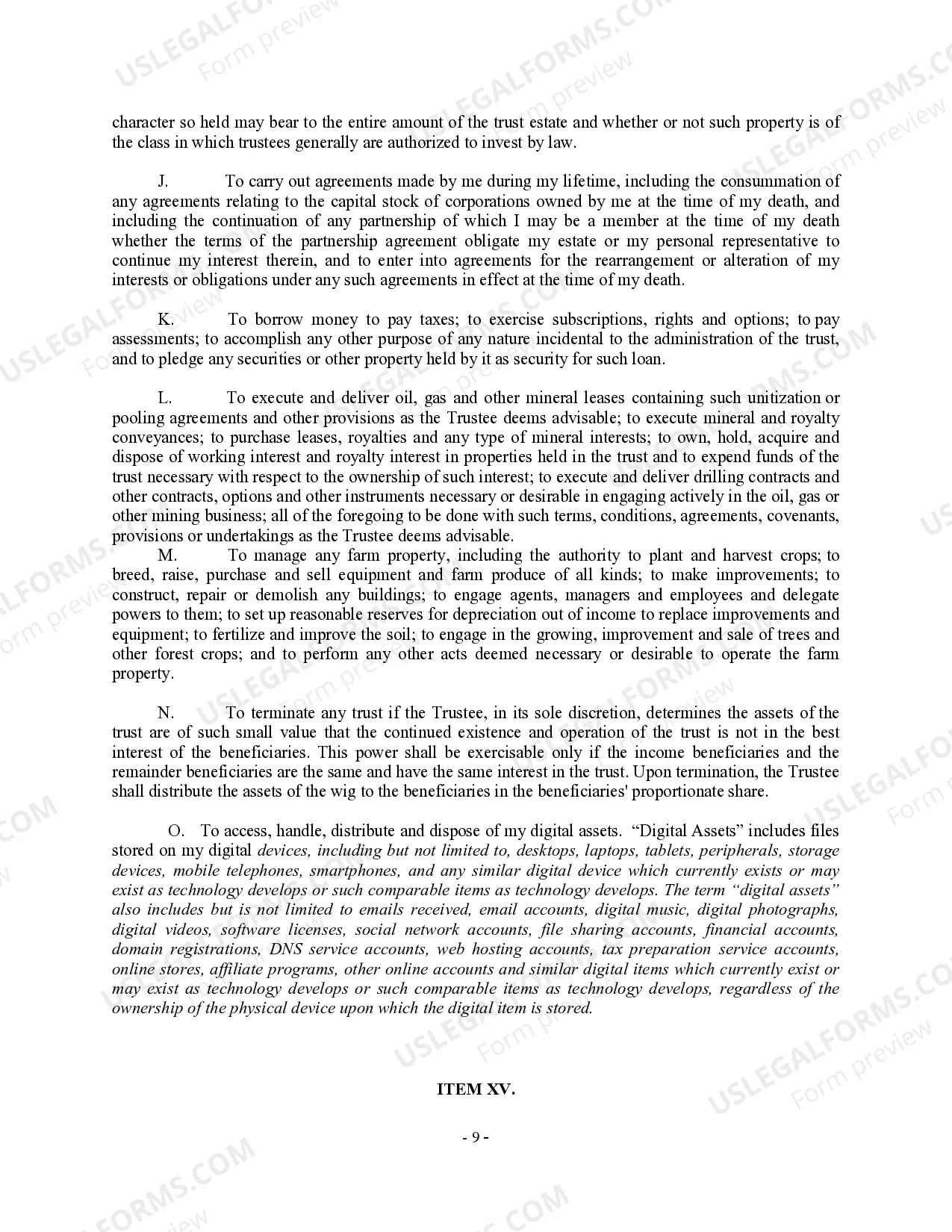
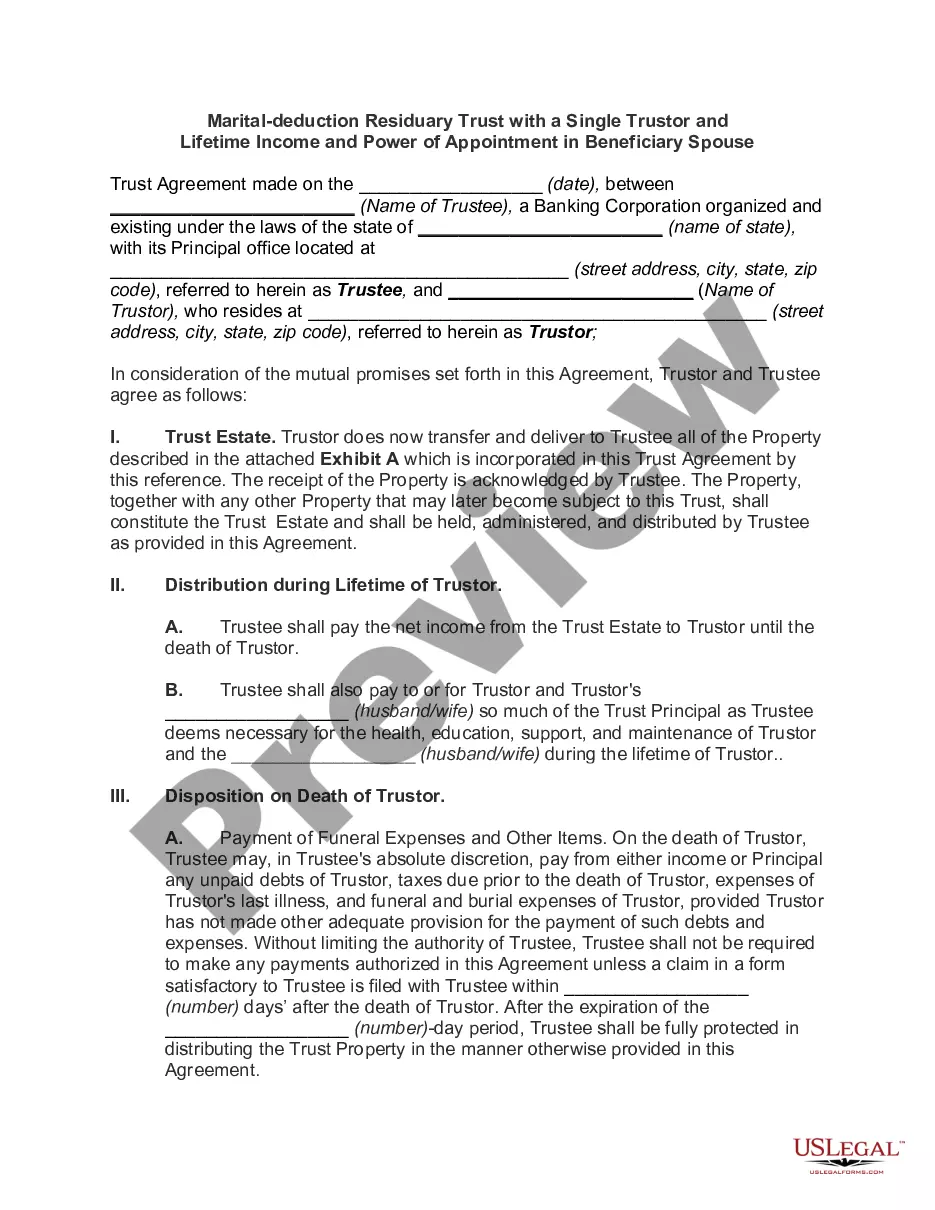
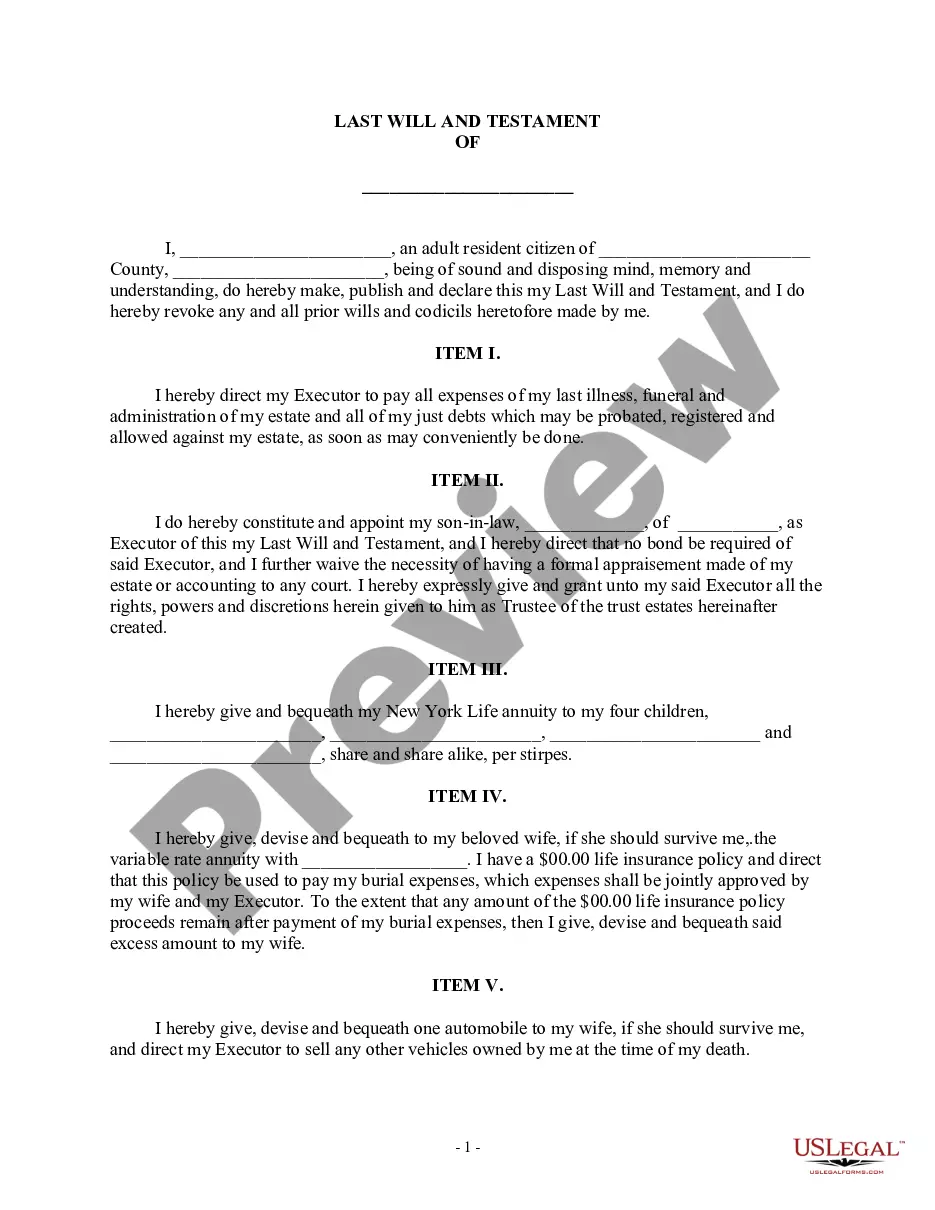
The Complex Will with Credit Shelter Marital Trust for Large Estates is a sophisticated legal document designed to facilitate estate planning while minimizing estate taxes for married couples. This form allows the couple to ensure that a specific amount of their estate passes tax-free to children through a marital trust. Unlike simple wills, this complex will incorporates a trust mechanism that maximizes tax exemption benefits, ensuring that significant assets can be transferred without incurring substantial tax liabilities upon death.
Key parts of this document
- Identification of the testator and their family members, including spouse and children.
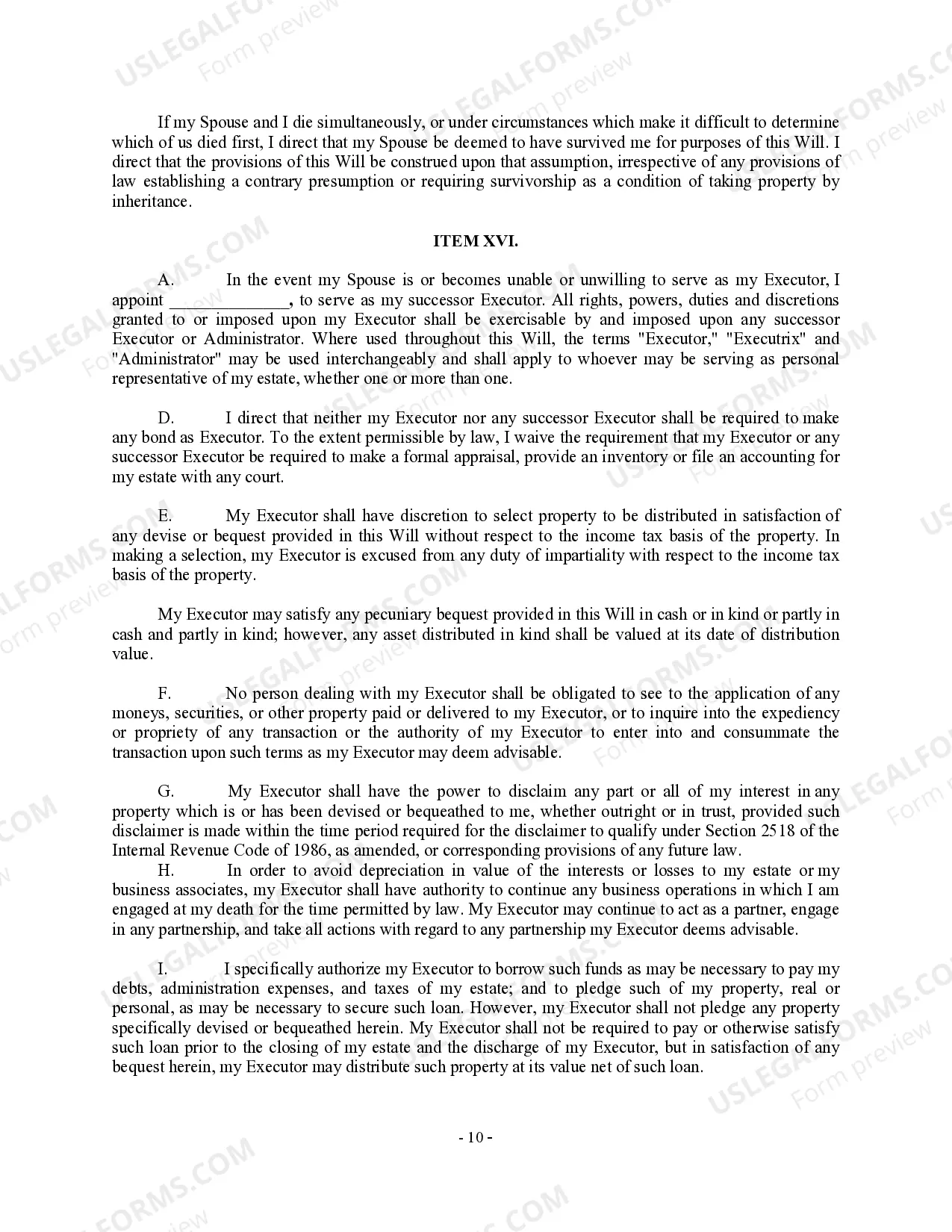
- Appointment of an executor and provisions for handling debts and taxes.
- Establishment of a Credit Shelter Trust to secure tax-free transfers to children.
- Instructions for the distribution of personal and real property, including family homes and personal effects.
- Provisions that govern the management and distribution of assets held in trust for the benefit of the spouse and children.




Common use cases
This form is particularly useful when individuals with large estates wish to ensure that their heirs receive maximum benefits without incurring estate taxes. It is recommended for married couples who own significant assets and want to plan for the possibility of one spouse passing away, ensuring that the surviving spouse and children are adequately provided for while minimizing tax implications.
Who this form is for
Eligibility and Intended Audience
- Married couples with considerable assets who want to establish an effective estate plan.
- Individuals seeking to minimize estate taxes for their beneficiaries.
- Families with children who wish to ensure the tax-efficient transfer of wealth.
- Estate planners and attorneys assisting clients in drafting comprehensive wills.
How to complete this form
Steps to Complete the Form
- Identify yourself as the testator and fill in your personal details, including name and county of residence.
- List your spouse and children, providing their full names.
- Appoint an executor to handle the estate and outline their responsibilities.
- Specify the assets to be placed in the Credit Shelter Trust and detail additional property distribution instructions.
- Sign the document in the presence of witnesses and have it notarized, if required.
Does this document require notarization?
This form does typically require notarization to be legally valid. However, you may consult local laws or instructions specific to Wisconsin for further details. US Legal Forms provides integrated online notarization services that are secure and available 24/7, allowing you to complete this process without travel.
Get your form ready online
Our built-in tools help you complete, sign, share, and store your documents in one place.
Make edits, fill in missing information, and update formatting in US Legal Forms—just like you would in MS Word.
Download a copy, print it, send it by email, or mail it via USPS—whatever works best for your next step.
Sign and collect signatures with our SignNow integration. Send to multiple recipients, set reminders, and more. Go Premium to unlock E-Sign.
If this form requires notarization, complete it online through a secure video call—no need to meet a notary in person or wait for an appointment.
We protect your documents and personal data by following strict security and privacy standards.

Make edits, fill in missing information, and update formatting in US Legal Forms—just like you would in MS Word.

Download a copy, print it, send it by email, or mail it via USPS—whatever works best for your next step.

Sign and collect signatures with our SignNow integration. Send to multiple recipients, set reminders, and more. Go Premium to unlock E-Sign.

If this form requires notarization, complete it online through a secure video call—no need to meet a notary in person or wait for an appointment.

We protect your documents and personal data by following strict security and privacy standards.
Common mistakes to avoid
Common Mistakes to Avoid
- Failing to properly identify all beneficiaries, which could lead to disputes.
- Not including necessary witness signatures, rendering the will invalid.
- Neglecting to review and update the will after major life changes.
- Assuming verbal agreements regarding asset distribution are legally binding.
Benefits of using this form online
Benefits of Using This Form Online
- Convenient access to a comprehensive legal document in a downloadable format.
- Editable content that allows users to personalize according to their specific situations.
- Drafted by licensed attorneys, ensuring legal accuracy and compliance.
- Cost-effective compared to hiring legal professionals for standard estate planning needs.
Looking for another form?

Form popularity
FAQ
QTIP trusts are put to use in estate planning and are especially useful when beneficiaries exist from a previous marriage but the grantor dies before a subsequent spouse does. With a QTIP, estate tax is not assessed at the point of the first spouse's death, but is instead determined after the second spouse has passed.
A marital trust is a type of irrevocable trust that allows you to transfer assets to a surviving spouse tax free. It can also shield the estate of the surviving spouse before the remaining assets pass on to your children.
A credit shelter trust (CST) is a trust created after the death of the first spouse in a married couple. Assets placed in the trust are generally held apart from the estate of the surviving spouse, so they may pass tax-free to the remaining beneficiaries at the death of the surviving spouse.
A marital trust starts as a revocable living trust. A surviving spouse can be its trustee.
A QTIP trust (officially a qualified terminable interest property trust) is a type of trust that allows someone to provide income for their surviving spouse and bequeath property and assets to a different set of beneficiaries.
A marital trust allows the couple's heirs to avoid probate and take less of a hit from estate taxes by taking full advantage of the unlimited marital deductiona provision that enables spouses to pass assets to each other without tax consequences.
Also called an "A" trust, a marital trust goes into effect when the first spouse dies. Assets are moved into the trust upon death and the income that these assets generate go to the surviving spouseunder some arrangements, the surviving spouse can also receive principal payments.
Unlike with a QTIP trust, the surviving spouse typically has complete control over a marital trust, including use of the trust assets and final say on designating who the final beneficiaries are. A QTIP trust offers more control to the grantor but less control to the surviving spouse compared to marital trust.
Yes, the surviving spouse may serve as trustee of the credit shelter trust.All of the assets in the credit shelter trust, including any appreciation in value during the surviving spouse's lifetime, pass free of estate tax to the beneficiaries.