Associate Application (Ergonomics)
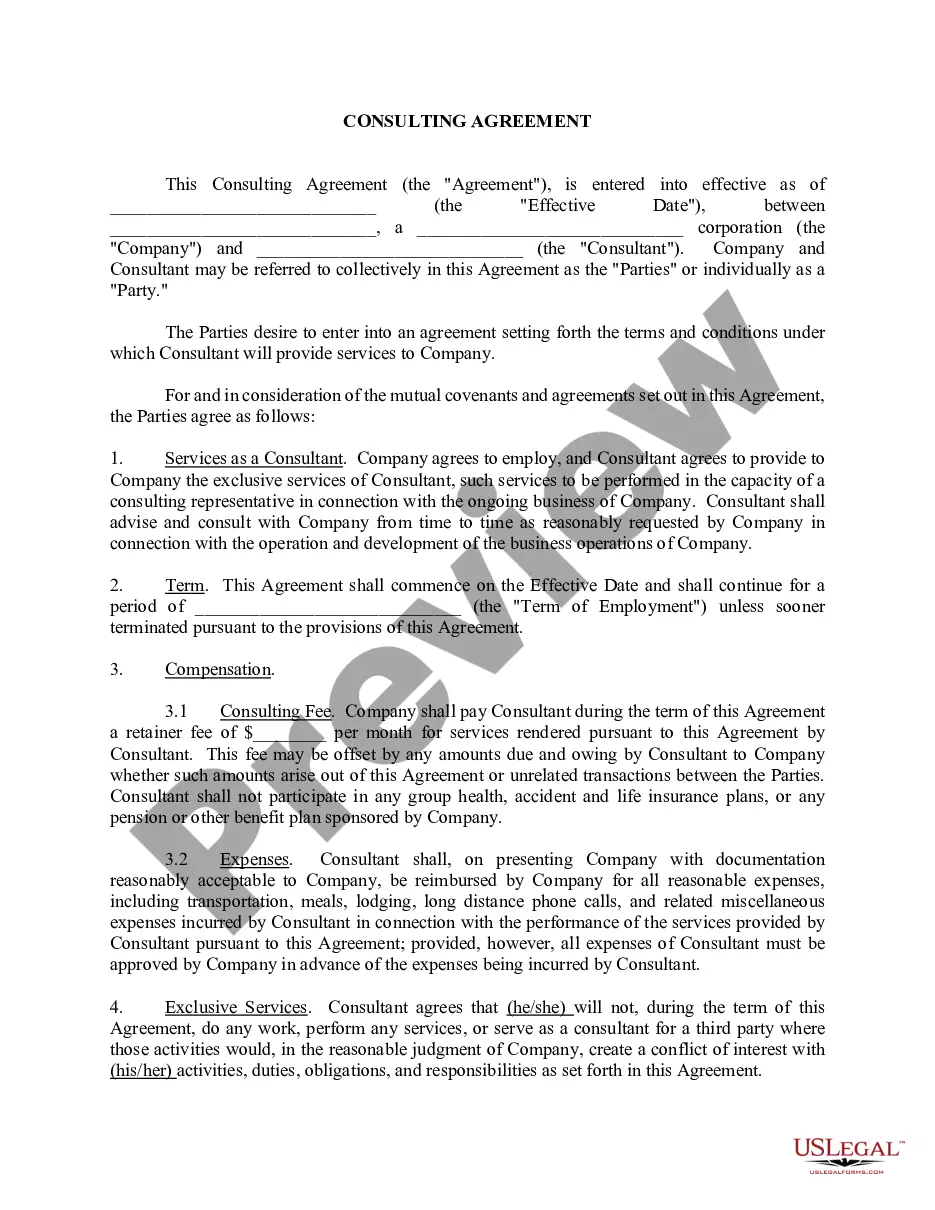
What is this form?
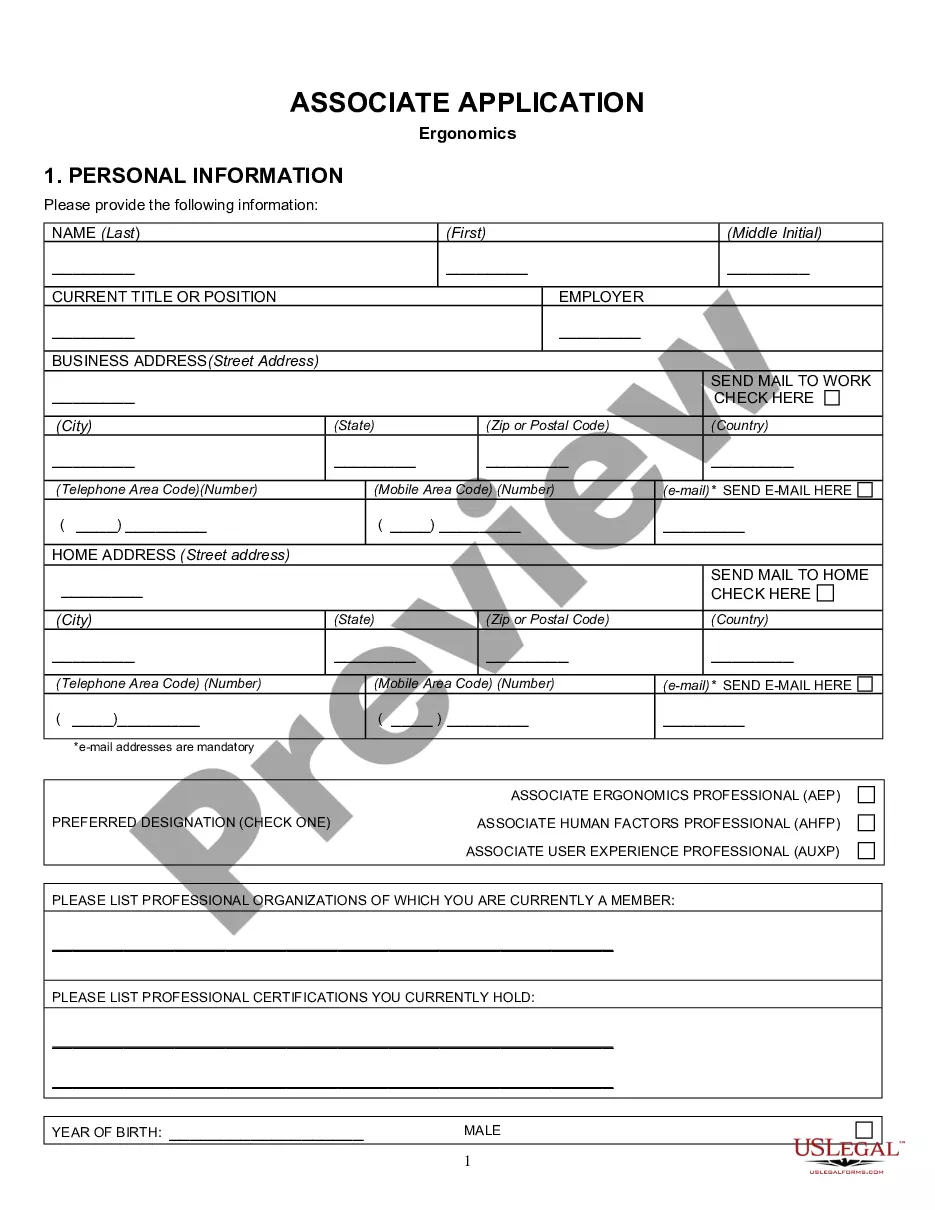
The Associate Application (Ergonomics) is designed for individuals seeking certification in ergonomics. This form allows applicants to submit their personal and educational information to demonstrate their qualifications. Unlike other applications, this specific document focuses on aspects related to ergonomics, highlighting both academic qualifications and professional experience necessary for certification as an Associate Ergonomics Professional, Associate Human Factors Professional, or Associate User Experience Professional.
Form components explained
- Personal information section for the applicant's details, including name, current position, and contact information.
- Preferred designation checkboxes to indicate the certification type being pursued.
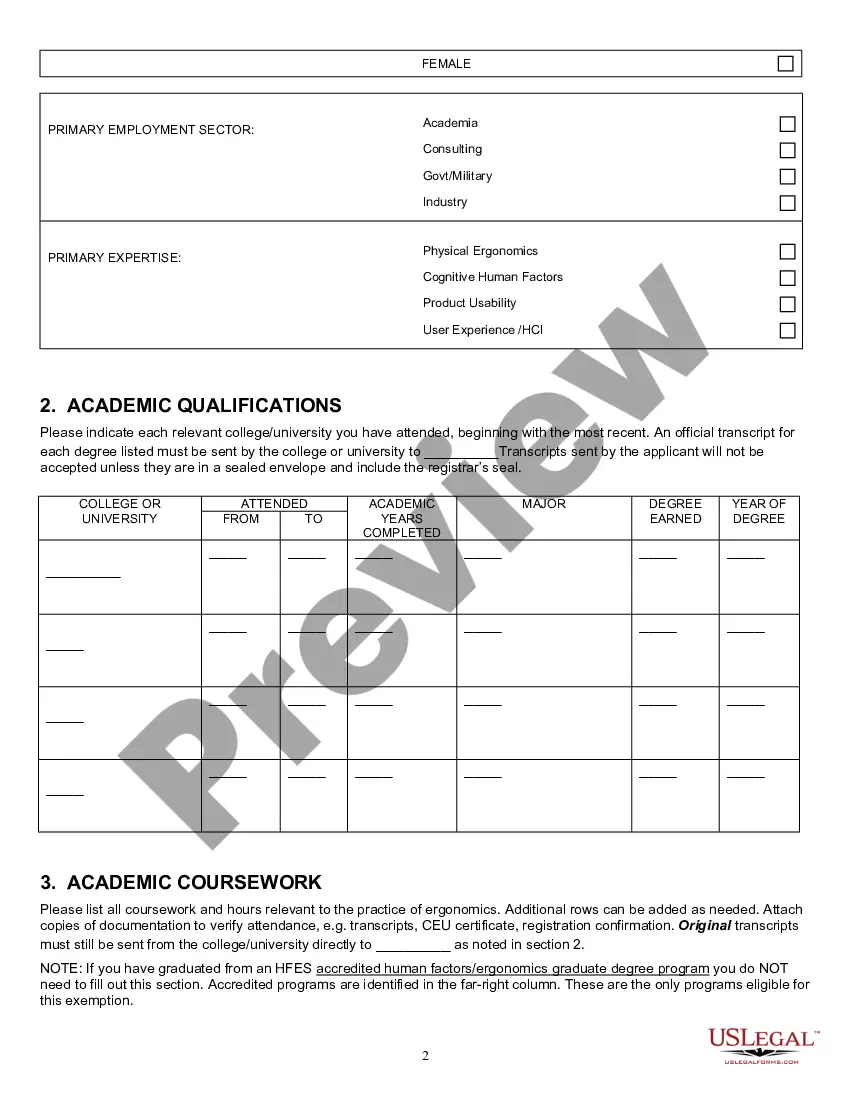
- Academic qualifications section requesting details of educational institutions attended and degrees earned.
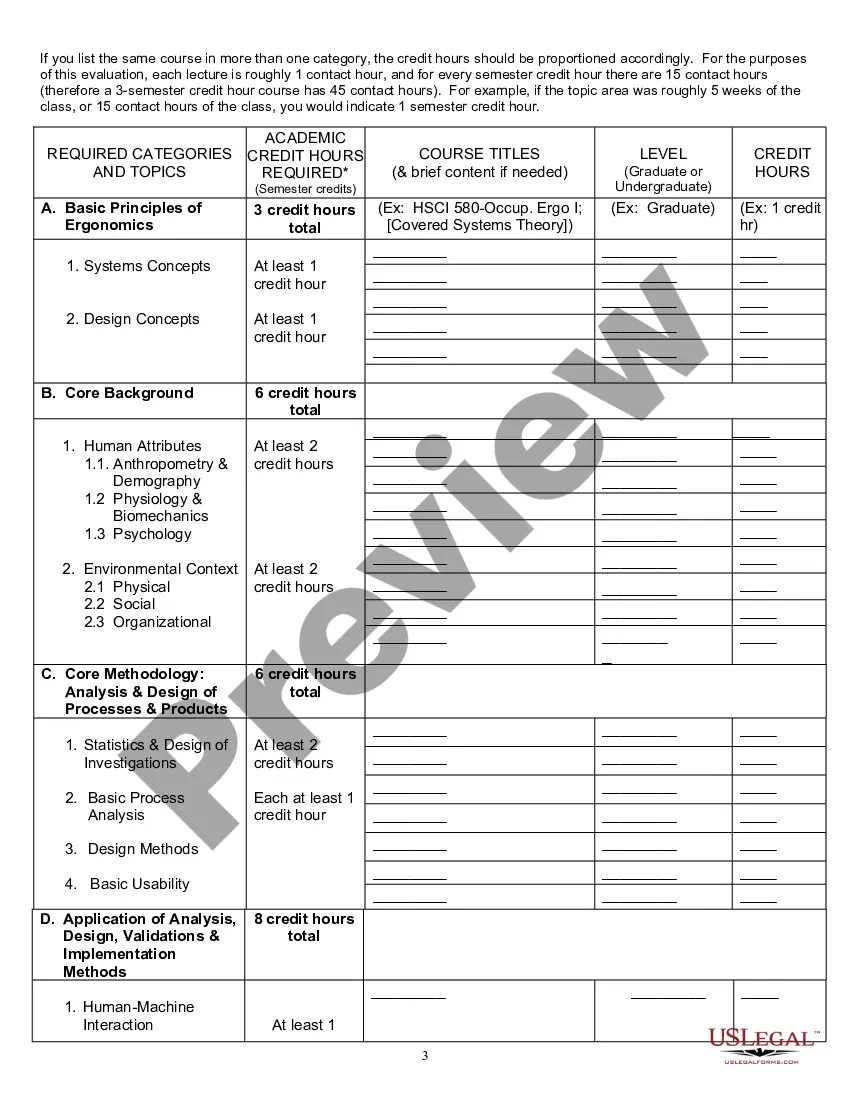
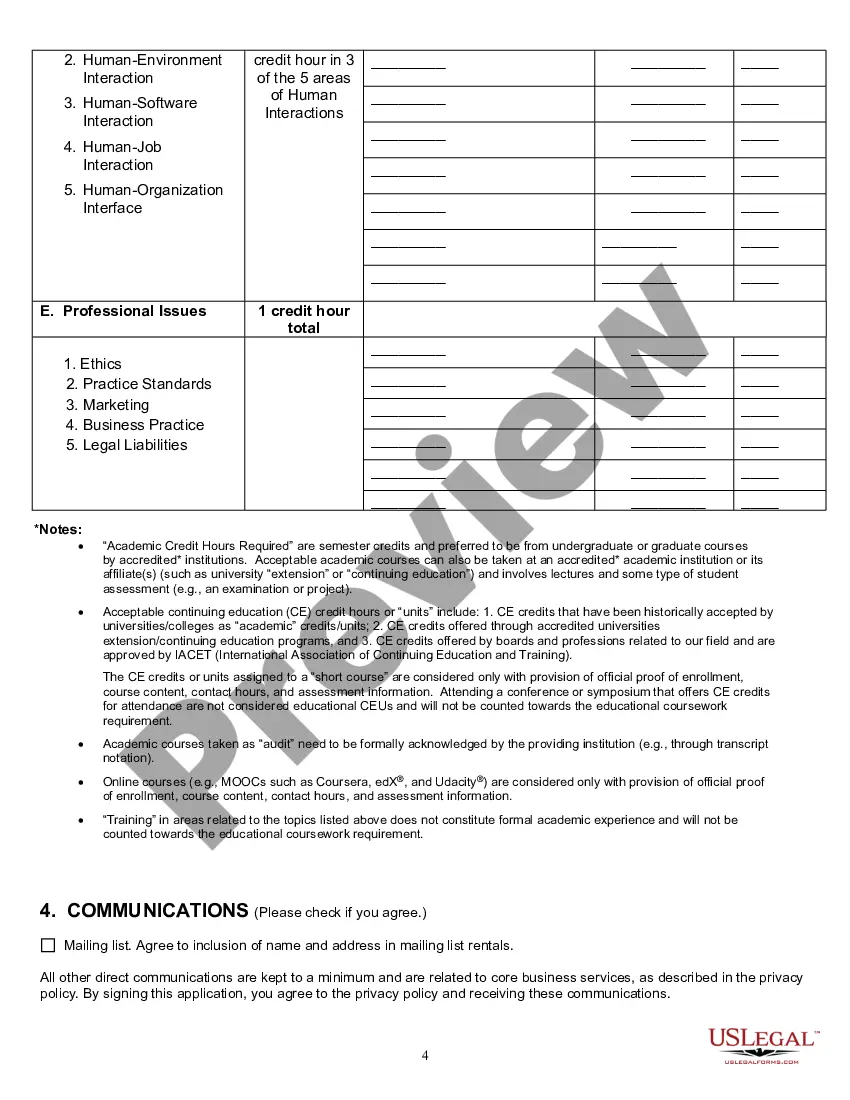
- Coursework section for listing relevant studies in ergonomics and human factors.
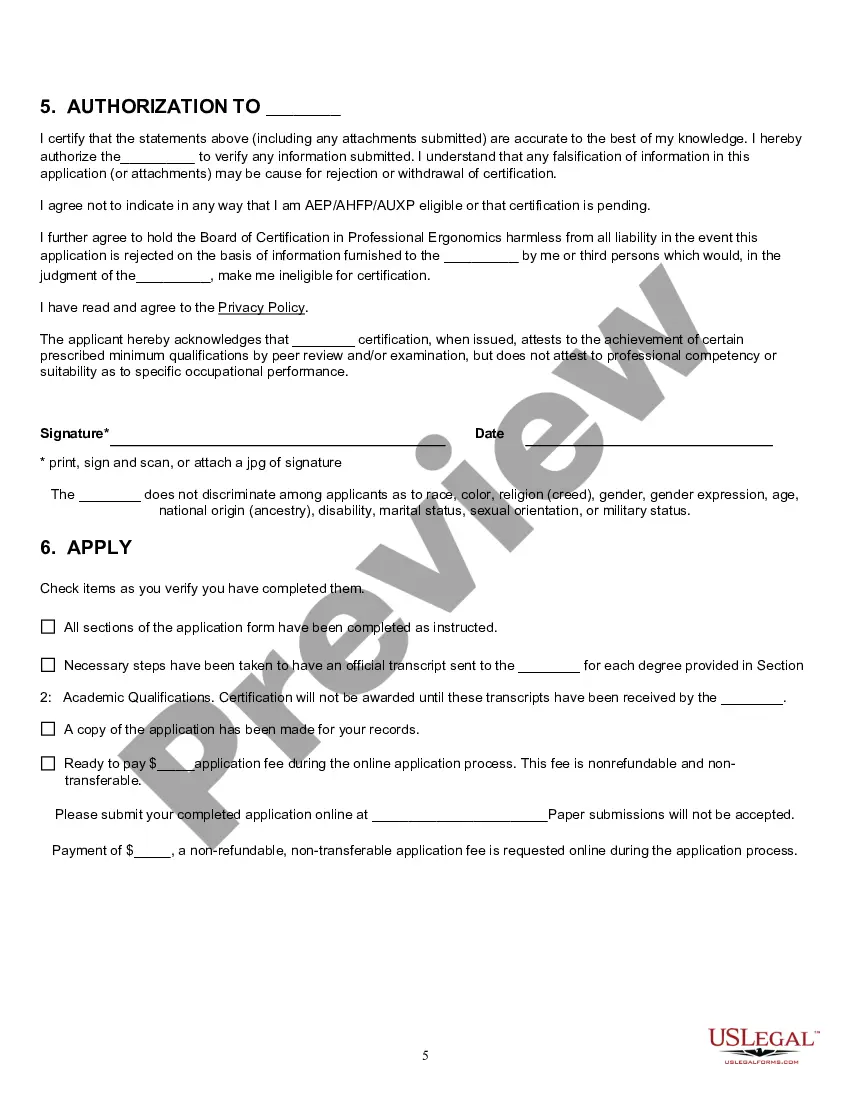
- Authorization section where applicants certify the accuracy of their information.
- Completion checklist to ensure all necessary sections are filled out before submission.


When to use this document
This form is necessary when an individual wants to apply for certification in ergonomics. You should use this application if you have the required educational background and professional experience and are ready to seek formal recognition in the field. It is often used when transitioning from educational pursuits to professional certification or for individuals looking to enhance their professional credentials.
Who should use this form
- Individuals aiming to become certified as Associate Ergonomics Professionals (AEP).
- Applicants seeking qualifications as Associate Human Factors Professionals (AHFP).
- Individuals intending to achieve certification as Associate User Experience Professionals (AUXP).
- Professionals with relevant educational qualifications in ergonomics and related fields.
Steps to complete this form
- Begin by providing your personal information, including your full name, current employment details, and contact information.
- Select your preferred certification designation from the provided options.
- Fill out the academic qualifications section, listing all colleges or universities attended and degrees earned.
- Detail your relevant coursework, ensuring to provide documentation for verification.
- Review all sections to make sure each is completed accurately before submitting your application online.
- Complete the authorization section to confirm the accuracy of your application and agree to the terms.
Does this form need to be notarized?
This form does not typically require notarization unless specified by local law. Be sure to check the specific requirements in your jurisdiction to ensure compliance.
Get your form ready online
Our built-in tools help you complete, sign, share, and store your documents in one place.
Make edits, fill in missing information, and update formatting in US Legal Forms—just like you would in MS Word.
Download a copy, print it, send it by email, or mail it via USPS—whatever works best for your next step.
Sign and collect signatures with our SignNow integration. Send to multiple recipients, set reminders, and more. Go Premium to unlock E-Sign.
If this form requires notarization, complete it online through a secure video call—no need to meet a notary in person or wait for an appointment.
We protect your documents and personal data by following strict security and privacy standards.

Make edits, fill in missing information, and update formatting in US Legal Forms—just like you would in MS Word.

Download a copy, print it, send it by email, or mail it via USPS—whatever works best for your next step.

Sign and collect signatures with our SignNow integration. Send to multiple recipients, set reminders, and more. Go Premium to unlock E-Sign.

If this form requires notarization, complete it online through a secure video call—no need to meet a notary in person or wait for an appointment.

We protect your documents and personal data by following strict security and privacy standards.
Typical mistakes to avoid
- Forgetting to include official transcripts or relevant documentation.
- Leaving sections of the application incomplete or unchecked.
- Submitting personal statements without verifying for accuracy.
- Failing to sign the application or improperly signing it.
Benefits of completing this form online
- Convenient access from anywhere, allowing you to complete the application at your own pace.
- Editable fields make it easy to correct errors before submission.
- Reliable processing ensures a smooth application experience.
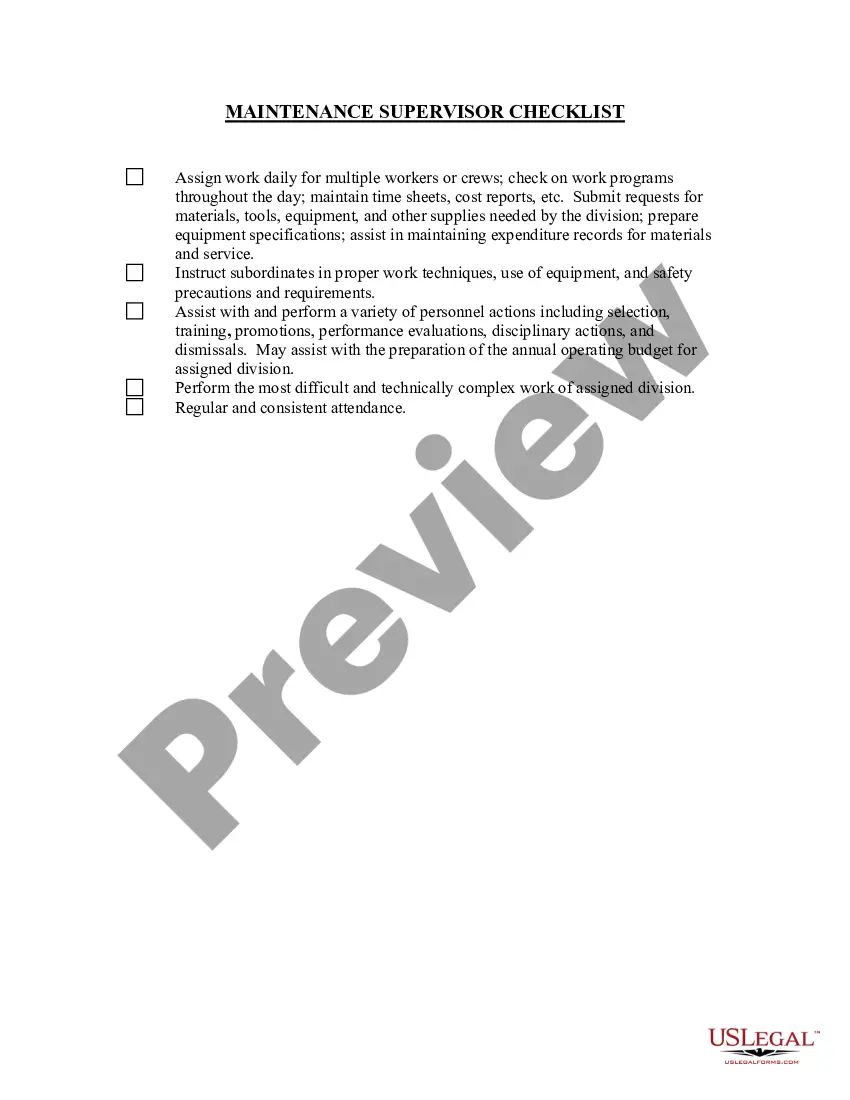
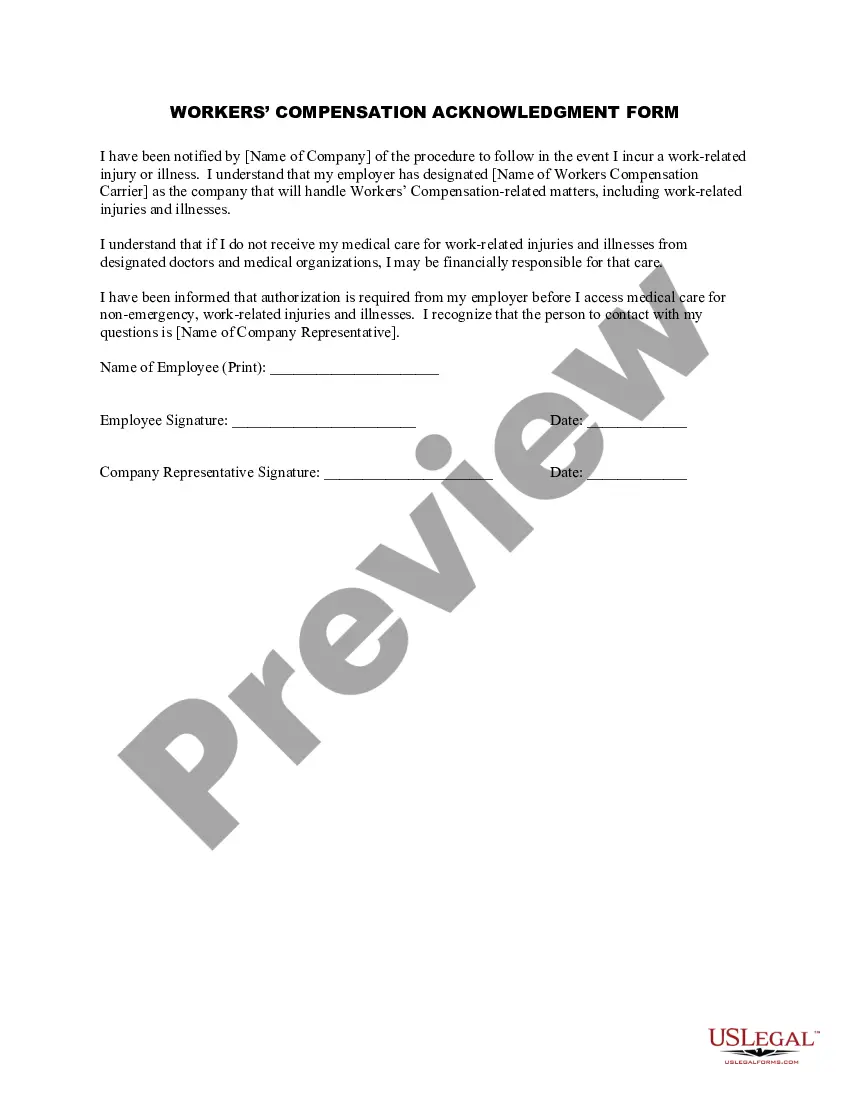
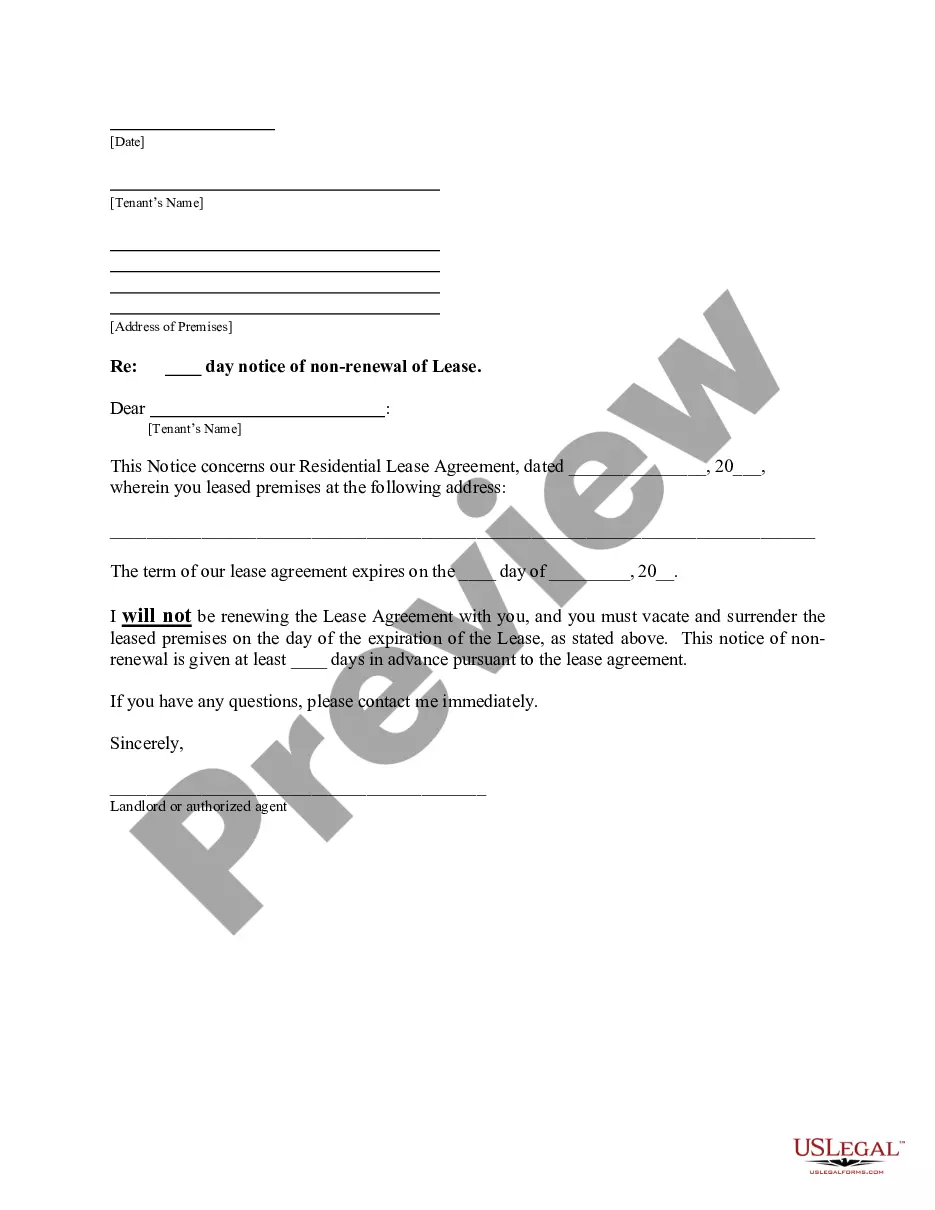
Looking for another form?



Form popularity
FAQ
Ergonomists ensure that the designs of systems, equipment and facilities provide the best levels of efficiency, comfort and health and safety for anyone using them. Ergonomics can promote both health and productivity in a work environment. Ergonomists are also known as human factors specialists.
3 Dimensions Or Ergonomics Physical Ergonomics. In physical ergonomics, it is mainly physiological interactions of people and their activities that are concerned.Cognitive Ergonomics.Organizational Ergonomics.
The function of specialists in ergonomics is to design or to improve the workplace, equipment, and procedures of workers to ensure the safe, healthy, and efficient achievement of personal and organizational goals.
Prominent ergonomic principles include: Use of neutral posture, rotating tasks to avoid overwork of muscles/other tissues, use of proper handholds and proper gripping technique, and proper lifting/carrying/pushing/pulling procedures.
There are three types of ergonomics: physical, cognitive, and organizational. Each of these differently affects how people interact with their environment, contributing to how effective they are in their work.
The Associate Ergonomist (AE) designation is earned by individuals who have met the ergonomics/human factors education requirements to move towards the CCPE designation.
What is an example of ergonomics? The best example of an ergonomic design is comfortable furniture like an office chair, an ideally designed desk, improved footrests, comfortable wrist rests, an adjustable monitor, an ergonomic keyboard, and a well-positioned mouse.
There are five aspects of ergonomics: safety, comfort, ease of use, productivity/performance, and aesthetics. Ergonomics is a science concerned with the 'fit' between people and their work.