Residential Purchase Agreement
Overview of this form
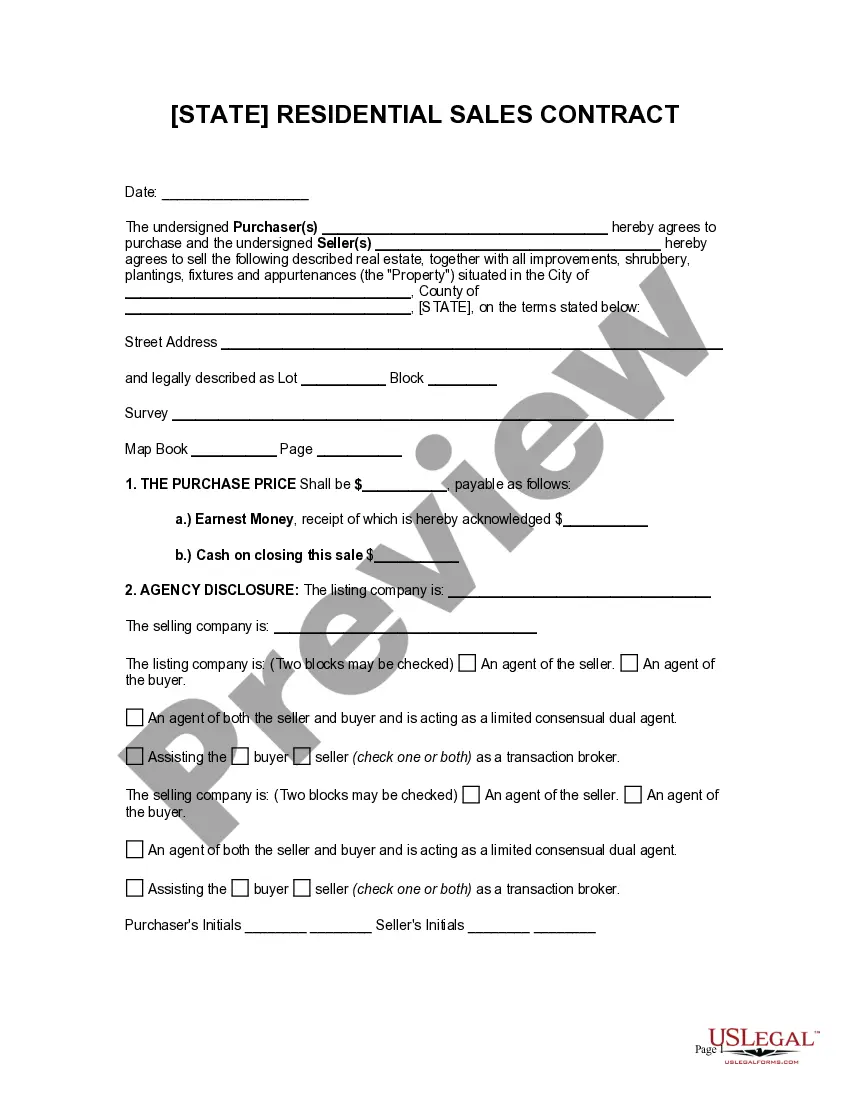
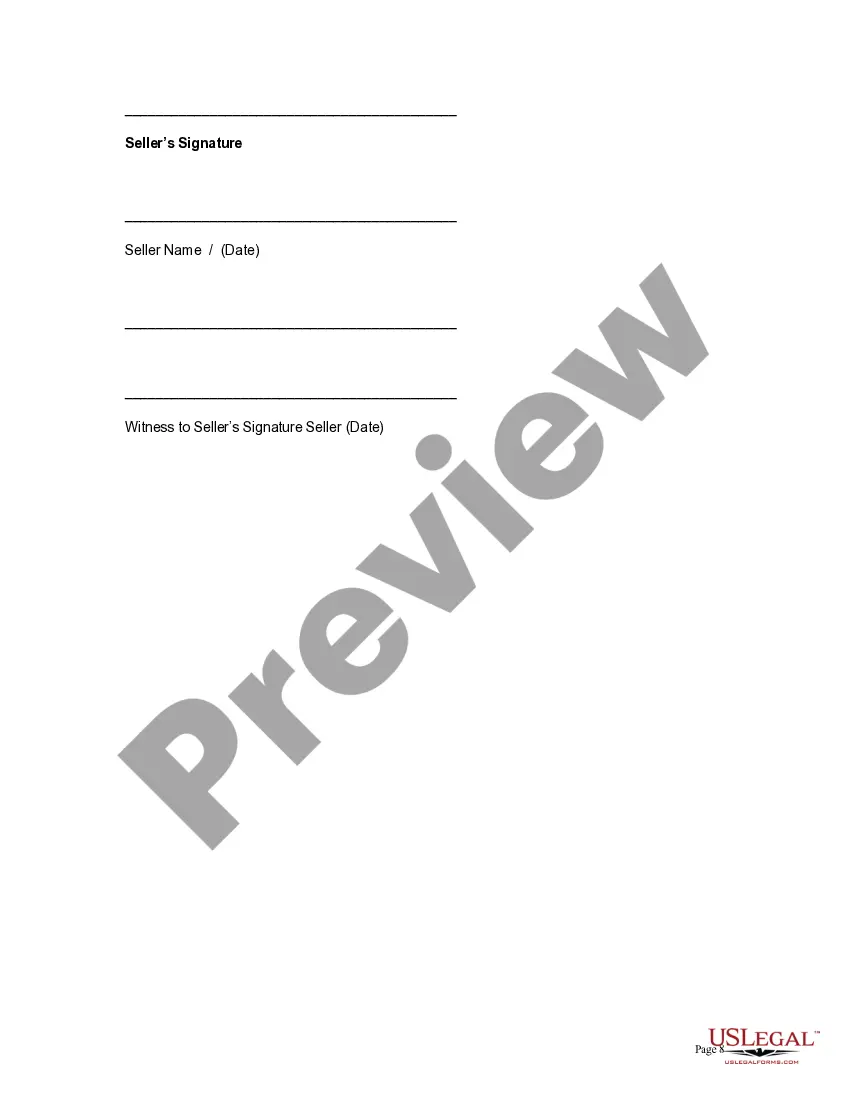
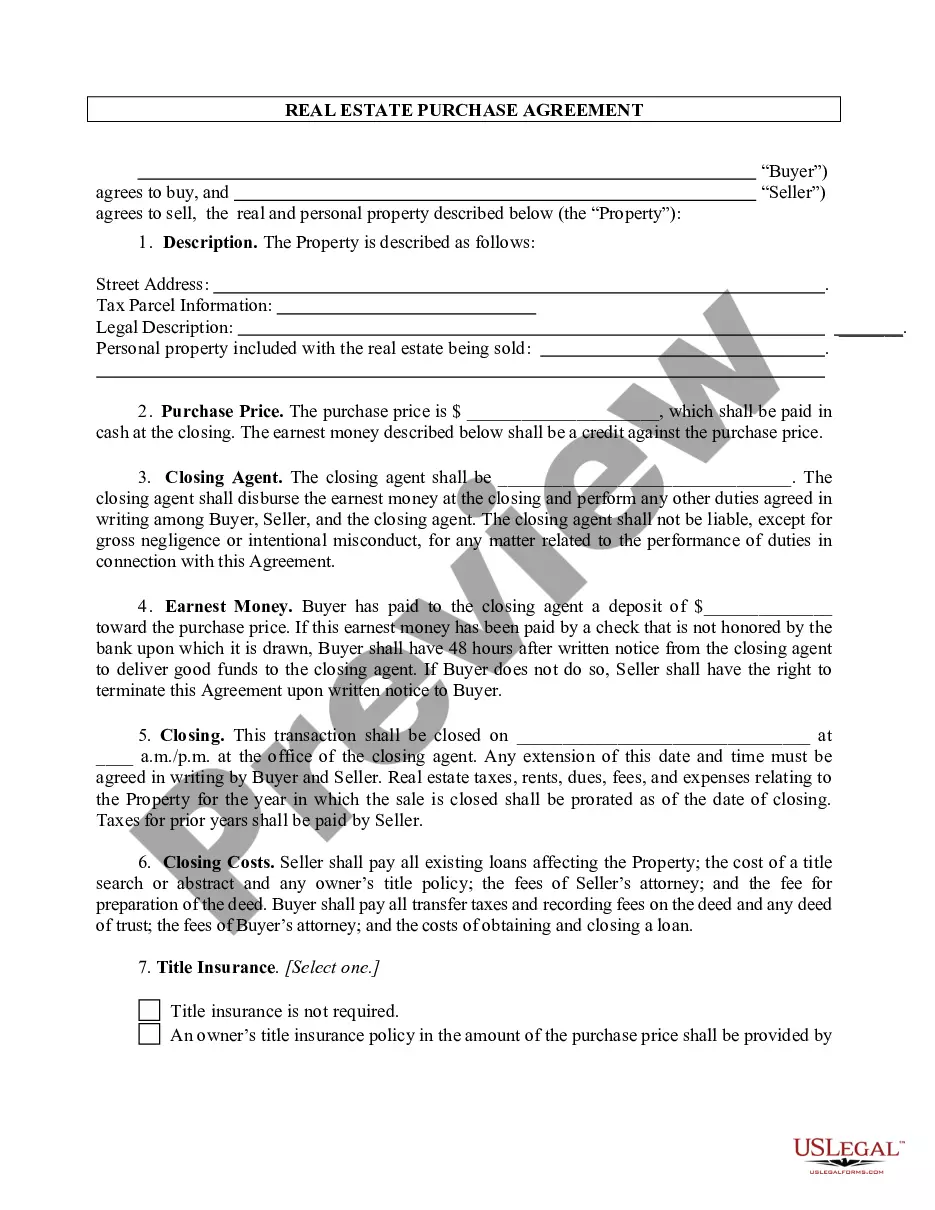
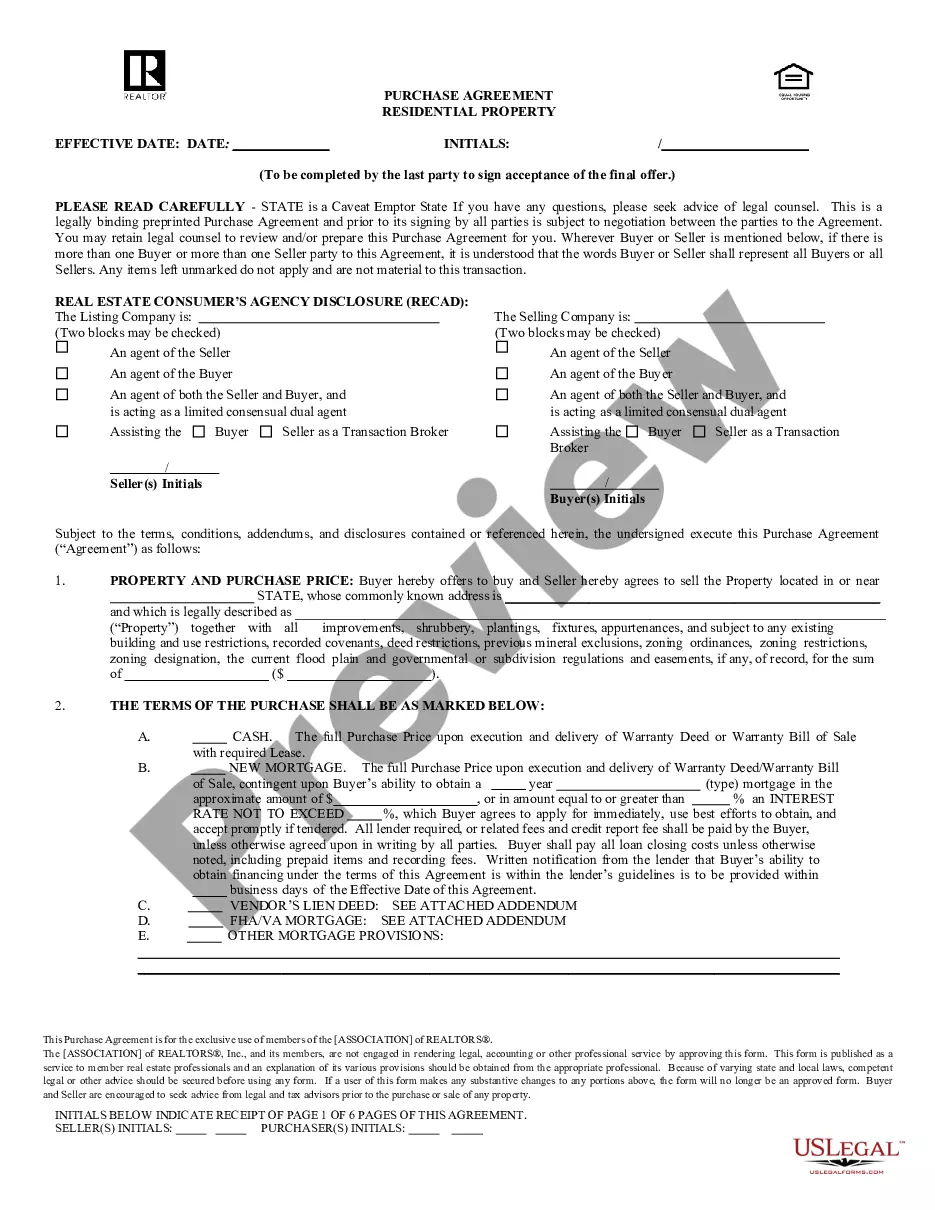
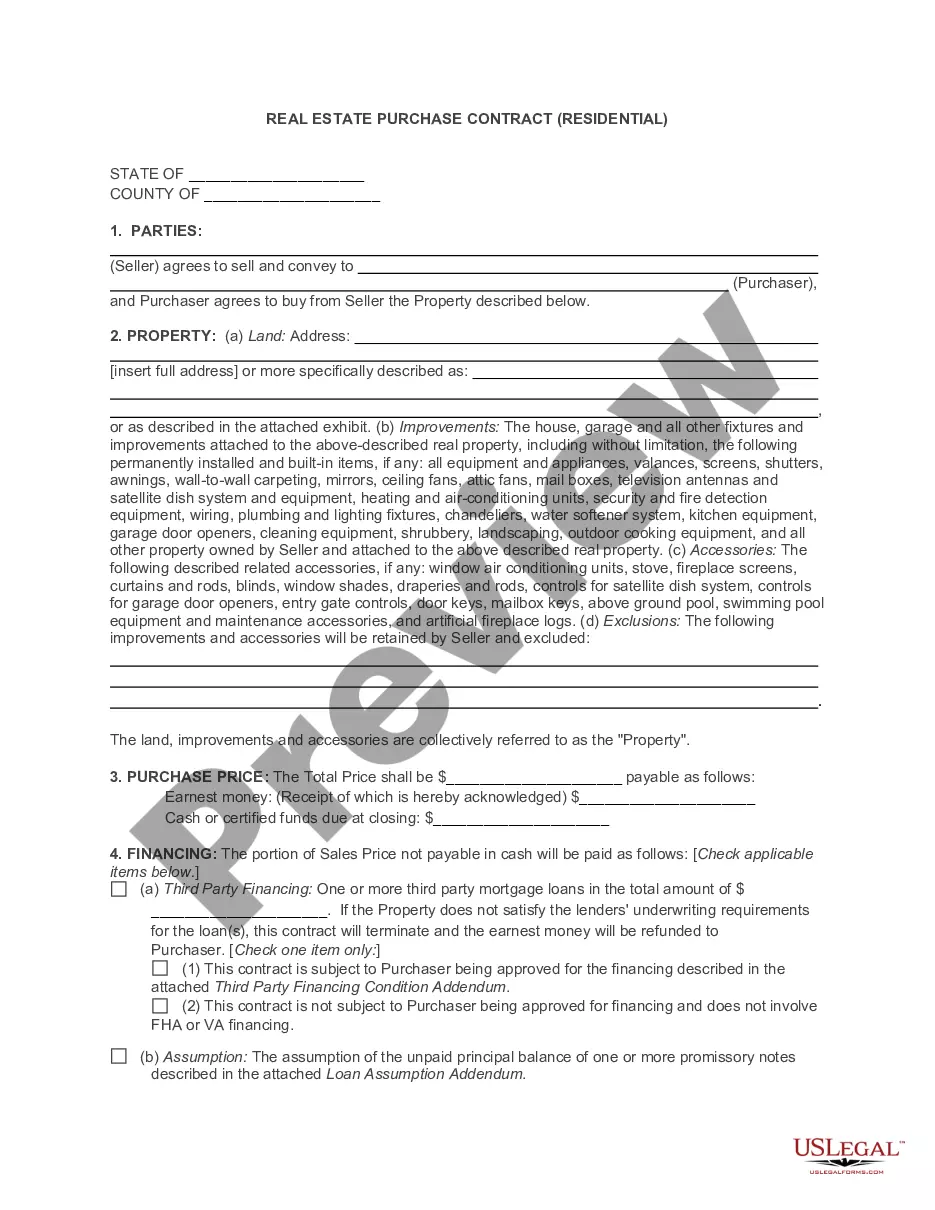
The Residential Purchase Agreement is a legal contract outlining the terms of a sale and purchase of real estate between a buyer and a seller. This agreement details crucial elements including the purchase price, property description, and conditions of sale. It is essential for establishing clear responsibilities and expectations for both parties involved in the transaction, differentiating it from other real estate documents such as lease agreements or rental contracts.
Key components of this form
- Date of agreement
- Identification of the parties involved (buyer and seller)
- Property description, including location and legal details
- Purchase price and payment terms, including earnest money
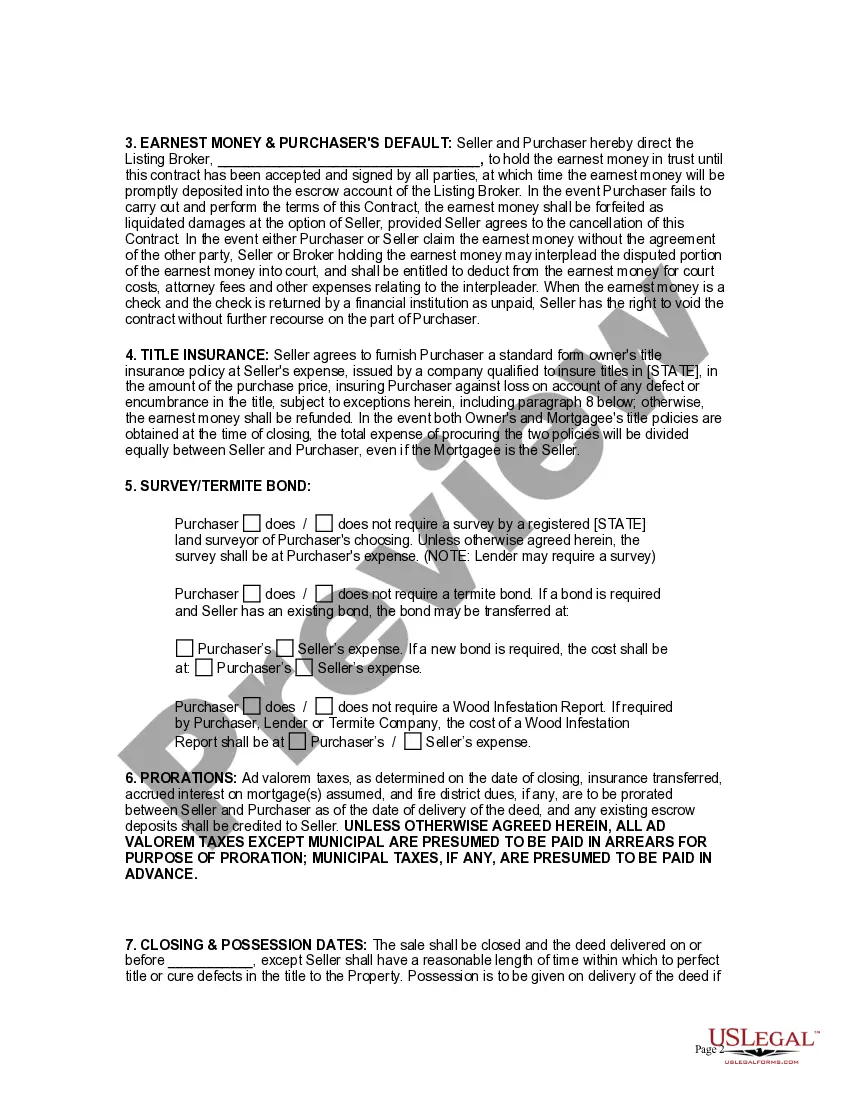
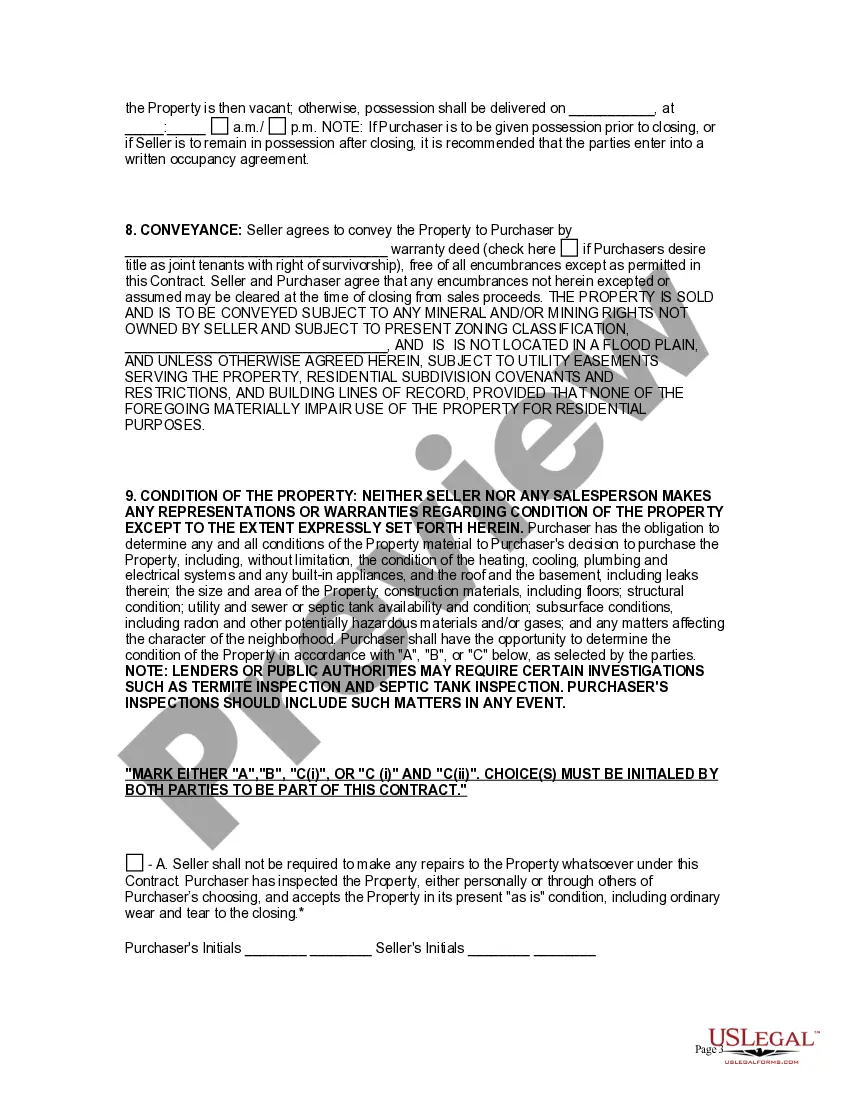
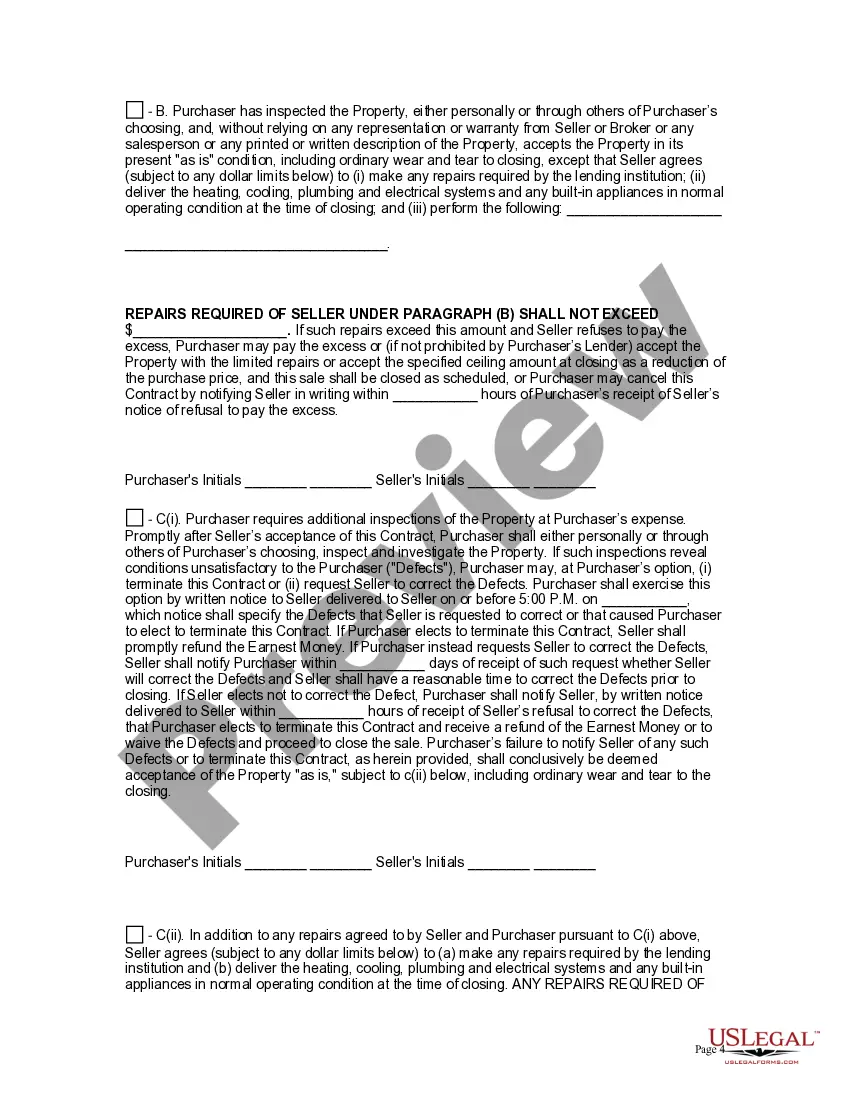
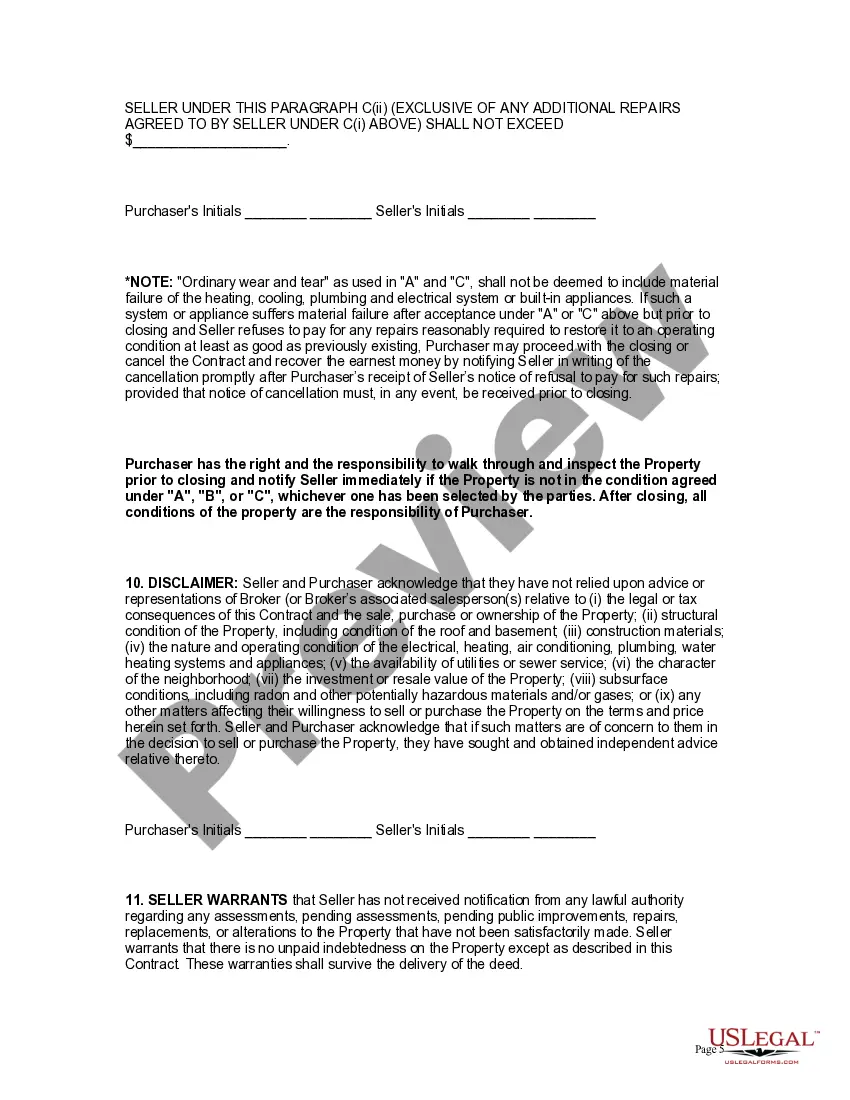
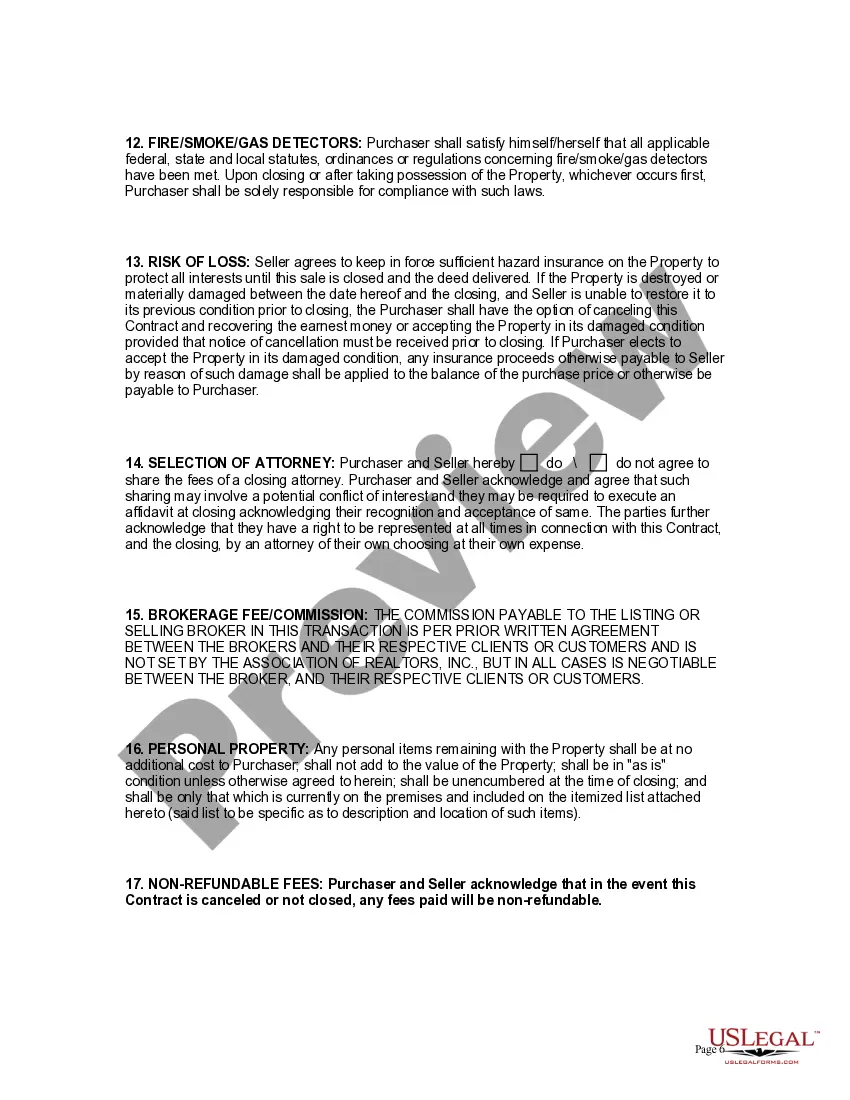
- Conditions regarding inspections, repairs, and disclosures
- Provisions related to closing dates and possession of the property

When to use this form
This form should be used when a buyer and seller agree on the terms for the sale of residential real estate. It is often utilized once a buyer has found a property they wish to purchase and the seller has accepted their offer, allowing both parties to formalize their agreement and proceed with the transaction.
Who this form is for
- Home buyers seeking to purchase residential property
- Sellers looking to close a sale of their real estate
- Real estate agents and brokers facilitating property transactions
- Individuals involved in real estate investments or transactions
Instructions for completing this form
- Identify and fill in the date of the agreement.
- Clearly list the names and contact information of the buyer(s) and seller(s).
- Provide a complete description of the property including its address and legal description.
- Specify the total purchase price and payment terms, including details on earnest money.
- Complete sections regarding inspections, repairs, and disclosures as agreed upon by both parties.
- Review the entire agreement for accuracy, sign it, and ensure all parties receive a copy.
Is notarization required?
This form does not typically require notarization unless specified by local law. Always check your jurisdictionâs regulations to ensure compliance.
Get your form ready online
Our built-in tools help you complete, sign, share, and store your documents in one place.
Make edits, fill in missing information, and update formatting in US Legal Forms—just like you would in MS Word.
Download a copy, print it, send it by email, or mail it via USPS—whatever works best for your next step.
Sign and collect signatures with our SignNow integration. Send to multiple recipients, set reminders, and more. Go Premium to unlock E-Sign.
If this form requires notarization, complete it online through a secure video call—no need to meet a notary in person or wait for an appointment.
We protect your documents and personal data by following strict security and privacy standards.

Make edits, fill in missing information, and update formatting in US Legal Forms—just like you would in MS Word.

Download a copy, print it, send it by email, or mail it via USPS—whatever works best for your next step.

Sign and collect signatures with our SignNow integration. Send to multiple recipients, set reminders, and more. Go Premium to unlock E-Sign.

If this form requires notarization, complete it online through a secure video call—no need to meet a notary in person or wait for an appointment.

We protect your documents and personal data by following strict security and privacy standards.
Mistakes to watch out for
- Failing to include all required details about the property.
- Not specifying the payment terms or earnest money correctly.
- Omitting signatures or dates, making the contract unenforceable.
- Overlooking state-specific requirements or local regulations.
Benefits of completing this form online
- Convenient access to a legally vetted document.
- Easy to complete and edit as needed before finalization.
- Secured download and storage options for future reference.
- Cost-effective solution compared to custom legal drafting.
Legal use & context
- Establishes a binding agreement between parties involved in a real estate transaction.
- Contains essential provisions that govern the sale and purchase process.
- Helps protect both buyer and seller from disputes regarding terms and conditions.
Looking for another form?
Form popularity
FAQ
The purchase agreement outlines the buyer's offer price, along with contingencies, financing terms, closing costs, possession date, and more. You must meticulously review the purchase agreement before you sign and turn the document into a legally binding sales contract.
The purpose of the Form 1 is to provide the buyer with important information about the property, including any encumbrances, easements, or other legal issues that may affect the sale. It is required under section 7 of the Land and Business (Sale and Conveyancing) Act 1994 (SA).
Can a Seller pull out of the REIQ contract? Once a residential contract has been signed by both the Seller and Buyer it is deemed legally binding by all parties. For a Seller to pull out of a sale it would be a complex and potentially costly procedure as they will be breaking the terms of the contract.
Types of Purchase Agreements There are four primary types of purchase orders. The difference is between them is essentially based on how much information is known at the time the order is made. The four types are standard purchase orders, planned purchase orders, blanket purchase orders, and contract purchase orders.
The contract of sale can be signed once you have accepted an offer from a buyer or the highest auction bid has reached or exceeded your reserve price. Your agent will prepare the contract of sale. If you are selling the property yourself then a conveyancer or solicitor will be able to assist with this stage.
It means that if another buyer makes an offer on the home, you have 48 hours to make your offer unconditional. This means you have to get an offer on your house or organise loan finance within 48 hours or withdraw your offer.
Once a contract is signed by the buyer and the seller it is legally binding. Examples of conditions can include: The offer will be withdrawn if the seller doesn't sign the contract by a certain date. A satisfactory building inspection report must be received.
Legally, you don't need a conveyancer or solicitor to sell your property. The complexities of real estate and property law can be daunting, however, so it makes sense to get sound, independent legal advice when you sell.