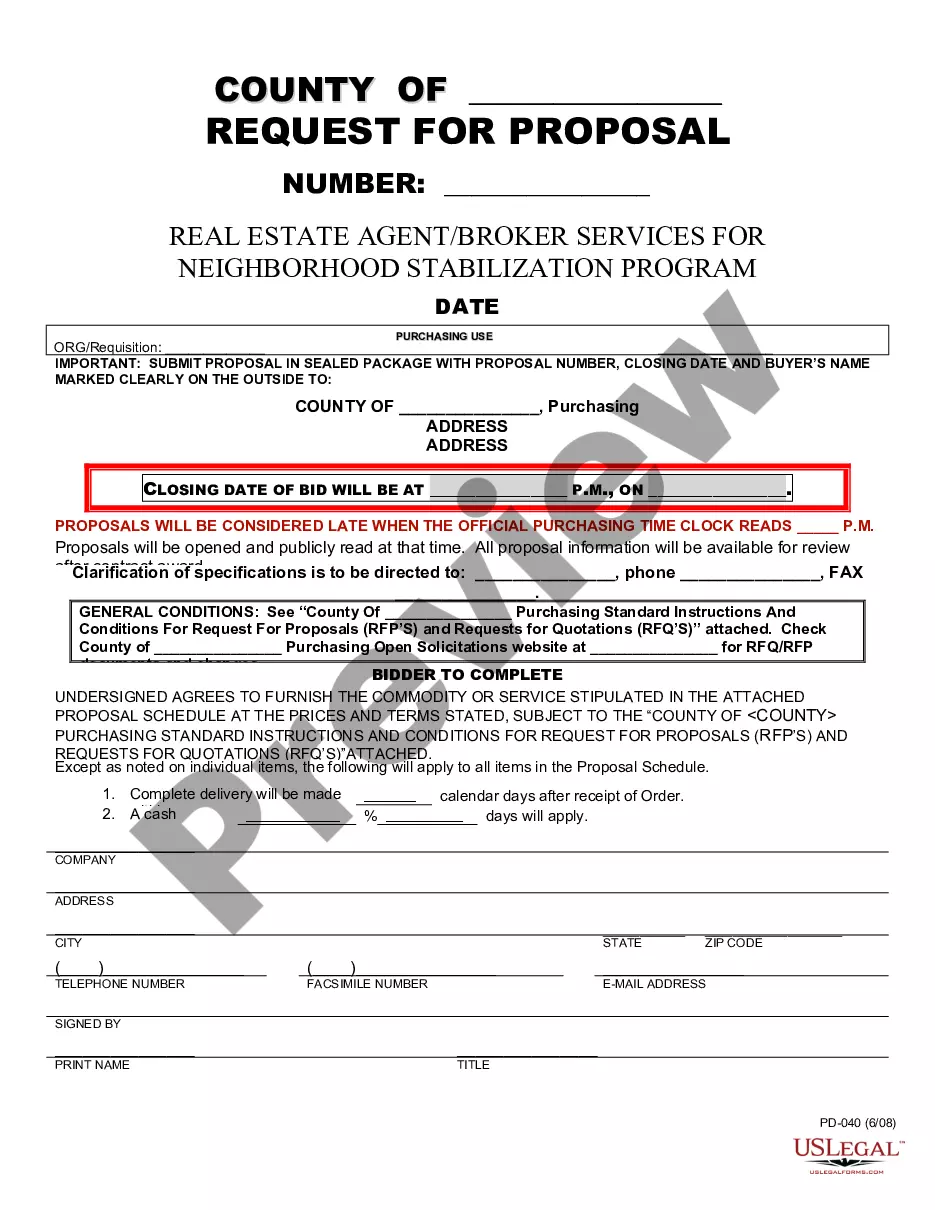
Request for Proposal: Real Estate Agent/Broker Services for Neighborhood Stabilization Program
What this document covers
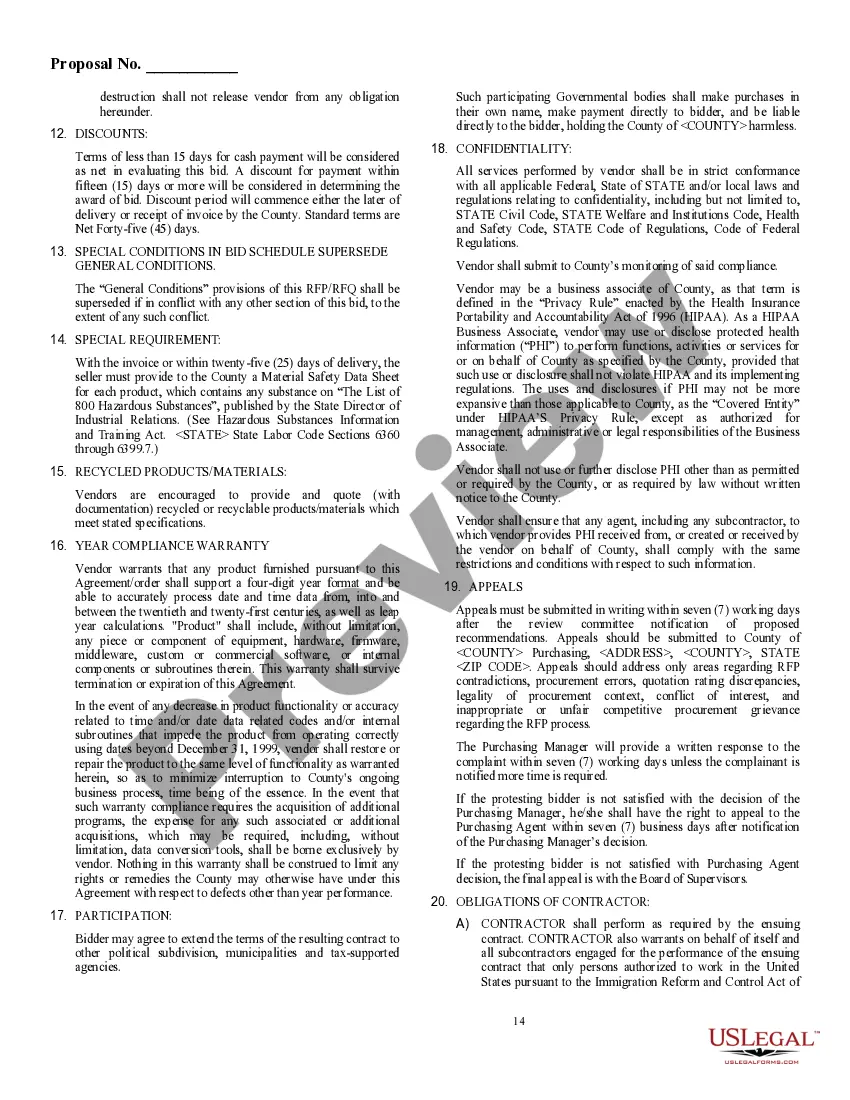
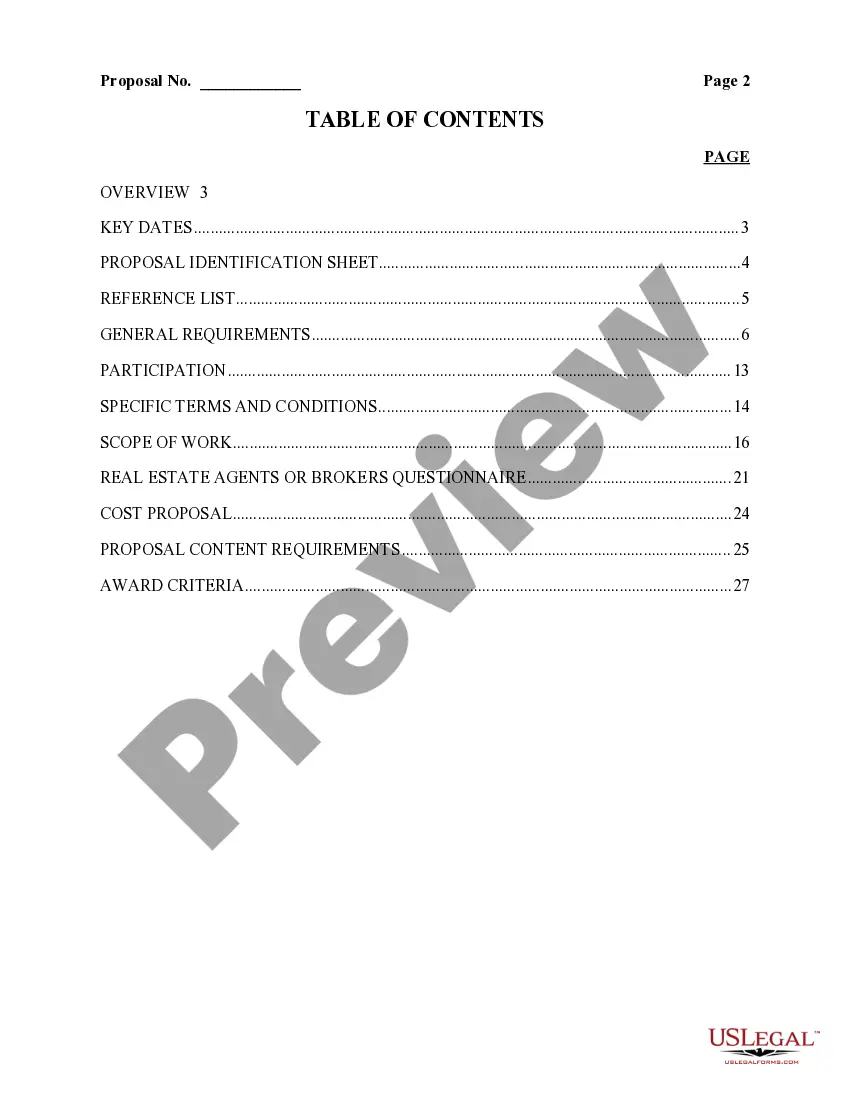
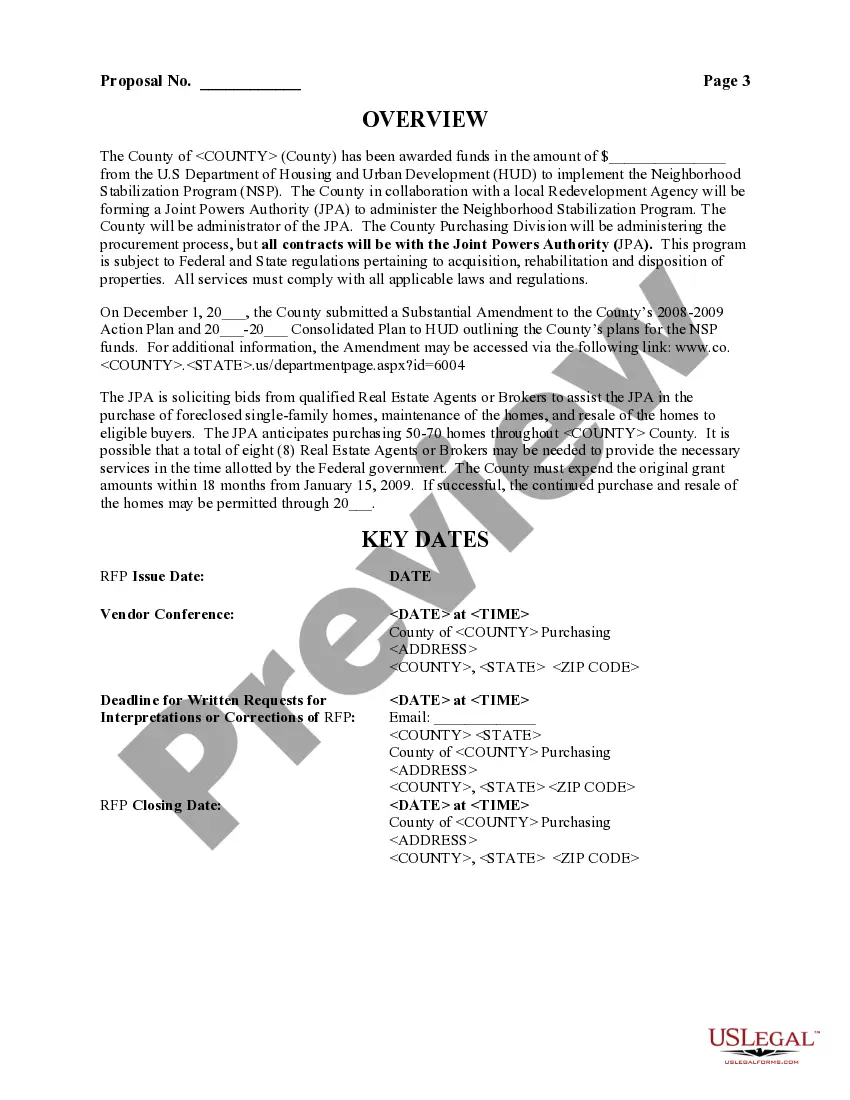
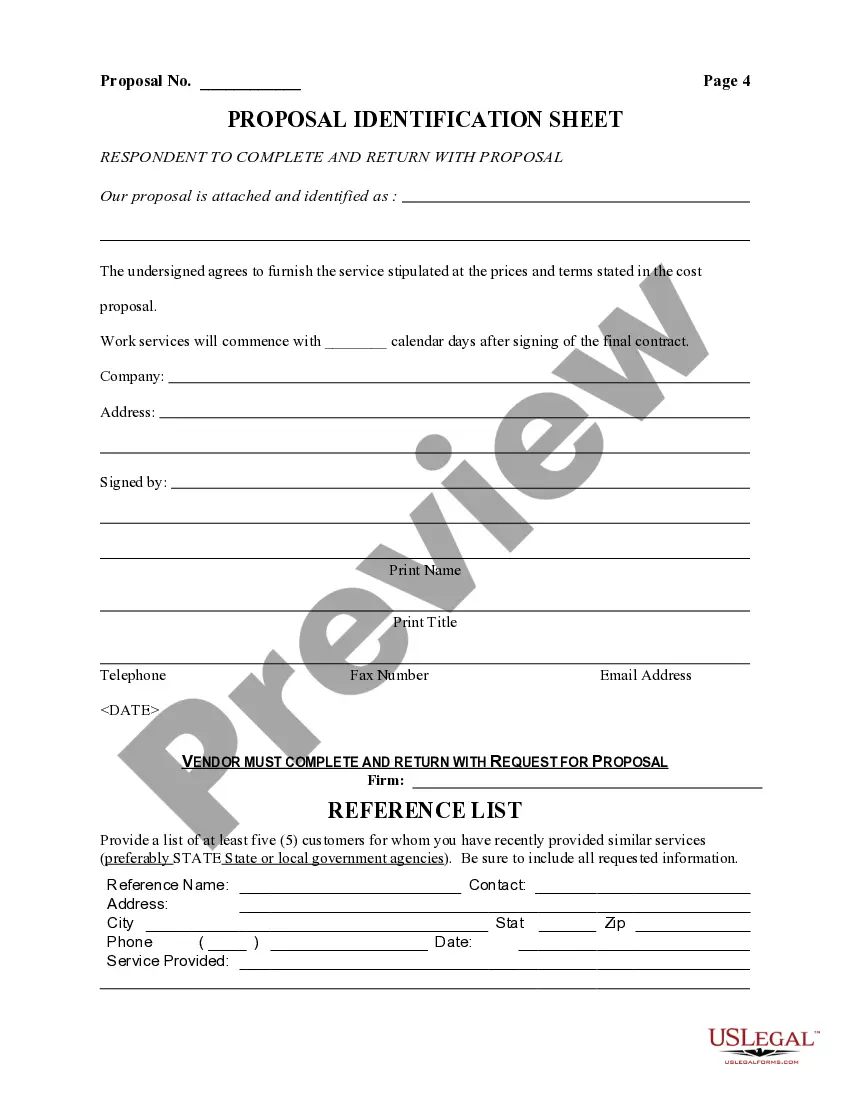
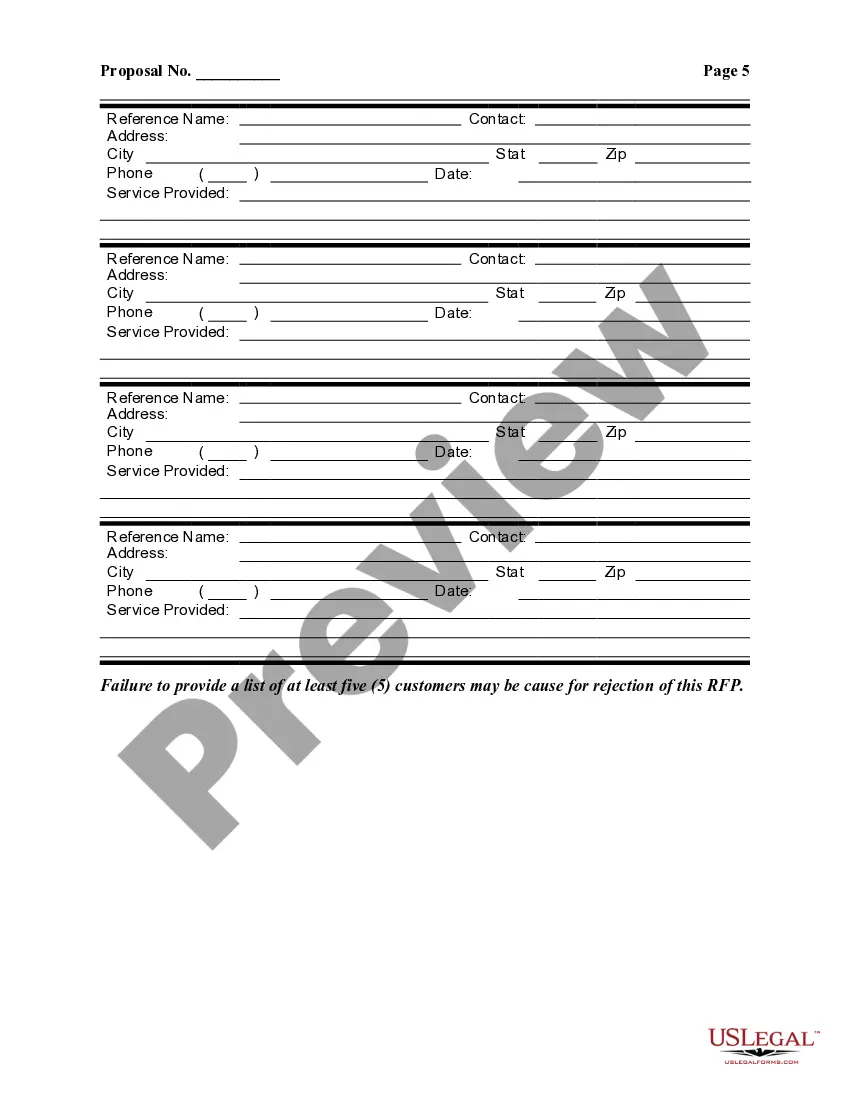
The Request for Proposal for Real Estate Agent/Broker Services for Neighborhood Stabilization Program is a formal document used by governmental agencies to solicit proposals from qualified real estate professionals. The primary purpose of this form is to procure services from real estate agents or brokers who will assist in buying, maintaining, and reselling foreclosed properties as part of a program designed to stabilize neighborhoods affected by the foreclosure crisis. This form is distinct from standard service contracts as it invites multiple bids and outlines specific qualifications and requirements for bidders.
What’s included in this form
- Contact information for submission and queries.
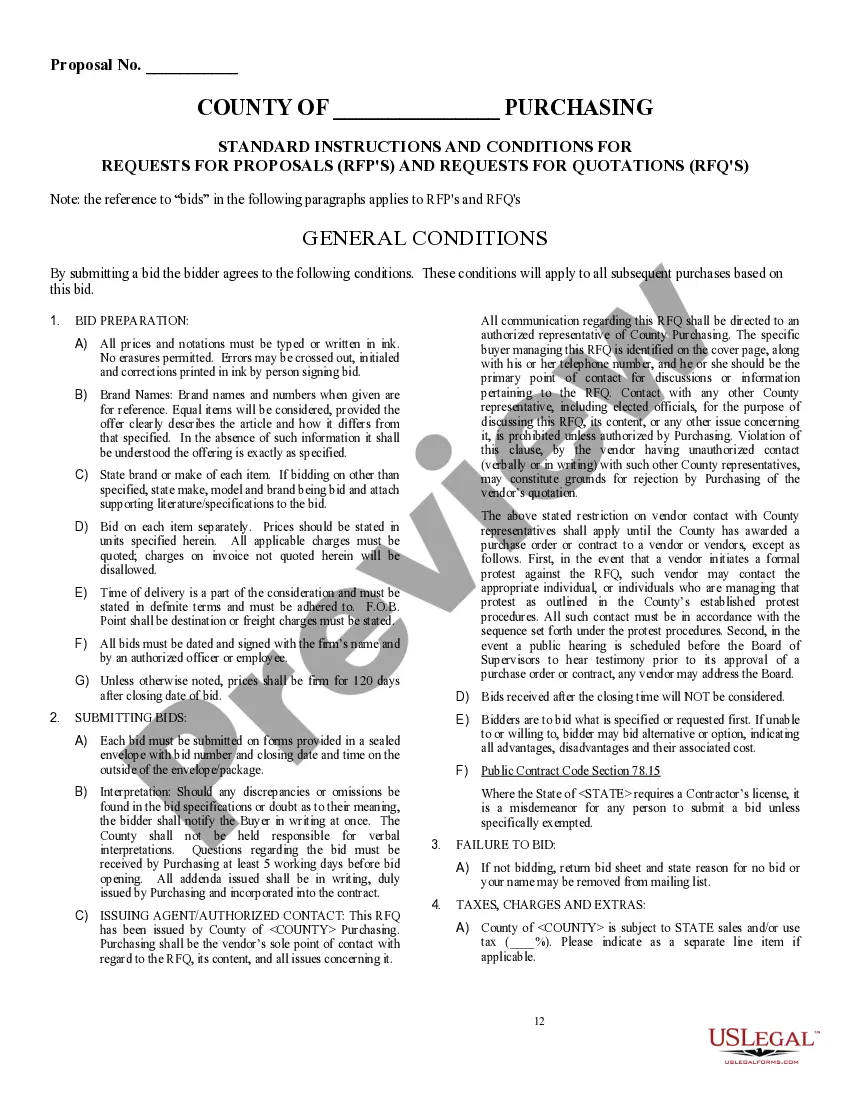
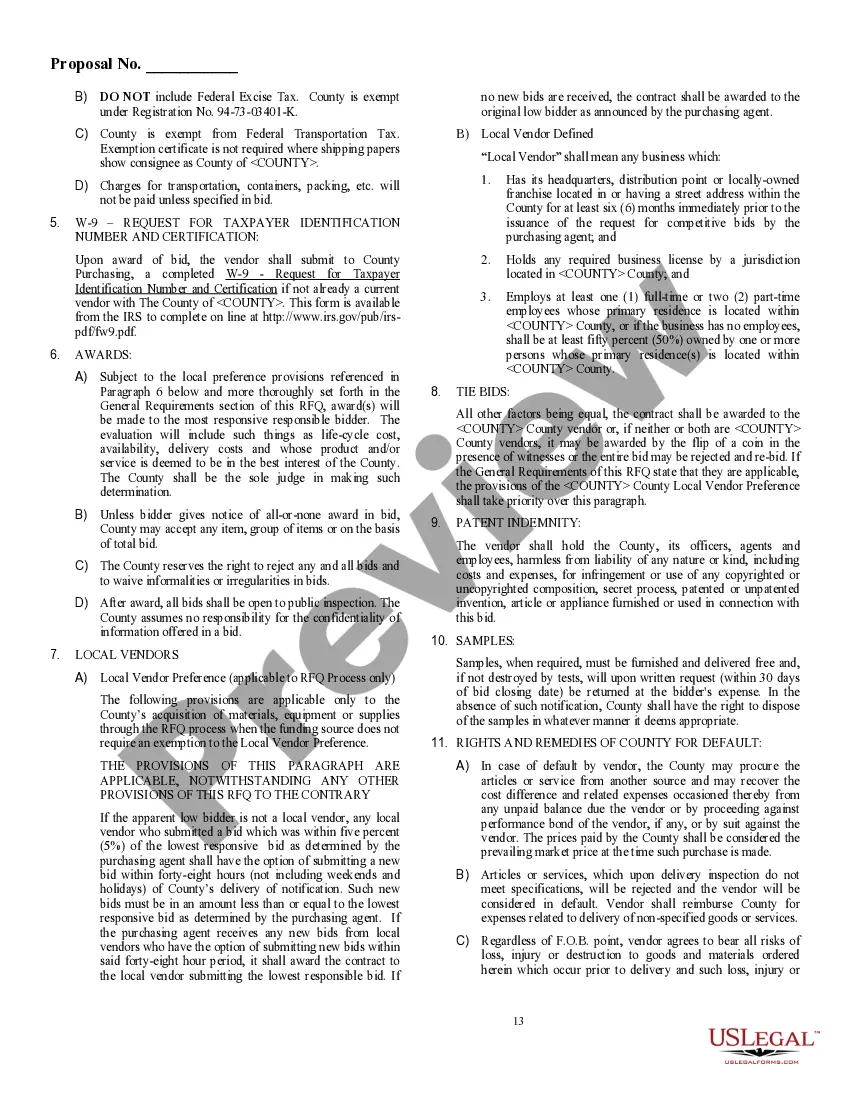
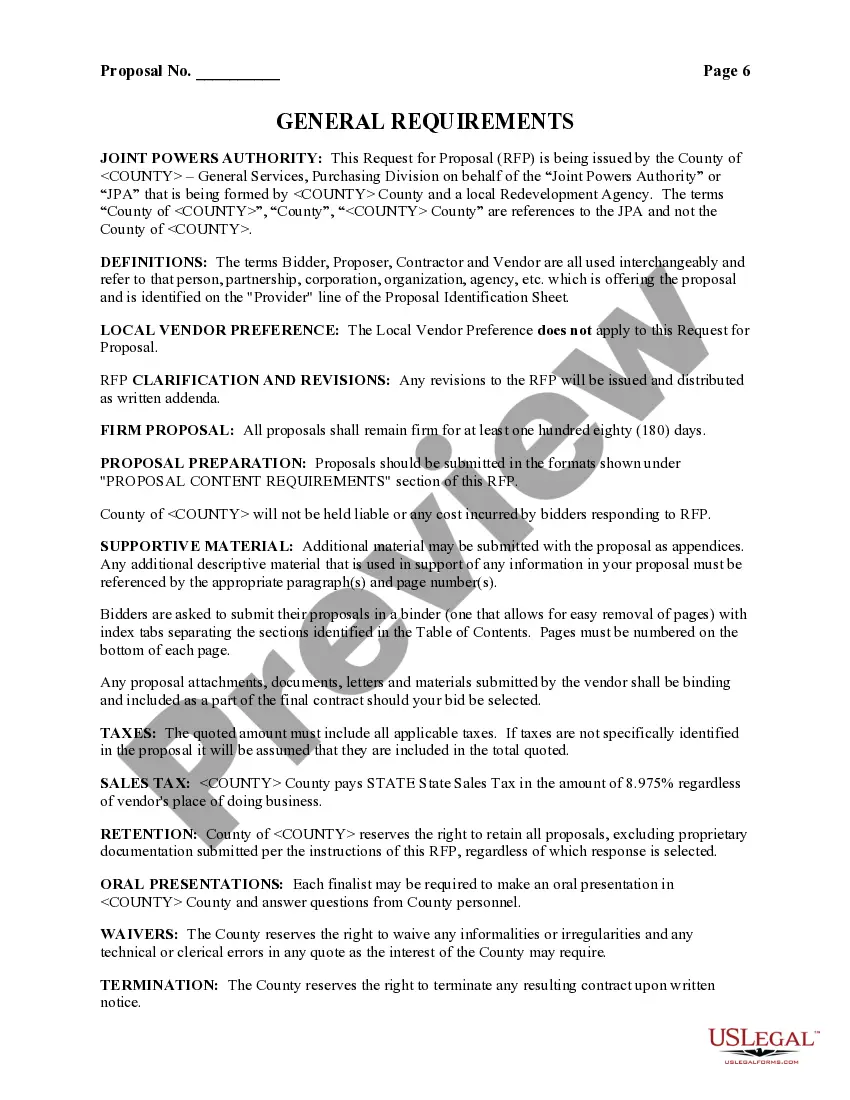
- Detailed general conditions and terms required for proposals.
- Specifications regarding the scope of work related to the Neighborhood Stabilization Program.
- Criteria for selection and award of the contract.
- Bid preparation guidelines and forms to complete.

Common use cases
This form should be used when a governmental entity seeks to engage real estate agents or brokers for executing the Neighborhood Stabilization Program. It is typically utilized when there is a need to secure professional services for buying and managing properties that are foreclosed or abandoned.
Who needs this form
- Government agencies responsible for managing neighborhood stabilization efforts.
- Real estate brokers and agents interested in participating in government contracts.
- Organizations focused on stabilizing communities impacted by foreclosures.
Instructions for completing this form
- Fill in your company's name and contact details at the top of the form.
- Review and acknowledge the general conditions and terms stated in the proposal.
- Clearly outline the services you intend to provide, addressing the specific scope of work.
- Complete the cost proposal section, including any discounts or terms related to pricing.
- Ensure that all required signatures are obtained before submission.
Does this document require notarization?
This form does not typically require notarization unless specified by local law. It is advisable to confirm any local requirements that may apply to your specific jurisdiction.
Get your form ready online
Our built-in tools help you complete, sign, share, and store your documents in one place.
Make edits, fill in missing information, and update formatting in US Legal Forms—just like you would in MS Word.
Download a copy, print it, send it by email, or mail it via USPS—whatever works best for your next step.
Sign and collect signatures with our SignNow integration. Send to multiple recipients, set reminders, and more. Go Premium to unlock E-Sign.
If this form requires notarization, complete it online through a secure video call—no need to meet a notary in person or wait for an appointment.
We protect your documents and personal data by following strict security and privacy standards.

Make edits, fill in missing information, and update formatting in US Legal Forms—just like you would in MS Word.

Download a copy, print it, send it by email, or mail it via USPS—whatever works best for your next step.

Sign and collect signatures with our SignNow integration. Send to multiple recipients, set reminders, and more. Go Premium to unlock E-Sign.

If this form requires notarization, complete it online through a secure video call—no need to meet a notary in person or wait for an appointment.

We protect your documents and personal data by following strict security and privacy standards.
Typical mistakes to avoid
- Failing to adhere to submission deadlines, causing proposals to be rejected.
- Not providing all required documentation and information within the proposal.
- Overlooking specific instructions regarding bid preparation and submission format.
- Not addressing the scope of work accurately as per the requirements outlined in the form.
Benefits of using this form online
- Easy access to download and complete the form, saving time in the procurement process.
- Editability allows for quick adjustments to proposals before submission.
- Reliable access to updated versions of forms in compliance with current regulations.
Looking for another form?







Form popularity
FAQ
A request for proposal (RFP) is both the process and documentation used in soliciting bids for potential business or IT solutions required by an enterprise or government agency.
RFP Sample Write your background and introduction.Define your project goals and scope of services.Detail your anticipated selection schedule.Describe the time and place for the submission of proposals.Clearly define your timeline.Specify the key elements of a proposal.Make your evaluation criteria clear.
A letter of intent (LOI), expresses the University's intention to submit a proposal in response to a particular program announcement or request for proposal (RFP). They can either be required as a pre-condition for invitation to submit a full proposal, or not required but encouraged.
RFPs are submitted by tenant brokers on behalf of tenants and are often presented in the earlier stages of lease negotiations. LOIs tend to be submitted or exchanged by either tenants or landlords and their brokers closer to final lease negotiation.
An RFP is an solicitation for bids, while a bid is an offer to purchase something. The purpose of an RFP is to get the best price for the product or service being offered, while the purpose of a bid is to get the job.
A letter of intent to bid is a formal way for prospective vendors to communicate their plan to submit a response or bid to a request for proposal (RFP). Often, a buyer requests or requires a letter of intent from interested vendors as part of the RFP process.
If you're looking for new commercial real estate, an unavoidable and critical aspect of this process is the Request for Proposal (RFP). Why? The RFP will cut through any ambiguity that may remain as you close in on your preferred properties.