Contract Service Agreement when Seller Continues to Operate Properties Sold to Buyer
Overview of this form
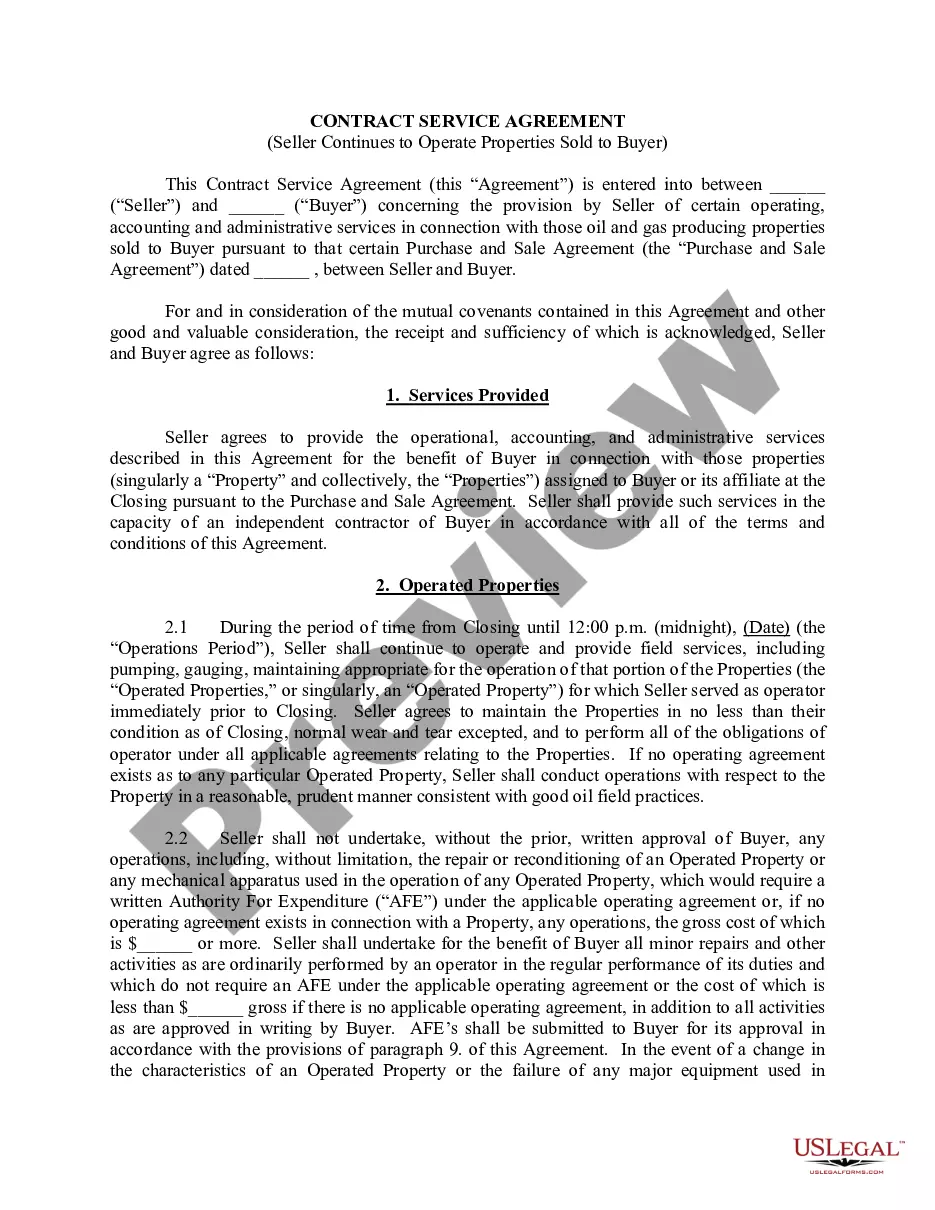
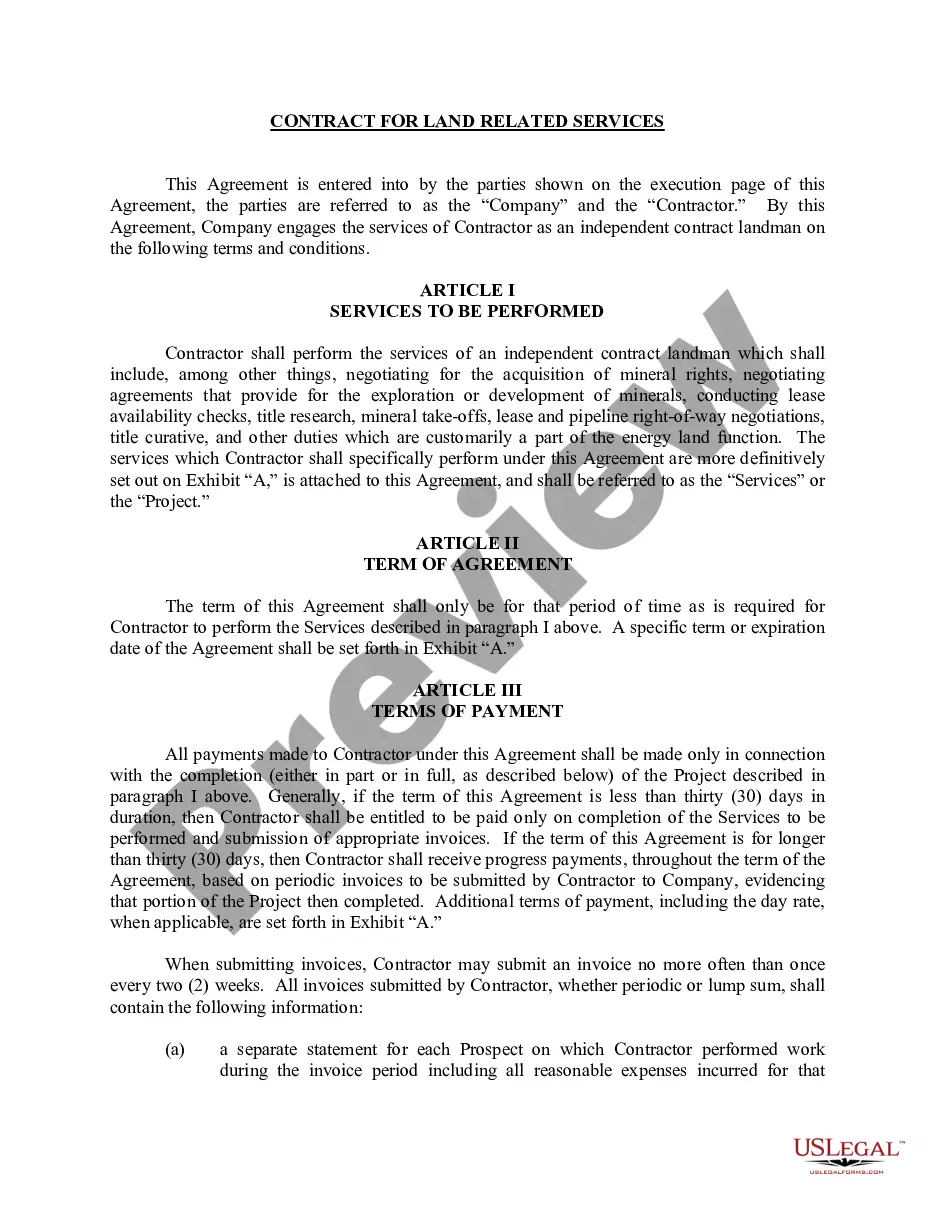
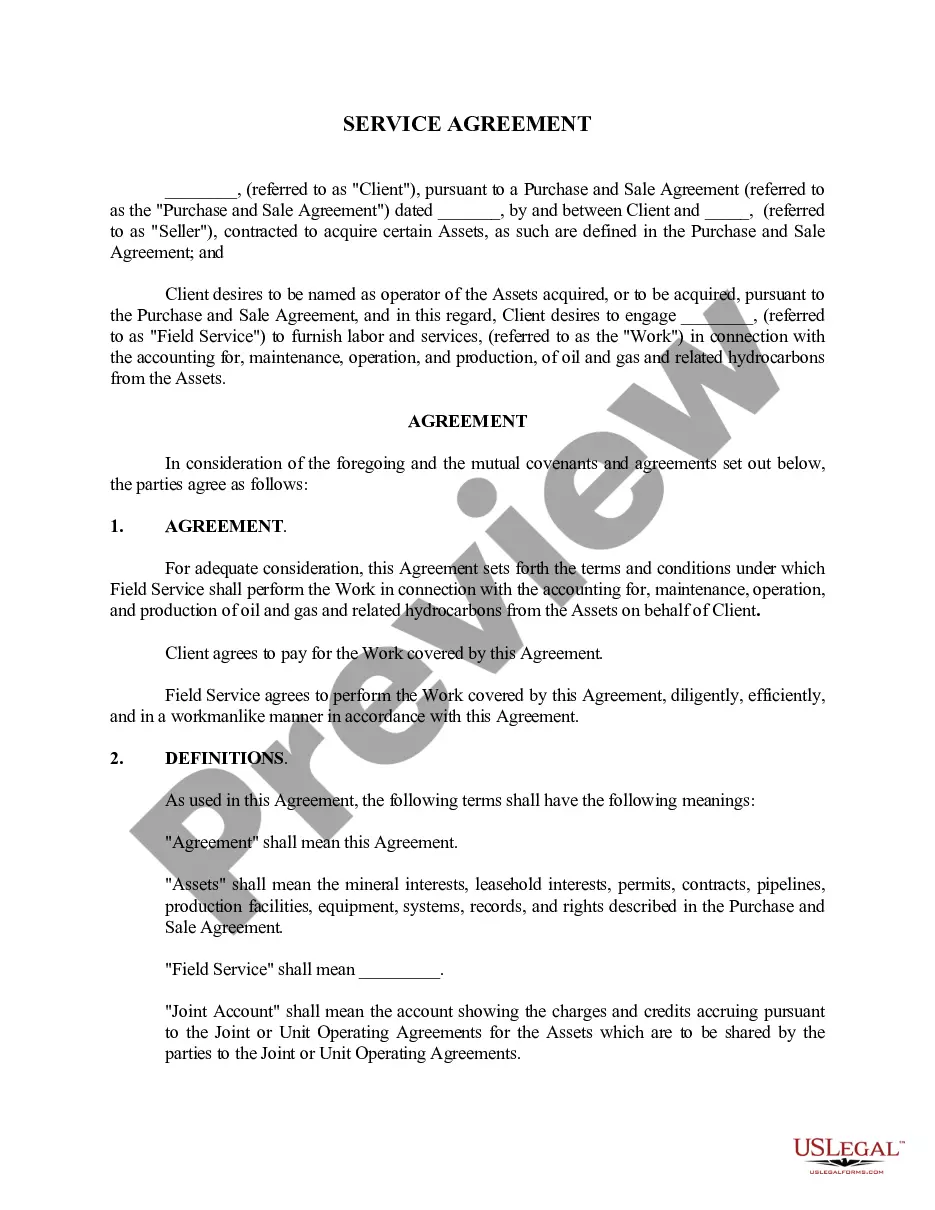
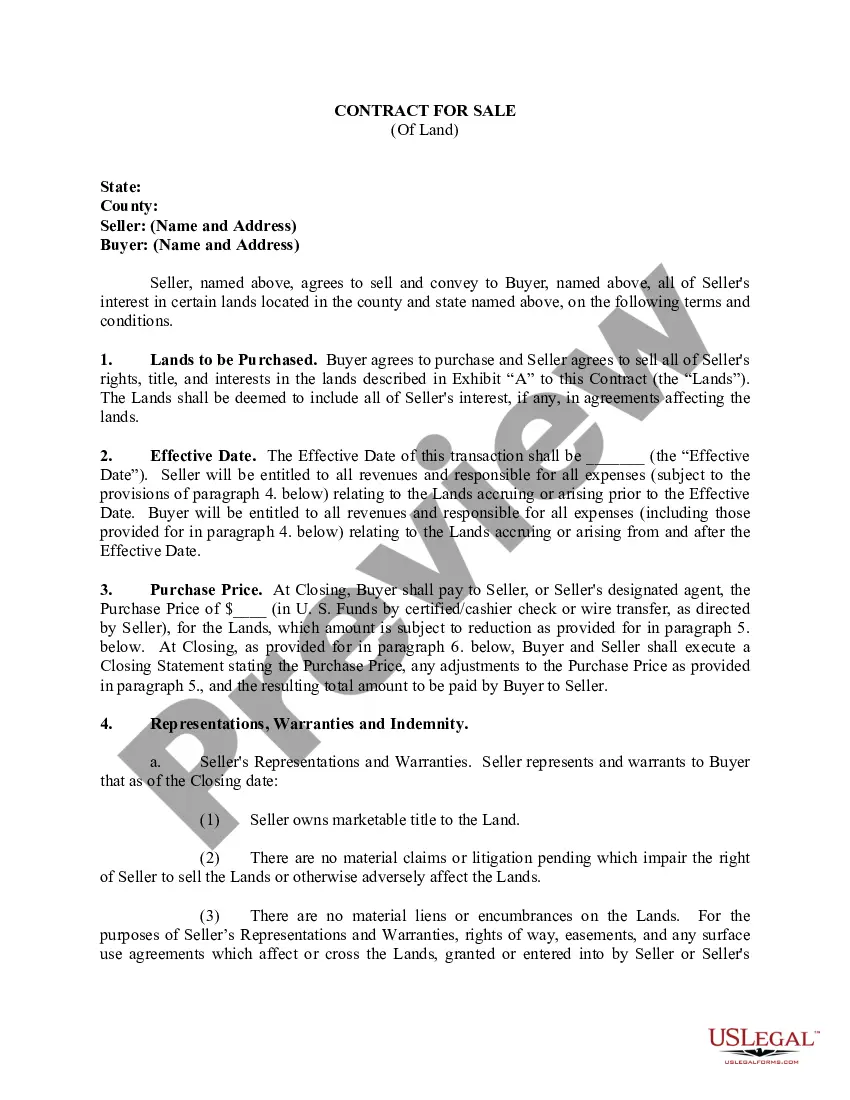
The Contract Service Agreement when Seller Continues to Operate Properties Sold to Buyer is a legal document that outlines the terms under which a seller provides operational, accounting, and administrative services for oil and gas properties sold to a buyer. This agreement ensures that the seller continues to manage certain operational aspects for a specified time after the sale, distinguishing it from standard sales contracts by its focus on ongoing operational duties.
Key components of this form
- Identification of parties involved: Clearly states the seller and buyer.
- Services provided: Specifies operational, accounting, and administrative services the seller will perform.
- Operations period: Defines the time frame during which the seller will operate the properties.
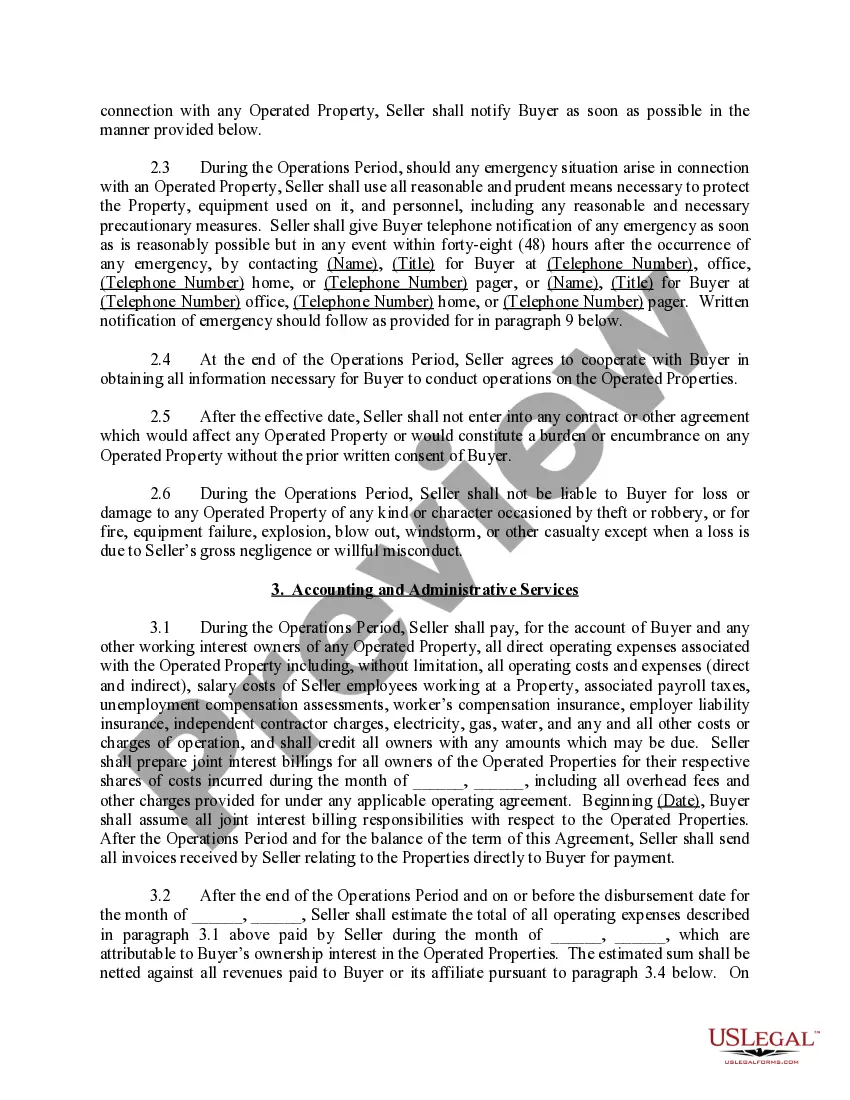
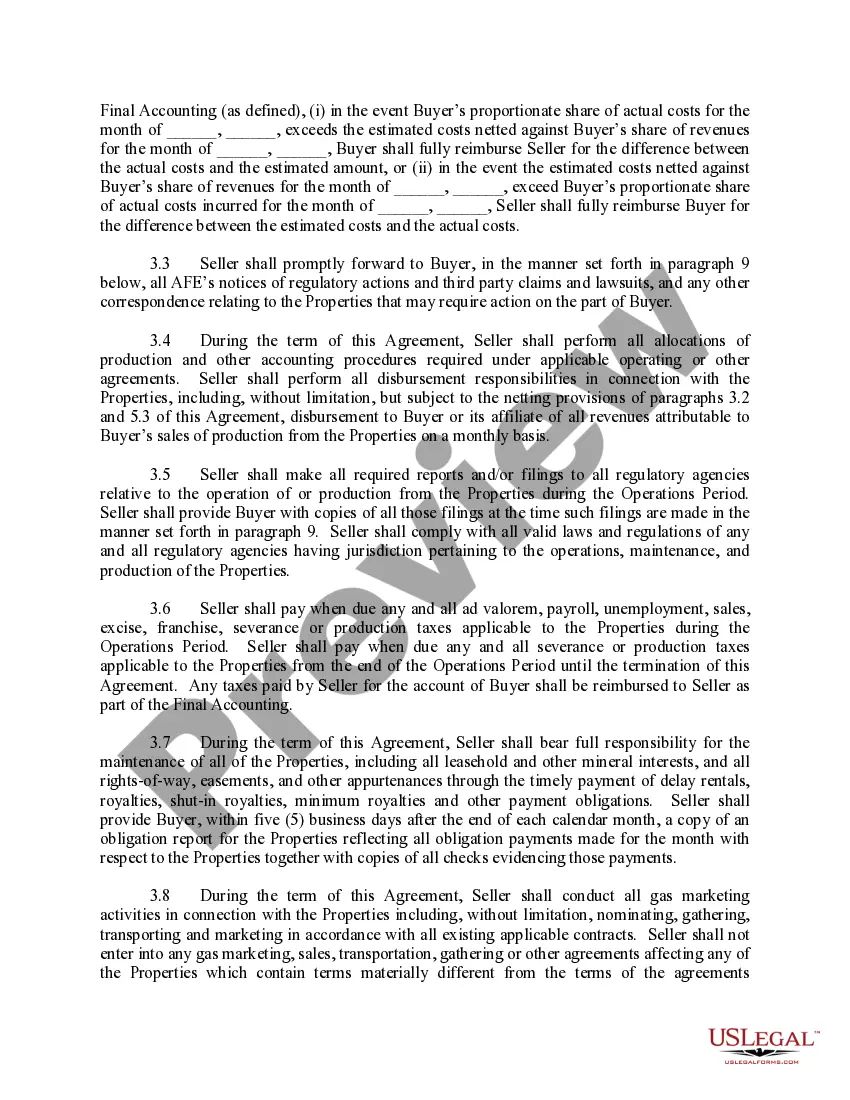
- Accounting and financial responsibilities: Outlines how expenses and revenues will be handled between the seller and buyer.
- Indemnity provisions: Details liability protections for both parties regarding service performance.
- Termination clauses: Explains conditions under which the agreement may be terminated by either party.

When to use this document
This form is necessary when a seller of oil and gas properties agrees to continue managing those properties for a certain period post-sale. It's particularly useful when the buyer needs a seamless transition in operations and functions until they are ready to take full control.
Who this form is for
This agreement is intended for:
- Oil and gas sellers who are transferring property ownership but want to maintain operational control temporarily.
- Buyers of oil and gas properties who require ongoing management services during the transition period.
- Legal professionals assisting in property sales involving operational transitions.
How to prepare this document
To complete this form, follow these steps:
- Identify the parties: Fill in the names of the seller and buyer.
- Specify the properties: Clearly describe the properties involved in the transaction.
- Enter the operations period: Indicate the start and end dates for operational management.
- Outline services: Detail the specific services the seller will provide during the operations period.
- Signatures: Ensure both parties sign and date the agreement to validate it.
Notarization requirements for this form
This form does not typically require notarization unless specified by local law. However, having it notarized can add an extra layer of authenticity.
Get your form ready online
Our built-in tools help you complete, sign, share, and store your documents in one place.
Make edits, fill in missing information, and update formatting in US Legal Forms—just like you would in MS Word.
Download a copy, print it, send it by email, or mail it via USPS—whatever works best for your next step.
Sign and collect signatures with our SignNow integration. Send to multiple recipients, set reminders, and more. Go Premium to unlock E-Sign.
If this form requires notarization, complete it online through a secure video call—no need to meet a notary in person or wait for an appointment.
We protect your documents and personal data by following strict security and privacy standards.

Make edits, fill in missing information, and update formatting in US Legal Forms—just like you would in MS Word.

Download a copy, print it, send it by email, or mail it via USPS—whatever works best for your next step.

Sign and collect signatures with our SignNow integration. Send to multiple recipients, set reminders, and more. Go Premium to unlock E-Sign.

If this form requires notarization, complete it online through a secure video call—no need to meet a notary in person or wait for an appointment.

We protect your documents and personal data by following strict security and privacy standards.
Avoid these common issues
- Failing to clearly define the services to be provided, leading to misunderstandings later.
- Neglecting to specify the operations period, causing confusion regarding timelines.
- Not including proper contact information for emergencies or notices.
- Omitting signatures or dates, which can render the agreement unenforceable.
Benefits of using this form online
- Convenience of accessing and downloading the form at any time.
- Editability allows users to customize the agreement to fit their specific needs.
- Reliability of using forms drafted by licensed attorneys to ensure legal compliance.
- This agreement is legal and enforceable as long as it is properly completed and signed by both parties.
- It is important to understand that certain provisions may be subject to state laws; thus, consulting with a legal professional is advisable.
Quick recap
- The agreement ensures ongoing operational management during a transition period after property sale.
- Both seller and buyer must clearly understand their rights and obligations under the agreement.
- Proper completion and potential notarization of the form are crucial for its validity.
Looking for another form?
Form popularity
FAQ
Review the details in the contract to see what the allowable time is for a delay on the part of the seller. Usually a 30-day window is applicable. However, if the house closing delayed by the seller moves beyond the allowable window, the seller could be liable for financial losses incurred by the buyer due to a delay.
1 Stating Basic Information in Your Contract. 2 Setting Forth the Payment Terms. 3 Disclosing Important Information to the Buyer. 4 Advising Parties About Closing Procedures.
Here's the good news. You are (probably) within your rights to sue someone who knowingly sells you a house with serious problems. "Most U.S. states have a home seller disclosure law that requires a seller to disclose defects in the home that they are aware of.
But unlike buyers, sellers can't back out and forfeit their earnest deposit money (usually 1-3 percent of the offer price). If you decide to cancel a deal when the home is already under contract, you can be either legally forced to close anyway or sued for financial damages.
A real estate deal can take a turn for the worst if the contract is not carefully written to include all the legal stipulations for both the buyer and seller.You can write your own real estate purchase agreement without paying any money as long as you include certain specifics about your home.
As a last resort, a homeowner may file a lawsuit against the seller within a limited amount of time, known as a statute of limitations. Statutes of limitations are typically two to 10 years after closing. Lawsuits may be filed in small claims court relatively quickly and inexpensively, and without an attorney.
If a seller fails to disclose, or actively conceals, problems that affect the value of the property; they are violating the law, and may be subject to a lawsuit for recovery of damages based on claims of fraud and deceit, misrepresentation and/or breach of contract.
Some seller disclosure laws require you to take action against the seller within the specified statute of limitations, perhaps one or two years from the date you close. If you are within this window, you may be able to sue the seller for the repair to your issue.
Who Prepares The Real Estate Purchase Agreement? Typically, the buyer's agent writes up the purchase agreement. However, unless they are legally licensed to practice law, real estate agents generally can't create their own legal contracts.