Limited Title Opinion
Understanding this form
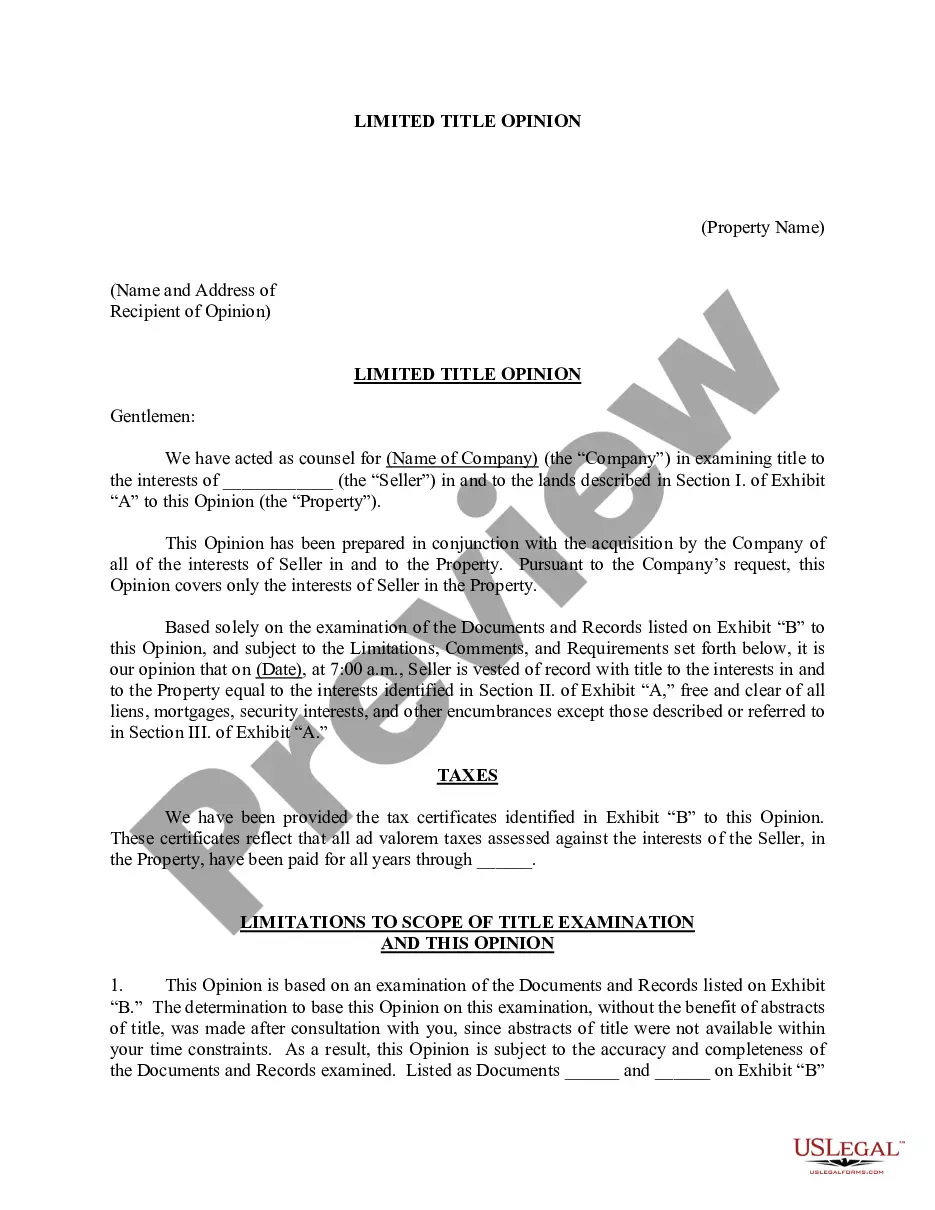
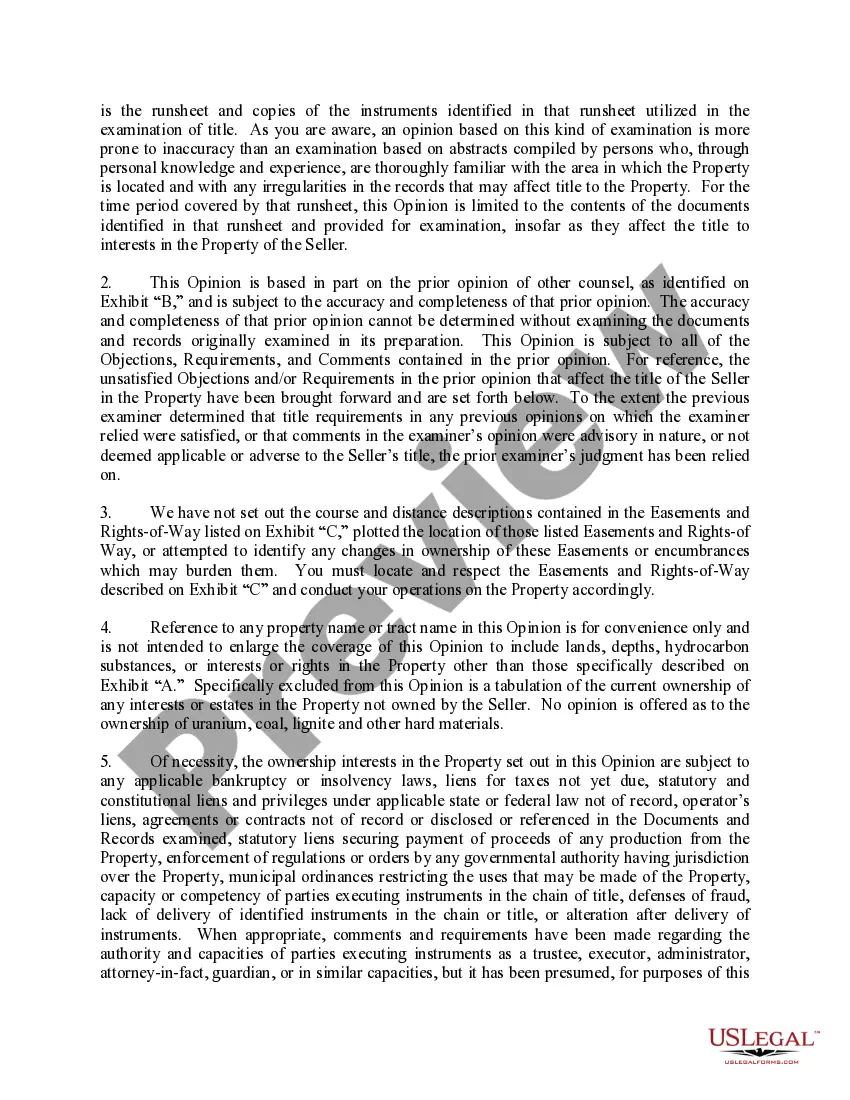
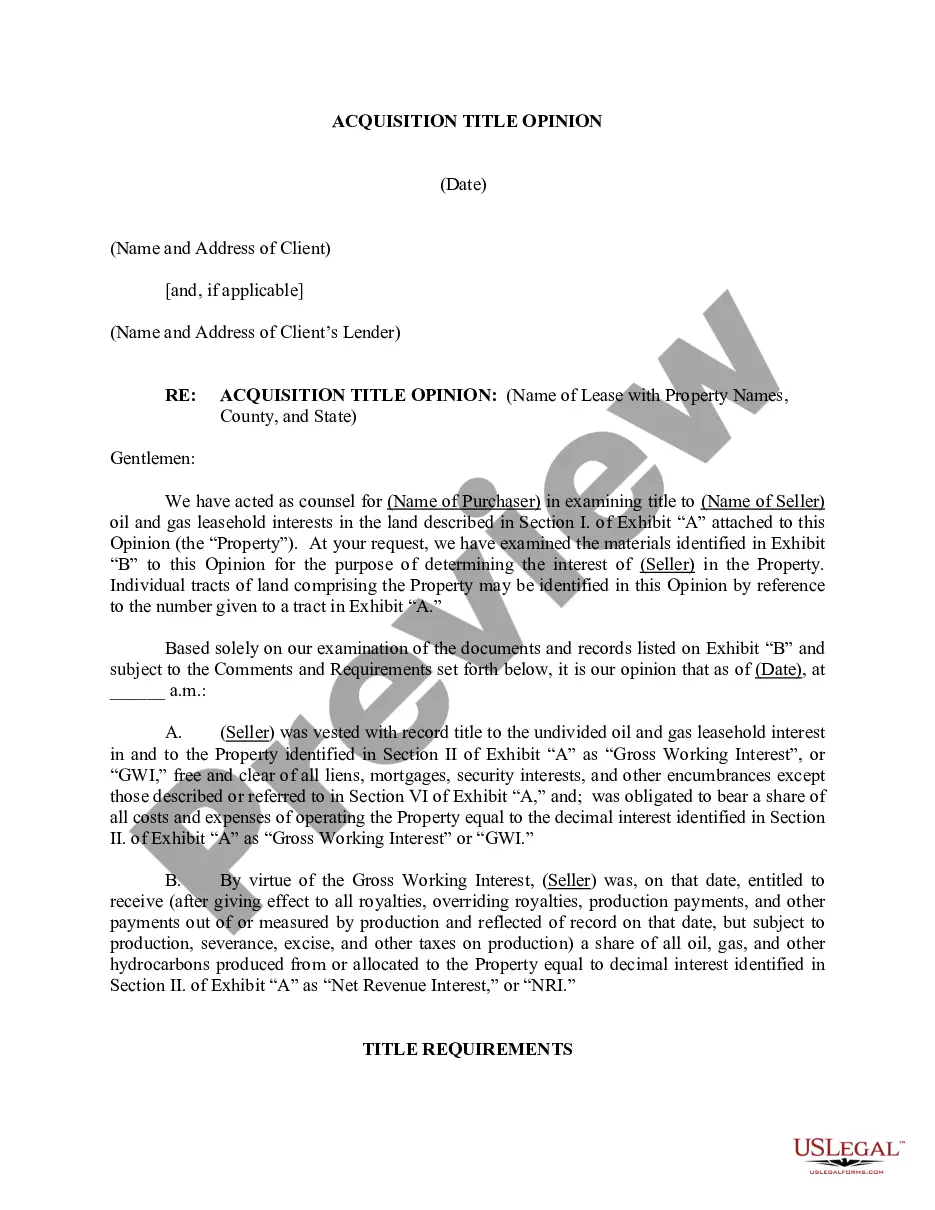
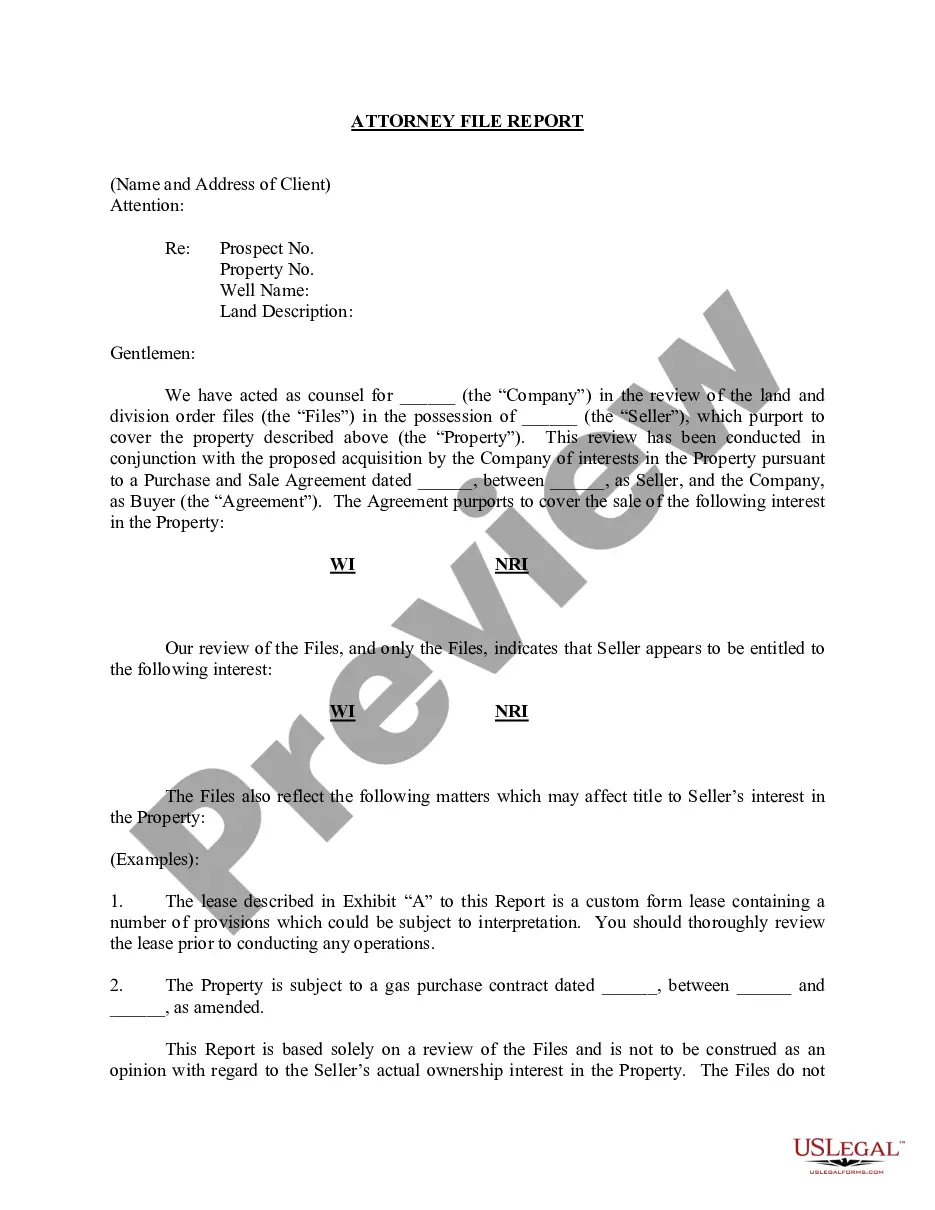
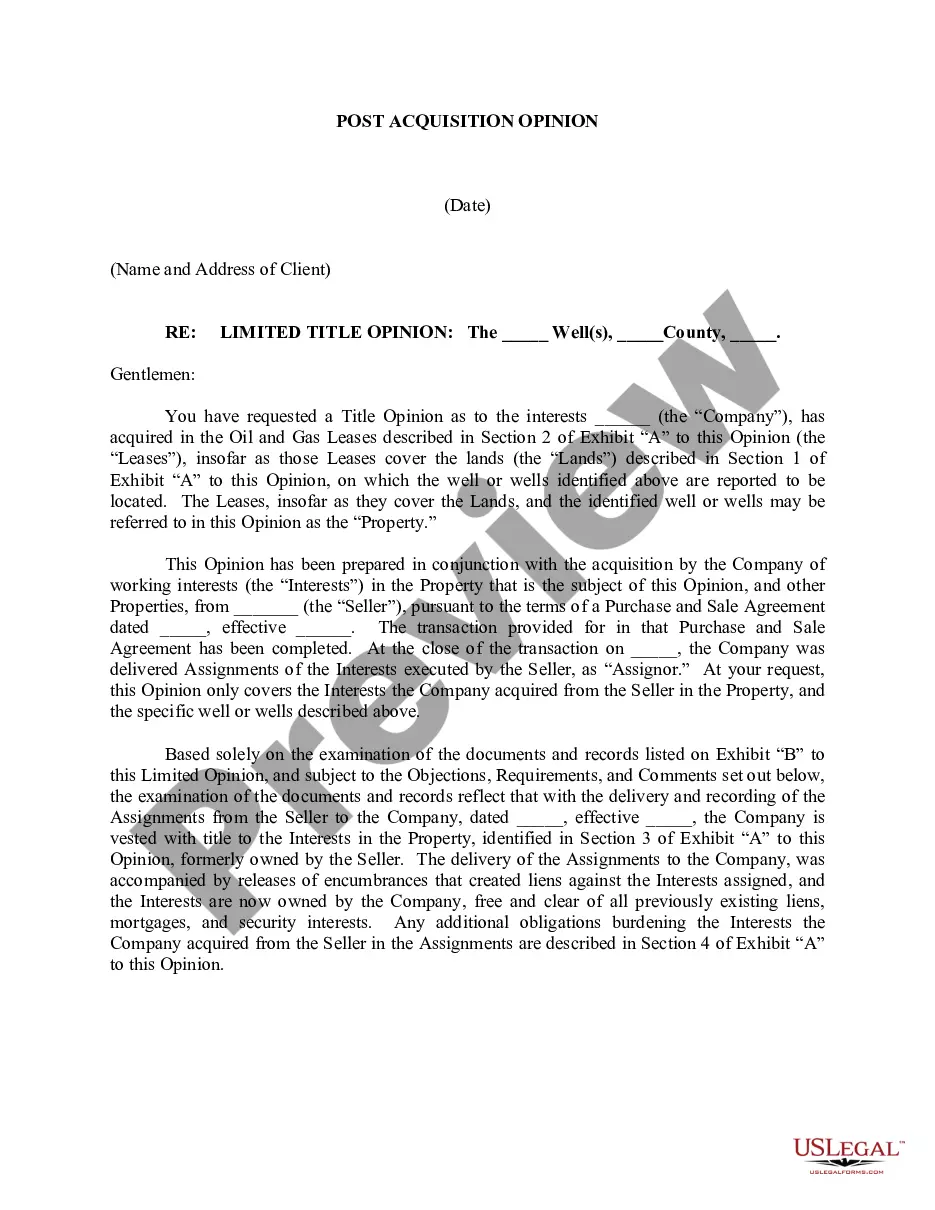
The Limited Title Opinion is a legal document prepared by an attorney that provides a summarized view of the title status of a property owned by a seller. Unlike a comprehensive title opinion, this form focuses solely on the seller's interests in the property, confirming that they hold clear title, free from most encumbrances. This opinion serves as a critical tool during real estate transactions, particularly when acquiring land or property interests.
What’s included in this form
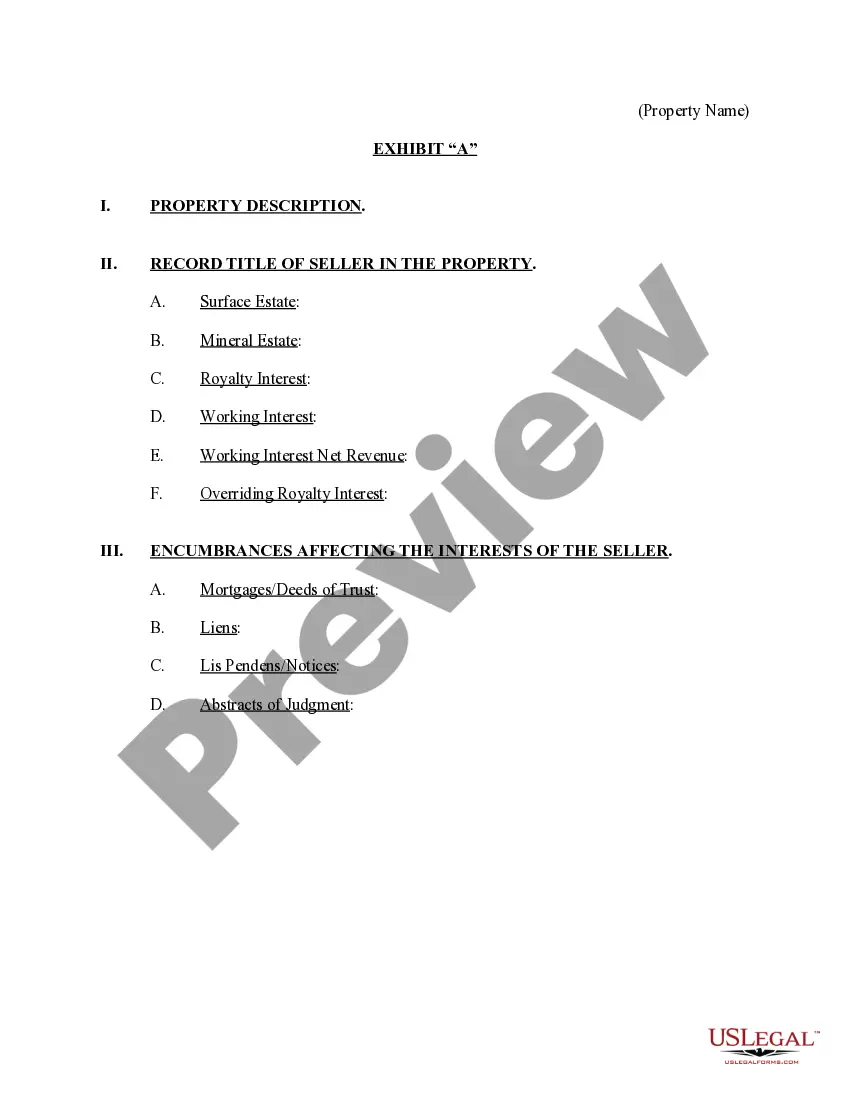
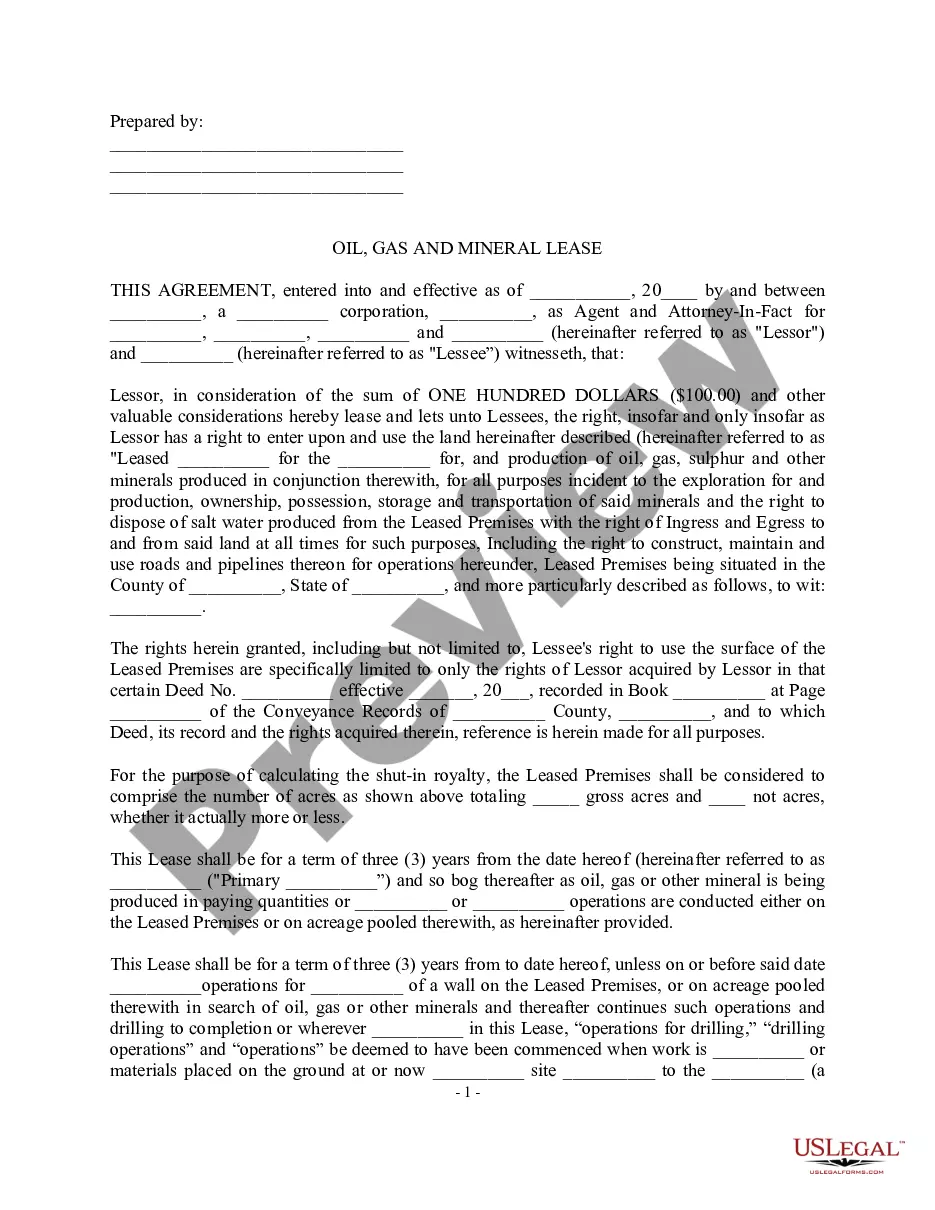
- Property description detailing the specific land in question.
- Identification of the Seller and their recorded interests.
- Summary of encumbrances, including any mortgages or liens.
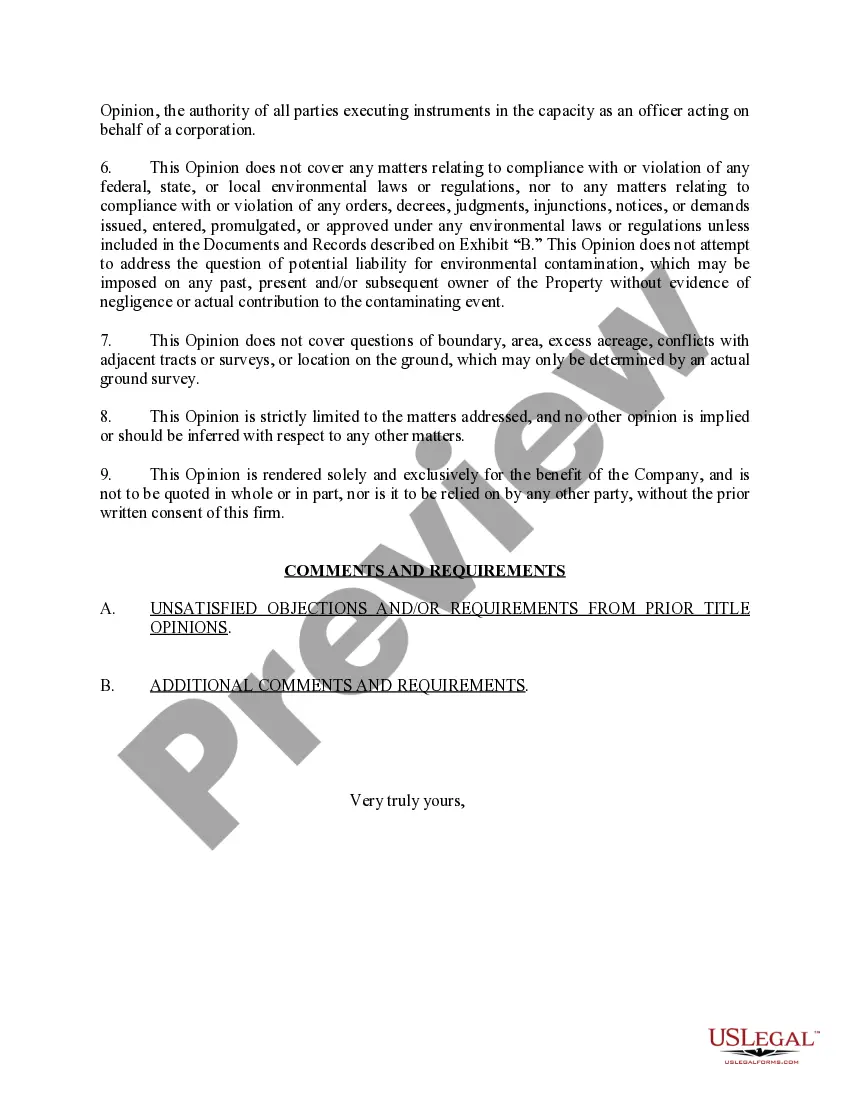
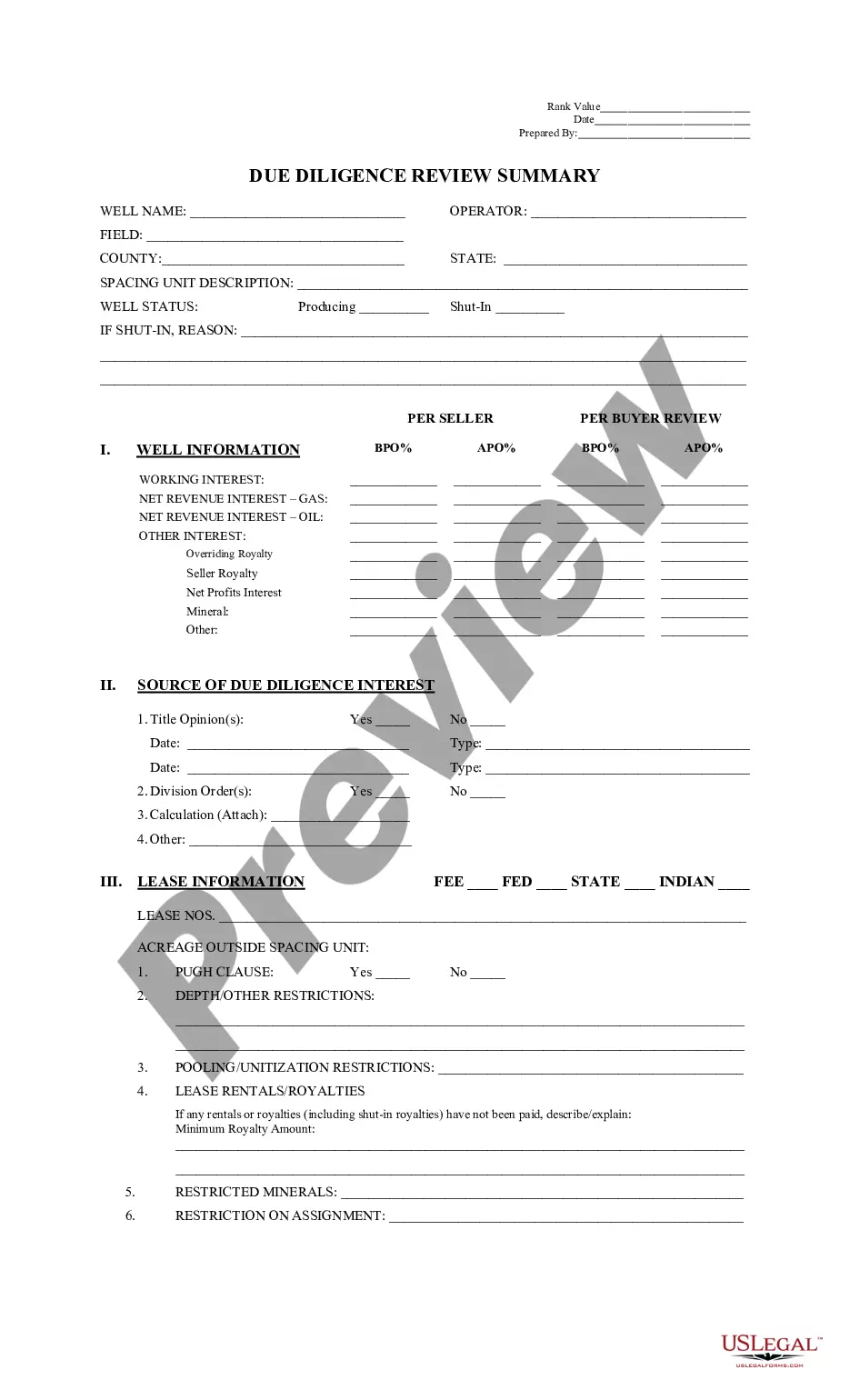
- Exhibits that list the documents and records examined.
- Limitations regarding the scope of the examination and opinion.

When to use this document
The Limited Title Opinion is typically used when a buyer is acquiring property from a seller and needs to establish that the seller holds a clear title to the property. This form is particularly relevant in transactions involving surface estates, mineral interests, or any rights related to the property, especially when time constraints do not allow for a full title examination.
Intended users of this form
- Real estate buyers seeking assurance of the seller's title to the property.
- Attorneys conducting title examinations on behalf of clients.
- Investors looking to understand the encumbrances related to the property before purchase.
Completing this form step by step
- Identify the parties involved, including the seller and the recipient of the opinion.
- Specify the property by completing the description provided in Exhibit A.
- Attach supporting documentation in Exhibit B that lists all examined records.
- Ensure all necessary details regarding encumbrances are included in Exhibit C.
- Review and finalize the opinion, ensuring all limitations and comments are clearly addressed.
Notarization guidance
This form does not typically require notarization unless specified by local law. It's important to check state-specific regulations to ensure compliance.
Get your form ready online
Our built-in tools help you complete, sign, share, and store your documents in one place.
Make edits, fill in missing information, and update formatting in US Legal Forms—just like you would in MS Word.
Download a copy, print it, send it by email, or mail it via USPS—whatever works best for your next step.
Sign and collect signatures with our SignNow integration. Send to multiple recipients, set reminders, and more. Go Premium to unlock E-Sign.
If this form requires notarization, complete it online through a secure video call—no need to meet a notary in person or wait for an appointment.
We protect your documents and personal data by following strict security and privacy standards.

Make edits, fill in missing information, and update formatting in US Legal Forms—just like you would in MS Word.

Download a copy, print it, send it by email, or mail it via USPS—whatever works best for your next step.

Sign and collect signatures with our SignNow integration. Send to multiple recipients, set reminders, and more. Go Premium to unlock E-Sign.

If this form requires notarization, complete it online through a secure video call—no need to meet a notary in person or wait for an appointment.

We protect your documents and personal data by following strict security and privacy standards.
Mistakes to watch out for
- Failing to provide accurate property descriptions can lead to legal disputes.
- Omitting relevant encumbrances or liens from the opinion can mislead buyers.
- Not updating the opinion based on the latest records examined.
Benefits of using this form online
- Convenience of downloading and completing the form at your own pace.
- Immediate access to legal templates that comply with current laws.
- Editability allows for quick adjustments tailored to specific transactions.
Legal use & context
- The Limited Title Opinion provides a preliminary view of title status, not a definitive guarantee.
- It is essential for risk mitigation in real estate transactions.
- Not all matters regarding title issues may be addressed; additional research may be necessary.
Quick recap
- The Limited Title Opinion confirms the seller's interests in a property are clear of major encumbrances.
- This form is essential for buyers during real estate transactions to prevent unexpected ownership issues.
- Always review local laws as they may influence the use and requirements of this form.
Looking for another form?



Form popularity
FAQ
The opinion of title is the legal opinion which attests to the validity of the title deed to a parcel of property. The opinion is sometimes issued in conjunction with an insuring title agency.
Title. n. 1) ownership of real property or personal property, which stands against the right of anyone else to claim the property. In real property, title is evidenced by a deed, judgment of distribution from an estate or other appropriate document recorded in the public records of the county.
A property title search examines public records on the property to confirm the property's rightful legal owner. The title search should also reveal if there are any claims or liens on the property that could affect your purchase.
A title opinion is a legal document and an important written communication between an attorney and his client.A thorough examination will reveal whether an owner has marketable title and will suggest curative measures to owners with title defects.
Title Insurance: The new alternative However, it is important to note that, unlike a title opinion, which attempts to assure good title and/or security, title insurance is meant to insure against the risks specified in the subject policy. In other words, title insurance only insures covered risks.
Many title issues can be resolved by filing one of three common documents: A quit claim deed removes an heir and clears up title among co-owners or spouses. A release of lien/judgment removes a paid mortgage or spousal or child support lien. A deed of reconveyance records payment of a mortgage under a deed of trust.
A party with a claim of ownership to land can file an action to quiet title, which serves as a sort of lawsuit against anyone and everyone else who has a claim to the land. If the owner prevails in the quiet title action, no further challenges to the title can be brought.
Errors in public records. To err is human, but when it affects your homeownership rights, those mistakes can be devastating. Unknown liens. Illegal deeds. Missing heirs. Forgeries. Undiscovered encumbrances. Unknown easements. Boundary/survey disputes.
A title opinion is the written opinion of an attorney, based on the attorney's title search into a property, describing the current ownership rights in the property, as well as the actions that must be taken to make the stated ownership rights marketable.