Kidnapping
Overview of this form
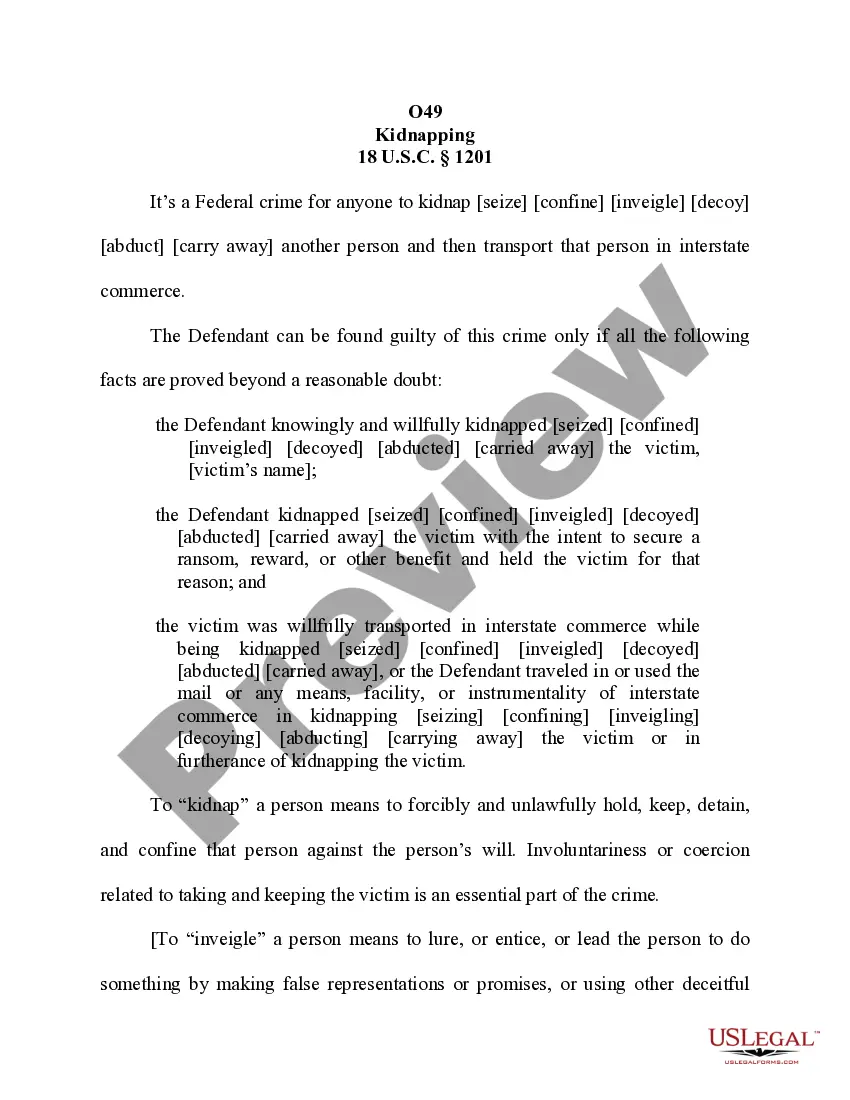
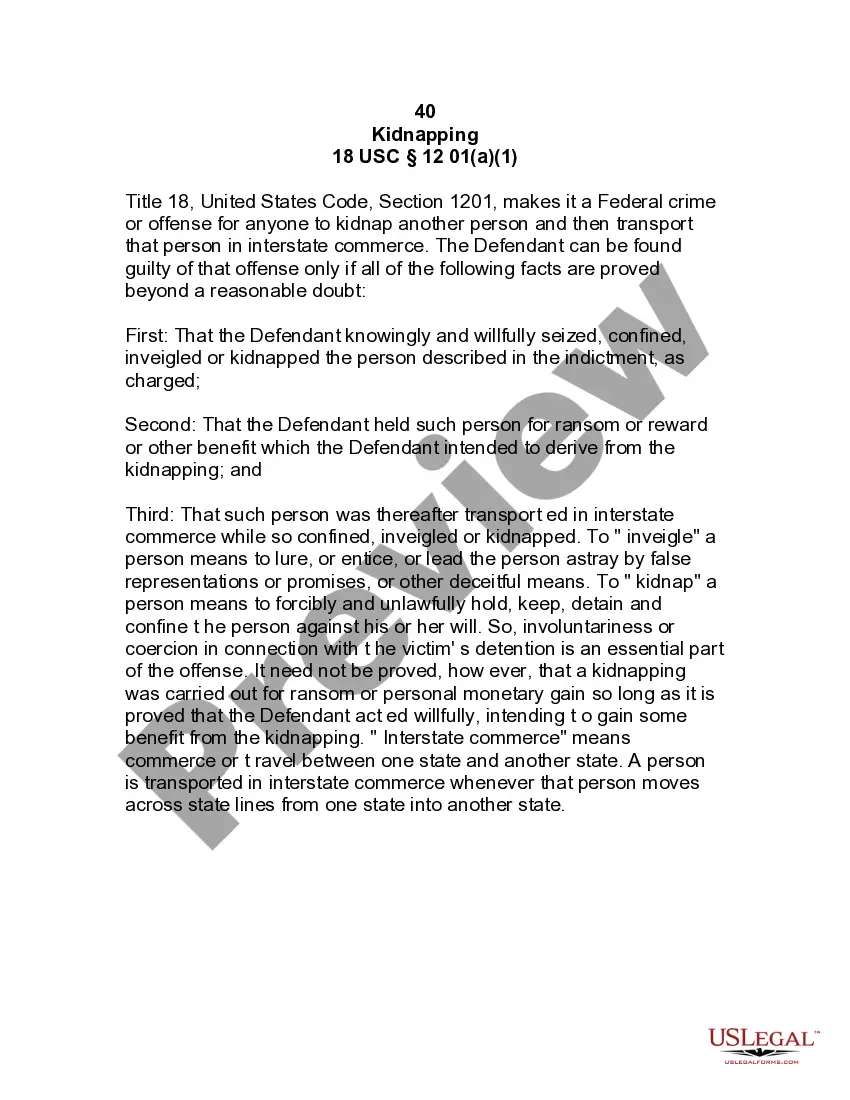
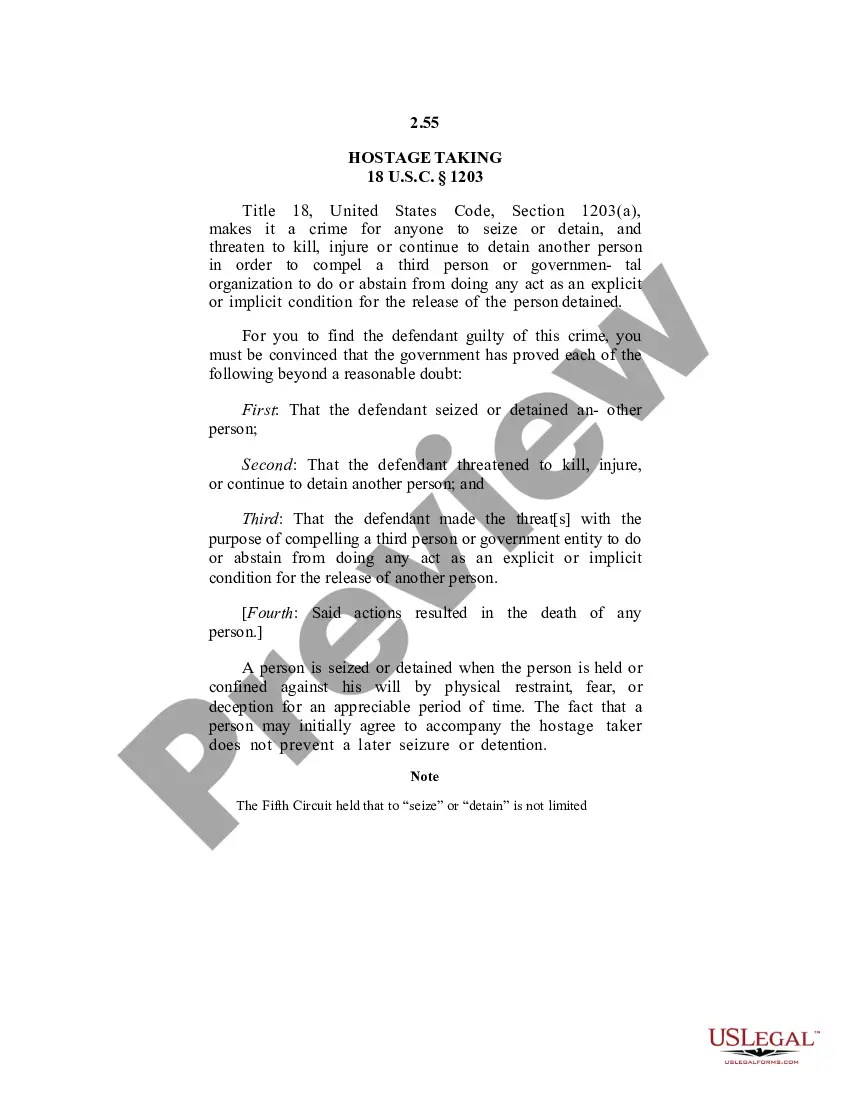
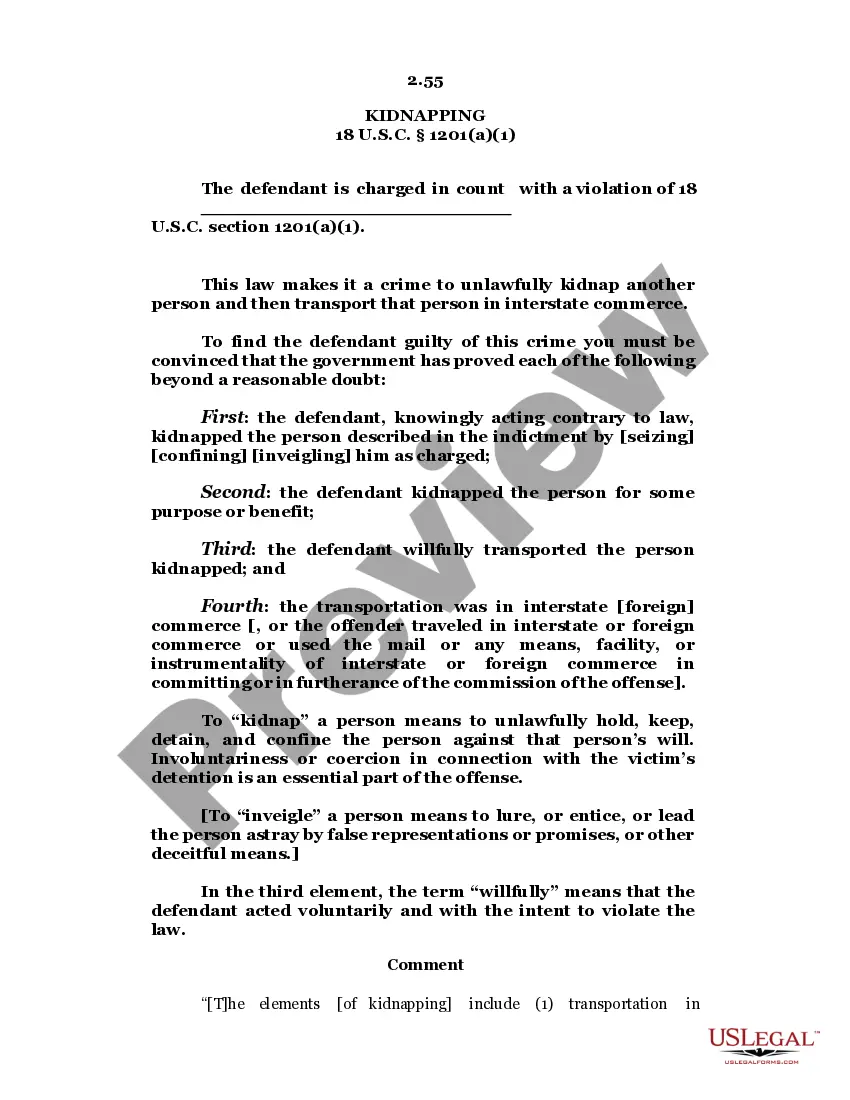
The Kidnapping form provides the jury instructions for the legal definition of kidnapping under federal law, specifically 18 U.S.C. § 1201. It outlines the elements that must be proven for a conviction of kidnapping, including the coercive and involuntary nature required for the act. This legal form distinguishes itself by focusing on the criteria set by the 11th Circuit Federal Court of Appeals, making it essential for understanding federal kidnapping cases.
What’s included in this form
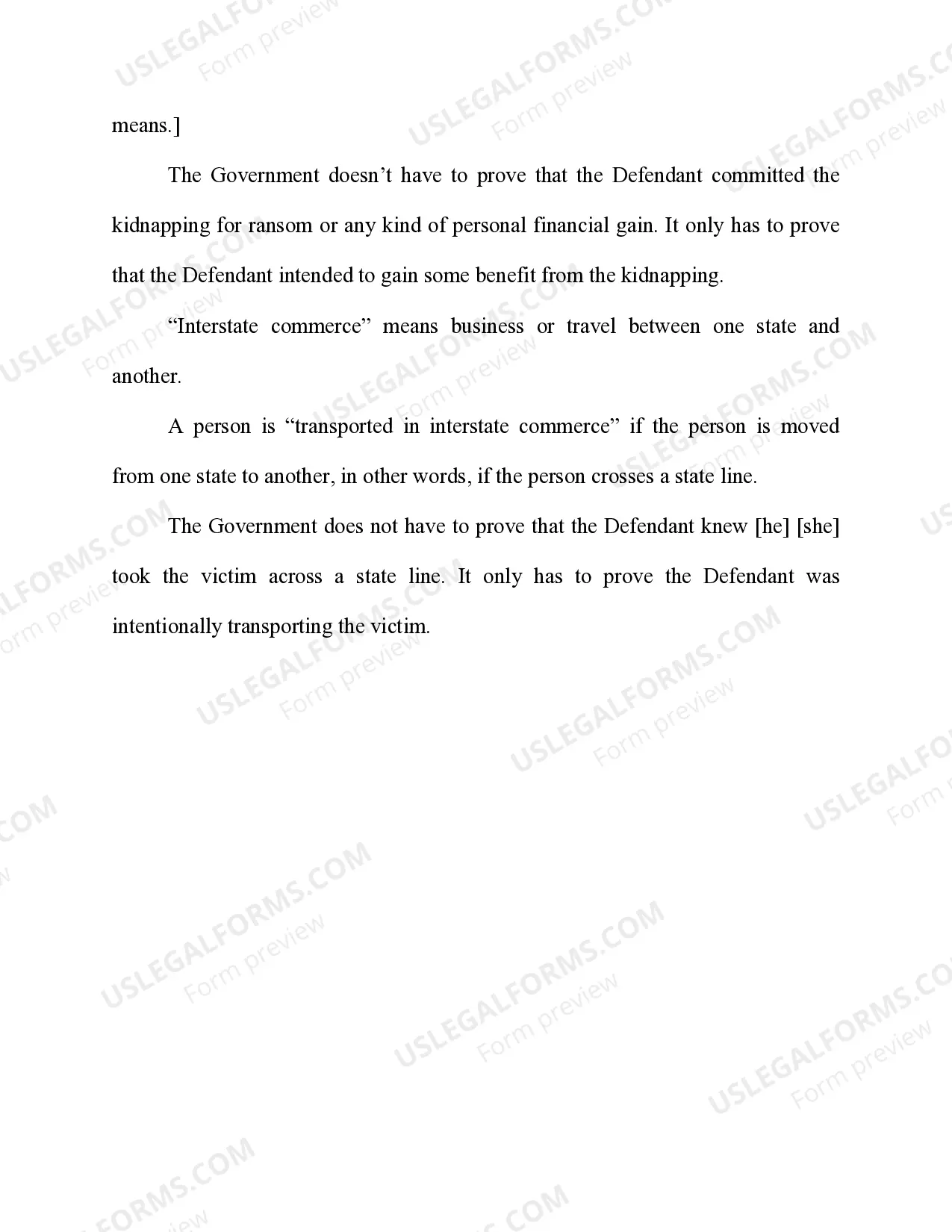
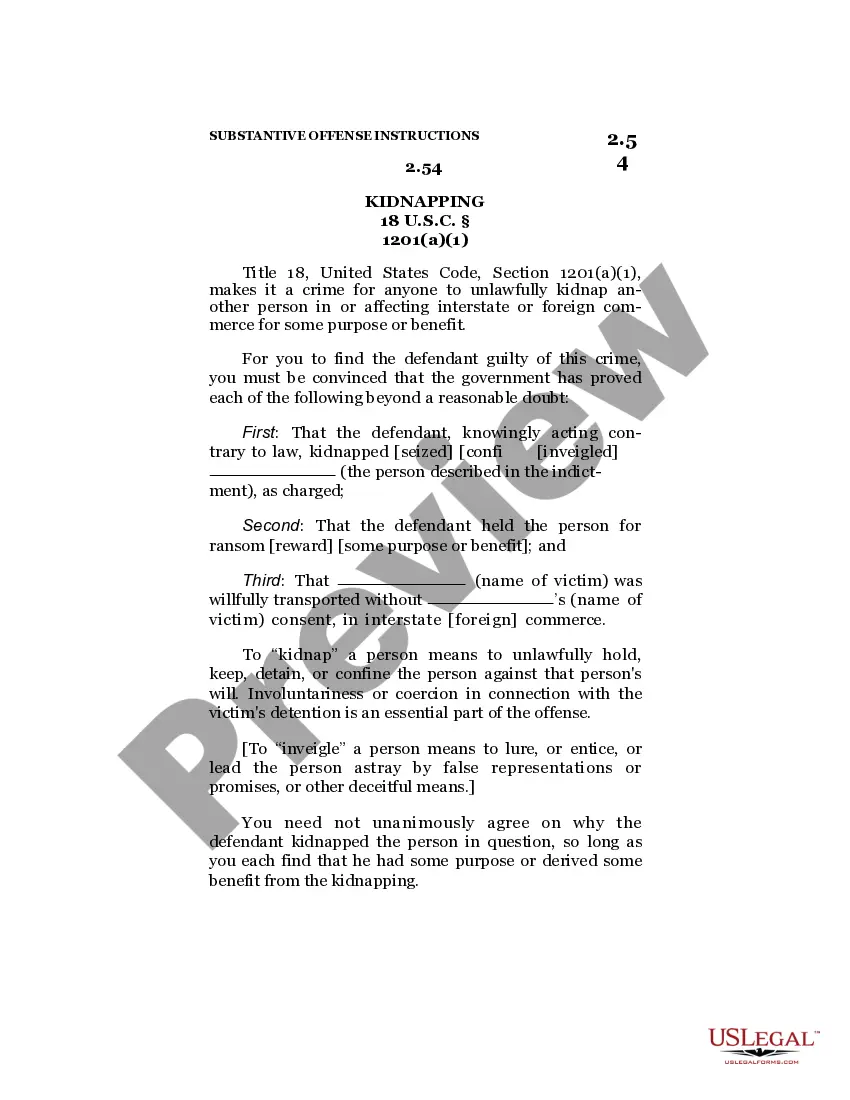
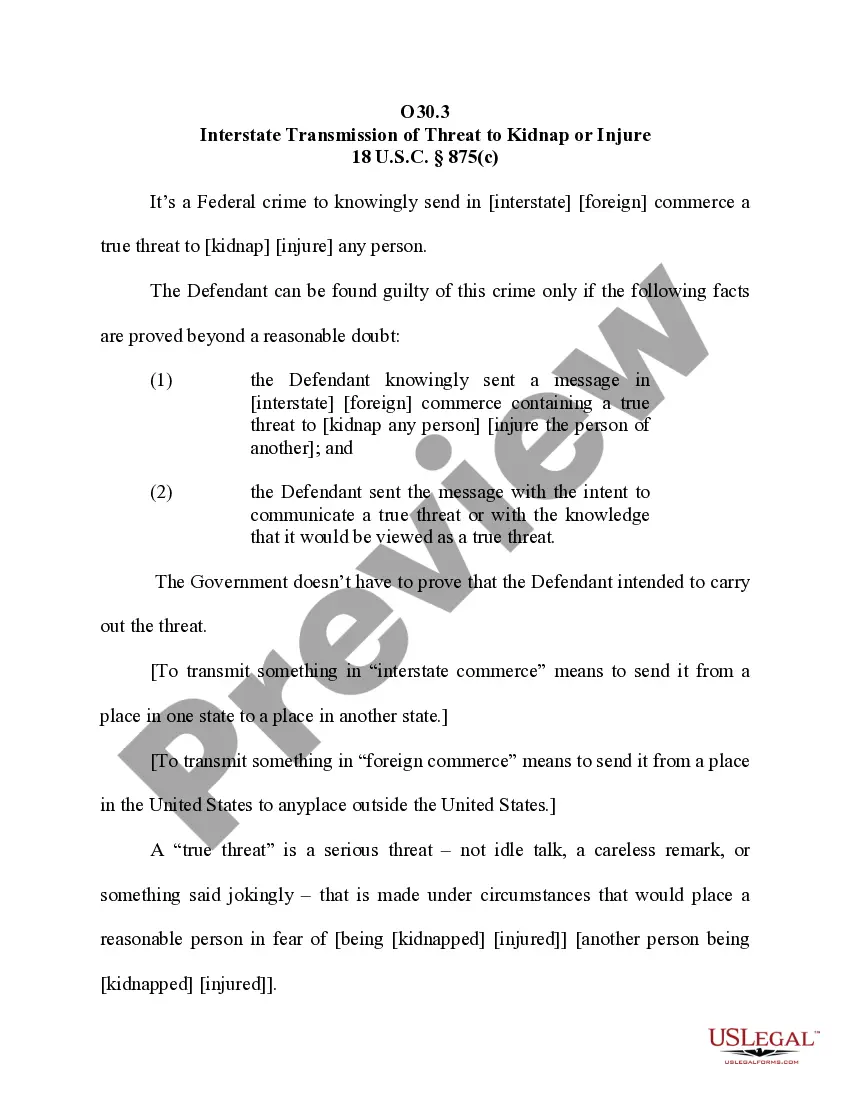
- Definition of kidnapping and related terms such as âinveigleâ and âinterstate commerce.â
- Criteria required for a finding of guilt beyond a reasonable doubt.
- Explanation of the intent necessary for a kidnapping charge.
- Clarification that the government need not prove intent for financial gain.
When this form is needed
This form is used in federal kidnapping cases where the prosecution must present jury instructions regarding the legal standards of kidnapping. It is particularly relevant in situations involving the alleged crime of unlawfully abducting an individual with the intent to hold them for ransom or other benefits, especially when the victim is transported across state lines.
Who this form is for
This form is intended for:
- Legal practitioners involved in criminal defense or prosecution of federal kidnapping cases.
- Jury members in federal courts assigned to cases involving kidnapping charges.
- Individuals seeking to understand the federal legal standards regarding kidnapping.
Completing this form step by step
- Identify the specific parties involved, including the defendant and victim.
- Clearly state the actions taken by the defendant that constitute kidnapping.
- Specify the intent behind the act of kidnapping, such as securing a ransom.
- Detail the transportation of the victim across state lines if applicable.
- Ensure that all elements of the crime are proven as required by federal law.
Does this form need to be notarized?
In most cases, this form does not require notarization. However, some jurisdictions or signing circumstances might. US Legal Forms offers online notarization powered by Notarize, accessible 24/7 for a quick, remote process.
Get your form ready online
Our built-in tools help you complete, sign, share, and store your documents in one place.
Make edits, fill in missing information, and update formatting in US Legal Forms—just like you would in MS Word.
Download a copy, print it, send it by email, or mail it via USPS—whatever works best for your next step.
Sign and collect signatures with our SignNow integration. Send to multiple recipients, set reminders, and more. Go Premium to unlock E-Sign.
If this form requires notarization, complete it online through a secure video call—no need to meet a notary in person or wait for an appointment.
We protect your documents and personal data by following strict security and privacy standards.

Make edits, fill in missing information, and update formatting in US Legal Forms—just like you would in MS Word.

Download a copy, print it, send it by email, or mail it via USPS—whatever works best for your next step.

Sign and collect signatures with our SignNow integration. Send to multiple recipients, set reminders, and more. Go Premium to unlock E-Sign.

If this form requires notarization, complete it online through a secure video call—no need to meet a notary in person or wait for an appointment.

We protect your documents and personal data by following strict security and privacy standards.
Mistakes to watch out for
- Failing to clearly establish the defendant's intent regarding the kidnapping.
- Neglecting the necessary elements that must be proved beyond a reasonable doubt.
- Misinterpreting the terms related to coercion and involuntary confinement.
- Overlooking the requirements of interstate commerce and its implications in the case.
Advantages of online completion
- Convenience of accessing federal legal forms from anywhere at any time.
- Editability allows users to tailor the content to specific case needs.
- Reliability of using forms drafted by licensed attorneys with a focus on accuracy.
- Time-saving through instant downloads without the need for physical paperwork.
Legal use & context
- This form is designed to meet federal legal standards and is enforceable in court.
- Understanding the legal definition provided in this form is crucial for both prosecution and defense in kidnapping cases.
- While the form provides guidance, consultation with a legal expert is recommended for specific cases.
Quick recap
- The Kidnapping form outlines the federal definition and requirements for kidnapping.
- Proving intent and the coercive nature of the act are central to the crime's prosecution.
- The form is applicable in federal court and relevant for various legal professionals and jurors.
Looking for another form?

Form popularity
FAQ
Definition. A crime at common law consisting of an unlawful restraint of a person's liberty by force or show of force so as to send the victim into another country. Under modern law, this crime will usually be found where the victim is taken to another location or concealed.
In sum, to be guilty of Kidnapping under CPC §207(a), the prosecution must prove that: You took or held someone through force or fear; AND, You moved, or made the person move, a substantial distance; AND, The other person didn't consent; AND, You didn't actually believe the person consented.
The original meaning of kidnap, dating from the late seventeenth century, was "steal children to provide servants to the American colonies," from kid, "child," and nap, "snatch away." After the particularly notorious Lindberg baby kidnapping in 1932, the U.S. Congress passed a law allowing the FBI to investigate all
Abduction means the taking of a person against their will, generally by means of persuasion, fraud, or force. Some jurisdictions also require that the abductee (the person who is abducted) be a child or that that the abductor intend to marry or harm the abductee or subject them to prostitution or trafficking.
The student is taken hostage and told to pay a ransom. To make the payment the student is forced at knifepoint by the hostage takers to withdraw the maximum amount of cash from a cashpoint machine.
Definition. A crime at common law consisting of an unlawful restraint of a person's liberty by force or show of force so as to send the victim into another country. Under modern law, this crime will usually be found where the victim is taken to another location or concealed.
The countries with the highest rates of kidnap are those with weak security infrastructures, high levels of impunity and economic disparity, such as Mexico, Venezuela and Nigeria, and those experiencing prolonged conflicts, such as Syria, Yemen and Afghanistan.
Kidnapping is usually accompanied with a ransom for money or other gains. However, a crime of abduction is considered to be when a person has been taken away from his or her original location by persuading him or her, by some act of fraud or with a forceful way that may include violence.