Research and Development Agreement between USDAs Agricultural Research Service, eMerge Vision Systems, Inc., and IA State Univ. of Science and Technology
About this form
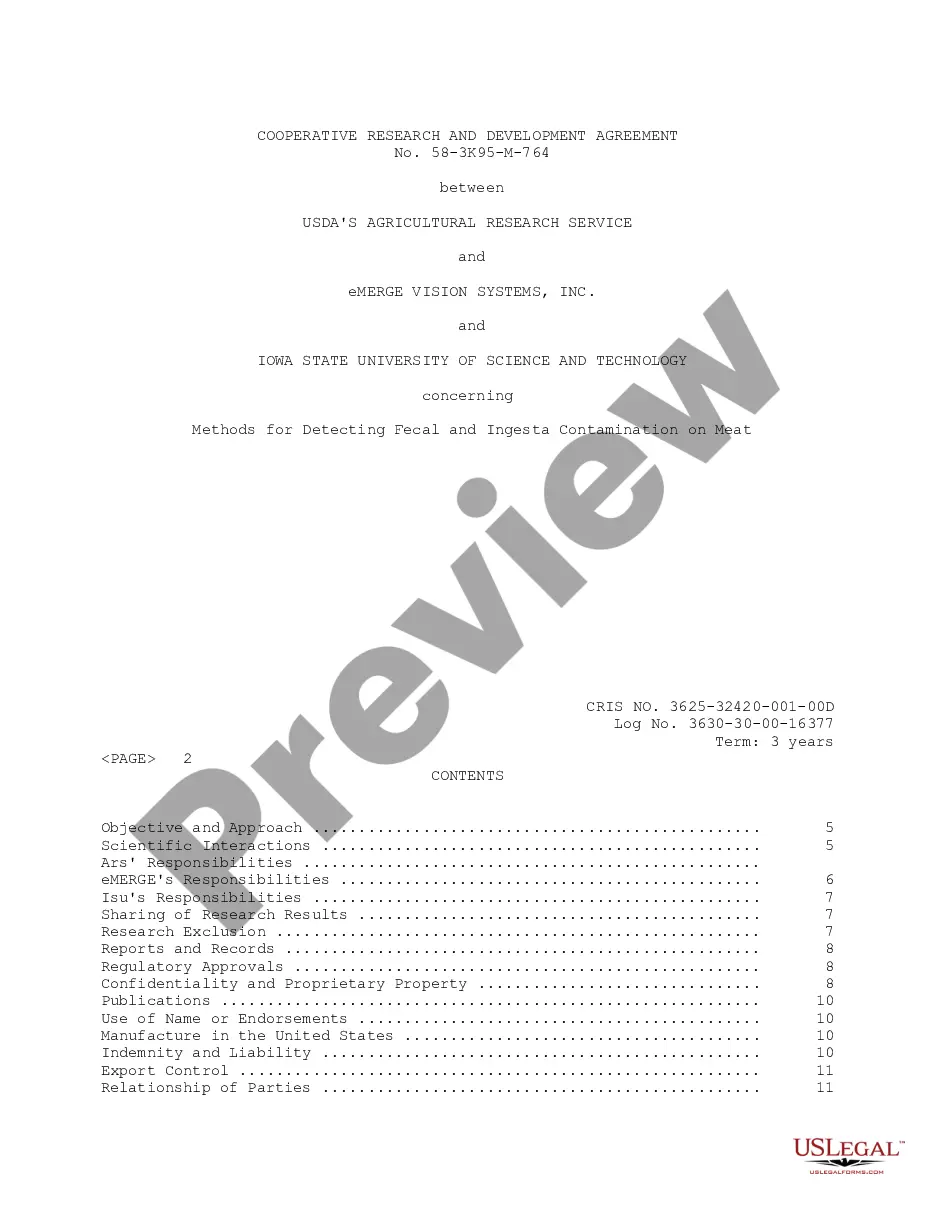
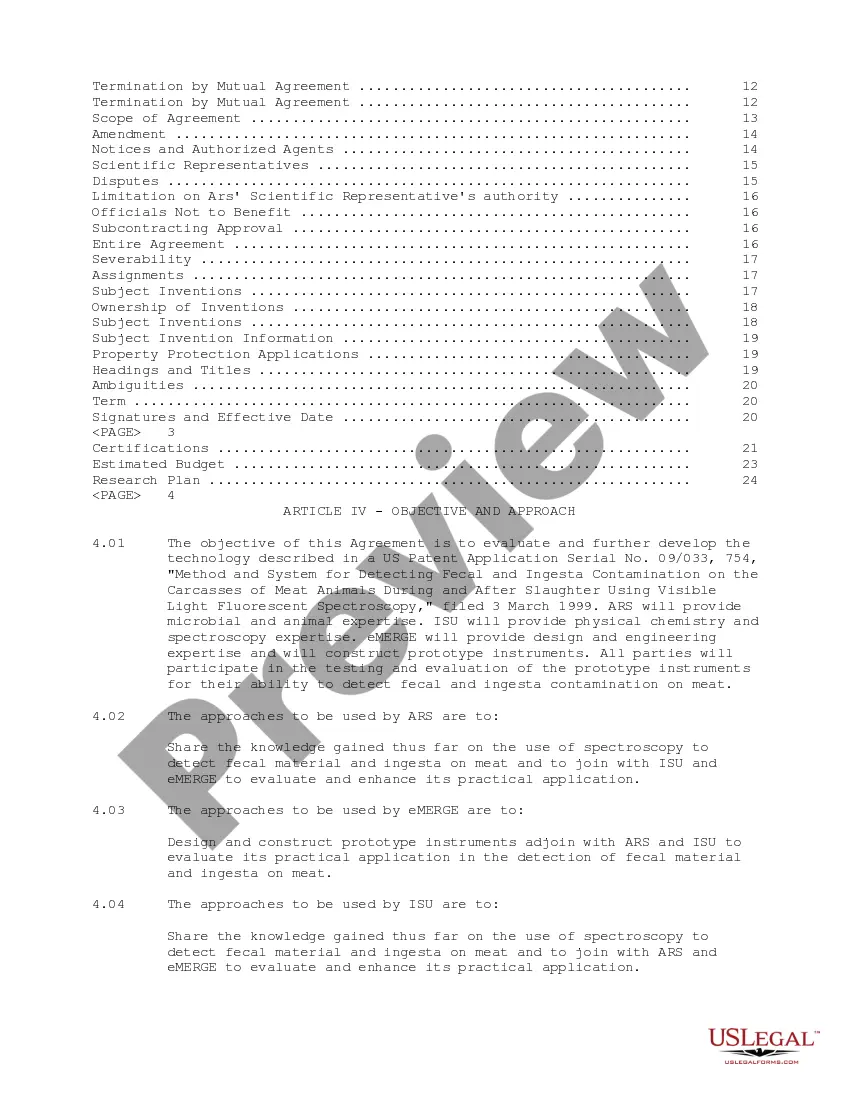
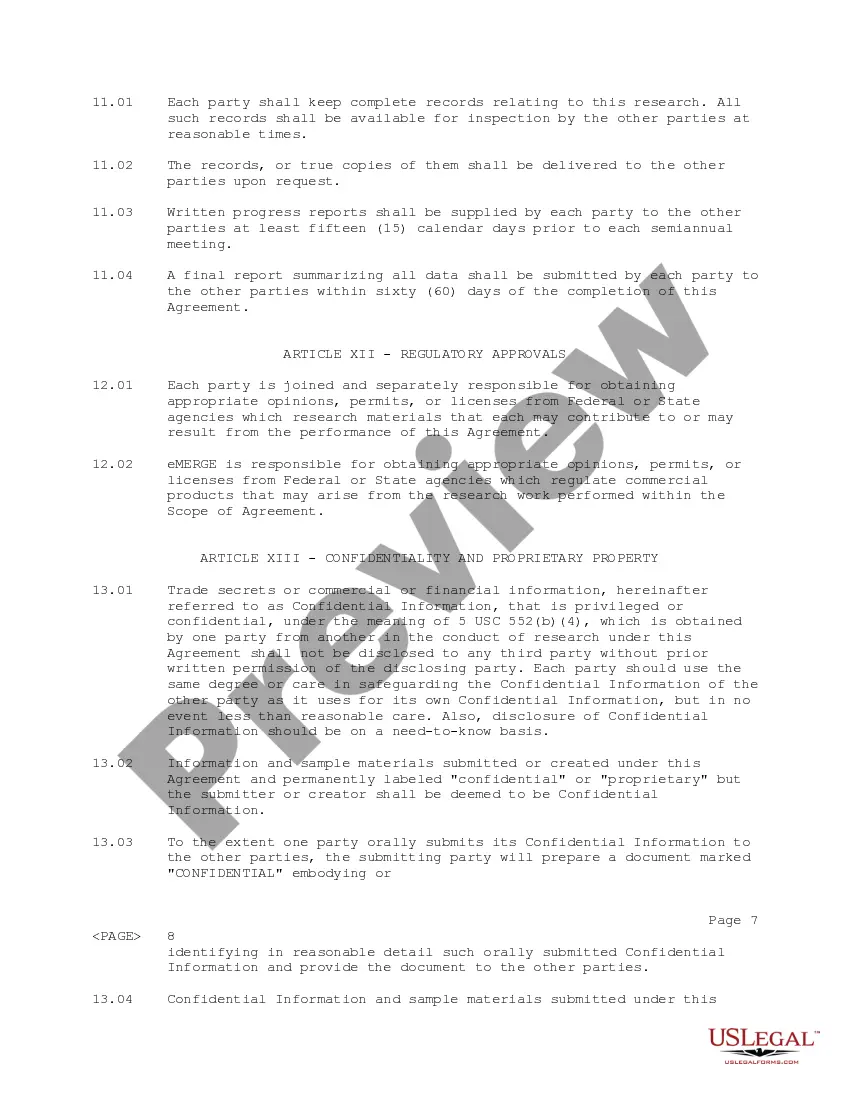
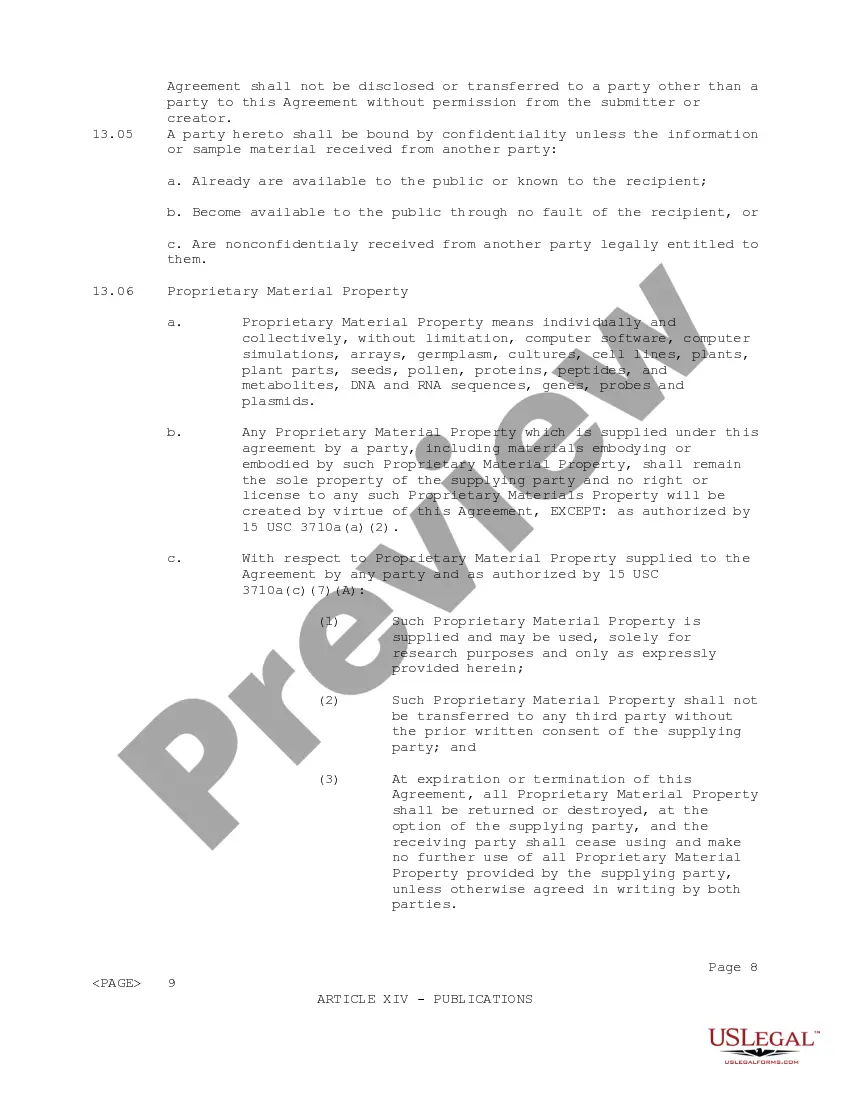
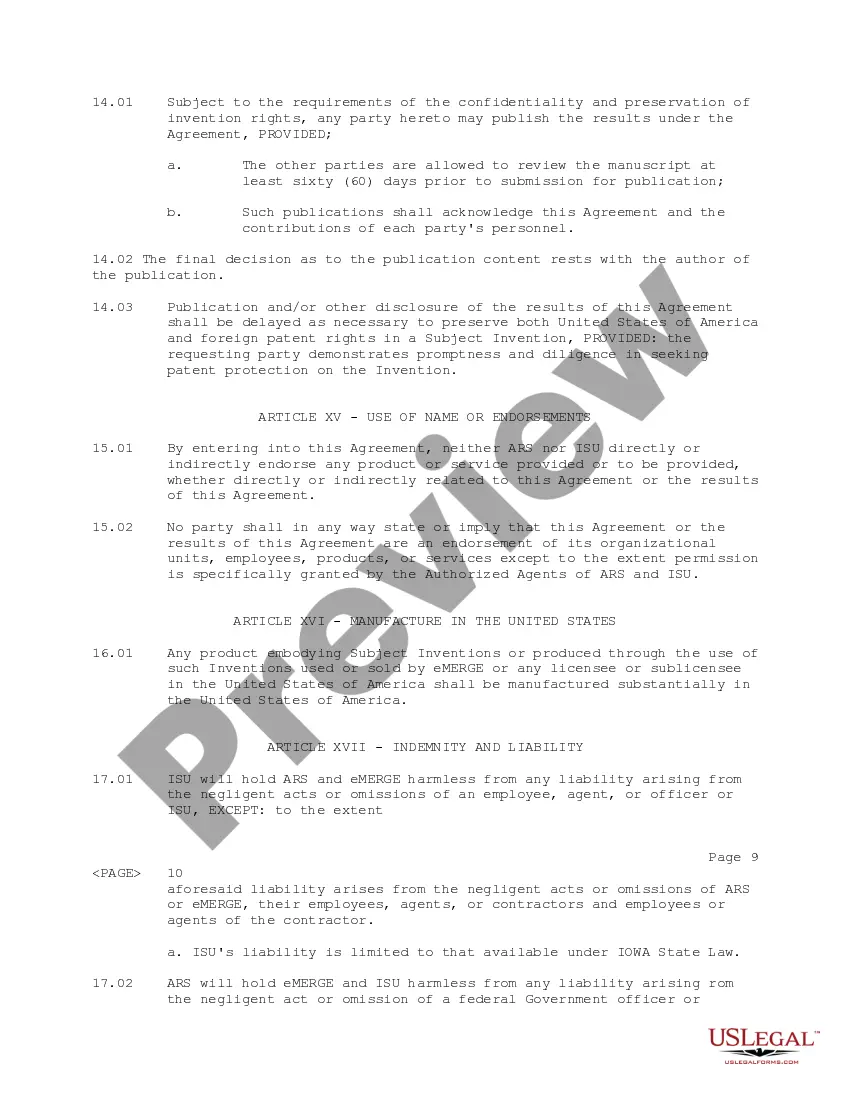
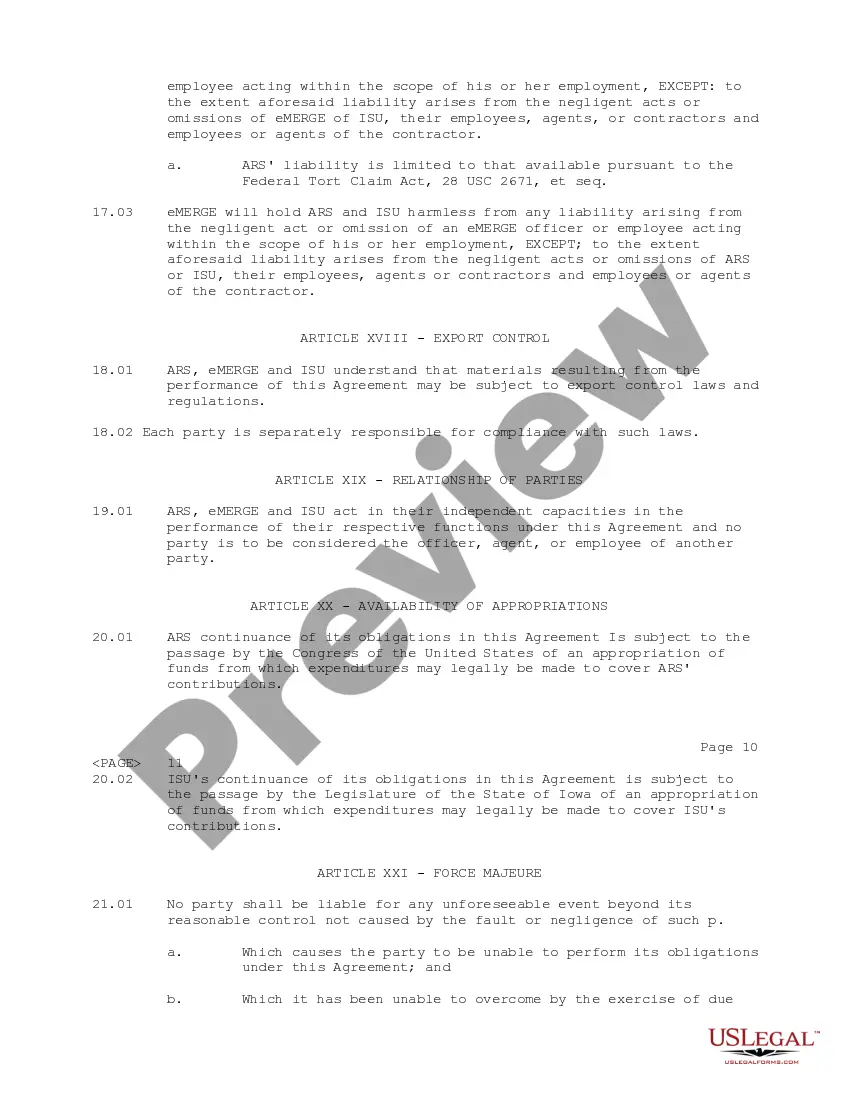
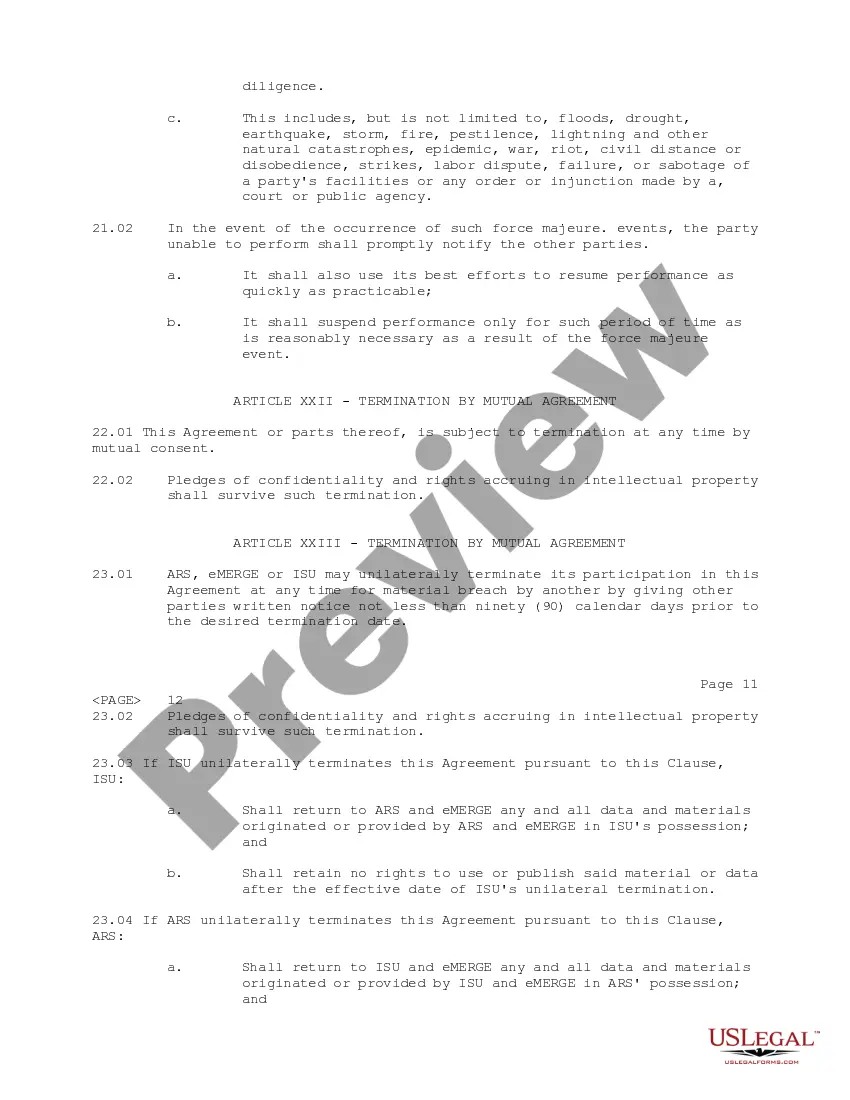
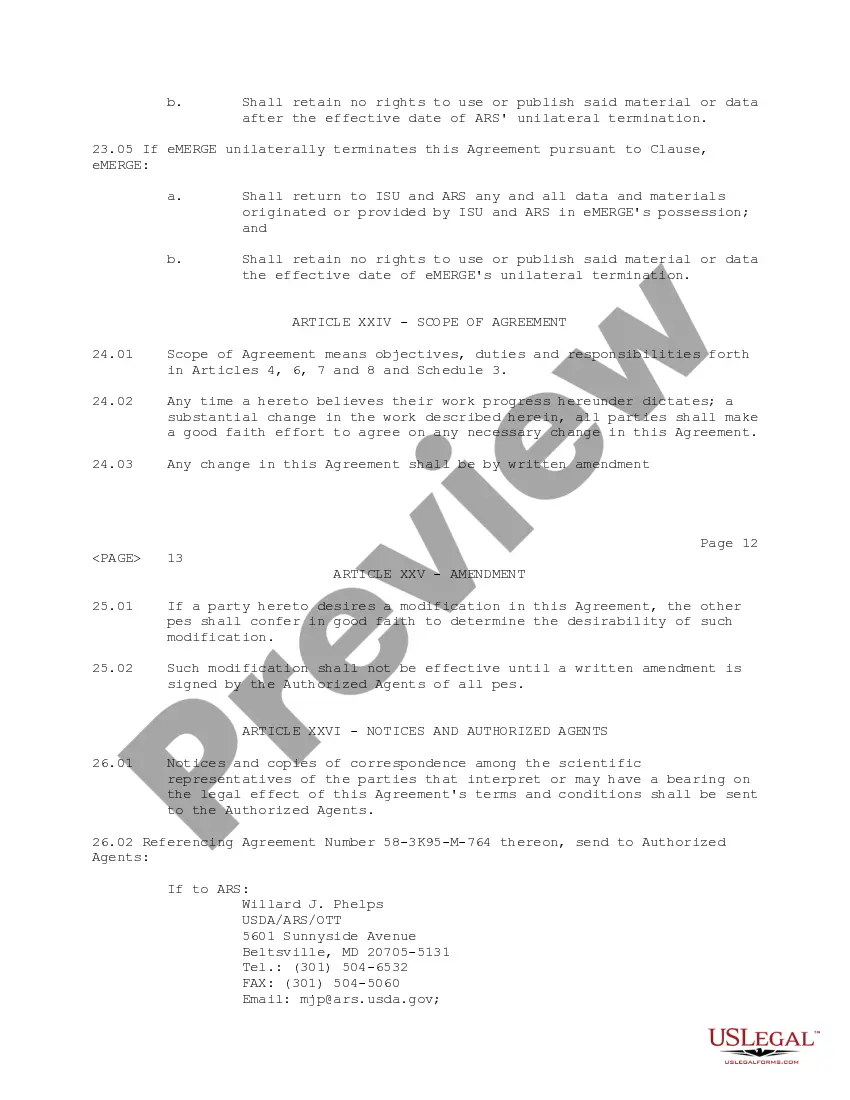
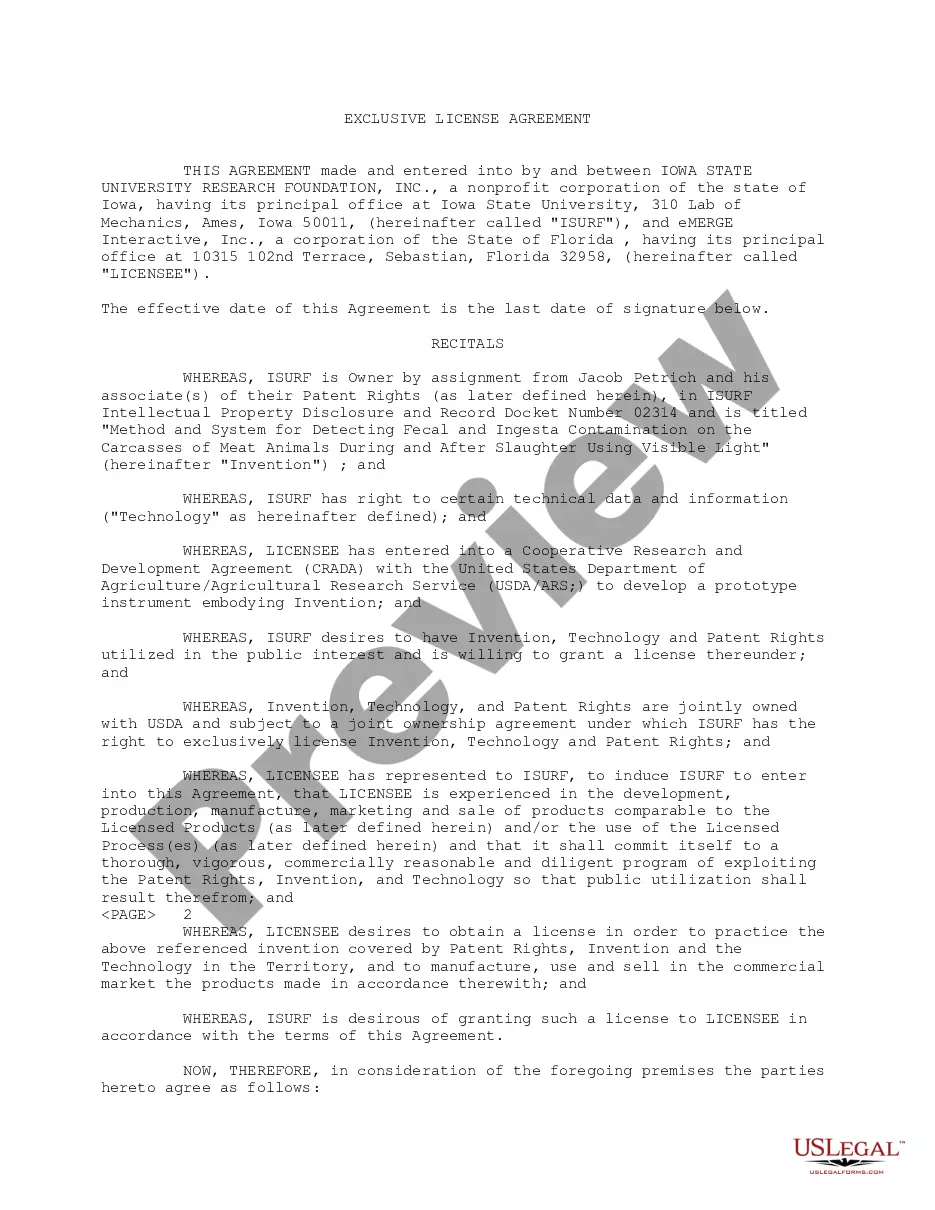
This form is a Cooperative Research and Development Agreement designed for collaboration between the USDA's Agricultural Research Service, eMerge Vision Systems, Inc., and Iowa State University of Science and Technology. Its primary purpose is to outline the responsibilities and contributions of each party in the research aimed at developing methods for detecting fecal and ingesta contamination in meat. Unlike general contracts, this agreement provides specific provisions for scientific collaboration, intellectual property rights, and confidentiality between the parties involved.
Key components of this form
- Objective and approach: Defines the technological goals and contributions of each party.
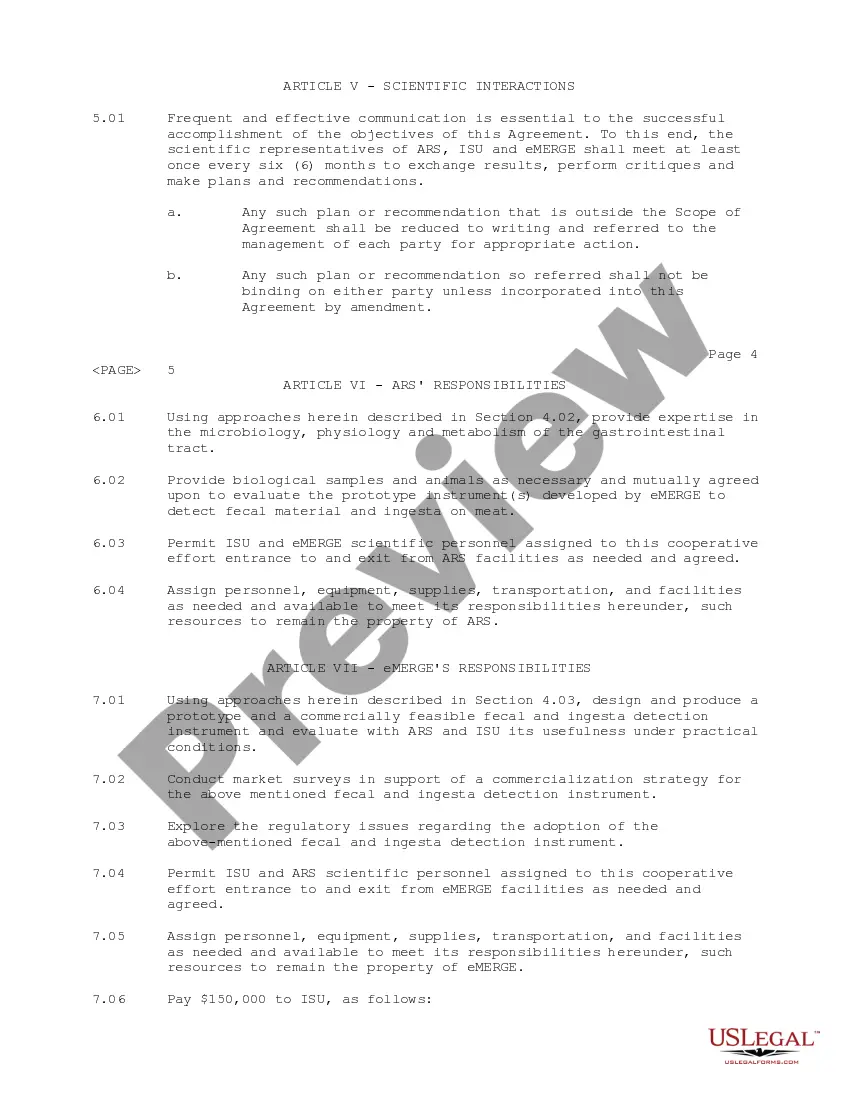
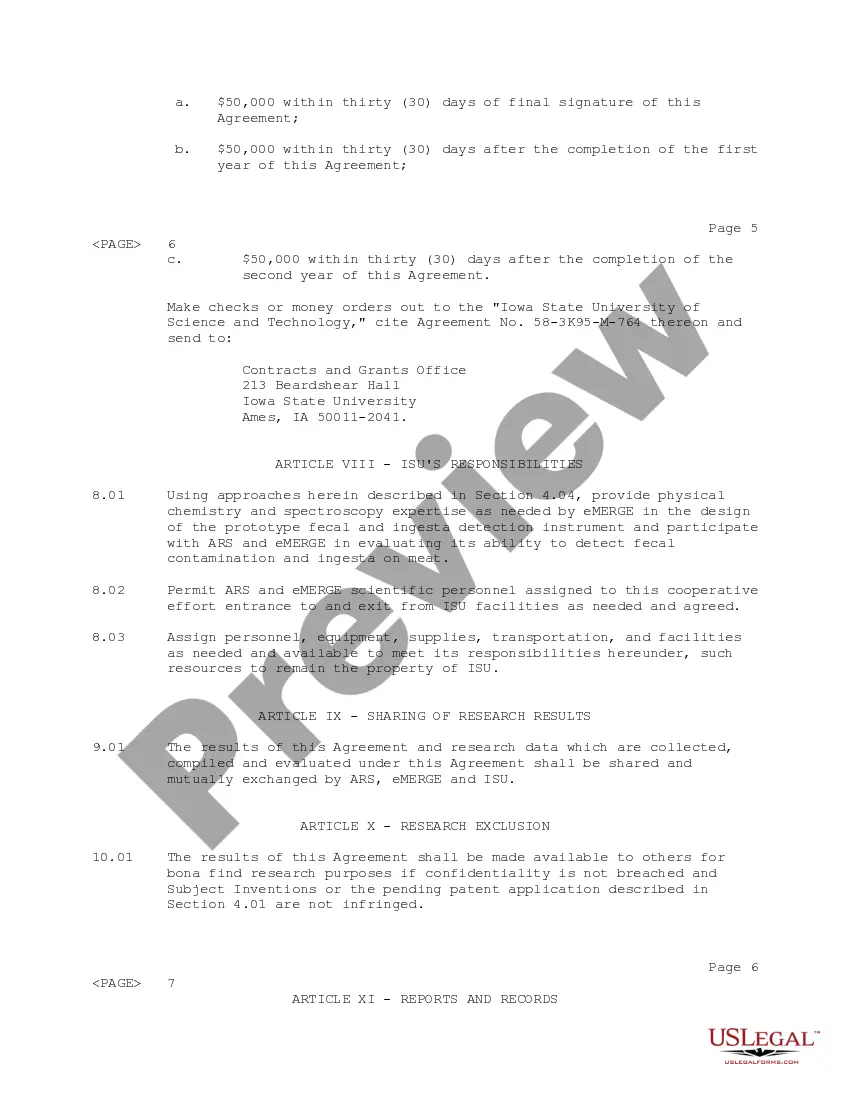
- Parties' responsibilities: Detailed roles and obligations of USDA, eMerge, and Iowa State University.
- Sharing of research results: Guidelines on data sharing and confidentiality.
- Termination clauses: Specifies conditions under which the agreement can be terminated.
- Ownership of inventions: Rights related to any inventions or discoveries made during the research.

Common use cases
This form is essential when establishing a formal partnership for scientific research involving multiple parties. It is particularly relevant in scenarios involving the development of new technologies and processes, such as food safety innovations, where collaboration between a federal agency, private sector, and academic institution is crucial.
Who can use this document
Intended audience:
- Researchers from government agencies looking to collaborate with private companies.
- Private sector firms seeking to partner with public institutions to innovate in technology.
- Academic institutions interested in conducting applied research in cooperation with federal agencies.
How to complete this form
Steps to complete this form:
- Identify the parties: Clearly state the names and addresses of the USDA, eMerge, and Iowa State University.
- Define the objectives: Specify the technological methods being developed and the research goals.
- Outline responsibilities: Detail the specific contributions and responsibilities of each party.
- Include financial terms: Document any payments or budget estimates agreed upon between the parties.
- Sign and date: Ensure that authorized representatives from each party sign the agreement to validate it.
Is notarization required?
This form does not typically require notarization unless specified by local law. Ensure that all parties have signed the agreement before any implementation or reliance on the terms outlined within.
Get your form ready online
Our built-in tools help you complete, sign, share, and store your documents in one place.
Make edits, fill in missing information, and update formatting in US Legal Forms—just like you would in MS Word.
Download a copy, print it, send it by email, or mail it via USPS—whatever works best for your next step.
Sign and collect signatures with our SignNow integration. Send to multiple recipients, set reminders, and more. Go Premium to unlock E-Sign.
If this form requires notarization, complete it online through a secure video call—no need to meet a notary in person or wait for an appointment.
We protect your documents and personal data by following strict security and privacy standards.

Make edits, fill in missing information, and update formatting in US Legal Forms—just like you would in MS Word.

Download a copy, print it, send it by email, or mail it via USPS—whatever works best for your next step.

Sign and collect signatures with our SignNow integration. Send to multiple recipients, set reminders, and more. Go Premium to unlock E-Sign.

If this form requires notarization, complete it online through a secure video call—no need to meet a notary in person or wait for an appointment.

We protect your documents and personal data by following strict security and privacy standards.
Typical mistakes to avoid
Common mistakes to avoid:
- Failing to specify clear roles and responsibilities of each party.
- Neglecting to outline the procedures for sharing and protecting proprietary information.
- Not including adequate provisions for termination and dispute resolution.
- Overlooking details related to ownership and licensing of inventions.
Why complete this form online
Benefits of using this form online:
- Convenient access to a legally vetted agreement template.
- Editable format allows for quick adjustments to meet specific project needs.
- Increased reliability of the document as it is prepared by legal professionals.
Legal use and context:
- This agreement is legally binding and enforceable as long as it adheres to applicable laws and regulations.
- Failing to comply with the terms specified in the agreement can lead to legal disputes and the potential for loss of research investments.
- Parties should be aware of their rights and responsibilities as laid out in the agreement to ensure mutual understanding and accountability.
Main things to remember
Key takeaways:
- This form formalizes cooperation between the USDA, eMerge, and Iowa State University for specific research purposes.
- Clear definitions of responsibilities and intellectual property rights are crucial to protect each partyâs interests.
- Completing this form accurately ensures that all parties are on the same page regarding their commitments and legal rights.
Looking for another form?









Form popularity
FAQ
Collaborations and Partnerships. Cooperative and Development Research Agreements (CRADA)
Research contracts are legally binding agreements that govern collaborative research between the University and external organisations, whether those organisations are funding the research or are participating in the conduct of the research itself.
A Cooperative Research and Development Agreement (CRADA) is any formal written agreement between one or more Federal laboratories and one or more non-Federal parties under which: The government, through its laboratories, provides personnel, services, facilities, equipment, intellectual property, or other resources.
A CRADA allows both parties to keep research results confidential for up to five years under the Freedom of Information Act.Private corporations participating in a CRADA are allowed to file for patent, and they retain patent rights on inventions developed by the CRADA. The government gets a license to the patents.
Development agreements are contracts approved by the Planning Commission and Board of Supervisors entered into by the City and a developer to expressly define a development project's rules, regulations, commitments, and policies for a specific period of time.
In the United States, a cooperative research and development agreement (CRADA or CRDA) is an agreement between a government agency and a private company or university to work together on research and development.
Technology Development A Cooperative Research and Development Agreement (CRADA) is a written agreement between a private company and a government agency to work together on a project.As a technology transfer mechanism, the CRADA is an extremely useful tool in moving federally funded R&D into the private sector.
Research Agreements allow two parties to jointly research a target technology. The more expensive the technology, the longer the agreement will take. At the duration of the agreement, each party earns the Boost for that technology." So, you begin a research agreement with a friend or ally, selecting a specific tech.