Complaint for Alienation of Affections
Understanding this form
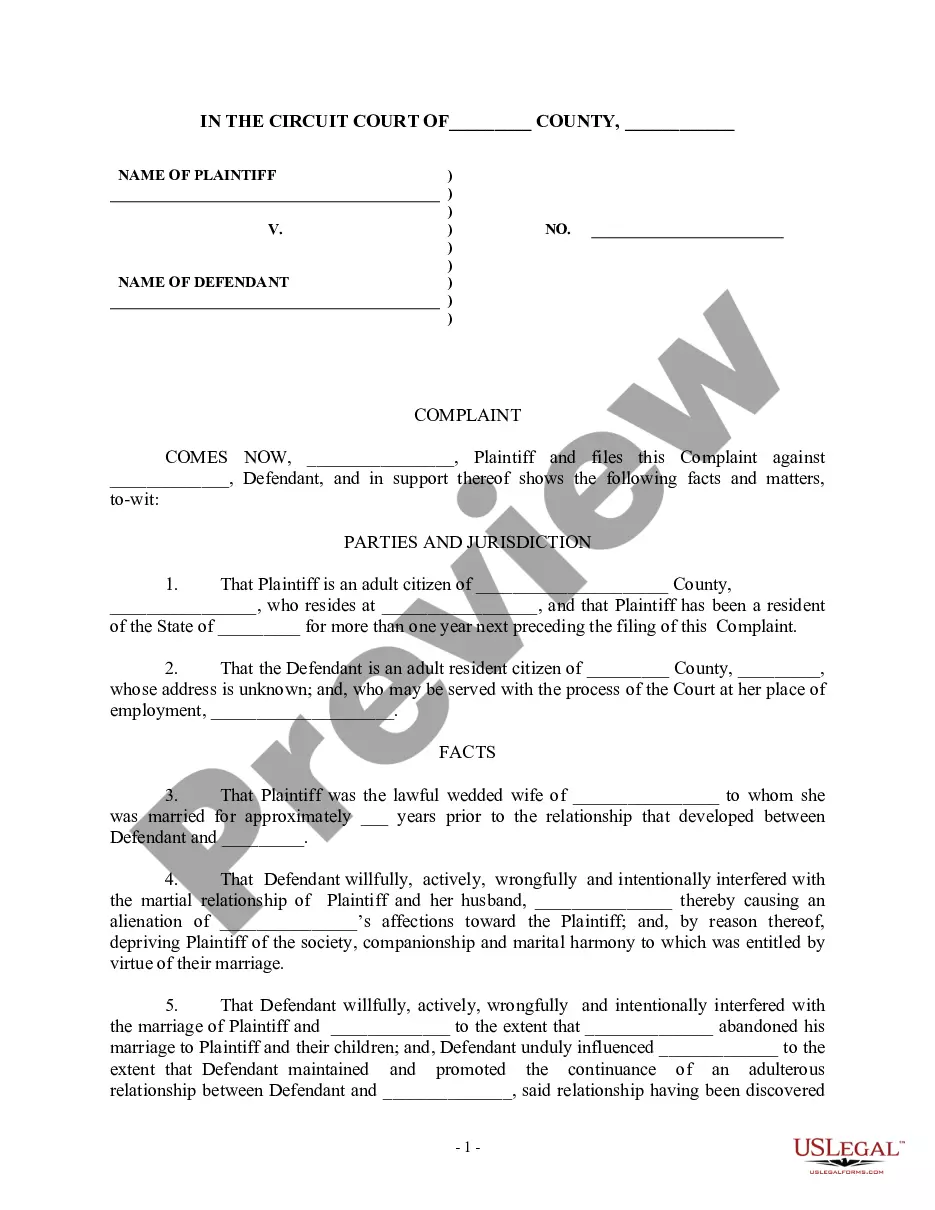
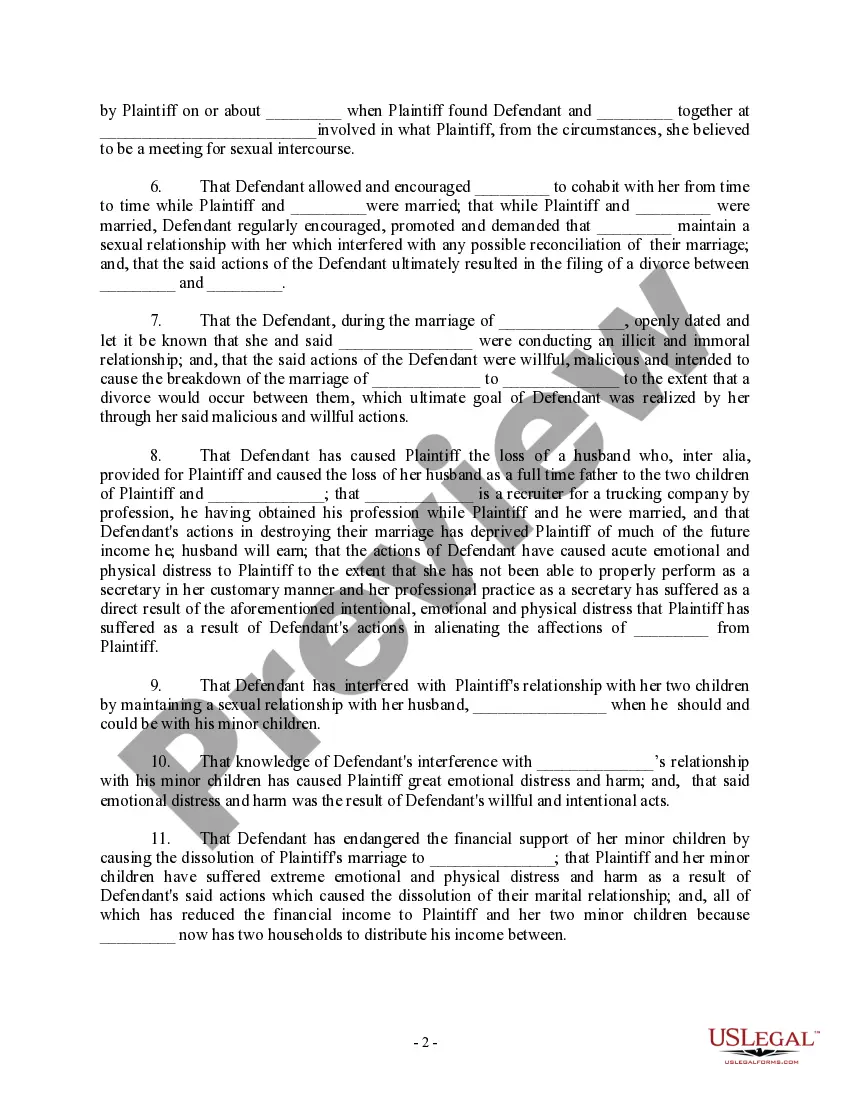
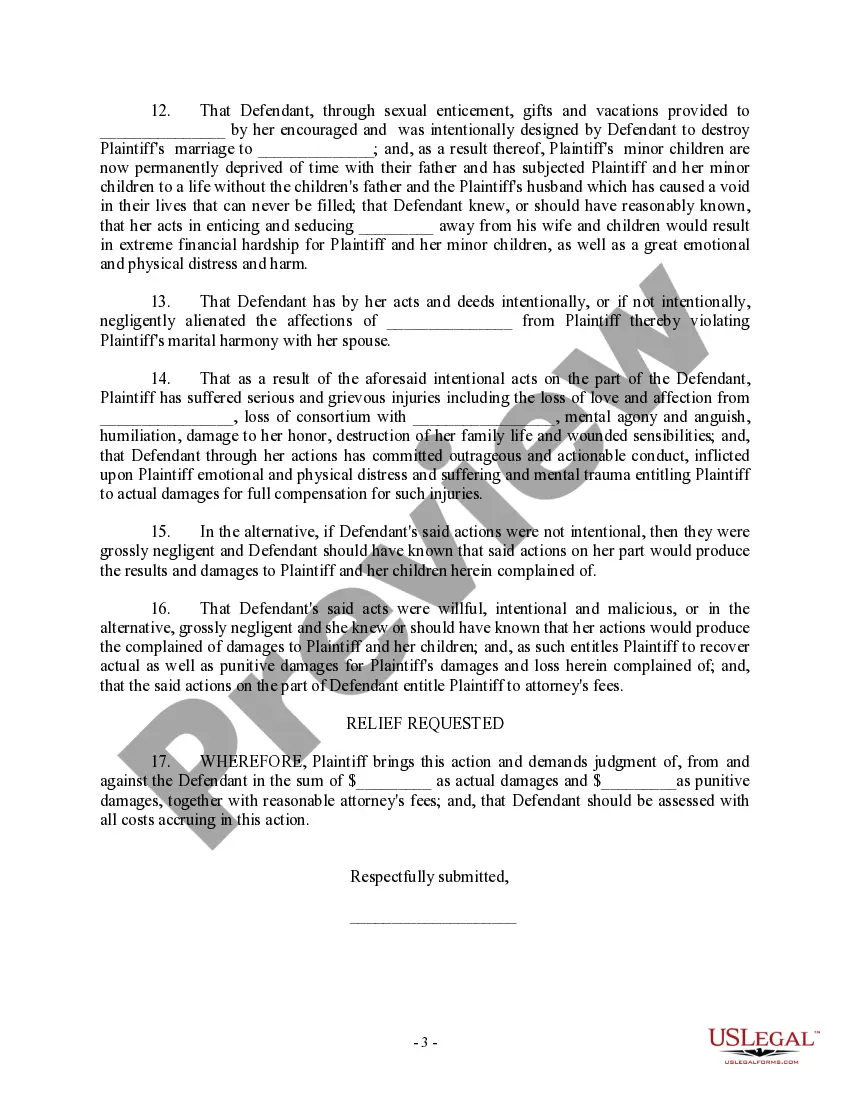
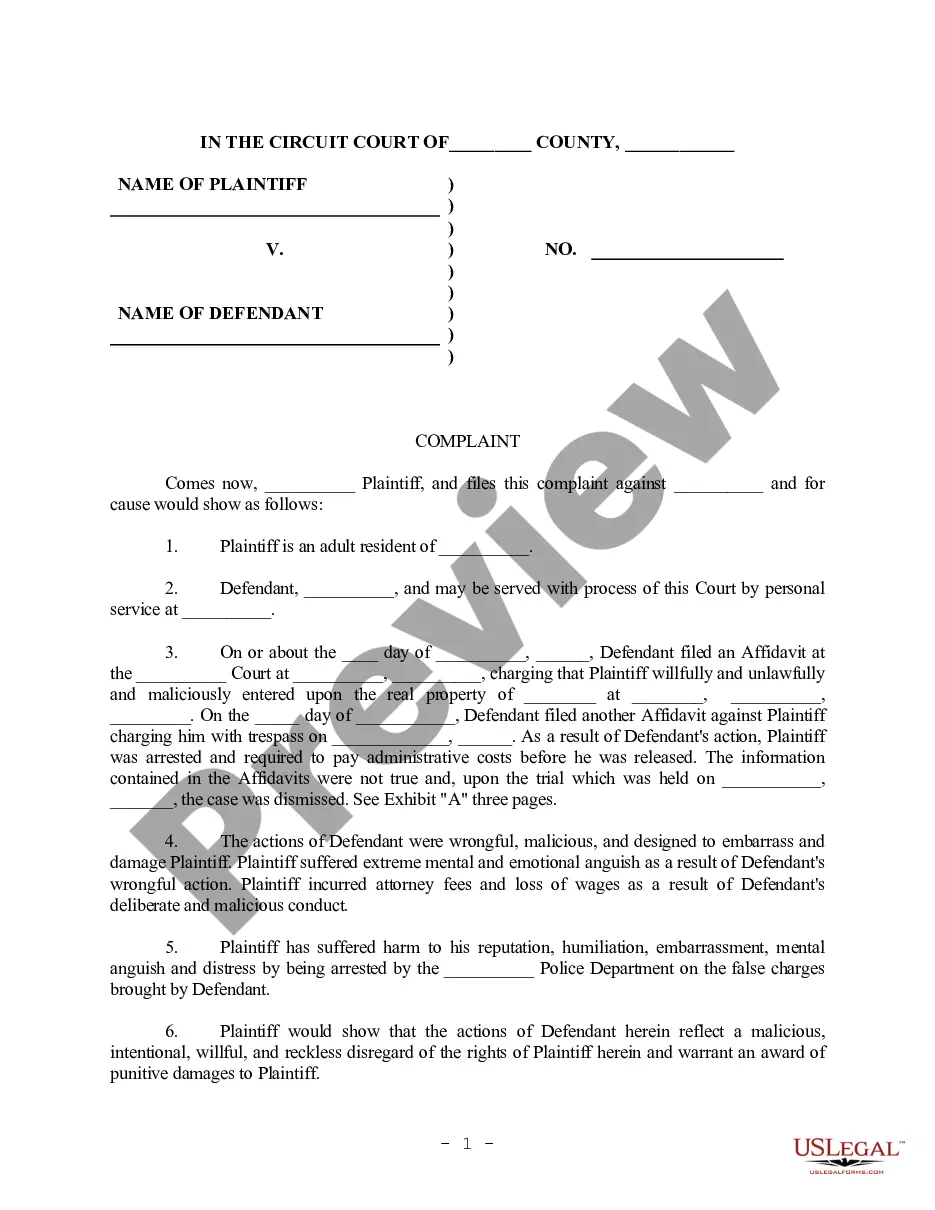
The Complaint for Alienation of Affections is a legal document used to initiate a lawsuit against a third party who has interfered with a marital relationship by causing one spouse to abandon the other. This form is distinct from divorce filings, as it specifically addresses the wrongdoing of an external party in a marriage, seeking compensation for the emotional and financial damages incurred by the aggrieved spouse.
Key parts of this document
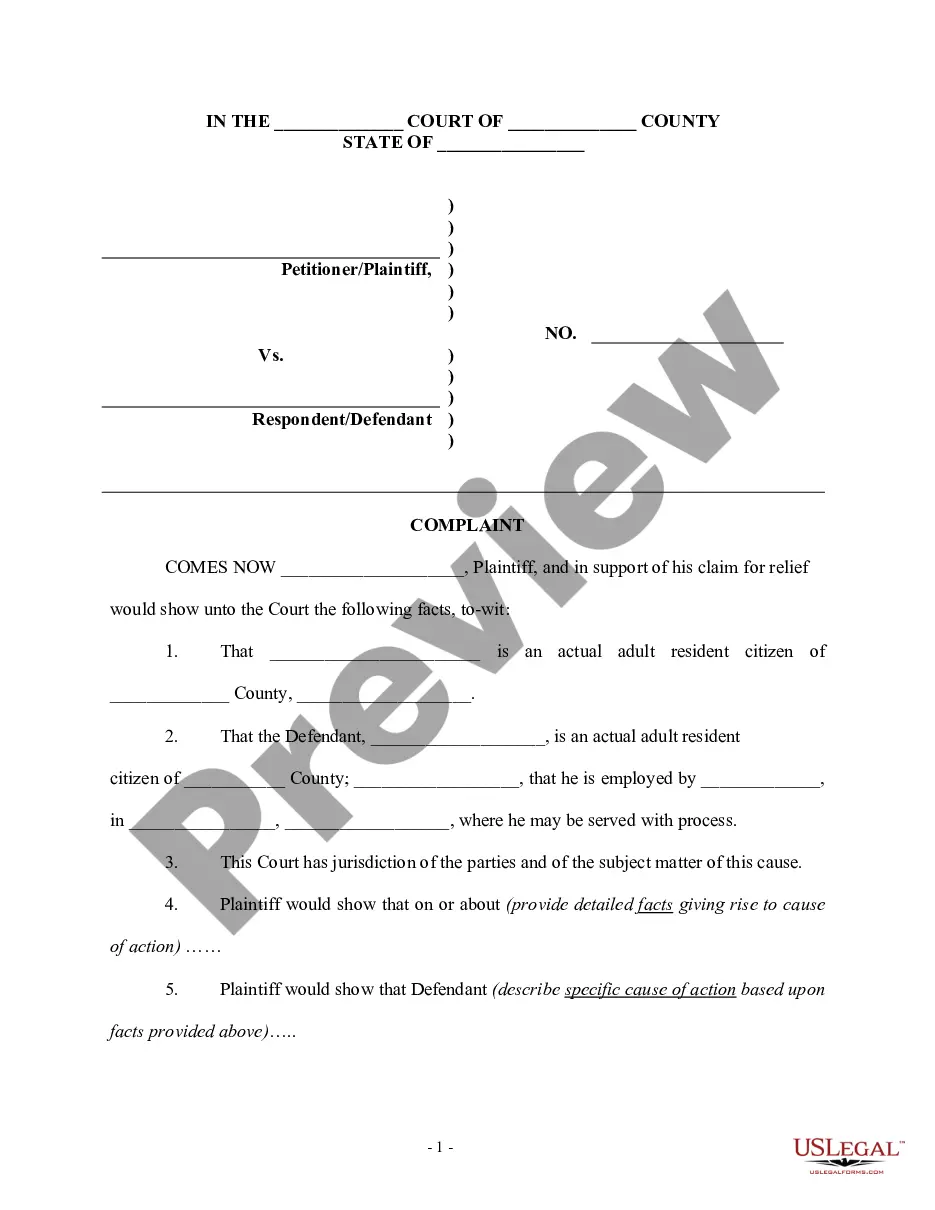
- Parties and jurisdiction: Identification of the plaintiff and defendant, including their addresses and residency details.
- Facts: A detailed account of the actions taken by the defendant that led to the alienation of affections.
- Relief requested: Specifies the damages sought from the defendant, including actual and punitive damages.

Situations where this form applies
This form should be used when an individual believes their spouse's affections have been wrongfully alienated by a third party's actions. Common situations include discovering an affair or other forms of emotional interference that have led to the breakdown of a marriage. It is suitable for those seeking to hold the responsible party accountable through legal channels.
Who needs this form
This form is intended for:
- Anyone whose spouse has engaged in an affair or emotional relationship with a third party.
- Individuals seeking legal recourse for emotional and financial damages caused by another person's interference in their marriage.
- People who have evidence of intentional actions by a third party that have resulted in the breakdown of their marital relationship.
How to prepare this document
- Identify the parties: Fill in your name and contact information as the plaintiff, and provide details about the defendant.
- Detail the facts: Clearly describe the actions taken by the defendant that interfered with your marital relationship.
- Specify the relief requested: State the amount of actual damages and punitive damages sought from the defendant.
Does this form need to be notarized?
In most cases, this form does not require notarization. However, some jurisdictions or signing circumstances might. US Legal Forms offers online notarization powered by Notarize, accessible 24/7 for a quick, remote process.
Get your form ready online
Our built-in tools help you complete, sign, share, and store your documents in one place.
Make edits, fill in missing information, and update formatting in US Legal Forms—just like you would in MS Word.
Download a copy, print it, send it by email, or mail it via USPS—whatever works best for your next step.
Sign and collect signatures with our SignNow integration. Send to multiple recipients, set reminders, and more. Go Premium to unlock E-Sign.
If this form requires notarization, complete it online through a secure video call—no need to meet a notary in person or wait for an appointment.
We protect your documents and personal data by following strict security and privacy standards.

Make edits, fill in missing information, and update formatting in US Legal Forms—just like you would in MS Word.

Download a copy, print it, send it by email, or mail it via USPS—whatever works best for your next step.

Sign and collect signatures with our SignNow integration. Send to multiple recipients, set reminders, and more. Go Premium to unlock E-Sign.

If this form requires notarization, complete it online through a secure video call—no need to meet a notary in person or wait for an appointment.

We protect your documents and personal data by following strict security and privacy standards.
Common mistakes
- Failing to provide accurate contact information for both parties.
- Not clearly detailing the facts supporting the claim, which can weaken the case.
- Overlooking local laws or filing procedures that may affect the outcome.
Why complete this form online
- Convenience: Download and complete the form from the comfort of your home.
- Editability: Easily make changes before finalizing the document.
- Reliability: Ensure that the documents are drafted by licensed attorneys, providing peace of mind that they comply with legal standards.
Legal use & context
- Alienation of affections claims are not recognized in every state, so understanding local laws is essential.
- This form can be part of a larger legal strategy, including divorce proceedings, if applicable.
Summary of main points
- The Complaint for Alienation of Affections addresses wrongful interference in a marriage.
- This form can seek compensation for emotional and financial damages caused by a third party.
- Completing the form accurately is essential to the success of the complaint.
Looking for another form?

Form popularity
FAQ
To file your complaint and initiate your lawsuit, you generally have to pay filing fees, typically around $200. If you cannot afford the filing fees, you can ask the clerk for an application to have them waived.
You can defeat an alienation of affection lawsuit by showing your action was innocent or that you weren't the reason the marriage broke down. In addition, there are other defenses which you might have, including the following: The plaintiff consented to the conduct.
A lawsuit for alienation of affection or criminal conversation must be brought no later than three years from the last act of the paramour giving rise to these claims. For a criminal conversation claim, that means no later than three years from the last time the paramour and the cheating spouse had sexual intercourse.
Alienation of affection and criminal conversation are civil tort claims that can entitle an aggrieved spouse to recover monetary damages from the third-party. The aggrieved spouse's lawsuit must allege specific damages, such as emotional distress, loss of income, and/or loss of consortium (conjugal relations).
This common law tort is abolished in several jurisdictions. In fact, only a few states in the United States still allow alienation of affection lawsuits. These states include Hawaii, Illinois, Mississippi, New Mexico, North Carolina, South Dakota, and Utah.
This is a very common question, but a pretty uncommon scenario. Depending on where you live, you may be able to file suit against the other woman (or man) through one of two types of civil tort claims criminal conversation or alienation of affection.
The law allows individuals to sue others for ruining their marriages. While most states got rid of it years ago, it's still on the books in Hawaii, Mississippi, New Mexico, North Carolina, South Dakota and Utah.The law has since evolved, such that women can now sue.
To prove a claim for alienation of affection, the jilted spouse must prove that, prior to the commencement of the affair, he or she had a loving marriage, that the loving marriage was diminished or destroyed by the paramour's conduct, and that it was that wrongful conduct that led to the diminishment of the marital