Liquidated Damages Clause
Overview of this form
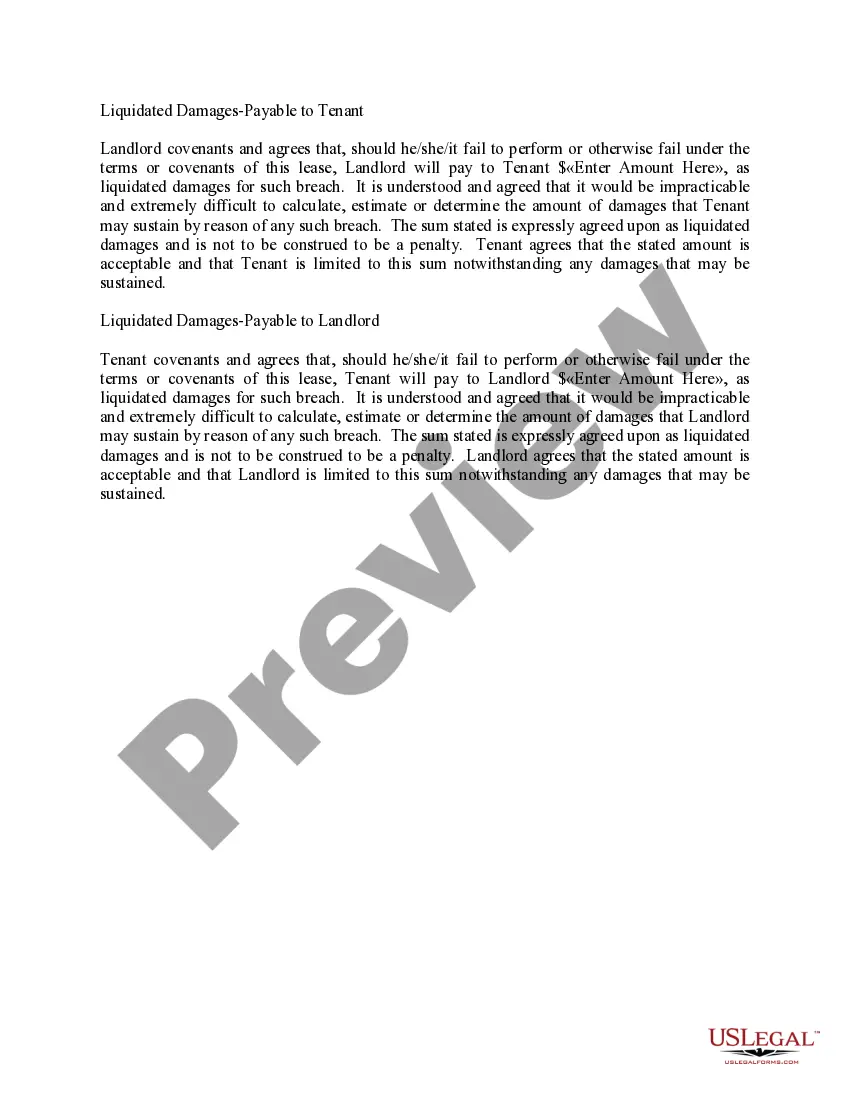
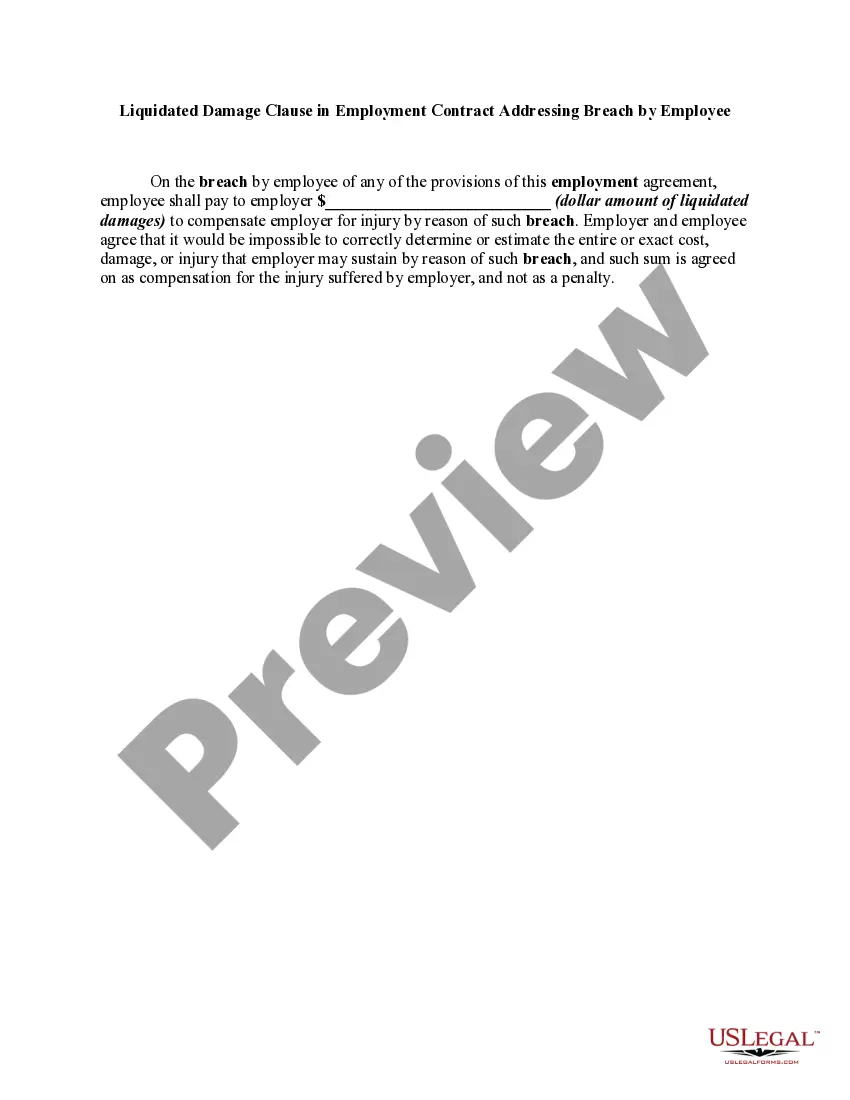
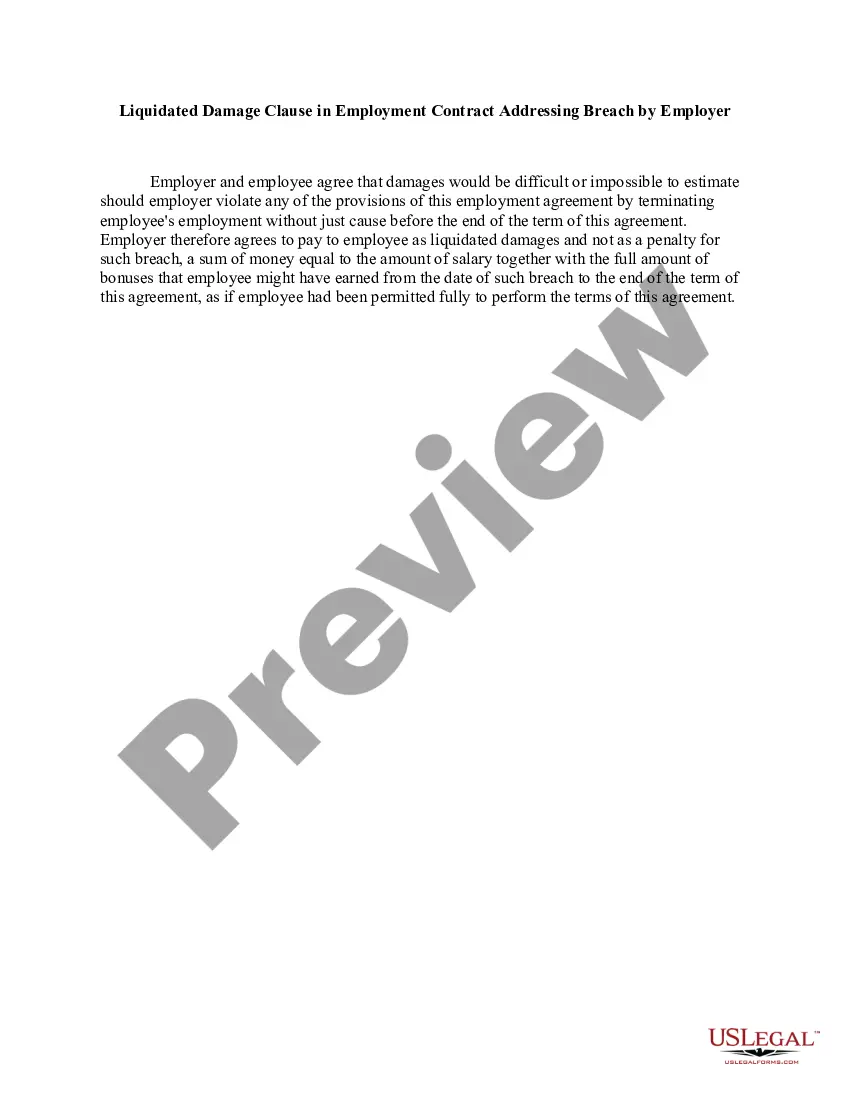
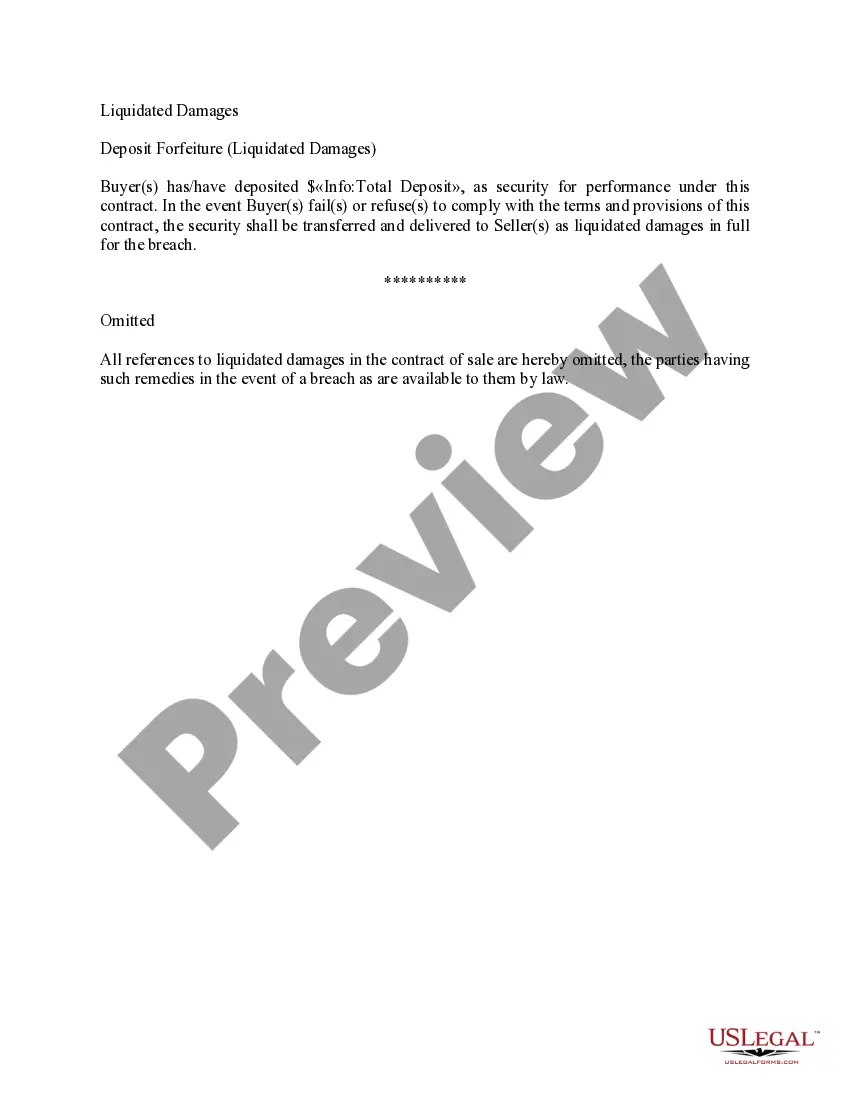
A liquidated damages clause is a provision used in contracts that specifies a predetermined amount of money to be paid by one party to another in the event of a breach. This clause is often included in lease agreements or real estate purchase contracts to outline the financial consequences should either the landlord or tenant fail to fulfill their contractual obligations. The clause serves to provide clarity and prevent disputes over damages by agreeing on a specific amount instead of needing to calculate actual damages after a breach occurs.
Main sections of this form
- Identification of the parties involved (Tenant and Landlord).
- Specification of the amount considered as liquidated damages.
- Understanding that the amount is not a penalty but a pre-agreed damage amount.
- Limitations on claims for damages beyond the stated amount.
When to use this document
This form becomes necessary in situations where a landlord or tenant anticipates the risk of breach in a lease agreement. For example, if a tenant may not pay their rent on time or a landlord might fail to maintain the property, the liquidated damages clause provides a clear financial remedy. It is also commonly utilized in real estate transactions to clarify the consequences of a buyer's or seller's noncompliance with the agreement.
Intended users of this form
This form is suitable for:
- Landlords who want to protect themselves against potential breaches by tenants.
- Tenants who wish to ensure their rights in the event of landlord noncompliance.
- Real estate buyers or sellers who seek to clarify the consequences of a breach during their transaction.
Instructions for completing this form
- Identify the parties involved, including the Tenant and Landlord.
- Clearly specify the monetary amount to be agreed upon as liquidated damages.
- Include a statement confirming that the amount is for damages and not a penalty.
- Ensure both parties understand and accept this limitation on further claims for damages.
- Sign and date the document to formalize the agreement.
Notarization guidance
This form does not typically require notarization unless specified by local law. However, having it notarized can add an extra layer of authenticity and may be beneficial in certain situations.
Get your form ready online
Our built-in tools help you complete, sign, share, and store your documents in one place.
Make edits, fill in missing information, and update formatting in US Legal Forms—just like you would in MS Word.
Download a copy, print it, send it by email, or mail it via USPS—whatever works best for your next step.
Sign and collect signatures with our SignNow integration. Send to multiple recipients, set reminders, and more. Go Premium to unlock E-Sign.
If this form requires notarization, complete it online through a secure video call—no need to meet a notary in person or wait for an appointment.
We protect your documents and personal data by following strict security and privacy standards.

Make edits, fill in missing information, and update formatting in US Legal Forms—just like you would in MS Word.

Download a copy, print it, send it by email, or mail it via USPS—whatever works best for your next step.

Sign and collect signatures with our SignNow integration. Send to multiple recipients, set reminders, and more. Go Premium to unlock E-Sign.

If this form requires notarization, complete it online through a secure video call—no need to meet a notary in person or wait for an appointment.

We protect your documents and personal data by following strict security and privacy standards.
Common mistakes to avoid
- Failing to specify the exact amount of liquidated damages.
- Confusing liquidated damages with penalties.
- Not having both parties sign the form.
- Overlooking state-specific legal requirements.
Benefits of completing this form online
- Convenient access to professionally drafted legal forms.
- Editable templates that allow for customization according to specific agreements.
- Immediate downloads, saving time in legal processes.
Legal use & context
- Liquidated damages clauses are enforceable in many jurisdictions, provided they are reasonable and not punitive in nature.
- Such clauses help parties agree upon and limit potential disputes surrounding breach of contract issues.
Main things to remember
- A liquidated damages clause specifies a fixed sum payable for breach, providing clarity in agreements.
- It is essential for both parties to agree to the specified amount and understand its implications.
- Using this form can facilitate smoother transactions and help avoid costly legal disputes.
Looking for another form?


Form popularity
FAQ
What are Liquidated Damages? In general, liquidated damages provisions specify a predetermined amount of money that must be paid as damages if one party fails to meet certain contractual requirements.
The main difference between a penalty clause and liquidated damages is that the former is intended as a punishment and the latter simply attempts to make amends or rectify a problem. Delays in commercial transactions can often bring up questions about penalties and liquidated damages.
A penalty clause is a contractual clause that imposes liquidated damages that are unreasonably high and represent a punishment for breach, rather than a reasonable forecast of damages for the harm that is caused by the breach, are referred to as penalty clauses.
A valid liquidated damages clause goes into effect when one party in a contract breaches the terms, resulting in a loss or injury to a person, a person's rights, or a person's property. Damages are a monetary sum, awarded by either a contract stipulation or a court judgment.
A penalty clause is a contractual clause that imposes liquidated damages that are unreasonably high and represent a punishment for breach, rather than a reasonable forecast of damages for the harm that is caused by the breach, are referred to as penalty clauses.
The main difference between a penalty clause and liquidated damages is that the former is intended as a punishment and the latter simply attempts to make amends or rectify a problem. Delays in commercial transactions can often bring up questions about penalties and liquidated damages.
Liquidated damages are used to compensate the Government for probable damages. Therefore, the liquidated damages rate must be a reasonable forecast of just compensation for the harm that is caused by late delivery or untimely performance of the particular contract.