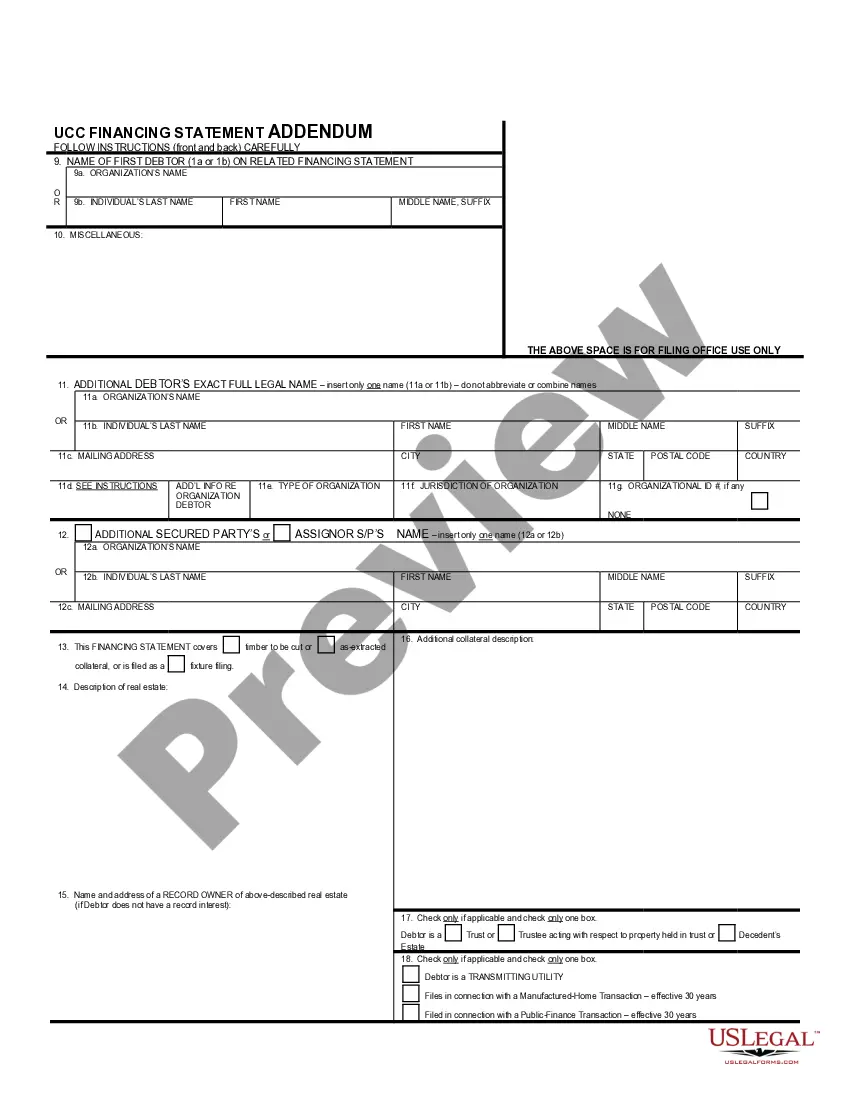
Contract with Independent Contractor with Confidentiality Agreement and Covenant Not to Compete
Understanding this form
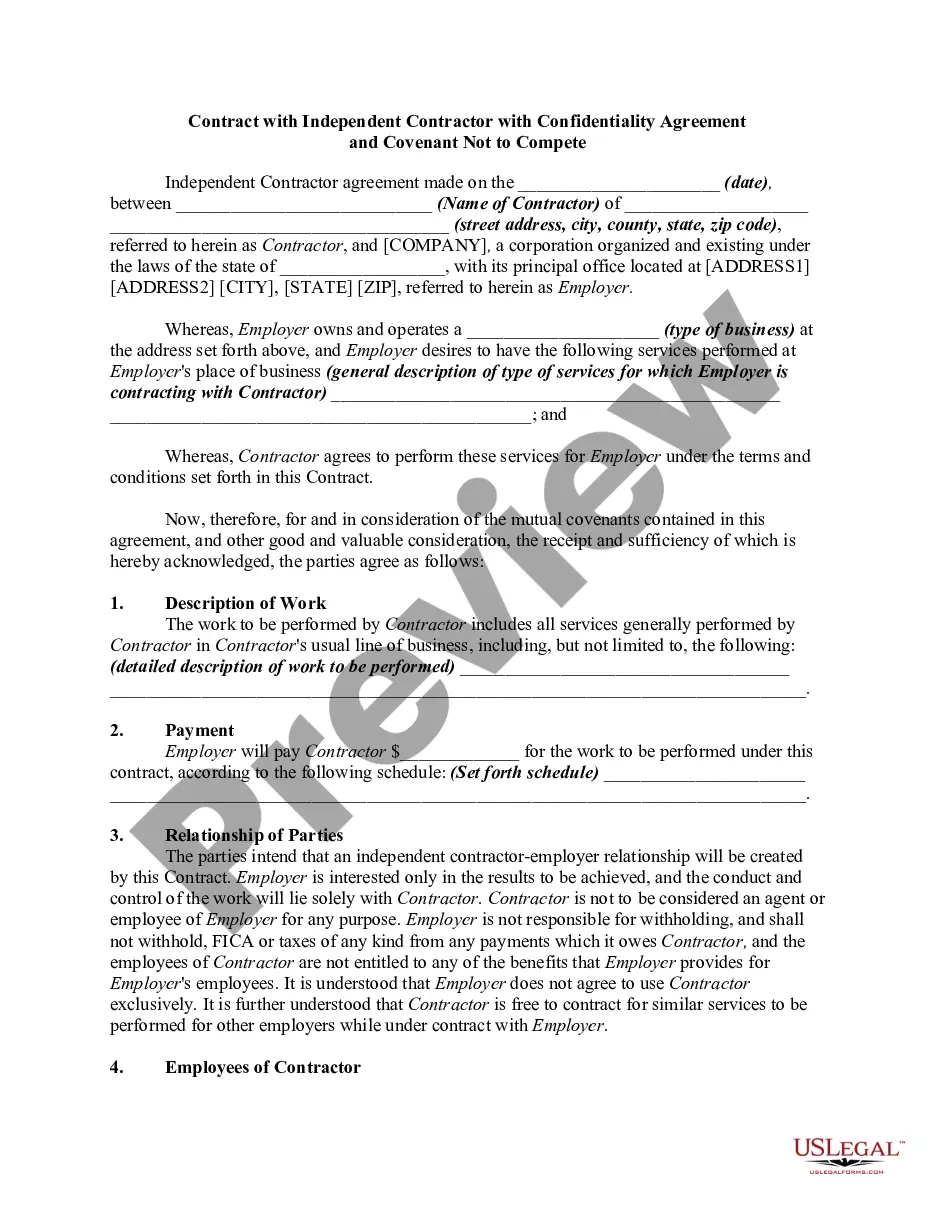
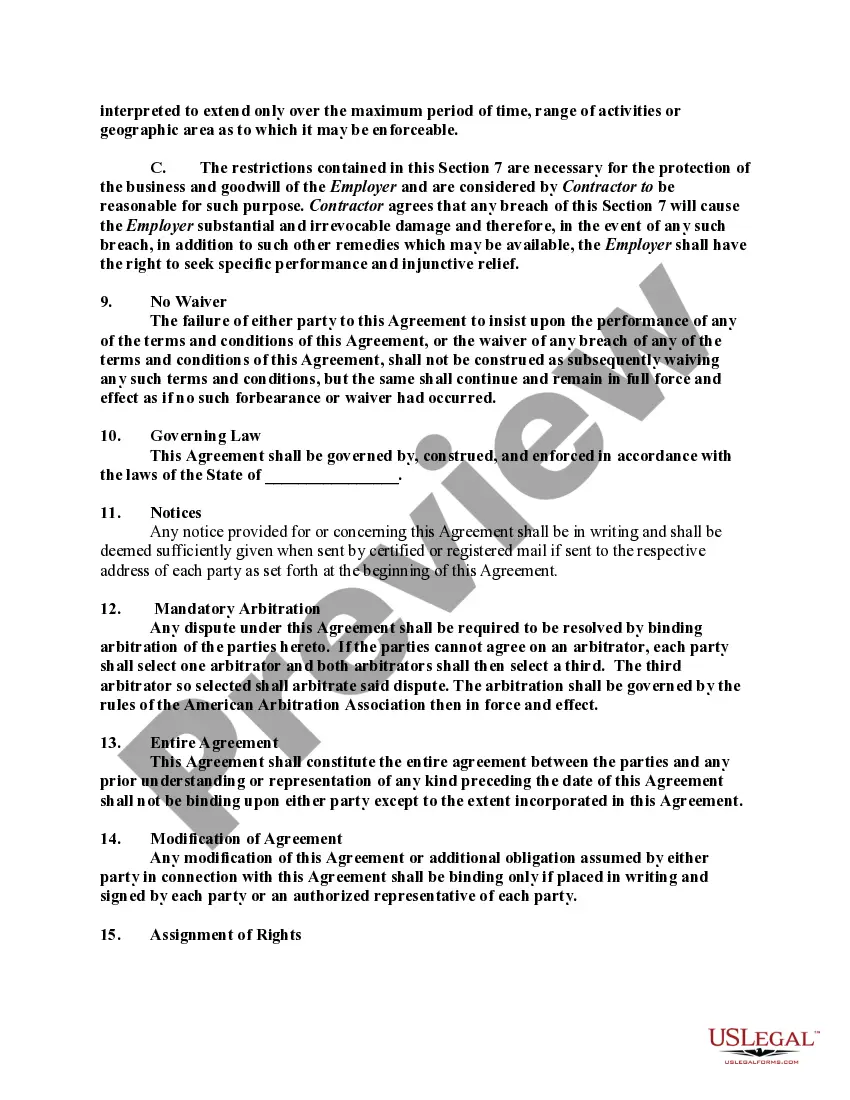
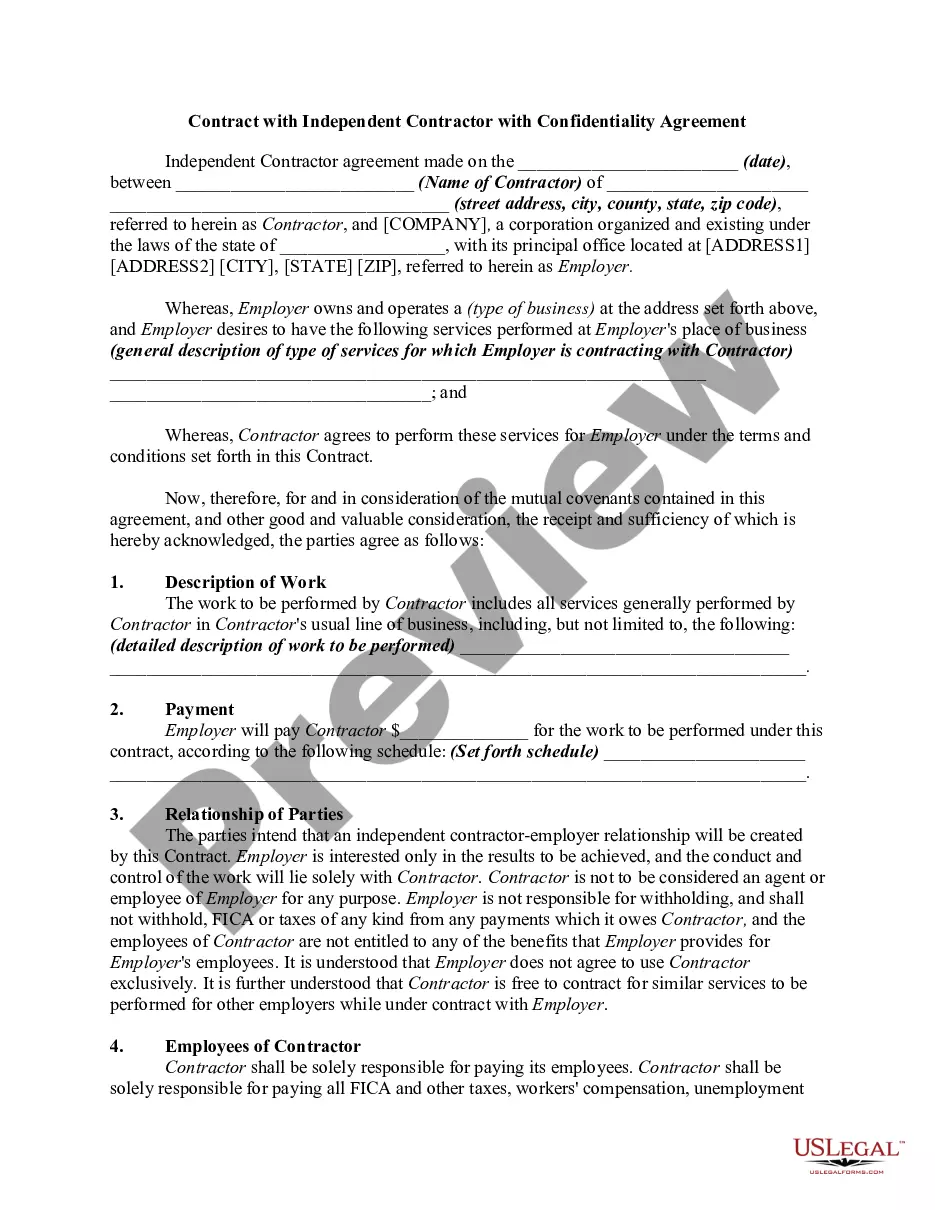
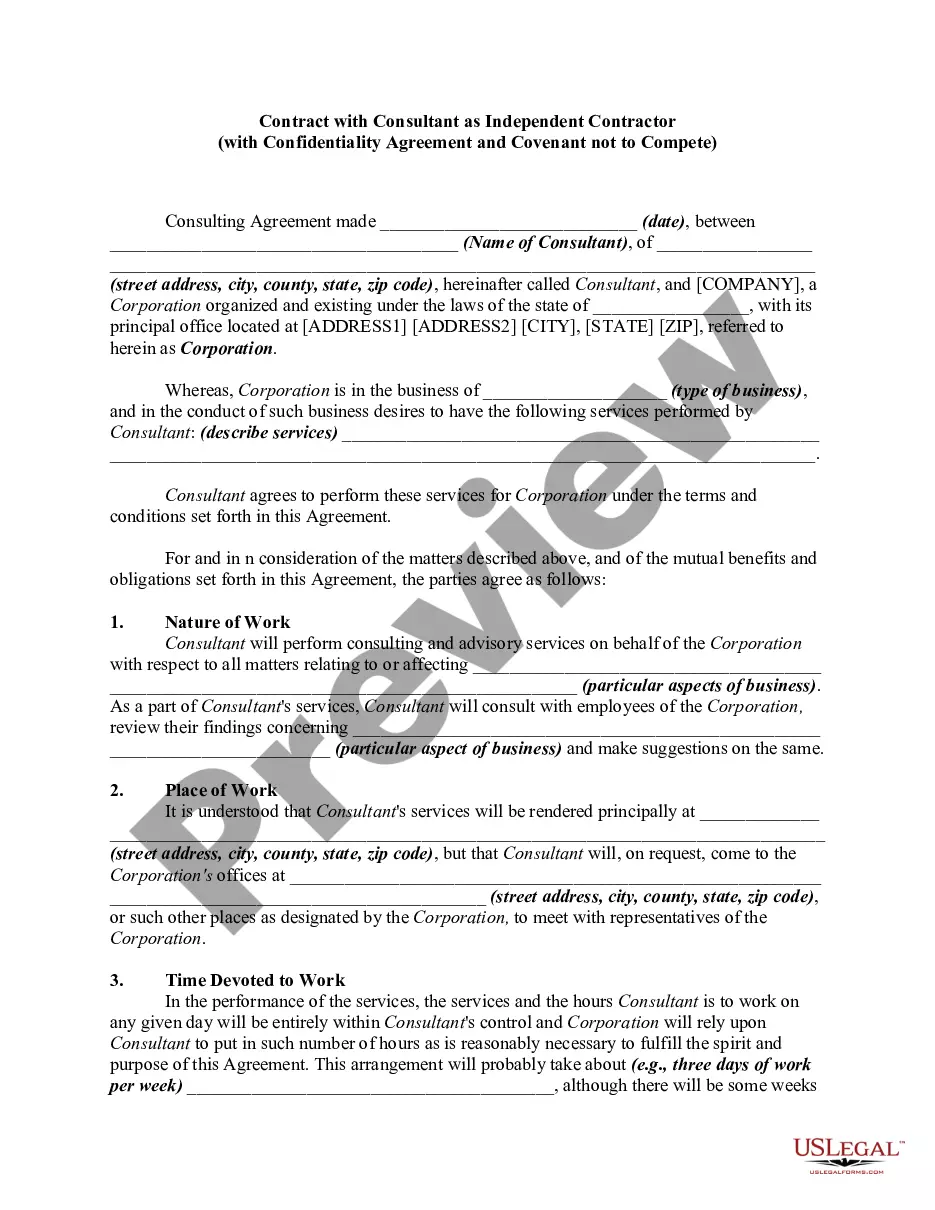
This Contract with Independent Contractor with Confidentiality Agreement and Covenant Not to Compete is a legal document that outlines the terms of the relationship between an independent contractor and an employer. It includes provisions for confidentiality and non-competition, which are important for protecting sensitive business information and preventing the contractor from competing with the employer after the contract ends. This form differs from a standard independent contractor agreement by incorporating these additional protections, making it crucial for employers who need to safeguard their trade secrets and business strategies.
Key components of this form
- Description of the work to be performed by the contractor.
- Payment terms and schedule for services rendered.
- Clarification of the independent contractor's relationship with the employer.
- Liability clauses outlining responsibility for work performed.
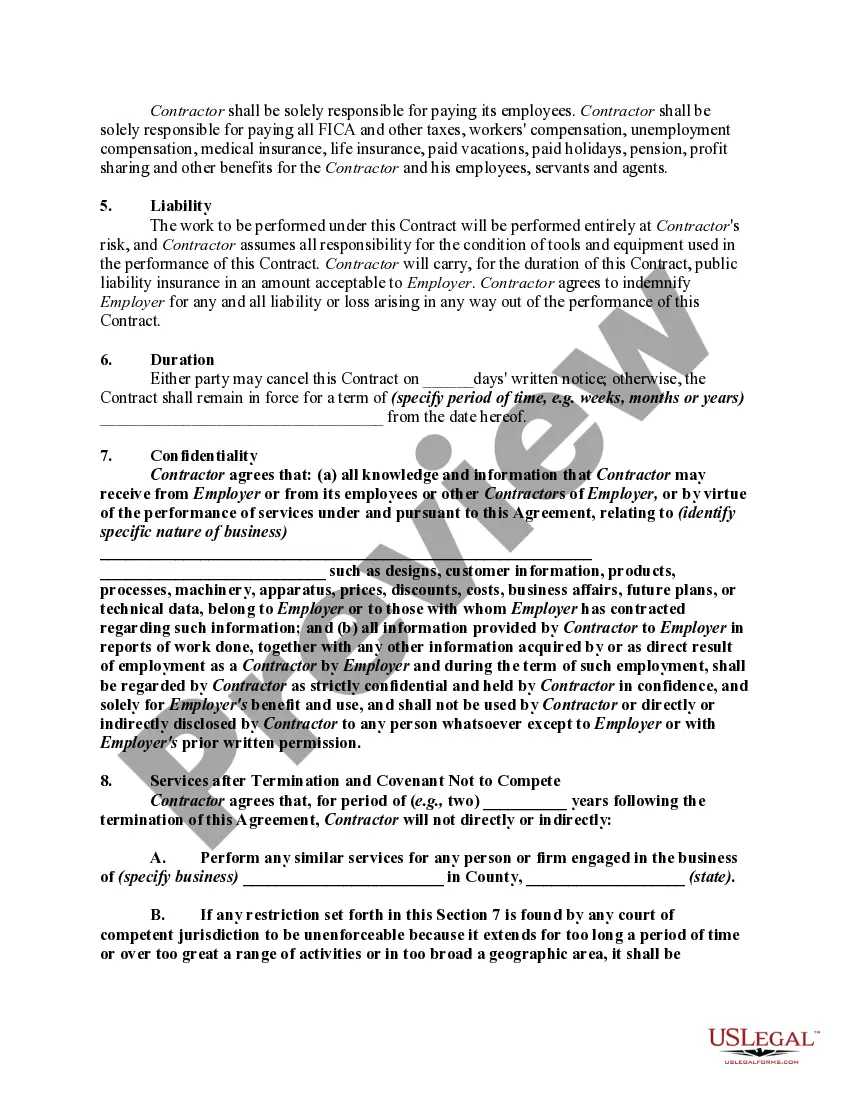
- Confidentiality obligations to protect employer's sensitive information.
- Covenant not to compete after termination of the agreement.
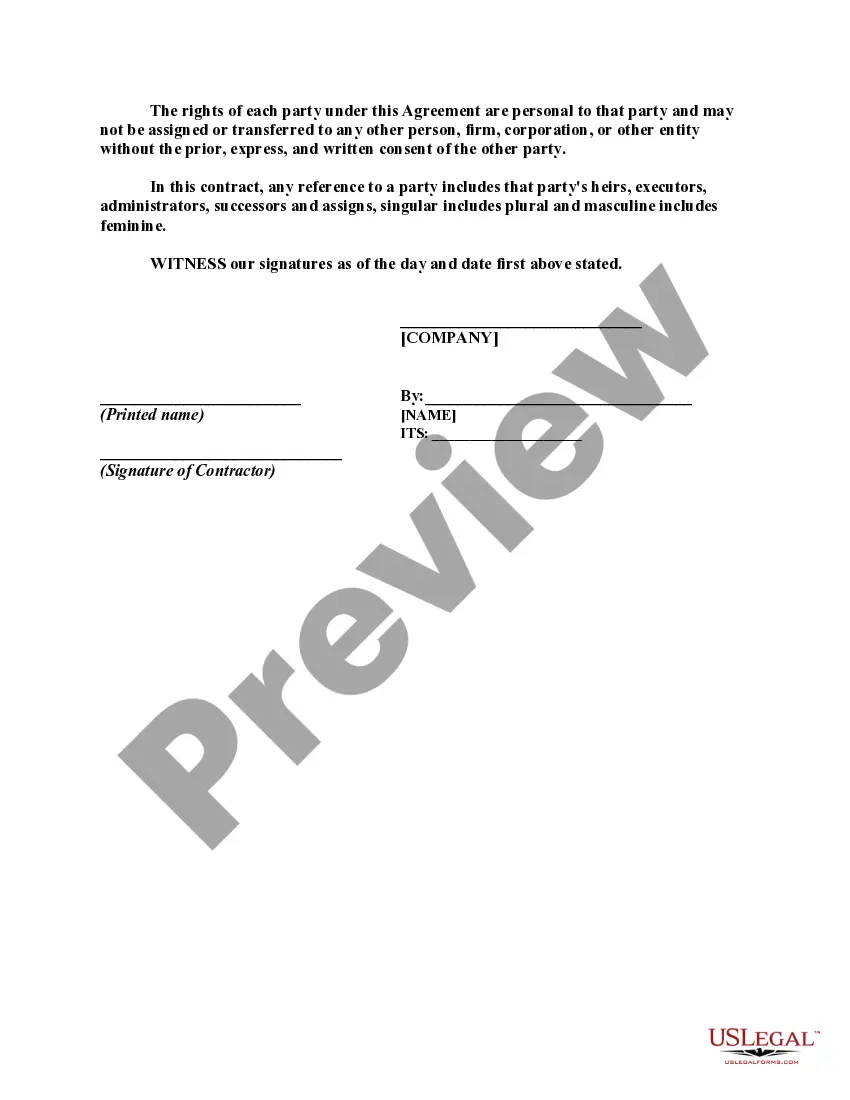
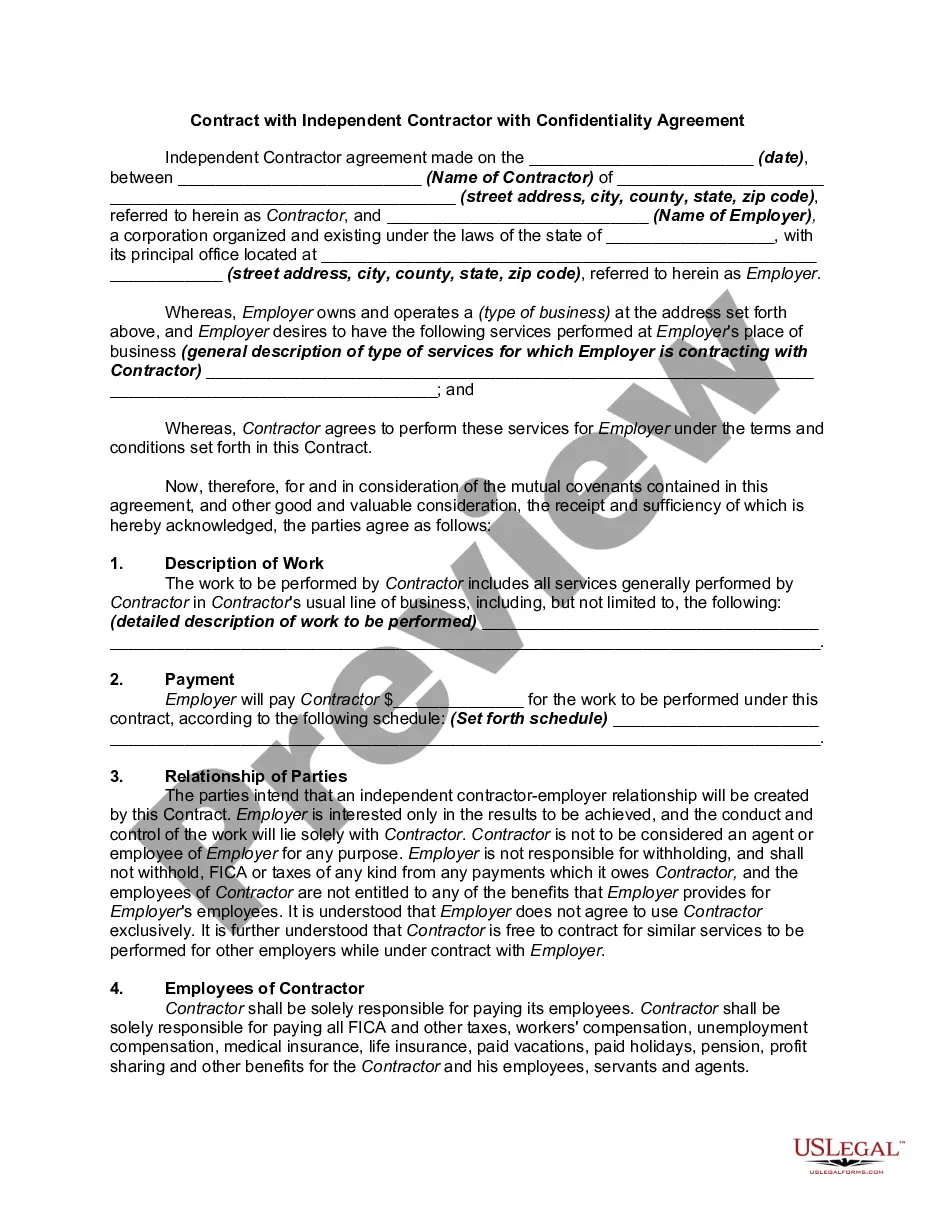
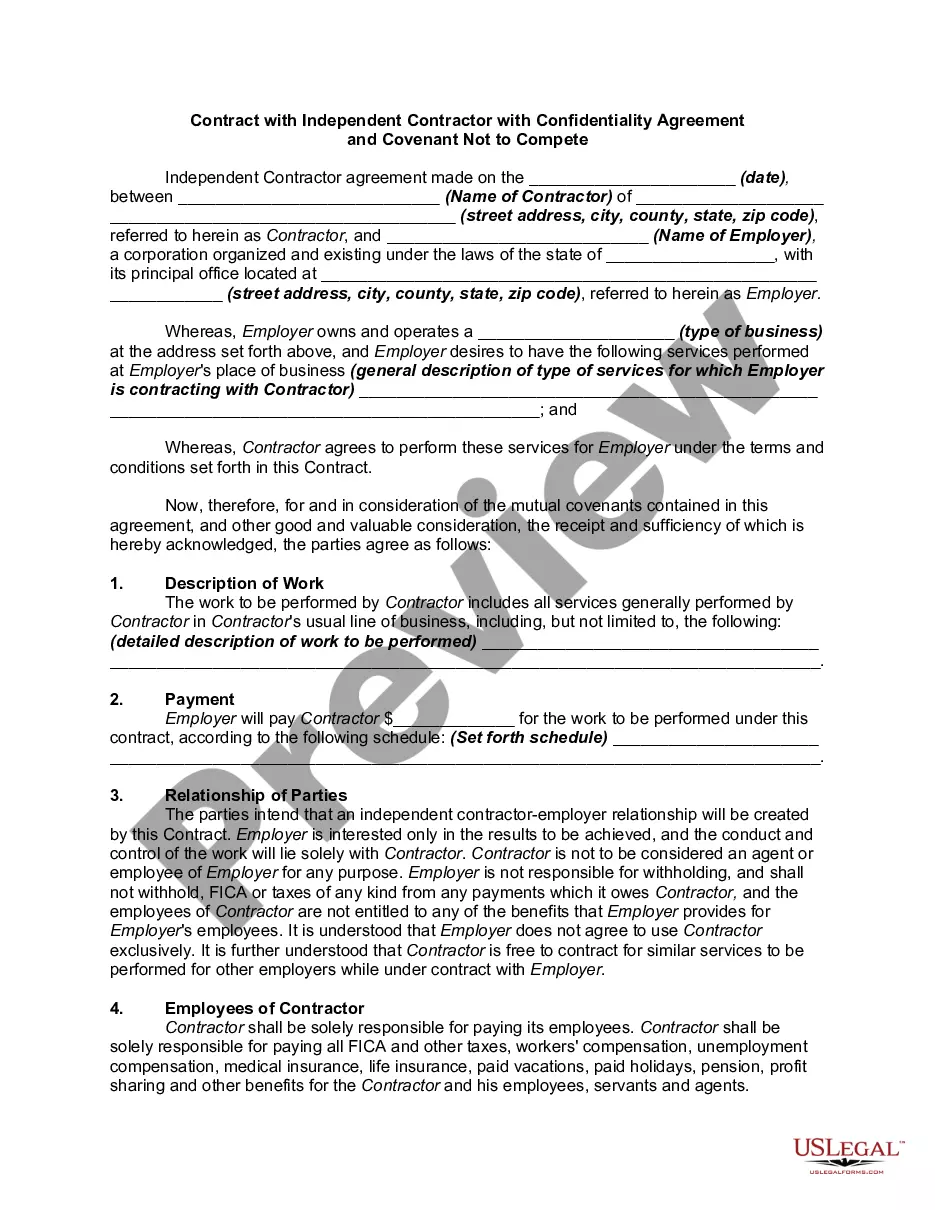
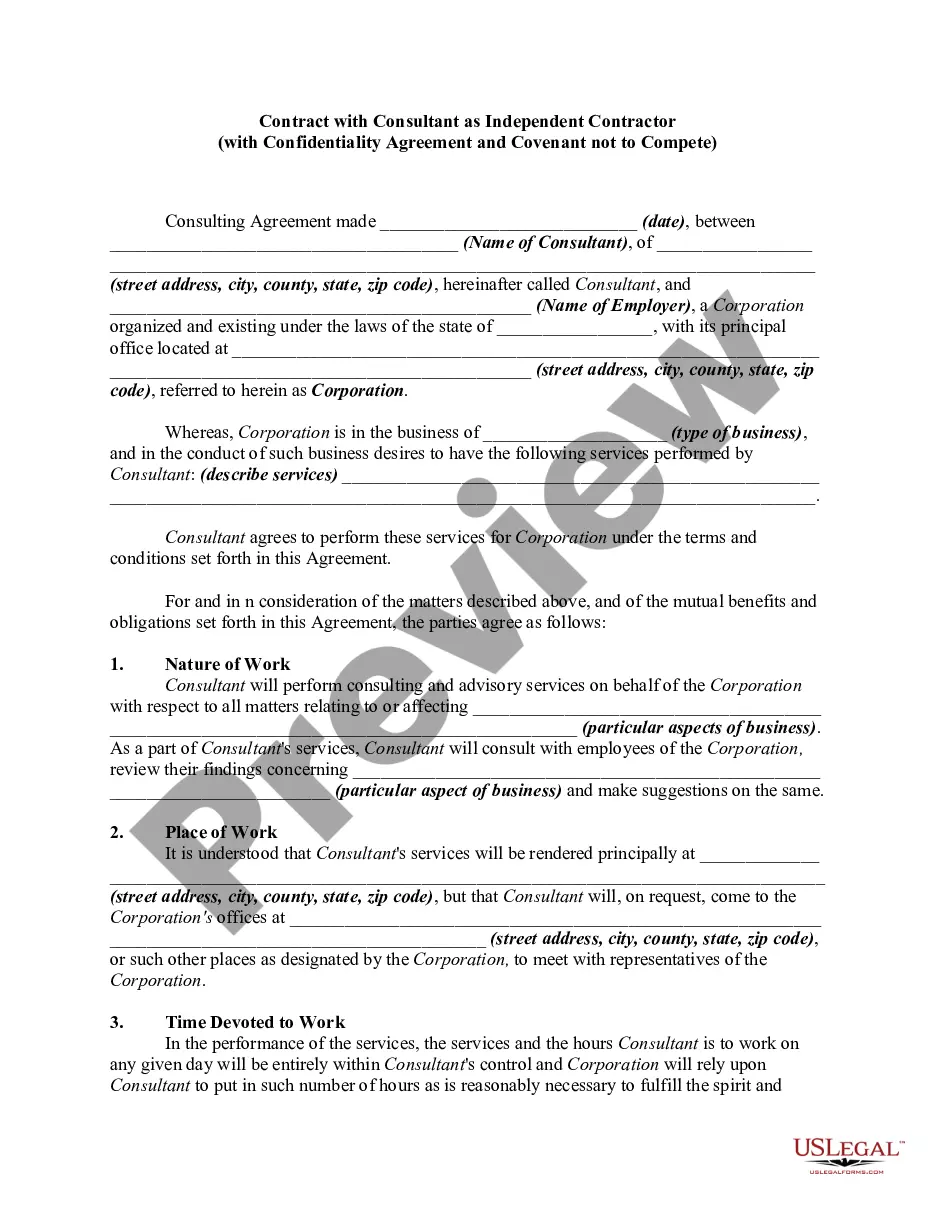
When to use this document
Use this form when you are hiring an independent contractor and want to ensure that proprietary information stays confidential and that the contractor does not enter into direct competition with your business after the contract ends. This is particularly important in industries where sensitive information is involved, such as technology, marketing, and consulting.
Intended users of this form
- Employers looking to hire independent contractors while protecting their business interests.
- Contractors who need to understand their responsibilities regarding confidentiality and competition.
- Businesses operating in sectors where sensitive information and competitive relations are significant.
Steps to complete this form
- Identify and fill in the names and addresses of both the contractor and the employer.
- Clearly describe the work the contractor will be performing.
- Specify the payment amount and the schedule for payments.
- State the duration of the contract and any notice period for termination.
- Include specific confidentiality clauses and the terms of the non-compete agreement.
- Ensure both parties sign the contract and date it to make it legally binding.
Notarization guidance
This form does not typically require notarization unless specified by local law. However, having it notarized can enhance its validity and help protect the interests of both parties involved.
Get your form ready online
Our built-in tools help you complete, sign, share, and store your documents in one place.
Make edits, fill in missing information, and update formatting in US Legal Forms—just like you would in MS Word.
Download a copy, print it, send it by email, or mail it via USPS—whatever works best for your next step.
Sign and collect signatures with our SignNow integration. Send to multiple recipients, set reminders, and more. Go Premium to unlock E-Sign.
If this form requires notarization, complete it online through a secure video call—no need to meet a notary in person or wait for an appointment.
We protect your documents and personal data by following strict security and privacy standards.

Make edits, fill in missing information, and update formatting in US Legal Forms—just like you would in MS Word.

Download a copy, print it, send it by email, or mail it via USPS—whatever works best for your next step.

Sign and collect signatures with our SignNow integration. Send to multiple recipients, set reminders, and more. Go Premium to unlock E-Sign.

If this form requires notarization, complete it online through a secure video call—no need to meet a notary in person or wait for an appointment.

We protect your documents and personal data by following strict security and privacy standards.
Common mistakes
- Failing to define the scope of work can lead to misunderstandings.
- Neglecting to include specific payment terms may cause payment disputes.
- Overly broad non-compete clauses can be deemed unenforceable.
- Not signing or dating the contract can invalidate the agreement.
Advantages of online completion
- Convenience of downloading and filling out the form at your own pace.
- Editable format allowing you to customize the document to meet your specific needs.
- Reliable legal language drafted by licensed attorneys to ensure compliance with laws.
Legal use & context
- This form can help protect the employer's confidential information and trade secrets.
- Non-compete clauses must be reasonable in scope and duration to be enforceable under most state laws.
- Misclassifying an independent contractor can lead to legal and financial penalties; it's essential to adhere to IRS guidelines.
What to keep in mind
- This contract clearly defines the relationship between the contractor and the employer.
- Confidentiality and non-compete clauses are vital for protecting business interests.
- Clearly outlined payment terms prevent disputes over compensation.
Looking for another form?

Form popularity
FAQ
An enforceable covenant not to compete must be: (1) in writing; (2) made a part of the employment contract; (3) based on valuable consideration; (4) reasonable as to time and territory; and (5) designed to protect a legitimate business interest of the employer.
The difference between the two agreements It doesn't mean you can't work for a competitor; it simply means you can't use proprietary or confidential information you learned or obtained from the former employer with a new employer.
A typical confidentiality clause might say, "The phrases and circumstances of this Agreement are completely confidential between the parties and shall not be disclosed to anybody else. Any disclosure in violation shall be deemed a breach of this Agreement."
Confidentiality/non-disclosure agreements are contracts in which the employee promises not to disclose certain proprietary information, such as trade secrets. Non-compete agreements are contracts in which the employee agrees not to unfairly compete against his/her (former) employer.
This legal contract usually includes information regarding the scope of the work, payment, and deadlines. The agreement might also provide guidance regarding any confidentiality requirements, insurance, and indemnification.
Generally, a confidentiality agreement will: identify the parties to be bound by the agreement. state the context and reasons for the agreement. define what information is considered confidential.
An independent contractor non-disclosure agreement prohibits a contractor from sharing any of the client's information with a third party. This form is required to be signed between the contractor and any subcontractors they should hire.
Here is a common example: CONFIDENTIALITY NOTICE: This message and any accompanying documents contain information belonging to the sender which may be confidential and legally privileged. This information is only for the use of the individual or entity to which it was intended.