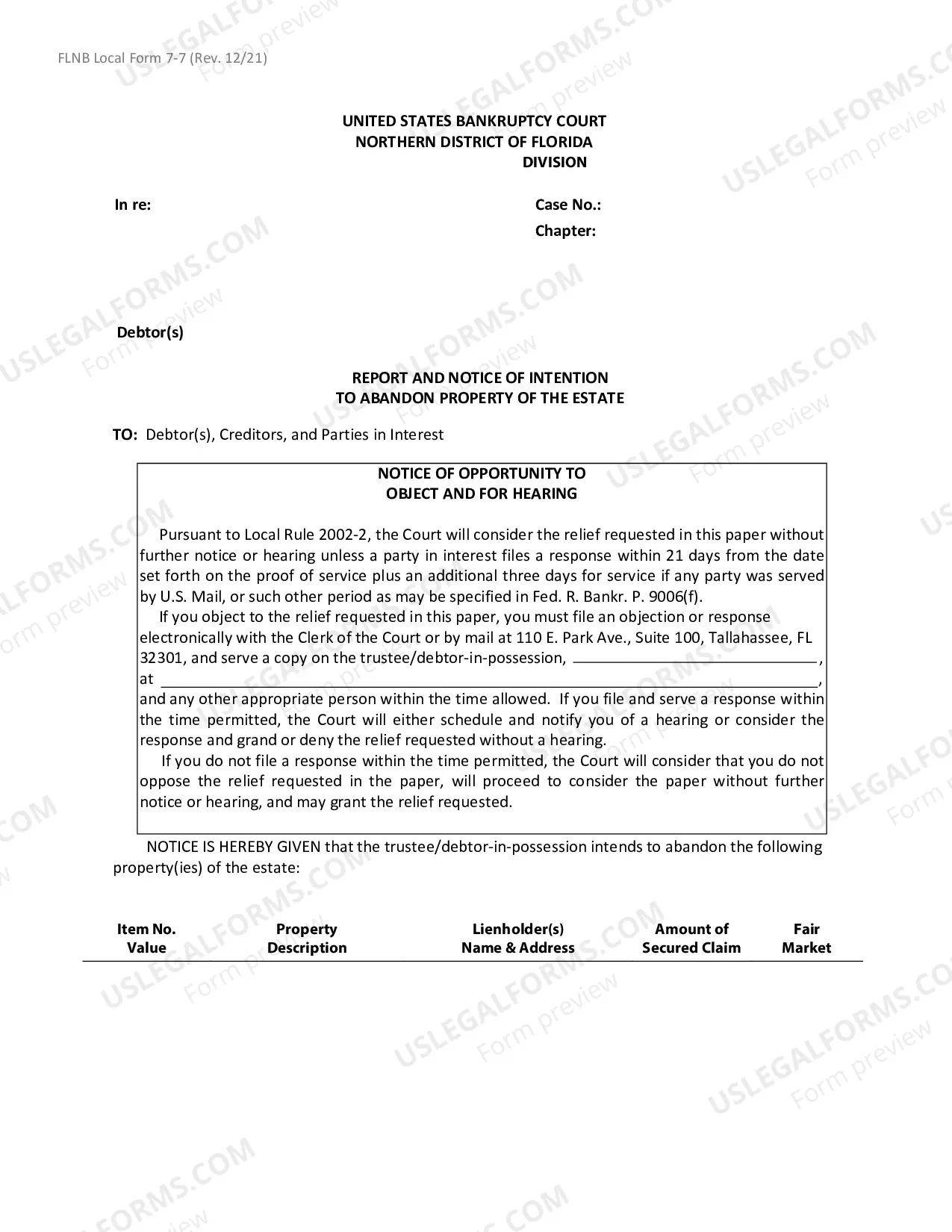
Sample Letter to Former Client regarding Hearing Scheduled on Client's Outstanding Attorney's Fees
About this form
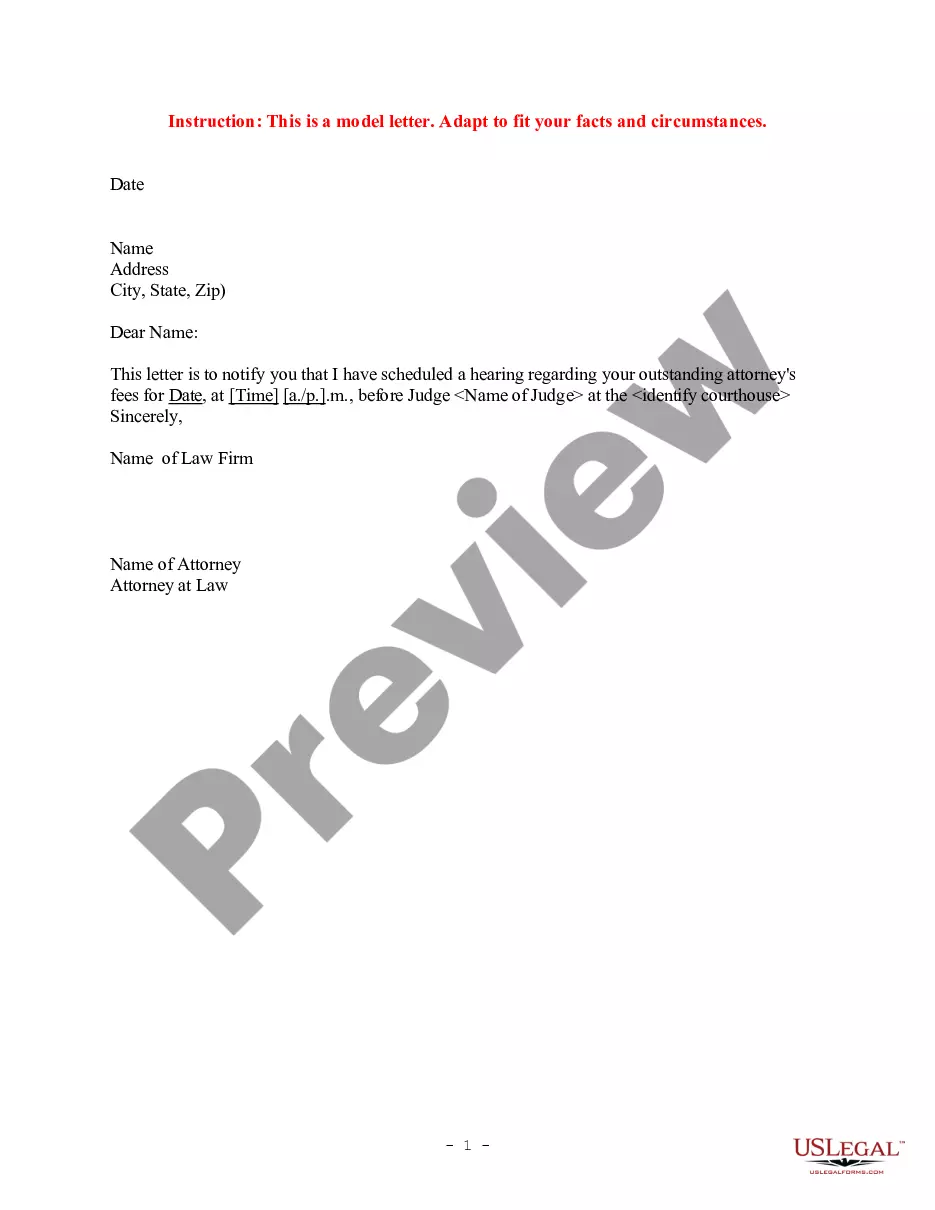
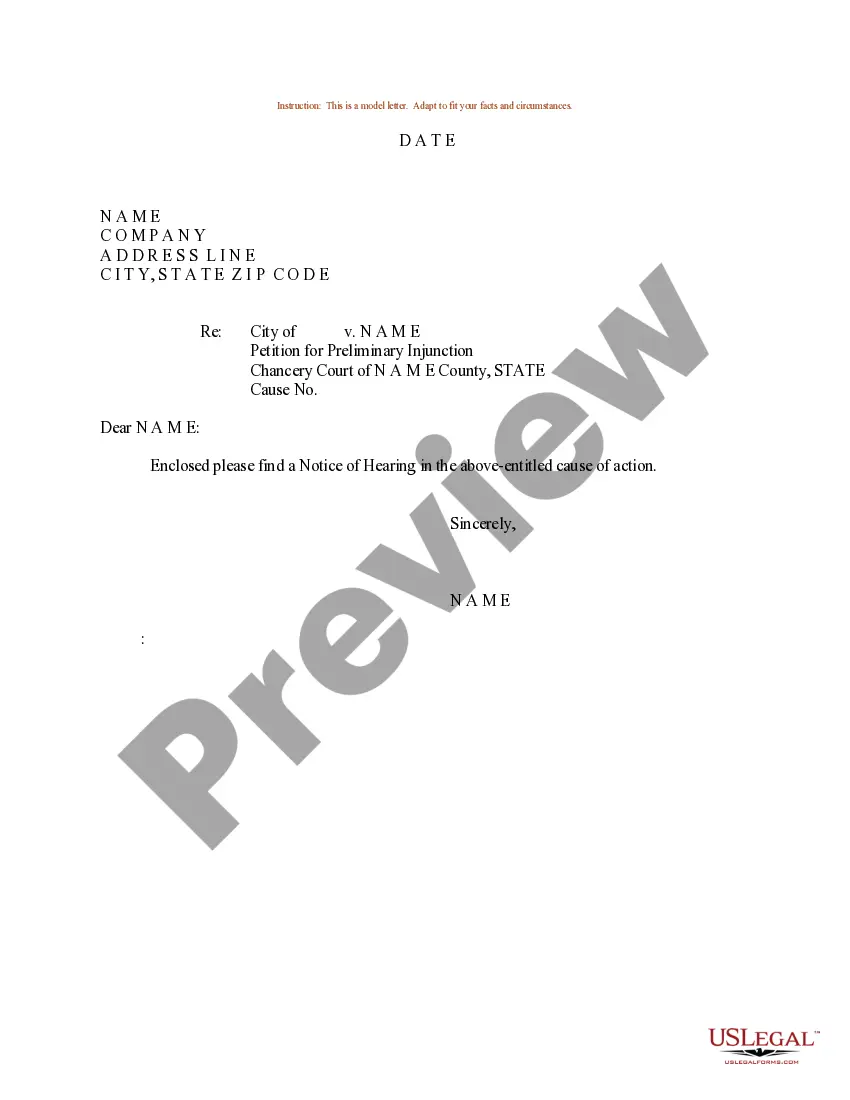
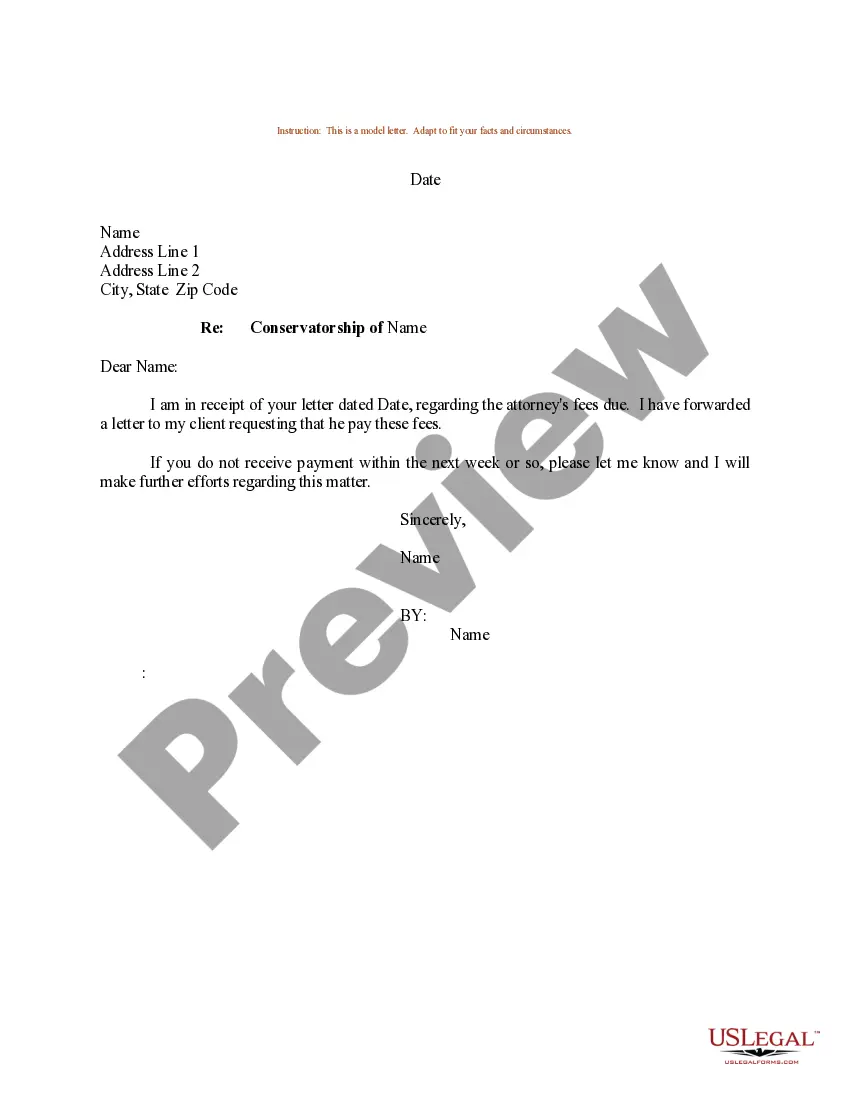
This form is a sample letter to a former client regarding a scheduled hearing on outstanding attorney's fees. The letter serves as a formal notification and helps maintain professional communication about unpaid balances. This specific form is designed for attorneys seeking to inform clients about impending legal actions related to their dues, distinguishing it from general debt collection letters.
Main sections of this form
- Date of the scheduled hearing
- Client's name and contact information
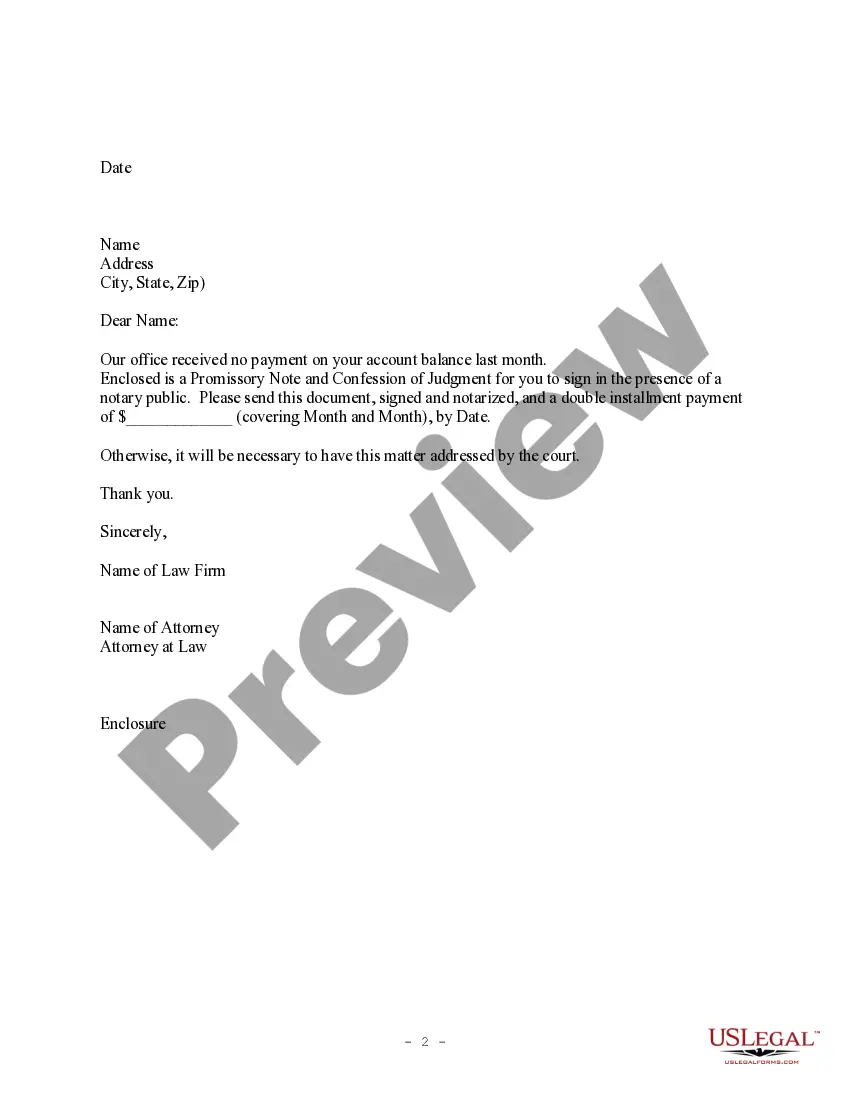
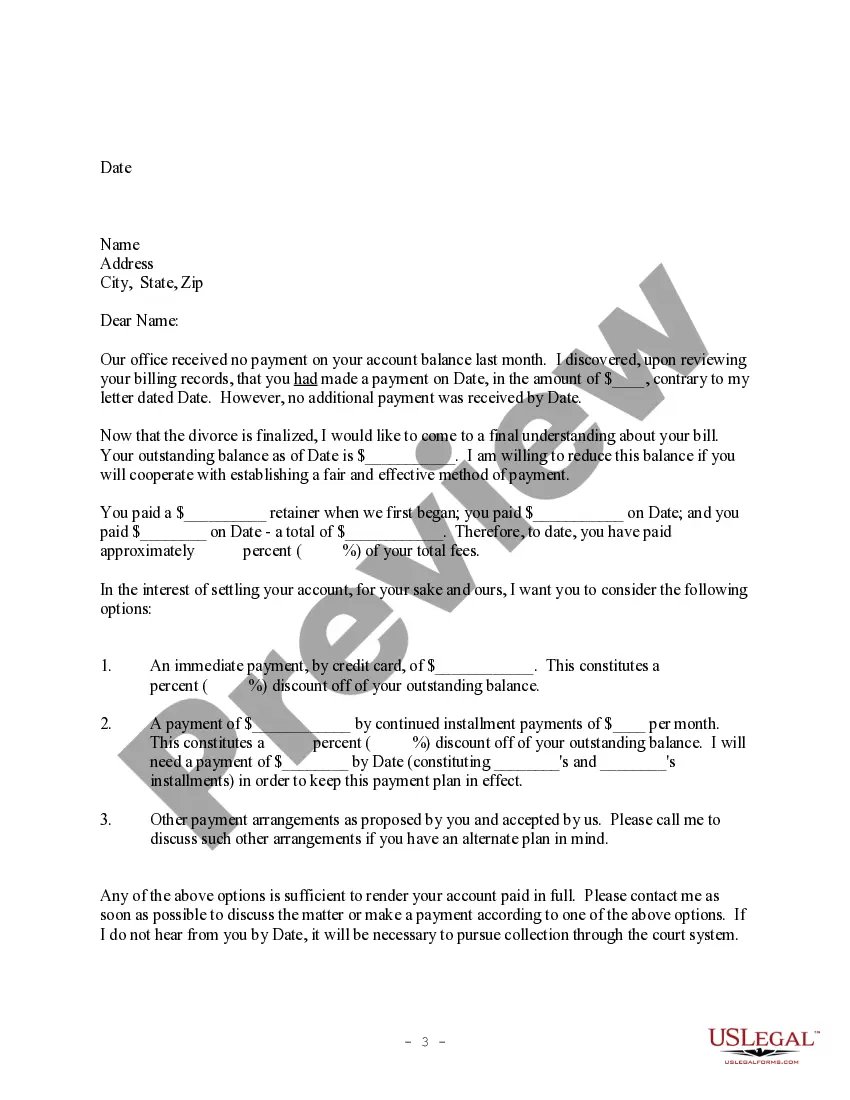
- Outstanding balance details
- Proposed payment options
- Instructions for signing and returning documents
- Consequences of non-payment (court action)
When to use this form
This form should be used when an attorney needs to notify a former client about a scheduled hearing concerning unpaid attorney's fees. It is applicable after previous payment requests have failed and before pursuing formal legal action to recover the fees owed.
Intended users of this form
- Attorneys representing clients in outstanding fee cases
- Law firms needing to communicate formal payment reminders
- Legal practitioners working in client collections
How to prepare this document
- Enter the date of the letter.
- Fill in the former clientâs name and address.
- Specify the date and time of the scheduled hearing.
- Detail the outstanding fees owed by the client.
- Provide proposed payment options or arrangements.
- Include the sender's law firm name and the attorney's signature.
Is notarization required?
This form does not typically require notarization unless specified by local law. It is advisable for attorneys to check state-specific regulations that may impose additional requirements on communication regarding payment notices.
Get your form ready online
Our built-in tools help you complete, sign, share, and store your documents in one place.
Make edits, fill in missing information, and update formatting in US Legal Forms—just like you would in MS Word.
Download a copy, print it, send it by email, or mail it via USPS—whatever works best for your next step.
Sign and collect signatures with our SignNow integration. Send to multiple recipients, set reminders, and more. Go Premium to unlock E-Sign.
If this form requires notarization, complete it online through a secure video call—no need to meet a notary in person or wait for an appointment.
We protect your documents and personal data by following strict security and privacy standards.

Make edits, fill in missing information, and update formatting in US Legal Forms—just like you would in MS Word.

Download a copy, print it, send it by email, or mail it via USPS—whatever works best for your next step.

Sign and collect signatures with our SignNow integration. Send to multiple recipients, set reminders, and more. Go Premium to unlock E-Sign.

If this form requires notarization, complete it online through a secure video call—no need to meet a notary in person or wait for an appointment.

We protect your documents and personal data by following strict security and privacy standards.
Common mistakes to avoid
- Failing to accurately detail the outstanding balance.
- Neglecting to include specific dates and times for the hearing.
- Not providing clear payment instructions.
- Using ambiguous language that could confuse the client.
Benefits of completing this form online
- Convenience of downloadable format, allowing for easy editing.
- Access to professional legal language drafted by licensed attorneys.
- Streamlined process for notifying clients about legal matters.
What to keep in mind
- This is a formal communication tool for attorneys regarding outstanding fees.
- Use it to notify clients of hearings related to unpaid balances.
- Ensure compliance with local jurisdictional requirements when using this form.
- Clear and concise language enhances understanding and response from clients.
Looking for another form?

Form popularity
FAQ
To start the process, complete a fee arbitration request form from the local bar association and submit the filing fee. Include information about the attorney's fees and costs and explain why you believe the attorney's fees are excessive. Attach copies of any documents requested on the form.
Get Straight To The Point. Be Firm. Make Your Case Plainly. Don't Be Spiteful. Acknowledge Your Responsibility For Applicable Lawyer Fees. Get A Copy Of Your Case File.
The Rules of Professional Conduct of the State Bar of California specify three circumstances under which an attorney must terminate a client relationship: (1) where the attorney knows or should know that a client is bringing an action, conducting a defense, asserting a position in litigation, or taking an appeal,
(A) While representing a client, a member shall not communicate directly or indirectly about the subject of the representation with a party the member knows to be represented by another lawyer in the matter, unless the member has the consent of the other lawyer.
The withdrawing or discharged lawyer must take action to protect the client's interest. These steps include giving reasonable notice of withdrawal, allowing time for retention of another lawyer, and promptly returning papers and property to which the client is entitled.
Stay calm, rational and polite. Give reasons for terminating the relationship, but keep emotion and name-calling out of the conversation. Follow-up with a phone call. You can start the process with an email, but you should follow-up with a phone call to talk your client through the process and answer any questions.
Under ABA Model Rule 1.16(a), a lawyer must withdraw from representing a client when: the lawyer is discharged by the client; the lawyer's physical or mental condition materially impairs the lawyer's ability to represent the client; or.
Let the client make the contact. Inform the client. Say thank you, repeatedly. Work out the details, and inform the client. Identify a good match for your client. Always give at least two names. Let the client make the contact, but give a heads-up if you can.
Why is a letter of engagement necessary? Very importantly, it provides documentary proof in the event of a dispute. It goes without saying that this contract will protect an attorney from clients who keep shifting the goalposts.