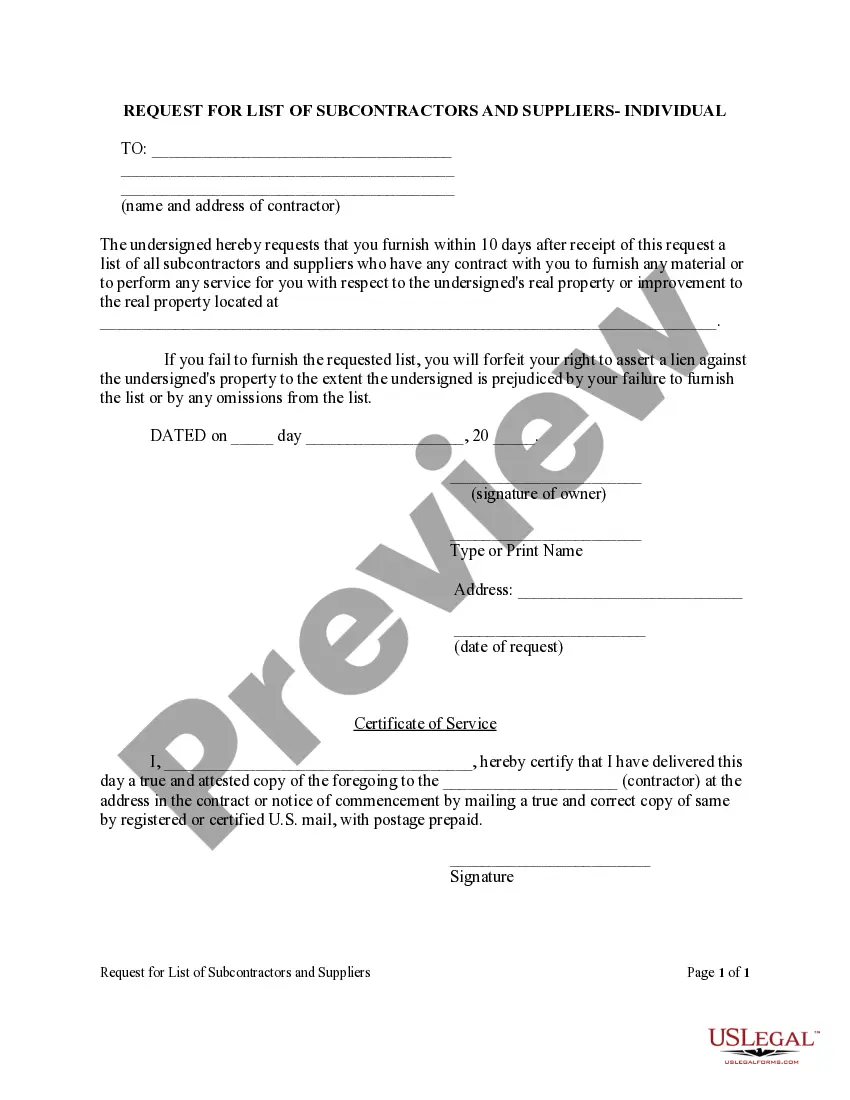
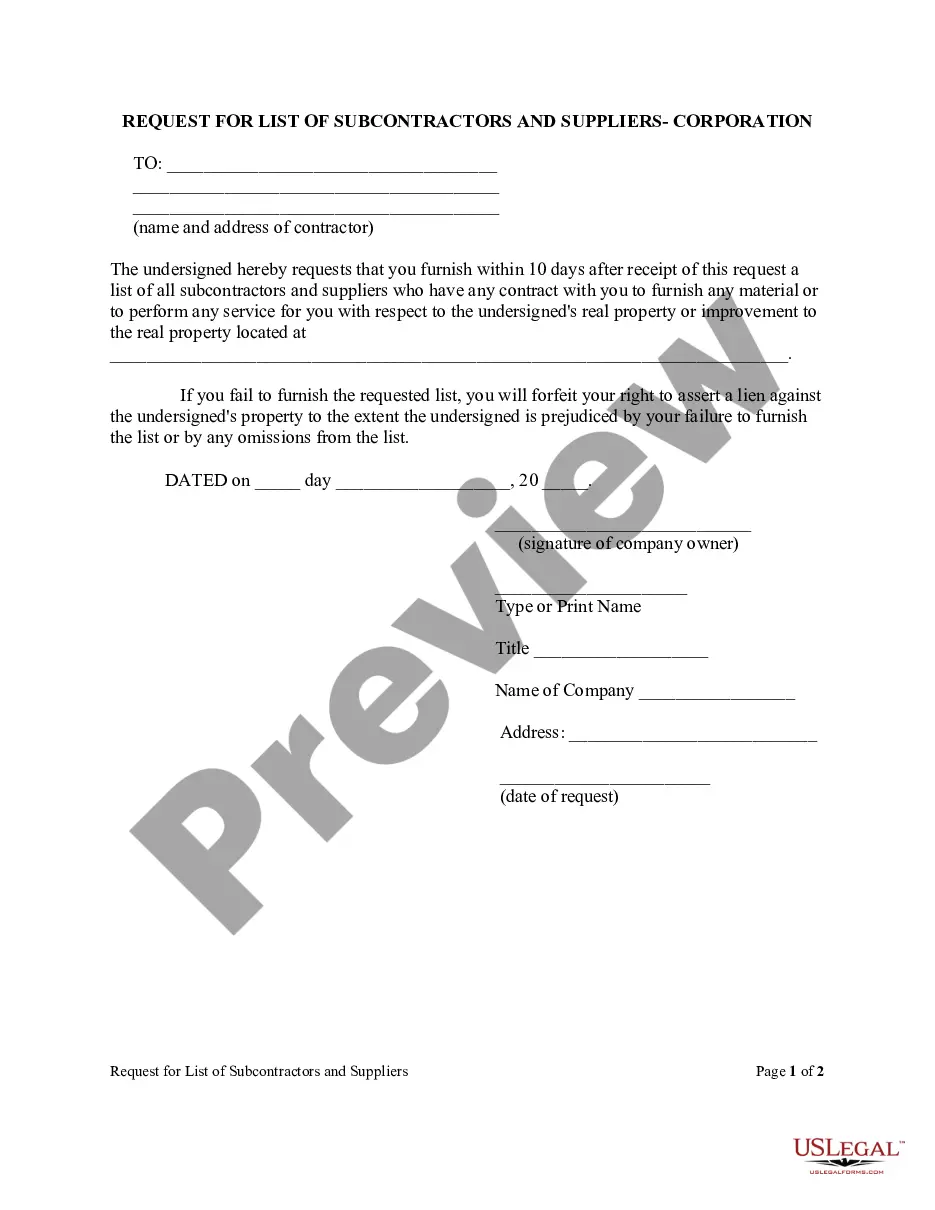
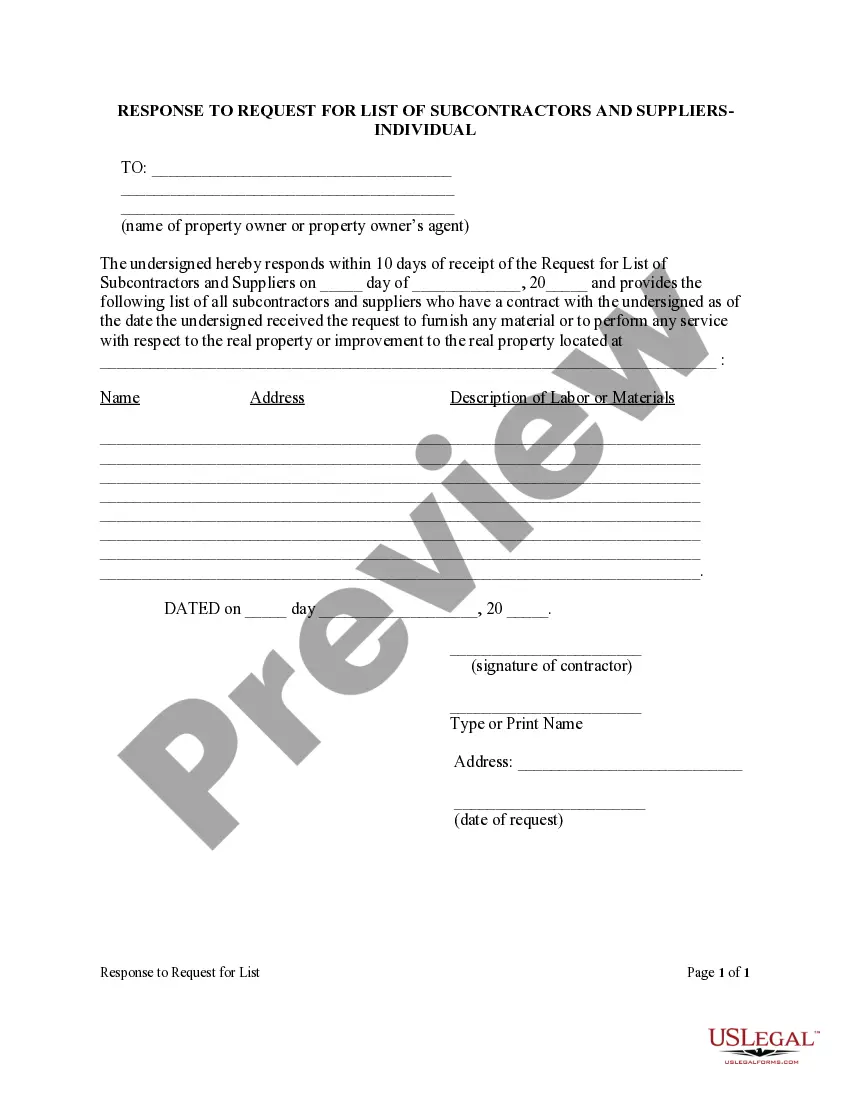
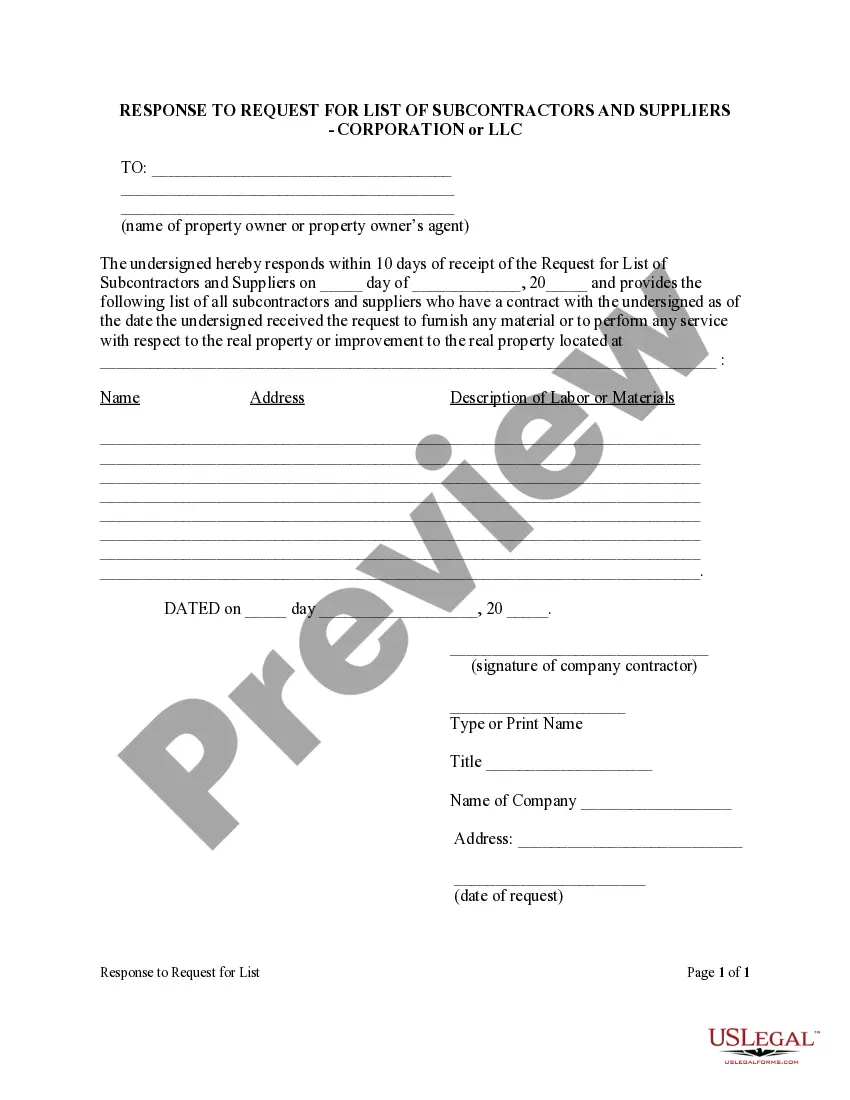
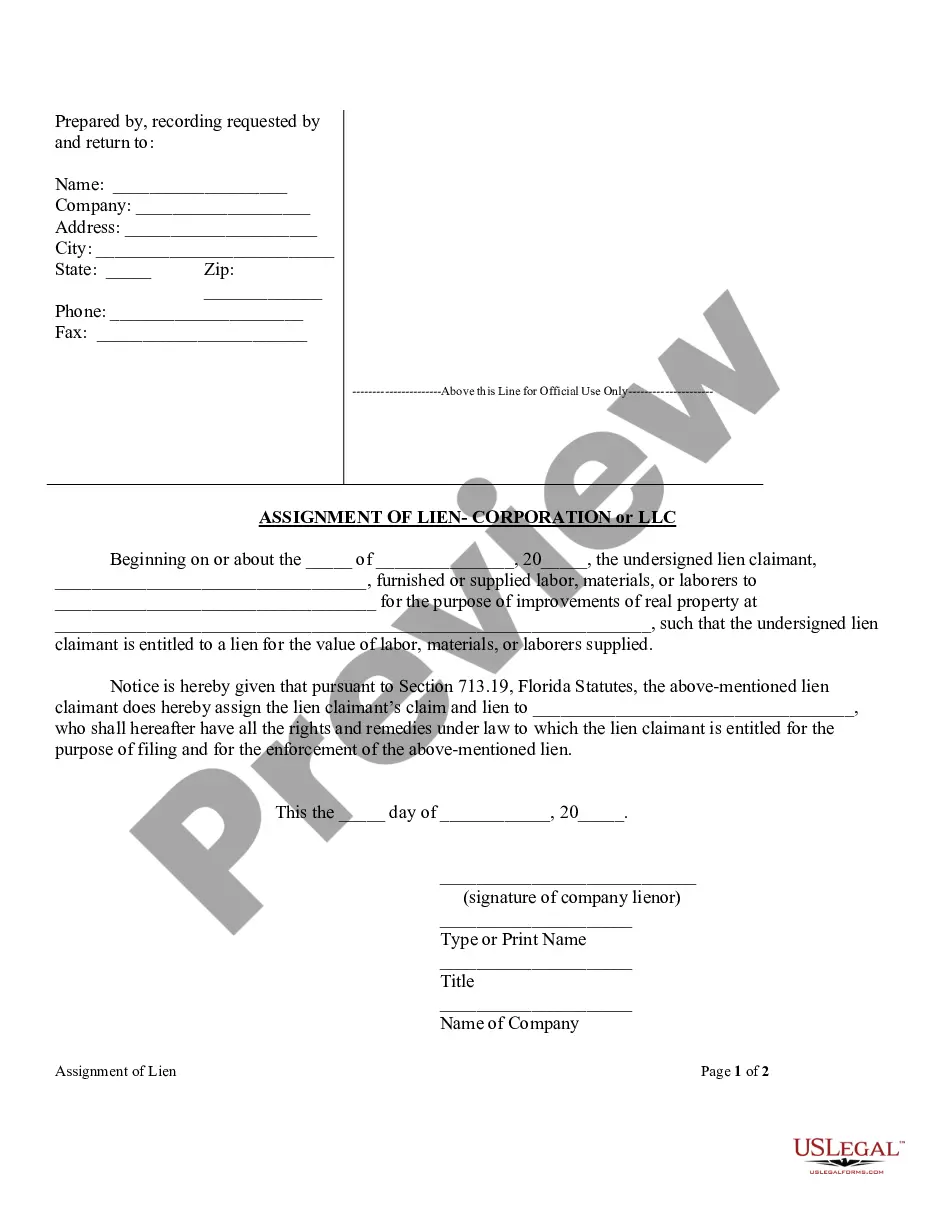
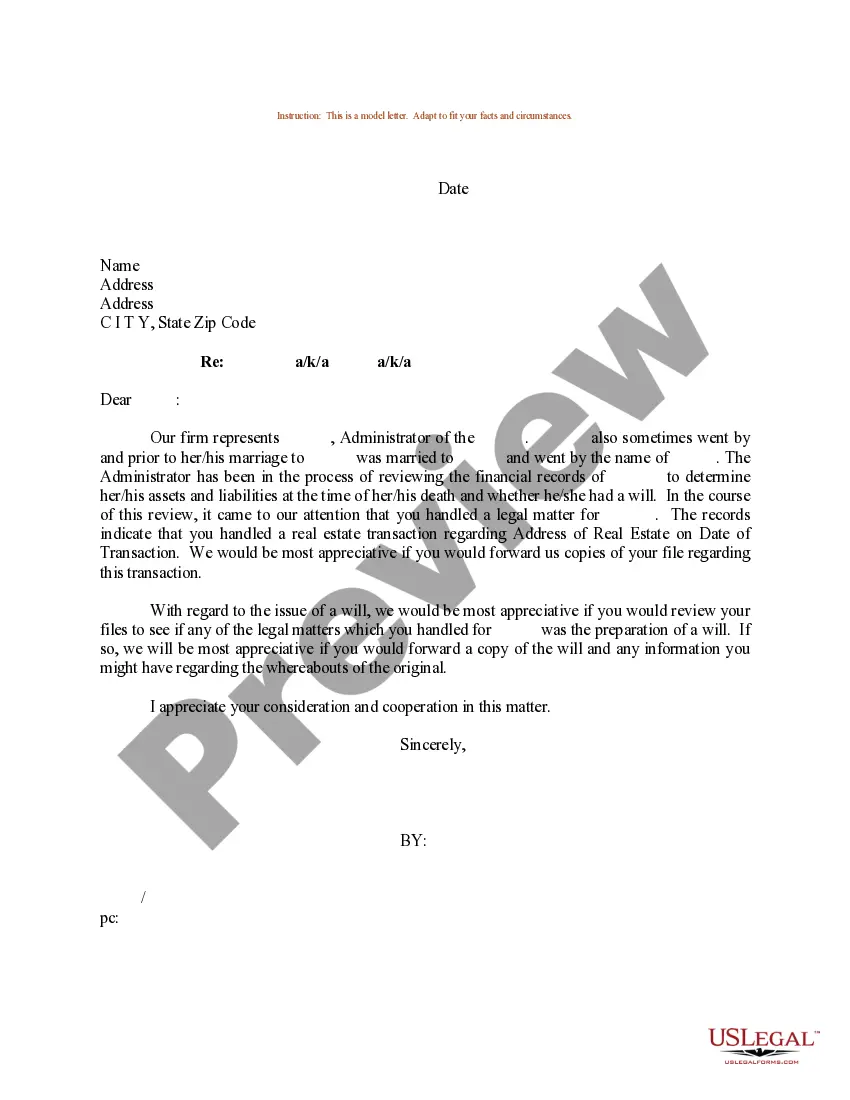
Sample Letter for Decedent's Real Estate Transaction
Overview of this form
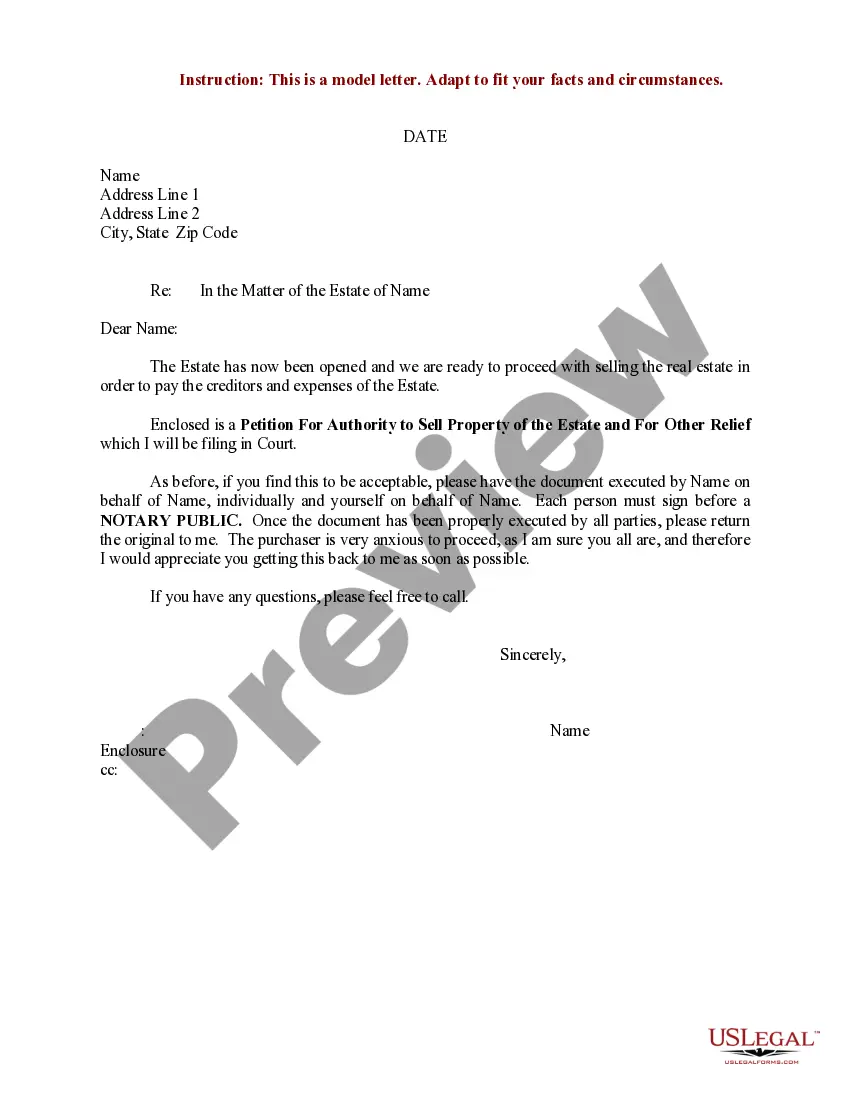
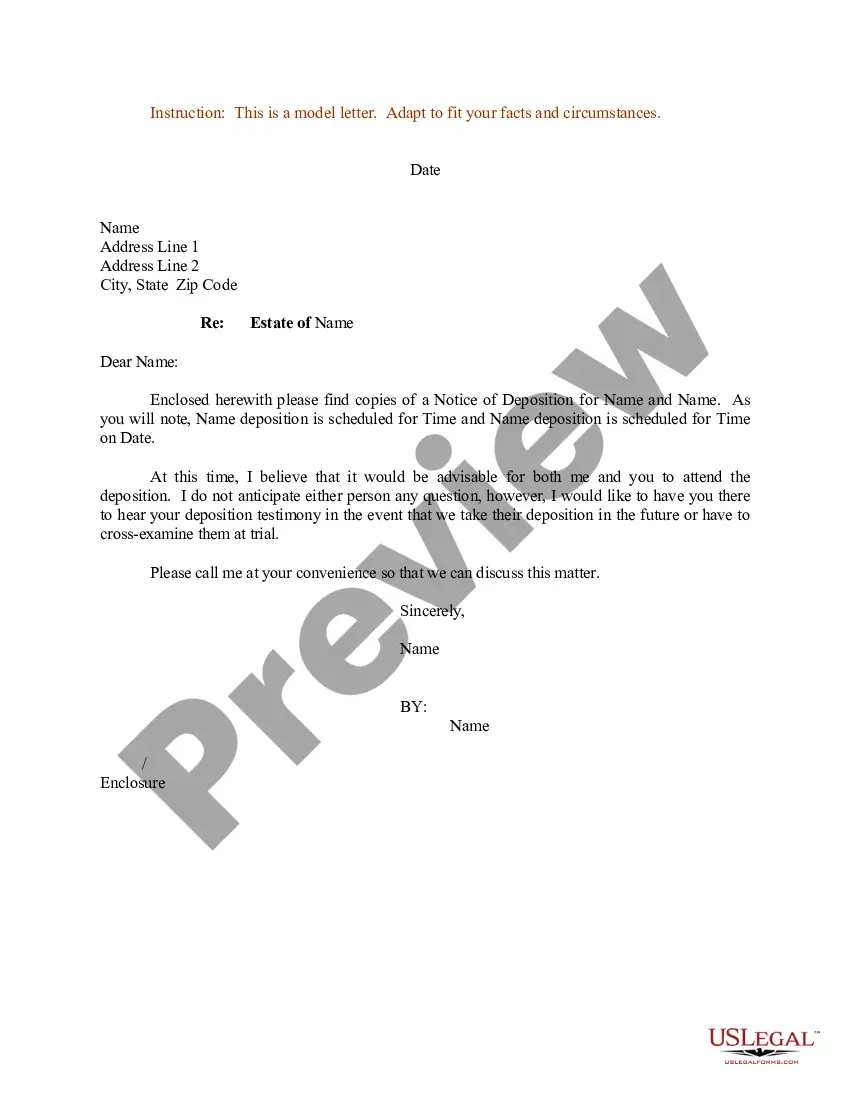
This form is a sample letter for a decedent's real estate transaction. It serves as a template for notifying parties involved in the transaction about the details of the decedent's property sales or transfers. This sample letter is designed for ease of use and legally distinct from other forms related to estate planning or property agreements, providing clarity in executing real estate transactions after someone's passing.
Key parts of this document
- Date: The date the letter is written.
- Recipient's Name and Address: The individual or entity receiving the letter.
- Property Details: Information about the property involved in the transaction.
- Decedent Information: Name and relevant details of the deceased individual.
- Signature Line: Space for the sender's signature to validate the document.

When this form is needed
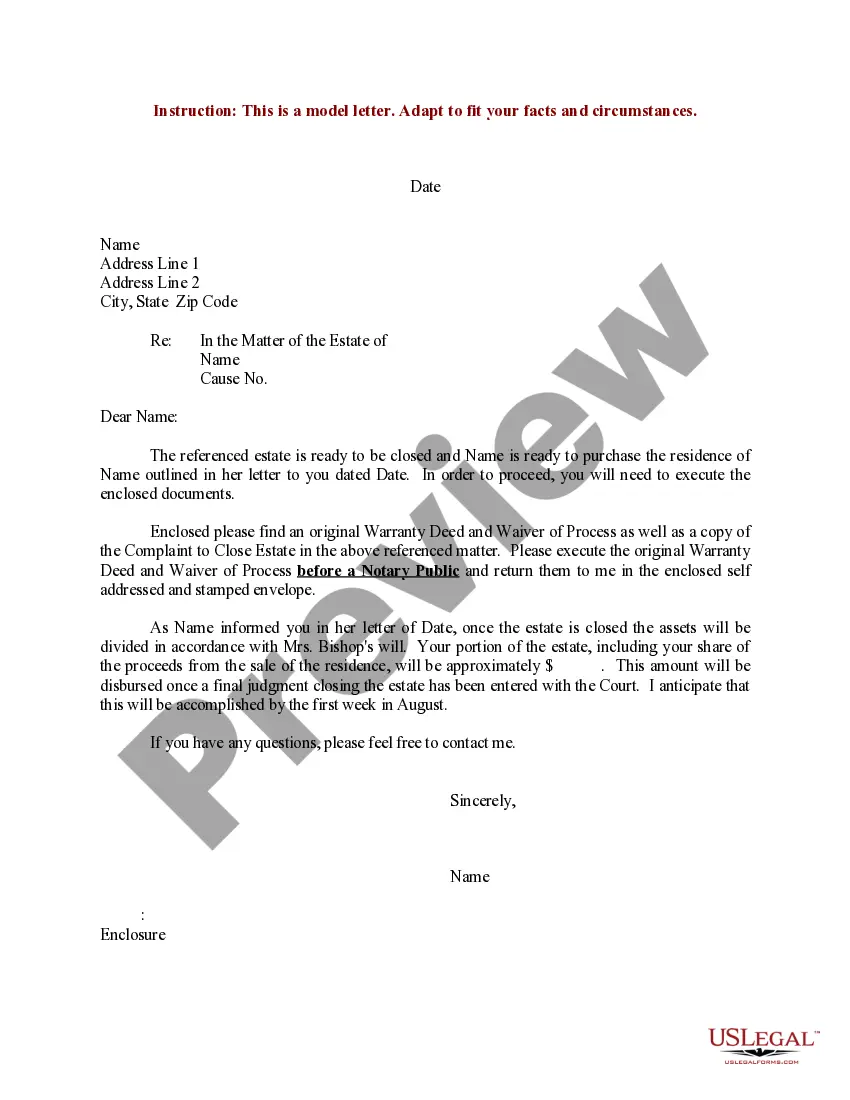
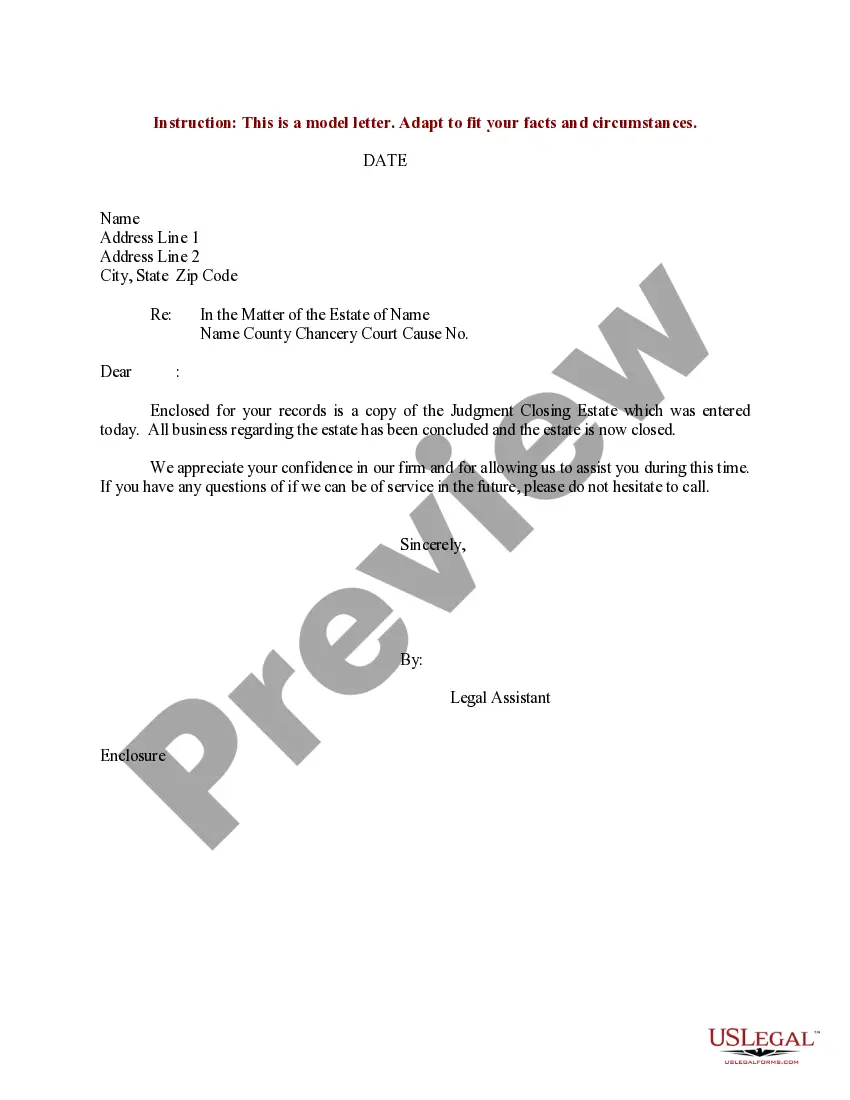
You should use this sample letter when you need to communicate real estate transaction details involving the property of a deceased person. This can include transactions for selling, transferring, or managing the decedent's real estate holdings. It is particularly useful when dealing with heirs, buyers, or real estate agents in the process of settling an estate.
Who this form is for
This form is intended for:
- Executors of an estate handling the decedent's property
- Beneficiaries who are entitled to the decedent's assets
- Real estate agents involved in transactions of the decedent's property
- Family members and heirs seeking clarity about property transactions
Steps to complete this form
- Identify the date by entering when the letter is written.
- Fill in the complete name and address of the recipient.
- Clearly state the property details in question.
- Provide the decedent's name and related information.
- Sign the letter and date the signature for authenticity.
Does this document require notarization?
This form does not typically require notarization unless specified by local law. Always verify your jurisdiction's requirements for added legal validity.
Get your form ready online
Our built-in tools help you complete, sign, share, and store your documents in one place.
Make edits, fill in missing information, and update formatting in US Legal Forms—just like you would in MS Word.
Download a copy, print it, send it by email, or mail it via USPS—whatever works best for your next step.
Sign and collect signatures with our SignNow integration. Send to multiple recipients, set reminders, and more. Go Premium to unlock E-Sign.
If this form requires notarization, complete it online through a secure video call—no need to meet a notary in person or wait for an appointment.
We protect your documents and personal data by following strict security and privacy standards.

Make edits, fill in missing information, and update formatting in US Legal Forms—just like you would in MS Word.

Download a copy, print it, send it by email, or mail it via USPS—whatever works best for your next step.

Sign and collect signatures with our SignNow integration. Send to multiple recipients, set reminders, and more. Go Premium to unlock E-Sign.

If this form requires notarization, complete it online through a secure video call—no need to meet a notary in person or wait for an appointment.

We protect your documents and personal data by following strict security and privacy standards.
Avoid these common issues
- Failing to include the accurate date of the letter.
- Missing or incorrect recipient details.
- Not providing sufficient information about the property involved.
- Omitting the decedent's complete information which may cause confusion.
- Not signing or dating the letter, leading to questions about authenticity.
Benefits of using this form online
- Convenience: Download and complete the form at your own pace.
- Editability: Customize the letter to suit specific transaction details.
- Reliability: Use a sample draft prepared by licensed attorneys to ensure legal sufficiency.
Legal use & context
- This form serves as a formal means of notifying involved parties about a decedent's property transaction.
- Failure to use appropriate legal language can lead to disputes or delays in property transfer.
Looking for another form?
Form popularity
FAQ
A letter of instructions is an informal document that gives your survivors information concerning important financial and personal matters that must be attended to after your demise.
Mention the obvious and that you wish to change the current beneficiary to a new one. Provide accurate details of the new beneficiary and double check the spelling. Specify that if any documentation or details not included are needed that you may be contacted with contact information enclosed.
To apply for probate or letters of administration by post, you'll need to fill in a number of forms. You'll need PA1P if the person left a will and PA1A if they didn't. These forms ask for details about the person who died, their surviving relatives and, the personal representative.
The Letters of Executorship and Letters of Authority can only be obtained from the Office of the Master of the High Court.
Keep the letter brief and straightforward as it is a legal document. Confirm the situation whereby probate has been granted. Was it written in the will? Clearly outline the obligations of the recipient so they know what is required of them. Sign the letter to make it legally binding.
Application fees for probate are £155 if you apply through a solicitor and A£215 if you're taking the DIY option. Estates worth less than A£5,000 pay no fee. Additional copies of the probate form can be ordered for A£1.50 each.
Probate or applying for Letters Probate is the process whereby the Court confirms that a Will is the valid last Will of a person. When the executor files for a grant of probate, he swears that the Will filed with the court is the last Will of the deceased person and that he knows of no later Will.
An executor letter authorizes a person or organization to act on behalf of a decedent's estate as an executor.It's also called "letters of testamentary" or "letters of administration" in some jurisdictions.
Keep the letter brief and straightforward as it is a legal document. Confirm the situation whereby probate has been granted. Was it written in the will? Clearly outline the obligations of the recipient so they know what is required of them. Sign the letter to make it legally binding.