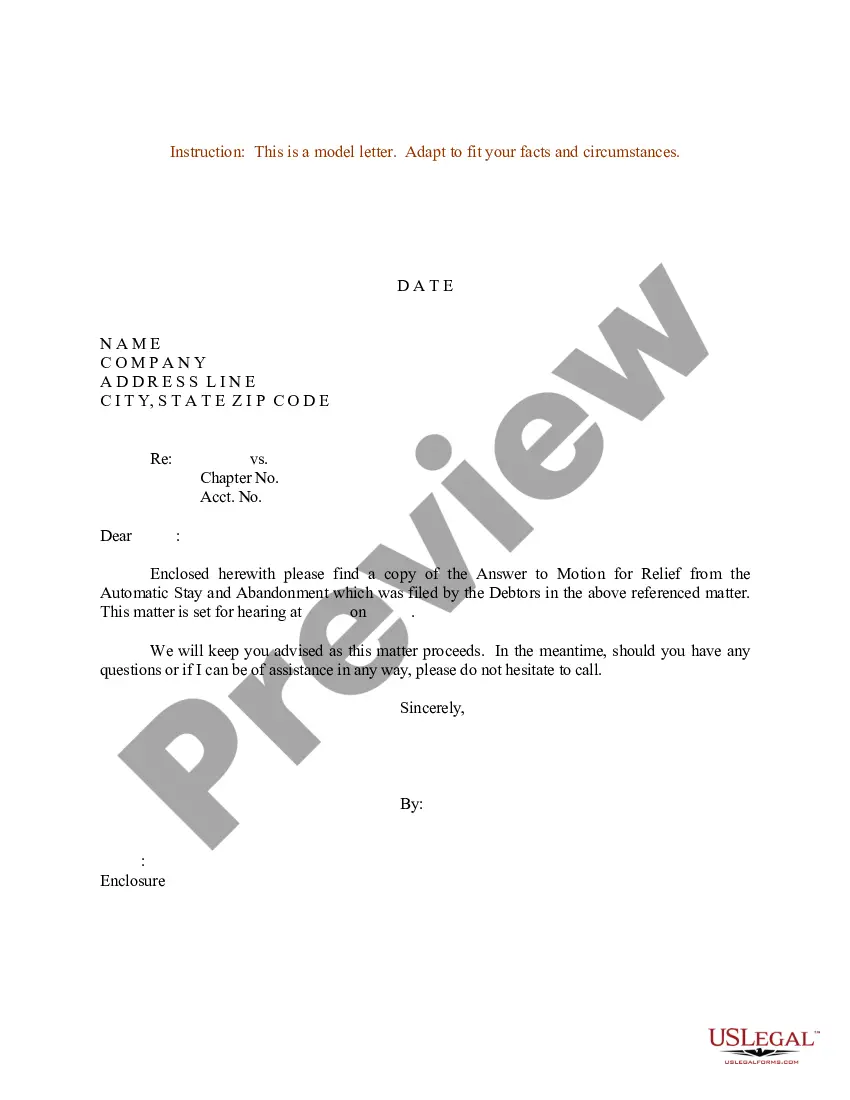
Sample Letter regarding Answer to Motion for Relief from the Automatic Stay and Abandonment
About this form
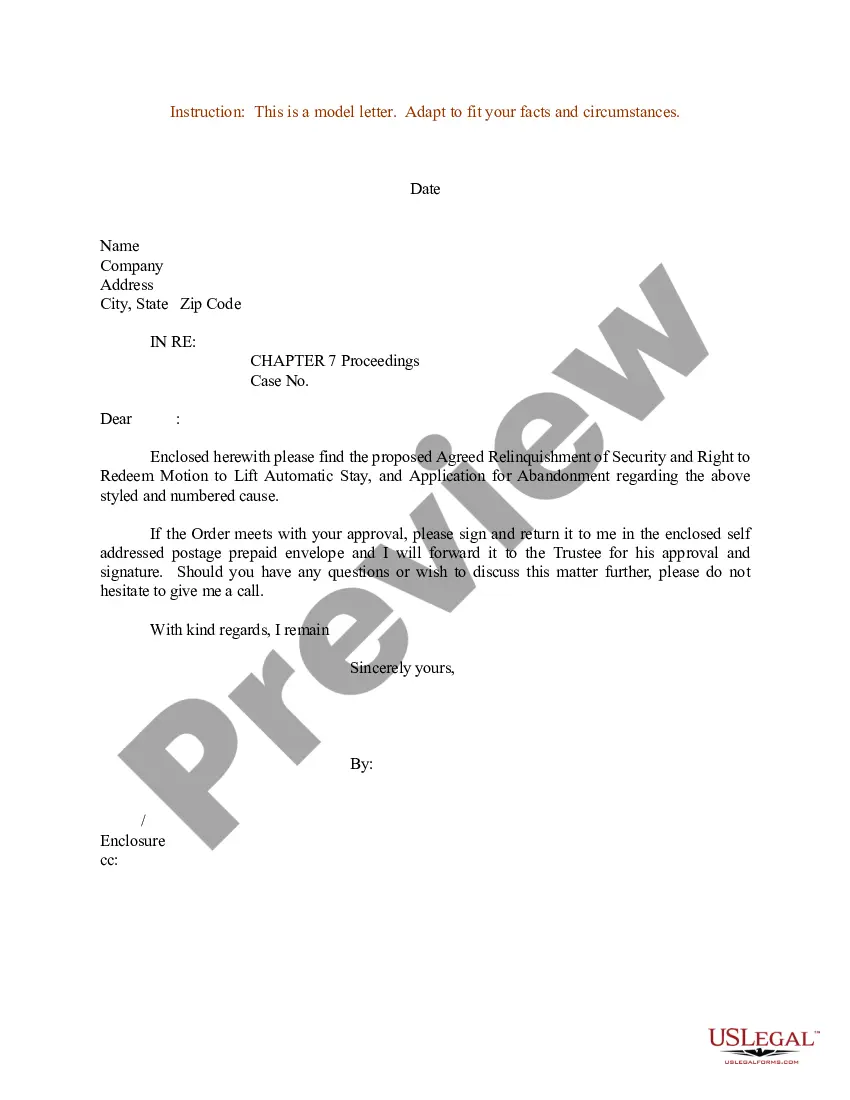
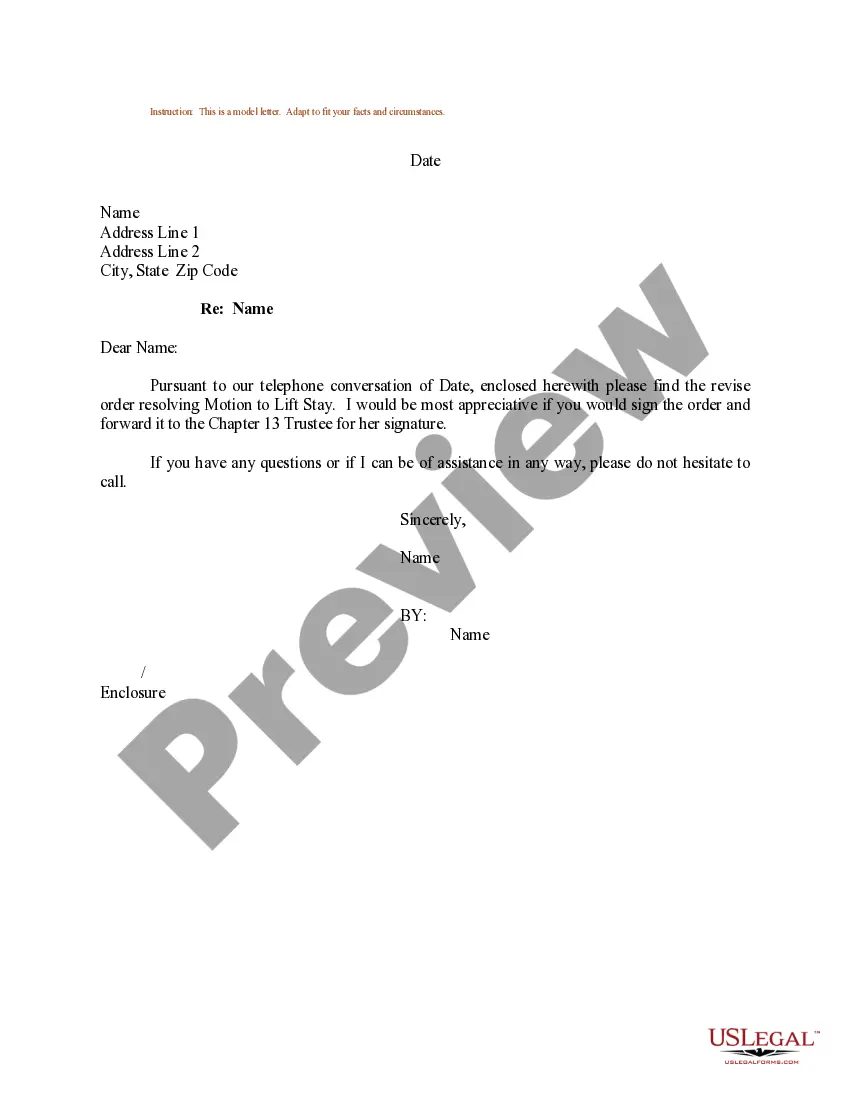
The Sample Letter regarding Answer to Motion for Relief from the Automatic Stay and Abandonment is a template designed to help individuals respond formally to motions filed in bankruptcy cases. This letter is essential for parties looking to contest or respond to a motion that seeks to lift the automatic stay on their property or assets. Unlike other legal forms, this letter specifically addresses the procedural aspects related to bankruptcy proceedings and aims to articulate the responder's position clearly and concisely.
Key parts of this document
- Date of the letter.
- Private name and address of the respondent.
- Clear statement of intentions regarding the motion.
- Any relevant legal references or arguments.
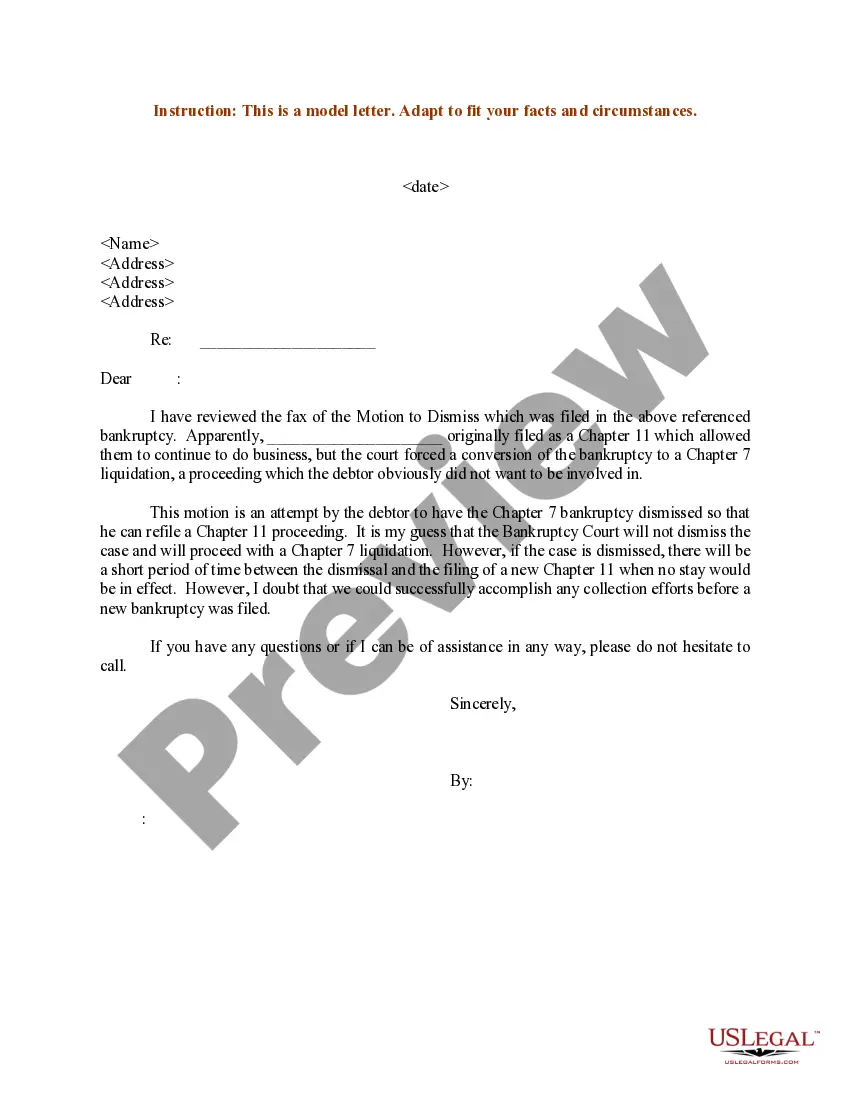
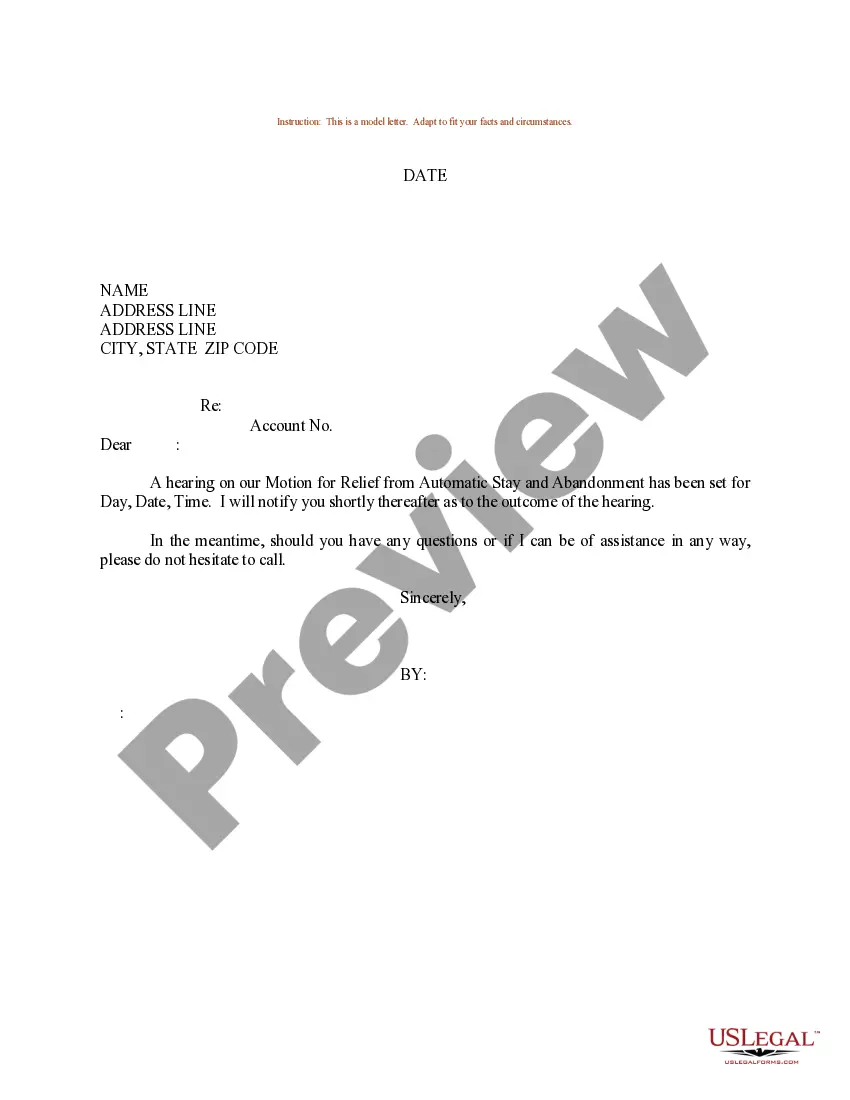
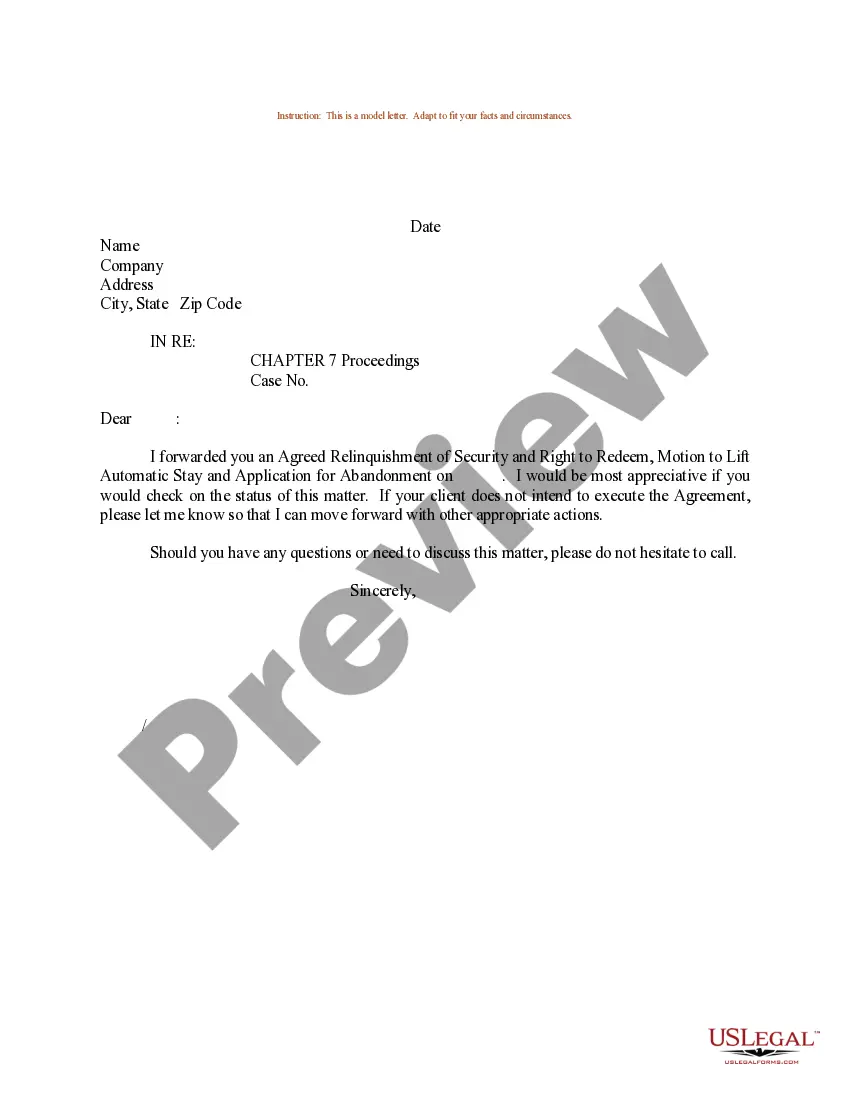
When this form is needed
This form is utilized when an individual or entity needs to respond to a motion for relief from an automatic stay in a bankruptcy case. Situations may include when a creditor seeks to regain possession of property, or when the debtor wishes to contest such a motion in order to protect their assets. The letter serves as an official communication to the court and the filing party about the respondentâs position regarding the motion.
Intended users of this form
- Debtors in bankruptcy who have received a motion for relief from the automatic stay.
- Attorneys representing clients in bankruptcy proceedings.
- Individuals looking to respond to creditor motions regarding property or assets.
Steps to complete this form
- Enter the date at the top of the letter.
- Provide your name and address accurately in the specified fields.
- Clearly state your position in response to the motion regarding the automatic stay.
- Include any necessary legal arguments or references to support your response.
- Sign the letter to validate your response.
Does this form need to be notarized?
This form does not typically require notarization unless specified by local law. It is advisable to check local regulations to ensure compliance with any particular requirements related to filing this letter in court.
Get your form ready online
Our built-in tools help you complete, sign, share, and store your documents in one place.
Make edits, fill in missing information, and update formatting in US Legal Forms—just like you would in MS Word.
Download a copy, print it, send it by email, or mail it via USPS—whatever works best for your next step.
Sign and collect signatures with our SignNow integration. Send to multiple recipients, set reminders, and more. Go Premium to unlock E-Sign.
If this form requires notarization, complete it online through a secure video call—no need to meet a notary in person or wait for an appointment.
We protect your documents and personal data by following strict security and privacy standards.

Make edits, fill in missing information, and update formatting in US Legal Forms—just like you would in MS Word.

Download a copy, print it, send it by email, or mail it via USPS—whatever works best for your next step.

Sign and collect signatures with our SignNow integration. Send to multiple recipients, set reminders, and more. Go Premium to unlock E-Sign.

If this form requires notarization, complete it online through a secure video call—no need to meet a notary in person or wait for an appointment.

We protect your documents and personal data by following strict security and privacy standards.
Mistakes to watch out for
- Failing to include the correct date.
- Not addressing the letter to the appropriate party or court.
- Omitting critical legal arguments or references.
- Neglecting to sign the letter before submission.
Benefits of completing this form online
- Convenient access to a legally vetted template.
- Easy to fill out and customize to individual circumstances.
- Downloadable format allows for efficient printing and submission.
- Adaptable for multiple jurisdictions when necessary.
Looking for another form?








Form popularity
FAQ
A Motion for Relief from the automatic stay is basically a request from a creditor to the Bankruptcy Court for permission to take back collateral. Motions for Relief are set down for hearings before the Bankruptcy Court.If a creditor has good cause for filing the motion, it will be granted.
What is a motion for relief from the automatic stay? A motion for relief from the automatic stay, also called a stay relief motion, is a request a creditor can submit to the bankruptcy court to ask for permission to take certain collection actions against the person who filed bankruptcy.
The automatic stay in bankruptcy is a temporary federal injunction that immediately stops most collection efforts by creditors, collection agencies and government entities against debtors and their property.It merely suspends efforts to collect or proceed against those debts while a bankruptcy case is open.
However, under certain circumstances, creditors can ask the court to allow them to go ahead with collections in spite of the bankruptcy filing. This is called a Motion for Relief from Automatic Stay, and a successful one often negates the whole purpose of filing for Chapter 7 bankruptcy in the first place.
Order for relief refers to an actual court order determining that a debtor is subject to the control of the bankruptcy court. The Bankruptcy Code enables a debtor to obtain a discharge from all debts that arose before the date of the order for relief. A voluntary petition constitutes an order for relief.
Once a Chapter 13 bankruptcy petition is filed, the automatic stay goes into effect with the order of relief being entered on the filing date. It's this automatic stay that prohibits the creditors from taking any further action outside the bankruptcy to collect monies that are owed to them from the debtor.
The automatic stay goes into effect for only 30 days after you file bankruptcy. Two or more previous bankruptcy cases dismissed within the past year.
A motion for relief from the automatic stay is a creditor's way of asking the court for permission to eg. foreclose on a house or repossess a car. As soon as any type of bankruptcy is filed, an injunction called the automatic stay comes into place.