Debt Acknowledgment - IOU
What this document covers
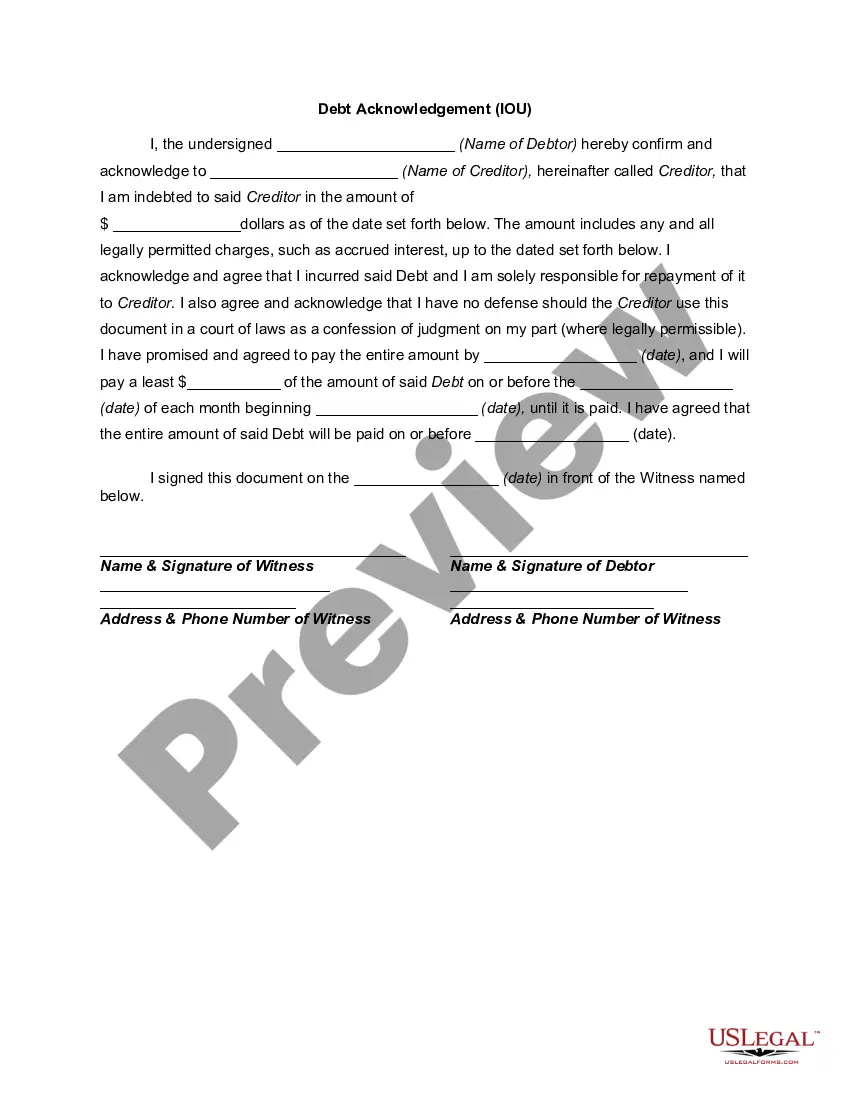
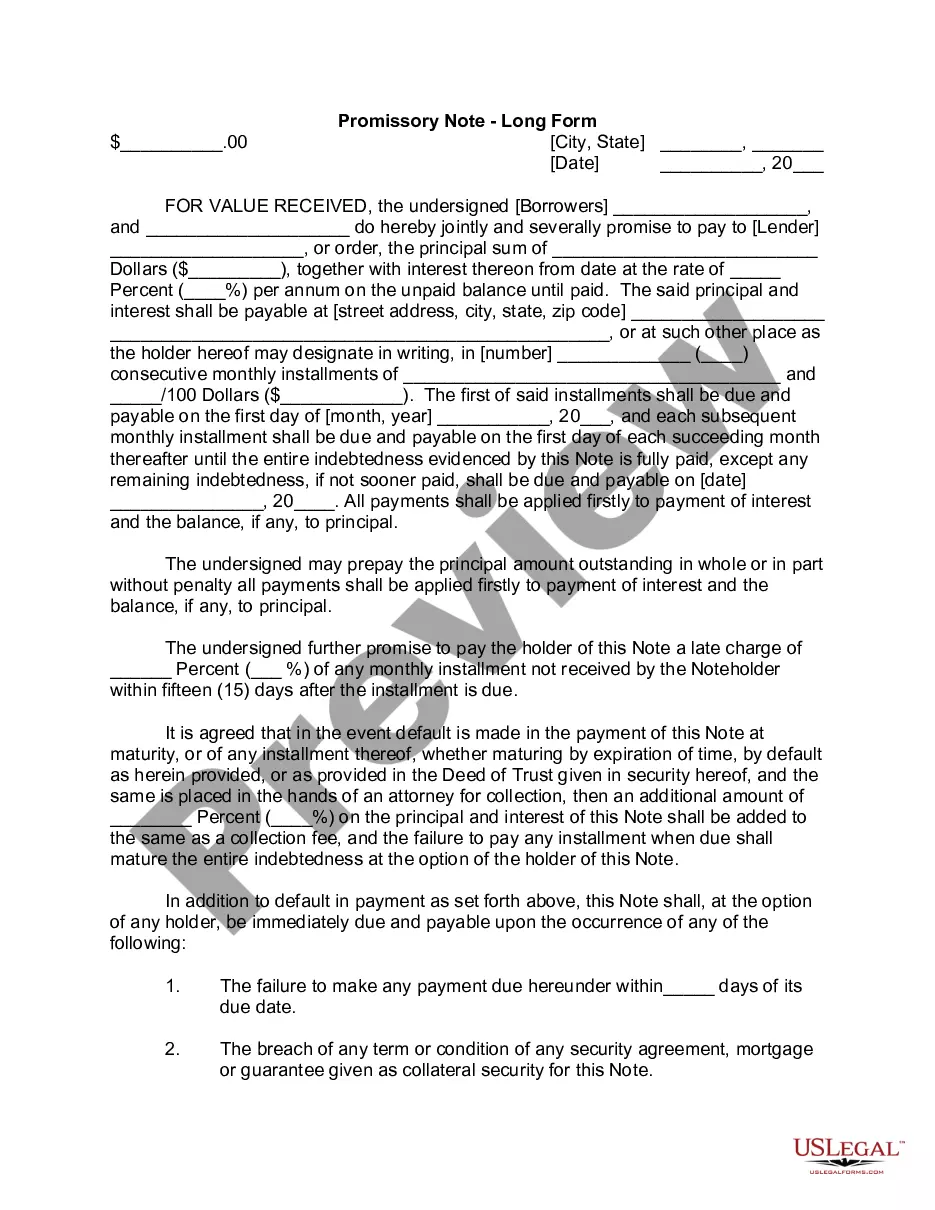
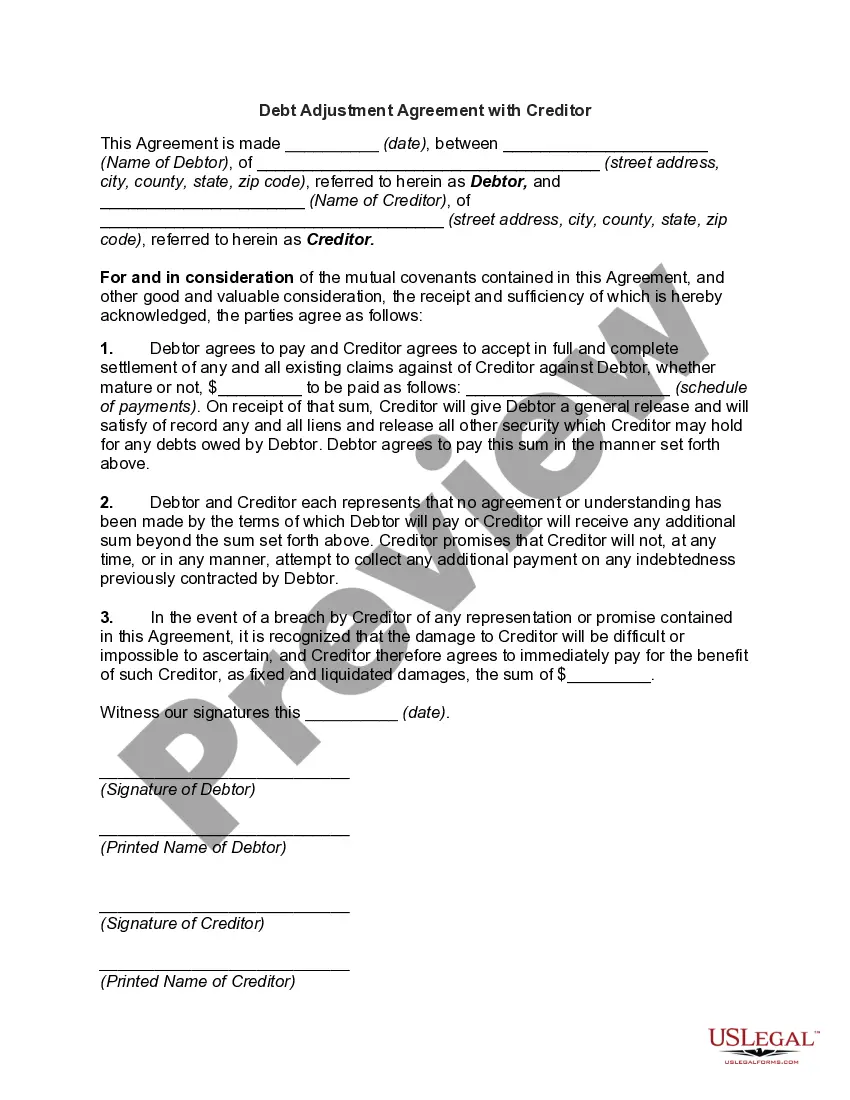
The Debt Acknowledgment - IOU form is an informal document that serves as a written acknowledgment of a debt incurred by one party (the debtor) to another party (the creditor). Unlike a promissory note, it does not typically outline specific repayment terms or deadlines, making it a simple declaration of the debt amount owed. This form is particularly useful in personal or casual lending situations where a formal contract may not be necessary but a written record is desired for clarity and accountability.
What’s included in this form
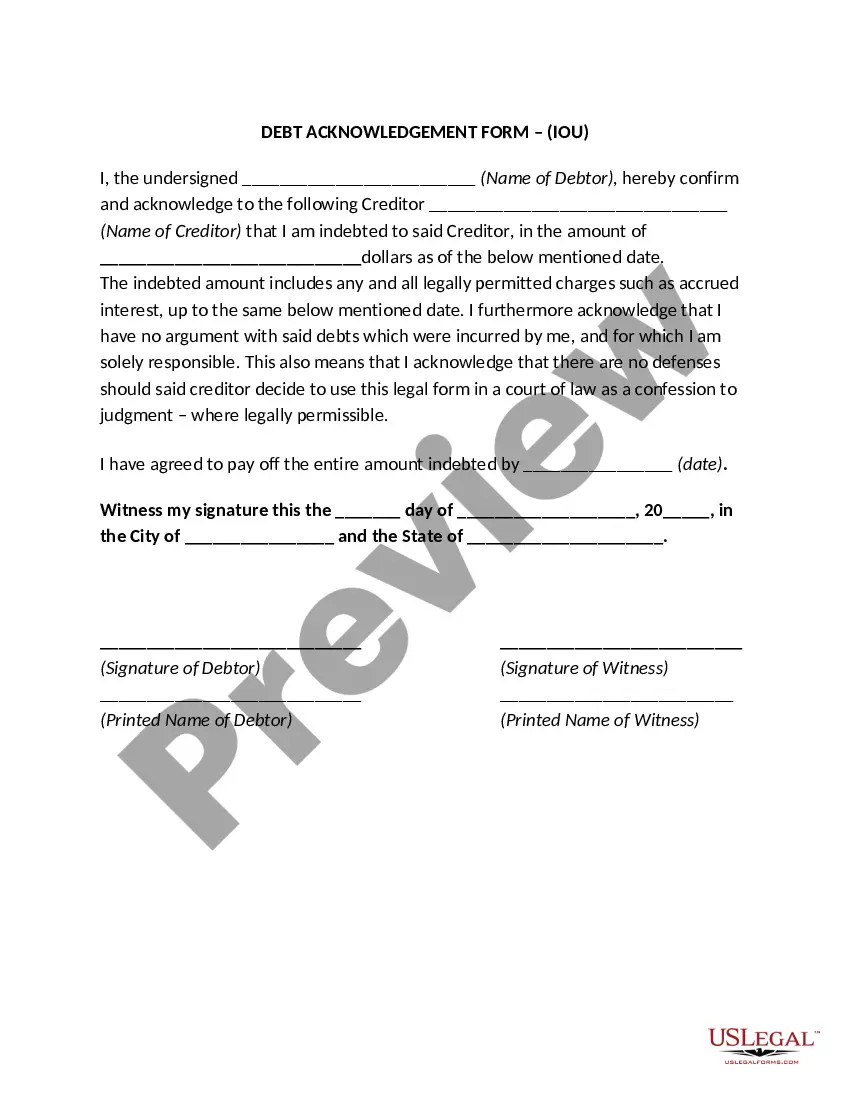
- The names and signatures of both the debtor and creditor.
- The total amount of the debt owed in dollars.
- The acknowledgment of the debt and the debtor's responsibility for repayment.
- The specified due date for full repayment.
- A clause related to the acknowledgment of potential legal actions regarding the debt.
- Witness information to add legitimacy to the document.
When to use this form
This form should be used when an individual or entity wishes to formally acknowledge a debt owed to another party without entering into a more complex loan agreement. Situations may include borrowing money from friends or family, personal loans without interest, or informal agreements where both parties prefer to keep a written record of the transaction. It is particularly helpful to prevent misunderstandings or disputes about the debt in the future.
Who should use this form
This form is suitable for:
- Individuals borrowing money from friends or family.
- Small business owners seeking to acknowledge debts to suppliers or contractors.
- Anyone involved in informal lending situations where formal contracts are not utilized.
- Debtors who want to ensure concise records of their financial obligations.
Steps to complete this form
- Identify the debtor and creditor, and enter their full names in the designated spaces.
- Specify the total amount of the debt clearly in dollar terms.
- Enter the repayment due date and any scheduled payment arrangements.
- Have the debtor sign the document in the presence of a witness for added validity.
- Ensure the witness also signs the document, providing their contact information.
Does this document require notarization?
Notarization is generally not required for this form. However, certain states or situations might demand it. You can complete notarization online through US Legal Forms, powered by Notarize, using a verified video call available anytime.
Get your form ready online
Our built-in tools help you complete, sign, share, and store your documents in one place.
Make edits, fill in missing information, and update formatting in US Legal Forms—just like you would in MS Word.
Download a copy, print it, send it by email, or mail it via USPS—whatever works best for your next step.
Sign and collect signatures with our SignNow integration. Send to multiple recipients, set reminders, and more. Go Premium to unlock E-Sign.
If this form requires notarization, complete it online through a secure video call—no need to meet a notary in person or wait for an appointment.
We protect your documents and personal data by following strict security and privacy standards.

Make edits, fill in missing information, and update formatting in US Legal Forms—just like you would in MS Word.

Download a copy, print it, send it by email, or mail it via USPS—whatever works best for your next step.

Sign and collect signatures with our SignNow integration. Send to multiple recipients, set reminders, and more. Go Premium to unlock E-Sign.

If this form requires notarization, complete it online through a secure video call—no need to meet a notary in person or wait for an appointment.

We protect your documents and personal data by following strict security and privacy standards.
Typical mistakes to avoid
- Failing to include the exact amount of the debt.
- Not specifying a repayment schedule, which may lead to confusion.
- Missing signatures from either the debtor or the witness.
- Using vague language that lacks clarity on the terms of repayment.
Why use this form online
- Convenience: Downloadable forms allow users to complete and store documents from home.
- Editability: Users can customize the form to fit their specific situation accurately.
- Reliability: Legal forms provided by licensed attorneys ensure compliance with current laws.
Looking for another form?


Form popularity
FAQ
Step 1 Debtor, Creditor, and the Amount. Enter the name of the Debtor/Borrower (John Rogers), the Creditor/Lender (James Smith), and the amount of the loan (in written and numeric form). Step 2 Repayment. Step 3 Signatures. Step 4 Notary Public (if applicable)
1Step 1 Debtor, Creditor, and the Amount. Enter the name of the Debtor/Borrower (John Rogers), the Creditor/Lender (James Smith), and the amount of the loan (in written and numeric form).2Step 2 Repayment.3Step 3 Signatures.4Step 4 Notary Public (if applicable)
While an IOU is less formal than a promissory note, it is still a legally binding document that can be used in court, if necessary.
Mention the Names of Promisor and Promisee. Mention the full name of the person who owes debt to another party. State the Essential Details. Mention Type and Kind of Loan. Putting the Signatures of the Legally Bound. Essentials of IOU Letter. Sample of IOU Letter.
However, to say that a written IOU has no legal value is incorrect.But if someone you cannot or do not want to refuse needs a loan at a time or place when you can get no lawyer, note or collateral, a signed IOU is enforceable written evidence of a debt.
An IOU is a written acknowledgement of debt that one party owes another. In business transactions, an IOU may be followed by a more formal written contract.The term IOU is also used in bookkeeping to refer to accounts receivable. IOUs are less formal and legally binding than promissory notes.
Usually, an IOU is a signed informal notice of an unpaid debt, sometimes because of partial payment and an outstanding balance due. For example, Company XYZ may buy raw materials for its production but until it sells the finished product, it does not have sufficient cash flow to pay for the raw materials in full.