Complaint for Malicious Prosecution, False Imprisonment, Abuse of Process
Overview of this form
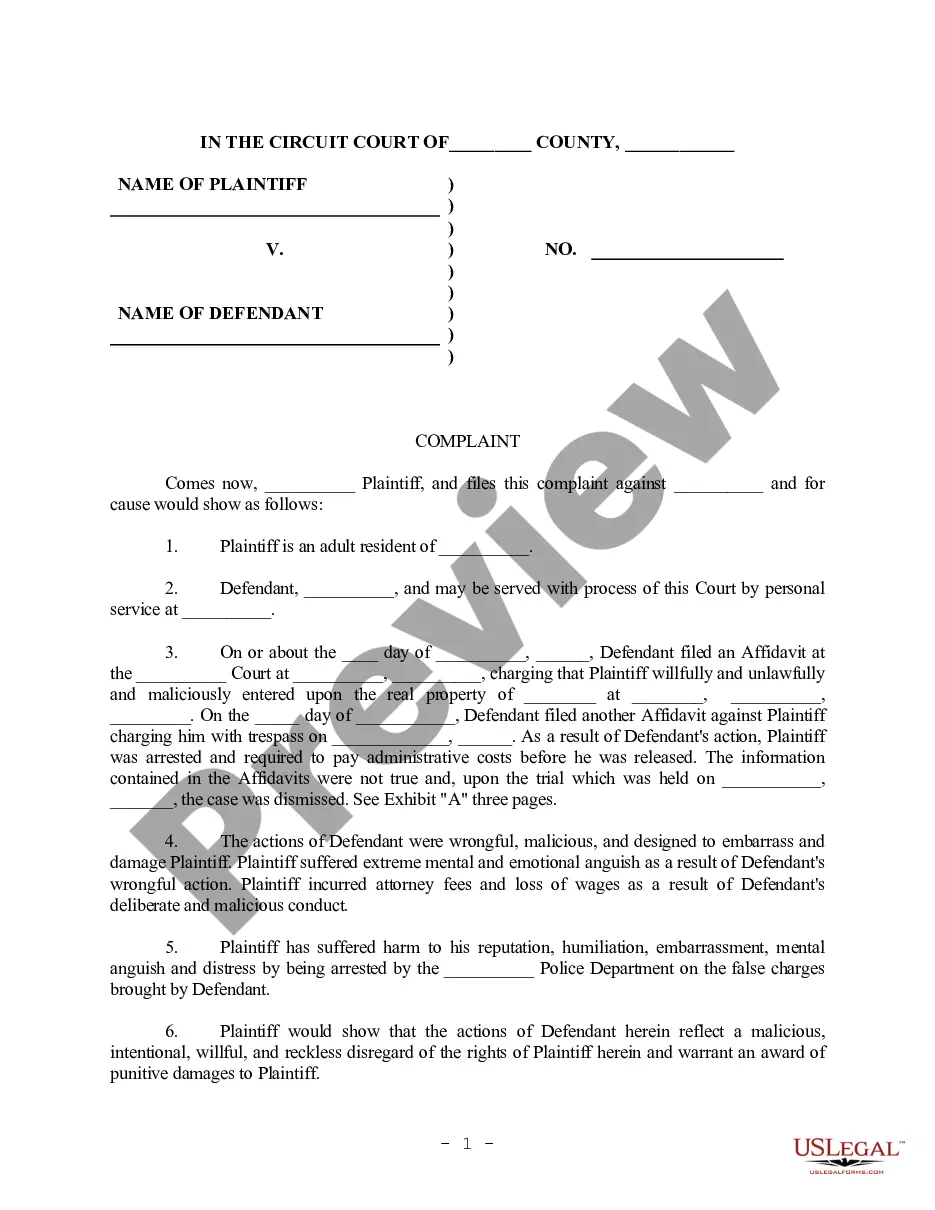
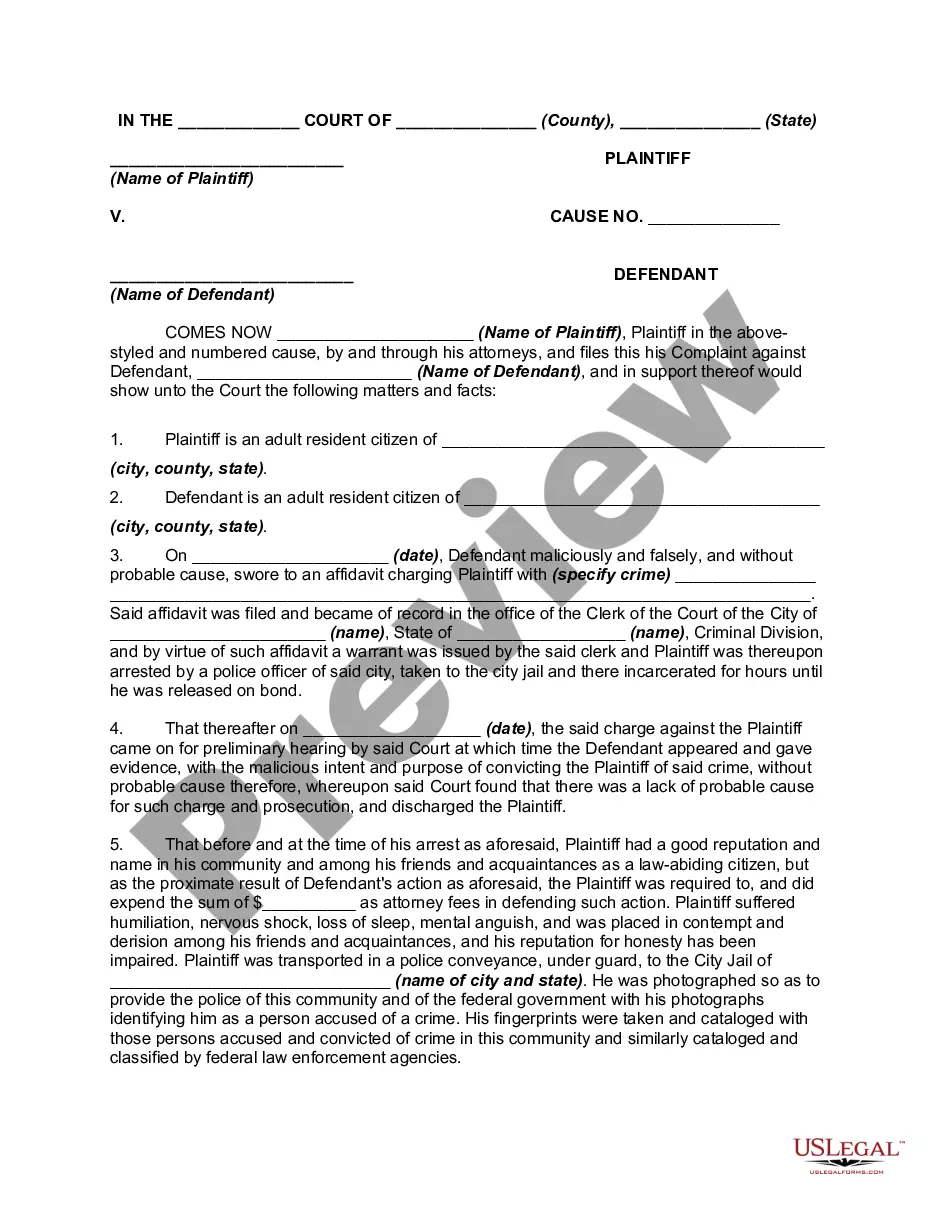
The Complaint for Malicious Prosecution, False Imprisonment, Abuse of Process is a legal document used to initiate a lawsuit against an individual or entity that has wrongfully accused someone of a crime, resulting in false imprisonment or harm. This form serves as a formal complaint detailing the plaintiff's grievances and the basis for the lawsuit, distinguishing it from other legal complaints focused on different issues, such as personal injury or contractual disputes.
Key parts of this document
- Identification of the plaintiff and defendant with addresses for service of process.
- Details surrounding the wrongful accusations and actions taken by the defendant.
- Evidence of mental and emotional distress suffered by the plaintiff.
- Claims for compensatory and punitive damages based on the defendant's misconduct.
- Signature line for the attorney representing the plaintiff.



When to use this form
This form should be used when an individual has been falsely accused of a crime and believes that those accusations led to their wrongful arrest or imprisonment. It's relevant when the accused can demonstrate that the allegations were made with malice and caused significant emotional distress or reputational harm. Situations involving malicious prosecution or abuse of process by law enforcement or other parties are also grounds for using this complaint.
Who needs this form
- Individuals who believe they have been maliciously prosecuted or falsely imprisoned.
- People seeking to hold another party accountable for false accusations.
- Those who have suffered emotional distress and reputational damage as a result of baseless claims against them.
How to prepare this document
- Identify the plaintiff and defendant, including their addresses.
- Clearly state the date and nature of the wrongful actions taken by the defendant.
- Detail the specific harm or distress suffered due to the defendant's actions.
- Specify the amount of damages sought, both compensatory and punitive.
- Sign the document as the attorney for the plaintiff.
Notarization requirements for this form
Notarization is generally not required for this form. However, certain states or situations might demand it. You can complete notarization online through US Legal Forms, powered by Notarize, using a verified video call available anytime.
Get your form ready online
Our built-in tools help you complete, sign, share, and store your documents in one place.
Make edits, fill in missing information, and update formatting in US Legal Forms—just like you would in MS Word.
Download a copy, print it, send it by email, or mail it via USPS—whatever works best for your next step.
Sign and collect signatures with our SignNow integration. Send to multiple recipients, set reminders, and more. Go Premium to unlock E-Sign.
If this form requires notarization, complete it online through a secure video call—no need to meet a notary in person or wait for an appointment.
We protect your documents and personal data by following strict security and privacy standards.

Make edits, fill in missing information, and update formatting in US Legal Forms—just like you would in MS Word.

Download a copy, print it, send it by email, or mail it via USPS—whatever works best for your next step.

Sign and collect signatures with our SignNow integration. Send to multiple recipients, set reminders, and more. Go Premium to unlock E-Sign.

If this form requires notarization, complete it online through a secure video call—no need to meet a notary in person or wait for an appointment.

We protect your documents and personal data by following strict security and privacy standards.
Common mistakes
- Failing to provide accurate addresses for the plaintiff and defendant.
- Not including sufficient details about the nature of the wrongful accusations.
- Neglecting to specify the amount of damages sought.
- Omitting evidence or supporting documentation when applicable.
Advantages of online completion
- Convenience of completing and downloading the form from anywhere.
- Editability allows personalization and adjustment to specific cases.
- Reliability of using a legally vetted form that adheres to relevant laws.
Legal use & context
- The form is enforceable in a court of law when properly completed.
- Claims must reflect accurate information as false representations could lead to additional legal consequences.
- Each state's laws regarding malicious prosecution and false imprisonment can differ, affecting how claims are handled.
Key takeaways
- Understand the specific claims of malicious prosecution, false imprisonment, and abuse of process.
- A properly completed form can help seek justice and compensation for wrongful actions.
- Always review state-specific requirements and legal implications when filing.
Looking for another form?

Form popularity
FAQ
Malicious prosecution and abuse of process are related types of civil lawsuits where one person (the plaintiff) sues another person (the defendant) for, in a prior case, trying to use the legal system against the plaintiff in an inappropriate manner. The prior case can be either criminal or civil in nature.
The Elements of Abuse of Process However, the typical elements that a plaintiff must prove in an abuse of process lawsuit are: The existence of an ulterior motive or purpose in using the process, and. An act in the use of the process that is not proper in the regular prosecution of the legal proceedings.
If a civil or criminal case is wrongfully prosecuted, the defendant in that case may be able to turn around and sue the plaintiff for malicious prosecution. One person can sue another person when a previous criminal or civil lawsuit was brought for wrongful purposes.
In the case of false imprisonment there is an important element of total restraint of personal liberty without lawful justification. But in the case of malicious prosecution there is the element of causing damage by means of an abuse of the process of Court.In an action for false imprisonment, it is not so required.