Assignment of Certificate of Deposit Agreement
What this document covers
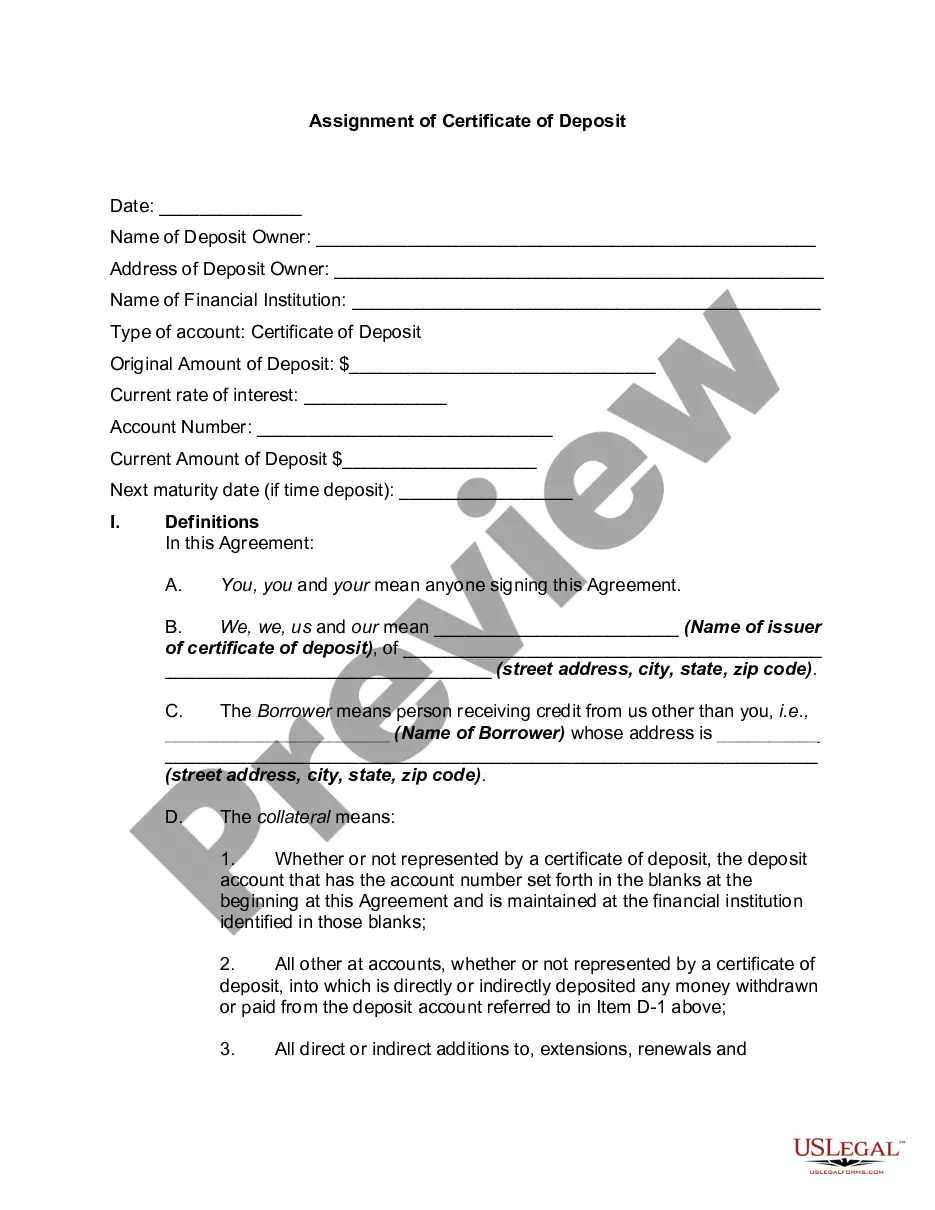
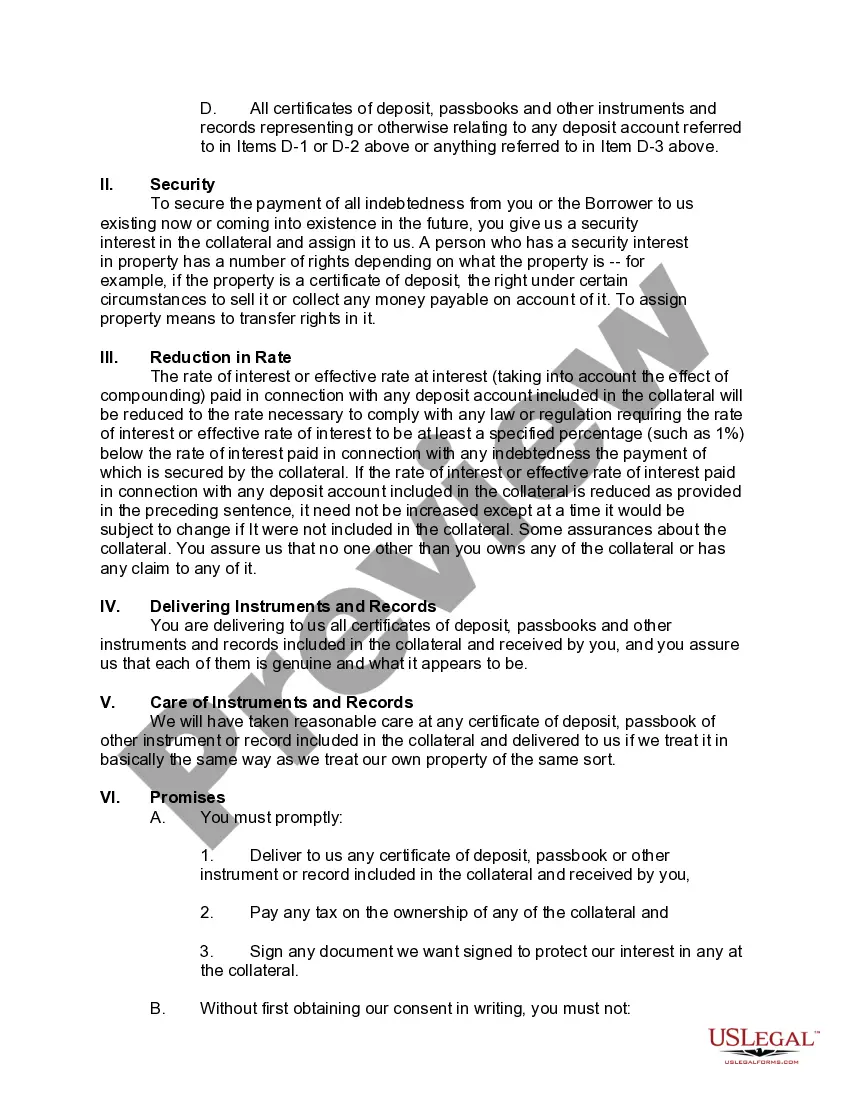
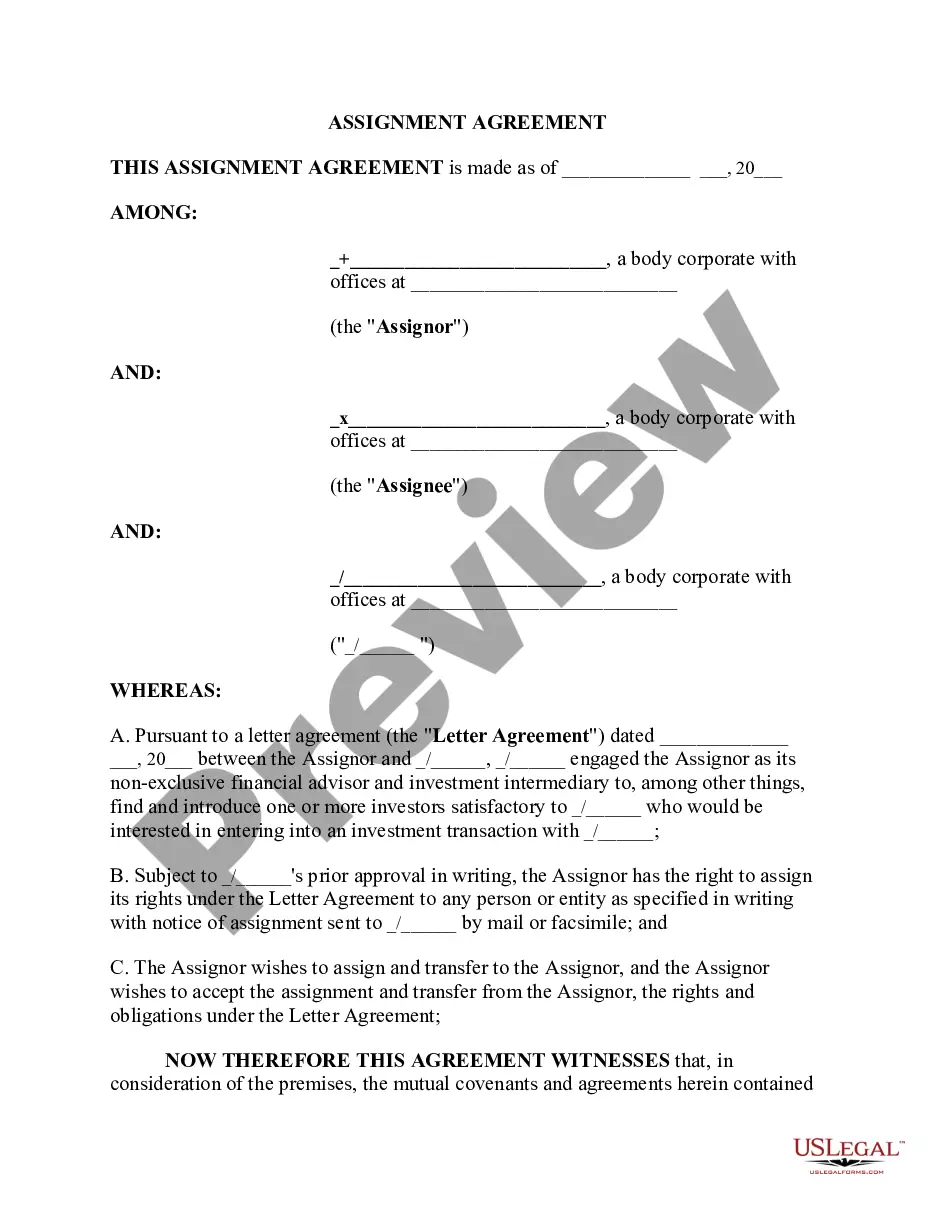
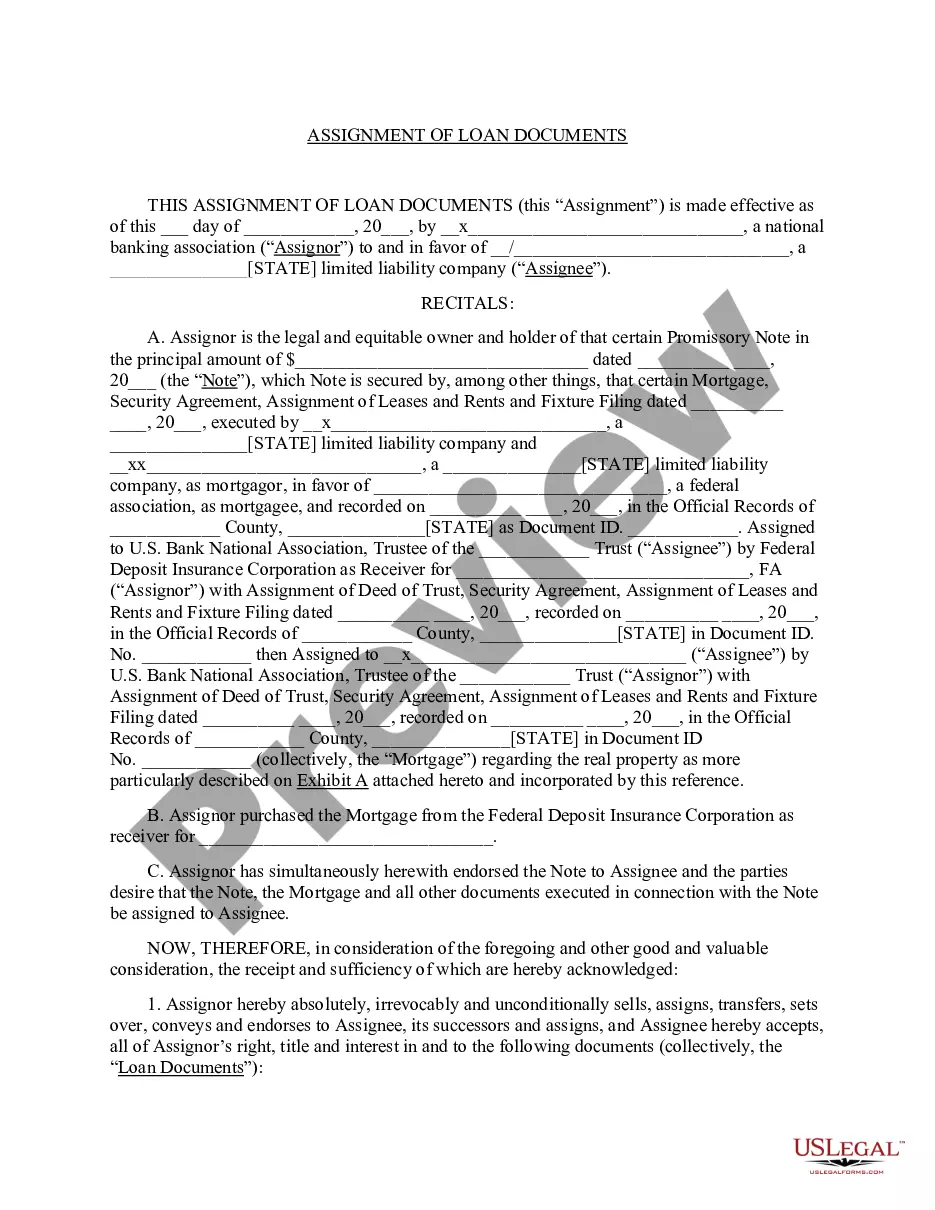
The Assignment of Certificate of Deposit Agreement is a legal document that allows an individual to assign a certificate of deposit (CD) as collateral for a debt or other obligation. This form is essential for individuals who need to secure a loan or financial obligation using their CD as collateral. Unlike standard bank forms, this document specifically outlines the rights and responsibilities involved in such assignments, making it a critical tool for both creditors and borrowers.
What’s included in this form
- Date and names of deposit owners and borrowers
- Details about the financial institution and type of account
- Definitions of key terms, including "collateral" and "security interest"
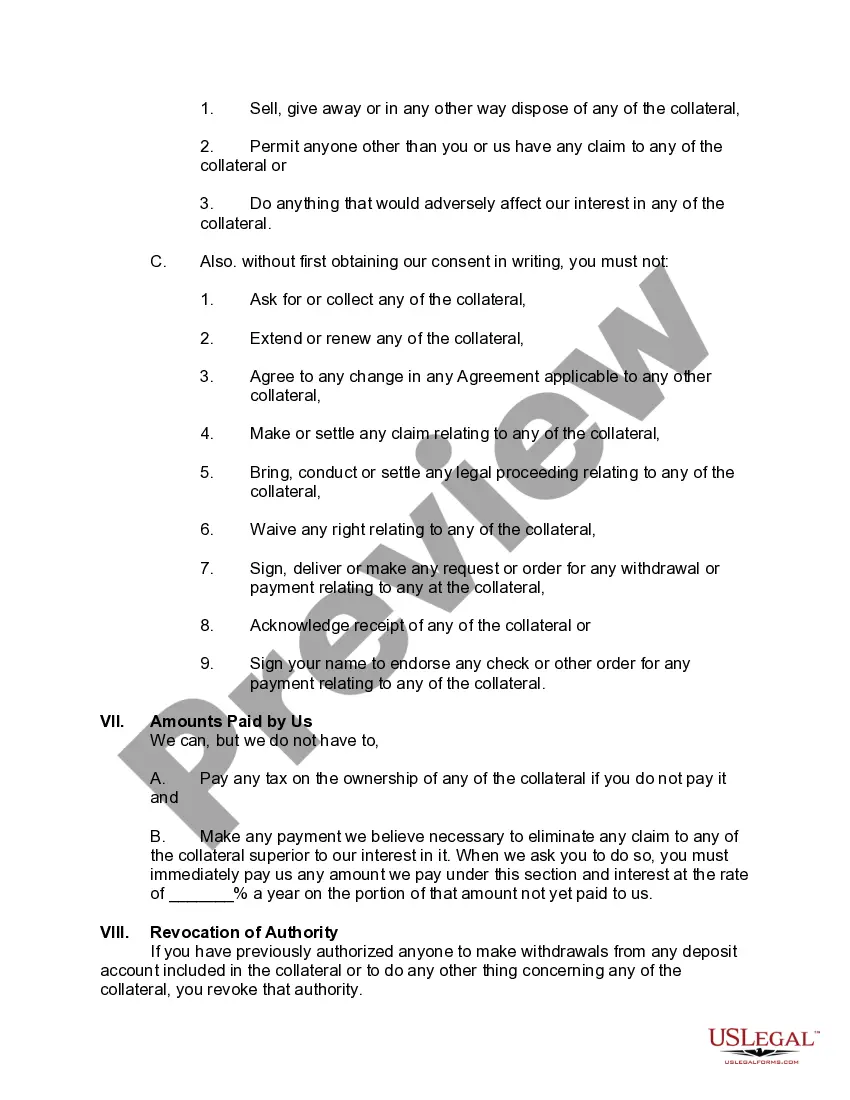
- Promises and responsibilities of both the assignor and the lender
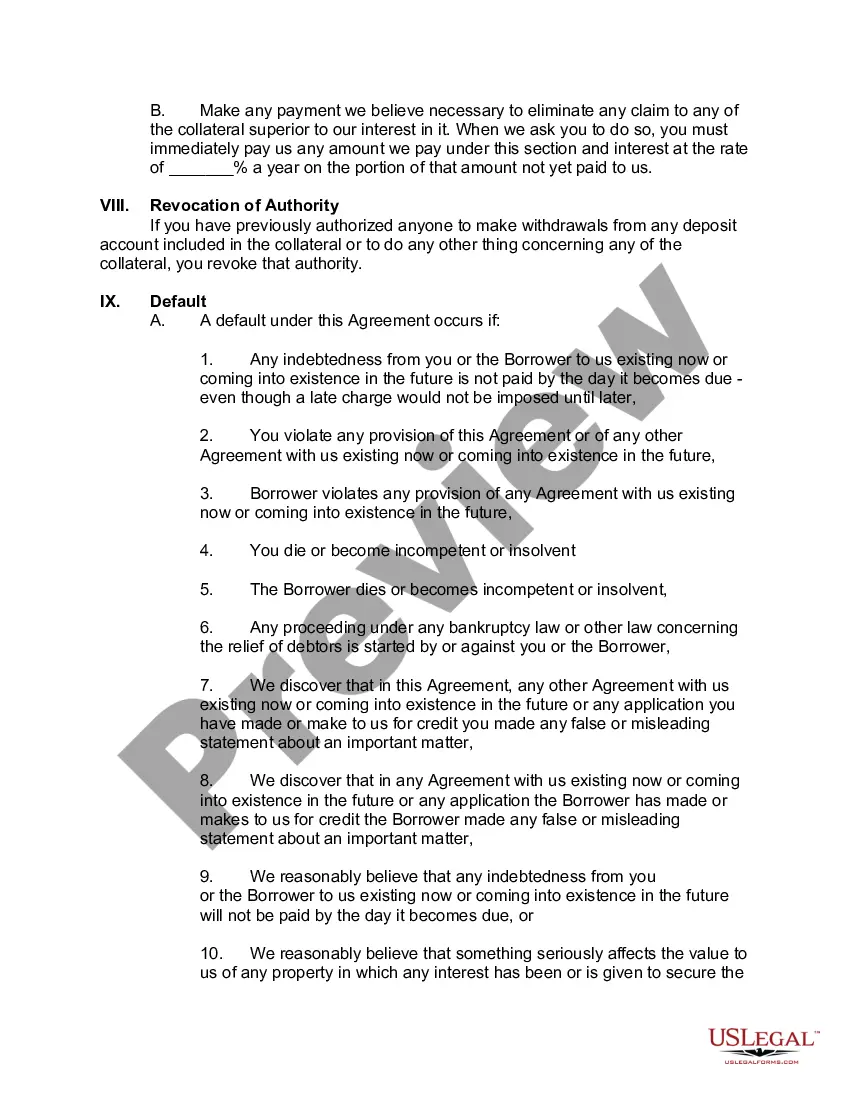
- Clauses regarding default and consequences of default
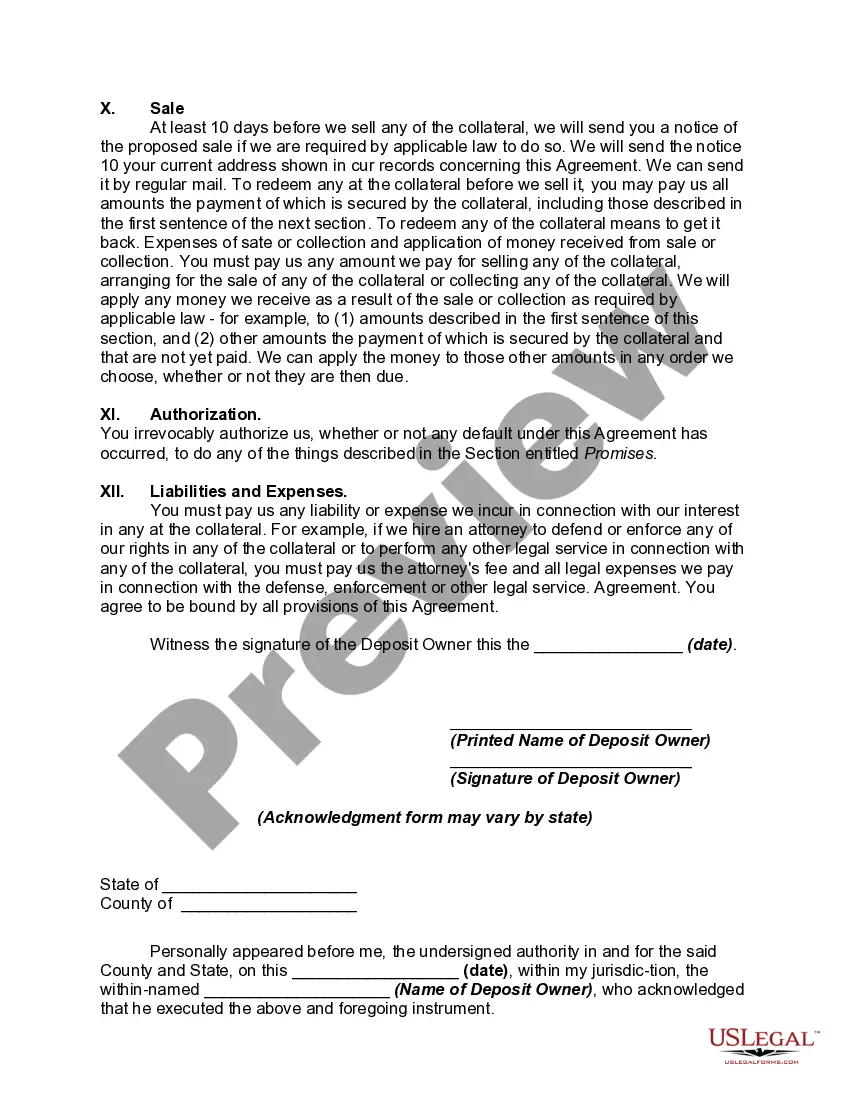
- Notarization section for legal acknowledgment
Common use cases
This form is used when an individual or entity wishes to use their certificate of deposit as security for a loan or a financial obligation. It is particularly relevant in situations where the borrower needs to demonstrate financial backup to the lender, ensuring that the lender can reclaim owed amounts in the event of default.
Who needs this form
- Individuals or businesses looking to secure a loan with a certificate of deposit
- Lenders seeking assurance against potential borrower default
- Estate administrators managing financial instruments on behalf of beneficiaries
How to complete this form
- Fill in the date and the full names and addresses of the deposit owner and borrower.
- Provide the name of the financial institution, account type, and account number.
- Enter the original amount of the deposit and the current interest rate.
- Review and agree to the definitions and responsibilities as laid out in the agreement.
- Have the form notarized if required by state law, ensuring legal authenticity of the signatures.
Is notarization required?
Notarization is required for this form to take effect. Our online notarization service, powered by Notarize, lets you verify and sign documents remotely through an encrypted video session, available 24/7.
Mistakes to watch out for
- Failing to accurately fill in all required fields, which can lead to disputes later.
- Not obtaining notarization when required in specific states.
- Neglecting to understand the implications of default and rights related to collateral.
Why use this form online
- Convenience of downloading and completing the form at your own pace.
- Editable fields that allow for easy customization to meet specific needs.
- Access to legally compliant templates drafted by licensed attorneys.
Jurisdiction-specific notes
This form is suitable for use across multiple states but may need changes to align with your state’s laws. Review and adapt it before final use.

Form popularity
FAQ
Certificates of deposit can be an effective way to save money while you earn interest safely. The problem is that a lot of banks require a minimum amount to open a CD. Sometimes the minimum requirement is $500 or $1,000, but depending on the bank and the type of CD, it could be $10,000 or more.
Certificates of deposit (CDs) A CD is the most restrictive of these savings accounts. You usually need to commit a minimum amount of money to open a certificate of deposit, and the money is locked away for a period of time, depending on the term you select. CD terms can range from a few months to five years.
A CD, or certificate of deposit, is a type of savings account with a fixed interest rate that's usually higher than a regular savings account, a fixed term length and a fixed date of withdrawal, known as the maturity date.CDs typically don't have monthly fees, but most have an early withdrawal penalty.
Debit "Certificate of Deposit" by the amount of the deposit. Credit "Cash" by the amount of the deposit. For example, a small business deposits $10,000 into a six-month CD that earns 5 percent interest. The small business would debit "Certificate of Deposit" by $10,000 and credit "Cash" by $10,000.
Find an insured financial institution. The Federal Deposit Insurance Corporation (FDIC) and National Credit Union Administration (NCUA) insure banks and credit unions, respectively. Pick a type of CD. Choose your term. Decide how often you want to collect your interest payments. Create your account. Fund the CD.
A CD, or certificate of deposit, is a type of savings account with a fixed interest rate that's usually higher than a regular savings account, a fixed term length and a fixed date of withdrawal, known as the maturity date. You lock up funds in a CD for a term generally between three months and five years.
Generally, CDs compound daily or monthly. The more often the CD compounds, the faster your savings will grow. The answer varies by account, but most CDs credit interest monthly. Some may allow you to have the interest transferred to a different account, such as a savings account or a money market account.
When you deposit money and promise to leave it in the bank for six months in order to earn a higher interest rate, the paper you get representing the deposit is an example of a certificate of deposit.
There's no limit to how many CDs you can open. You can even shop around at different banks to see which one is offering the best rates currently. One smart strategy is called a CD ladder. This means splitting up your investments into different CDs with different maturity dates.