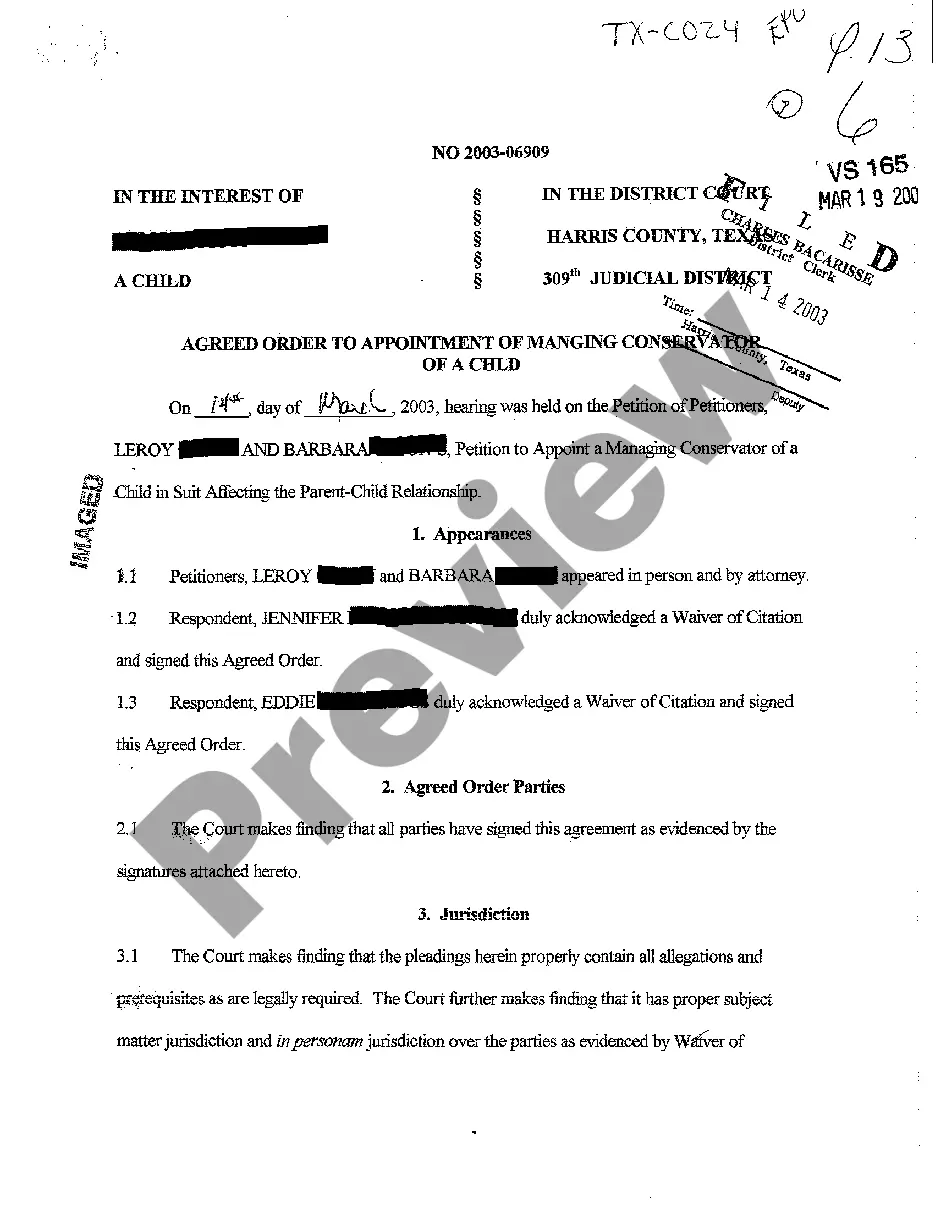
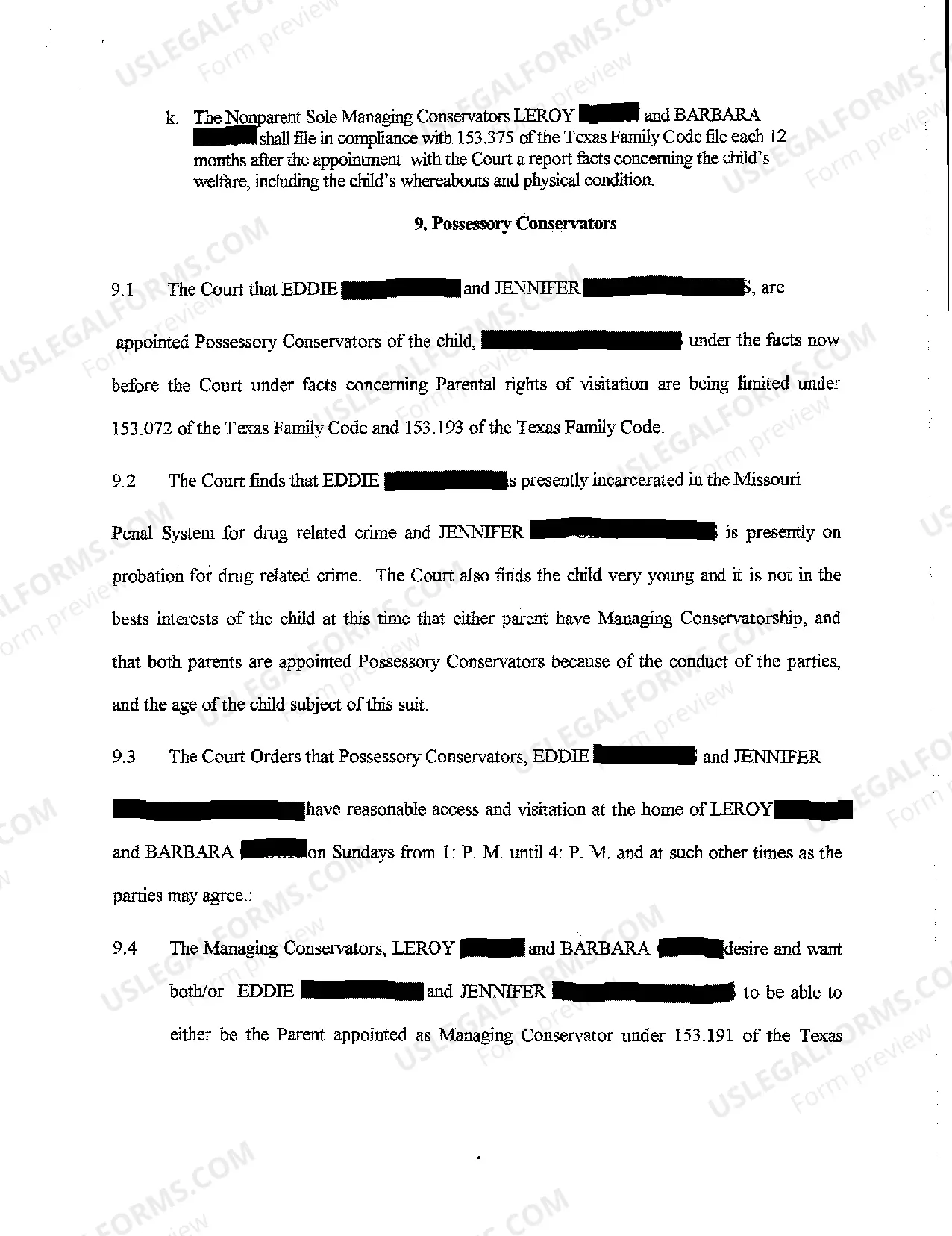
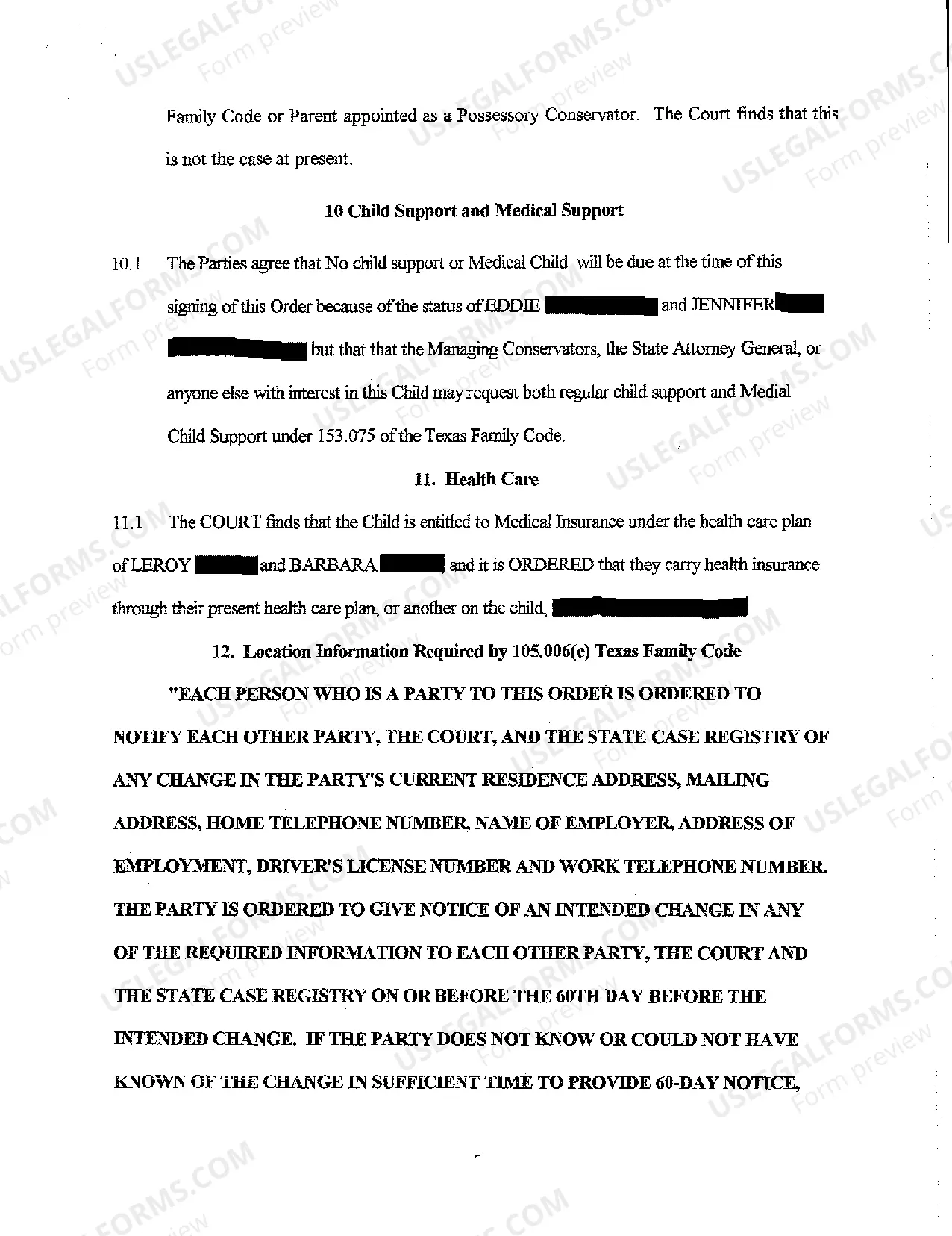
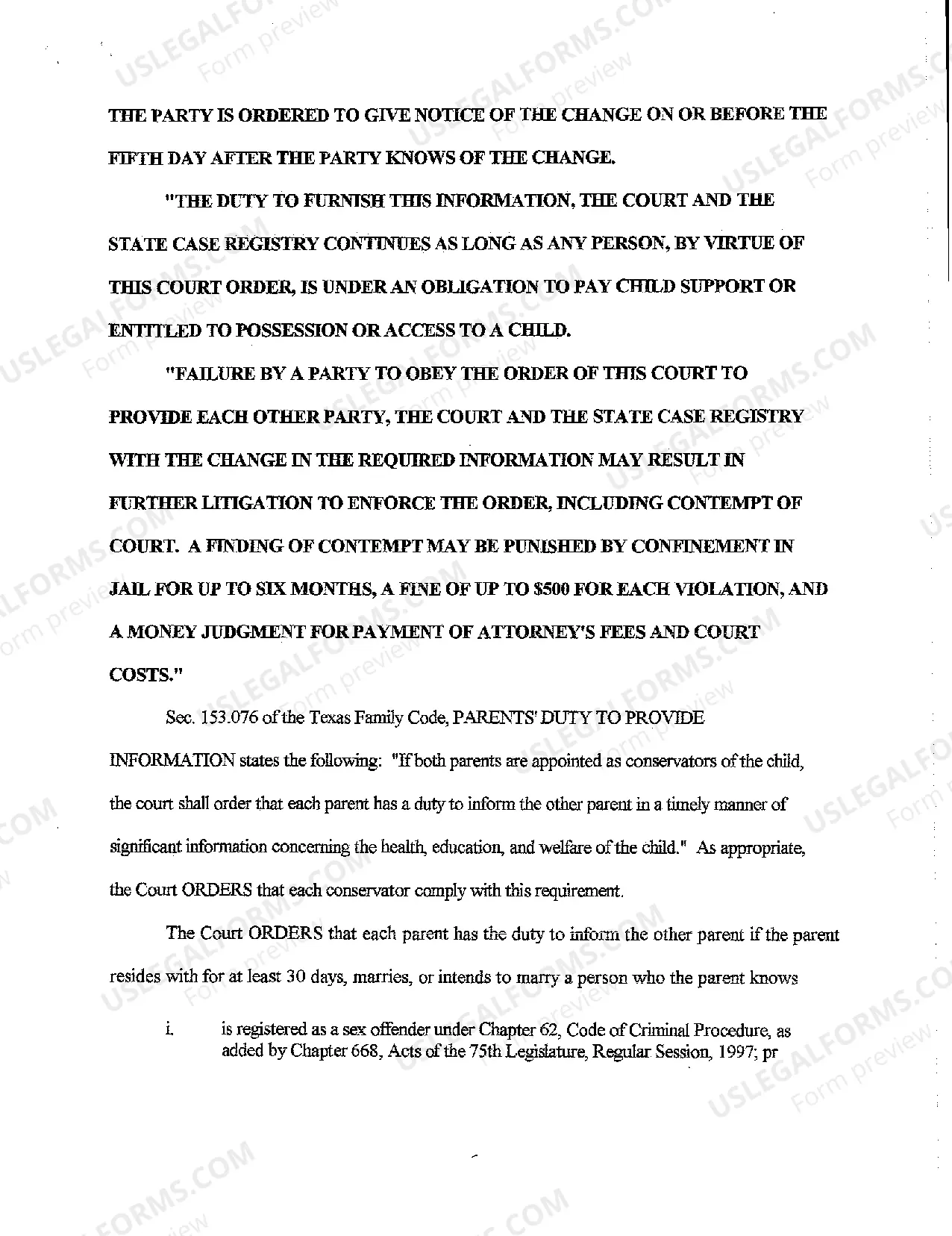
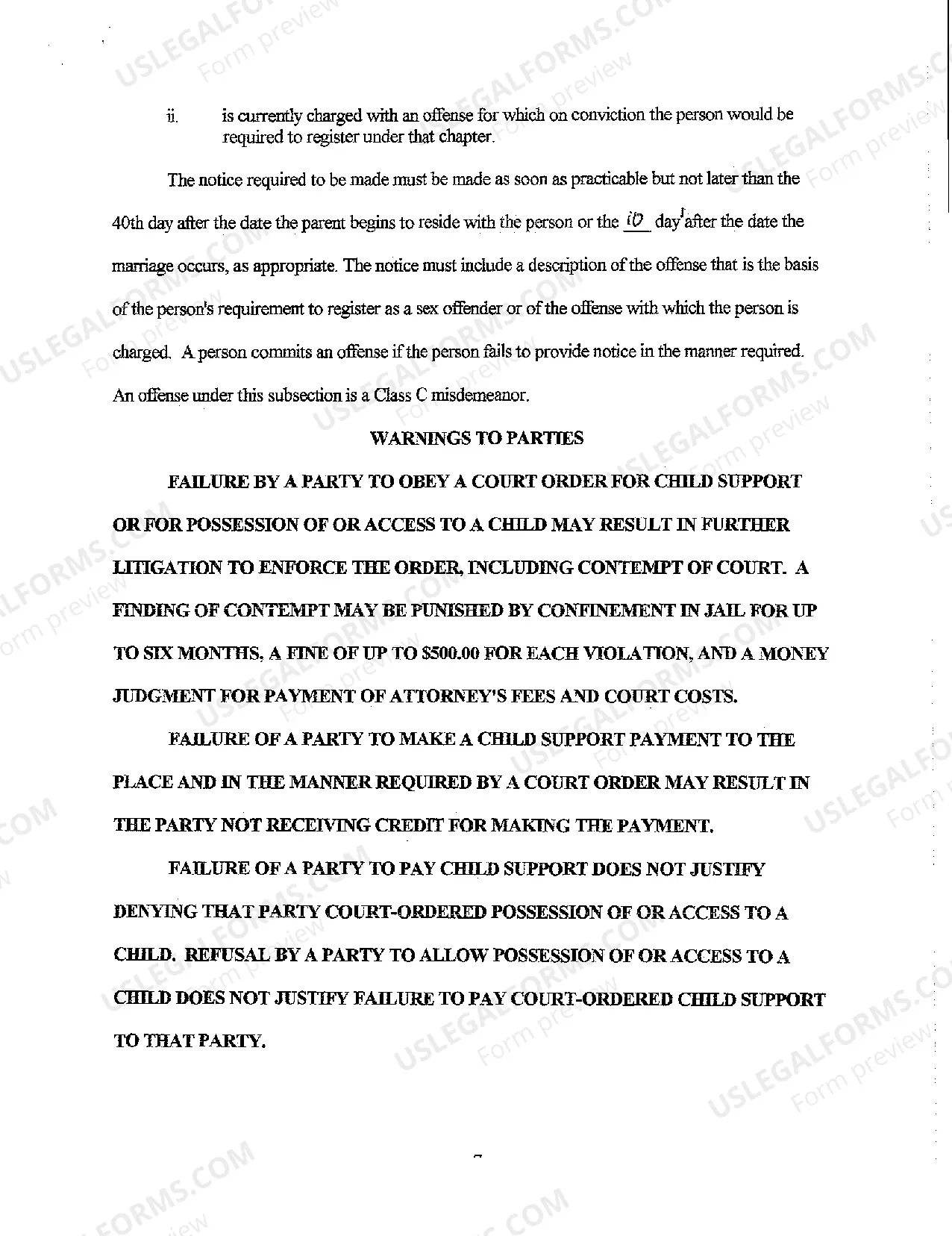
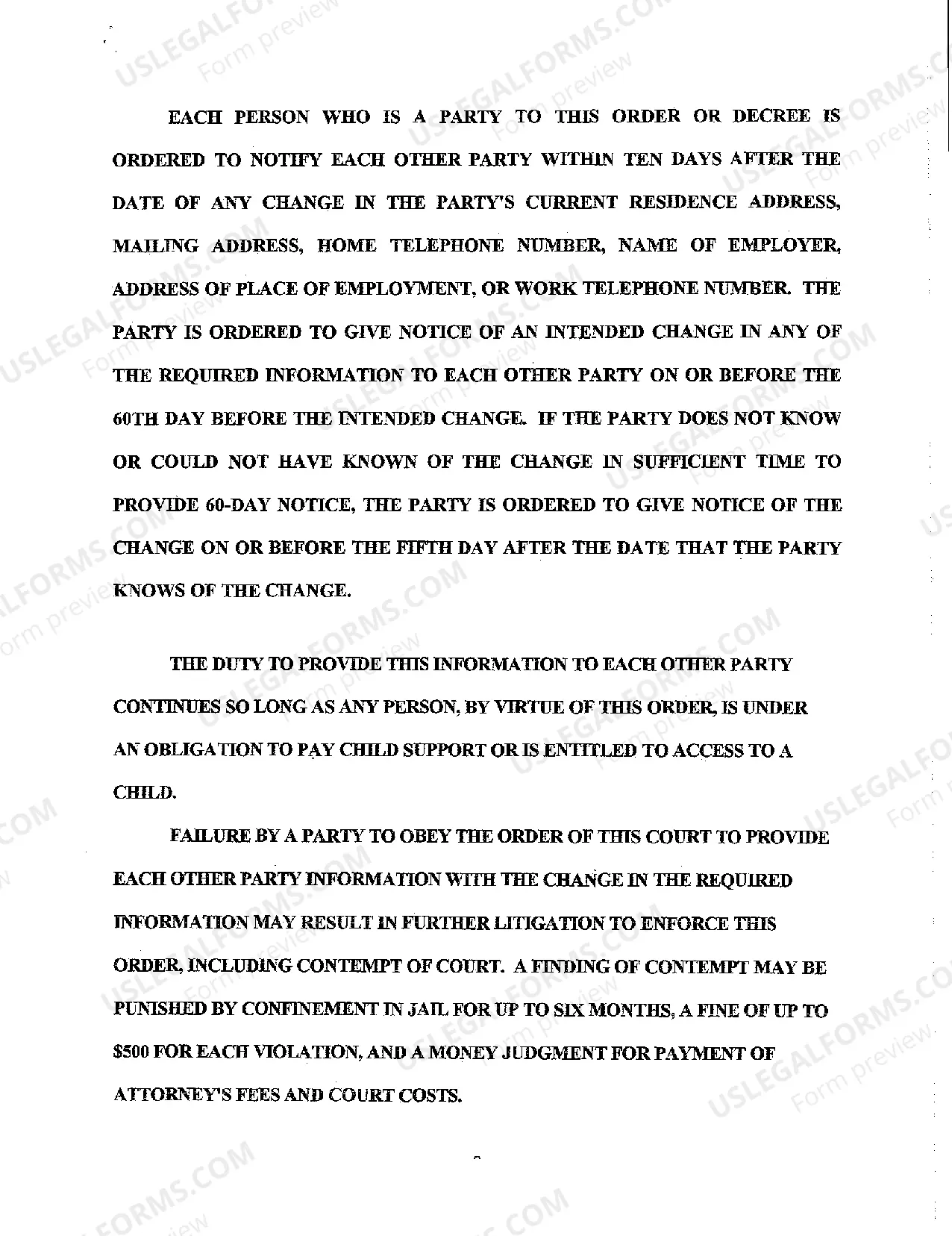
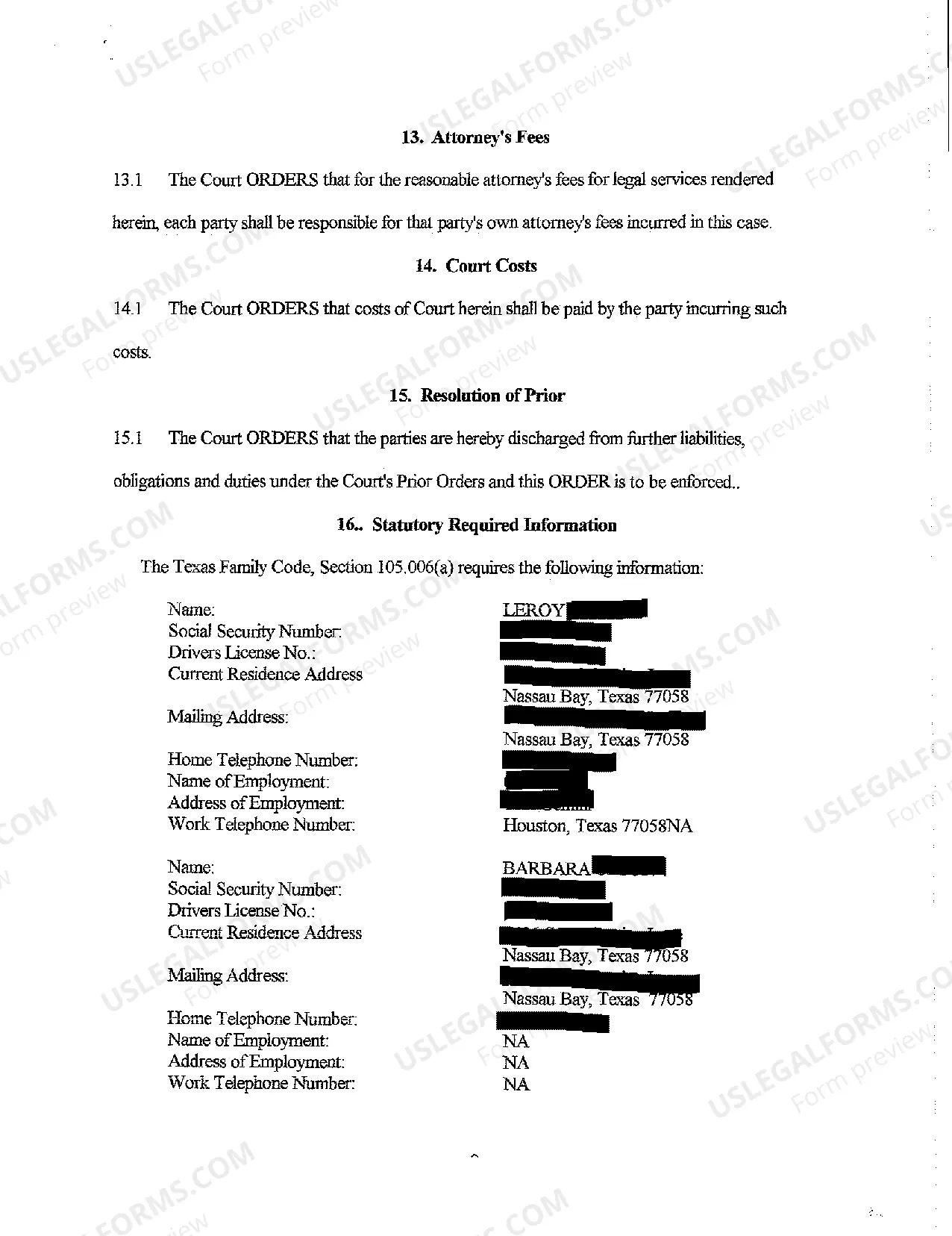
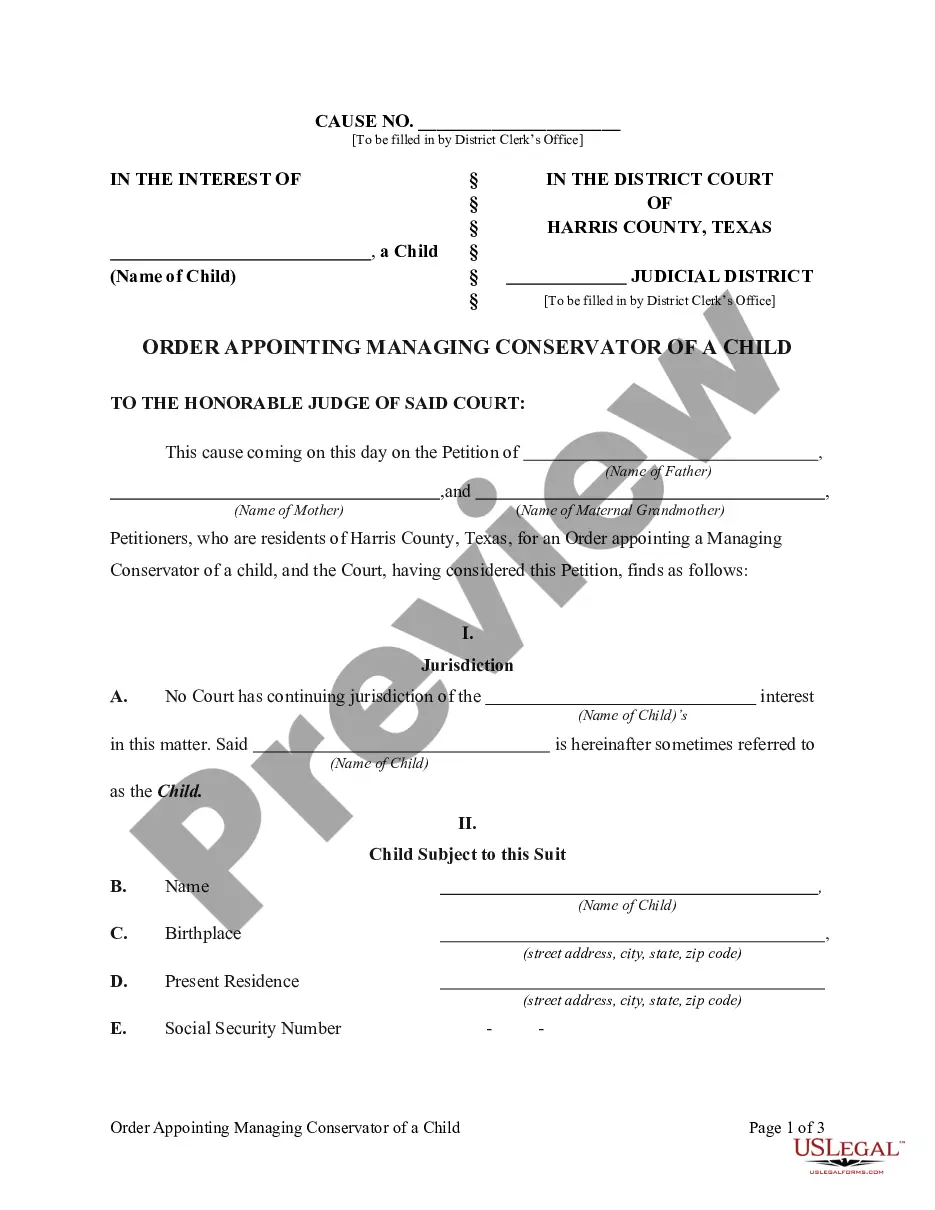
Texas Agreed Order to Appointment of Managing Conservator for Child


Does this document require notarization?
Notarization is generally not required for this form. However, certain states or situations might demand it. You can complete notarization online through US Legal Forms, powered by Notarize, using a verified video call available anytime.
Form popularity
FAQ
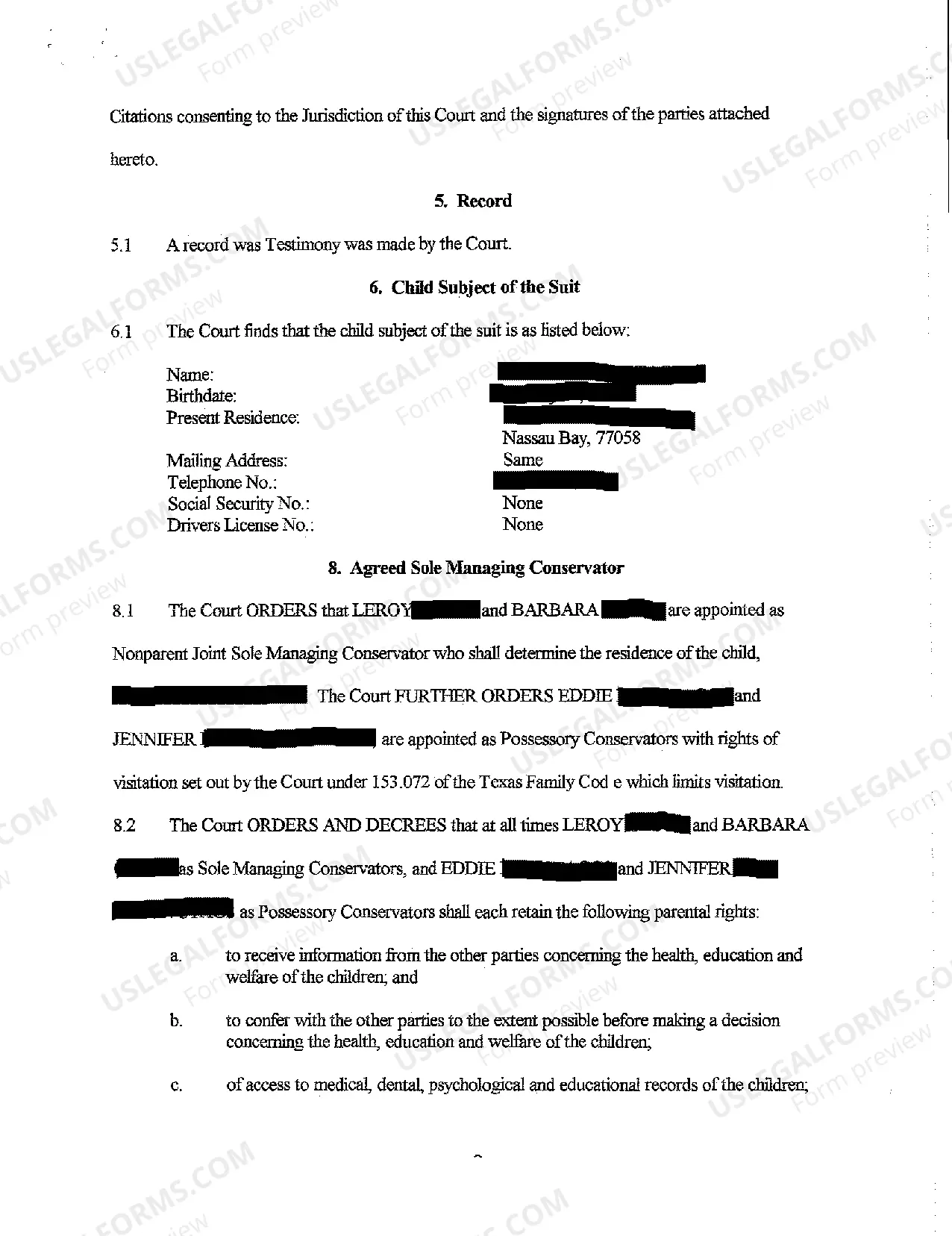
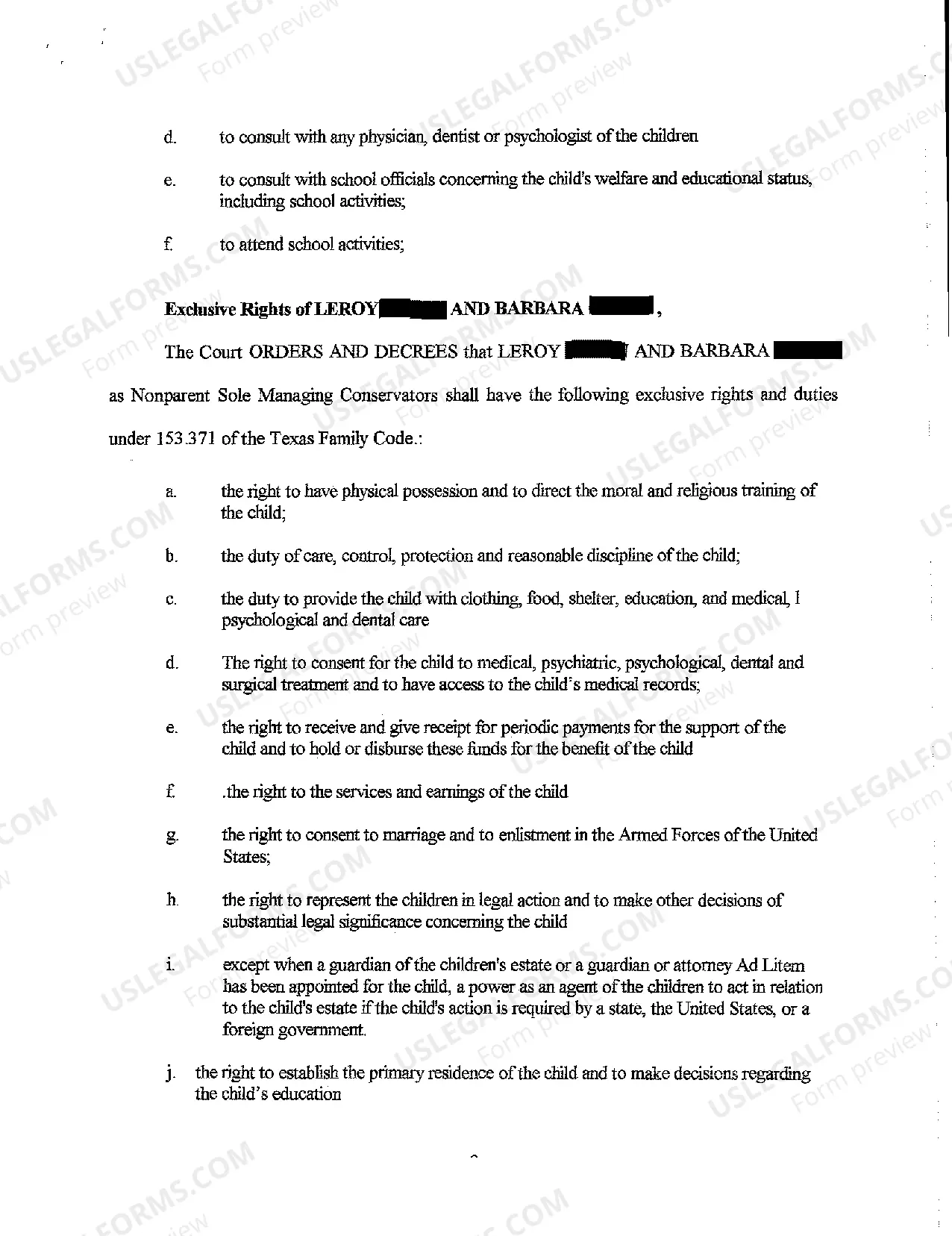
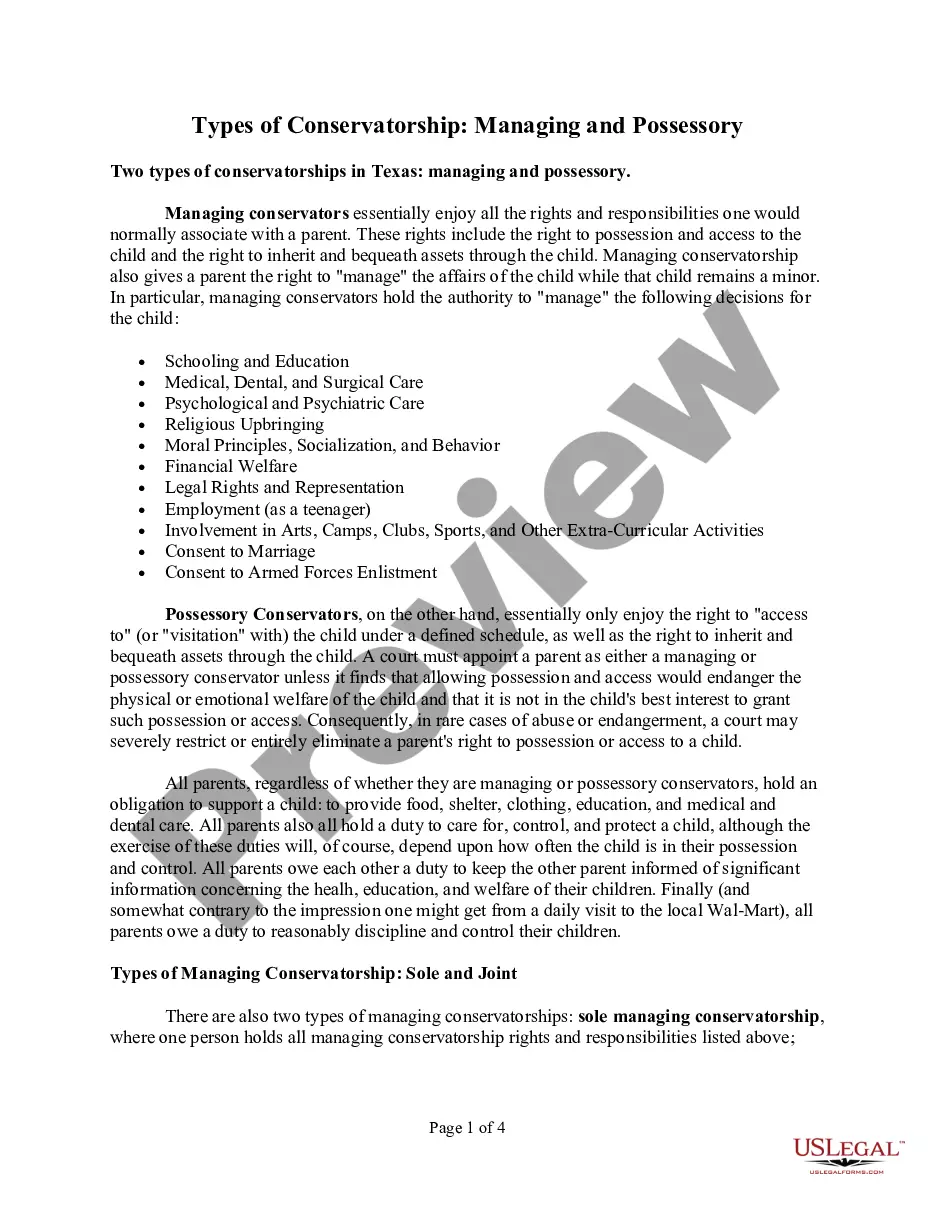
A legal designation, sole managing conservatorship affords one parent the right to make final decisions regarding a child's health and life. Along with designating where a child will live, the parent with sole managing conservatorship has control over medical, dental, and surgical treatments.
A conservator, also known in Texas as a guardian of the estate, has the authority over a person's finances. The minor or protected person is known as the ward. To be appointed as a conservator, you must file a petition with the probate court. The ward or other interested person can challenge the petition.
If one parent is named the Sole Managing Conservator, the other parent is usually named the Possessory Conservator.A Possessory Conservator still has the rights of a parent, but will not have the final say on most decisions.
Managing conservatorship means mostly what other states call custody; it can be held jointly by both parents or solely by one; the court will divide duties and rights between joint conservators. Possessory conservatorship means visitation; also called access or possession.
N a word: no. Despite the sound of the term, the court did not grant one parent sole or exclusive custody of the child when it ordered one parent as the sole managing conservator.
In the state of Texas, the terms guardianship and conservatorship are not interchangeable: Conservatorships are related to children and their parents. Guardianships are caregivers for adults who have become incapacitated, and children whose parents are deceased.
What is the Standard Possession Order? In Texas, the law presumes that the Standard Possession Order is in the best interest of a child age 3 or older. See Texas Family Code chapter 153.252. The Standard Possession Order says that the parents may have possession of the child whenever they both agree.
A Sole Managing Conservator has the exclusive right to make most decisions about the child. Reasons a judge might name a parent (or nonparent) Sole Managing Conservator include: family violence by the other parent. child abuse or neglect by the other parent.absence of the other parent in the child's life.