Tennessee Compromise Line Agreement and Quit Claim Deed
What is this form?
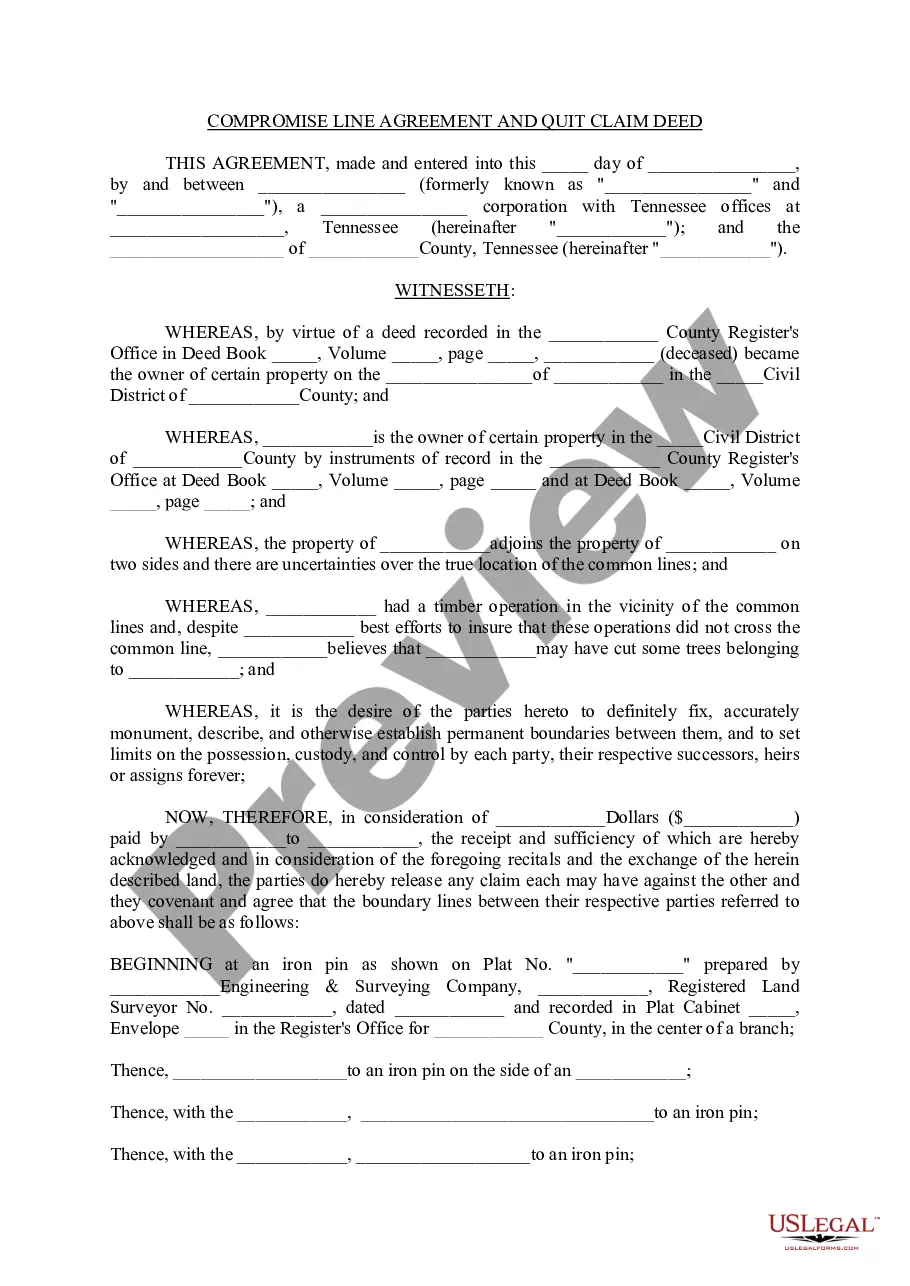
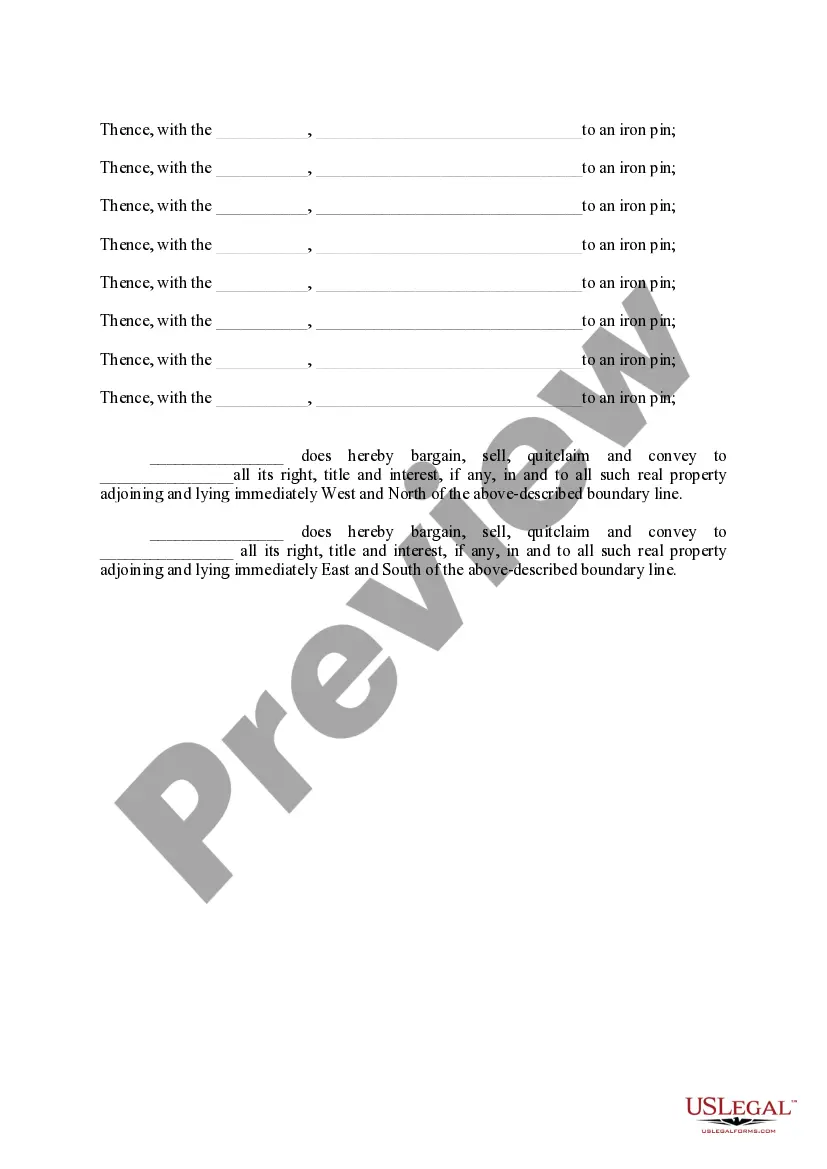
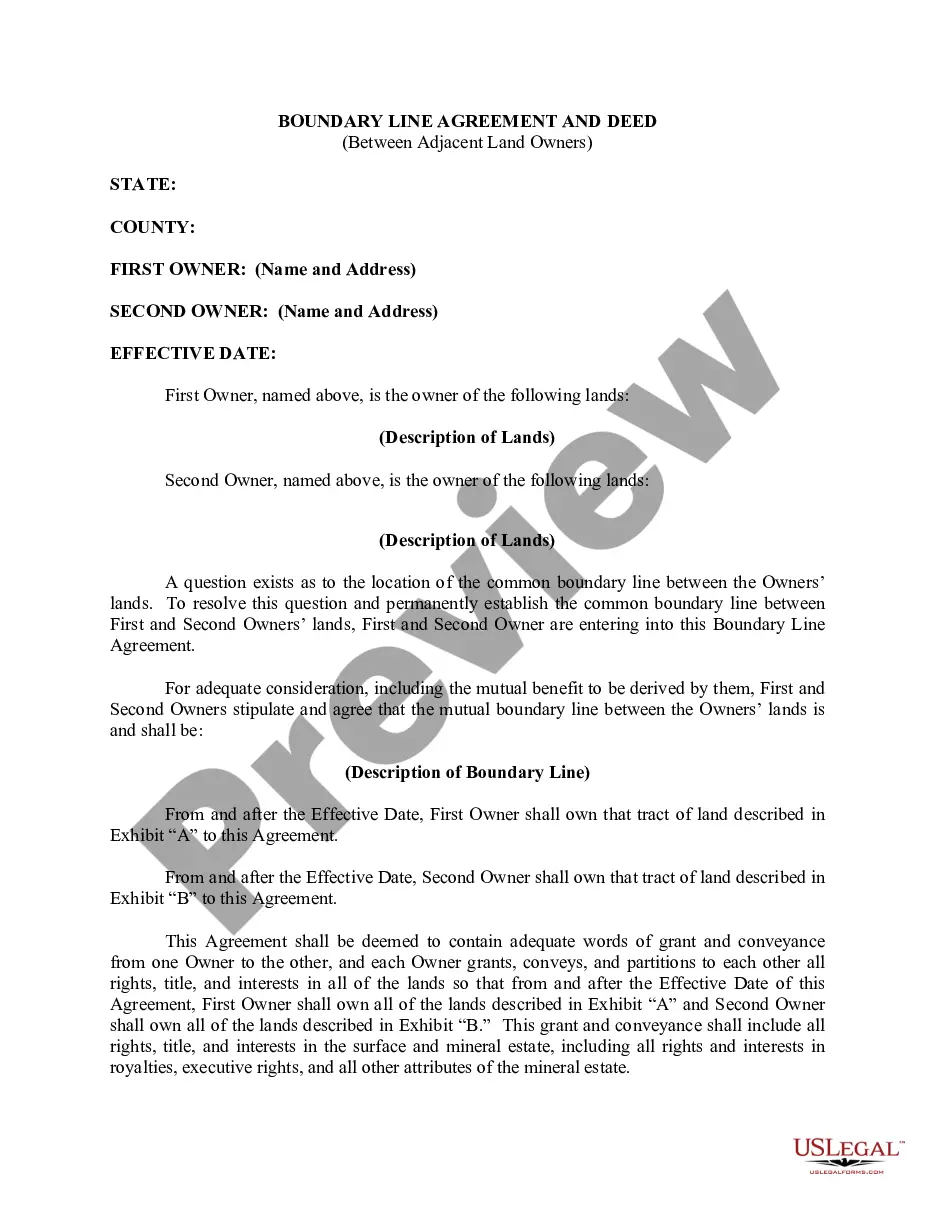
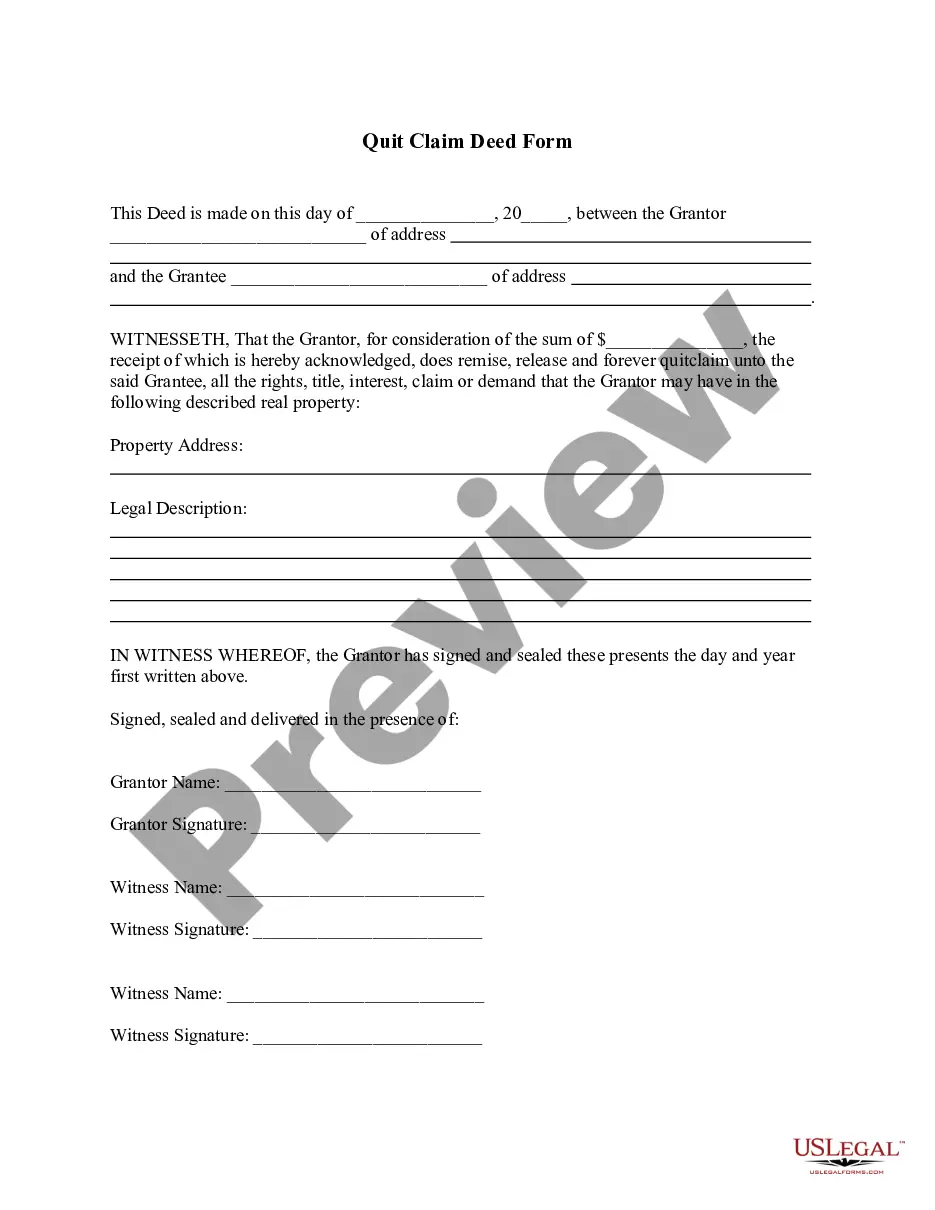
The Compromise Line Agreement and Quit Claim Deed is a legal document that outlines an agreement between two parties regarding the precise location of boundary lines between their properties. This form helps resolve uncertainties concerning property lines and includes a quitclaim deed where a corporation transfers its interest in the property to an individual. By establishing clear boundaries, this form protects both parties' rights and interests in the adjoining land, ensuring a mutual understanding and lawful ownership.
What’s included in this form
- The date of the agreement and identification of the parties involved.
- Descriptions of the properties affected, including deed references and civil districts.
- A detailed recount of the uncertainties regarding common lines and potential encroachments.
- Specific boundary definitions indicated with starting points and geographical references.
- The monetary consideration exchanged between parties.
- Signature blocks for all parties and notary acknowledgment.



Common use cases
This form should be used when two property owners are in disagreement about the precise location of common property lines. It is particularly useful in situations where there is uncertainty or potential boundary disputes, such as when one party believes their property has been encroached upon by another. By using this form, parties can clarify property boundaries and avoid future conflicts.
Who can use this document
- Individuals or corporations who own adjacent properties with disputed boundary lines.
- Property owners who have previously engaged in actions that may have affected their neighborâs property rights.
- Real estate professionals facilitating property transfers where boundary issues need formal resolution.
Steps to complete this form
- Identify the parties involved, including the corporation and individual.
- Provide a clear description of the properties in question, referencing applicable deeds.
- Clearly state the monetary consideration exchanged between the parties.
- Define the agreed-upon boundary lines using precise geographical terms and references.
- Ensure all parties sign the document in front of a notary public to validate the agreement.
Notarization guidance
Yes, this form must be notarized to be legally valid. Notarization helps confirm the identities of the parties signing the document and ensures that the agreement is executed correctly. US Legal Forms offers integrated online notarization, available 24/7, on secure video calls for added convenience.
Get your form ready online
Our built-in tools help you complete, sign, share, and store your documents in one place.
Make edits, fill in missing information, and update formatting in US Legal Forms—just like you would in MS Word.
Download a copy, print it, send it by email, or mail it via USPS—whatever works best for your next step.
Sign and collect signatures with our SignNow integration. Send to multiple recipients, set reminders, and more. Go Premium to unlock E-Sign.
If this form requires notarization, complete it online through a secure video call—no need to meet a notary in person or wait for an appointment.
We protect your documents and personal data by following strict security and privacy standards.

Make edits, fill in missing information, and update formatting in US Legal Forms—just like you would in MS Word.

Download a copy, print it, send it by email, or mail it via USPS—whatever works best for your next step.

Sign and collect signatures with our SignNow integration. Send to multiple recipients, set reminders, and more. Go Premium to unlock E-Sign.

If this form requires notarization, complete it online through a secure video call—no need to meet a notary in person or wait for an appointment.

We protect your documents and personal data by following strict security and privacy standards.
Typical mistakes to avoid
- Failing to accurately describe property boundaries, which can lead to future disputes.
- Not having the form notarized, which may impede its enforceability.
- Leaving out critical details such as deed references or the consideration amount.
- Neglecting to include all parties who have an interest in the property.
Why complete this form online
- Easy access to templates drafted by licensed attorneys ensures legal compliance.
- Convenient editing features allow customization according to specific circumstances.
- Cost-effective compared to hiring an attorney for document preparation.
- Quick availability, allowing users to download and complete the form at their convenience.
Looking for another form?
Form popularity
FAQ
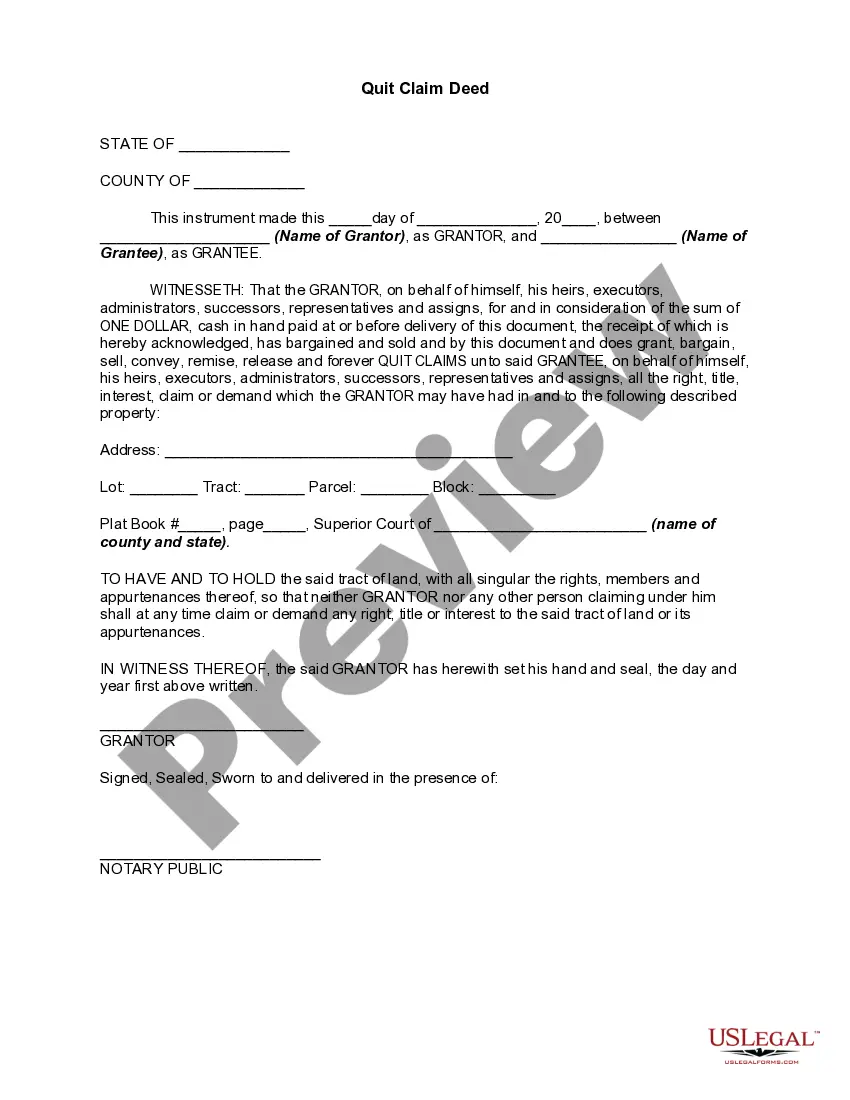
A quitclaim deed is dangerous if you don't know anything about the person giving you the property. You should be sure that a person actually has rights to a property before signing it over with a quitclaim deed.
A quitclaim deed is quick and easy because it transfers all of one person's interest in the property to another.The deed transfers all claims the seller has to the property, if any. If the seller has no interest in the real estate, no interest is transferred.
Quitclaim deeds are most often used to transfer property between family members. Examples include when an owner gets married and wants to add a spouse's name to the title or deed, or when the owners get divorced and one spouse's name is removed from the title or deed.
Quitclaim deeds are most often used to transfer property between family members. Examples include when an owner gets married and wants to add a spouse's name to the title or deed, or when the owners get divorced and one spouse's name is removed from the title or deed.
The drawback, quite simply, is that quitclaim deeds offer the grantee/recipient no protection or guarantees whatsoever about the property or their ownership of it. Maybe the grantor did not own the property at all, or maybe they only had partial ownership.
1 attorney answer Your mother's dementia does not, as a matter of law, make her incapable of executing a quitclaim deed. However, if your Power of Attorney was duly recorded and is a General Power of Attorney, you are the person who is the attorney in fact for...
A quitclaim deed transfers title but makes no promises at all about the owner's title.A person who signs a quitclaim deed to transfer property they do not own results in no title at all being transferred since there is no actual ownership interest. The quitclaim deed only transfers the type of title you own.
This can make it difficult to sell a home acquired with a quitclaim deed, but it certainly isn't impossible. To sell a home you received through a quitclaim deed, you will still need to transfer ownership using a warranty deed.
A quitclaim deed affects ownership and the name on the deed, not the mortgage. Because quitclaim deeds expose the grantee to certain risks, they are most often used between family members and where there is no exchange of money.Quitclaim deeds transfer title but do not affect mortgages.