South Carolina Notice and Certificate of Lien
About this form
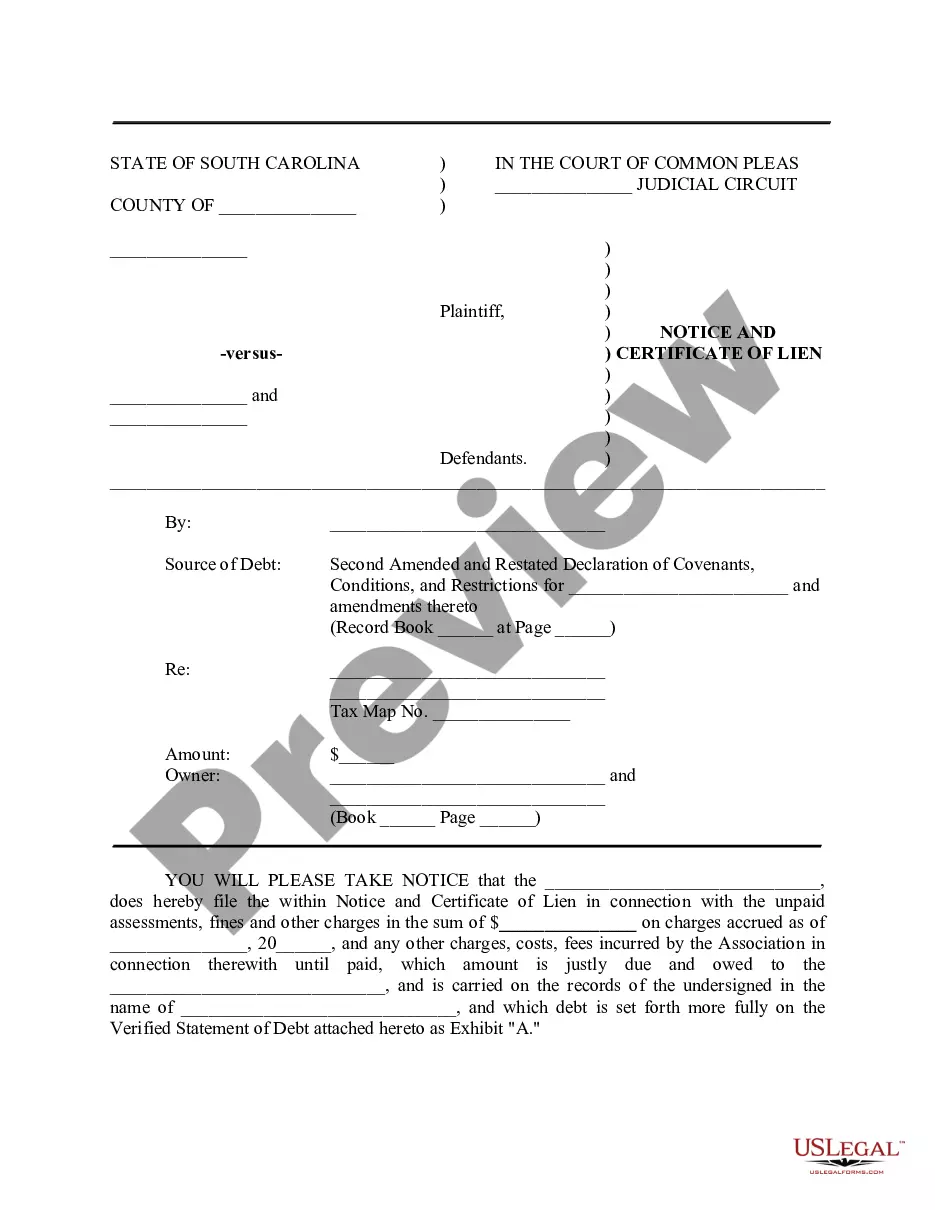
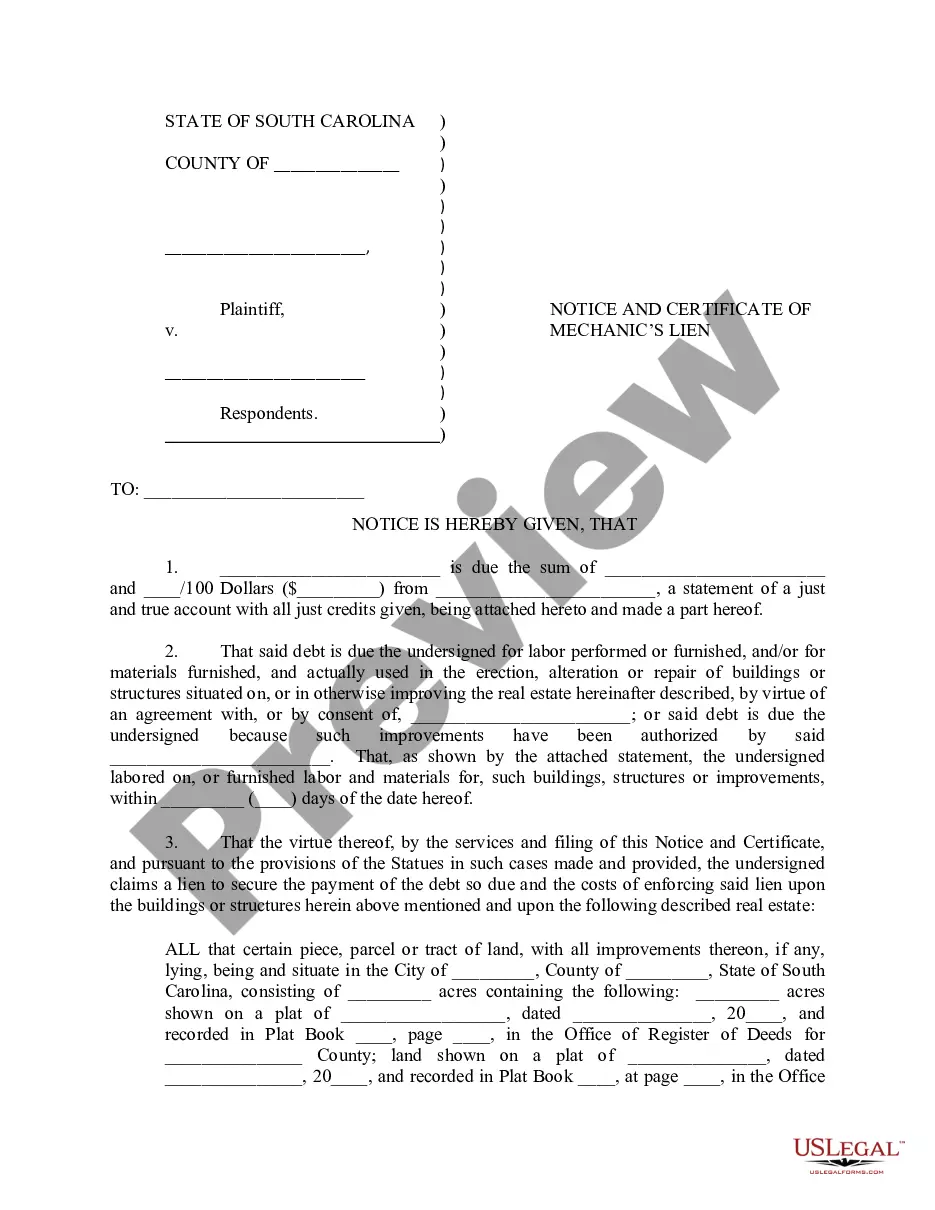
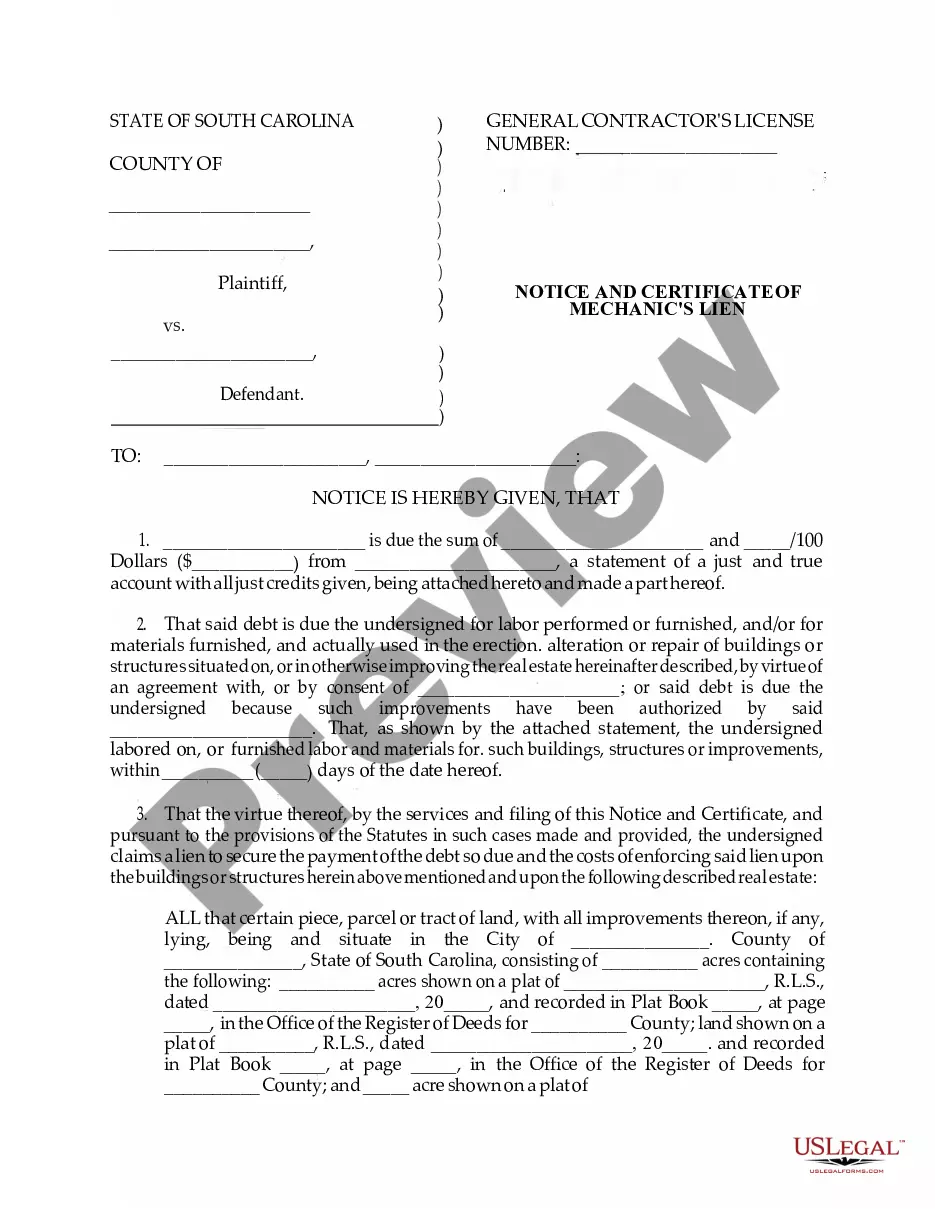
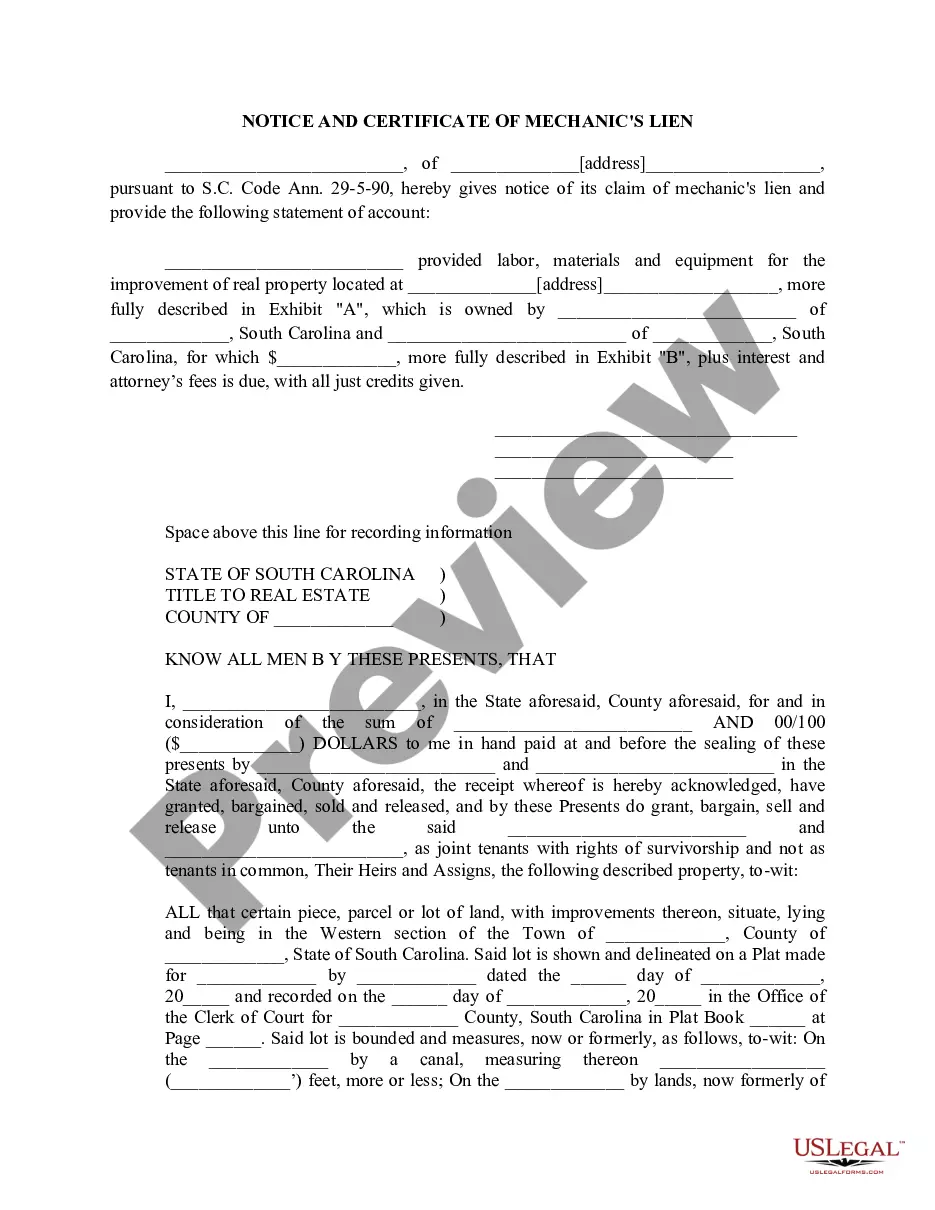
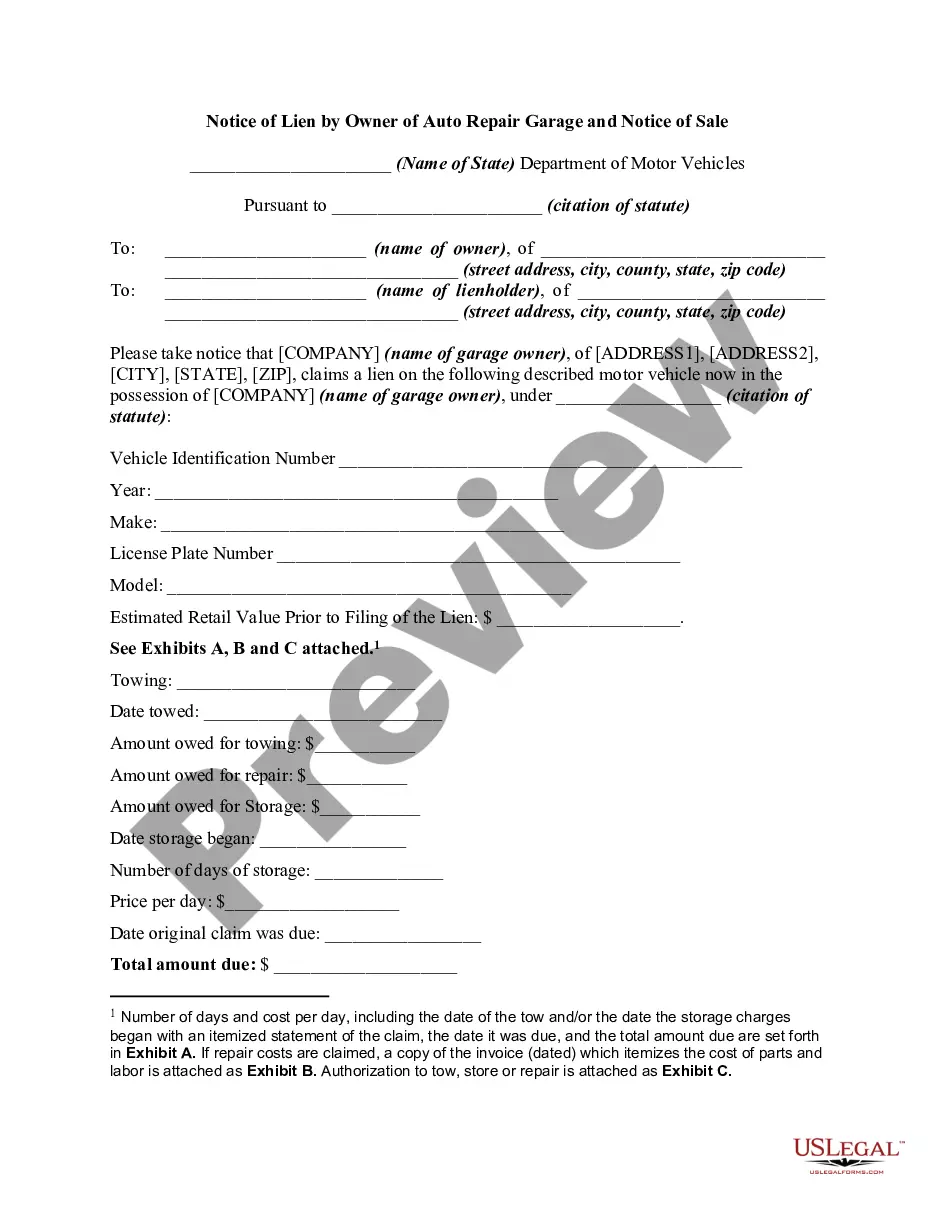
The Notice and Certificate of Lien is a legal document used to assert a claim against real property due to an unpaid debt. This form is typically filed by an individual or entity, claiming that the property owner owes a sum of money, such as unpaid assessments or fees. Unlike other lien forms, this document not only notifies the property owner of the lien, but also certifies the claim, providing a formal record of the debt on the property.
Form components explained
- Filing party: Identifies the individual or organization filing the lien.
- Source of debt: Specifies the basis for the lien, including any relevant documents.
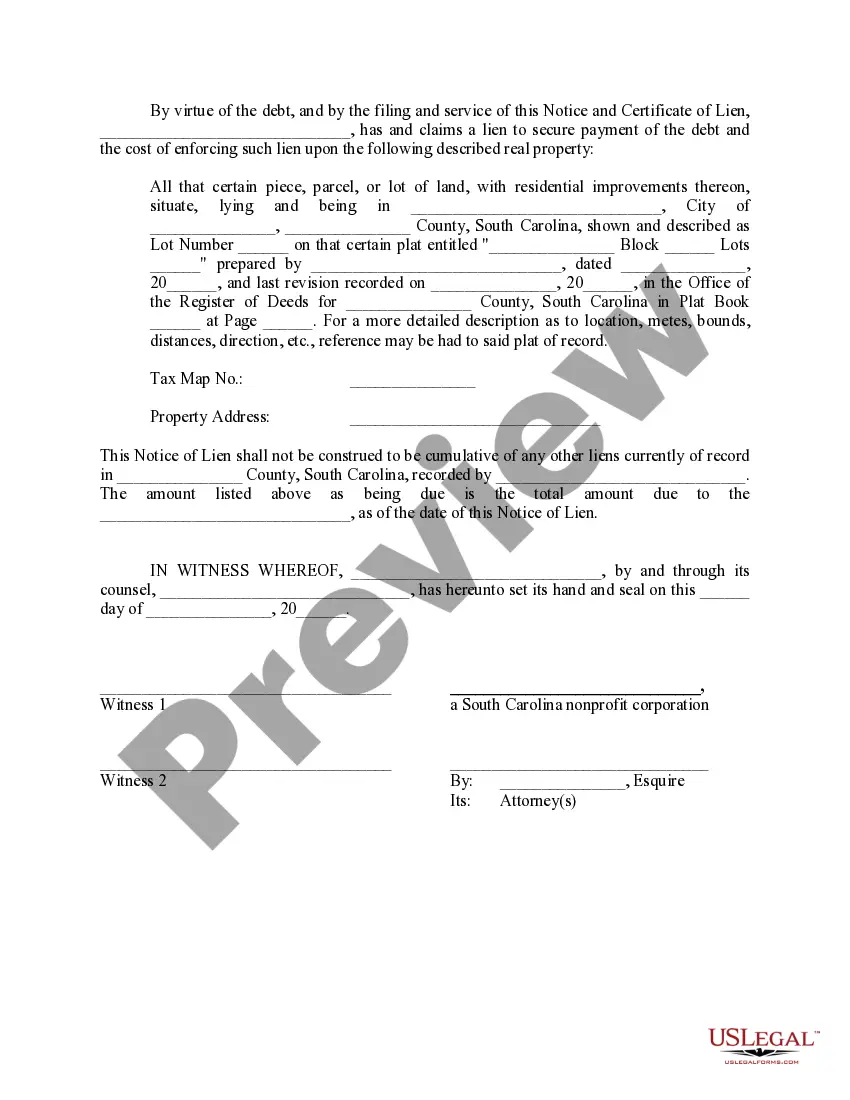
- Property description: Provides a detailed description of the real property subject to the lien.
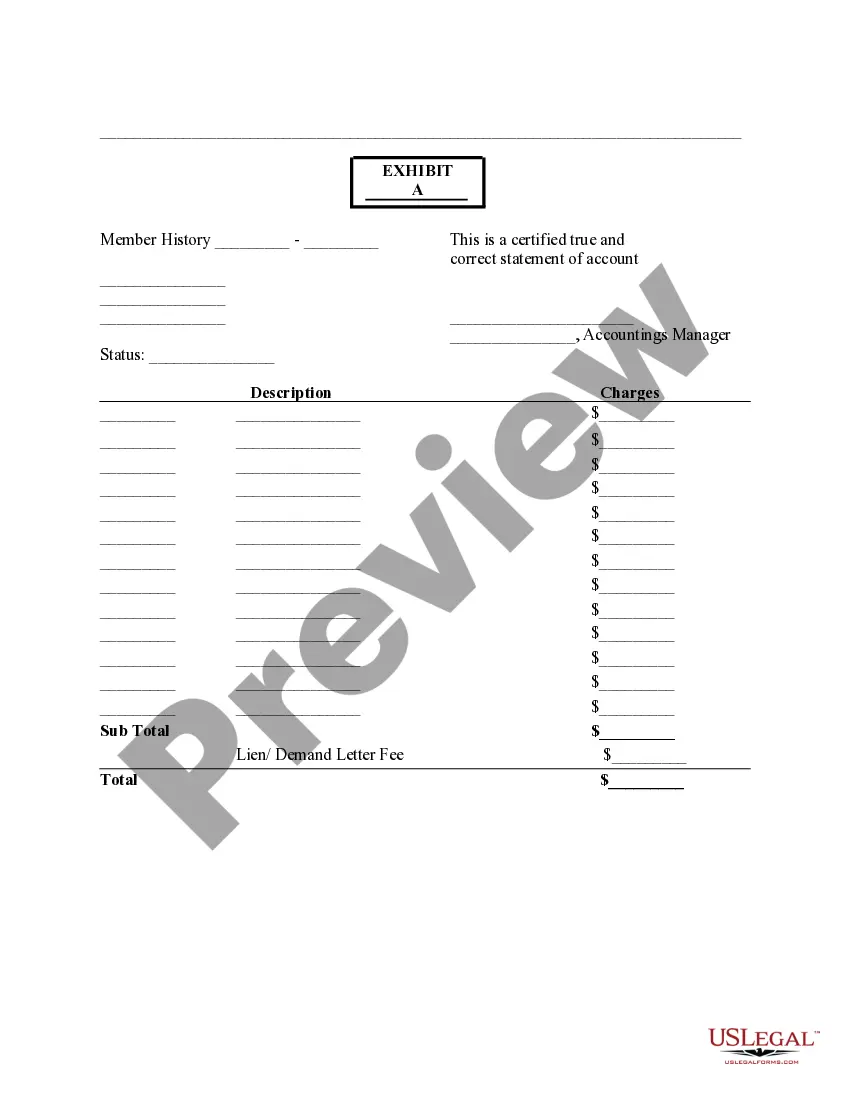
- Debt amount: States the total amount owed and any applicable fees.
- Signatures: Requires signatures from the filing partyâs authorized representatives and witnesses.
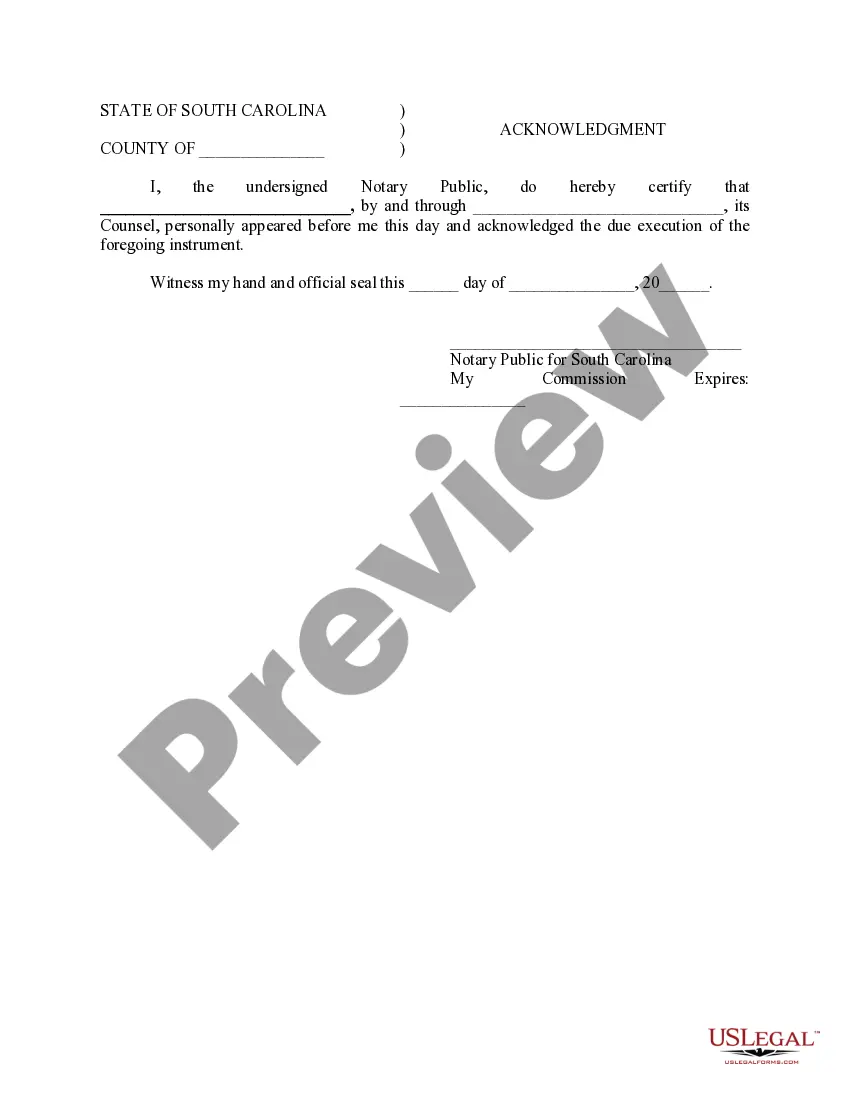
- Notary acknowledgment: Certifies the execution of the document before a notary public.
Situations where this form applies
This form should be used when a creditor needs to establish a legal claim (lien) against a property owner for debts owed. It is applicable in situations such as unpaid homeowners' association fees, contractor payments, or any situation where a party wishes to secure a debt against real estate. Filing this lien can help ensure that the debt is paid before the property can be sold or refinanced.
Who this form is for
This form is intended for:
- Individuals or entities that hold a legal claim against a property due to unpaid obligations.
- Homeownersâ associations seeking to recover unpaid dues from members.
- Contractors or suppliers who wish to enforce payment for services rendered on real property.
- Attorneys representing clients with a legitimate claim against property owners.
Steps to complete this form
- Identify the parties: List the names of the plaintiff and defendants.
- Specify the property: Enter the legal description of the property, including the tax map number.
- Detail the debt: Provide the total amount owed, breaking down the charges and any applicable fees.
- Include the source of debt: Mention the relevant agreements or declarations that establish the obligation.
- Collect signatures: Ensure the necessary parties sign and date the document, along with witnesses.
- Obtain notarization: Have the executed form notarized to comply with legal requirements.
Does this document require notarization?
Yes, this form must be notarized to be legally valid. The document requires notarization to confirm the identities of the parties involved and to ensure the execution is duly recorded. US Legal Forms offers 24/7 online notarization services, allowing you to complete this requirement securely via video call without the need for travel.
Get your form ready online
Our built-in tools help you complete, sign, share, and store your documents in one place.
Make edits, fill in missing information, and update formatting in US Legal Forms—just like you would in MS Word.
Download a copy, print it, send it by email, or mail it via USPS—whatever works best for your next step.
Sign and collect signatures with our SignNow integration. Send to multiple recipients, set reminders, and more. Go Premium to unlock E-Sign.
If this form requires notarization, complete it online through a secure video call—no need to meet a notary in person or wait for an appointment.
We protect your documents and personal data by following strict security and privacy standards.

Make edits, fill in missing information, and update formatting in US Legal Forms—just like you would in MS Word.

Download a copy, print it, send it by email, or mail it via USPS—whatever works best for your next step.

Sign and collect signatures with our SignNow integration. Send to multiple recipients, set reminders, and more. Go Premium to unlock E-Sign.

If this form requires notarization, complete it online through a secure video call—no need to meet a notary in person or wait for an appointment.

We protect your documents and personal data by following strict security and privacy standards.
Avoid these common issues
- Failing to accurately describe the property, which can lead to challenges in enforcement.
- Omitting signatures or dates, resulting in a potentially invalid lien.
- Not including the necessary supporting documents, like the verified statement of debt.
- Neglecting to check local recording fees or requirements, which can delay filing.
Why use this form online
- Convenience: Easily download the form from anywhere, at any time.
- Editability: Customize the form with your specific information before printing.
- Legitimate format: Ensure your document meets legal standards without the need for complex legal knowledge.
Looking for another form?

Form popularity
FAQ
To perfect a mechanic's lien, the contractor, subcontractor, or supplier must file a notice of mechanic's lien with the Register of Deeds or Clerk of Court of the county where the real property is located and serve the property owner with notice and a copy of the lien within 90 days of the completion of the work. S.C.
With the judgment in hand, a judgment creditor can place a judgment lien on your real estate and occasionally on personal property depending on the state in which you live.
To perfect a mechanic's lien, the contractor, subcontractor, or supplier must file a notice of mechanic's lien with the Register of Deeds or Clerk of Court of the county where the real property is located and serve the property owner with notice and a copy of the lien within 90 days of the completion of the work. S.C.
A mortgage creates a lien on your property that gives the lender the right to foreclose and sell the home to satisfy the debt. A deed of trust (sometimes called a trust deed) is also a document that gives the lender the right to sell the property to satisfy the debt should you fail to pay back the loan.
A South Carolina mechanics' lien claim must be filed within 90 days after completion of the contractors work. A lawsuit to foreclose upon the South Carolina construction lien must be brought no later than 6 months after the claimant ceases to furnish labor or materials.
Under South Carolina law, if this is your homestead, you can exemptor keep$53,375 in equity. And you have less than that amount, so you're golden as far as your homestead exemption goes.
In South Carolina, a claimant who has filed a mechanics lien will have 6 months from the last day on which the claimant furnished labor and/or materials to the project to enforce their lien.
As South Carolina is not a tax lien state, buyers purchase an interest in land, rather than a lien. Investors usually receive anywhere from 3% - 12% back in interest or receive the deed outright on the property. For those looking for ROI in a short time period, tax sales are certainly something to consider.