New Jersey Complaint for Annulment
What this document covers
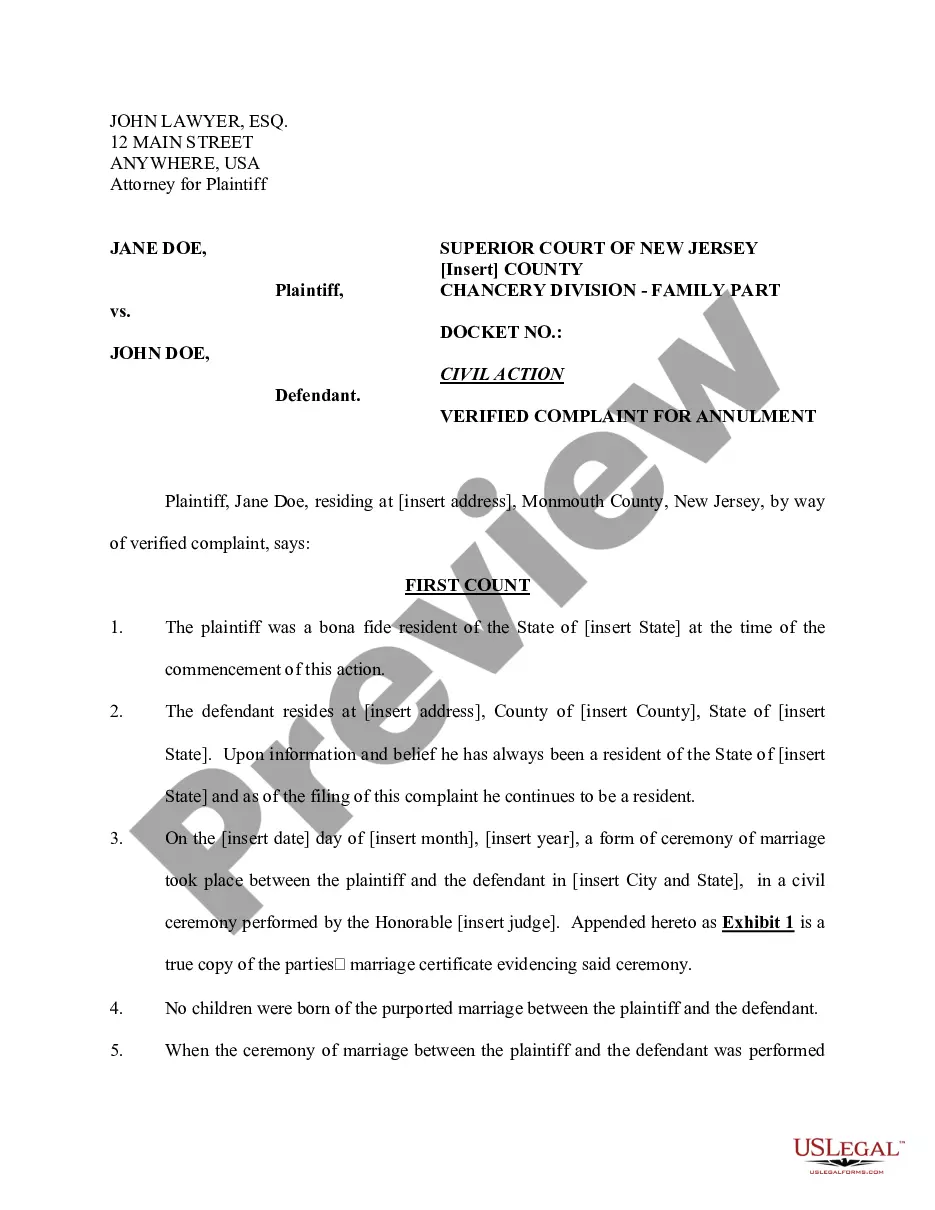
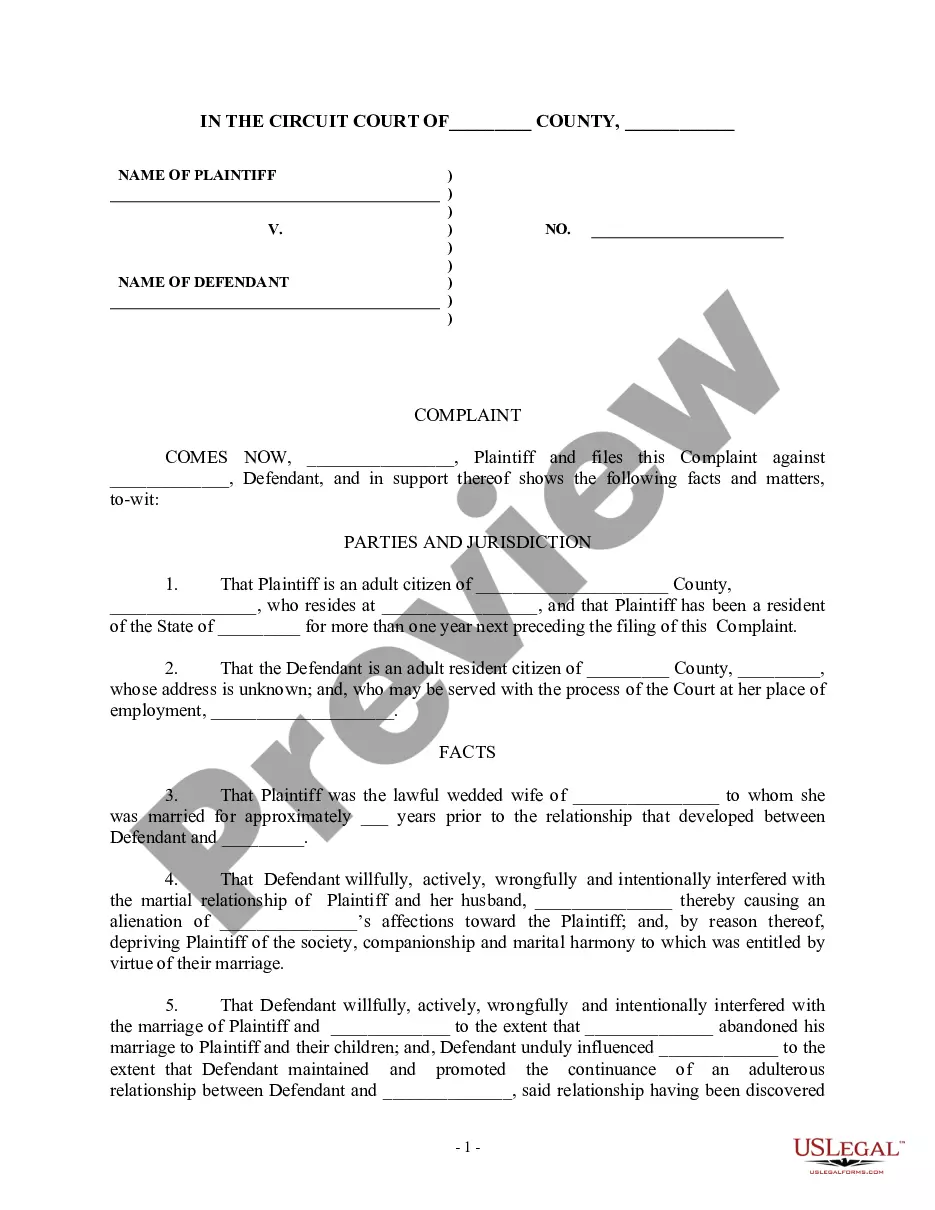
The Complaint for Annulment is a legal document filed in court to seek the annulment of a marriage. This form allows the plaintiff to initiate proceedings against the defendant, asserting that the marriage should be declared null and void. Unlike a divorce, an annulment declares that the marriage never legally existed, usually based on factors such as fraud, incapacity, or lack of consent.
Key components of this form
- Identification of the parties involved (plaintiff and defendant).
- Jurisdiction information indicating the court's authority to hear the case.
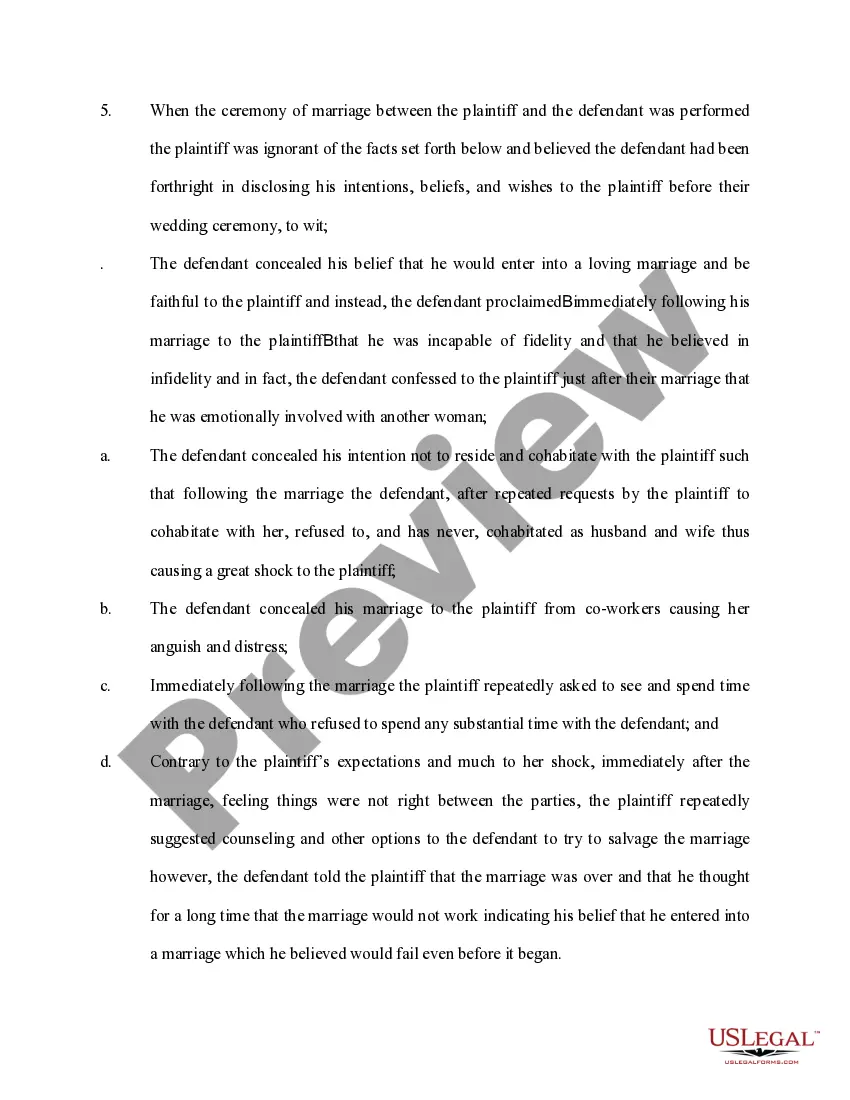
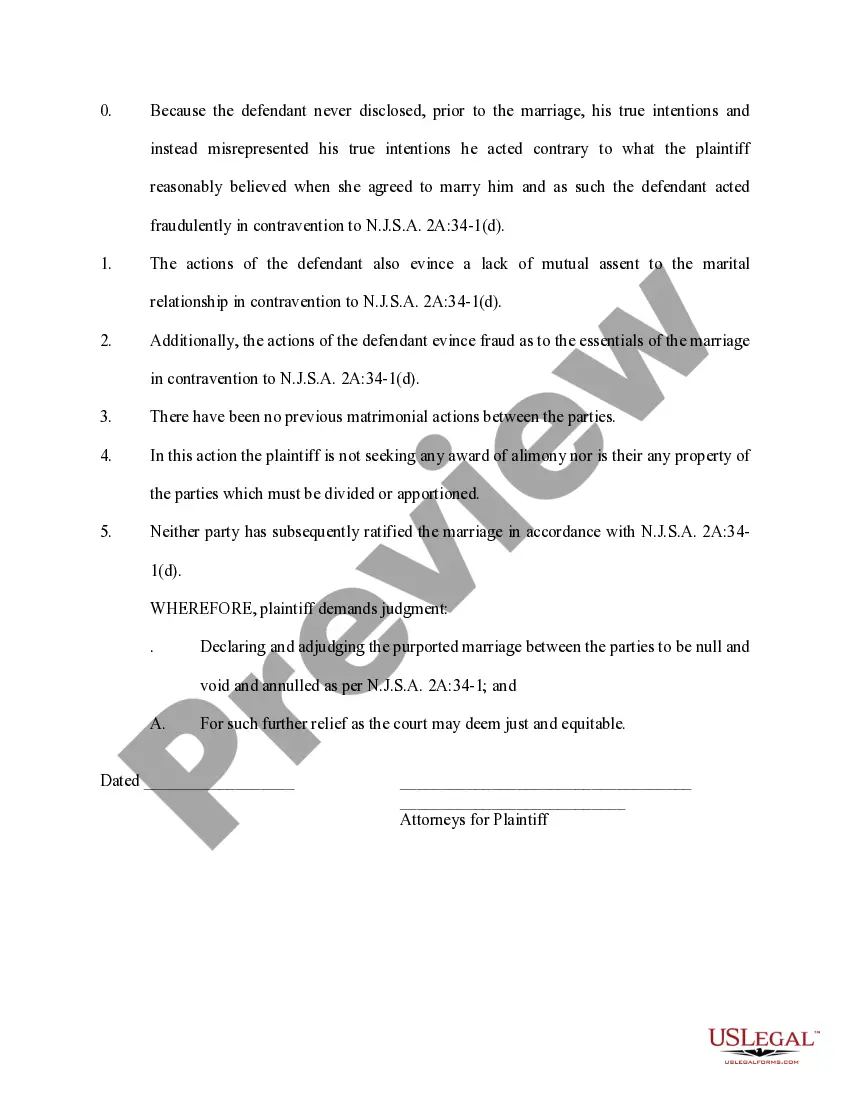
- The grounds for annulment, including any fraudulent misrepresentations.
- A statement regarding the absence of children from the marriage.
- A request for the court to declare the marriage annulled.
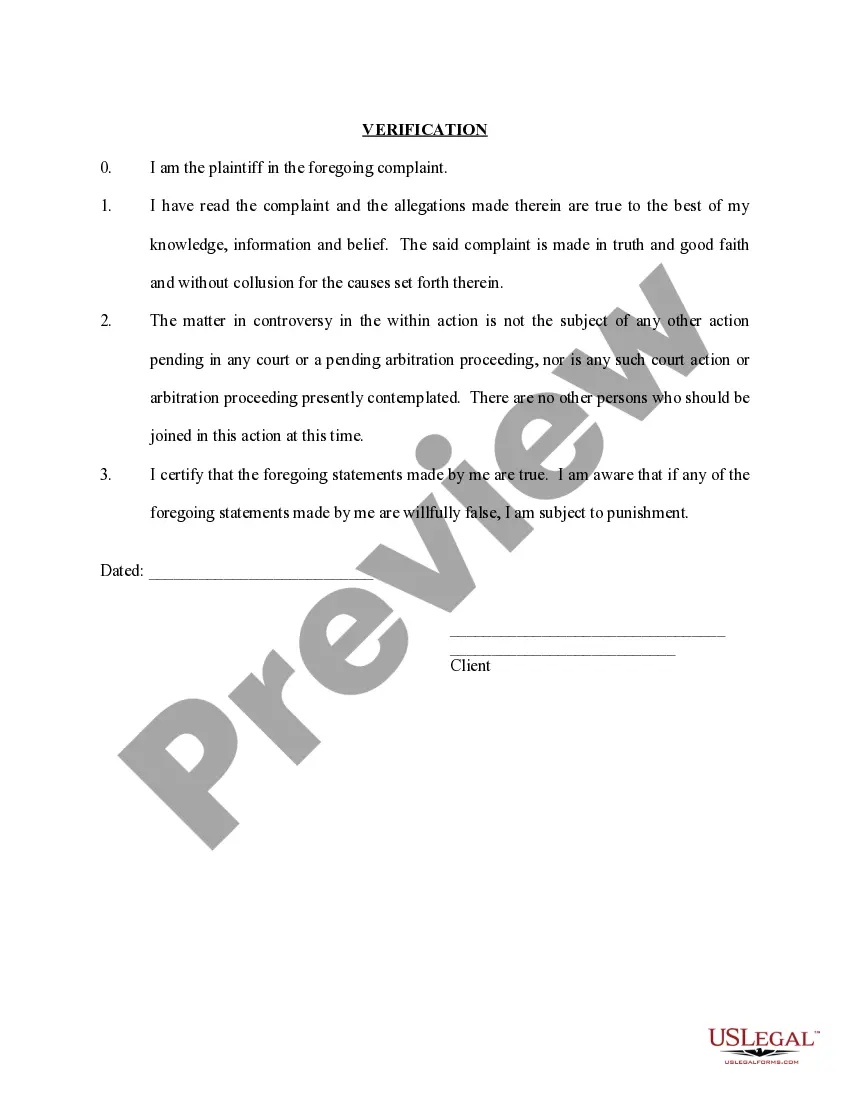
- Verification by the plaintiff confirming the truthfulness of the allegations.

Common use cases
This form should be used when an individual believes that their marriage is invalid due to specific reasons, such as fraud or lack of consent. Common situations include discovering that a spouse concealed important information before the marriage, such as an inability to be faithful or previous marital status. It may also be appropriate if one party was not of sound mind during the marriage ceremony.
Who needs this form
This form is intended for:
- Individuals seeking to annul their marriage based on legal grounds.
- People who have experienced misrepresentation or concealed information from their spouse.
- Residents of New Jersey who wish to file for annulment in the Superior Court.
Instructions for completing this form
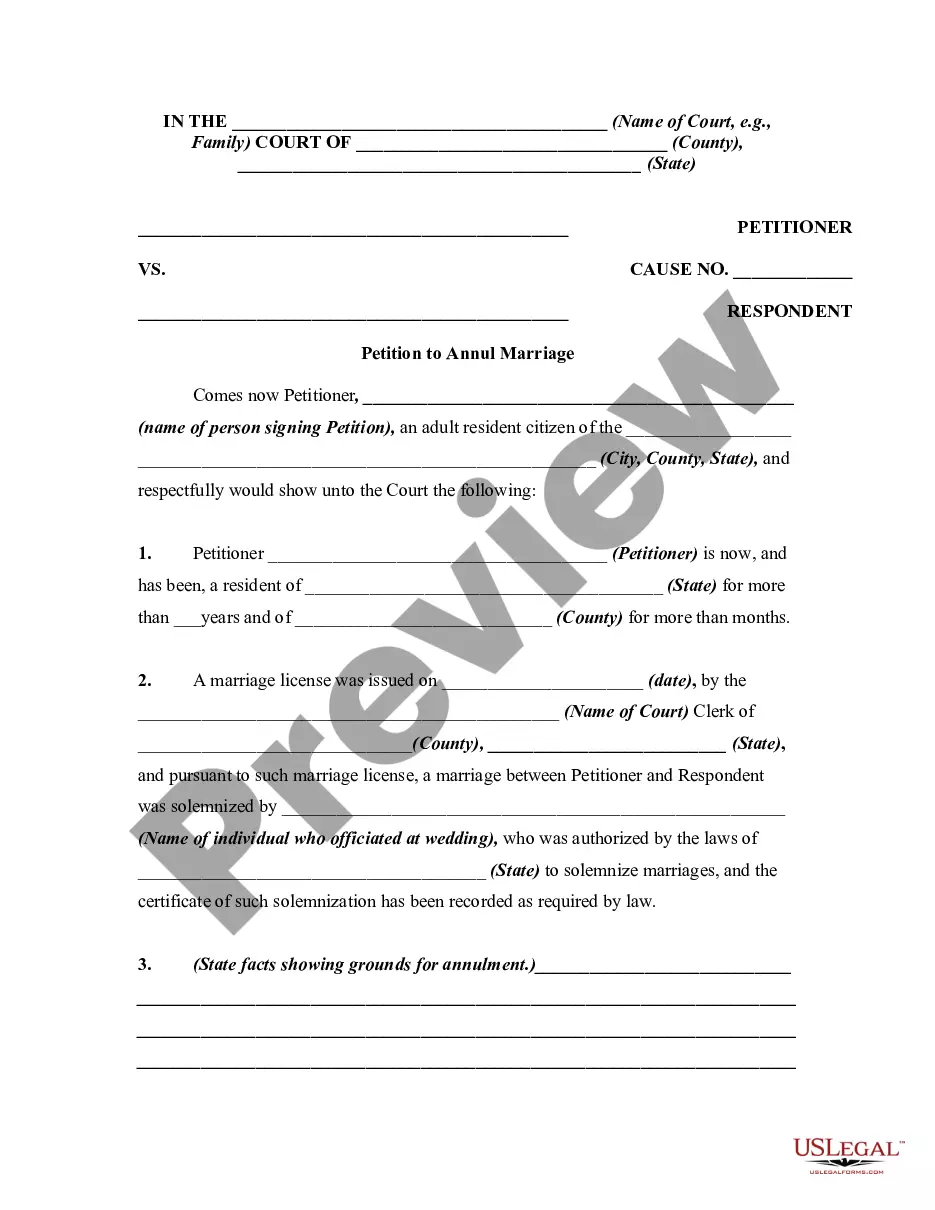
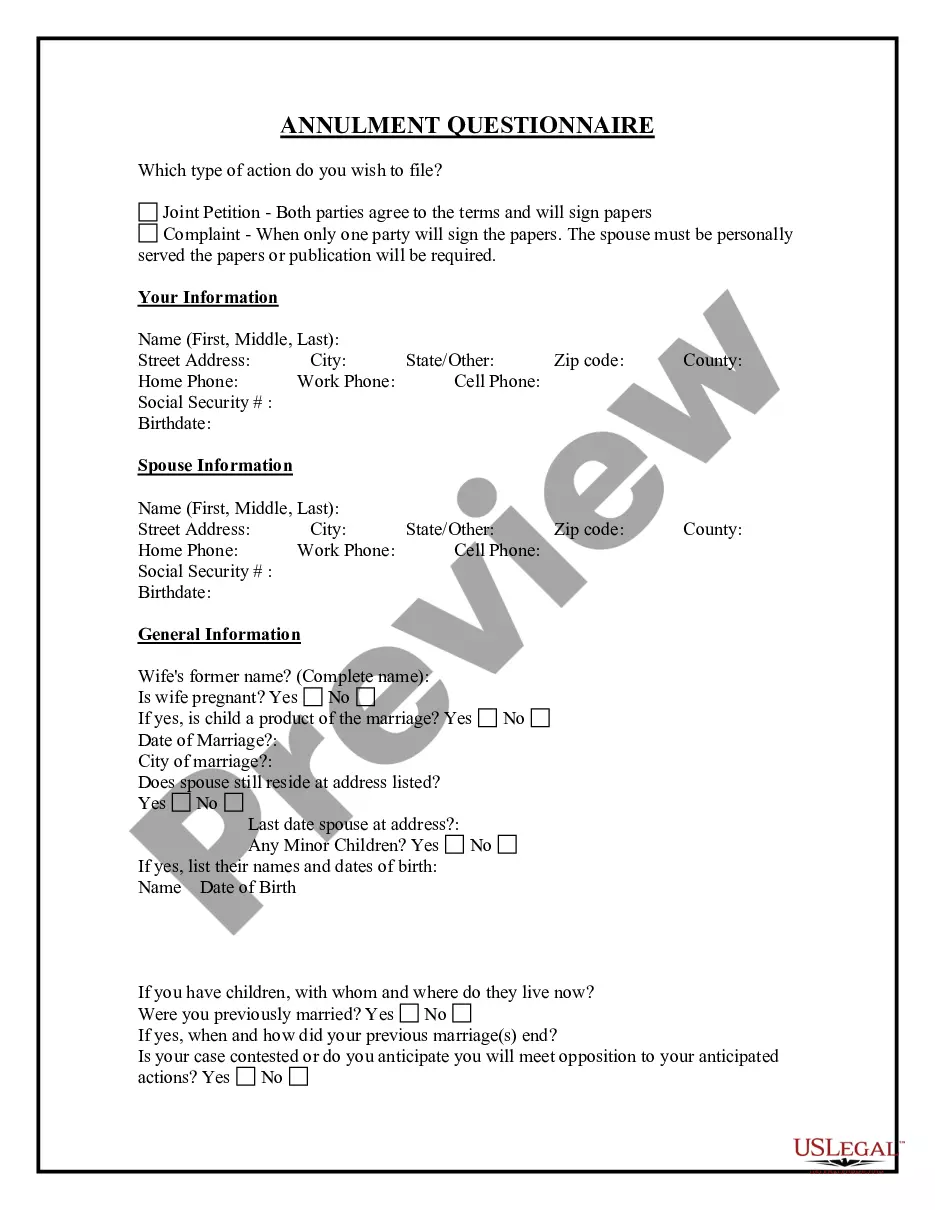
- Fill in the names and addresses of both the plaintiff and defendant.
- Insert relevant details about the marriage, including the date and location of the ceremony.
- Detail the specific reasons for seeking the annulment, citing any fraudulent actions by the defendant.
- Sign and date the verification section to affirm the truth of the statements made in the complaint.
- File the completed form with the appropriate court in the jurisdiction where you or your spouse resides.
Does this document require notarization?
Notarization is required for this form to take effect. Our online notarization service, powered by Notarize, lets you verify and sign documents remotely through an encrypted video session, available 24/7.
Get your form ready online
Our built-in tools help you complete, sign, share, and store your documents in one place.
Make edits, fill in missing information, and update formatting in US Legal Forms—just like you would in MS Word.
Download a copy, print it, send it by email, or mail it via USPS—whatever works best for your next step.
Sign and collect signatures with our SignNow integration. Send to multiple recipients, set reminders, and more. Go Premium to unlock E-Sign.
If this form requires notarization, complete it online through a secure video call—no need to meet a notary in person or wait for an appointment.
We protect your documents and personal data by following strict security and privacy standards.

Make edits, fill in missing information, and update formatting in US Legal Forms—just like you would in MS Word.

Download a copy, print it, send it by email, or mail it via USPS—whatever works best for your next step.

Sign and collect signatures with our SignNow integration. Send to multiple recipients, set reminders, and more. Go Premium to unlock E-Sign.

If this form requires notarization, complete it online through a secure video call—no need to meet a notary in person or wait for an appointment.

We protect your documents and personal data by following strict security and privacy standards.
Common mistakes
- Failing to provide accurate information about the marriage ceremony.
- Not including all necessary details regarding the grounds for annulment.
- Neglecting to properly sign and date the verification section.
- Filing the complaint in the incorrect court jurisdiction.
Why complete this form online
- Convenience of completing the form from home without the need for legal office visits.
- Accessibility of downloadable templates that can be filled out at your own pace.
- Reliability of forms drafted by licensed attorneys, ensuring compliance with state laws.
Legal use & context
- This form is used to formally annul a marriage, declaring it invalid from the outset.
- Plaintiffs should be aware that grounds for annulment must be adequately substantiated to succeed in court.
- Understanding the implications of annulment is crucial, as it can affect personal and legal status.
Key takeaways
- The Complaint for Annulment is used to declare a marriage invalid due to fraud or misrepresentation.
- Accurate and complete completion of the form is essential for legal validation.
- This form is specifically designed for residents of New Jersey, adhering to state law.
Looking for another form?

Form popularity
FAQ
It was not consummated - you have not had sexual intercourse with the person you married since the wedding (does not apply for same sex couples) you did not properly consent to the marriage - for example you were forced into it.
File an Answer only. An "Answer" tells the judge and your spouse what parts of the complaint you agree with and disagree with. File an Answer with a Counterclaim.
Both parties must sign the Decree of Annulment, and may be able to submit the Decree to the judge for approval without a hearing. Start at Step 2 below to get the annulment finalized this way.
You cannot simply challenge an annulment by telling the court that you wish to remain married. Rather, you are challenging the material representations made by the petitioner. For example, if the grounds for annulment are listed as fraud in the petition, you will need to argue that the fraud never occurred.
If either party is aggrieved by the decision, he or she is asked to contact the Judge in writing within three weeks to add his/her personal appeal. The Judge will then forward this request to the Court of Appeals.
You can annul a marriage for a number of reasons, such as: it was not consummated - you have not had sexual intercourse with the person you married since the wedding (does not apply for same sex couples) you did not properly consent to the marriage - for example you were forced into it.
You can get an annulment in New Jersey for any of the following grounds: you or your spouse was under age 18 at the time you married and since turning 18 you and your spouse have not had sexual relations. due to a mental condition or intoxication, you or your spouse was unable to comprehend that you were marrying.
However, sometimes annulments are denied, leaving you with little in the way of options. If your annulment is denied, you will have to go through the divorce process if you no longer want your marriage to be void. There are many reasons why your annulment may be denied.
The Decree of Annulment. The Decree of Annulment is the final order that includes all the terms of the annulment.If both parties are signing the Decree: The Decree of Annulment must include all of the agreements between you and your spouse. You both must sign the Decree of Annulment.