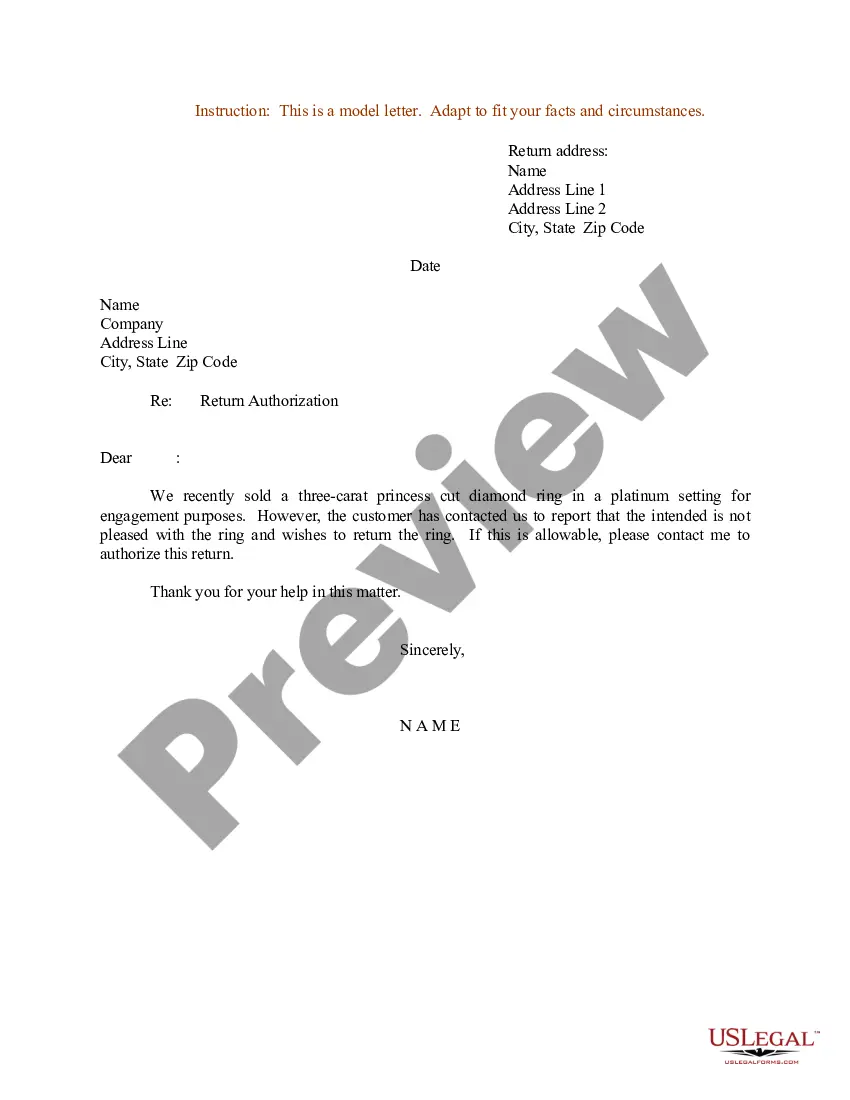
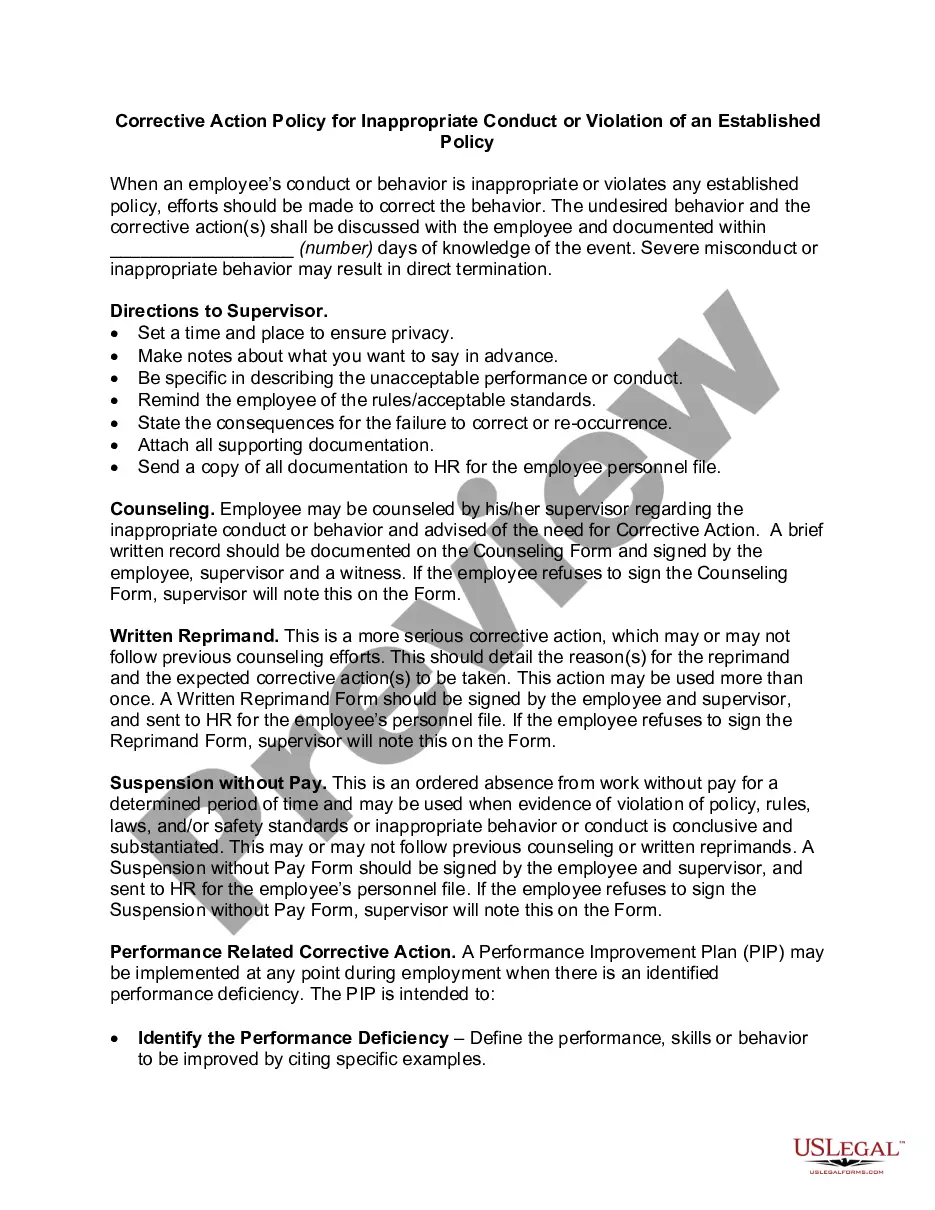
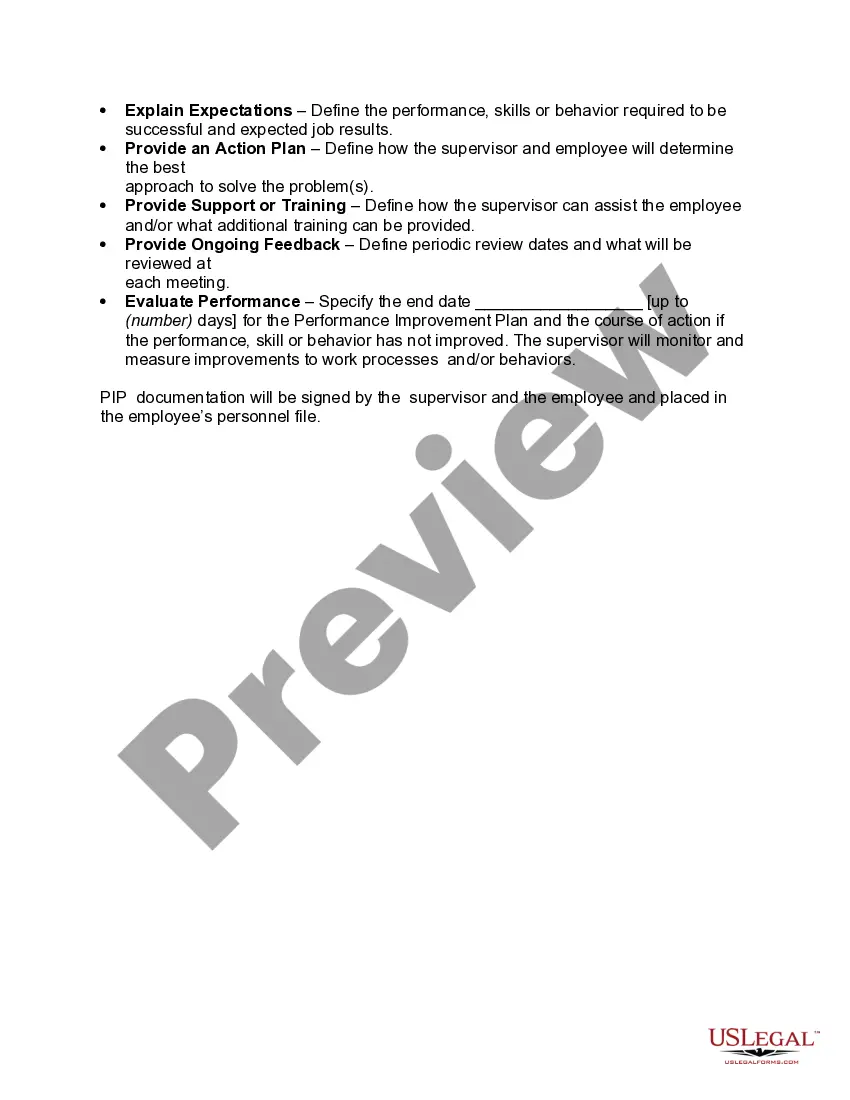
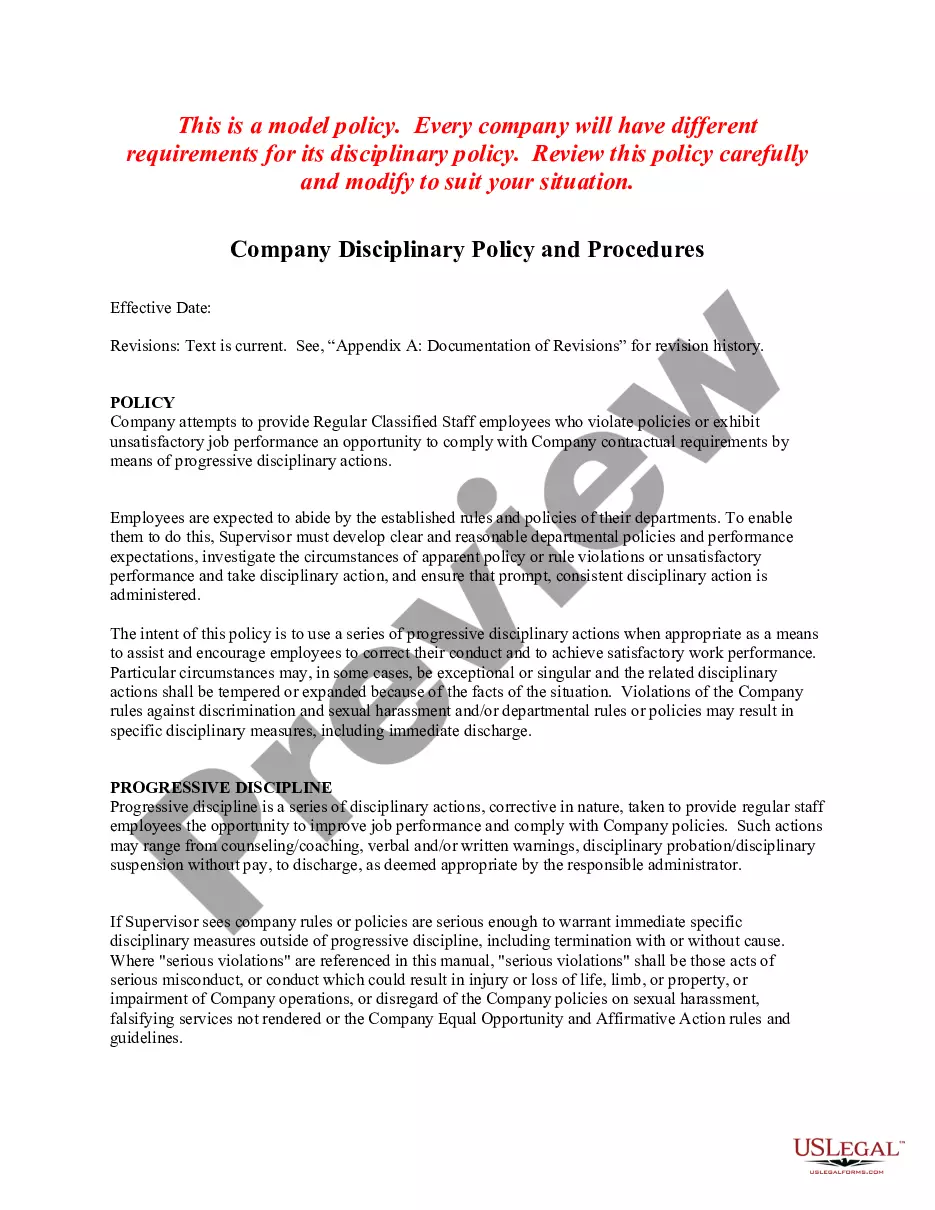
Mississippi Corrective Action Policy for Inappropriate Conduct or Violation of an Established Policy
Description
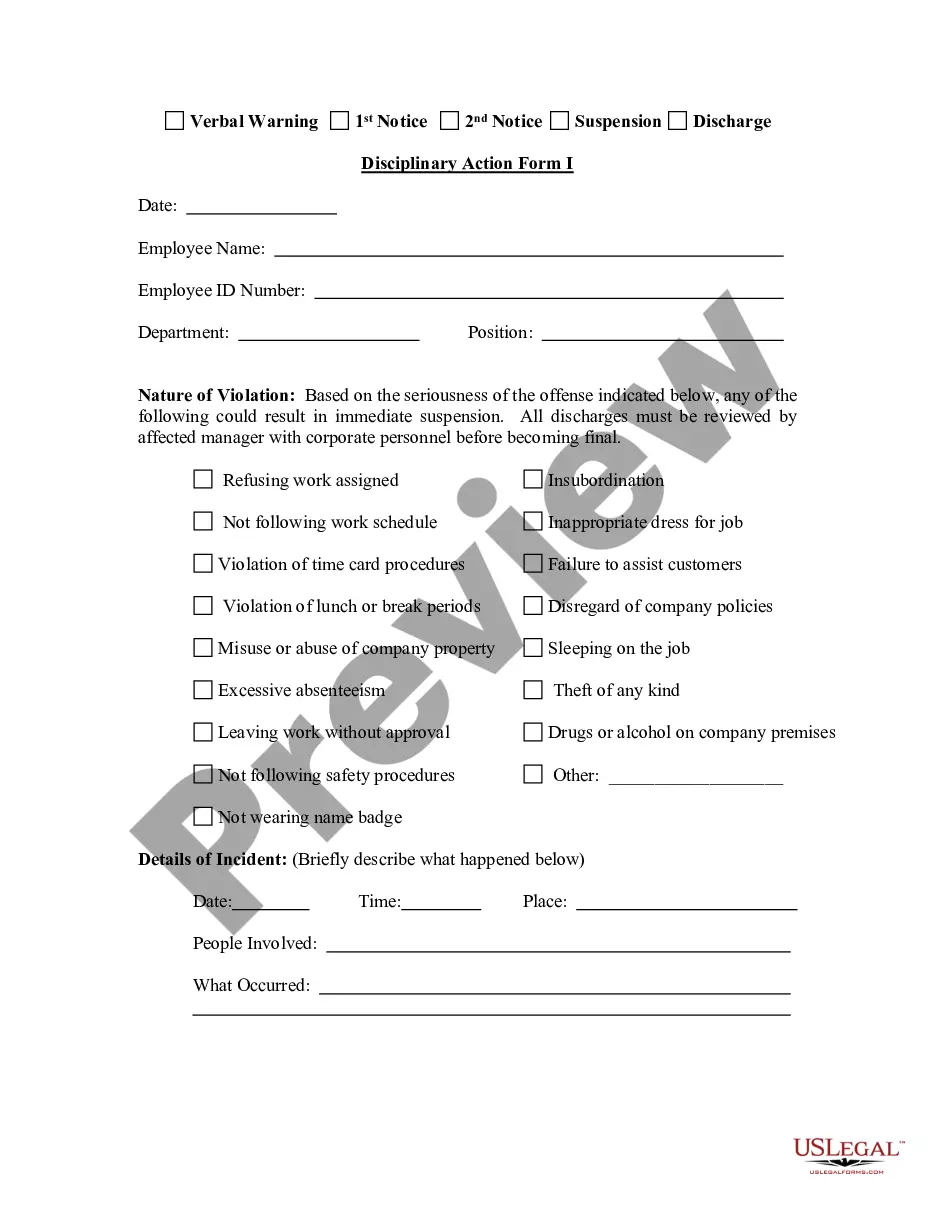
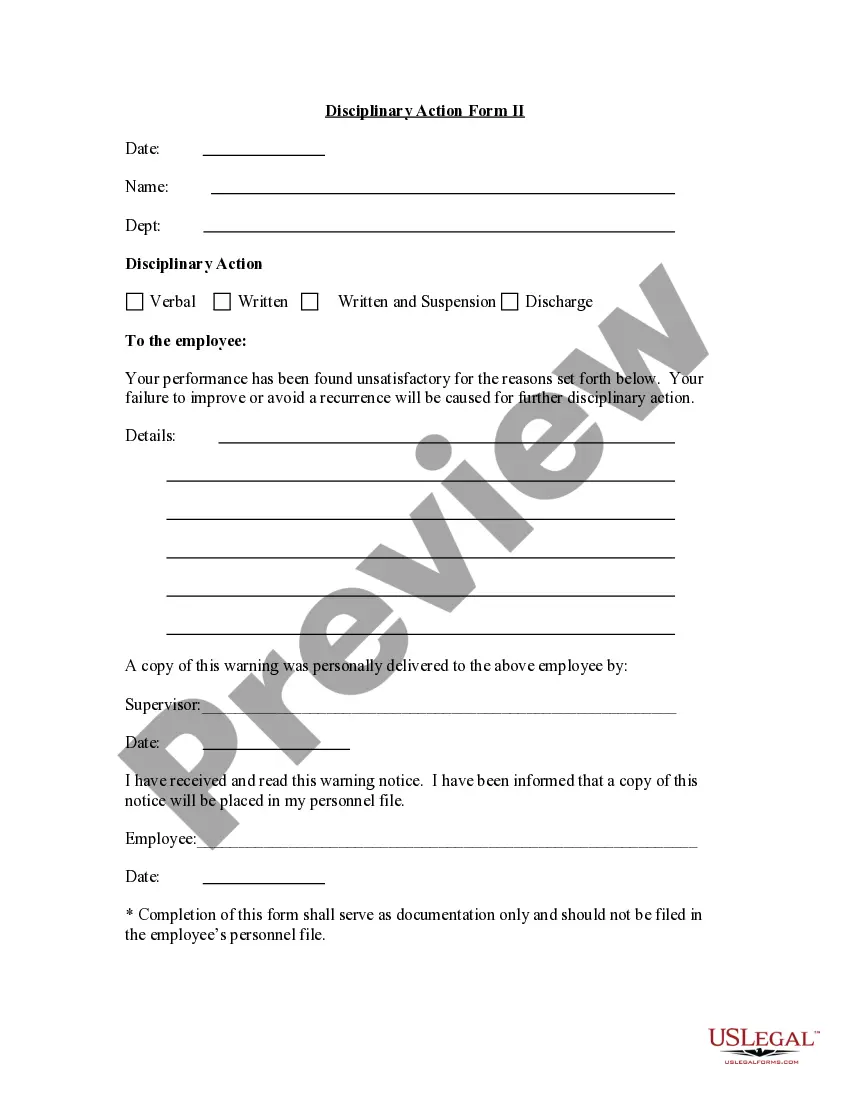
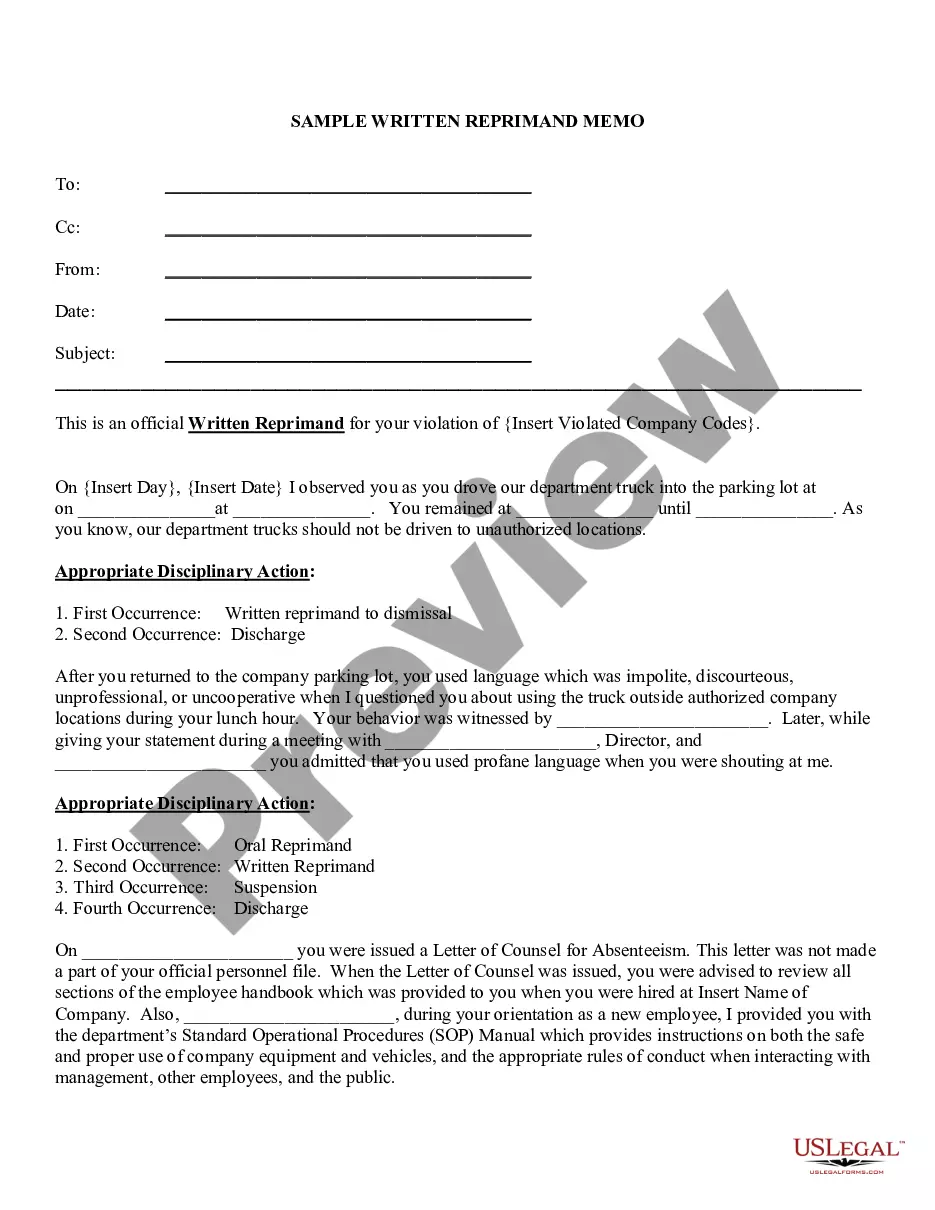
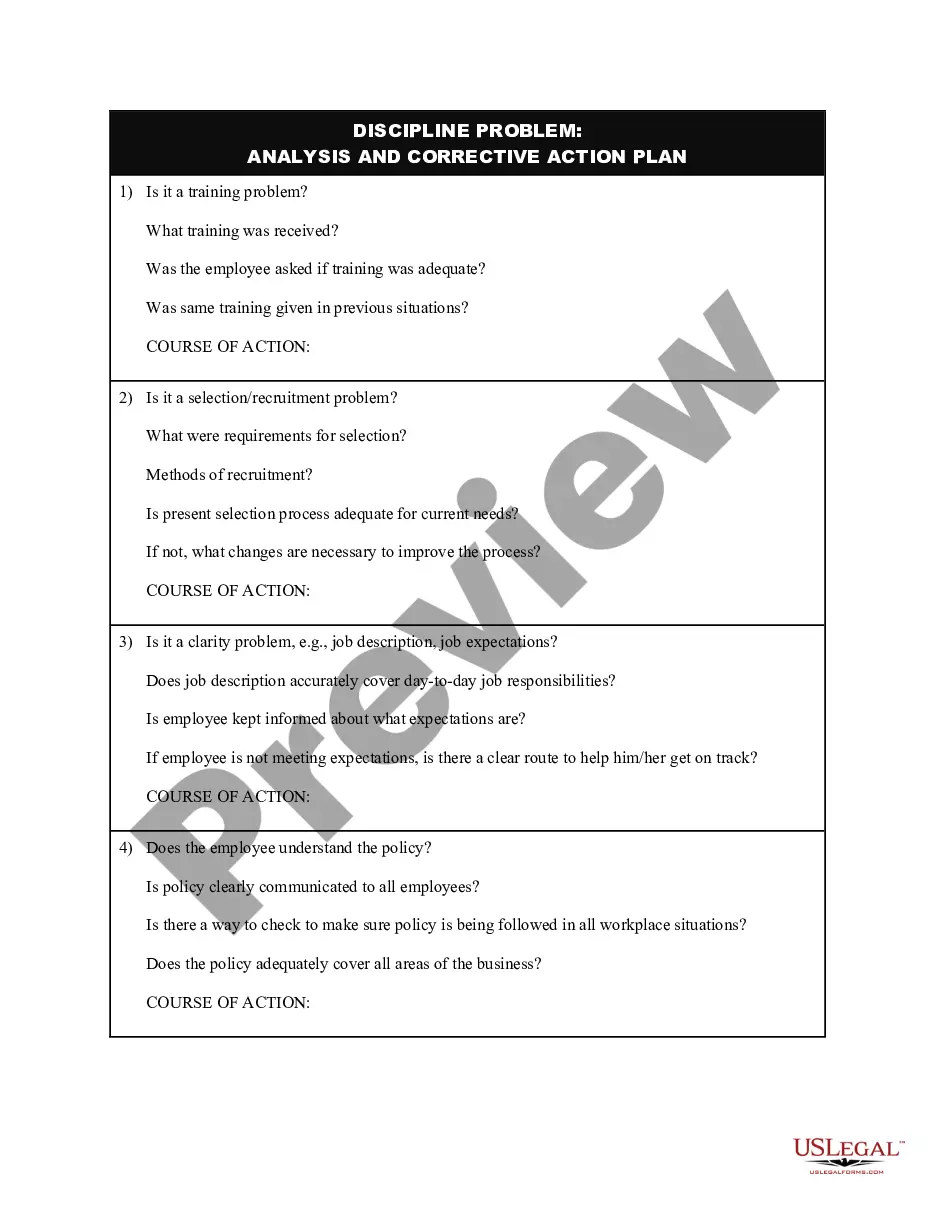
Get your form ready online
Our built-in tools help you complete, sign, share, and store your documents in one place.
Make edits, fill in missing information, and update formatting in US Legal Forms—just like you would in MS Word.
Download a copy, print it, send it by email, or mail it via USPS—whatever works best for your next step.
Sign and collect signatures with our SignNow integration. Send to multiple recipients, set reminders, and more. Go Premium to unlock E-Sign.
If this form requires notarization, complete it online through a secure video call—no need to meet a notary in person or wait for an appointment.
We protect your documents and personal data by following strict security and privacy standards.

Make edits, fill in missing information, and update formatting in US Legal Forms—just like you would in MS Word.

Download a copy, print it, send it by email, or mail it via USPS—whatever works best for your next step.

Sign and collect signatures with our SignNow integration. Send to multiple recipients, set reminders, and more. Go Premium to unlock E-Sign.

If this form requires notarization, complete it online through a secure video call—no need to meet a notary in person or wait for an appointment.

We protect your documents and personal data by following strict security and privacy standards.
Looking for another form?



How to fill out Corrective Action Policy For Inappropriate Conduct Or Violation Of An Established Policy?
Are you in a position where you frequently need documents for both business or personal reasons.
There are numerous legal document formats available online, but finding reliable ones can be challenging.
US Legal Forms offers thousands of templates, such as the Mississippi Corrective Action Policy for Inappropriate Conduct or Violation of an, which can be customized to satisfy federal and state regulations.
Once you find the appropriate form, click on Purchase now.
Select the payment plan you want, fill in the required information to create your account, and pay for the transaction using your PayPal or Visa or Mastercard.
- If you are already familiar with the US Legal Forms website and have an account, simply Log In.
- Then, you can download the Mississippi Corrective Action Policy for Inappropriate Conduct or Violation of an template.
- If you do not have an account and wish to start using US Legal Forms, follow these steps.
- Find the form you need and ensure it is for the correct city/county.
- Use the Review button to check the form.
- Examine the details to make sure you have selected the correct form.
- If the form is not what you are searching for, make use of the Search area to find the form that fits your needs.
Form popularity
FAQ
Corrective Action. Identify the problem and take appropriate action. Performance improvement plan. Progressive discipline. Documenting an investigation.
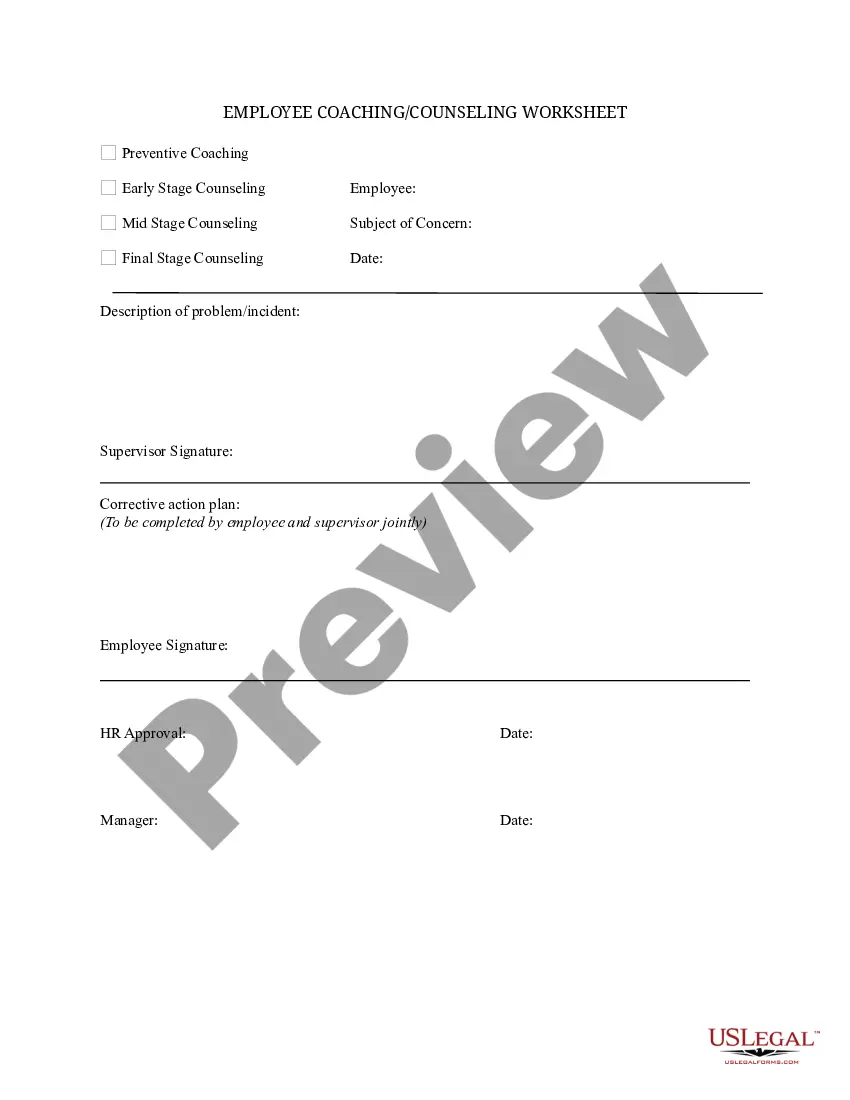
Corrective action is a process of communicating with the employee to improve unacceptable behavior or performance after other methods such as coaching and performance appraisal have not been successful.
Disciplinary Action is a procedure of responding to an employee's misconduct. This action is considered when an employee does not follow company policies, regulations and causes problems to the employer. It is an employer's reaction to an employee's negative or unprofessional behavior.
Corrective Action is usually a three to four step process in most companies. It's designed to reduce legal liability in firing someone, even in "at-will" employment environments.
Verbal warnings are one of the most common types of discipline at the workplace and are typically the first step in a progressive series of disciplinary measures. In most small businesses, supervisors of the employee regardless of that employee's status issue verbal warnings.
Common workplace disciplinary issuesLateness and unauthorised absence. Taking leave without permission or being repeatedly late for work (or leaving early) could result in disciplinary proceedings.Bullying.Misuse of social media, emails or the internet.Discrimination.Criminal conduct.General misconduct.Performance.
Disciplinary Action Against Employees : Penalties and PunishmentsOral Warning: The mildest form of discipline is die oral warning.Written Notice: The second step in order of severity in progressive discipline is the written notice or warning.Suspension:Demotion:Pay Cut:Dismissal/Discharge:
Corrective action is defined, in this context, as: coaching; verbal warning; and written warning (reprimand). Disciplinary action is defined as: suspension; demotion; and dismissal.
Acceptable Disciplinary Actions: Acceptable disciplinary actions are verbal warning; written reprimand; suspension; and termination.
Corrective action is not considered discipline and is primarily focused on improving the employee's performance, attendance or conduct. Your goal as a manager is to guide the employee to correct performance, attendance or behavior, not to punish the employee.