Mississippi Judgment
Understanding this form
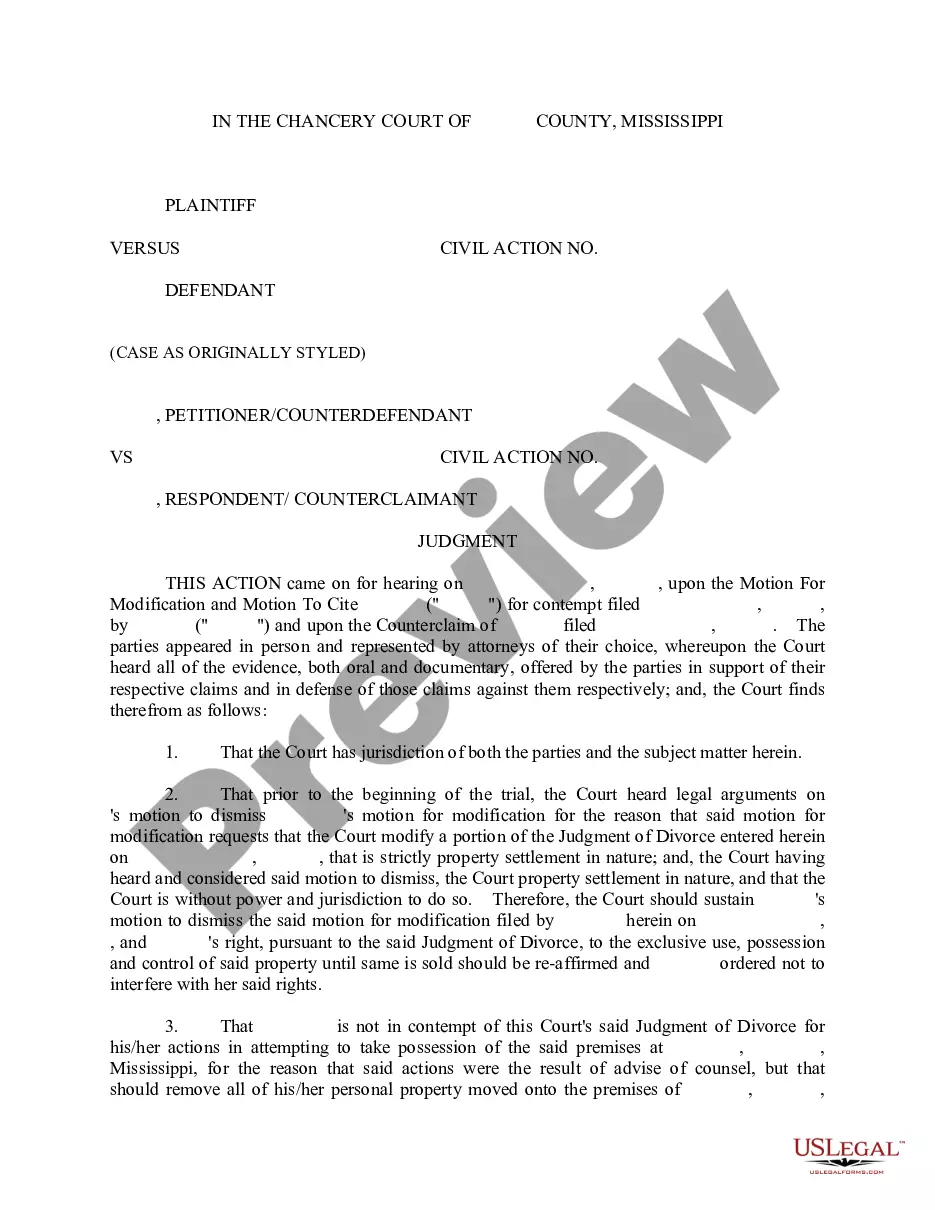
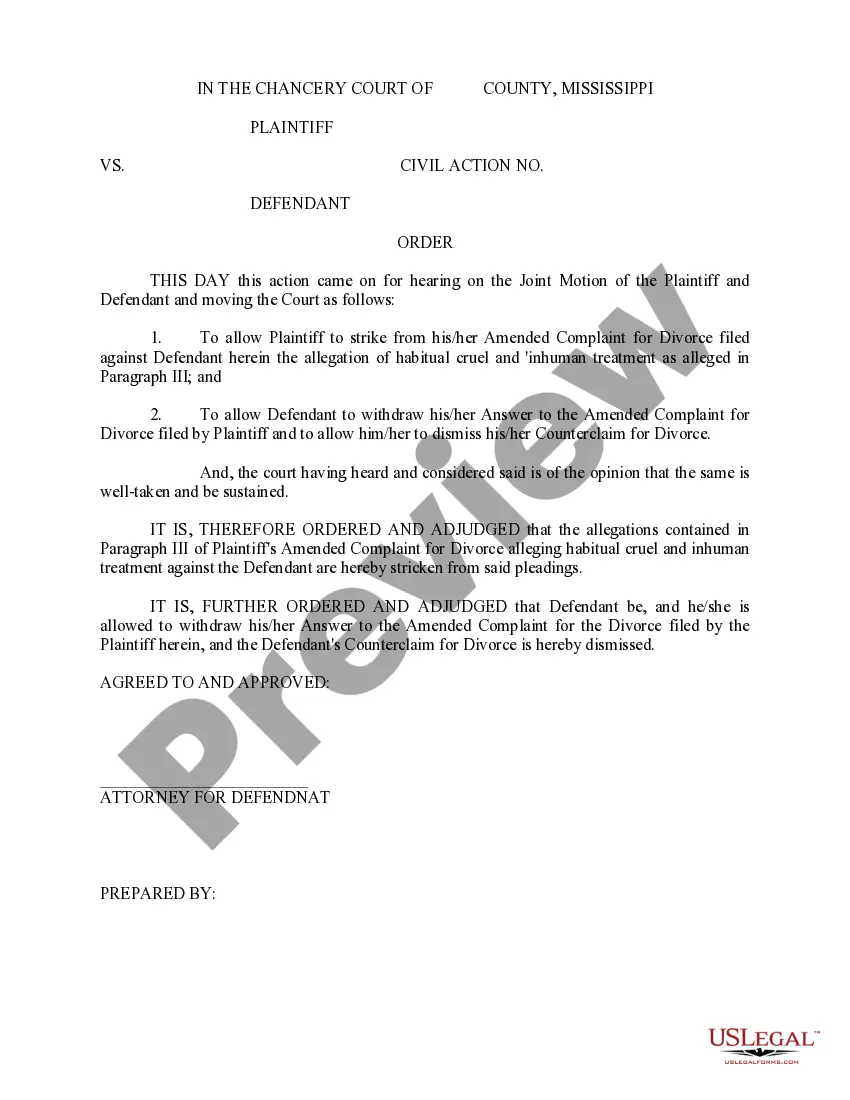
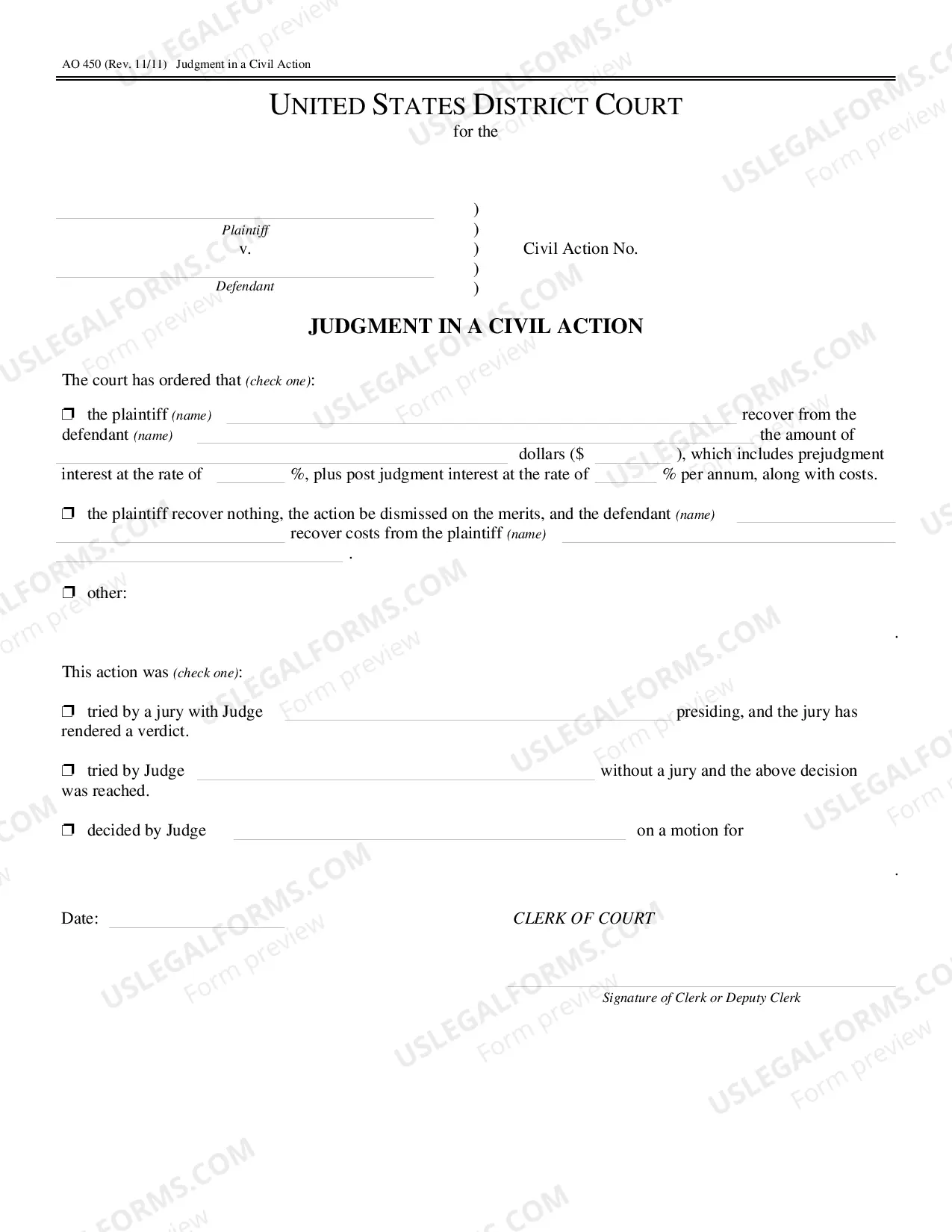
The Judgment form is a legal document used to formally record a court's decision in a civil case. This binding document details the court's findings and outcomes following a hearing, which may involve modifications to prior judgments, like divorce decrees or property settlements. It serves to enforce court orders and clarify the responsibilities and rights of the parties involved, making it distinct from other legal forms like petitions or motions, which initiate cases rather than conclude them.
What’s included in this form
- Heading with case title, including plaintiff and defendant names.
- Details of the hearing date and motions presented.
- Findings of the court regarding jurisdiction and prior motions.
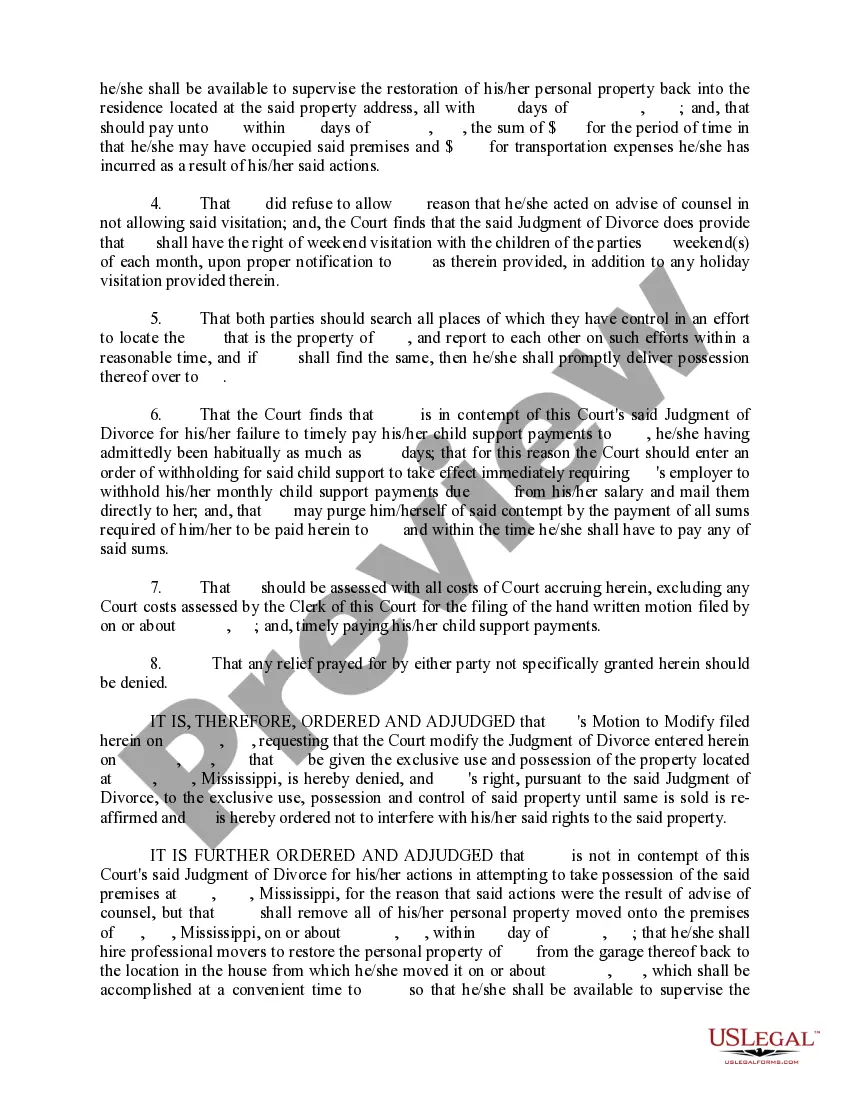
- Specific orders related to property possession, child support, and visitation rights.
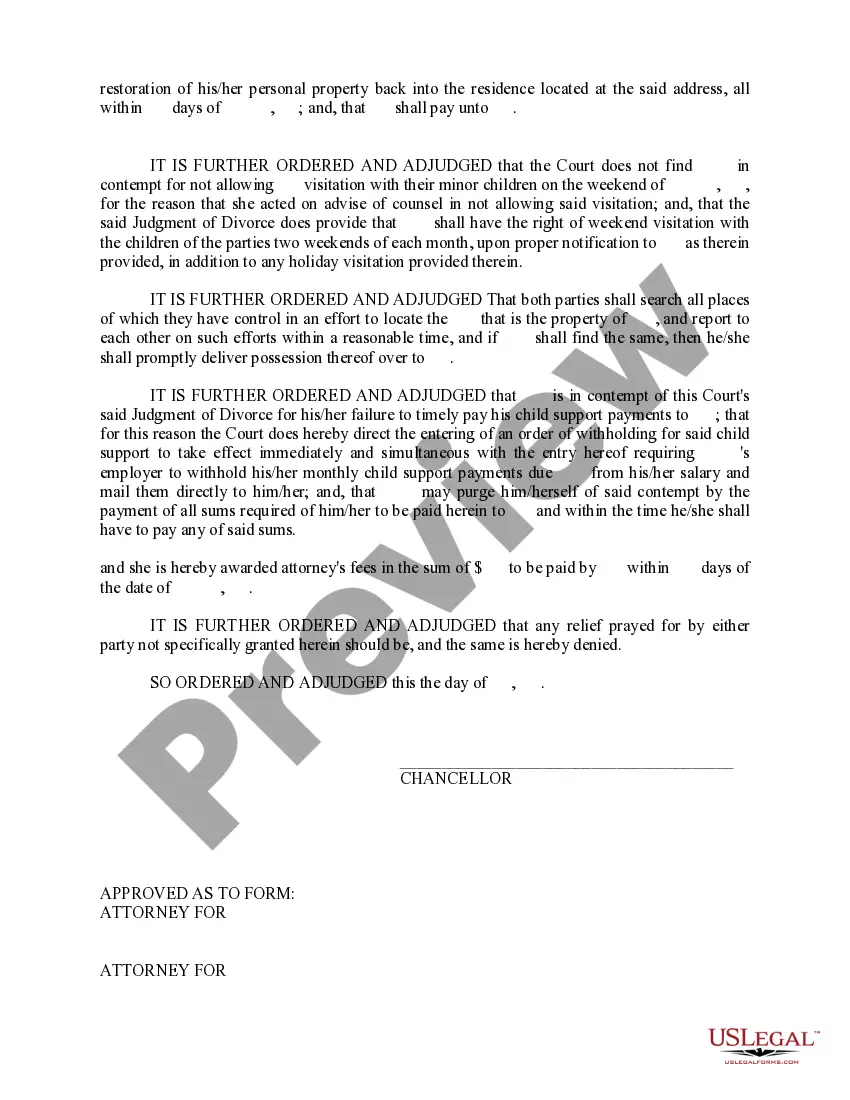
- Provisions for enforcement, including deadlines and actions required by each party.
- Signature line for the presiding judge and attorneys involved.
Situations where this form applies
This Judgment form should be used after a court hearing where a decision is made on matters such as divorce modifications, custody disputes, or enforcement of previous court orders. It is necessary when the court needs to clarify rights, impose obligations, or rectify compliance issues between the parties involved. Typical scenarios include situations where one party seeks to modify the terms of a divorce or where issues of compliance with earlier judgments arise.
Who should use this form
- Individuals involved in a civil court case, such as family law matters or civil disputes.
- Attorneys representing clients in court who require official documentation of a judgment.
- Parties seeking to enforce or modify prior court rulings.
Steps to complete this form
- Identify the parties involved in the case and enter their names in the designated headings.
- Document the date of the hearing and detail any motions presented.
- Summarize the court's findings and decisions regarding each party's actions and responsibilities.
- Include specific orders from the judge concerning property, child support, and visitation schedules.
- Ensure the form is signed by the judge and includes the attorneys' names for record-keeping.
Is notarization required?
This form does not typically require notarization to be legally valid. However, some jurisdictions or document types may still require it. US Legal Forms provides secure online notarization powered by Notarize, available 24/7 for added convenience.
Get your form ready online
Our built-in tools help you complete, sign, share, and store your documents in one place.
Make edits, fill in missing information, and update formatting in US Legal Forms—just like you would in MS Word.
Download a copy, print it, send it by email, or mail it via USPS—whatever works best for your next step.
Sign and collect signatures with our SignNow integration. Send to multiple recipients, set reminders, and more. Go Premium to unlock E-Sign.
If this form requires notarization, complete it online through a secure video call—no need to meet a notary in person or wait for an appointment.
We protect your documents and personal data by following strict security and privacy standards.

Make edits, fill in missing information, and update formatting in US Legal Forms—just like you would in MS Word.

Download a copy, print it, send it by email, or mail it via USPS—whatever works best for your next step.

Sign and collect signatures with our SignNow integration. Send to multiple recipients, set reminders, and more. Go Premium to unlock E-Sign.

If this form requires notarization, complete it online through a secure video call—no need to meet a notary in person or wait for an appointment.

We protect your documents and personal data by following strict security and privacy standards.
Common mistakes
- Failing to include complete names and titles of the parties.
- Omitting key details from the findings section, leading to confusion about the court's decision.
- Not signing or dating the form properly, which can invalidate the judgment.
- Inserting incorrect dates regarding prior judgments or hearings.
Benefits of using this form online
- Convenience of filling out and downloading the document from anywhere.
- Editable format allows for quick updates as needed before submission.
- Access to attorney-drafted templates ensures compliance with legal standards.
- Time-saving by providing a clear structure to follow when completing the form.
Looking for another form?
Form popularity
FAQ
The five stages of divorce follow the common five stages of grief: denial, anger, bargaining, depression, and acceptance. When a couple is going through a divorce, both people involved experience these stages at different times, in different ways.
You are not happy. Most of your interactions are not positive. You find reasons to avoid your partner. Your friends or family urge you to end the relationship. Your instincts are telling you to get out. You live like roommates. Everything is hard. One or both have changed values or priorities.
The most commonly reported major contributors to divorce were lack of commitment, infidelity, and conflict/arguing. The most common final straw reasons were infidelity, domestic violence, and substance use. More participants blamed their partners than blamed themselves for the divorce.
There are four main types of California divorce options that can be chosen: no-fault divorce, uncontested divorce, simplified divorce and limited divorce.