Mississippi Complaint for Partition
What is this form?
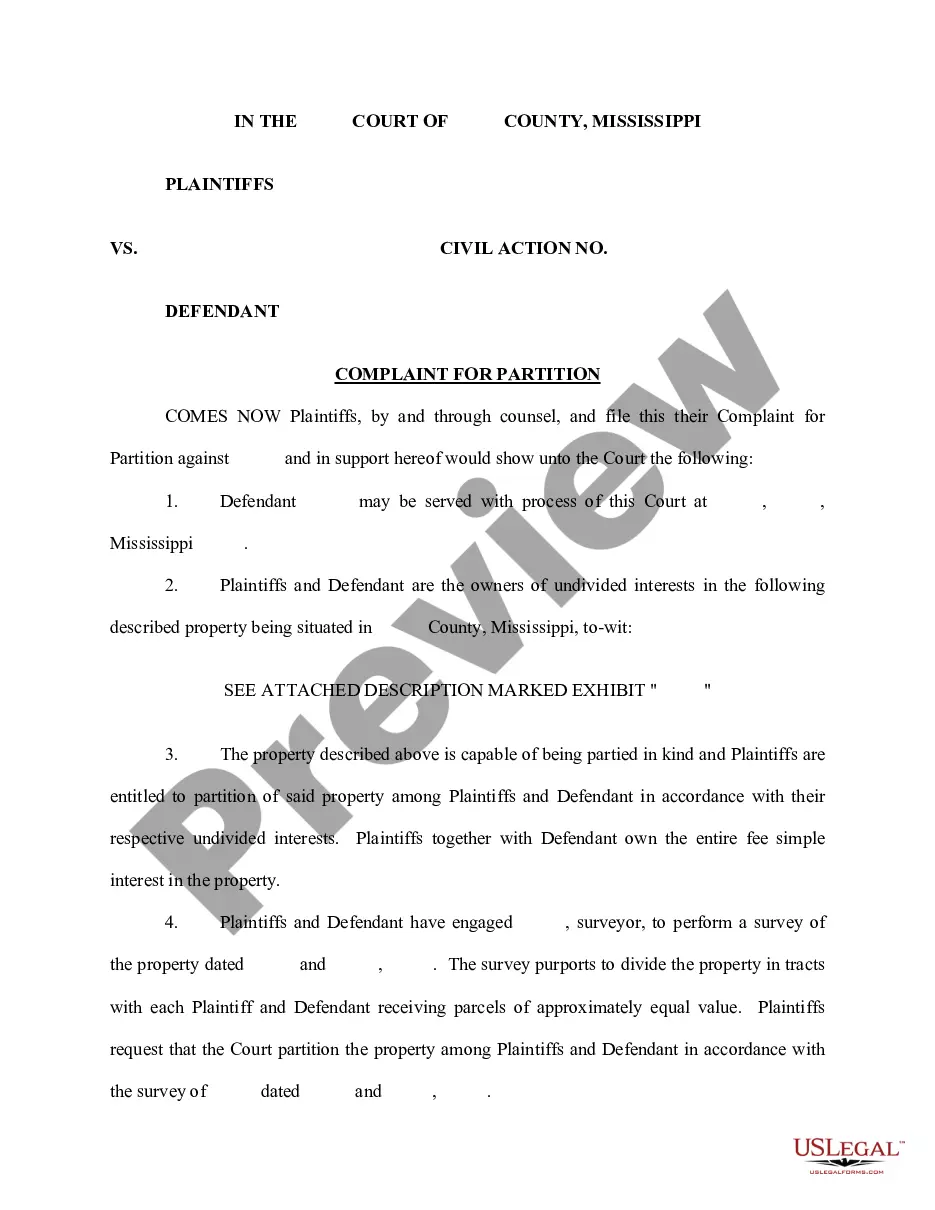
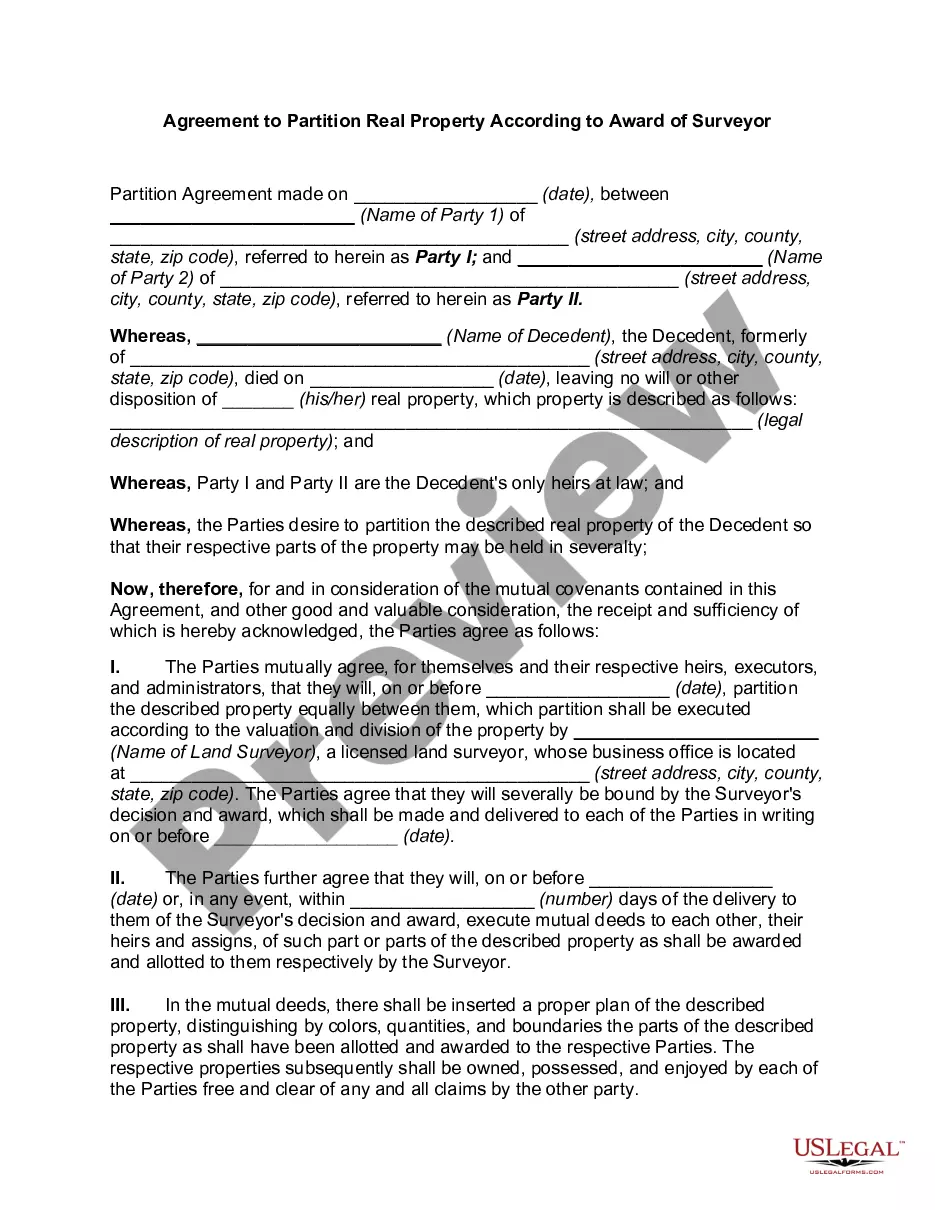
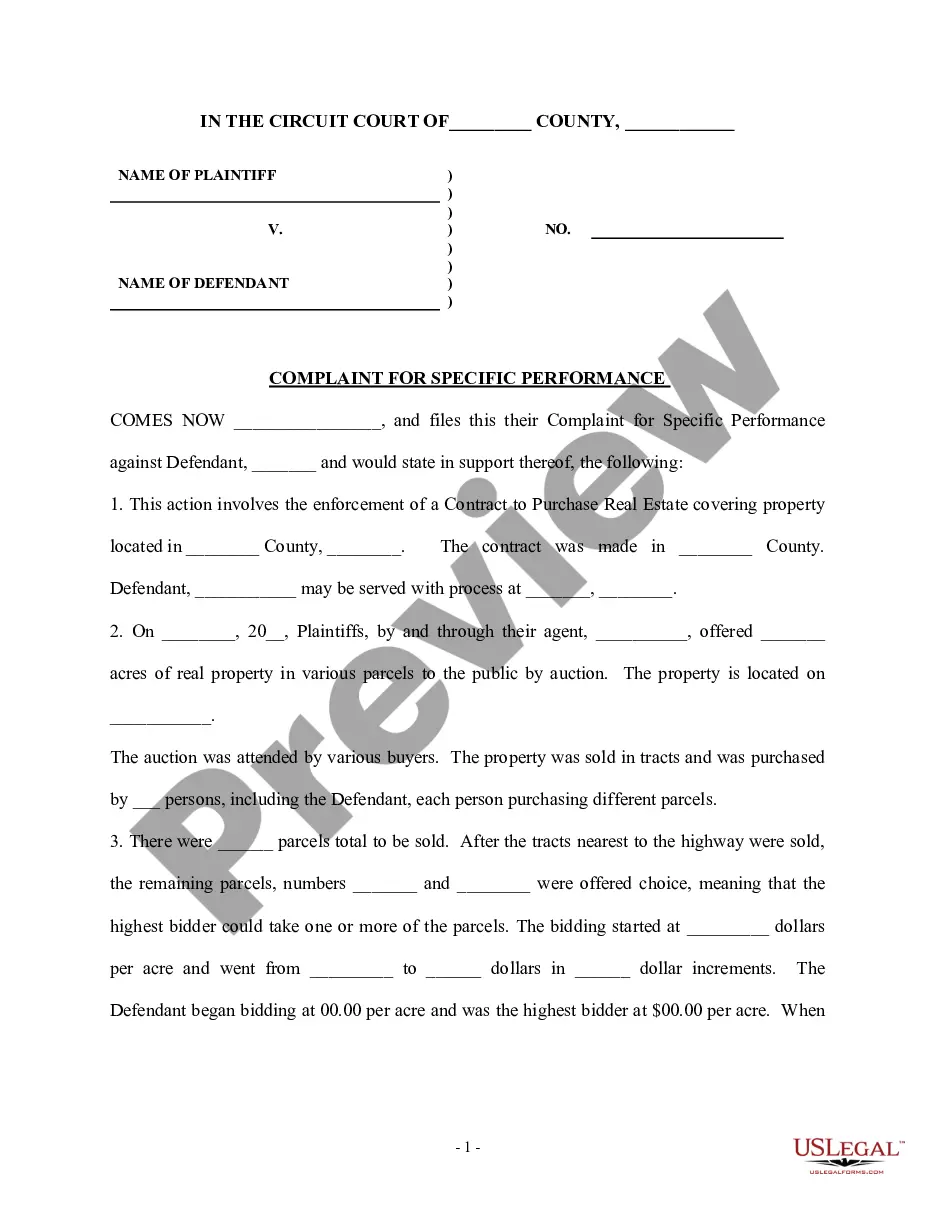
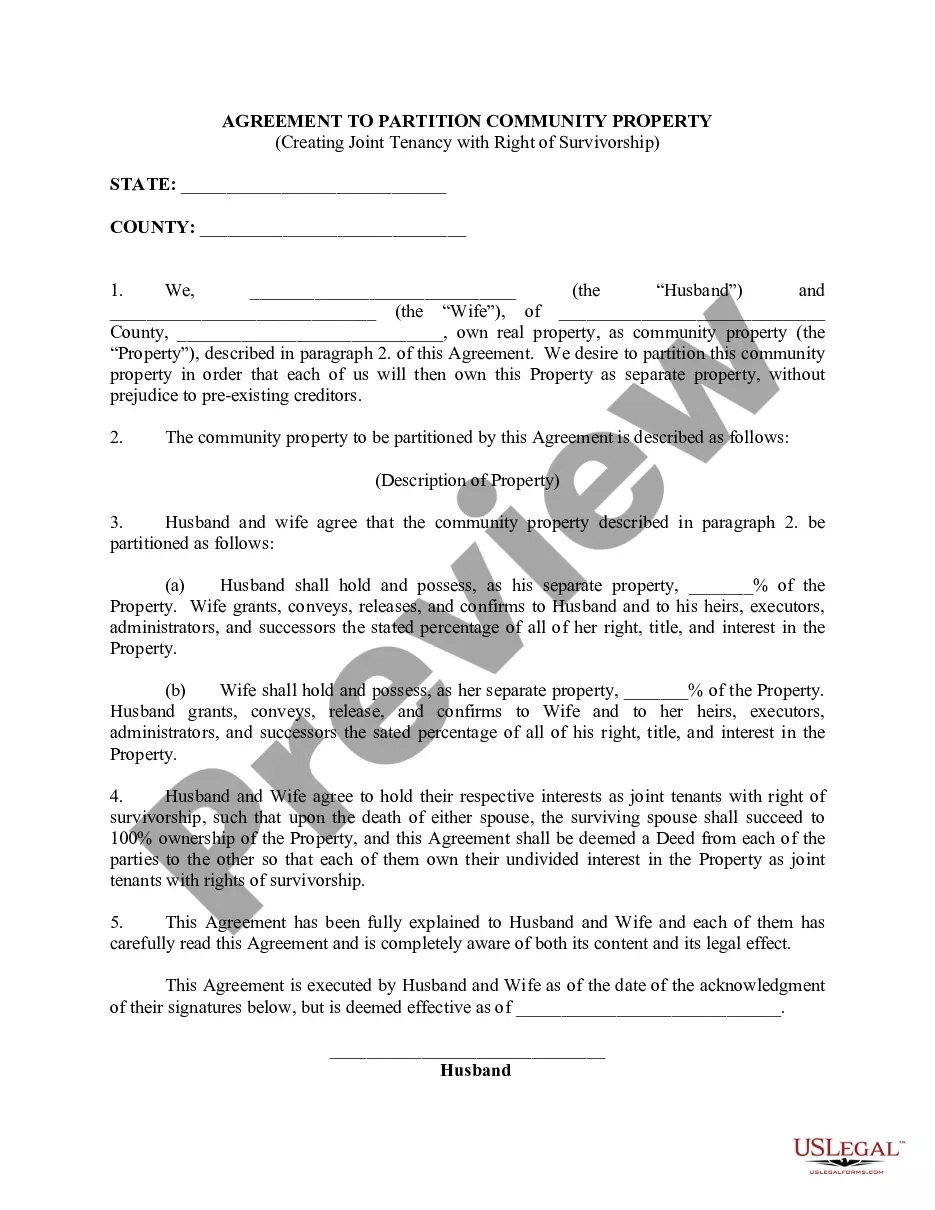
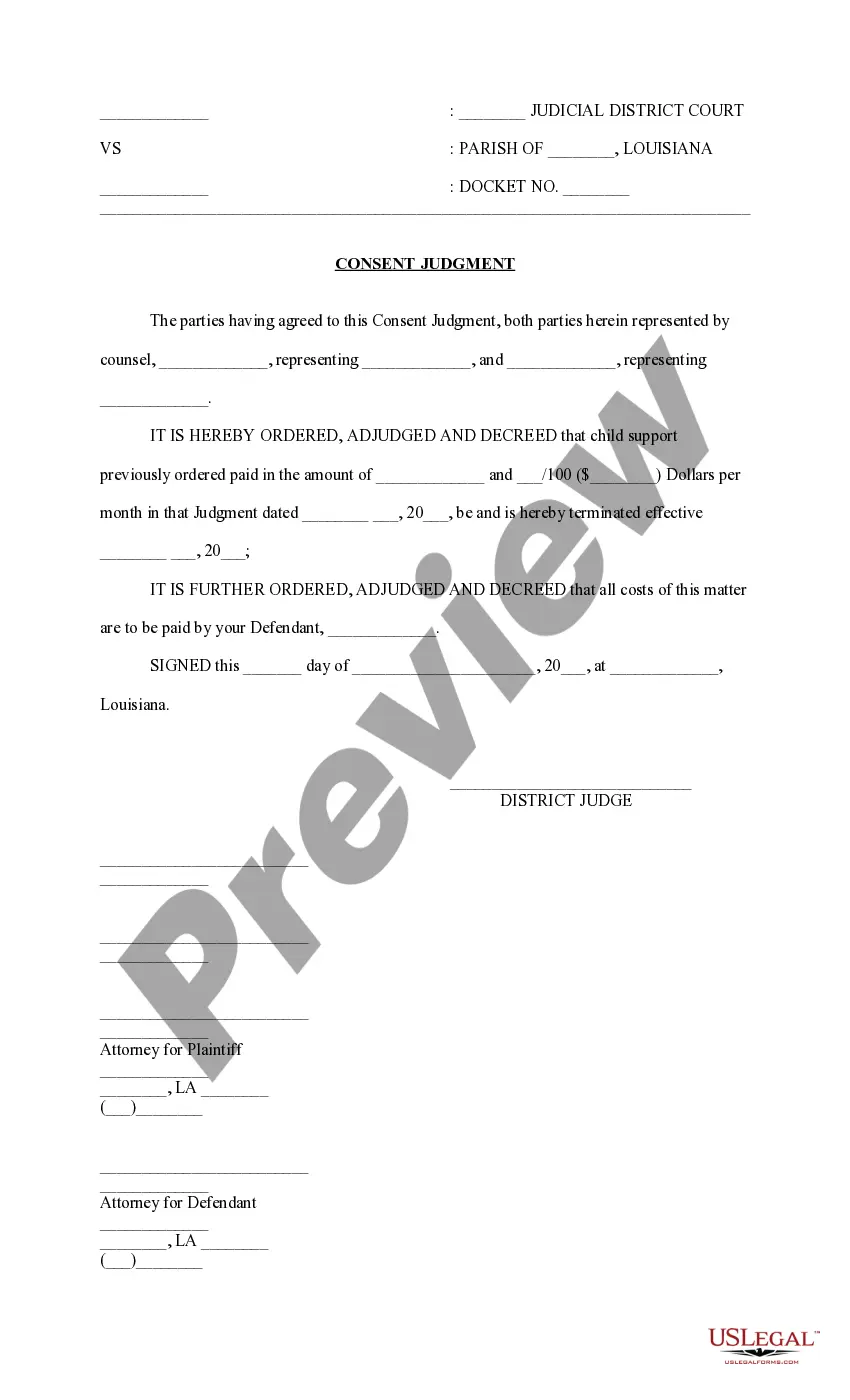
The Complaint for Partition is a legal document that initiates a court action related to the division of real property among co-owners. This form outlines the allegations that lead to the request for partitioning the property and specifies the relief sought by the filing party. Unlike other legal complaints, the Complaint for Partition specifically addresses disputes regarding co-owned properties, making it essential for situations where shared ownership creates contention.
Key components of this form
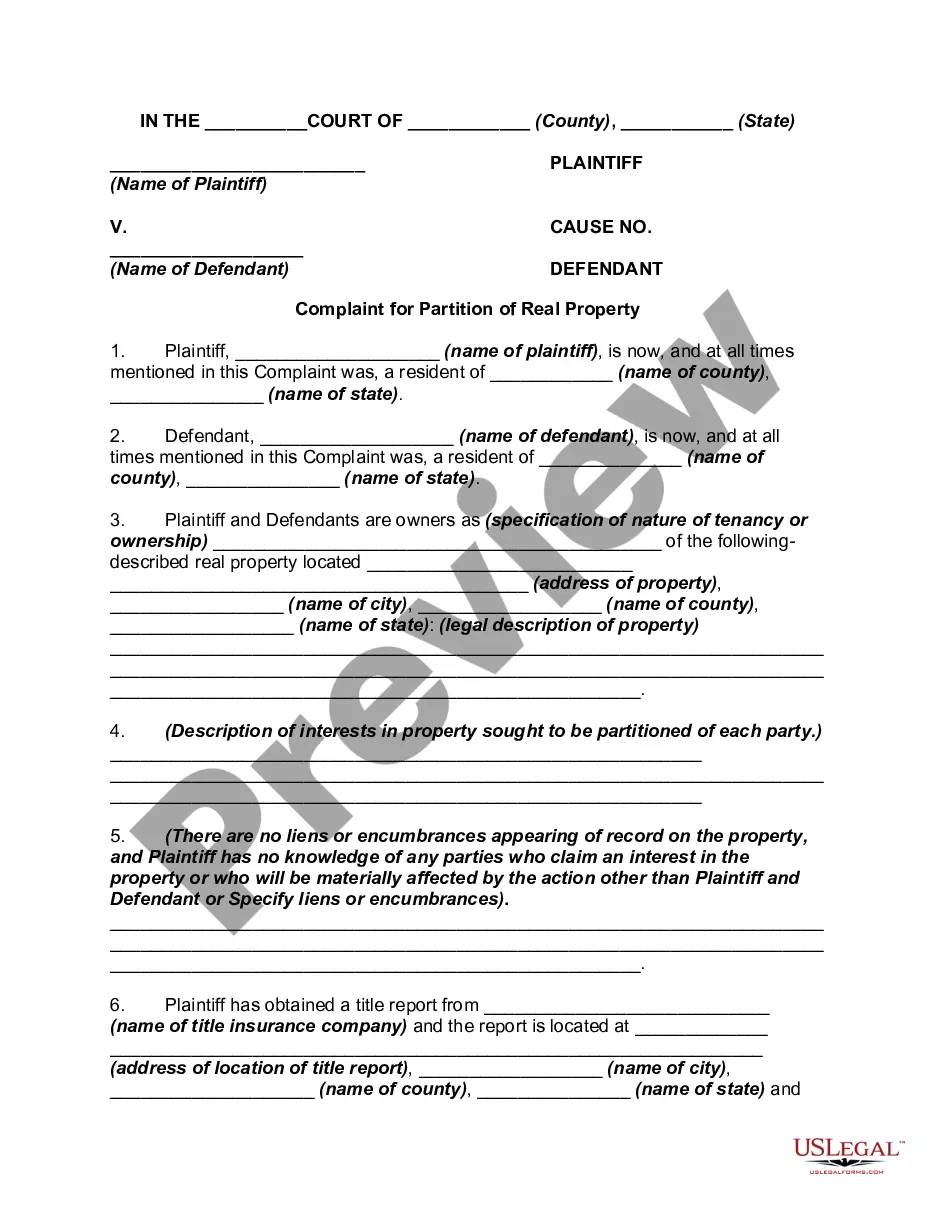
- Title of the action, identifying the parties involved.
- Statement of jurisdiction, establishing the court's authority over the case.
- Facts leading to the partition request, detailing ownership and use of the property.
- Legal grounds for requesting partition, citing relevant state laws.
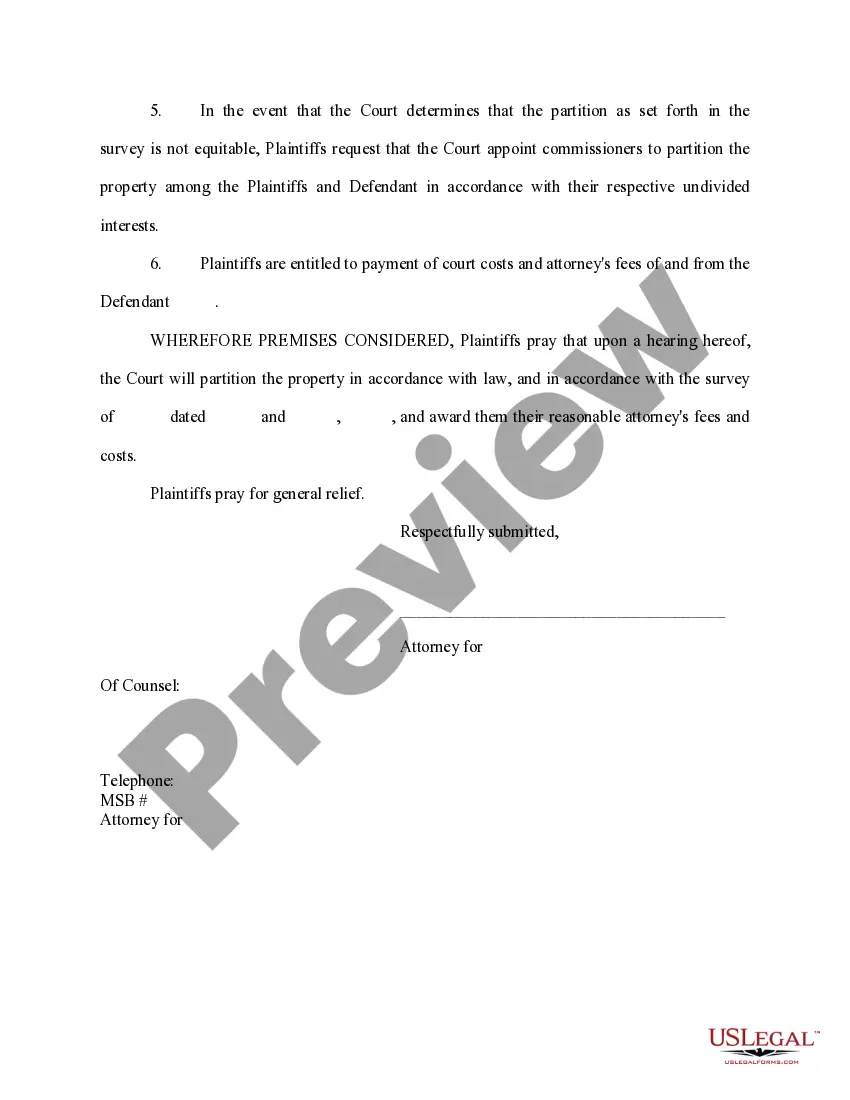
- Request for relief, clearly stating the desired outcome, such as sale of the property or physical division.
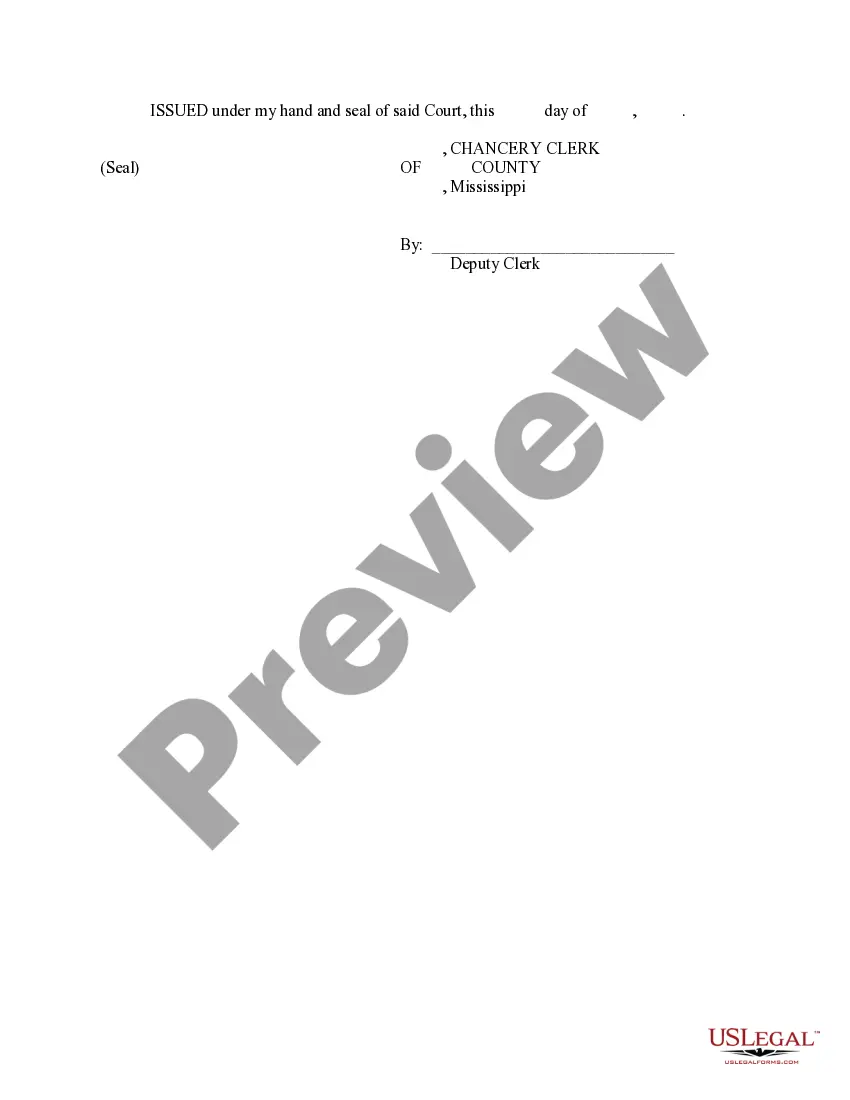
- Verification and signature blocks for the plaintiff or their attorney.
Common use cases
This form should be used when you and another party (or parties) share ownership of a property and cannot agree on its use or future. Common scenarios include family disputes over inheritance, partnerships where one party wishes to liquidate their share, or situations where co-owners are unable to reach mutual decisions regarding the property. If negotiation fails, filing a Complaint for Partition can help to legally resolve the ownership issues through the court system.
Who needs this form
This form is intended for individuals or entities that hold shared ownership of a property and are seeking a legal resolution to disputes over that property. Typical users include:
- Co-owners of real estate, such as family members or business partners.
- Heirs of an estate inheriting a property jointly without agreement.
- Any party involved in disputes regarding the use, management, or sale of shared property.
Steps to complete this form
- Identify all parties involved and their respective shares in the property.
- Provide a clear description of the property in question, including its address and ownership history.
- Detail the reasons for partitioning the property and any previous attempts to resolve the issue.
- State the specific legal grounds for the partition, referencing state laws where applicable.
- Sign and date the form, ensuring it is verified in accordance with local requirements.
Notarization requirements for this form
Notarization is required for this form to take effect. Our online notarization service, powered by Notarize, lets you verify and sign documents remotely through an encrypted video session, available 24/7.
Get your form ready online
Our built-in tools help you complete, sign, share, and store your documents in one place.
Make edits, fill in missing information, and update formatting in US Legal Forms—just like you would in MS Word.
Download a copy, print it, send it by email, or mail it via USPS—whatever works best for your next step.
Sign and collect signatures with our SignNow integration. Send to multiple recipients, set reminders, and more. Go Premium to unlock E-Sign.
If this form requires notarization, complete it online through a secure video call—no need to meet a notary in person or wait for an appointment.
We protect your documents and personal data by following strict security and privacy standards.

Make edits, fill in missing information, and update formatting in US Legal Forms—just like you would in MS Word.

Download a copy, print it, send it by email, or mail it via USPS—whatever works best for your next step.

Sign and collect signatures with our SignNow integration. Send to multiple recipients, set reminders, and more. Go Premium to unlock E-Sign.

If this form requires notarization, complete it online through a secure video call—no need to meet a notary in person or wait for an appointment.

We protect your documents and personal data by following strict security and privacy standards.
Avoid these common issues
- Failing to include all co-owners as defendants in the complaint.
- Omitting specific legal grounds for partitioning the property.
- Not providing complete information about the property, leading to potential delays.
- Neglecting to verify the form before filing, which can lead to rejection by the court.
Benefits of completing this form online
- Convenient access to legal forms that can be downloaded and completed at your own pace.
- Editable templates allow you to tailor the content to your specific situation easily.
- Reliable resources crafted by licensed attorneys to ensure compliance with legal standards.
Legal use & context
- The Complaint for Partition is an enforceable legal document recognized by courts to adjudicate property disputes among co-owners.
- Filing this form does not guarantee a resolution; legal proceedings may take time and may require court hearings.
- Legal representation is recommended to navigate complex property laws and proceedings.
Main things to remember
- The Complaint for Partition is vital for co-owners seeking to resolve property disputes legally.
- Understanding the structure and requirements of the form is crucial for effective use.
- Being aware of state-specific rules can prevent legal issues in the filing process.
Looking for another form?

Form popularity
FAQ
It generally takes about a year and half to two years to get to trial on a partition action.
When owners of jointly owned property can't agree on the sale of the entire property, a partition lawsuit to force its sale may be filed. In a partition lawsuit, the court can order the sale of the entire property and divide proceeds among its owners.
A suit for partition is filed in a Civil Court having jurisdiction over the area where the property is located. If there are several properties, the lawsuit can be filed in any one of the courts. The partition suit results in a decree which ends the joint nature of the property.
You can hire a trust litigation attorney to litigate a partition action. Your attorney may fight to increase the value of your share of the property if, for example, you paid for maintenance, repairs, improvements, property taxes, mortgage payments, etc.
You can hire a trust litigation attorney to litigate a partition action. Your attorney may fight to increase the value of your share of the property if, for example, you paid for maintenance, repairs, improvements, property taxes, mortgage payments, etc.
How long does it take to process a partition action? It generally takes about a year and half to two years to get to trial on a partition action.
Can A Partition Be Stopped? Typically, a partition action cannot be stopped once a lawsuit is filed because anyone who wants to dissolve ownership that is jointly owned with another person has a legal right to sell his/her interest if desired.