Mississippi Complaint for Injunction
What this document covers
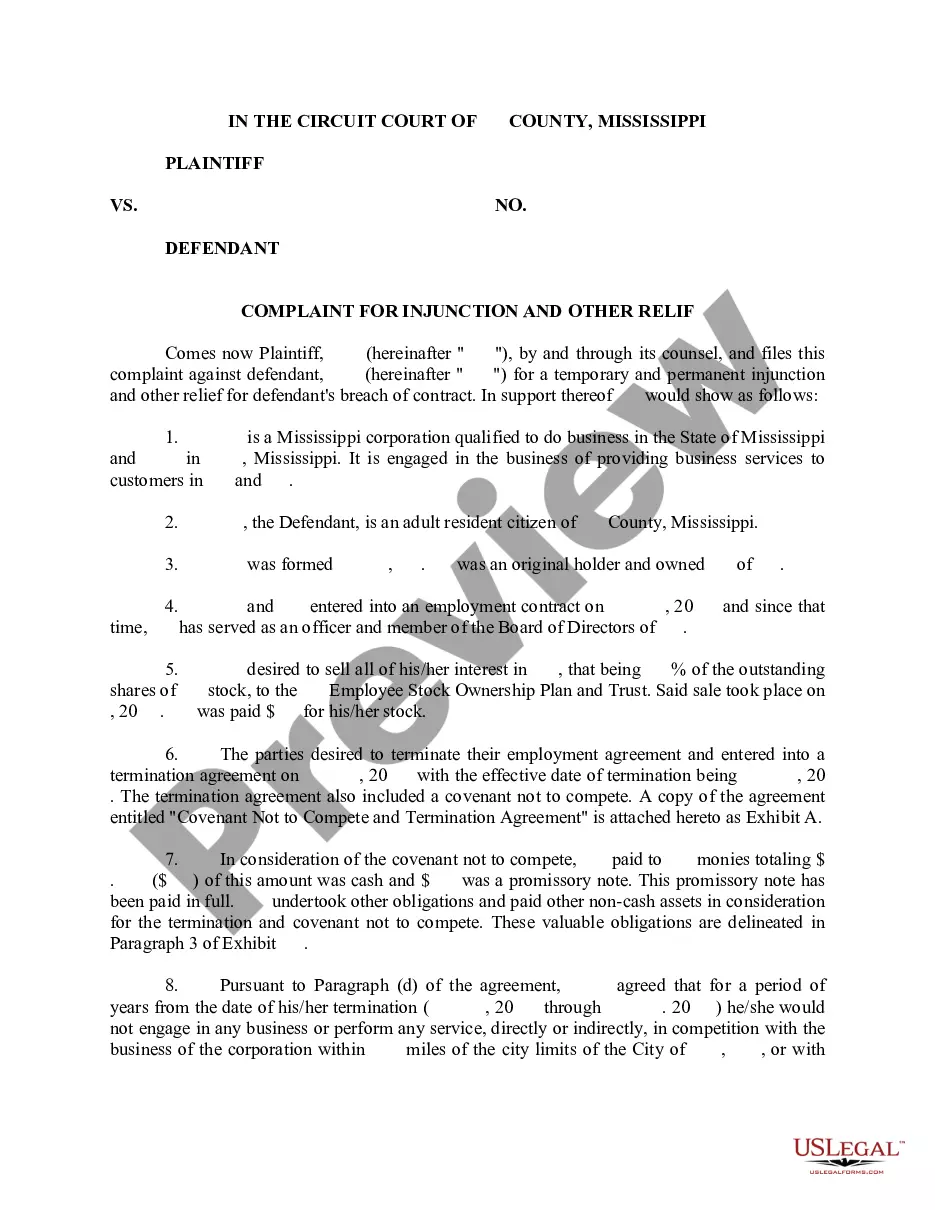
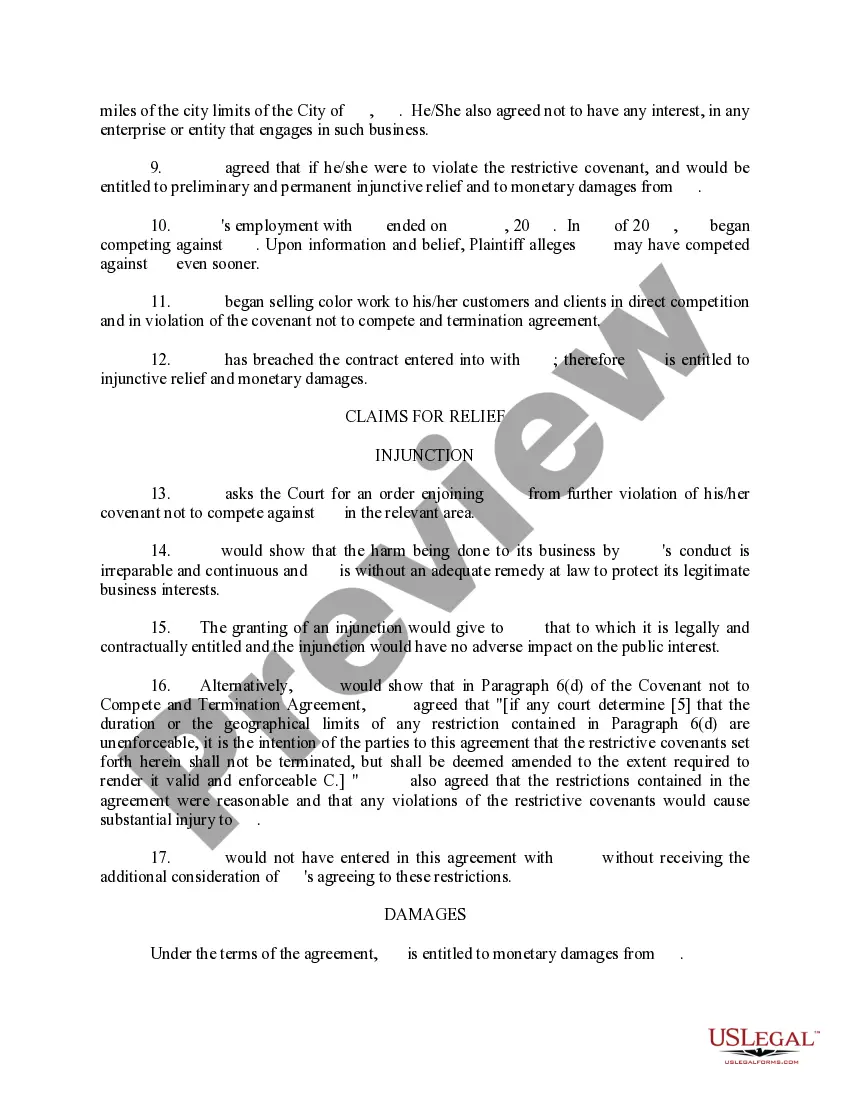
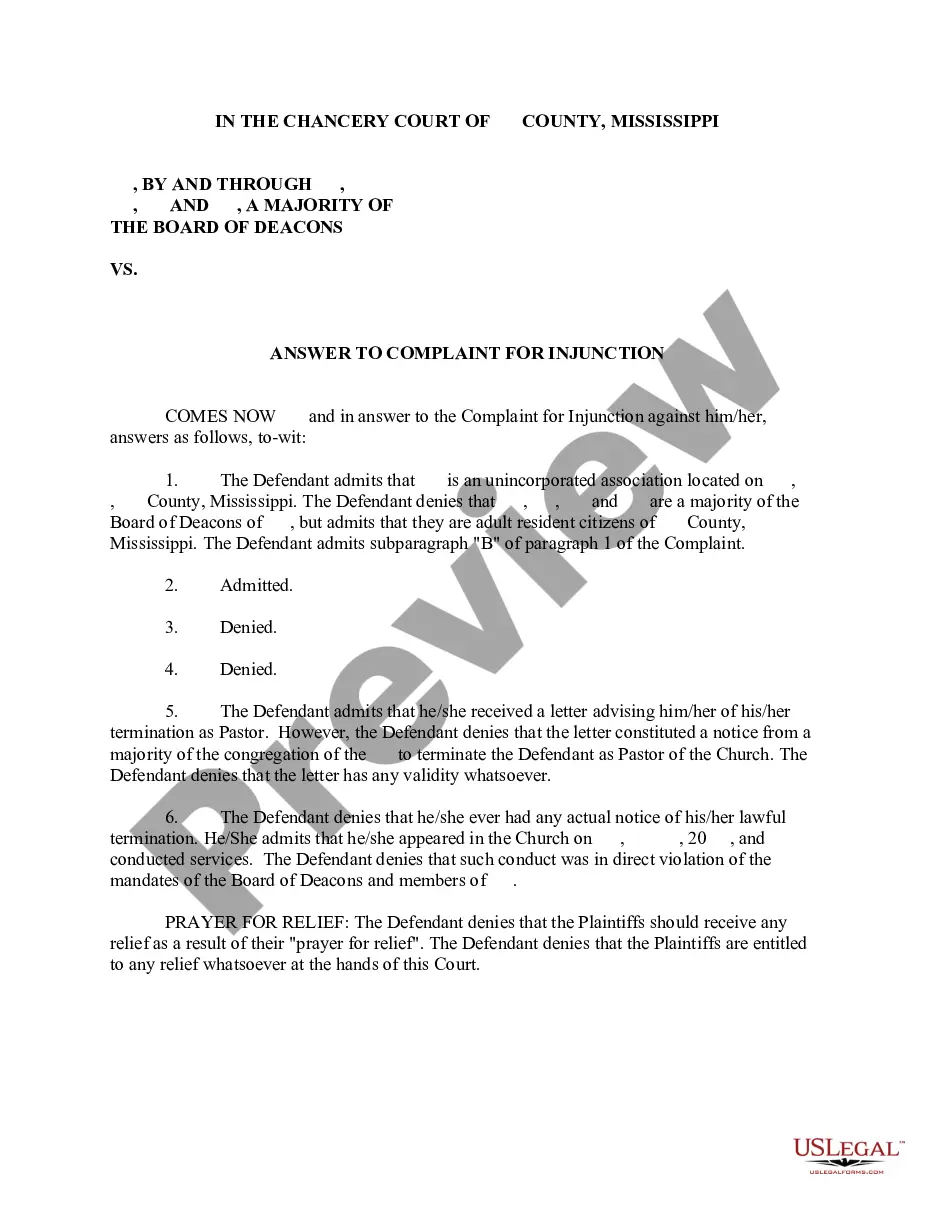
The Complaint for Injunction is a legal document filed by a plaintiff seeking a court order to prevent the defendant from breaching a covenant not to compete. This form is crucial for businesses aiming to protect their interests when an employee, after leaving their job, engages in activities that directly compete against their former employer. Unlike other complaints, this form specifically requests an injunction in addition to monetary damages due to contractual violations.
What’s included in this form
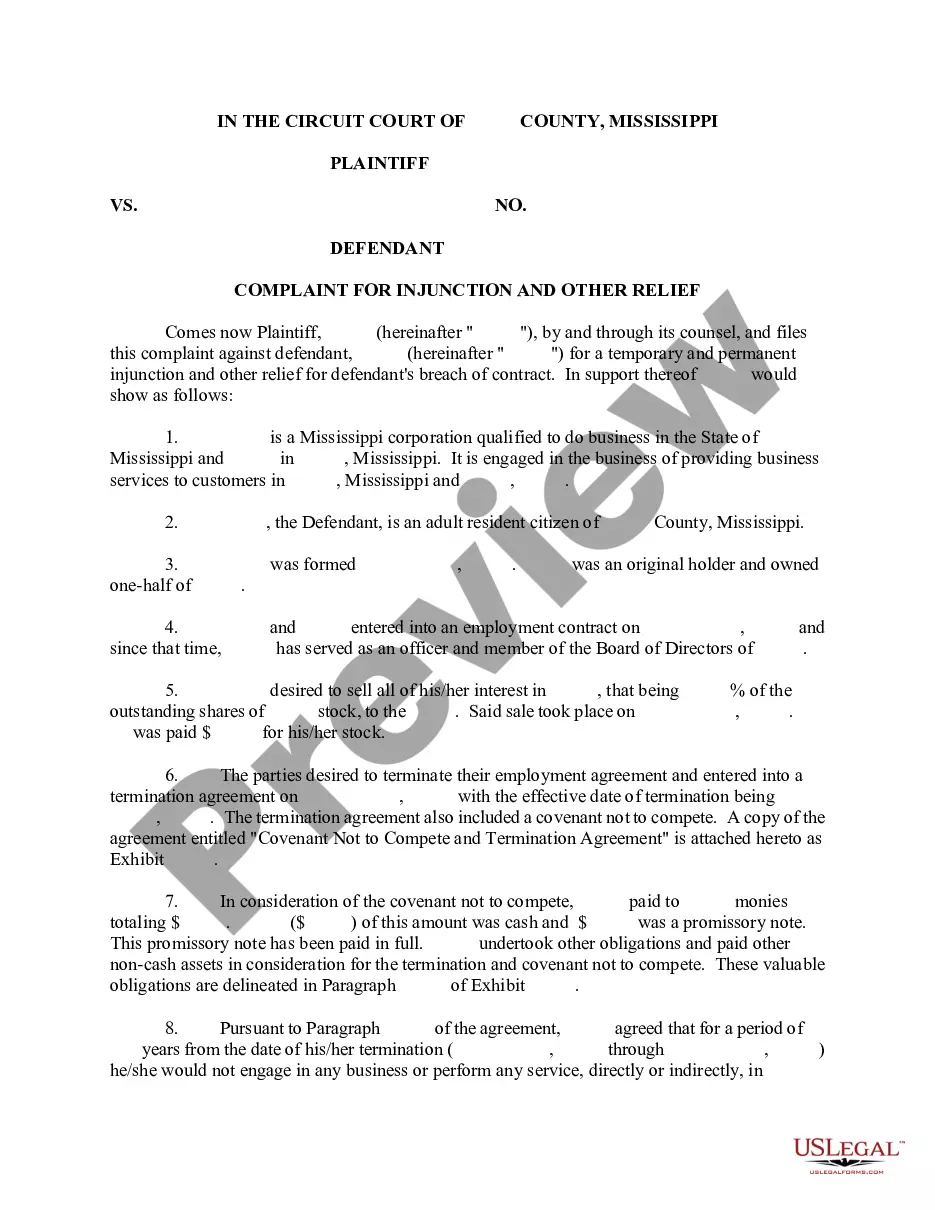
- Identification of the plaintiff and defendant.
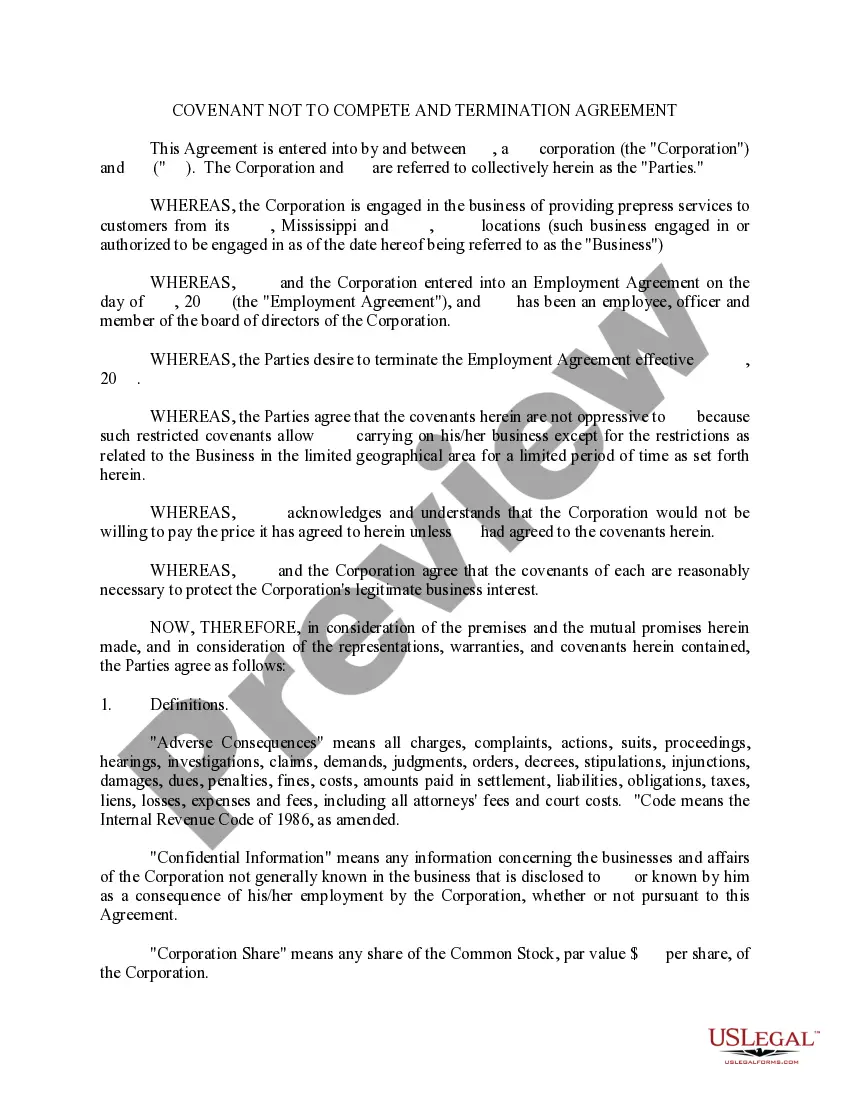
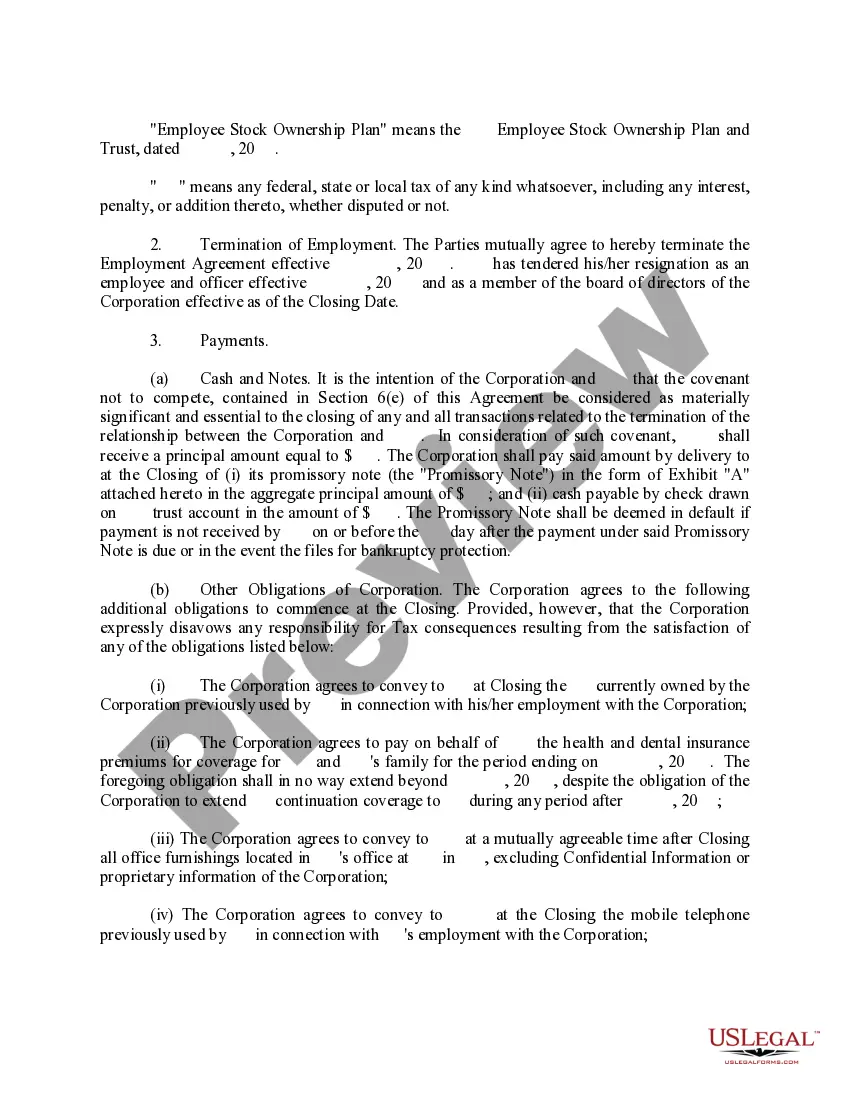
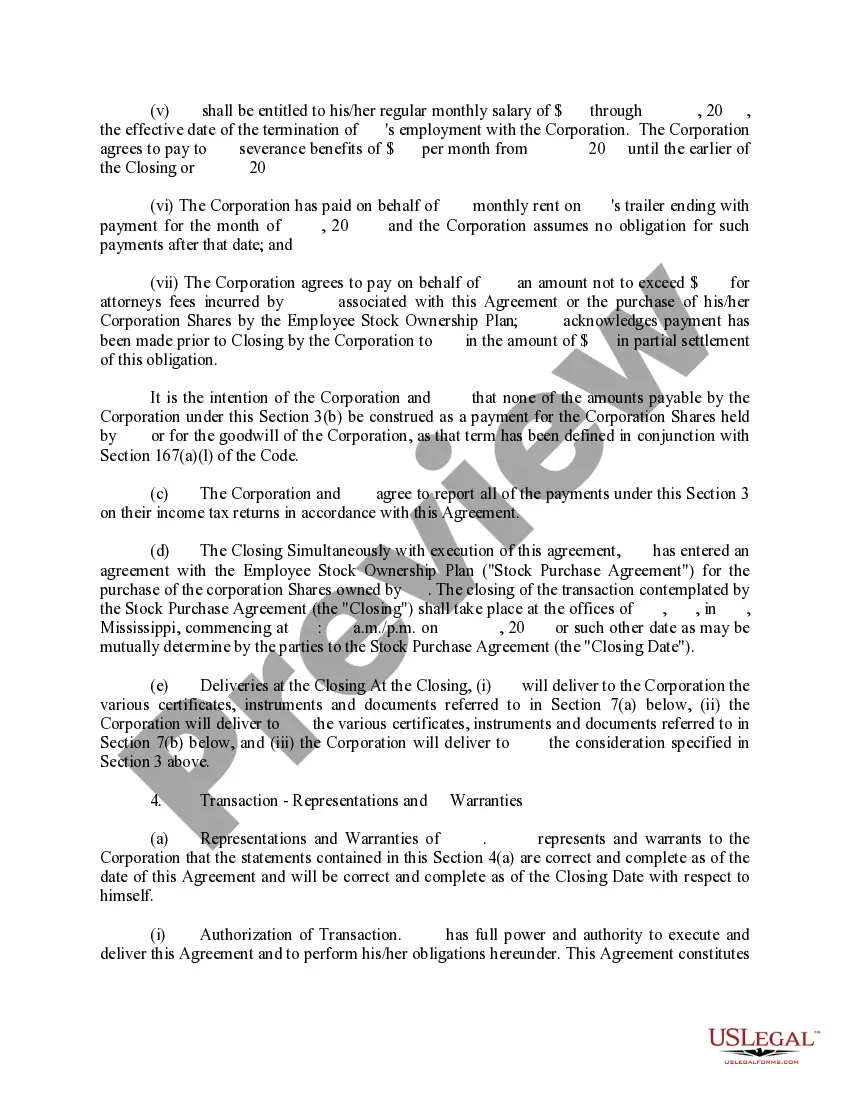
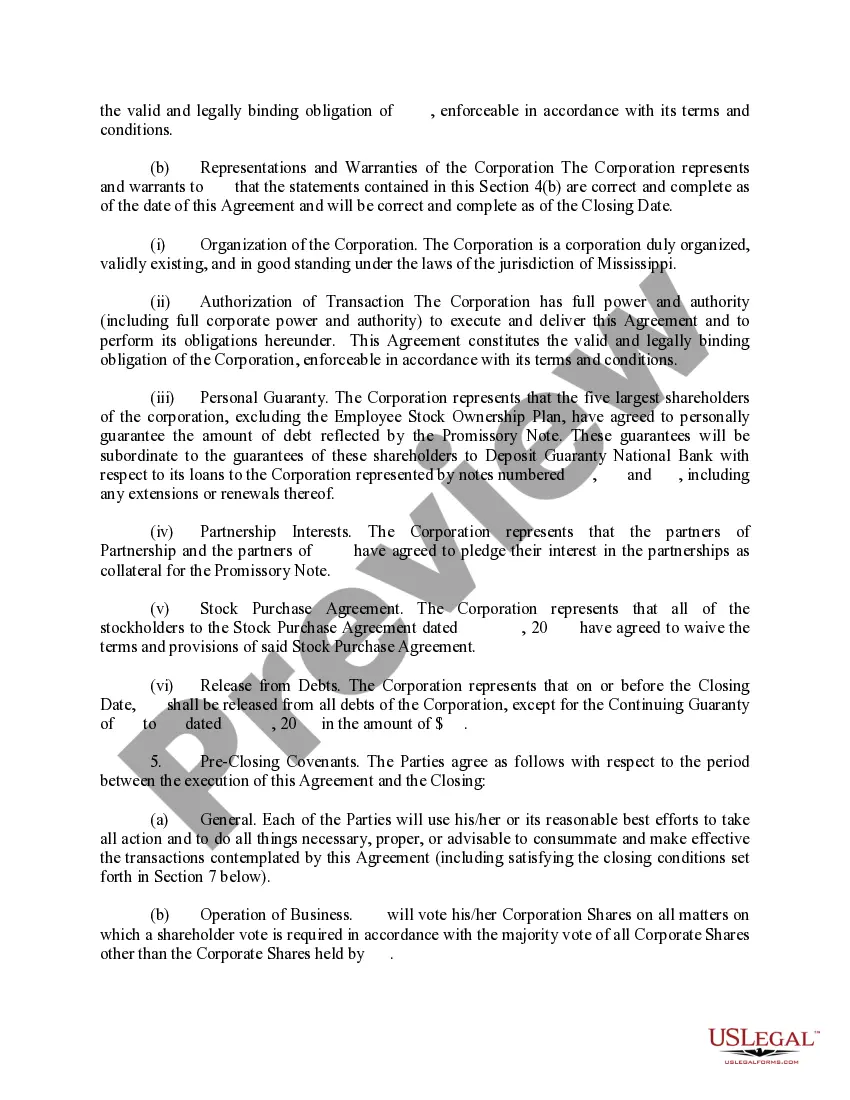
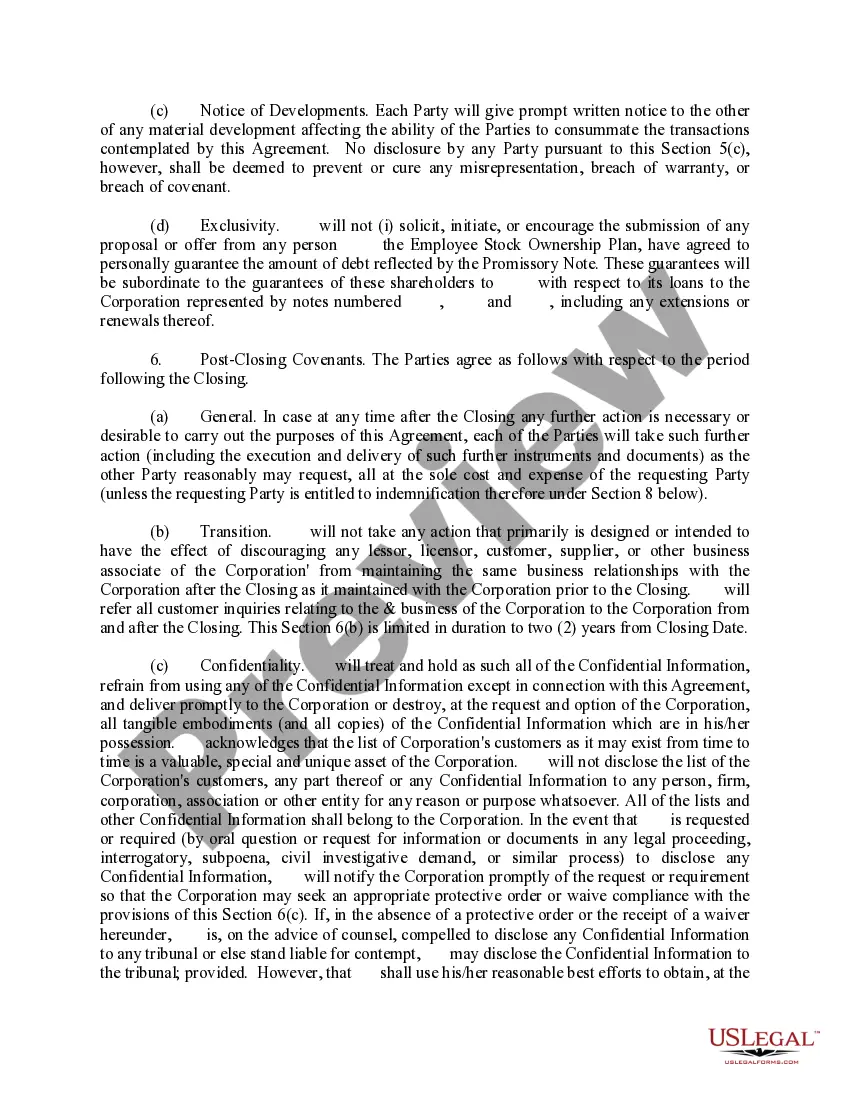
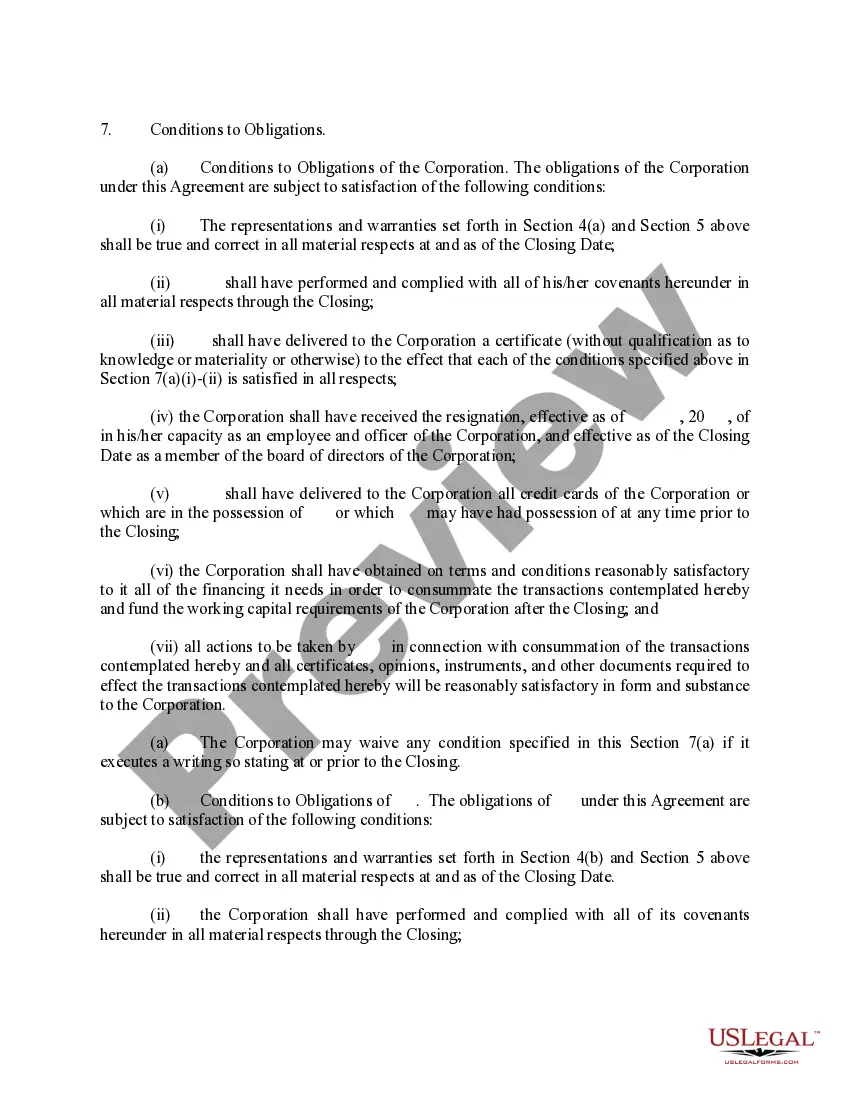
- Details of the employment contract and termination agreement.
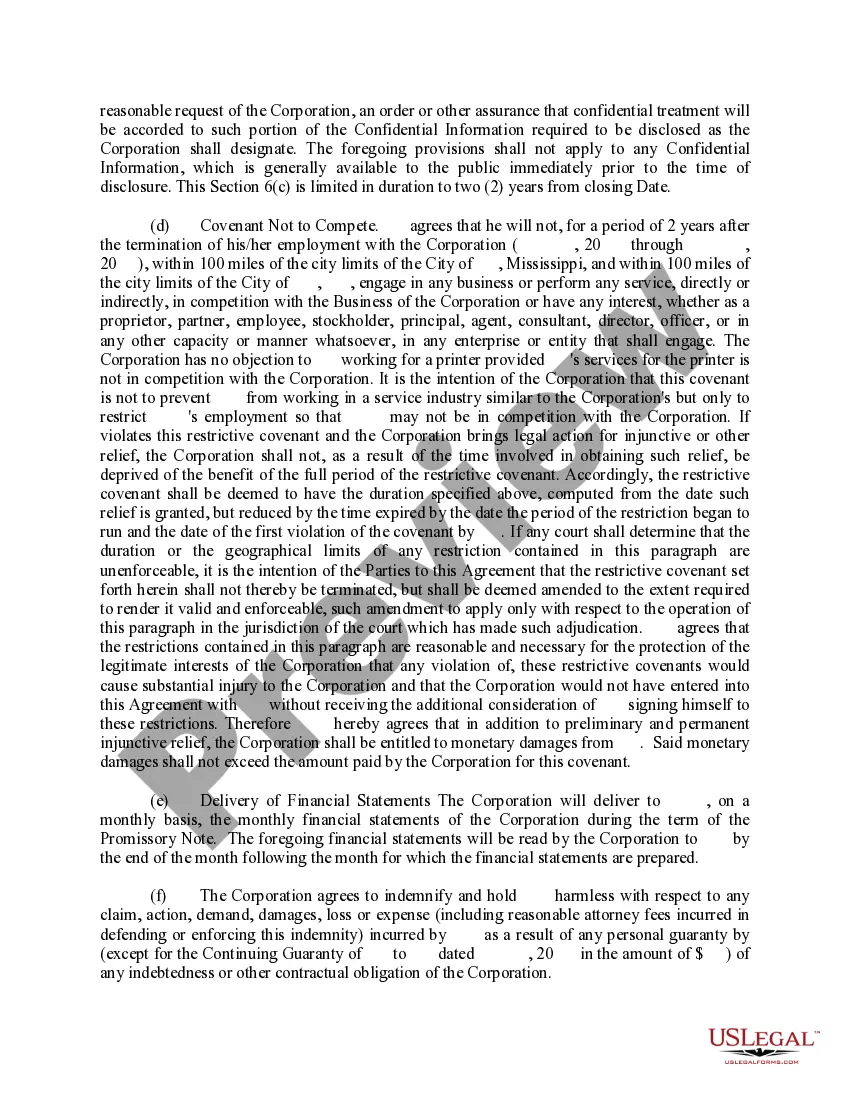
- Terms of the covenant not to compete.
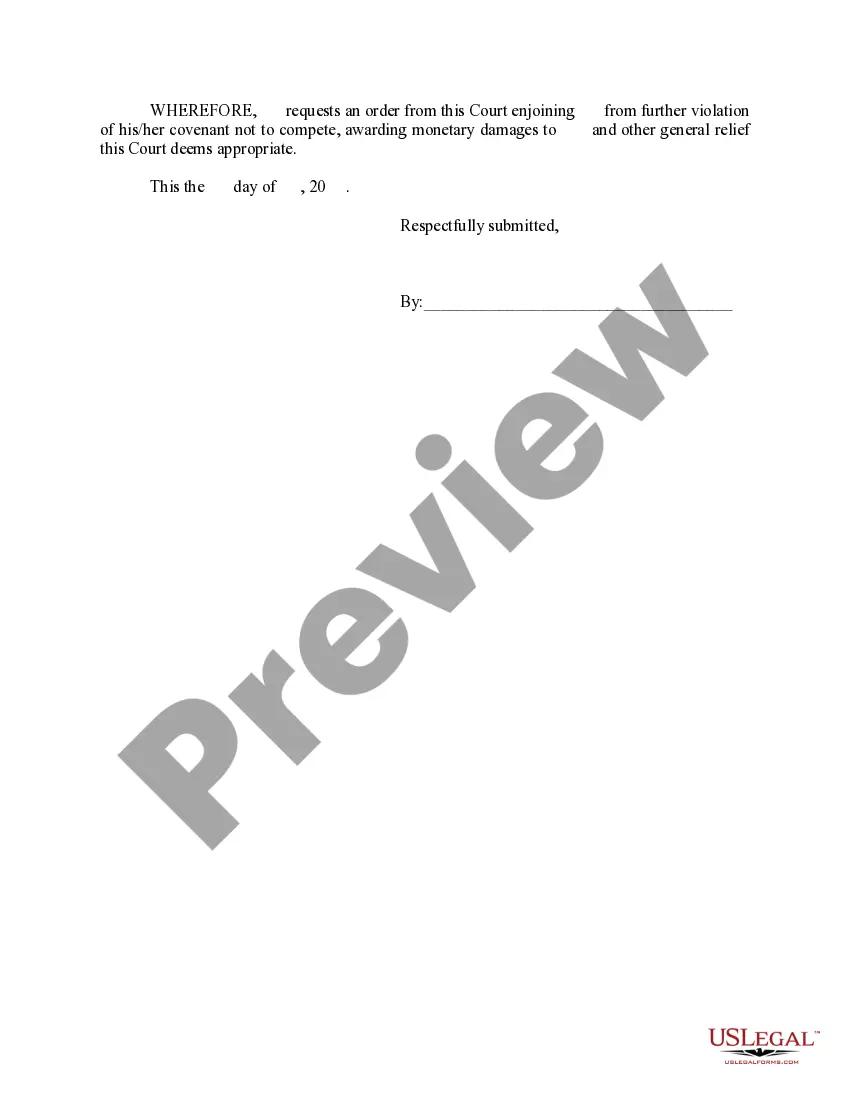
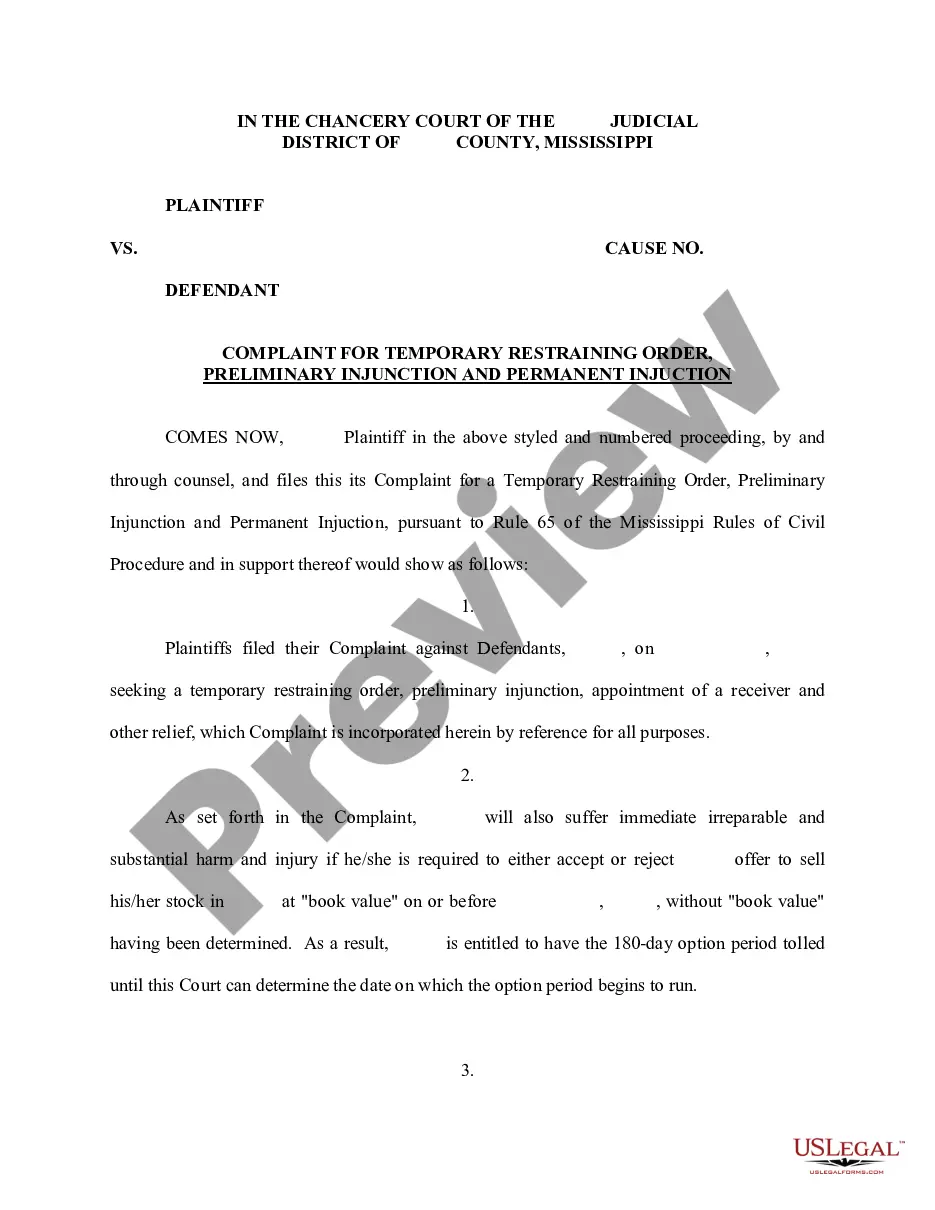
- Claims for injunctive relief and monetary damages.
- Legal basis for requesting an injunction.



Situations where this form applies
This form should be used when a former employee is violating a non-compete clause outlined in their termination agreement. It is especially important when the plaintiff can demonstrate that the former employee's actions are causing irreparable harm to the business and that there is no adequate remedy available at law. Situations may include a direct competitor hiring the former employee or the employee soliciting clients from the plaintiffâs business.
Intended users of this form
- Business owners seeking protection from former employees who violate non-compete agreements.
- Employers looking to ensure that their business interests are safeguarded against unfair competition.
- Attorneys representing plaintiffs in matters involving breach of contract related to employment agreements.
How to prepare this document
- Identify the plaintiff and defendant by providing their full names and addresses.
- Outline the details of the employment contract, including dates and terms of termination.
- Specify the terms of the covenant not to compete, including duration and geographical limitations.
- Detail the alleged breaches by the defendant and the harm caused to the plaintiff.
- Sign the complaint and include the date of submission.
Notarization requirements for this form
This form does not typically require notarization unless specified by local law. However, users should verify local regulations to ensure compliance.
Get your form ready online
Our built-in tools help you complete, sign, share, and store your documents in one place.
Make edits, fill in missing information, and update formatting in US Legal Forms—just like you would in MS Word.
Download a copy, print it, send it by email, or mail it via USPS—whatever works best for your next step.
Sign and collect signatures with our SignNow integration. Send to multiple recipients, set reminders, and more. Go Premium to unlock E-Sign.
If this form requires notarization, complete it online through a secure video call—no need to meet a notary in person or wait for an appointment.
We protect your documents and personal data by following strict security and privacy standards.

Make edits, fill in missing information, and update formatting in US Legal Forms—just like you would in MS Word.

Download a copy, print it, send it by email, or mail it via USPS—whatever works best for your next step.

Sign and collect signatures with our SignNow integration. Send to multiple recipients, set reminders, and more. Go Premium to unlock E-Sign.

If this form requires notarization, complete it online through a secure video call—no need to meet a notary in person or wait for an appointment.

We protect your documents and personal data by following strict security and privacy standards.
Typical mistakes to avoid
- Failing to include all necessary parties involved in the case.
- Not clearly defining the terms of the covenant not to compete.
- Overlooking the requirement to provide evidence of harm caused by the breach.
- Using vague language that may lead to confusion in the court.
Why use this form online
- Convenient access to a precisely drafted legal form that meets state requirements.
- Immediate download and modification capabilities for user-specific needs.
- Time-saving by reducing the need to consult legal counsel for basic form drafting.
Looking for another form?



Form popularity
FAQ
The Plaintiff / Applicant, above named, respectfully submits as under: 1. That the Plaintiff has filed the above titled suit against the Defendant / Respondent for decree of Specific Performance of Agreement to Sell dated _____ and Memorandum of Understanding dated ___ and same is pending before this Hon'ble Court. 2.
It typically takes a week or two to get an injunction, but you can apply for an injunction to be granted on the same day if you are at immediate risk of significant harm. If the court grants an injunction without notice, you will have to go back to court later for a hearing once the abuser has been given notice.
Temporary Restraining Orders: A temporary restraining order (TRO) is an order by the court immediately prohibiting a threatened action.Preliminary Injunctions: A preliminary injunction is an order prohibiting an action, to preserve the status quo while the underlying court case is decided.
Renewal or extensionsInjunctions are normally for a specified period of time (e.g. six months) but can be renewed; or they may be made until further order.
Most lawyers are familiar with some basic ways to enforce money judgments. But what about injunctions? One of the most flexible ways to enforce an injunction is with the contempt power of the court. It permits a variety of different remedies that are available to creative lawyers and judges.
Prima facie case is a must to be eligible to obtain a temporary injunction. A permanent injunction can be granted by the court by passing a decree made at the hearing and upon the merits of the suit. The court can grant an injunction to not do certain acts, which are prohibited by the contract to do.
It is also important that you do not take any steps which might breach the terms of the injunction in any way, as a breach of an injunction is generally punishable as a contempt of Court which in some circumstances can lead to imprisonment.
To get an injunction order, you must file an application, including a written statement of the aggrieved, through a civil lawyer at the appropriate court. The process might take a while as parties are required to show evidence before the court, and the court will have to ultimately decide on the matter.
An application for an injunction can be made once Court proceedings have begun. Alternatively, the Court can grant an injunction before the start of Court proceedings if the matter is urgent or if it necessary in the interests of justice.