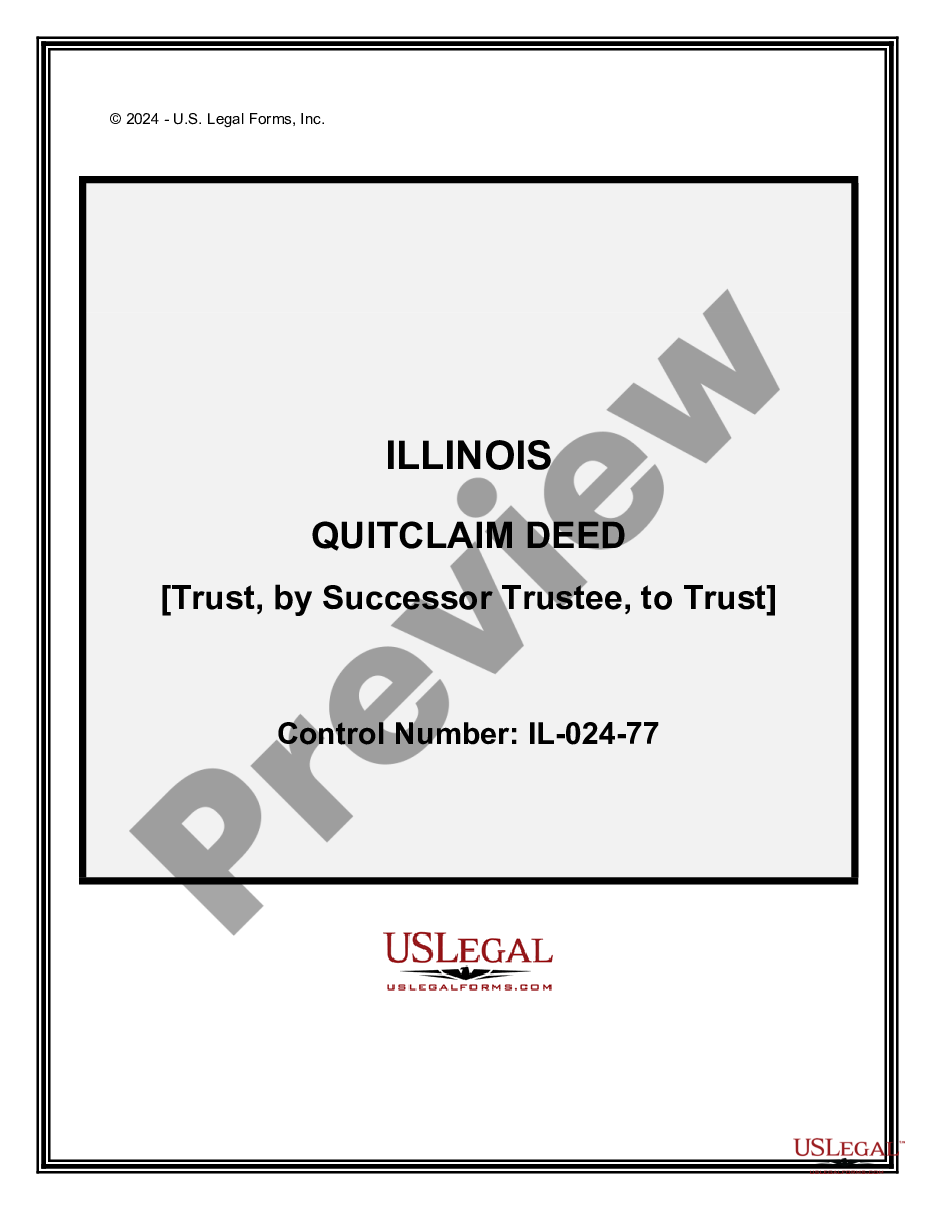
Illinois Quitclaim Deed - Trust, by Successor Trustee, to Trust
Understanding this form
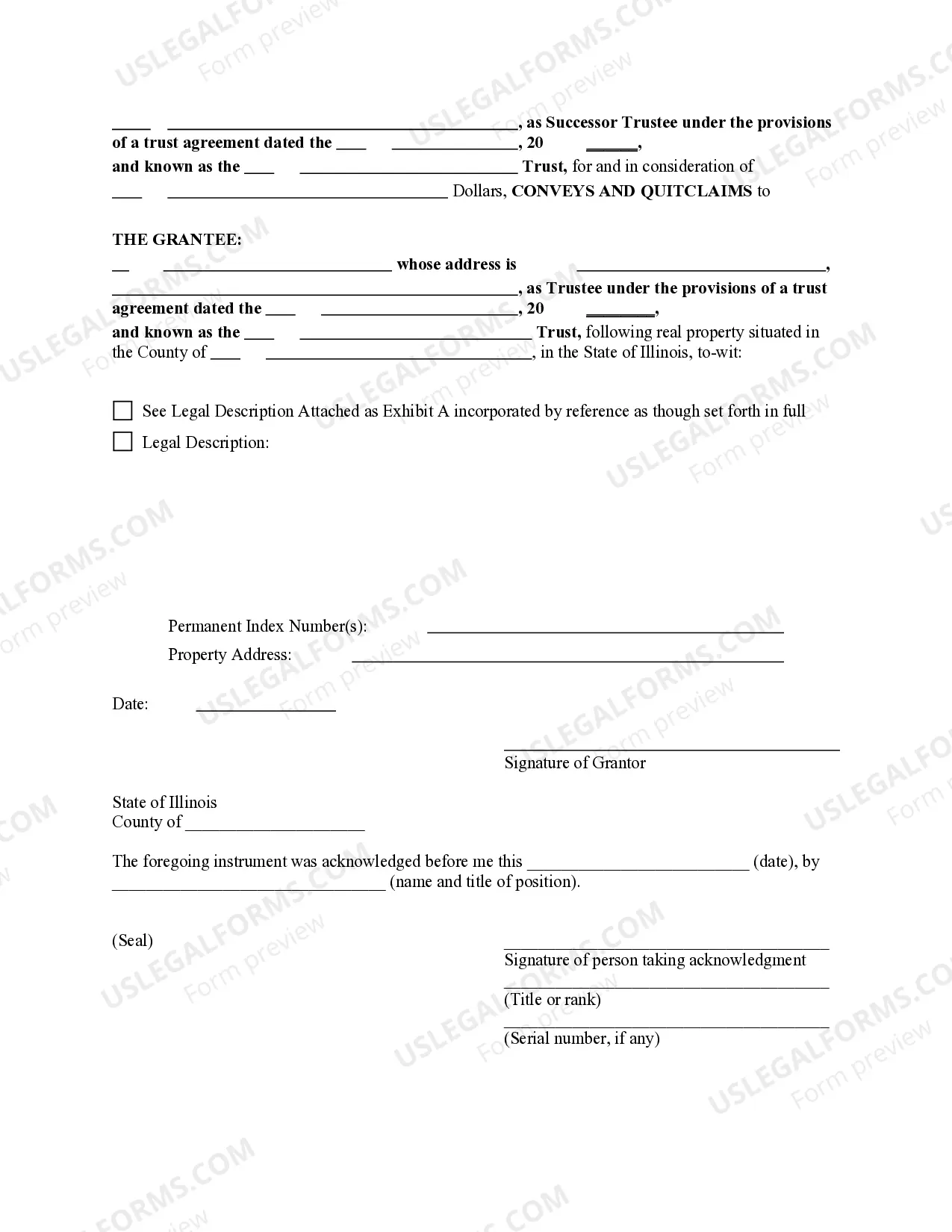
The Quitclaim Deed - Trust, by Successor Trustee, to Trust is a legal document used to transfer property ownership from a trust acting through a successor trustee to another trust. This deed conveys and quitclaims the described property without guaranteeing clear title, distinguishing it from other types of deeds, such as warranty deeds which offer clearer title assurances. It is specifically designed to comply with state statutory laws, ensuring its legality within the jurisdiction where it is executed.
What’s included in this form
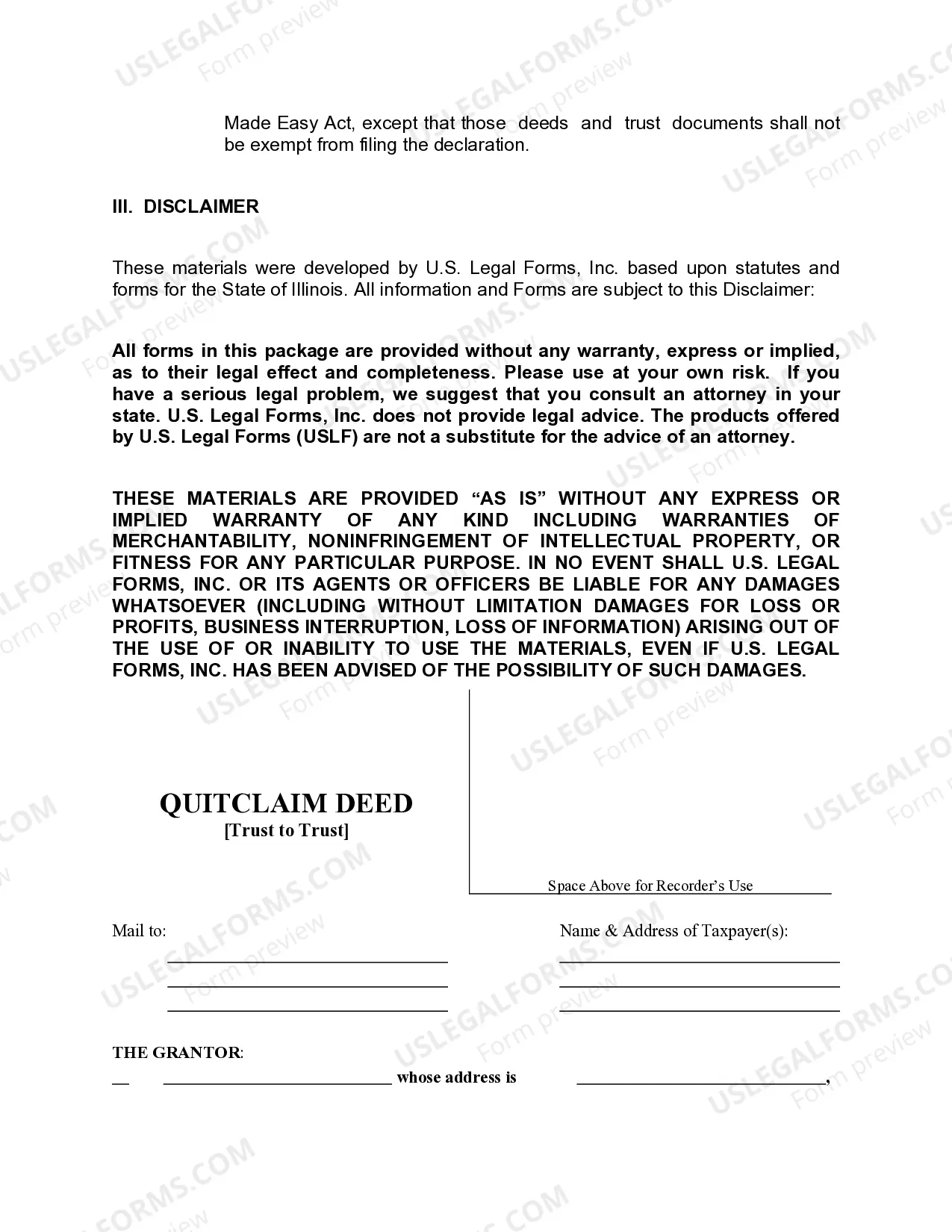
- Identifying information for the grantor (the trust) and grantee (the receiving trust).
- A detailed description of the property being transferred.
- The actual date of the transaction and relevant signatures.
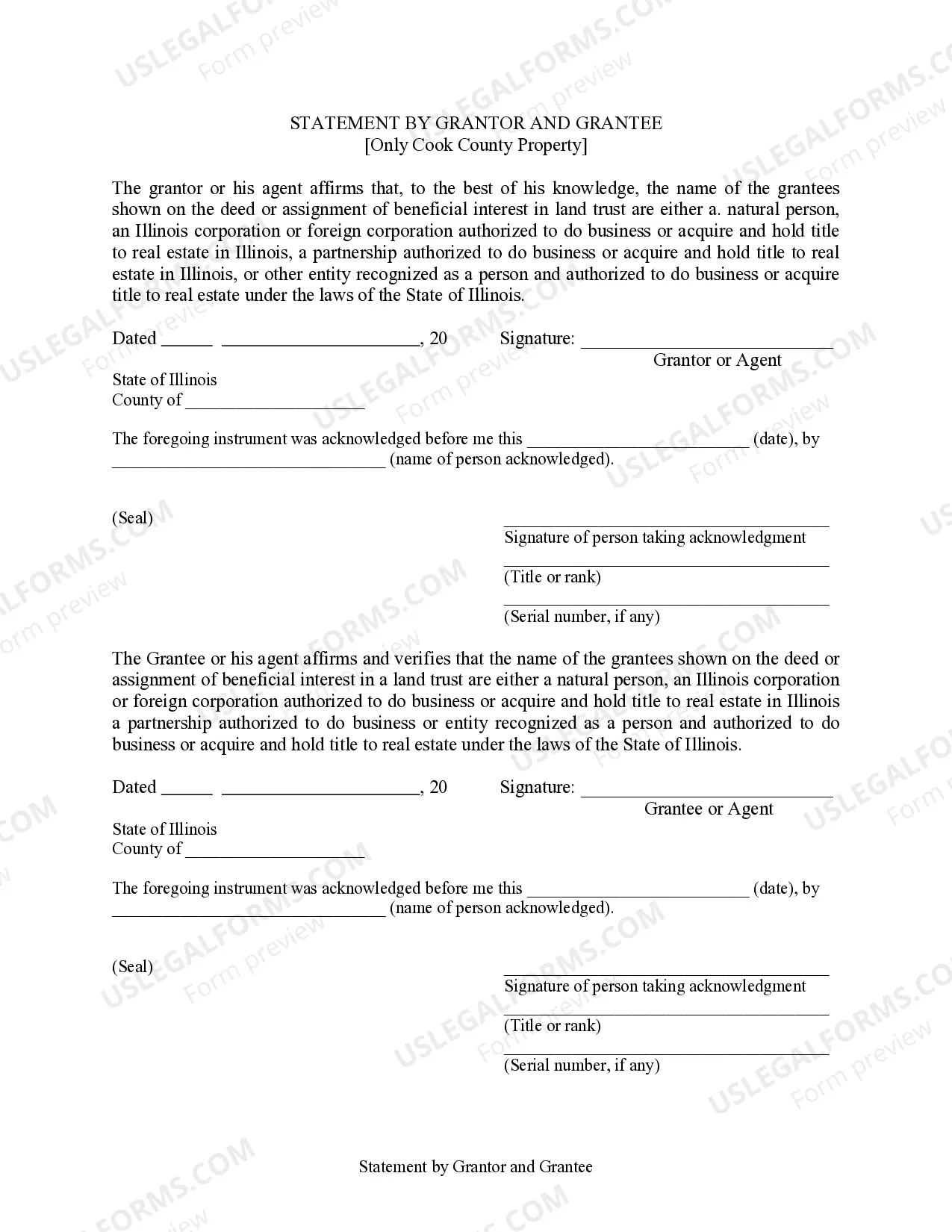
- Notary acknowledgment section to validate the signatures.
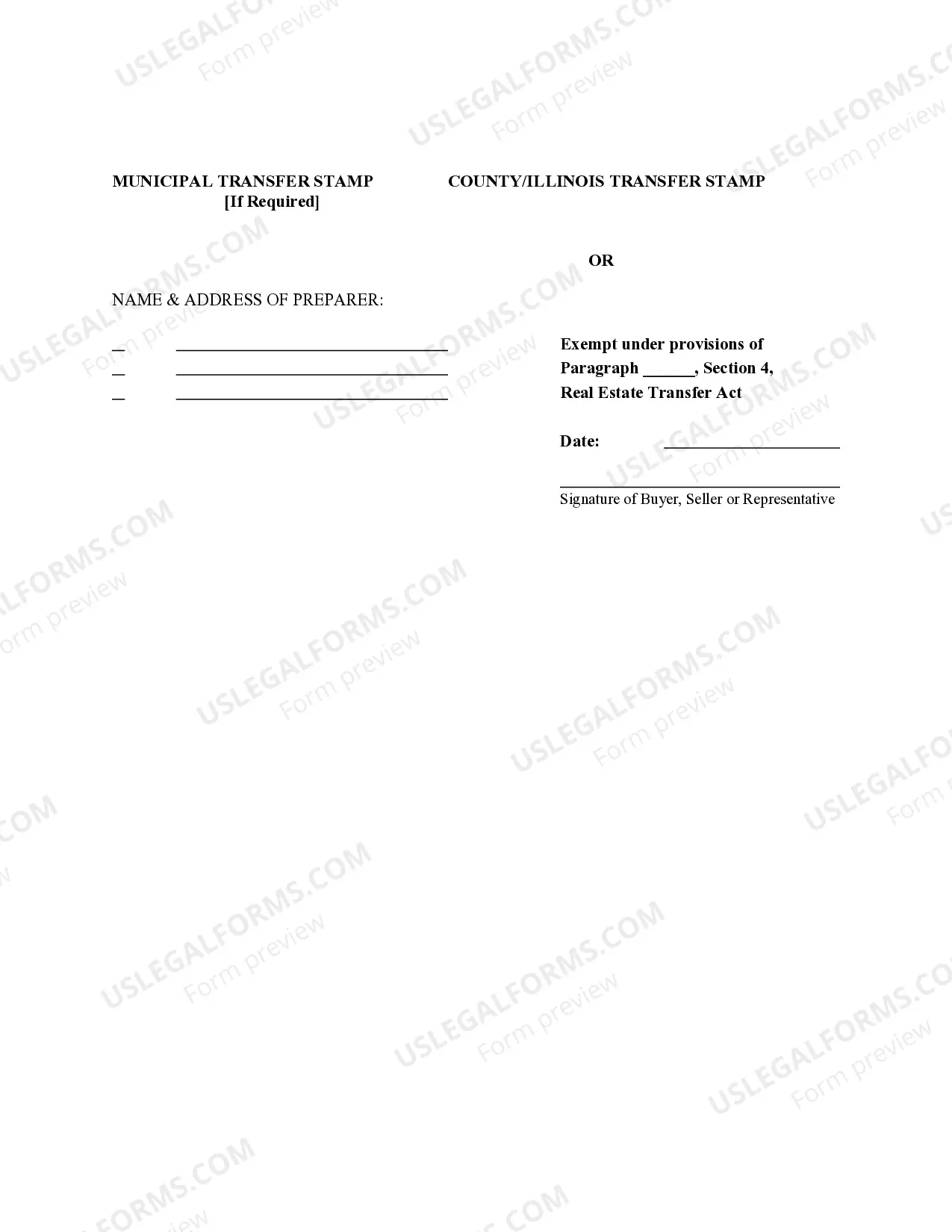
- Space for any applicable municipal or state transfer stamps, if required.






When to use this document
You should use this Quitclaim Deed when a property is being transferred between trusts, particularly when one trust is designated to replace another due to changes in management or beneficiaries. It is particularly useful in estate planning, asset removal or reallocation, or when consolidating properties held under different trusts for administrative purposes.
Intended users of this form
This form is intended for:
- Successor trustees responsible for managing and transferring trust property.
- Trust beneficiaries looking to simplify or restructure trust holdings.
- Individuals or entities involved in estate planning to ensure a smooth transition of property ownership.
How to complete this form
Follow these steps to complete the Quitclaim Deed:
- Identify the parties involved: the grantor (trust) and the grantee (receiving trust).
- Describe the property being transferred, including legal description and address.
- Enter the date of the transaction and ensure all parties sign the document.
- Complete the notary acknowledgment section to validate the deed.
- If required, obtain the necessary municipal or county transfer stamps and file the deed accordingly.
Does this document require notarization?
Yes, this form must be notarized to be legally valid. It is essential to have a notary public witness the signatures of the parties involved, ensuring that the document is properly executed. US Legal Forms offers integrated online notarization 24/7, which provides a secure video call with a licensed notary, ensuring compliance without the need to travel.
Get your form ready online
Our built-in tools help you complete, sign, share, and store your documents in one place.
Make edits, fill in missing information, and update formatting in US Legal Forms—just like you would in MS Word.
Download a copy, print it, send it by email, or mail it via USPS—whatever works best for your next step.
Sign and collect signatures with our SignNow integration. Send to multiple recipients, set reminders, and more. Go Premium to unlock E-Sign.
If this form requires notarization, complete it online through a secure video call—no need to meet a notary in person or wait for an appointment.
We protect your documents and personal data by following strict security and privacy standards.

Make edits, fill in missing information, and update formatting in US Legal Forms—just like you would in MS Word.

Download a copy, print it, send it by email, or mail it via USPS—whatever works best for your next step.

Sign and collect signatures with our SignNow integration. Send to multiple recipients, set reminders, and more. Go Premium to unlock E-Sign.

If this form requires notarization, complete it online through a secure video call—no need to meet a notary in person or wait for an appointment.

We protect your documents and personal data by following strict security and privacy standards.
Common mistakes
- Failing to include a complete property description leading to potential legal disputes.
- Not having the deed notarized when required, making the deed invalid.
- Overlooking municipal transfer stamp requirements, resulting in additional fees or delays.
Advantages of online completion
- Easy and quick online access to the form saves time and reduces paperwork.
- Forms are editable, allowing users to complete them conveniently before printing.
- The accuracy of state-specific legal requirements is ensured by licensed attorneys.
- This Quitclaim Deed is legally valid for property transfers between trusts as long as it complies with state laws.
- Due to its nature, the quitclaim deed does not guarantee clear title, which may lead to potential legal concerns if the title has defects.
Quick recap
- The Quitclaim Deed - Trust, by Successor Trustee, to Trust allows property to be transferred between trusts without title guarantees.
- It is essential to include a detailed property description and have the document notarized.
- Involve a legal professional for complex trust matters to ensure all nuances are properly addressed.
Looking for another form?
Form popularity
FAQ
Yes, a quit claim deed supercedes the trust. The only thing that can be done is to file a suit in court challenging the deed as the product of fraud and undue influence. A court action like that will cost thousands of dollars, but might be worth it if the house was owned free and clear.
Party information: names and addresses of the trustor(s), trustee(s), beneficiary(ies), and guarantor(s) (if applicable) Property details: full address of the property and its legal description (which can be obtained from the County Recorder's Office)
Either draft or have an attorney draft a Trustee's Deed transferring ownership of the real estate out of the trust to the beneficiary. After it is signed, you and the beneficiary must go to the clerk of the court to have the deed recorded in the public records.
In the context of a California mortgage transaction, a trust deed also transfer ownership. Only this time, the title is being placed in the hands of a third-party trustee, who holds the property on behalf of the lender and the homeowner-borrower until the mortgage is paid.
California Property TaxesTransferring real property to yourself as trustee of your own revocable living trust -- or back to yourself -- does not trigger a reassessment for property tax purposes. (Cal. Rev. & Tax Code § 62(d).)
Obtain a California grant deed from a local office supply store or your county recorder's office. Complete the top line of the deed. Indicate the grantee on the second line. Enter the trustees' names and addresses.
Some owners are put off using solicitors duke to the deed of trust cost. Individuals can write out their own, and use someone else as a witness. However, this may have errors or not be a legally binding document. The investment of getting a deed of trust when buying a property is often worth it in the long term.
When you're ready to transfer trust real estate to the beneficiary who is named in the trust document to receive it, you'll need to prepare, sign, and record a deed. That's the document that transfers title to the property from you, the trustee, to the new owner.
A quitclaim deed can be used to transfer property from a trust, but a Special Warranty Deed seems to be a more common way to do this.