Idaho Synchronization and Public Performance License for Multimedia
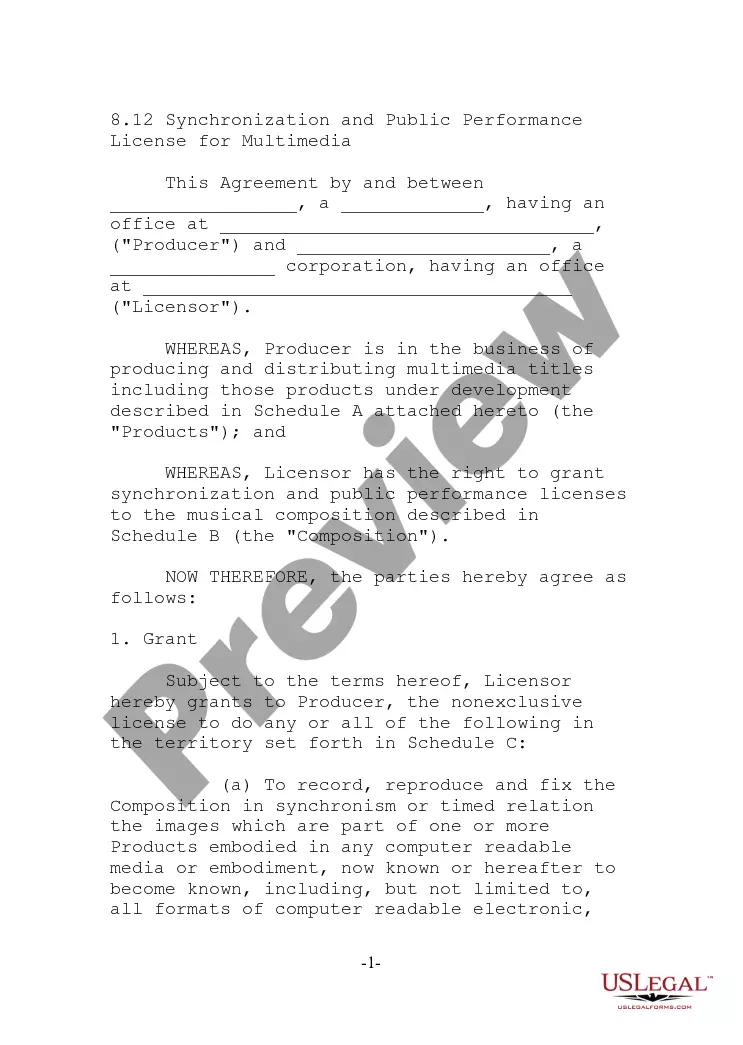
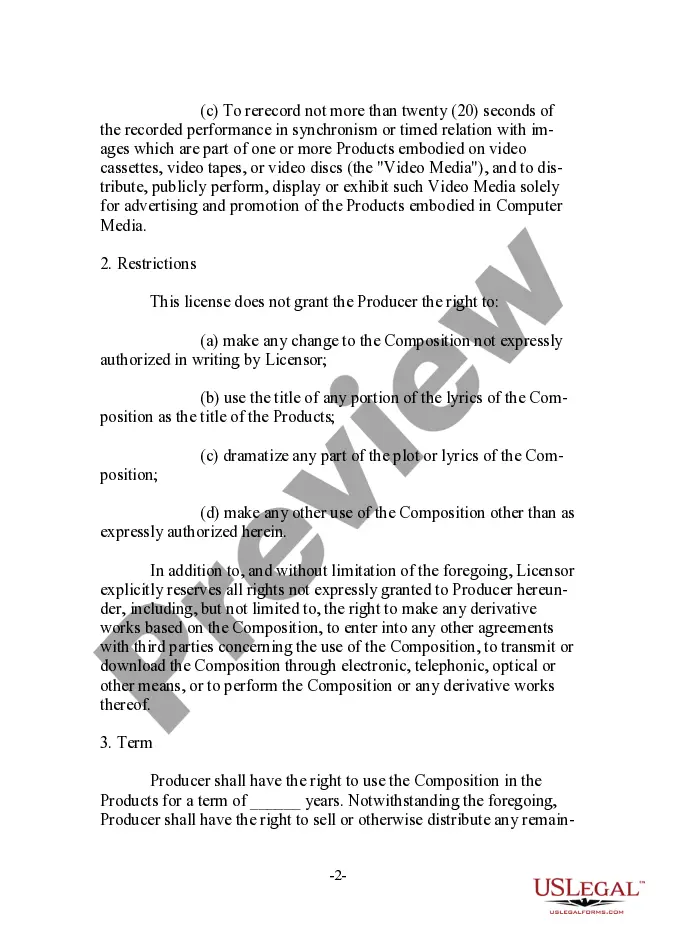
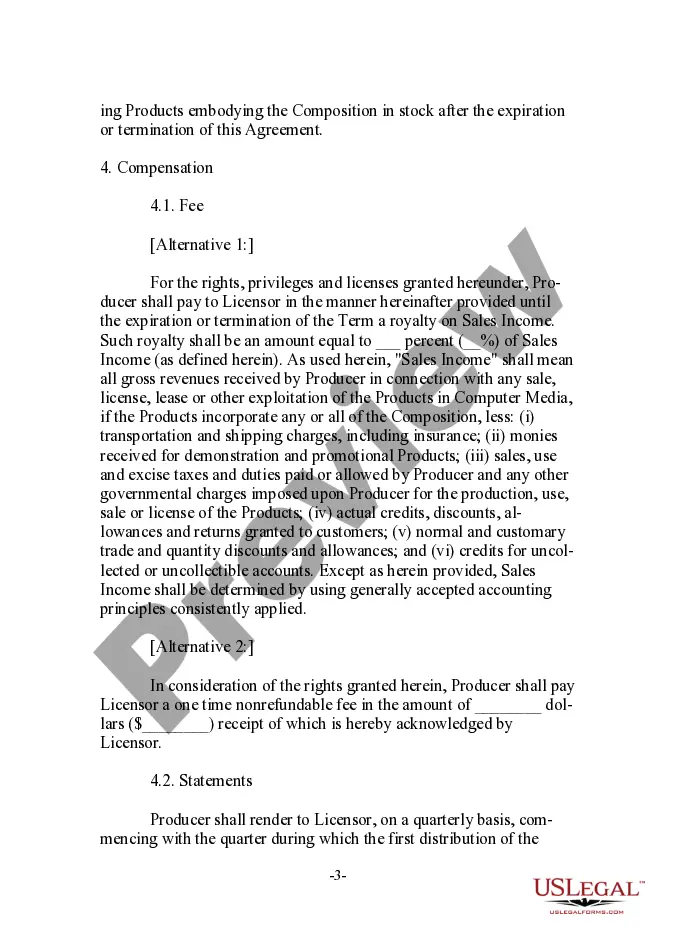
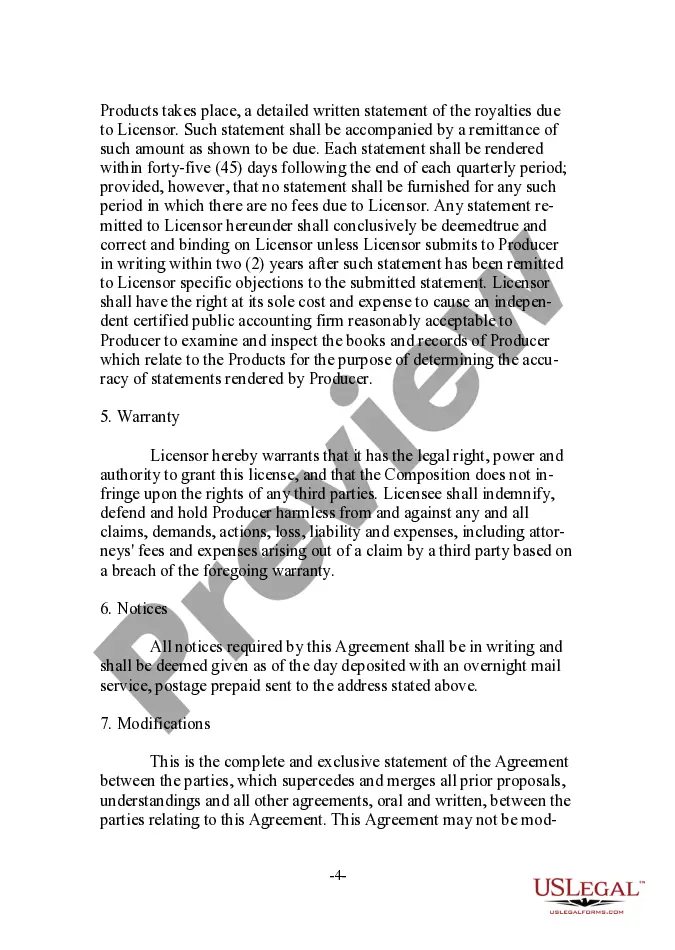
Description
Get your form ready online
Our built-in tools help you complete, sign, share, and store your documents in one place.
Make edits, fill in missing information, and update formatting in US Legal Forms—just like you would in MS Word.
Download a copy, print it, send it by email, or mail it via USPS—whatever works best for your next step.
Sign and collect signatures with our SignNow integration. Send to multiple recipients, set reminders, and more. Go Premium to unlock E-Sign.
If this form requires notarization, complete it online through a secure video call—no need to meet a notary in person or wait for an appointment.
We protect your documents and personal data by following strict security and privacy standards.

Make edits, fill in missing information, and update formatting in US Legal Forms—just like you would in MS Word.

Download a copy, print it, send it by email, or mail it via USPS—whatever works best for your next step.

Sign and collect signatures with our SignNow integration. Send to multiple recipients, set reminders, and more. Go Premium to unlock E-Sign.

If this form requires notarization, complete it online through a secure video call—no need to meet a notary in person or wait for an appointment.

We protect your documents and personal data by following strict security and privacy standards.
Looking for another form?
How to fill out Synchronization And Public Performance License For Multimedia?
You may devote time on-line attempting to find the legal document format that meets the state and federal needs you require. US Legal Forms gives a large number of legal kinds which can be analyzed by pros. You can easily down load or print out the Idaho Synchronization and Public Performance License for Multimedia from the assistance.
If you already possess a US Legal Forms profile, you can log in and click on the Download button. Afterward, you can comprehensive, modify, print out, or indication the Idaho Synchronization and Public Performance License for Multimedia. Every single legal document format you get is the one you have for a long time. To get yet another duplicate of any purchased develop, proceed to the My Forms tab and click on the corresponding button.
Should you use the US Legal Forms site the first time, adhere to the basic recommendations under:
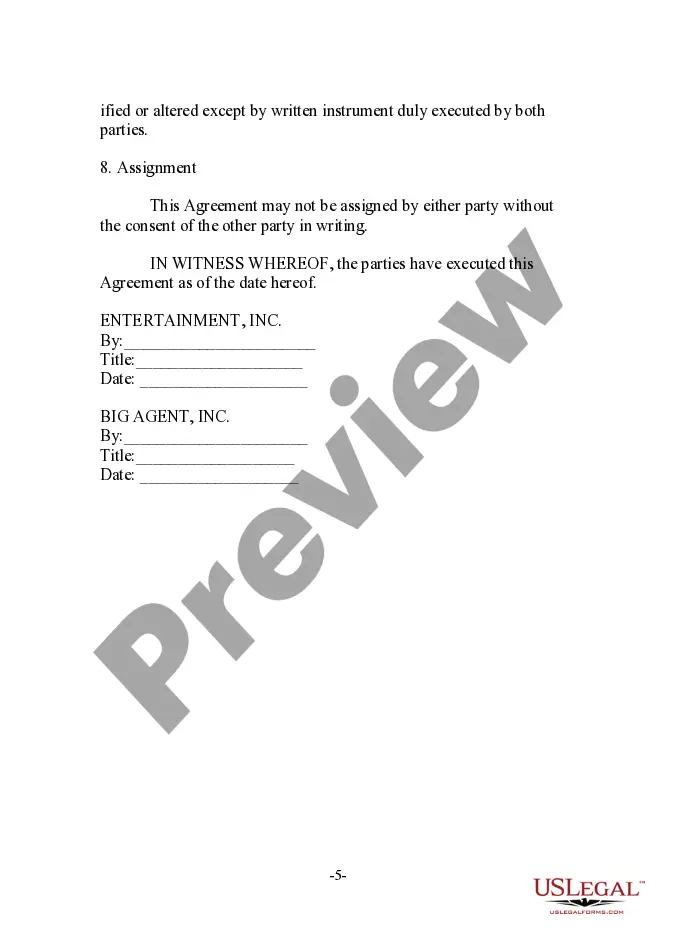
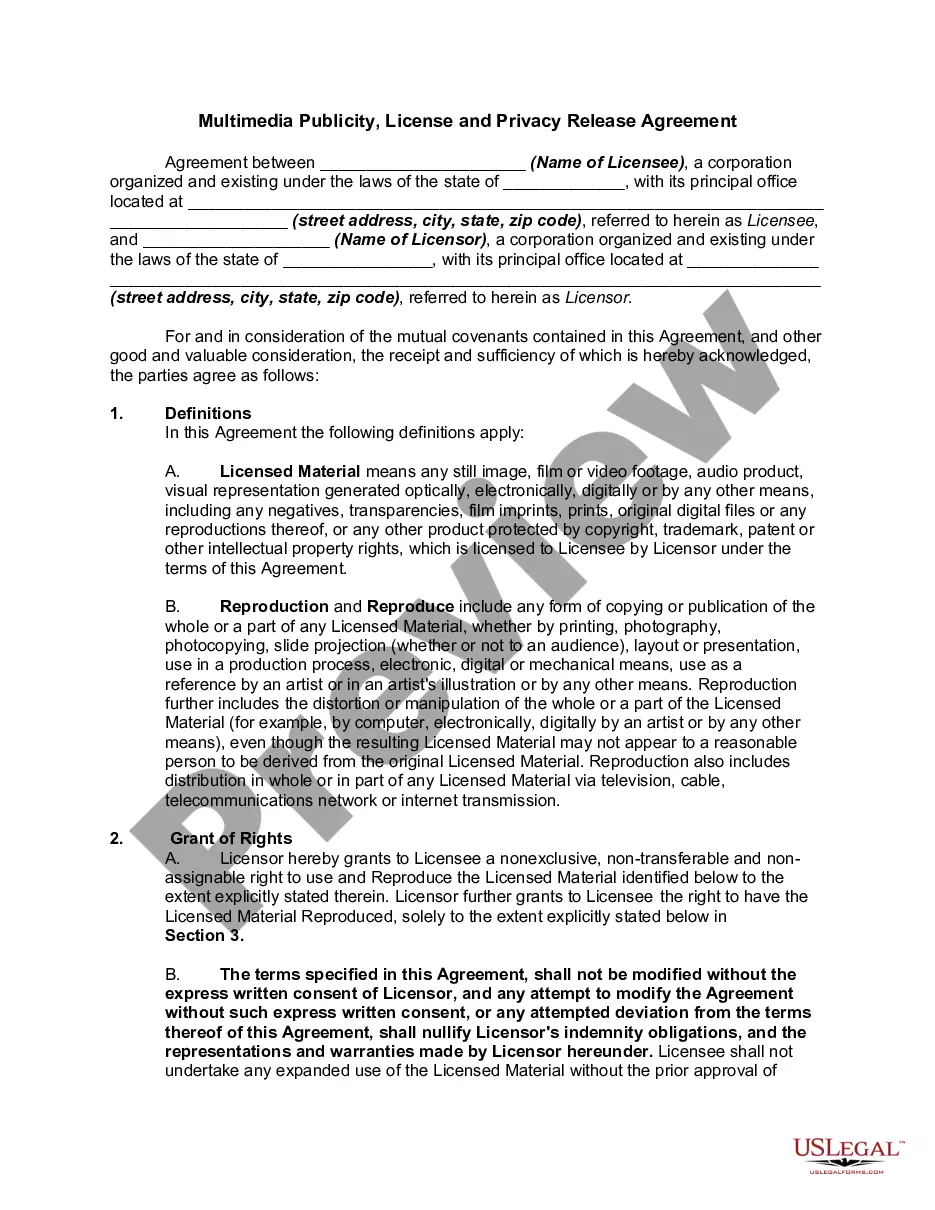
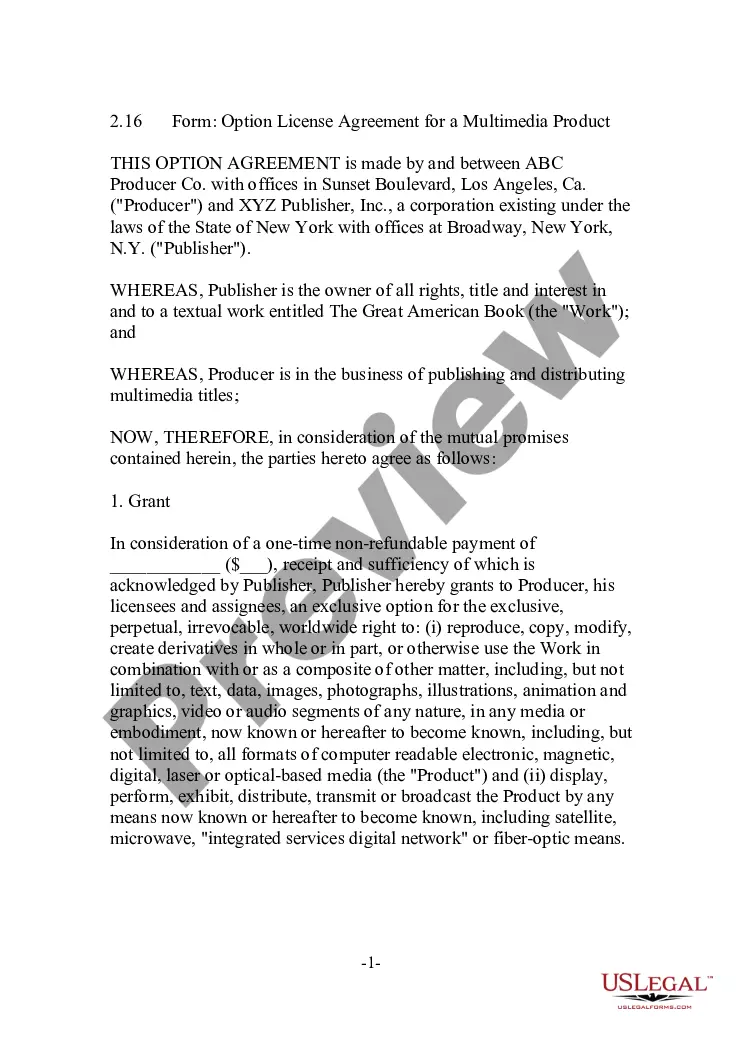
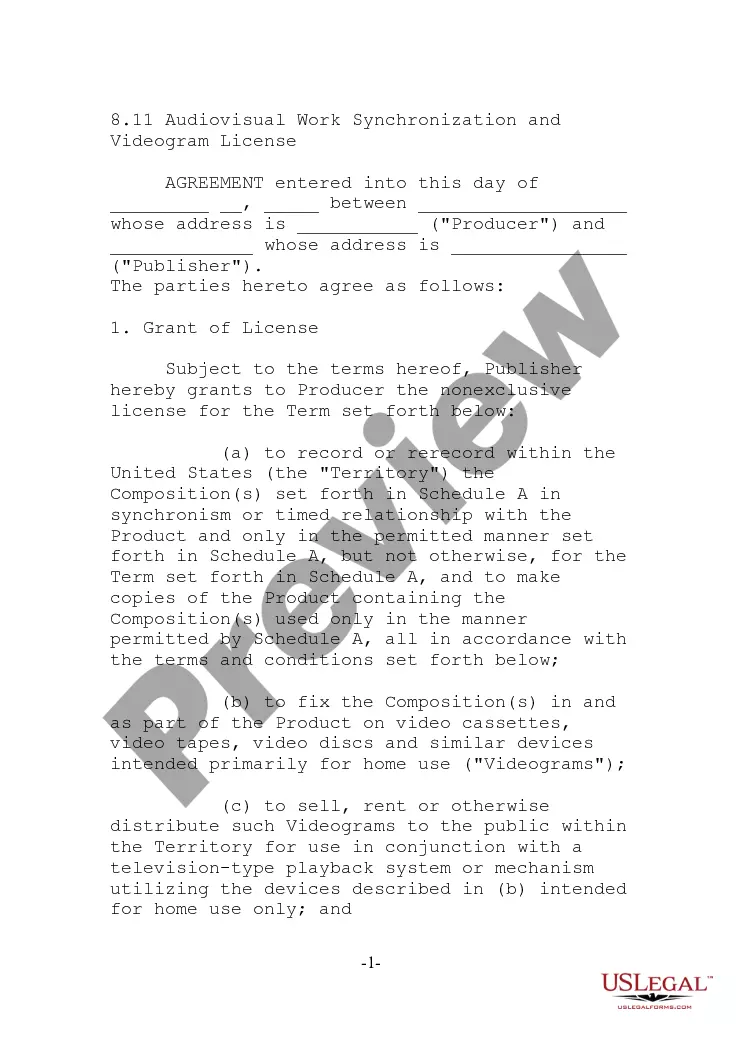
- Initial, make certain you have chosen the right document format to the area/metropolis of your choice. Browse the develop description to make sure you have selected the appropriate develop. If offered, use the Preview button to search throughout the document format as well.
- If you wish to discover yet another variation from the develop, use the Lookup industry to get the format that suits you and needs.
- When you have found the format you want, just click Get now to move forward.
- Select the costs prepare you want, key in your references, and sign up for a merchant account on US Legal Forms.
- Comprehensive the financial transaction. You may use your Visa or Mastercard or PayPal profile to purchase the legal develop.
- Select the formatting from the document and down load it in your gadget.
- Make modifications in your document if necessary. You may comprehensive, modify and indication and print out Idaho Synchronization and Public Performance License for Multimedia.
Download and print out a large number of document web templates while using US Legal Forms Internet site, which provides the most important variety of legal kinds. Use expert and status-distinct web templates to handle your organization or personal requires.
Form popularity
FAQ
Whenever you release a recording of a song that someone else wrote in a video format, even if it's just a small portion of the song, you need a synchronization license. Synchronization licenses are most commonly used for YouTube videos, cover song videos, wedding videos, and commercial and corporate videos.
A synchronization license is an agreement between a music user and the owner of a copyrighted composition (song) that grants permission to release the song in a video format (YouTube, DVDs, Blue-ray discs). This permission is also called synchronization rights, synch rights, or sync rights.
In order to use that recording, you'll need a master use license. Together, a master use license and a sync license will allow you to add your favorite songs to the films and video games you create. The good news is that you don't have to contact famous celebrities directly in order to obtain these licenses.
Non-Commercial Videogram Synchronization License: This involves using a song in a video or ?on-screen performance,? starting at $0.25 per copy with a minimum license amount of $25 per license.
Put simply; you can legally use music in videos if you have permission from the person, people, or company who owns the rights. Since the publisher and the record label usually hold music rights, you'll have to get permission from both. From the publisher or composer, you'll get a synchronization (or sync license).
The mechanical license only covers the audio portion of your YouTube cover. To post video along with the song, you'll need a synchronization license, also called a ?sync" license.
The copyright holder of the music grants the license, and your cost ranges from a handful of dollars to hundreds of thousands of dollars, depending on the song and how you are using it. No law forces a copyright holder to grant a synchronization license to anybody willing to pay for it.
Business owners in the United States should contact the three rights agencies that handle all public performance licensing in the United States, ASCAP, BMI, and SESAC, to inquire about obtaining public performance licenses.