California Perpetual Conservation Easement Grant To Maintain Property in Natural and Open Space Environment
Overview of this form
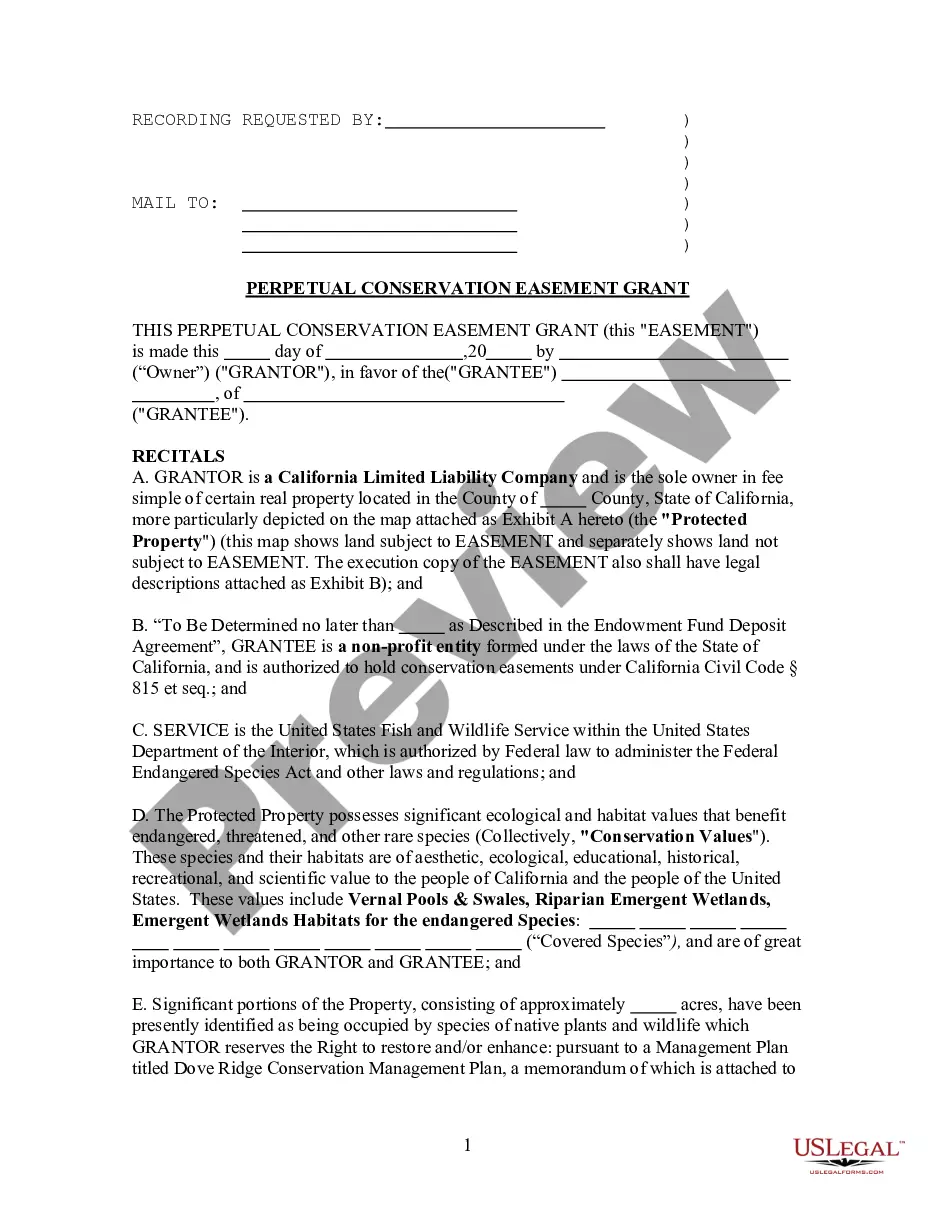
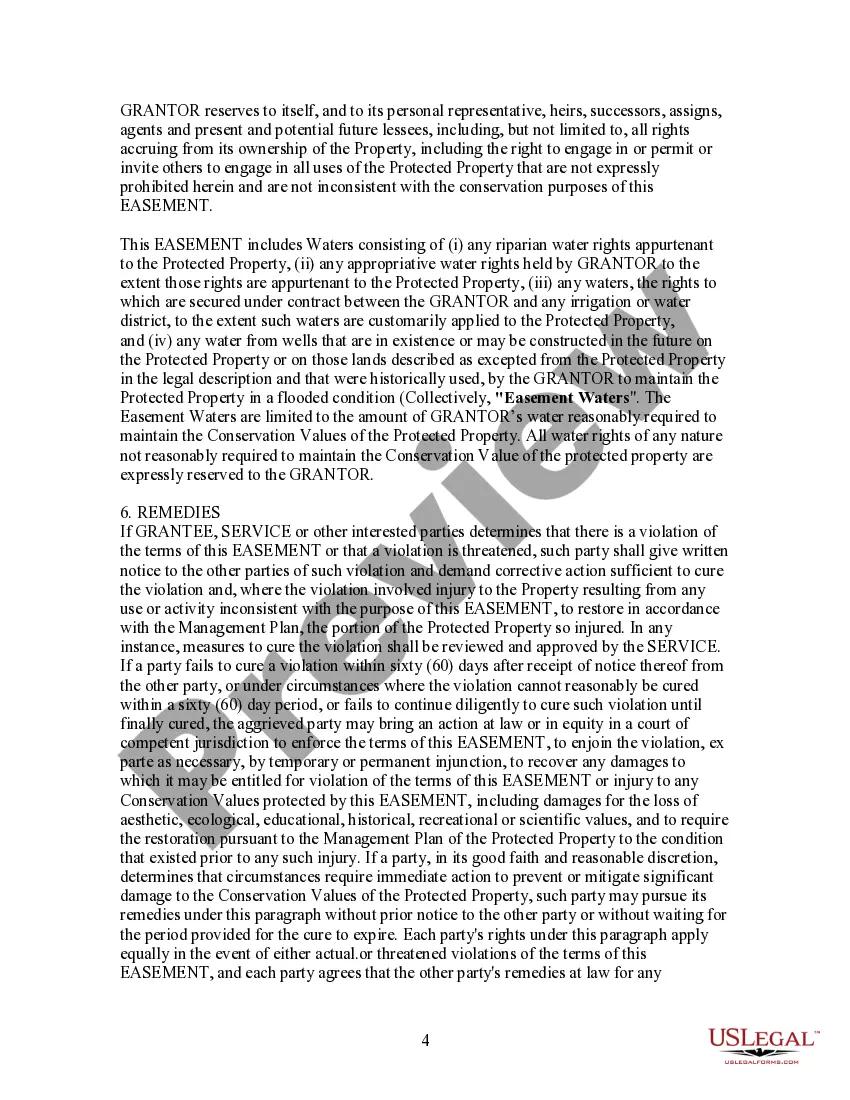
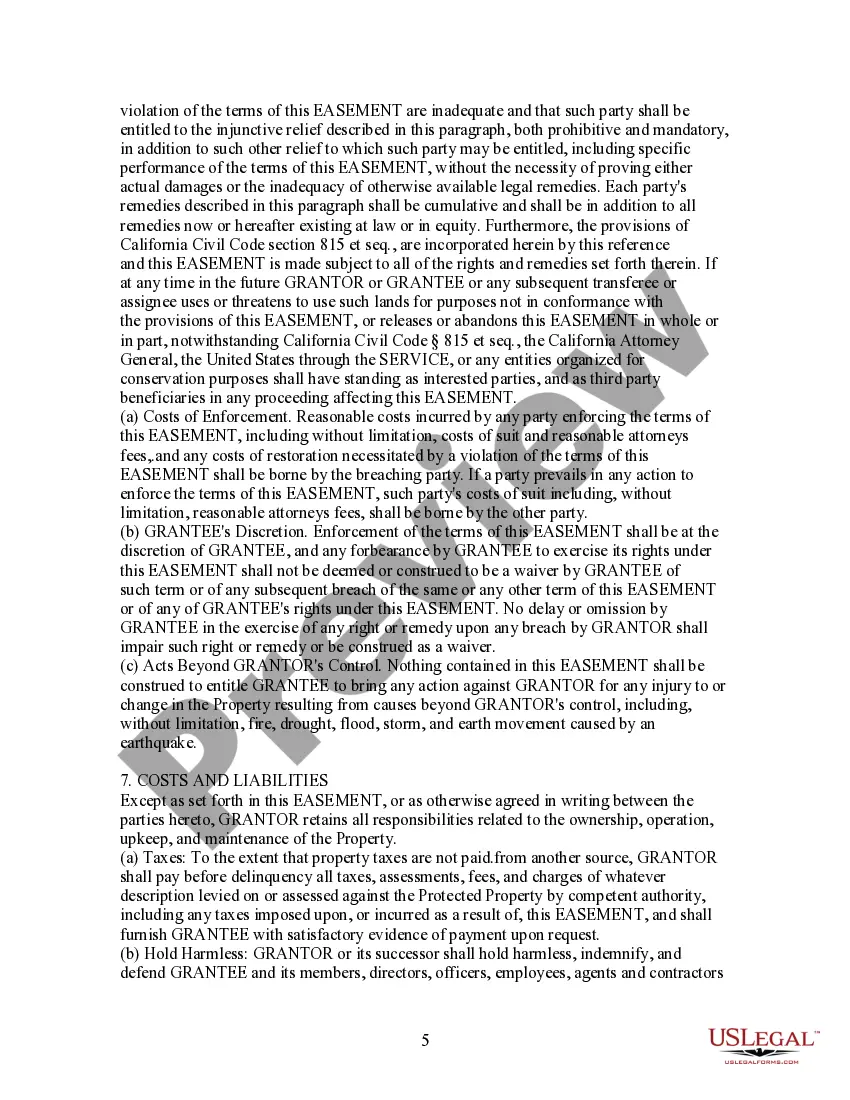
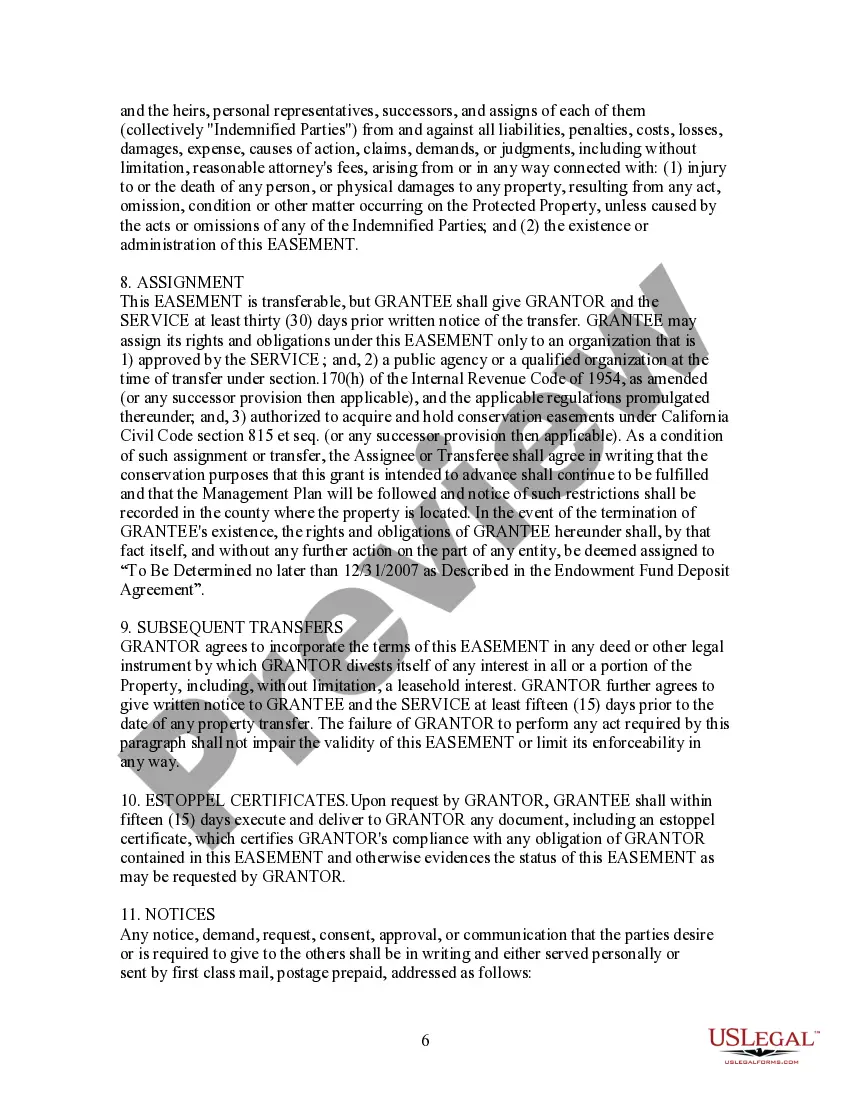
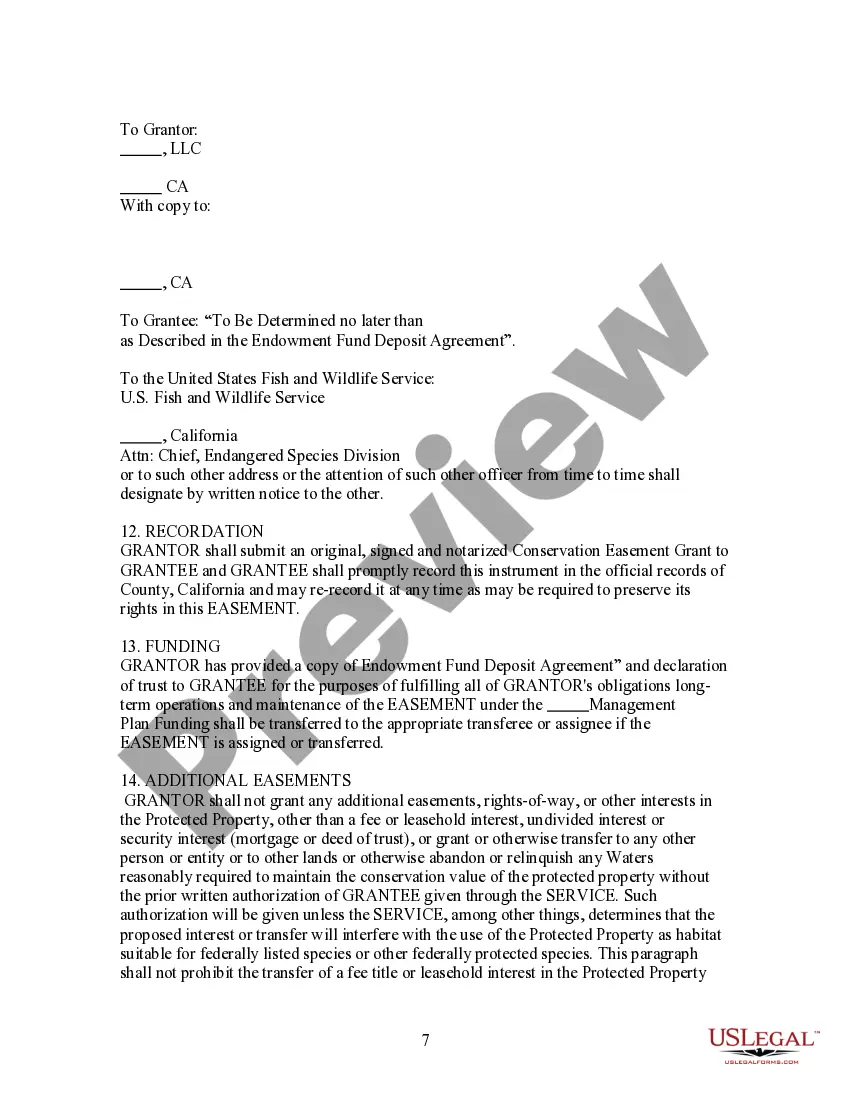
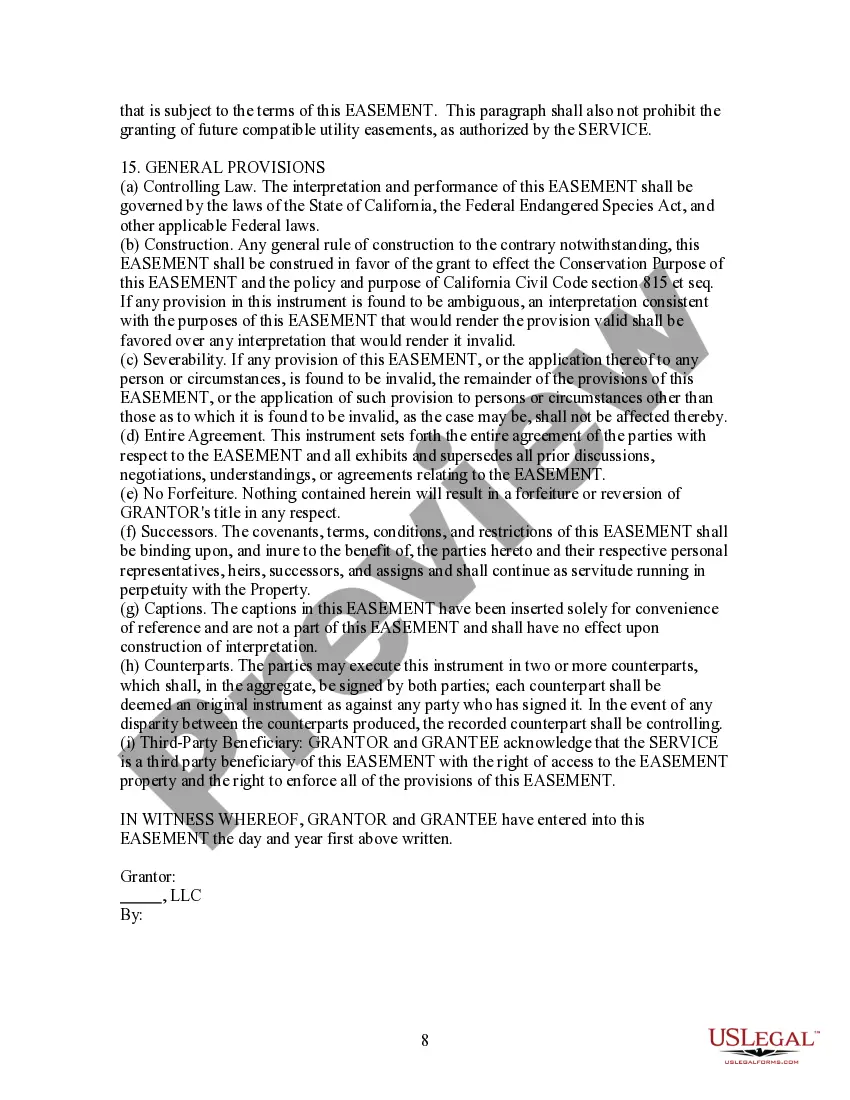
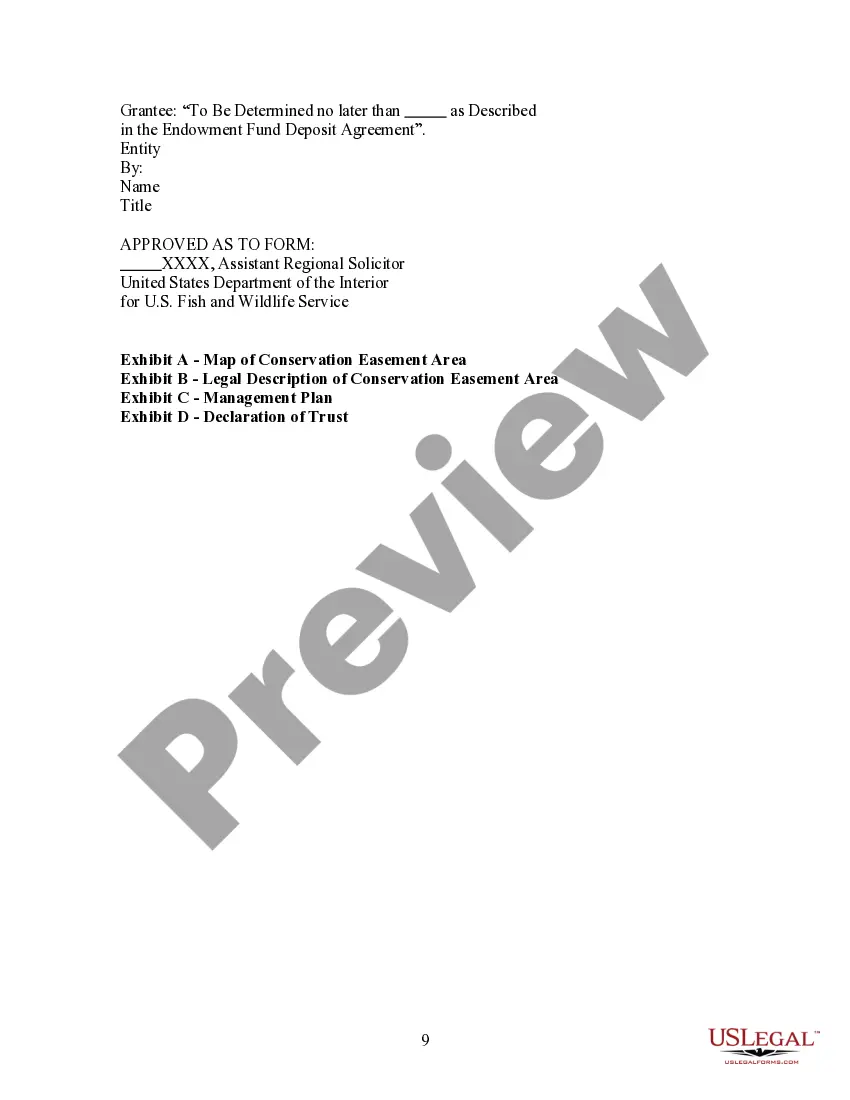
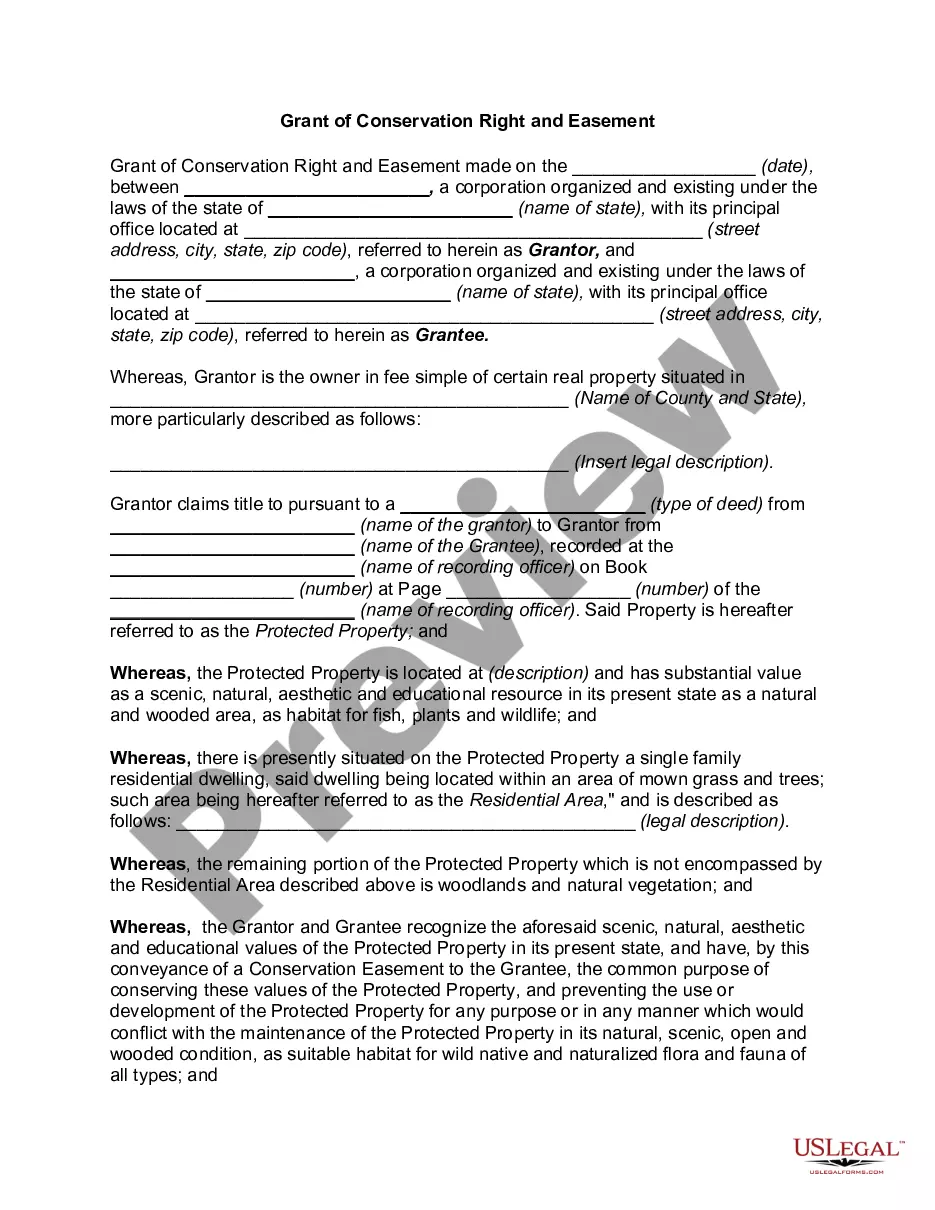
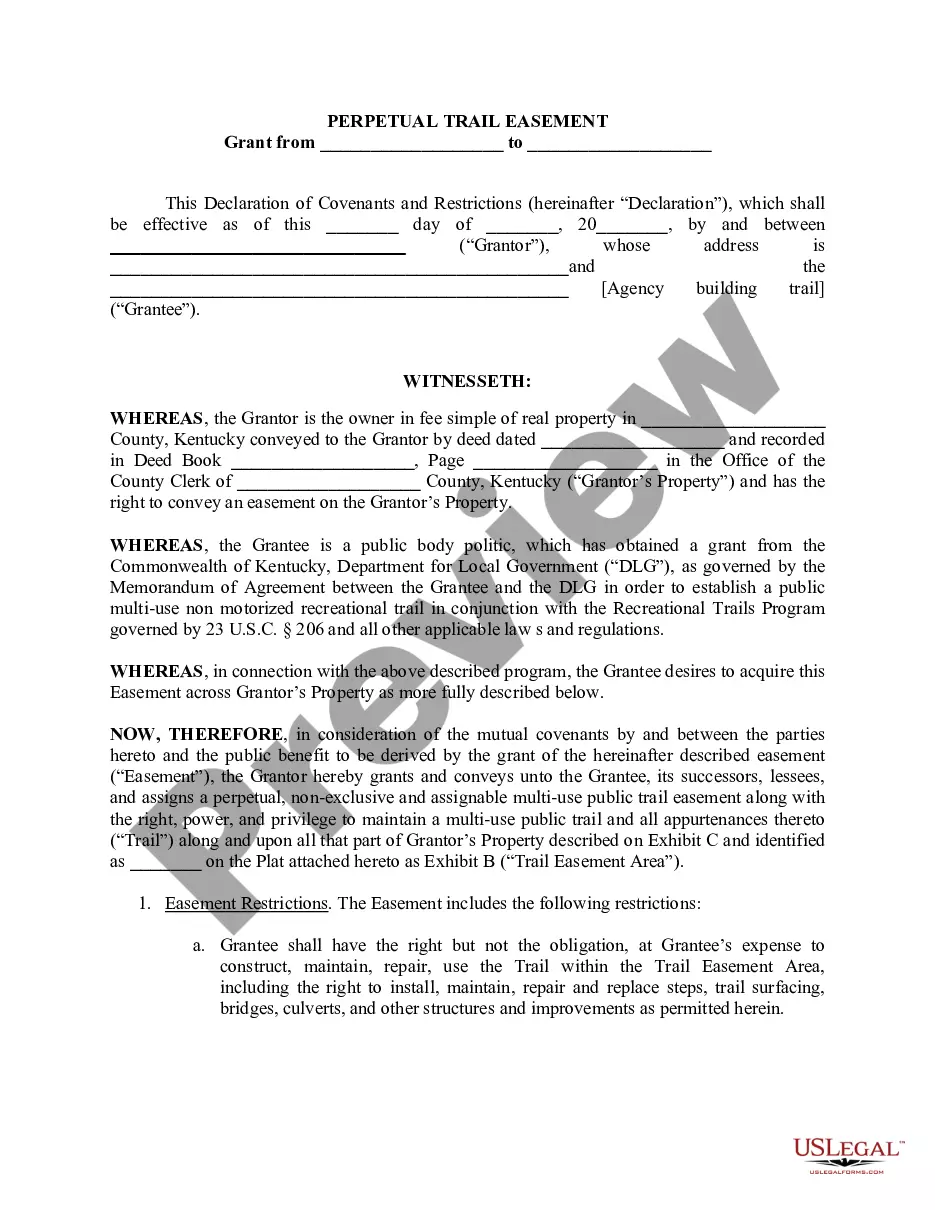
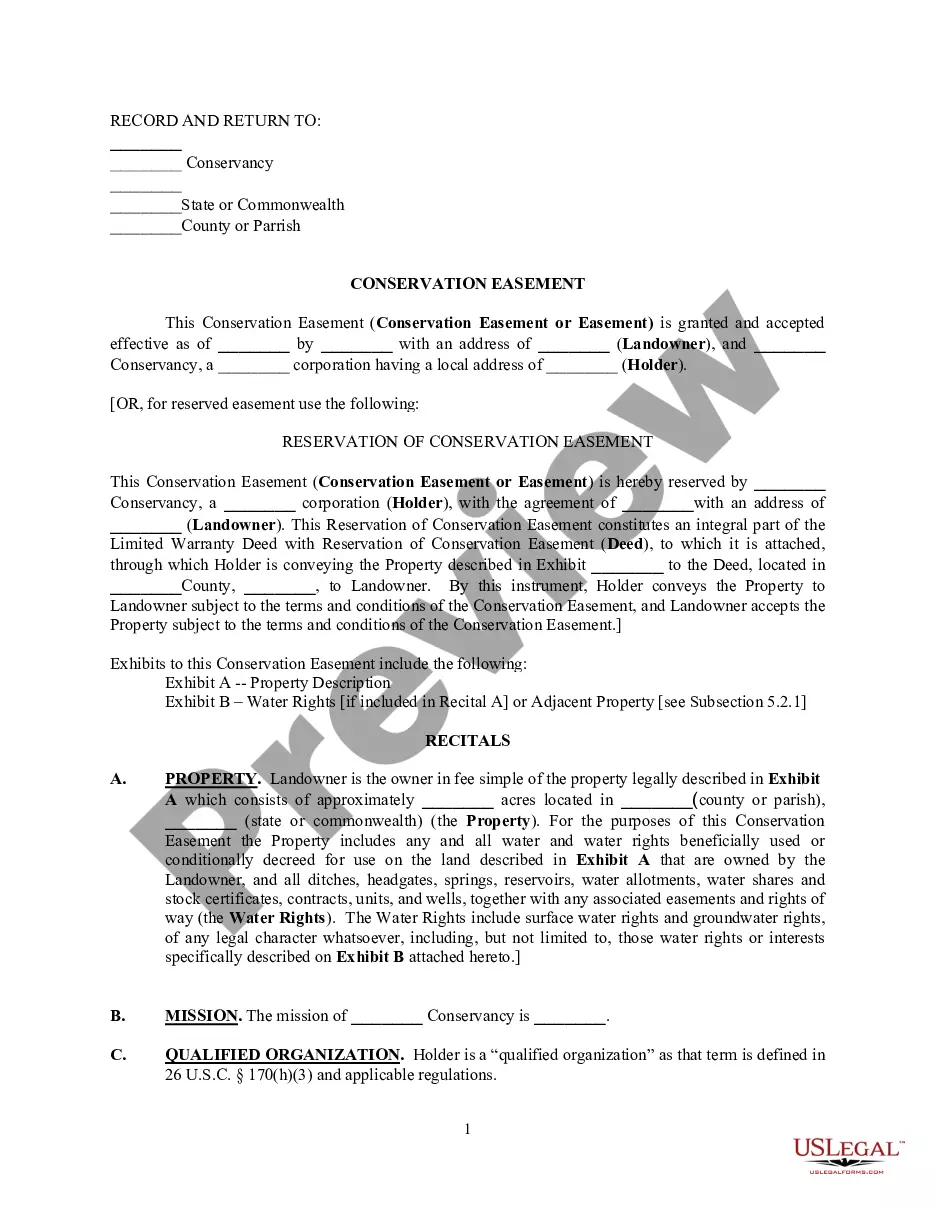
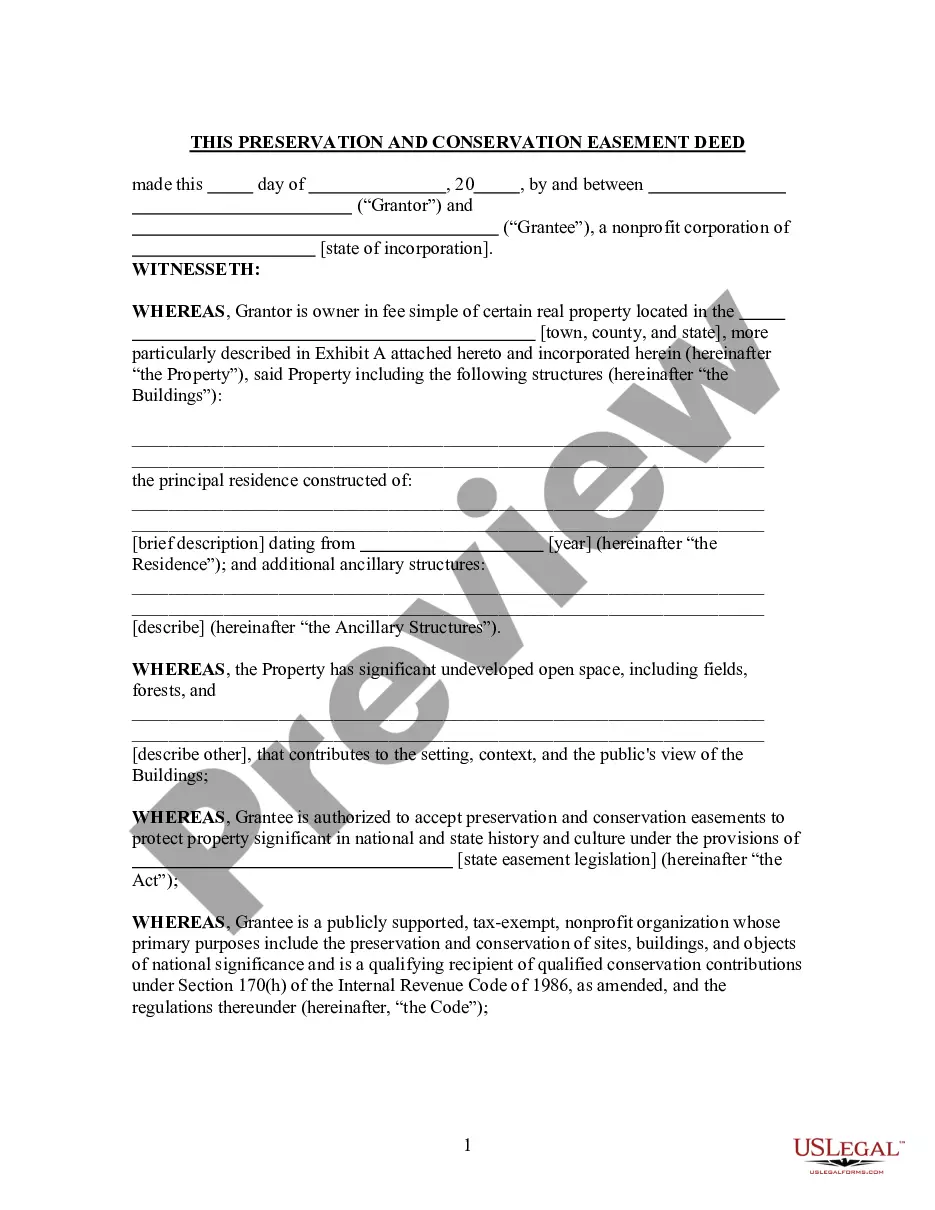
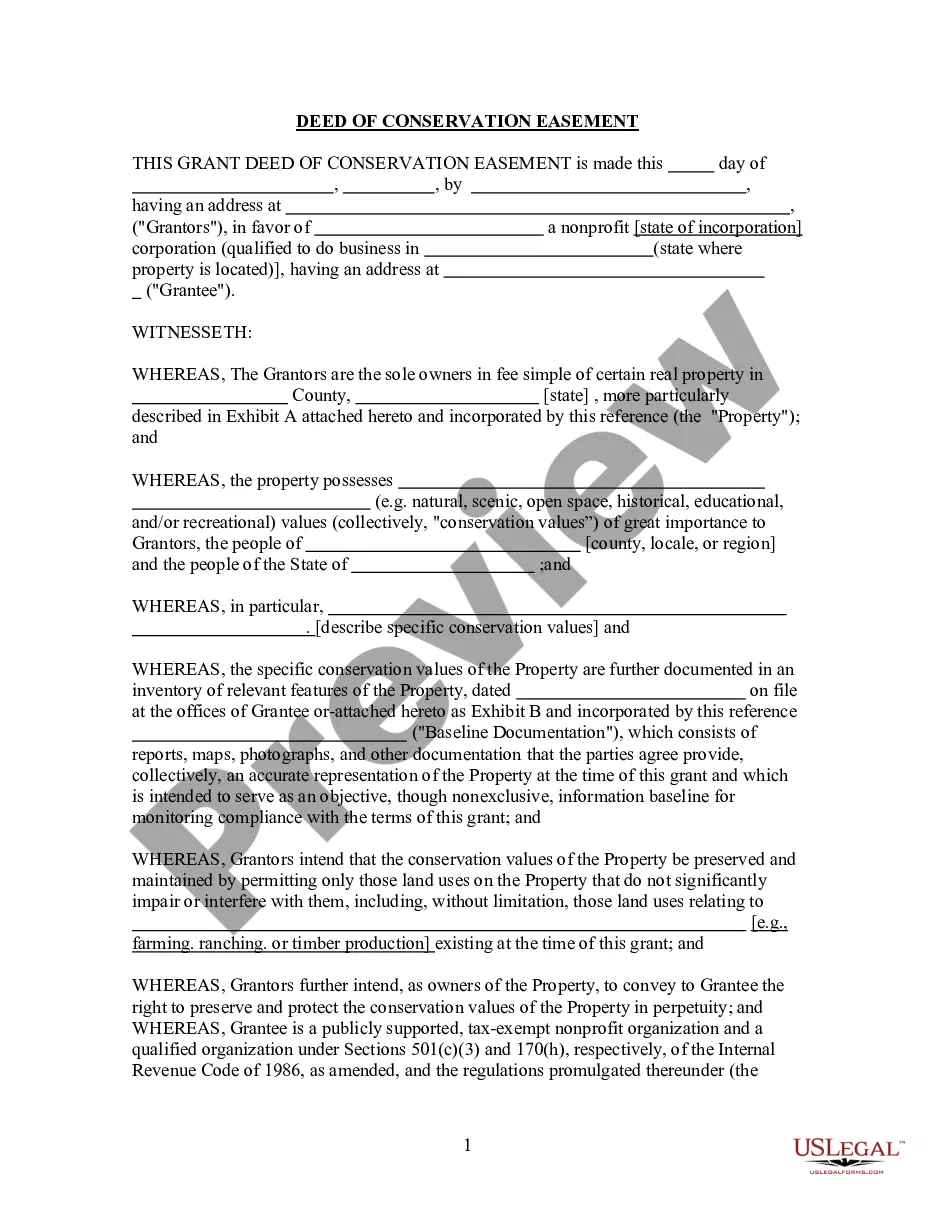
The Perpetual Conservation Easement Grant To Maintain Property in Natural and Open Space Environment is a legal document designed to ensure that a specified property remains preserved in its natural state for environmental benefits. This form allows the landowner (the Grantor) to grant perpetual conservation rights to a designated organization (the Grantee), ensuring that the land is maintained for agricultural and open space values. It differs from other property agreements by specifically prohibiting activities that might harm the land's conservation value, thereby safeguarding its ecological and cultural significance.
Key components of this form
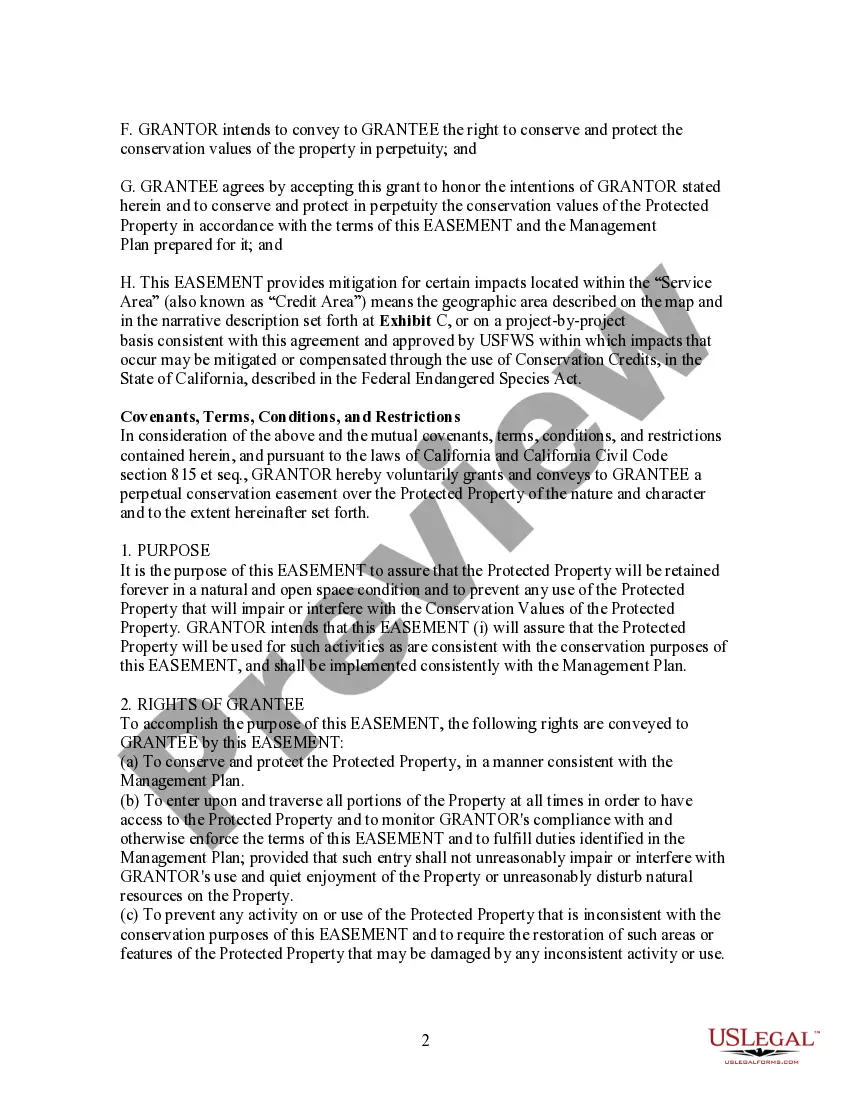
- Purpose: Establishes the intent to conserve and protect natural values of the property in perpetuity.
- Rights of Grantee: Outlines specific rights given to the Grantee for monitoring and enforcing conservation efforts.
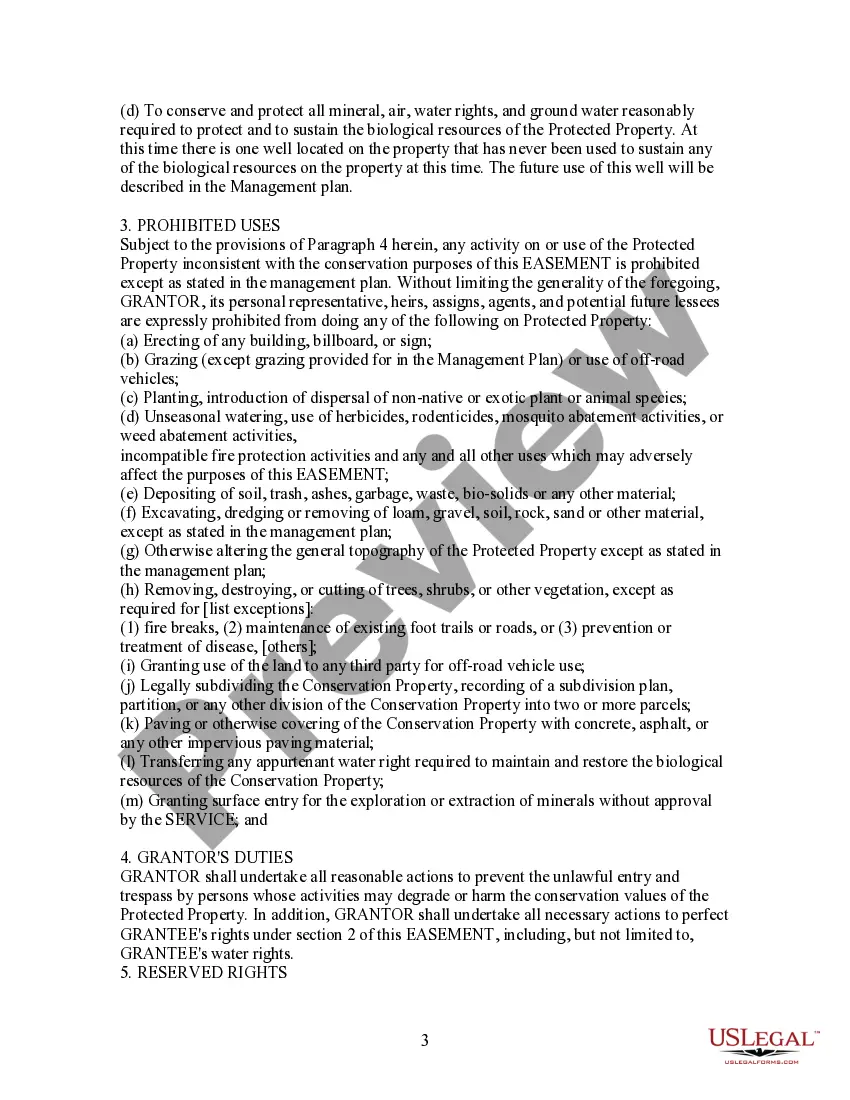
- Prohibited Uses: Lists activities that are not permitted on the property to maintain its conservation status.
- Grantorâs Duties: Details responsibilities that the Grantor must uphold to protect the conservation values.
- Reserved Rights: Enumerates rights that the Grantor retains while still adhering to conservation standards.
When this form is needed
This form should be used when a property owner wants to ensure that their land is preserved for natural and agricultural uses. It is particularly relevant for landowners involved in environmental conservation initiatives, those receiving public or private funding for conservation, or parties needing to mitigate impacts related to development or environmental regulations. The easement helps to maintain open space, biodiversity, and legal standing for conservation projects.
Who can use this document
- Property Owners: Individuals or organizations that own land and wish to preserve its conservation values.
- Conservation Organizations: Entities that work towards environmental protection and require legal easements for monitoring.
- Public Agencies: Governmental bodies that support conservation efforts and need to formalize agreements with landowners.
- Developers: Companies requiring a structured approach to mitigating environmental impacts during land development.
Completing this form step by step
- Identify the parties: Enter the names of the Grantor (property owner) and Grantee (organization receiving conservation rights).
- Specify the property: Provide a detailed description of the property being placed under the conservation easement, including any relevant maps.
- Define the conservation values: State the specific ecological or agricultural values that the easement aims to preserve.
- Outline prohibited activities: Clearly list any activities that are to be prohibited to maintain the conservation purpose of the property.
- Include signatures: All parties must sign and date the document to make it legally binding.
Does this form need to be notarized?
This form does not typically require notarization unless specified by local law. However, having it notarized can add an extra layer of legal validity and formal recognition of the agreement.
Get your form ready online
Our built-in tools help you complete, sign, share, and store your documents in one place.
Make edits, fill in missing information, and update formatting in US Legal Forms—just like you would in MS Word.
Download a copy, print it, send it by email, or mail it via USPS—whatever works best for your next step.
Sign and collect signatures with our SignNow integration. Send to multiple recipients, set reminders, and more. Go Premium to unlock E-Sign.
If this form requires notarization, complete it online through a secure video call—no need to meet a notary in person or wait for an appointment.
We protect your documents and personal data by following strict security and privacy standards.

Make edits, fill in missing information, and update formatting in US Legal Forms—just like you would in MS Word.

Download a copy, print it, send it by email, or mail it via USPS—whatever works best for your next step.

Sign and collect signatures with our SignNow integration. Send to multiple recipients, set reminders, and more. Go Premium to unlock E-Sign.

If this form requires notarization, complete it online through a secure video call—no need to meet a notary in person or wait for an appointment.

We protect your documents and personal data by following strict security and privacy standards.
Avoid these common issues
- Failing to accurately describe the property can lead to enforcement issues.
- Overlooking or improperly defining prohibited uses may result in unintentional violations.
- Not providing enough detail in the management plan can lead to confusion regarding conservation efforts.
- Neglecting to signify all parties properly may invalidate the document.
Advantages of online completion
- Convenience of downloading from home without the need for in-person consultations.
- Editability allows users to customize the document to fit specific needs and situations.
- Access to templates drafted by licensed attorneys, ensuring legal accuracy.
- Time-saving features streamline the process of creating essential legal documents.
Legal use & context
- This easement is legally binding and enforceable under California law.
- Ensures compliance with environmental regulations outlined in the Federal Endangered Species Act.
- Can be challenged in court if terms are violated, protecting the conservation values of the property.
Key takeaways
- The Perpetual Conservation Easement is essential for landowners seeking to protect their propertyâs natural values.
- Clear definition of rights, duties, and prohibited uses is crucial to enforce the easement effectively.
- Understanding state-specific laws and requirements enhances the legal efficacy of the form.
Key terms explained
- Grantor: The property owner conveying the easement rights.
- Grantee: The entity or individual receiving the easement rights for conservation purposes.
- Protected Property: The land subject to the conservation easement.
- Conservation Values: The ecological, agricultural, or cultural qualities of the land that the easement aims to protect.
Looking for another form?

Form popularity
FAQ
To place your land in a conservation easement, start by reaching out to a land trust or a local conservation organization. They can guide you through the process of applying for a California Perpetual Conservation Easement Grant To Maintain Property in Natural and Open Space Environment. After they assess your property, they will help outline the terms of the easement and any restrictions or allowances. This partnership ensures that your land conservation goals align with legal and environmental standards.
Conservation easements can be a worthwhile investment, particularly as they provide tax benefits and preserve land value. By participating in a California Perpetual Conservation Easement Grant To Maintain Property in Natural and Open Space Environment, landowners contribute to environmental conservation while potentially receiving financial incentives. Moreover, these easements can enhance the aesthetic appeal of your land and provide peace of mind knowing you are protecting natural resources. It’s a smart way to ensure your land's legacy.
For a conservation easement, there is no strict minimum amount of land required, but larger parcels often make a more significant impact. In the context of the California Perpetual Conservation Easement Grant To Maintain Property in Natural and Open Space Environment, it is advisable to consult with local authorities or conservation organizations. They can help you determine what size of land would be most beneficial for both your goals and the local ecosystem. Investing in a suitable plot can create lasting natural benefits.
A green space easement is a legal tool designed to preserve and protect public green spaces by restricting development on the property. This approach aligns with the California Perpetual Conservation Easement Grant To Maintain Property in Natural and Open Space Environment, ensuring that valuable landscapes and ecosystems remain intact. By implementing such easements, communities can maintain their natural beauty and ecological health.
You can refuse an easement if it has not yet been formally established or if you are not the property owner. If a request for a conservation easement, such as the California Perpetual Conservation Easement Grant To Maintain Property in Natural and Open Space Environment, is made, you have the right to negotiate the terms or decline participation. It’s important to carefully consider the implications of all easement options.
The most common type of easement on residential property is a utility easement, which grants utility companies the right to access the land for maintenance and installation of services. However, many homeowners also consider California Perpetual Conservation Easement Grants To Maintain Property in Natural and Open Space Environment to protect their natural resources and preserve green spaces. Understanding the types of easements available allows you to make informed decisions about property use.
A nature conservancy easement is a legal agreement that protects a property’s natural features and resources. This type of easement is similar to the California Perpetual Conservation Easement Grant To Maintain Property in Natural and Open Space Environment, focusing on preserving habitats and promoting environmental stewardship. It allows landowners to retain ownership while ensuring that the land remains in its natural state.
Yes, a perpetual easement generally runs with the land, meaning it remains in effect even if ownership changes. This aspect allows future owners to understand the protected status of the property under the California Perpetual Conservation Easement Grant To Maintain Property in Natural and Open Space Environment. Therefore, it is essential to consider the implications for ongoing property use.
Removing land from a conservation easement is possible, but it typically involves a legal process. You may need to work with local authorities and demonstrate a valid reason for the change. In many cases, the terms of a California Perpetual Conservation Easement Grant To Maintain Property in Natural and Open Space Environment are binding and may not allow cancellation without consent from the easement holder.
A California Perpetual Conservation Easement Grant To Maintain Property in Natural and Open Space Environment allows landowners to preserve their property for conservation purposes. For instance, if a landowner has a beautiful stretch of woodlands, they can place a conservation easement on that land. This easement restricts development and ensures the area remains untouched for future generations. It is an effective way to contribute to environmental sustainability while retaining ownership of the property.