California Cross-Complaint for Damages
Understanding this form
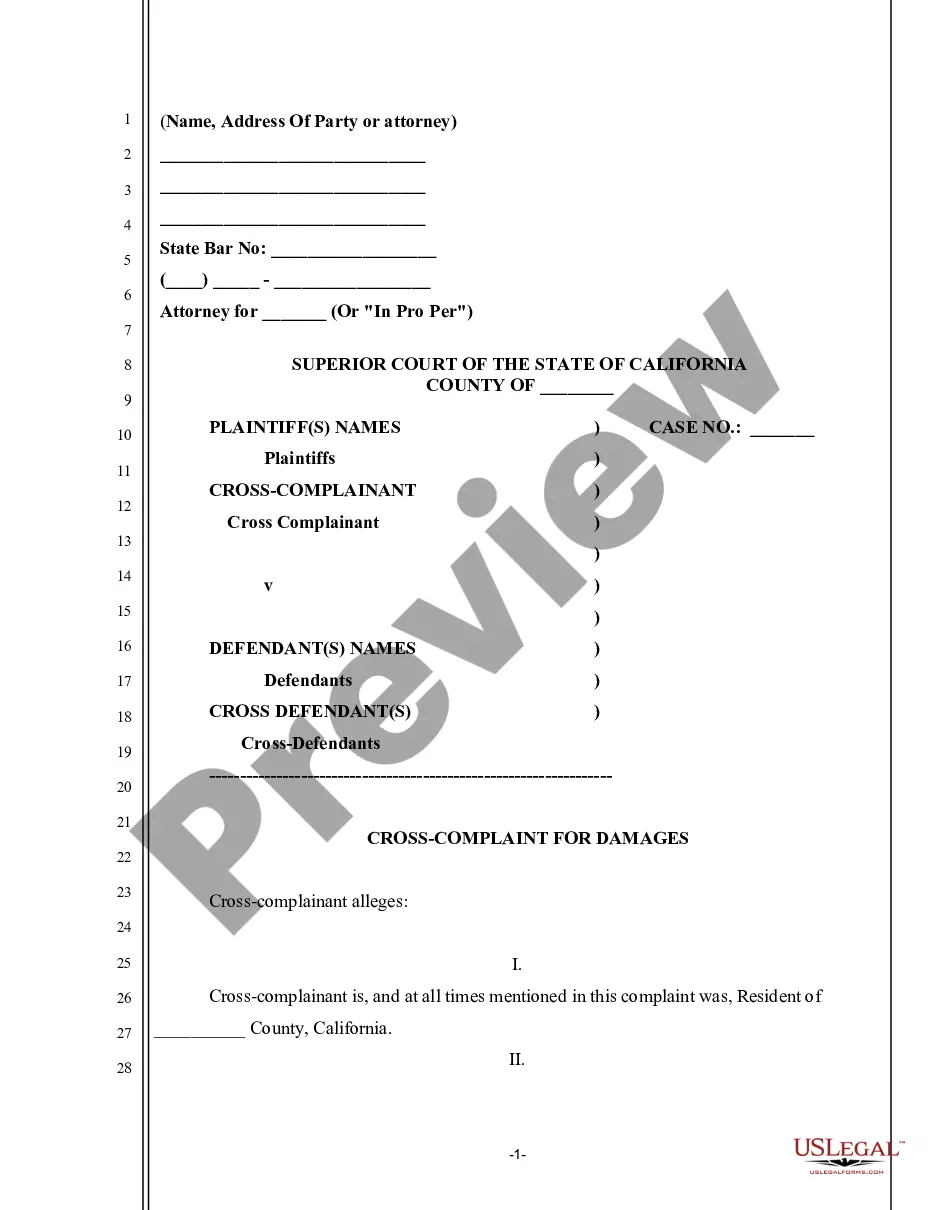
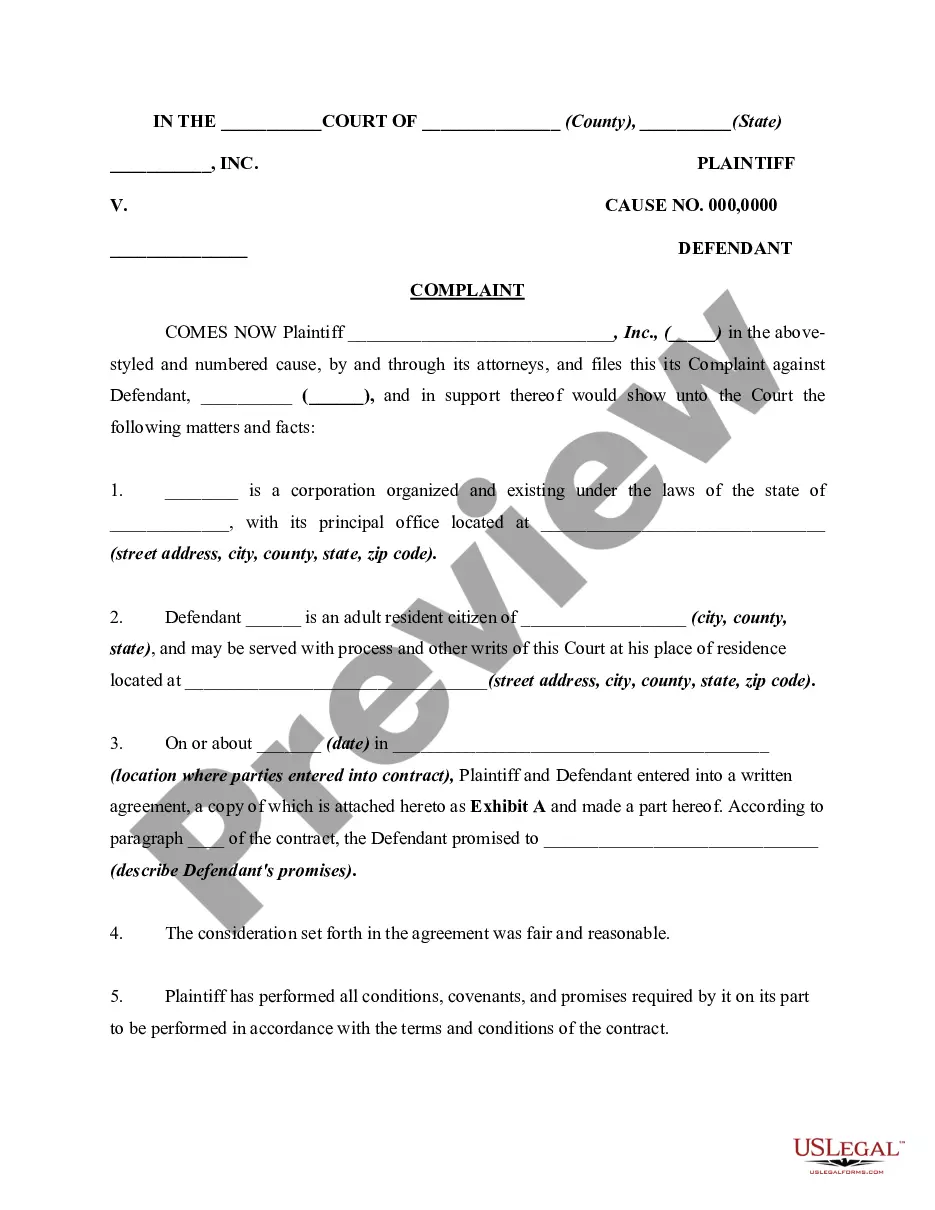
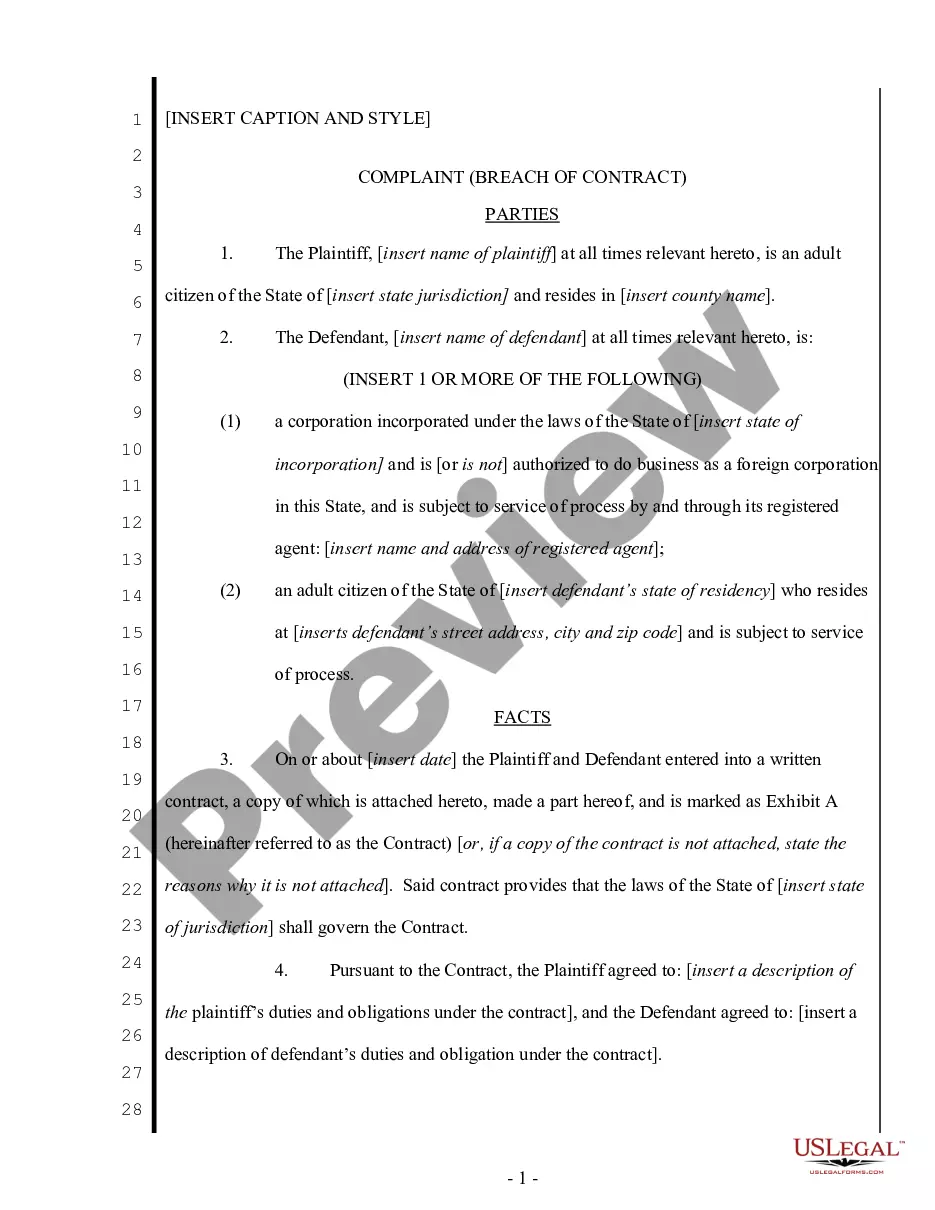
The Cross-Complaint for Damages is a legal document used in civil litigation when a defendant seeks to bring a claim against a plaintiff in response to an initial complaint. This form specifically addresses situations where the cross-defendant's breach of contract has caused damages to the cross-complainant. Unlike a standard complaint, this form allows a party to assert its own claims within an existing lawsuit, effectively turning the tables on the original plaintiff by detailing the damages incurred as a result of the breach.
Main sections of this form
- Parties involved: Identifies the cross-complainant and cross-defendant.
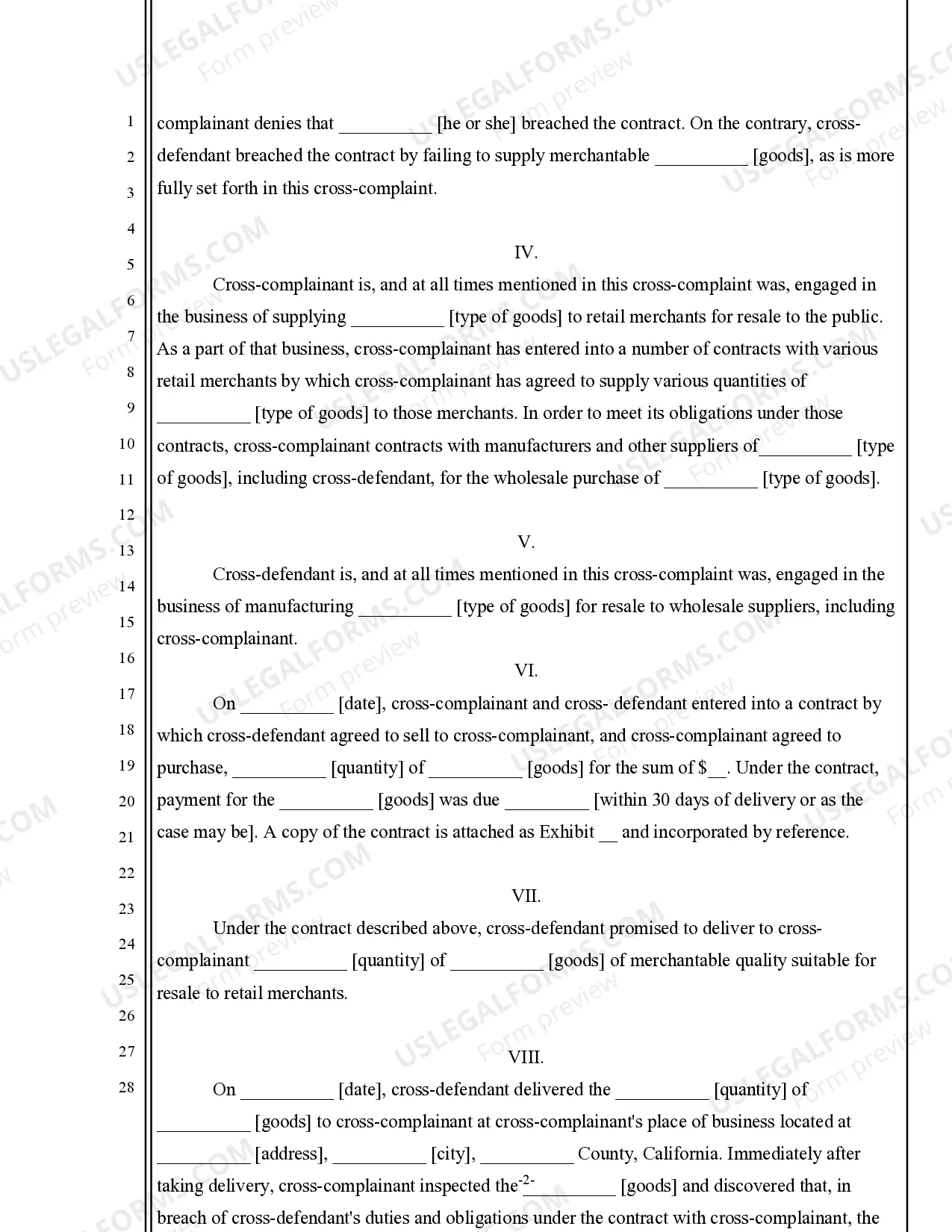
- Statement of facts: Provides the context surrounding the breach of contract.
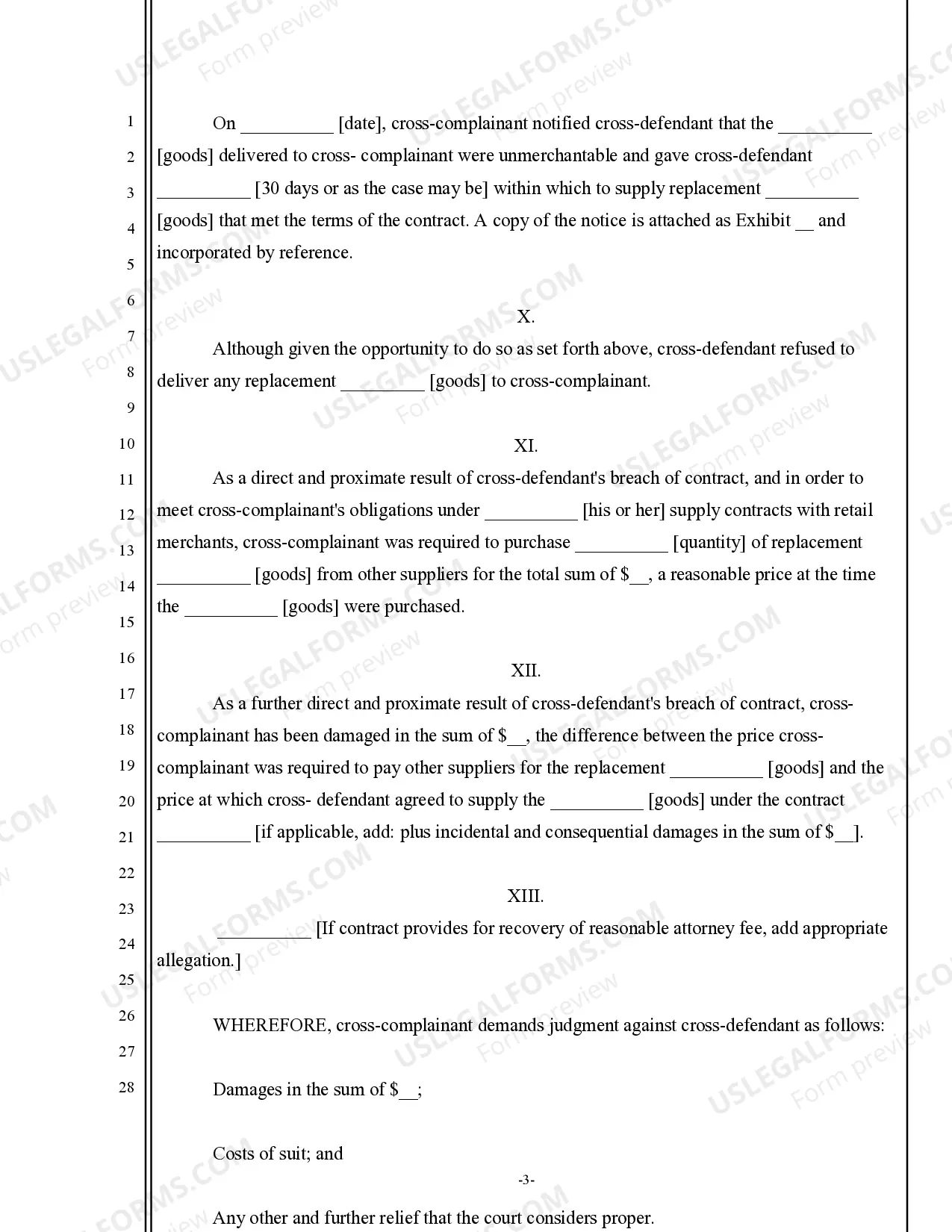
- Damages claimed: Details the financial impact on the cross-complainant as a result of the breach.
- Request for relief: Specifies the damages sought by the cross-complainant.
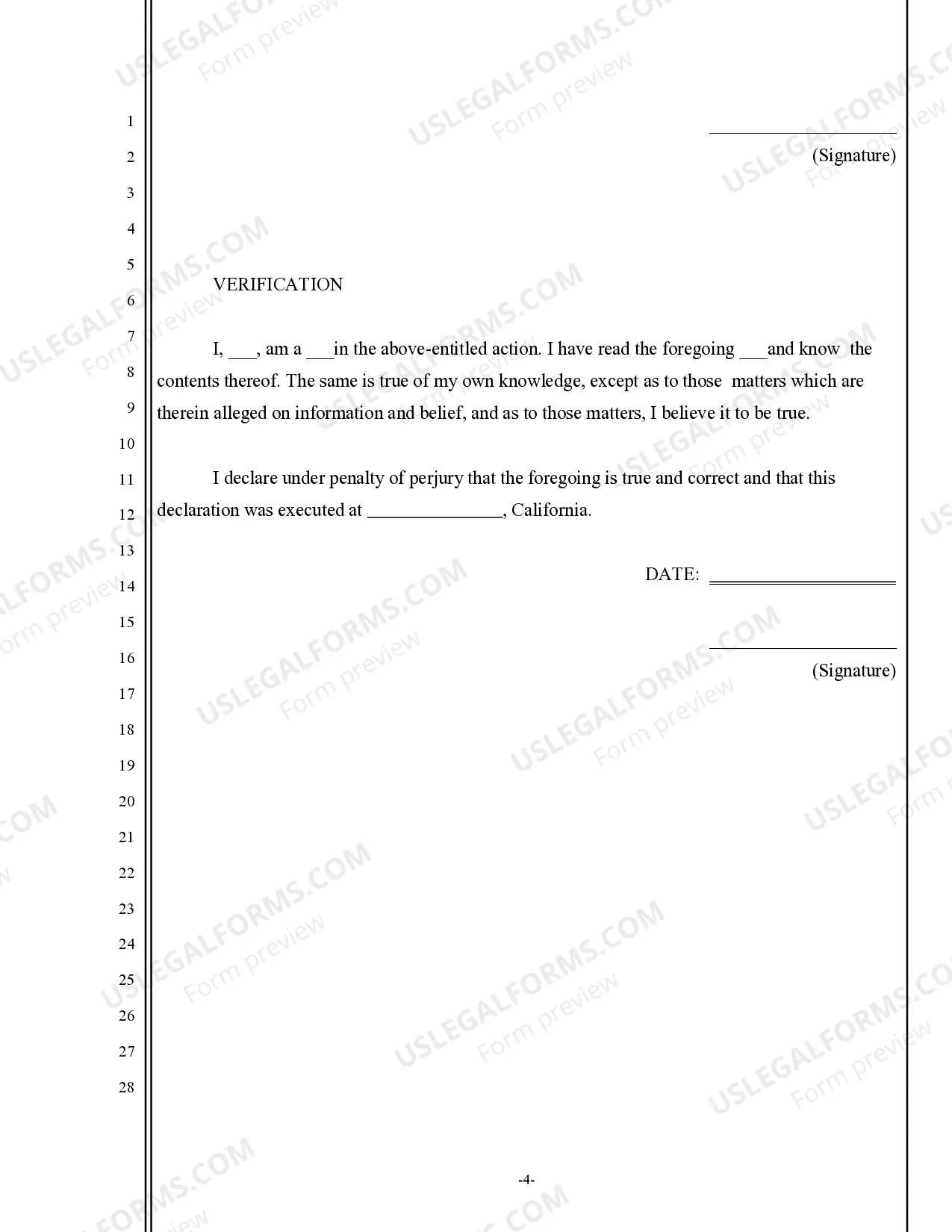
- Verification: A declaration affirming the truth of the allegations made in the form.



When this form is needed
This form should be used when you have been sued for breach of contract and wish to counterclaim against the plaintiff for damages you have suffered due to their failure to perform under the terms of the contract. It is particularly relevant when you have had to incur additional costs or losses because of their actions, and you seek to recover those amounts through a legal complaint.
Who can use this document
- Business owners who have entered into contracts with suppliers or customers.
- Individuals or businesses facing a lawsuit from a party they claim has also violated a contract.
- Any party involved in a legal dispute over the terms of a contract.
Instructions for completing this form
- Identify the parties: Fill in the names and addresses of the cross-complainant and cross-defendant.
- Describe the breach: Clearly outline the circumstances under which the breach occurred, including relevant dates and details of the contract.
- State the damages: Specify the financial losses you incurred as a result of the breach, including replacement costs and other related expenses.
- Provide supporting documents: Attach any contracts, notices, or other relevant documentation as exhibits.
- Sign and date the form: Ensure that the form is signed by the cross-complainant or their legal representative.
Is notarization required?
This form does not typically require notarization to be legally valid. However, some jurisdictions or document types may still require it. US Legal Forms provides secure online notarization powered by Notarize, available 24/7 for added convenience.
Get your form ready online
Our built-in tools help you complete, sign, share, and store your documents in one place.
Make edits, fill in missing information, and update formatting in US Legal Forms—just like you would in MS Word.
Download a copy, print it, send it by email, or mail it via USPS—whatever works best for your next step.
Sign and collect signatures with our SignNow integration. Send to multiple recipients, set reminders, and more. Go Premium to unlock E-Sign.
If this form requires notarization, complete it online through a secure video call—no need to meet a notary in person or wait for an appointment.
We protect your documents and personal data by following strict security and privacy standards.

Make edits, fill in missing information, and update formatting in US Legal Forms—just like you would in MS Word.

Download a copy, print it, send it by email, or mail it via USPS—whatever works best for your next step.

Sign and collect signatures with our SignNow integration. Send to multiple recipients, set reminders, and more. Go Premium to unlock E-Sign.

If this form requires notarization, complete it online through a secure video call—no need to meet a notary in person or wait for an appointment.

We protect your documents and personal data by following strict security and privacy standards.
Common mistakes to avoid
- Failing to accurately identify all parties involved in the lawsuit.
- Omitting details about the contract and breach, which can weaken the claim.
- Not including all relevant evidence or documents as exhibits.
- Forgetting to sign and date the form before filing.
Why use this form online
- Convenience: Easily fill out and download the form at your own pace.
- Editability: Make changes quickly and ensure accuracy before submitting.
- Reliability: Access a legally vetted template that complies with state laws.
Looking for another form?
Form popularity
FAQ
party complaint involves bringing an additional party into the lawsuit who may be liable for some or all of the original claim. Conversely, a cross claim occurs when a defendant in the original complaint asserts claims against another defendant in the same action. Both serve unique strategic purposes in litigation, but a California CrossComplaint for Damages primarily focuses on claims arising out of the same transaction as the original dispute.
To respond to a cross-complaint in California, you must file an answer within the specified time frame after service. Your response should address each allegation made in the cross-complaint clearly and concisely. It's essential to articulate your defenses and any counterclaims you wish to assert. USLegalForms provides templates and resources that can help you draft a suitable response efficiently.
In California, you do not need to issue a new summons for a cross-complaint if the original defendant is already part of the litigation. The cross-complaint is served with the existing summons and complaint. This approach streamlines the litigation process and helps avoid unnecessary delays. If you have questions about this, USLegalForms offers helpful resources to guide you through the procedure.
Cross complaints are legal documents filed by a defendant against another party in the same lawsuit. They allow the defendant to assert claims for damages or other relief against other defendants or even the plaintiff. Essentially, a California Cross-Complaint for Damages can turn a defensive position into an offensive one, enabling you to seek remedies while addressing the original claims made against you.
When you file a California Cross-Complaint for Damages, you typically serve it alongside your answer to the original complaint. You must ensure that the original plaintiff and all parties involved receive a copy of the cross-complaint. This process helps maintain transparency and allows everyone to address the issues in court. Using platforms like USLegalForms can simplify this process by providing ready-made documents tailored to your needs.
The '5 year rule' in California often refers to the statute of limitations for written contracts, which requires you to file a lawsuit within five years after the breach occurs. This can directly impact various legal issues, including damages claims in cases like a California Cross-Complaint for Damages. Understanding your deadlines is vital for preserving your rights while navigating these legal waters.
In California, there is no specific duration for marriage to claim half of the community property. Upon divorce, all assets acquired during the marriage are usually divided equally, regardless of the marriage length. However, specifics may arise in complex cases, such as a California Cross-Complaint for Damages due to financial disputes. Legal advice can assist you in navigating these matters.
A 'complaint' typically refers to a formal legal document filed in court outlining grievances or claims against another party, such as in a California Cross-Complaint for Damages. On the other hand, a 'comment' is more casual and can express an opinion or reaction without legal implications. Understanding this distinction can aid in drafting appropriate legal documents.
The '3 year rule' in California generally pertains to how long you have to file a lawsuit for personal injury or property damage claims. This statute of limitations allows you three years from the date of the incident to take legal action. Filing within this timeframe is crucial, especially when considering a California Cross-Complaint for Damages. Timely action helps preserve your legal rights.
The terms 'complaint' and 'complain' serve different grammatical purposes. 'Complaint' is a noun, referring to a formal accusation or expression of dissatisfaction, often used in legal contexts, such as a California Cross-Complaint for Damages. In contrast, 'complain' is a verb that indicates the act of expressing displeasure. Understanding the difference can help in various contexts, especially in legal documentation.