Arkansas No Contact Order
About this form
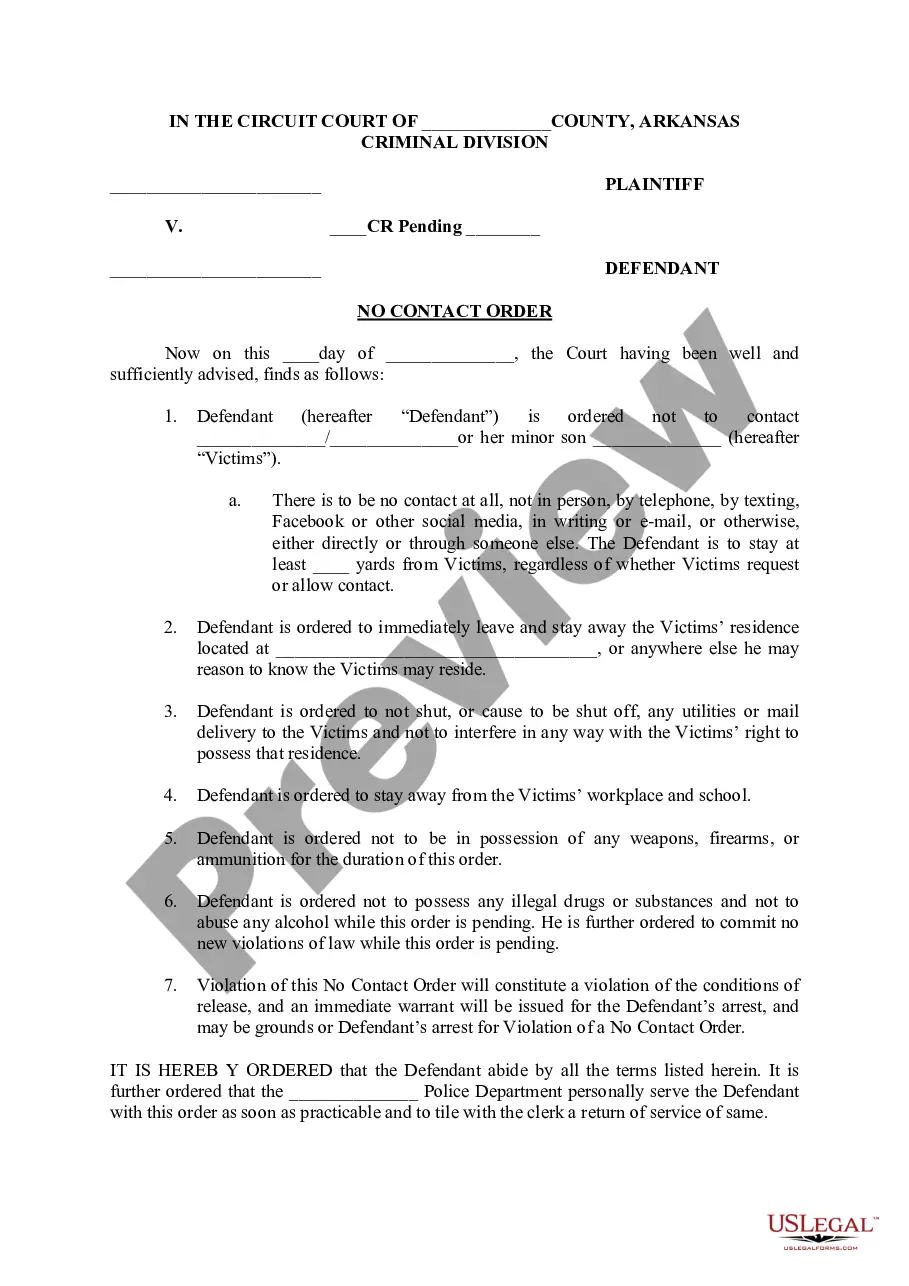
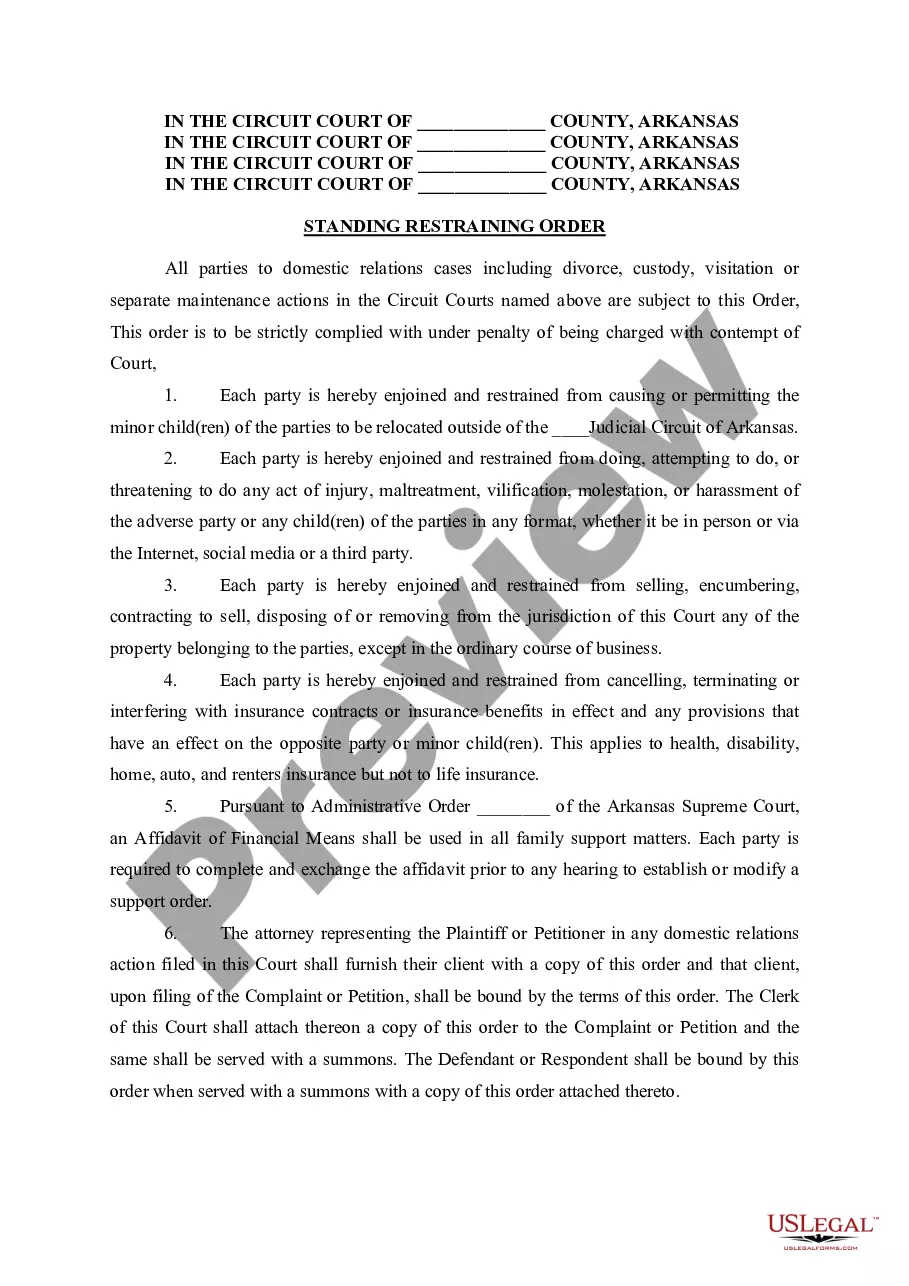
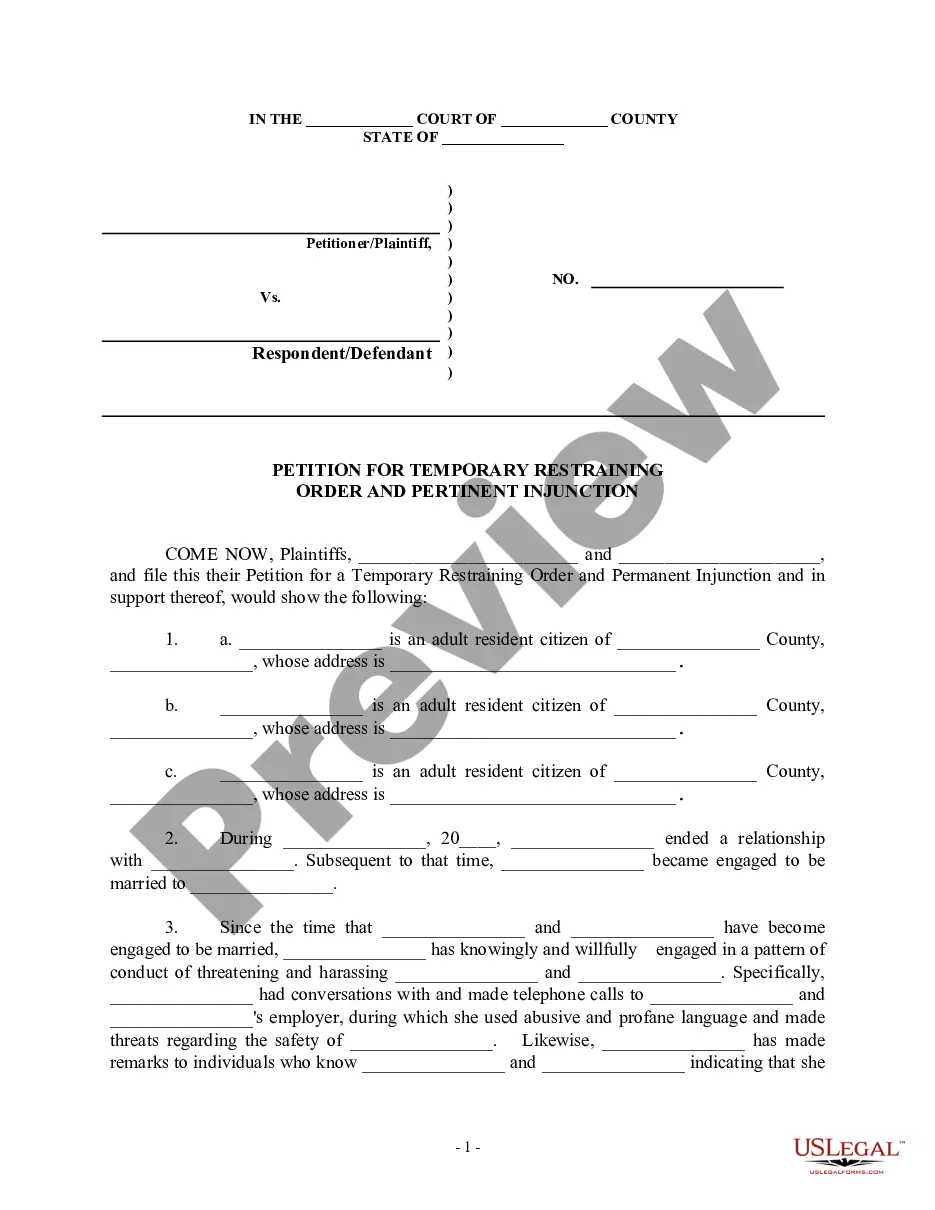
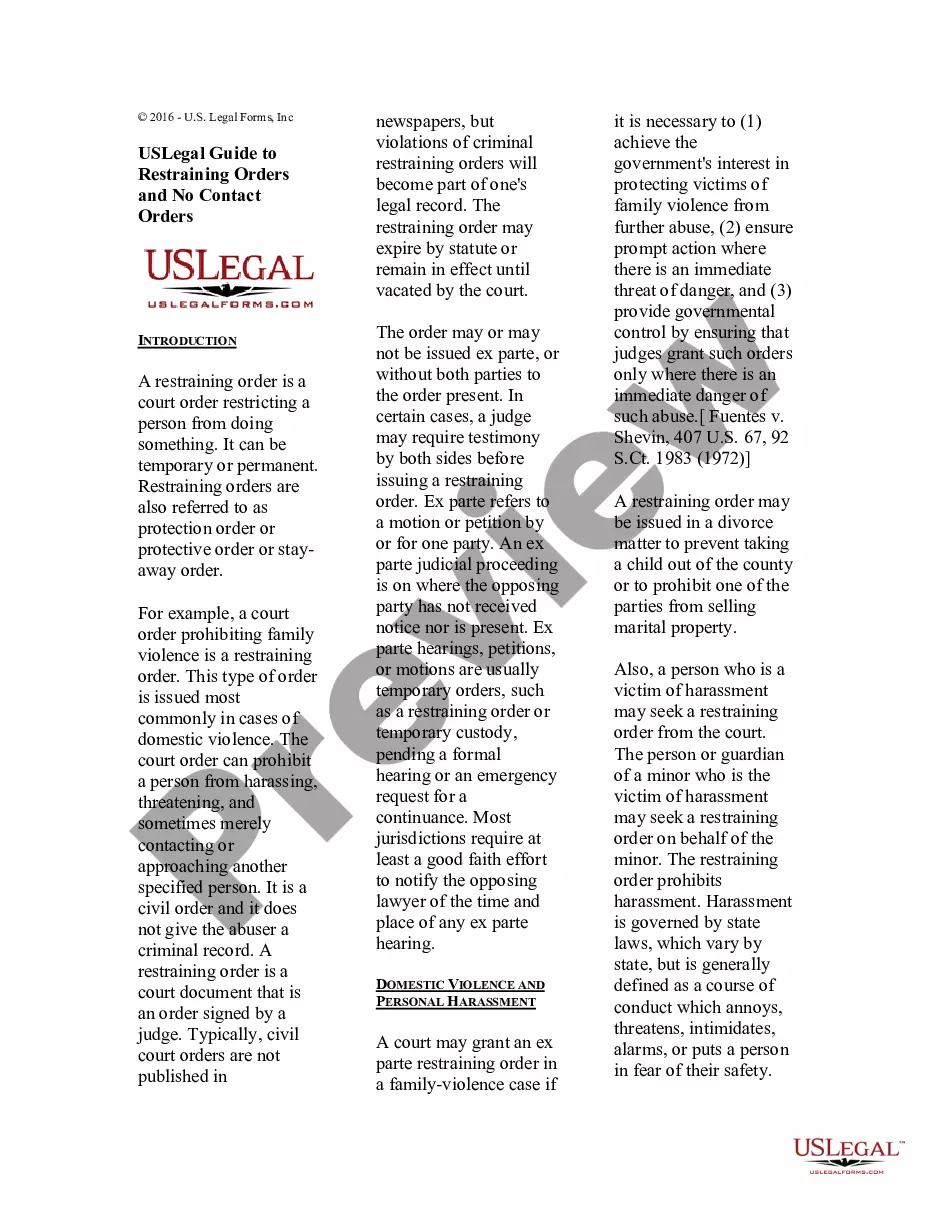
A No Contact Order is a legal document issued by a court that prohibits one person from contacting another. This order is commonly used in cases involving domestic violence, threats, or harassment to ensure the safety of the victim. This form differs from a standard restraining order in that it specifically limits all forms of contact, including direct and indirect communication, effectively isolating the parties involved until further court proceedings occur.
Key components of this form
- The names of the plaintiff and defendant involved in the case.
- Clear definitions of prohibited contact methods, including in-person, phone, text, and social media.
- Specific distance that the defendant must maintain from the victims.
- Instructions for the defendant regarding the victims' residence, workplace, and school.
- Conditions related to possession of weapons and illegal substances.
- Consequences of violating the No Contact Order.
When this form is needed
This form should be used when there is a need to prevent an individual from contacting another person due to fears of harm, harassment, or domestic violence. It is often employed following incidents where the defendant has been charged with a crime that threatens the safety of the victim, especially in cases involving family or household members.
Who needs this form
- Victims of domestic violence or harassment seeking legal protection.
- Family members of individuals facing threats or violence.
- Law enforcement or legal representatives acting on behalf of victims.
How to complete this form
- Identify and enter the names of the plaintiff and defendant at the top of the form.
- Specify the parties involved, such as the victims and their minor children.
- Fill in the effective date of the order.
- Detail the prohibited actions, making sure to cover all forms of communication.
- Indicate the required distance that the defendant must maintain from the victims.
- Provide the address of the victimsâ residence and any other relevant locations the defendant must avoid.
Does this form need to be notarized?
This form does not typically require notarization unless specified by local law. It is important to follow court guidelines regarding notary requirements in your jurisdiction.
Get your form ready online
Our built-in tools help you complete, sign, share, and store your documents in one place.
Make edits, fill in missing information, and update formatting in US Legal Forms—just like you would in MS Word.
Download a copy, print it, send it by email, or mail it via USPS—whatever works best for your next step.
Sign and collect signatures with our SignNow integration. Send to multiple recipients, set reminders, and more. Go Premium to unlock E-Sign.
If this form requires notarization, complete it online through a secure video call—no need to meet a notary in person or wait for an appointment.
We protect your documents and personal data by following strict security and privacy standards.

Make edits, fill in missing information, and update formatting in US Legal Forms—just like you would in MS Word.

Download a copy, print it, send it by email, or mail it via USPS—whatever works best for your next step.

Sign and collect signatures with our SignNow integration. Send to multiple recipients, set reminders, and more. Go Premium to unlock E-Sign.

If this form requires notarization, complete it online through a secure video call—no need to meet a notary in person or wait for an appointment.

We protect your documents and personal data by following strict security and privacy standards.
Avoid these common issues
- Failing to list all methods of prohibited contact.
- Not specifying the distance that the defendant must maintain from the victims.
- Inaccurately identifying the names or addresses of the parties involved.
- Not including the date of the order.
Why use this form online
- Immediate access to the form without needing to visit a physical location.
- Forms can be customized and downloaded quickly and easily.
- Reliability in following the correct legal format for Arkansas courts.
Legal use & context
- No Contact Orders are enforceable by law and violations can lead to criminal charges.
- These orders provide essential protection for victims during legal proceedings.
- Some jurisdictions may require additional documentation or specific procedures for enforcement.
Main things to remember
- A No Contact Order is crucial for protecting individuals from potential harm.
- Understanding its components is essential for proper implementation.
- Filing this document correctly can significantly impact the safety of the victims involved.
Looking for another form?



Form popularity
FAQ
The Arkansas No Contact Order is a court order that requires the respondent to have no contact with the protected person and to stay away from the person’s home, workplace, and other locations. It is used in domestic violence or family-law cases to provide immediate, court-protected safety when there is a risk of harm or harassment.
Delivery typically occurs through a law enforcement officer, sheriff, or a court-approved process server who serves the respondent with the order. The order generally becomes enforceable once it has been served, and the serving official should explain the terms and potential penalties for violations.
After issuance, the order is enforceable by law enforcement, and violations can lead to arrest or contempt. The order may specify a duration and whether a hearing is scheduled to extend, modify, or terminate it. The protected person should report any contact or threats to authorities.
No Contact Order focuses on prohibiting contact with the protected person, while a restraining order can include broader restrictions and protections. In Arkansas, the right relief depends on the facts and the relief sought in DV or family-law proceedings.
The rules generally require the respondent to have no direct or indirect contact with the protected person and to stay away from the protected person’s home, workplace, and other locations the order lists. Violations are enforceable by law enforcement and can lead to arrest or contempt.
The Arkansas No Contact Order provides targeted relief by prohibiting contact with the protected person, while a restraining order may cover broader conduct and protections in more situations. This form is designed for domestic violence or family-law contexts where immediate no-contact relief is needed.