Alabama Plaintiffs Motion to Compel Defendant
What this document covers
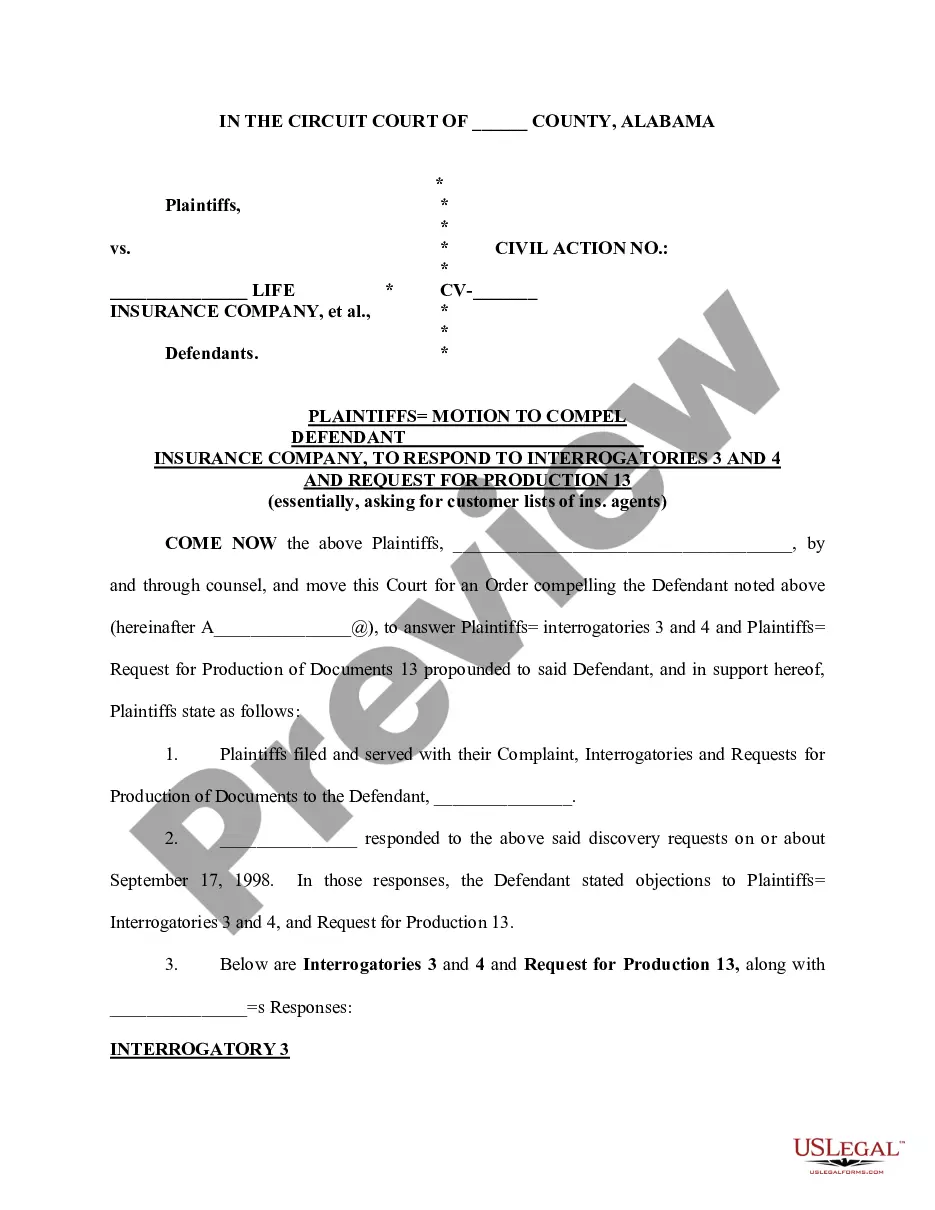
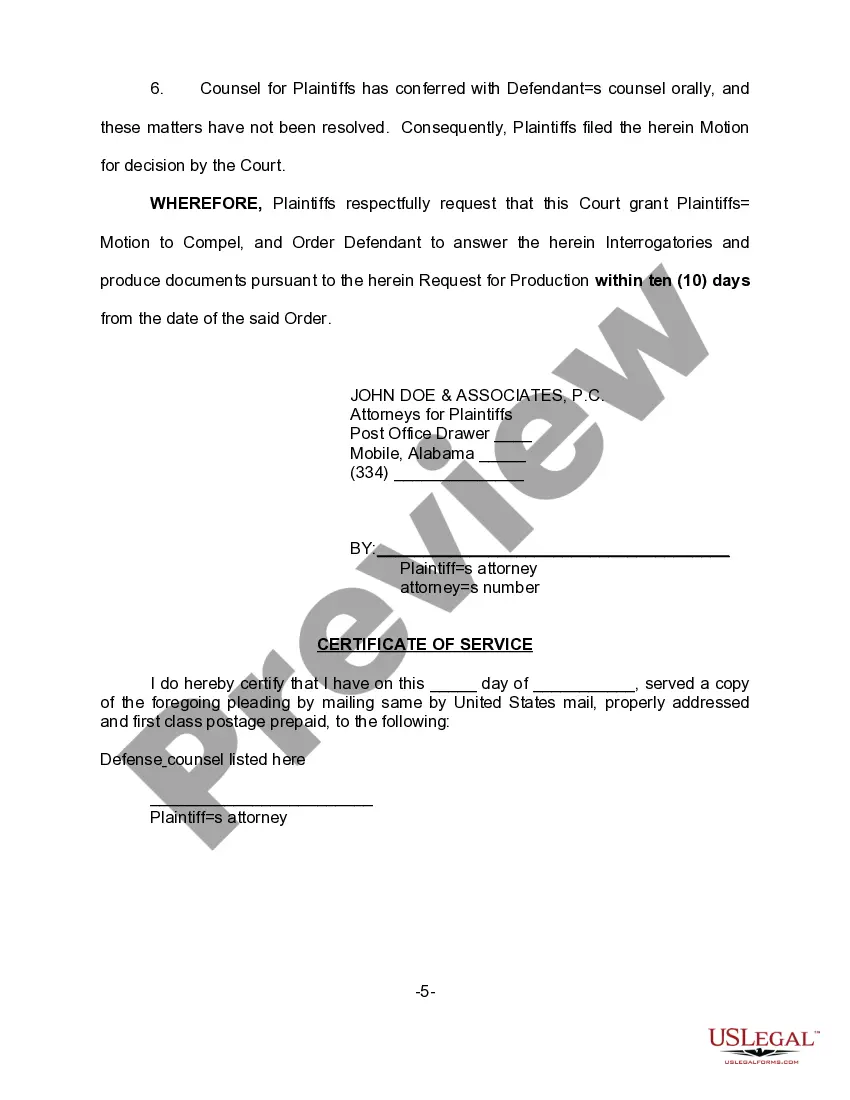
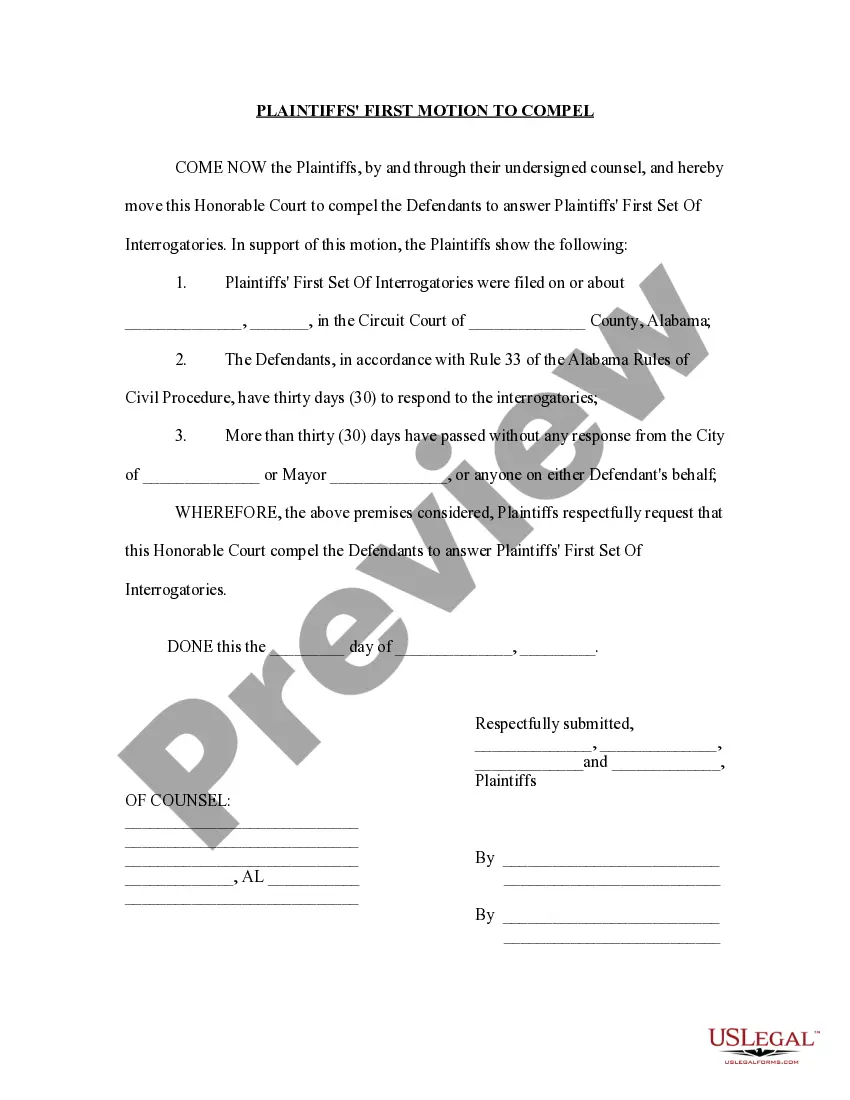
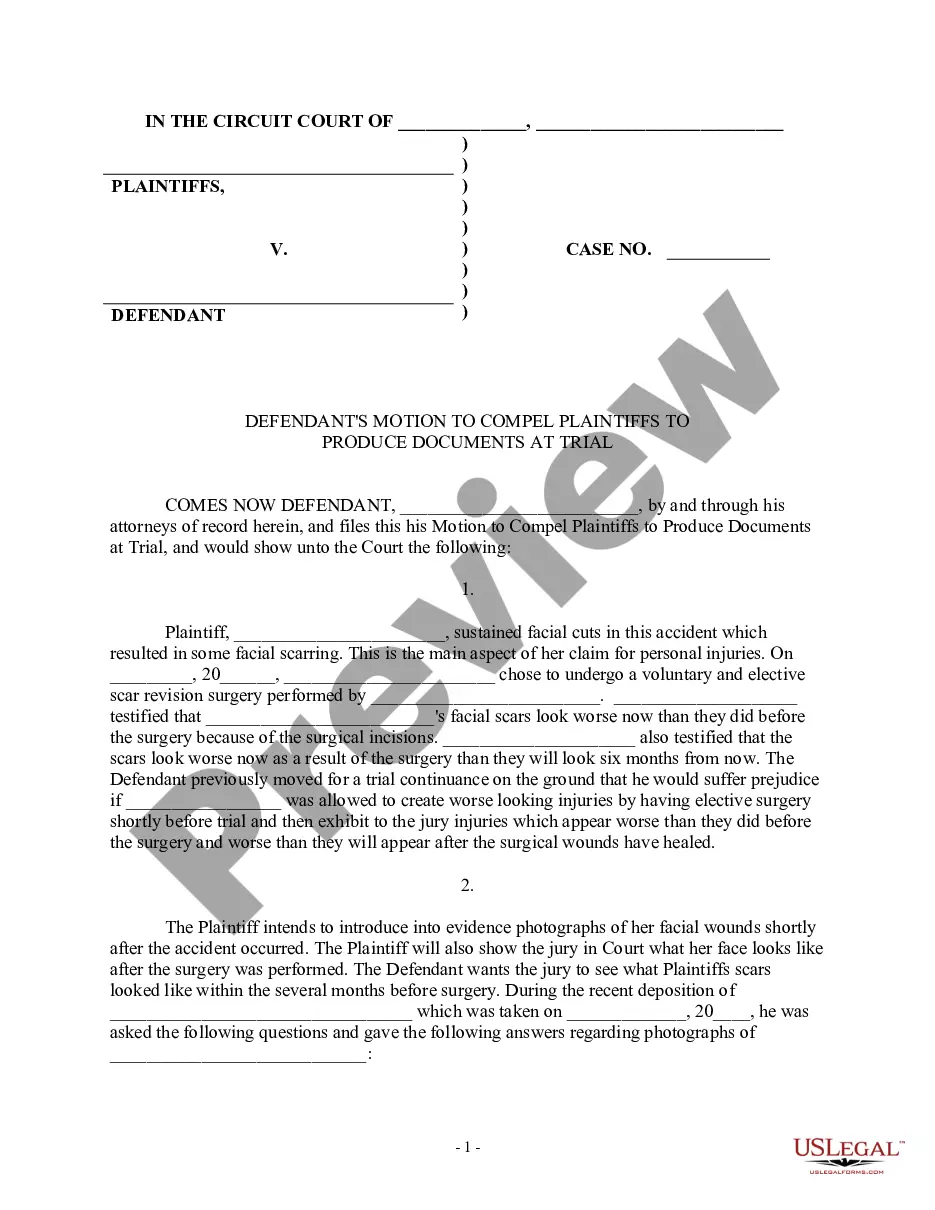
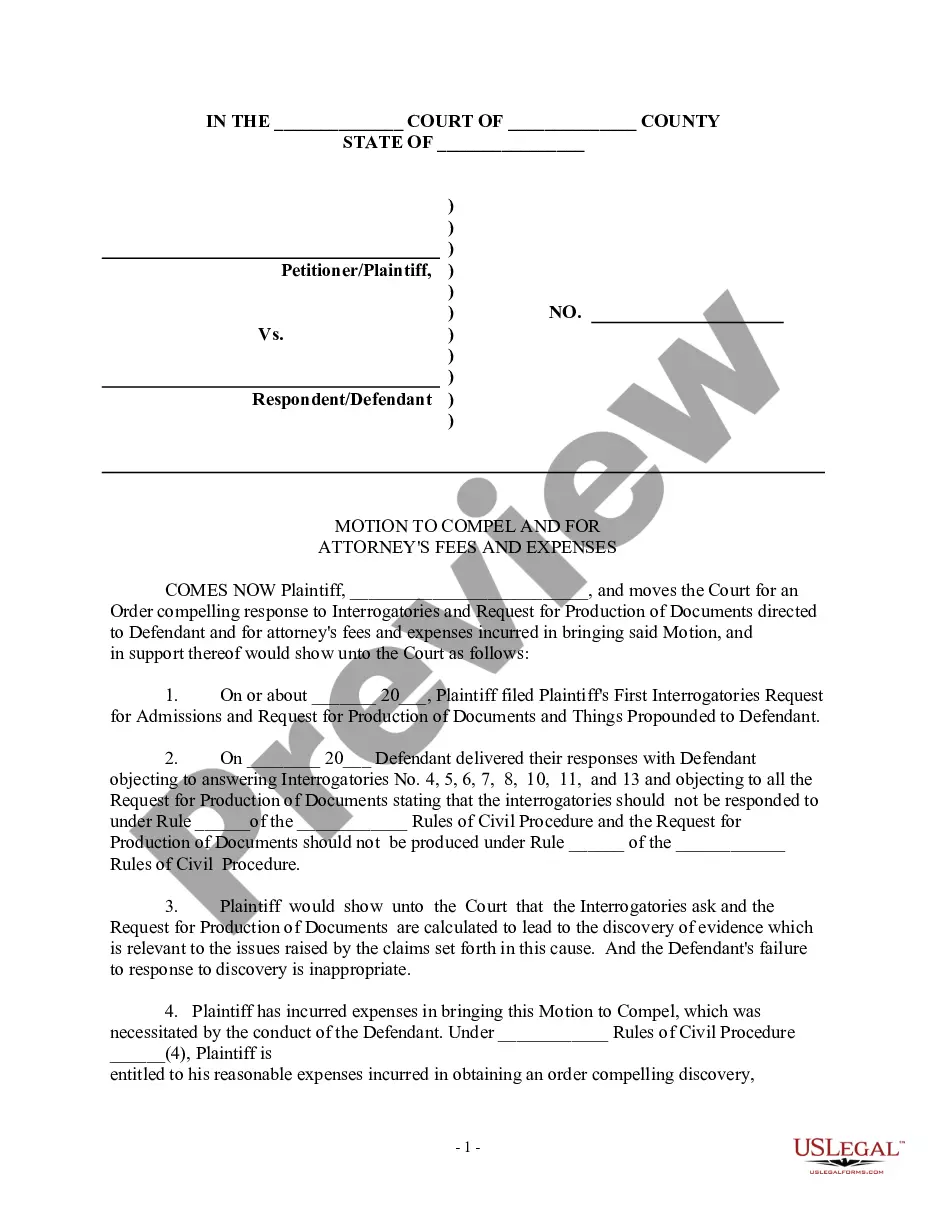
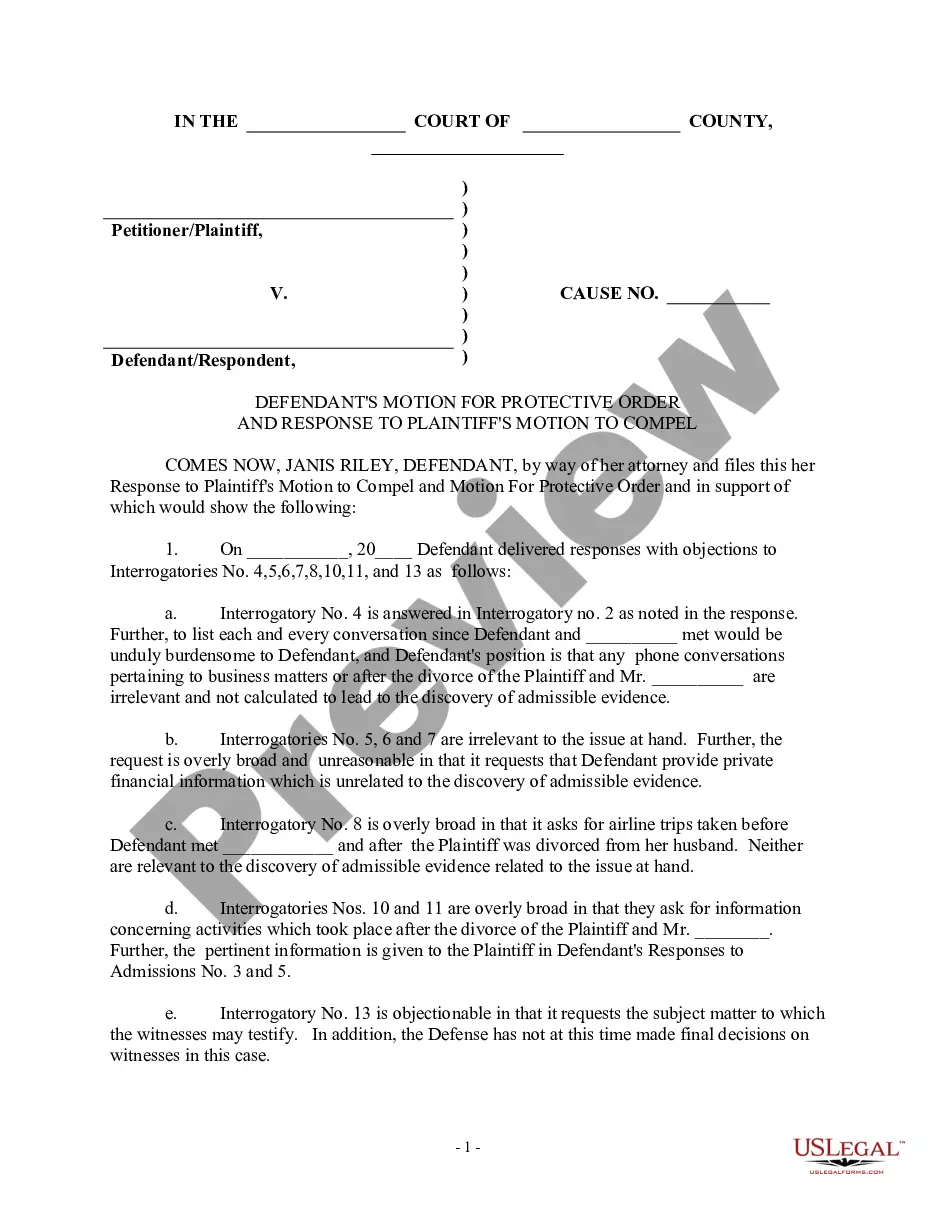
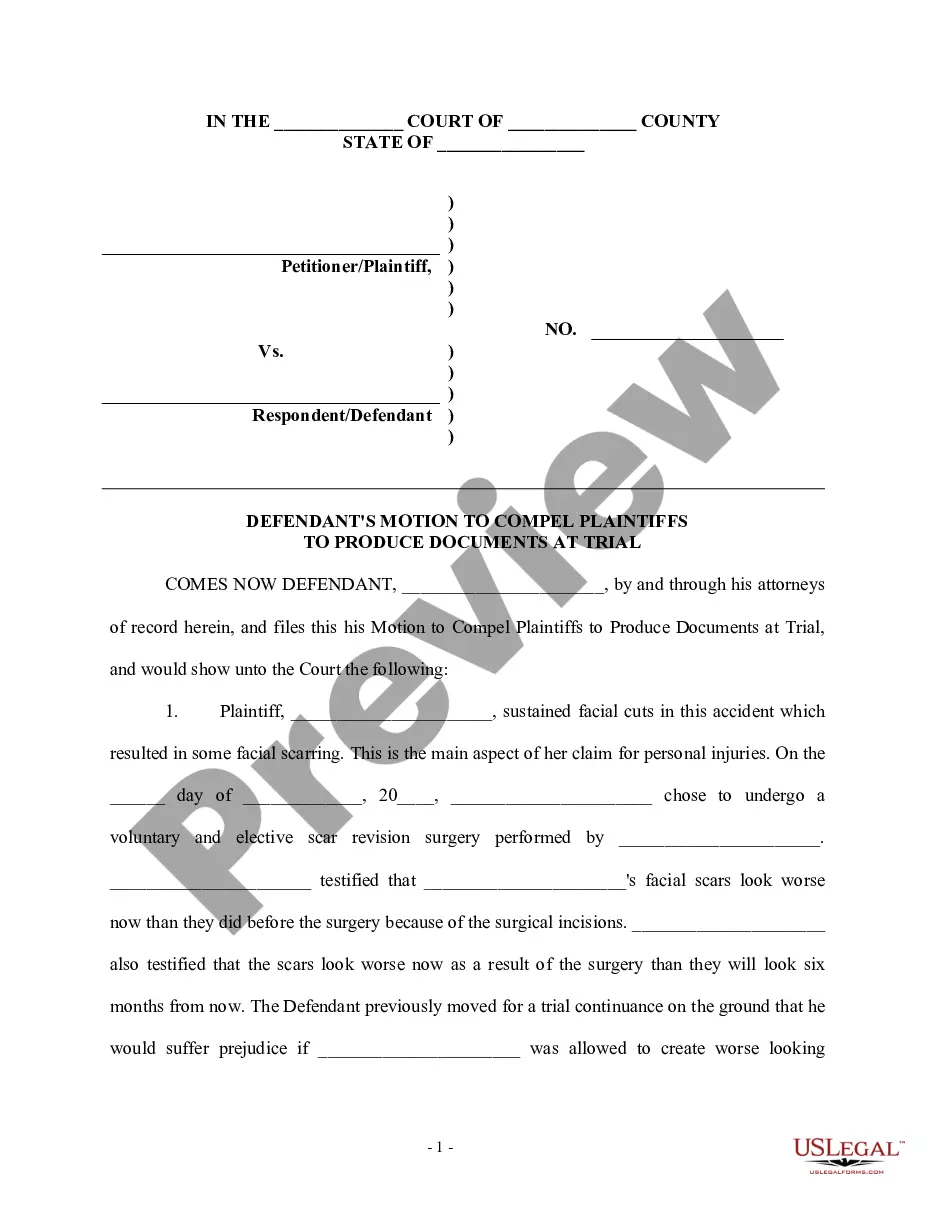
The Plaintiff's Motion to Compel Defendant is a legal document used in civil litigation to request that the court order a defendant to respond to specific discovery requests. This form is particularly focused on compelling the defendant to answer interrogatories and produce requested documents that are pertinent to the case, distinguishing it from similar motions that may address different aspects of discovery disputes.
Key components of this form
- Caption: Includes the names of the parties and the case number.
- Motion request: Clearly states the plaintiff's request to compel the defendant to respond to specific interrogatories and requests for production.
- Background facts: Outlines the context and previous negotiation efforts between the parties.
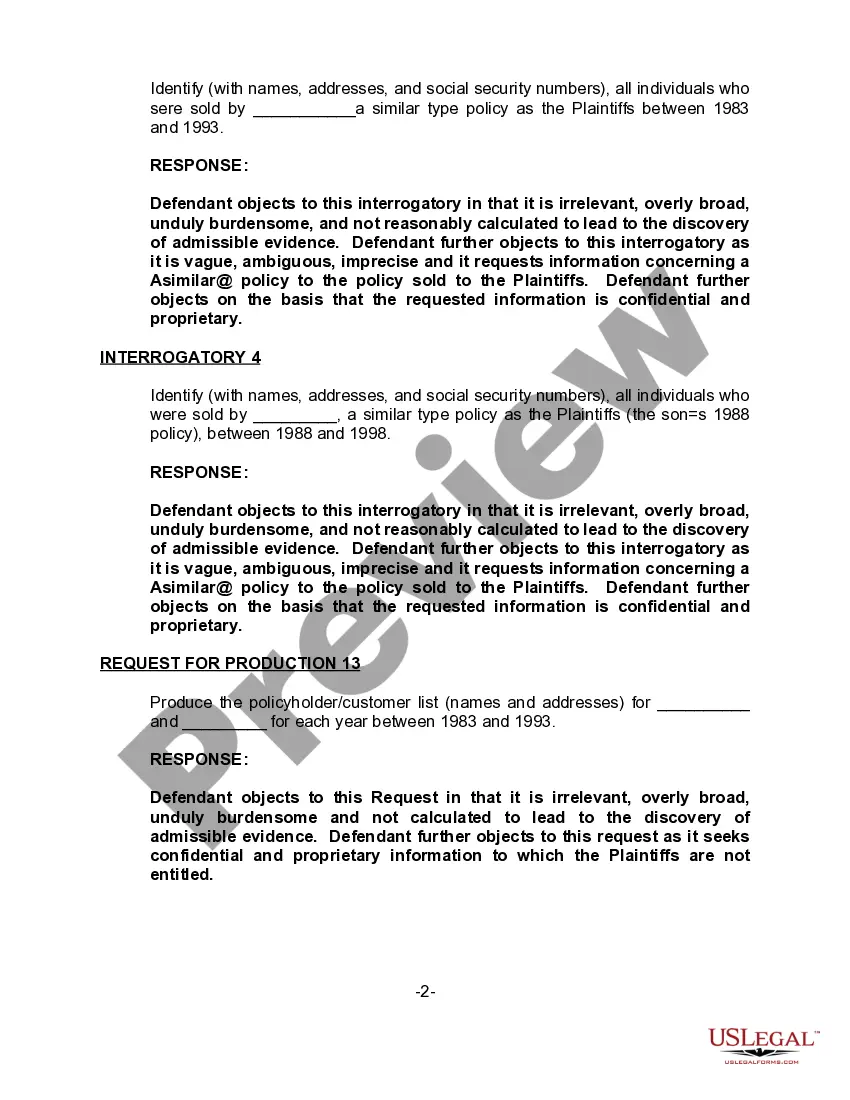
- Specific interrogatories and requests: Lists the exact questions and requests for documents being sought from the defendant.
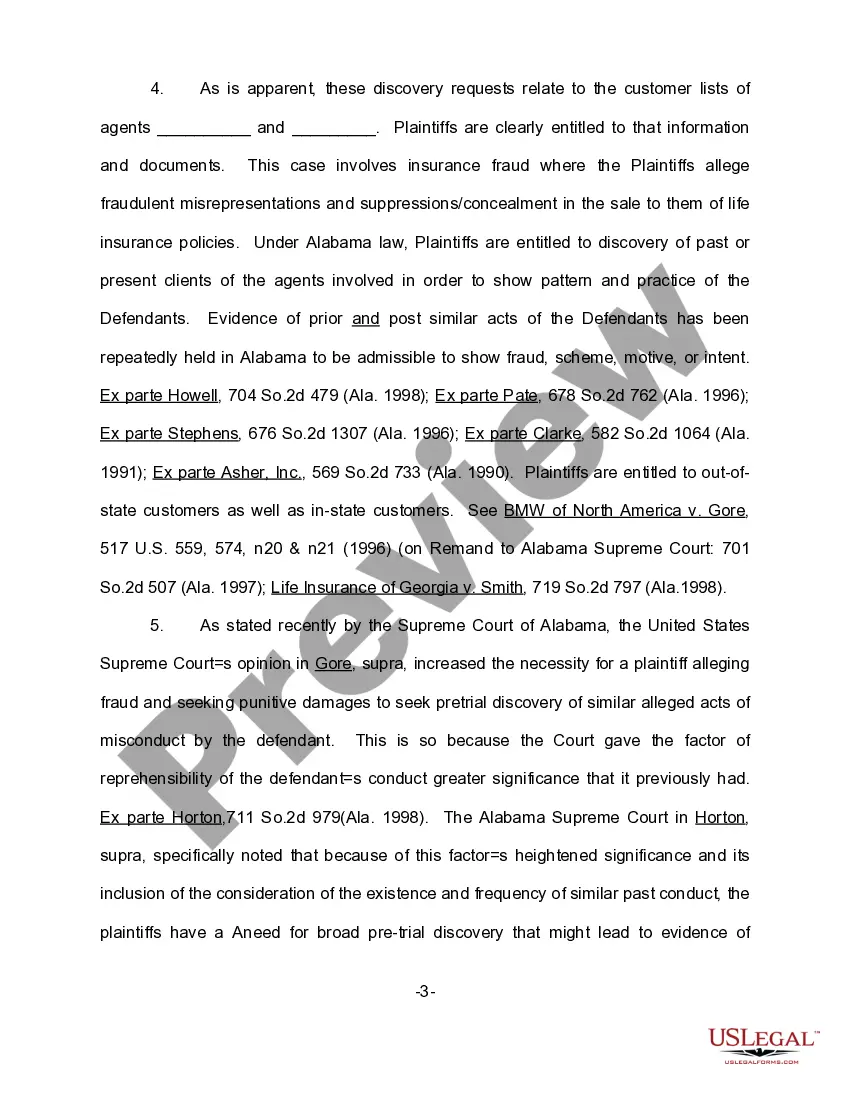
- Legal basis: Provides the legal foundation for why the information is needed, referencing applicable case law.
- Certificate of service: Confirms that the document has been served to the opposing party's counsel.

Situations where this form applies
This form is used when a plaintiff has made discovery requests (interrogatories and document requests) to a defendant, but the defendant has failed to respond adequately or has objected to the requests. It's applicable in civil cases, particularly when the requested information is crucial to prove claims, such as allegations of fraud or breach of contract.
Who needs this form
- Individuals involved in civil litigation as plaintiffs.
- Attorneys representing plaintiffs in court proceedings.
- Parties seeking to obtain specific information or documents from a defendant that are essential for their case.
How to complete this form
- Identify the parties: Fill in the names of the plaintiffs and the defendant as they appear in the case.
- Enter the civil action number: Include the specific number assigned to the case by the court.
- Specify the interrogatories and requests: Clearly list the specific interrogatories and requests for production that you are seeking from the defendant.
- Provide background information: Describe the context of the discovery requests and any previous interactions with the defendant's counsel.
- Sign and date the form: Ensure that the attorney representing the plaintiffs signs the motion and adds the date of submission.
Notarization requirements for this form
This form does not typically require notarization unless specified by local law. However, it's always wise to double-check any court requirements that may apply to your specific case.
Get your form ready online
Our built-in tools help you complete, sign, share, and store your documents in one place.
Make edits, fill in missing information, and update formatting in US Legal Forms—just like you would in MS Word.
Download a copy, print it, send it by email, or mail it via USPS—whatever works best for your next step.
Sign and collect signatures with our SignNow integration. Send to multiple recipients, set reminders, and more. Go Premium to unlock E-Sign.
If this form requires notarization, complete it online through a secure video call—no need to meet a notary in person or wait for an appointment.
We protect your documents and personal data by following strict security and privacy standards.

Make edits, fill in missing information, and update formatting in US Legal Forms—just like you would in MS Word.

Download a copy, print it, send it by email, or mail it via USPS—whatever works best for your next step.

Sign and collect signatures with our SignNow integration. Send to multiple recipients, set reminders, and more. Go Premium to unlock E-Sign.

If this form requires notarization, complete it online through a secure video call—no need to meet a notary in person or wait for an appointment.

We protect your documents and personal data by following strict security and privacy standards.
Mistakes to watch out for
- Failing to specify which interrogatories and requests are being contested.
- Not including a clear legal basis for the requested information.
- Missing the civil action number or incorrectly naming the parties involved.
- Omitting the certificate of service, which confirms that the motion has been delivered to the opposing party.
Benefits of using this form online
- Easy access to expertly drafted legal templates.
- The ability to download and edit the form to meet your specific needs.
- Enhanced security and convenience when preparing legal documents from home.
- Time-saving options for immediate use without the need for in-person consultations.
Legal use & context
- This motion is a formal request to the court, which can be critical for obtaining necessary evidence.
- It highlights the importance of compliance with discovery rules to build a case.
- Failure to compel can limit a party's ability to present their case effectively.
Summary of main points
- The Plaintiff's Motion to Compel is essential for obtaining necessary information from a defendant.
- Filing this motion can help address prejudicial withholding of evidence or information.
- Understanding local rules and providing a strong legal basis strengthens the chance for a successful motion.
Looking for another form?



Form popularity
FAQ
A plaintiff motion to compel signifies a request made by a plaintiff to the court to order a defendant to provide necessary information or documents. This motion is pivotal in cases where the defendant fails to meet discovery obligations. Essentially, through the Alabama Plaintiffs Motion to Compel Defendant, plaintiffs strive to ensure transparency and fairness in the legal process, leading to a more just resolution.
Rule 34 in Alabama's civil procedure allows a party to request the production of documents, electronically stored information, or tangible evidence from another party. This rule supports the discovery process, ensuring that both parties exchange necessary information. The Alabama Plaintiffs Motion to Compel Defendant can be utilized if the other party does not comply with these requests, reinforcing the importance of document exchange in legal cases.
If a party fails to respond to a motion to compel, the court may view this as a sign of non-compliance. Consequently, the court could grant the motion, compelling the party to produce the requested documents or information. In the context of the Alabama Plaintiffs Motion to Compel Defendant, such a ruling can significantly help the plaintiff by ensuring they receive the evidence needed for their case.
The burden of a motion to compel typically lies with the party initiating the motion, which means they must demonstrate to the court that their request is necessary and justified. For an effective Alabama Plaintiffs Motion to Compel Defendant, the plaintiff needs to clearly outline the circumstances and show how the other party's lack of response affects the case. This step is vital to ensure the court understands the importance of granting the motion.
A Rule 37 motion refers to a formal request in Alabama's civil procedure that aims to compel a party to comply with discovery requests or court orders. This type of motion is important in legal proceedings where one party may not provide the needed documents or information. Through the Alabama Plaintiffs Motion to Compel Defendant, plaintiffs can seek the court's assistance in enforcing compliance effectively.
The Alabama Plaintiffs Motion to Compel Defendant often falls under Rule 37, which allows a party to request the court to order another party to provide necessary information. This motion is crucial when the other party has failed to respond to discovery requests. It ensures that the legal process moves forward without undue delay, fostering a fair trial.
A motion to compel is not inherently bad; rather, it serves as a tool to ensure compliance with legal processes. In the context of an Alabama Plaintiffs Motion to Compel Defendant, it can be a critical step in obtaining necessary evidence for the case. However, if used excessively or unjustifiably, it might strain relationships between parties. Ultimately, its effectiveness depends on the circumstances surrounding its use.
The burden typically lies with the party requesting the motion to compel, meaning they must demonstrate the necessity of the information sought. In an Alabama Plaintiffs Motion to Compel Defendant, the plaintiff needs to show that the defendant's compliance with discovery obligations is necessary for the case at hand. Establishing this need is crucial to persuading the court to grant the request.
Filling out a motion form requires you to provide essential details, including your name, case title, and nature of the motion. For instances like an Alabama Plaintiffs Motion to Compel Defendant, you should articulate the purpose of the motion clearly and succinctly. Use straightforward language and ensure all required fields of the form are completed to avoid delays in processing.
Filling out a motion to compel involves clearly stating your intention and reasons for the request. Begin with identifying the parties and relevant case details in your Alabama Plaintiffs Motion to Compel Defendant. Then, outline the specific discovery issues and attach any supporting documents. Providing precise information will streamline the process and lend credibility to your motion.